- EXPERT'S HELP
- +256789210067
- +256200955001
- info@kenlinktours.com


Kigali to Lake Bunyonyi and Bwindi Safari
June 30, 2026
Budget Gorilla Trekking Tours from Kigali
June 30, 2026
Kigali to Queen Elizabeth National Park Safari. While Kigali is best known as a gateway to gorilla trekking in Bwindi, it’s also a surprisingly convenient starting point for a classic savanna safari in Queen Elizabeth National Park, Uganda’s most biodiverse wildlife reserve. For travelers who want tree-climbing lions, elephant herds, hippo-filled waterways, and exceptional birdlife rather than, or in addition to, gorilla trekking, a Kigali to Queen Elizabeth safari delivers a genuinely classic African game-viewing experience without requiring a flight into Entebbe. This guide walks through how the route works, what to expect along the way, and how to structure your trip.
Why Queen Elizabeth National Park from Kigali Makes Sense
Queen Elizabeth National Park sits in western Uganda, within reasonable driving distance of the Rwanda border, making it a logical extension for travelers already routing through Kigali, whether for gorilla trekking, business, or simply taking advantage of Rwanda’s strong international flight connections. The park is renowned for its sheer diversity, savanna plains, wetlands, crater lakes, and forest patches all within a single reserve, supporting an unusually wide range of wildlife for its size.
For travelers who aren’t planning to trek gorillas, or who have already done so on a previous trip, Queen Elizabeth offers a compelling standalone safari destination, while still being easily reached via the same cross-border route used for Bwindi-bound travelers. Our team at Kenlink Tours regularly designs itineraries around exactly this kind of flexible, Kigali-based routing.
Understanding the Route and Border Crossing
Traveling from Kigali to Queen Elizabeth National Park typically involves crossing the Uganda border at Cyanika or Katuna, followed by a drive north through Uganda’s southwestern districts, often passing near or through Bwindi’s outskirts and the scenic Ishasha sector before reaching the park’s main game-viewing areas. The full journey from Kigali generally takes between six and eight hours, depending on road conditions and the specific route taken, making it a substantial but manageable single-day transfer, or one easily broken into two days if combined with a Bwindi gorilla trek along the way.
At the border, most travelers can obtain a Uganda visa on arrival, while those holding the East Africa Tourist Visa can cross without an additional application. A passport valid for at least six months and proof of yellow fever vaccination are required for entry.
Combining Queen Elizabeth with a Gorilla Trek
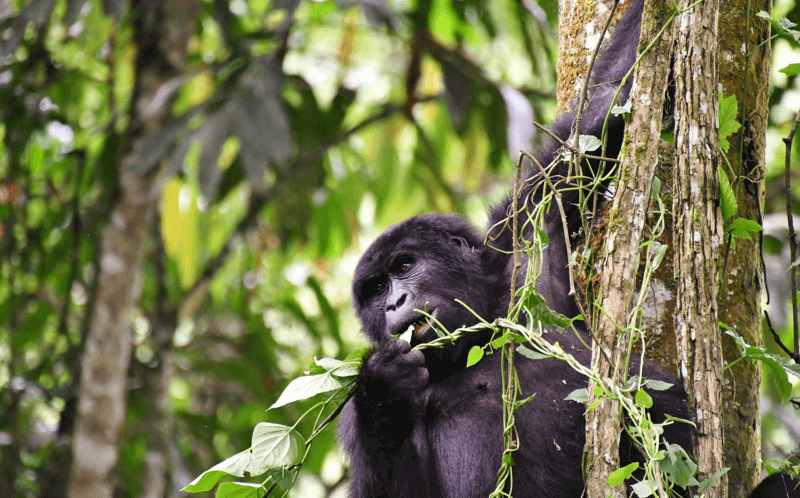
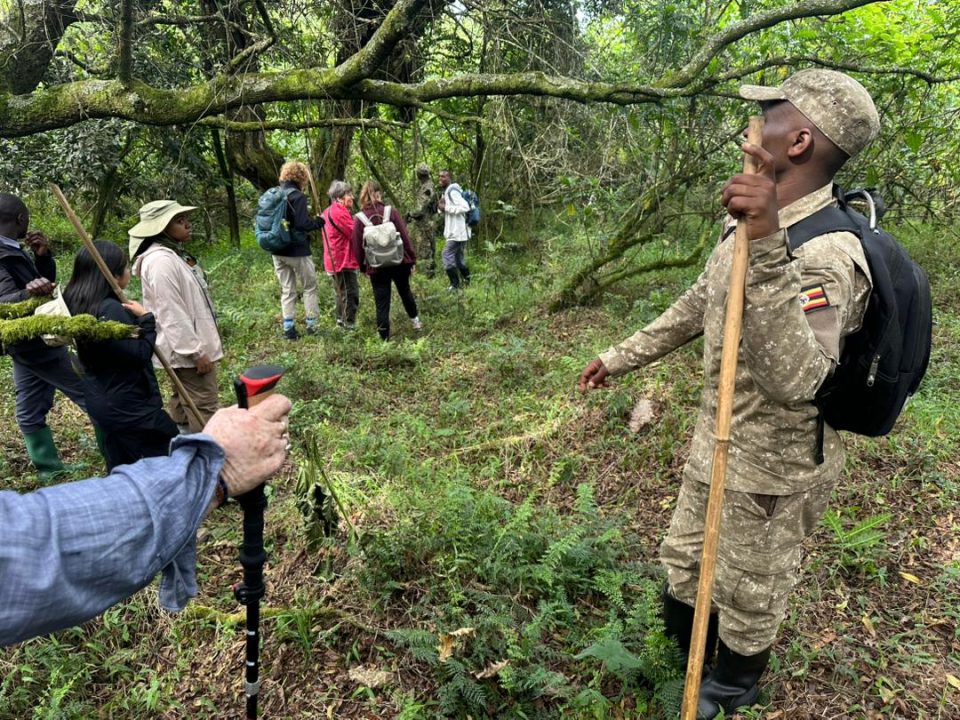
While Queen Elizabeth can be visited as a standalone destination, many travelers choose to combine it with gorilla trekking in Bwindi, since the two parks sit relatively close together and share much of the same access route from Kigali. This combination forms the basis of our popular 5-day gorilla and wildlife safari, which pairs a single gorilla trekking day in Bwindi with two full days of game viewing in Queen Elizabeth, including a boat cruise along the Kazinga Channel.
If gorilla trekking isn’t part of your plans, the same general route can be adjusted into a wildlife-focused itinerary that spends more time across Queen Elizabeth’s various sectors, including the remote and rewarding Ishasha region in the park’s south.
Wildlife Highlights of Queen Elizabeth National Park
Queen Elizabeth National Park is perhaps best known for the tree-climbing lions of its Ishasha sector, a rare behavior observed in only a handful of locations across Africa, where lions can often be spotted draped across the branches of large fig trees during the heat of the day. Beyond this unusual sight, the park supports healthy populations of elephants, buffalo, leopards, and Uganda kob, along with over 600 recorded bird species, making it one of the premier birdwatching destinations on the continent.
The Kazinga Channel, the natural waterway connecting Lake Edward and Lake George, is another major highlight, offering some of the most reliable hippo and crocodile viewing in East Africa, along with excellent opportunities to photograph elephants drinking and bathing at the water’s edge during a relaxed boat cruise.
A Sample 3-Day Queen Elizabeth Itinerary from Kigali
A focused, wildlife-only itinerary might begin with a full driving day from Kigali to Queen Elizabeth National Park, arriving by late afternoon with time to settle into your lodge before an early dinner. The second day would typically include an early morning game drive through the park’s northern sector, followed by an afternoon boat cruise along the Kazinga Channel, two of the park’s signature experiences. The third day allows for a final morning game drive, potentially exploring the Ishasha sector for a chance at spotting the tree-climbing lions, before beginning the return drive to Kigali.
For travelers with more time, this itinerary can easily be extended to include a full day specifically dedicated to Ishasha, or combined with a Bwindi gorilla trek to create a longer, more comprehensive itinerary. You can review structured options on our Uganda safari packages page.
Best Time of Year to Visit
Queen Elizabeth National Park offers good game viewing throughout the year, though conditions and visibility vary by season. The dry seasons, from June to September and December to February, generally offer the best game viewing, since animals tend to congregate more predictably around water sources and dense vegetation thins out, improving visibility. The wetter months bring lush green scenery and excellent birdwatching, particularly for migratory species, though some park roads can become more challenging to navigate.
For travelers combining this trip with gorilla trekking in Bwindi, timing the visit around the same dry season windows tends to offer the most comfortable overall experience across both parks.
Accommodation in and around Queen Elizabeth
Lodging options around Queen Elizabeth National Park range from budget tented camps to luxury lodges perched along the Kazinga Channel or overlooking the park’s open plains. Many properties offer game viewing directly from the lodge grounds, with elephants, buffalo, and antelope regularly passing within view of guest rooms and dining areas. Travelers prioritizing the Ishasha sector for tree-climbing lions should consider lodges specifically located in or near that area, since it sits a meaningful distance from the park’s main northern circuit.
Our team can recommend accommodation suited to your preferred travel style and budget as part of a complete itinerary booked through Kenlink Tours.
Park Fees and Conservation
Entry into Queen Elizabeth National Park, along with all game drives and boat cruise fees, supports the conservation work carried out by the Uganda Wildlife Authority (UWA), the government body responsible for protecting Uganda’s national parks and wildlife. Park fees vary depending on activity and nationality, and your tour operator will typically include these costs within your overall itinerary pricing, along with the necessary permits for boat cruises and any specialized activities like nocturnal game drives.
What to Pack for a Queen Elizabeth Safari
Unlike the rainforest trekking gear needed for Bwindi, a Queen Elizabeth safari calls for lighter, breathable clothing in neutral tones, a wide-brimmed hat, sunscreen, and good binoculars for spotting wildlife at a distance during game drives. A camera with a zoom lens is invaluable for capturing distant sightings, particularly of tree-climbing lions or birds along the Kazinga Channel. As with any East African safari, travel insurance and appropriate malaria prevention measures are strongly recommended.
Plan Your Kigali to Queen Elizabeth Safari
A Kigali to Queen Elizabeth National Park safari proves that Rwanda’s capital isn’t just a gateway to gorilla trekking, it’s also a practical, scenic starting point for one of Uganda’s richest classic game-viewing experiences. Whether paired with a Bwindi gorilla trek or enjoyed as a standalone wildlife adventure, this route offers tree-climbing lions, hippo-filled waterways, and some of the best birdwatching in the region, all accessible without ever needing to fly into Entebbe.
To start planning your trip, browse our Uganda safari packages, explore our Bwindi Impenetrable National Park page if you’d like to combine your trip with gorilla trekking, or email our team directly at info@kenlinktours.com with your travel dates, and we’ll help design your ideal Kigali to Queen Elizabeth National Park safari.