- EXPERT'S HELP
- +256789210067
- +256200955001
- info@kenlinktours.com


Short Gorilla Tours in Uganda
August 30, 2026
Short Gorilla Safaris is in Rwanda
September 1, 2026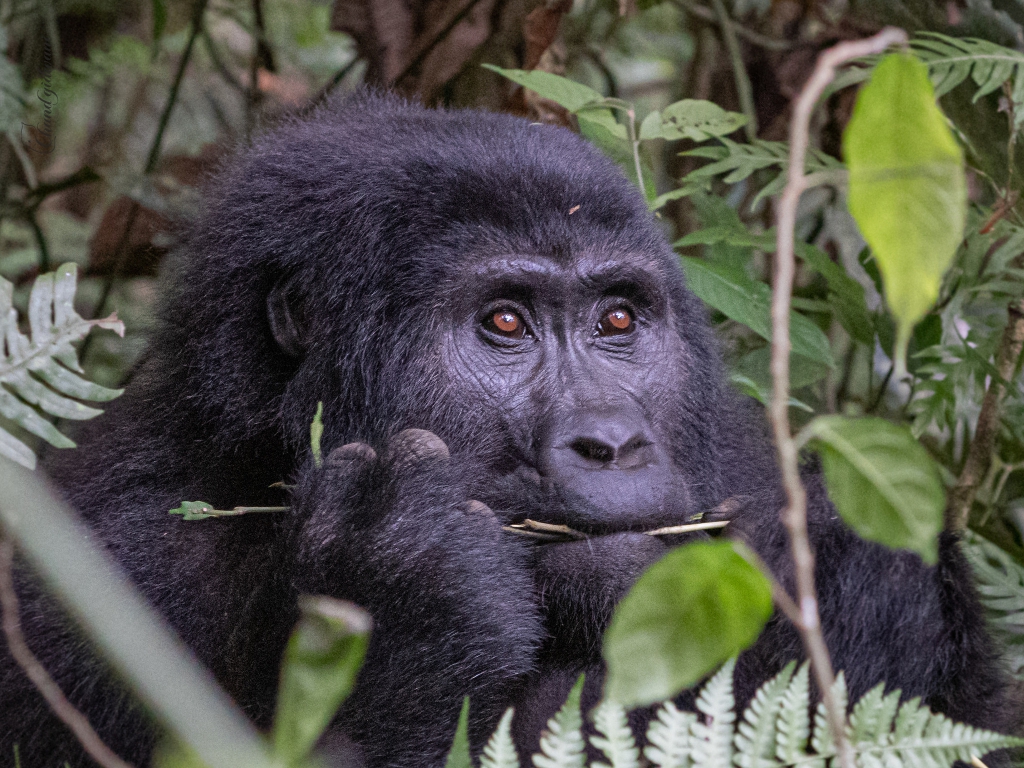
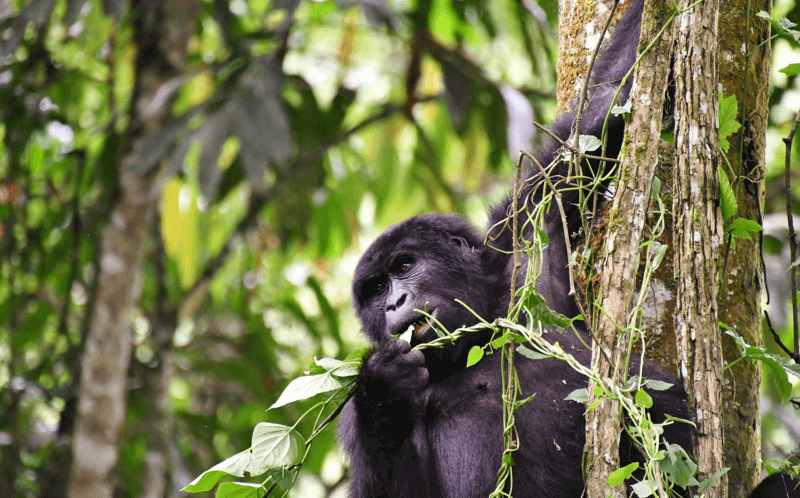
Gorilla Trekking Tours in Rwanda. There are very few wildlife encounters left on earth that can silence a grown adult mid-sentence. Standing seven meters from a 200-kilogram silverback gorilla, watching him watch you back with the calm, almost human curiosity in his eyes, is one of them. This is what draws travellers from every continent to the misty volcanic slopes of northern Rwanda every single year, and it’s the experience we build our Rwanda safaris around at Kenlink Tours. Gorilla trekking tours in Rwanda have become one of the most sought-after wildlife experiences on the planet, not just because of the animals themselves, but because Rwanda has quietly built the smoothest, safest, and best-organized gorilla tourism system anywhere in the world.
If you’ve been dreaming about a Rwanda gorilla safari, this guide walks you through everything you need to plan one properly: permit prices, the best season to go, what the trek actually feels like from the moment you register to the moment you find the family, detailed packing lists, health and safety guidance, our most popular tour packages, where to stay, and how to combine the trek with the rest of the country or even a second gorilla trek across the border in Uganda. By the end, you’ll know exactly how to plan a trip that’s both unforgettable and completely stress-free.
Why Rwanda Is the Ultimate Gorilla Trekking Destination in Africa
Mountain gorillas exist in only two places on the planet: the Virunga Massif, shared by Rwanda, Uganda and the Democratic Republic of Congo, and the Bwindi Impenetrable Forest in southwestern Uganda. Of the three Virunga countries, Rwanda has invested the most in making the experience polished, safe and efficient. Kigali International Airport is a short two-and-a-half-hour drive from the trekking headquarters, the roads are tarmacked almost the entire way, and the park authority runs one of the most professional wildlife-tourism operations on the continent. Rwanda is also one of the safest, cleanest countries to travel through in Africa, with plastic bags banned nationwide and a level of infrastructure investment that makes even a short weekend trip feel effortless from the moment you land. That combination of accessibility, comfort and world-class conservation is exactly why gorilla trekking tours in Rwanda consistently rank among the top wildlife experiences in Africa, and why so many of our clients choose it as the centrepiece of their trip rather than an add-on.
Volcanoes National Park: Home to a Third of the World’s Mountain Gorillas
Every Rwanda gorilla trek happens in Volcanoes National Park, a 160-square-kilometre stretch of rainforest draped across five of the eight Virunga volcanoes: Karisimbi, Bisoke, Sabyinyo, Gahinga and Muhabura. The park protects roughly a third of the world’s remaining mountain gorilla population, spread across more than a dozen habituated families that rangers track daily. Beyond the gorillas, the park is also where you’ll find golden monkeys, forest buffalo, and the graves of the primatologist Dian Fossey, whose research station, Karisoke, sits deep in the same forest. Travellers researching the park in more depth often compare notes with independent overviews such as this Volcanoes National Park destination guide, which is a useful cross-reference if you want a second perspective before you commit to an itinerary.
Meet the Habituated Gorilla Families of Volcanoes National Park
Volcanoes National Park is currently home to more than a dozen habituated gorilla families that rangers visit daily, each with its own size, personality, and backstory that guides love to share on the trail. Susa, made famous by Dian Fossey’s original research, is one of the largest and most storied families, though its remote location on the slopes of Karisimbi makes it one of the tougher treks. Sabyinyo is often assigned to travellers who want a shorter, easier hike, thanks to its habit of staying close to the park boundary, and it’s led by one of the biggest silverbacks in the park. Other well-known families include Agashya, known for shifting territory unpredictably; Umubano; Kwitonda; and Hirwa, a family formed from a rare merger of two separate groups. Rangers assign trekkers to a family the morning of the hike based on fitness level, current location, and permit availability rather than personal preference, so while you can request an easier or harder trek, you won’t know your exact family until you arrive at Kinigi park headquarters.
Gorilla Trekking Permit Prices in Rwanda (2026 Guide)
The single biggest line item in any Rwanda gorilla safari budget is the trekking permit itself. As of 2026, the Rwanda Development Board sets the standard international rate at US$1,500 per person, per trek. That fee covers park entry, an armed ranger escort, a professional guide, and up to one hour in the physical presence of a habituated gorilla family once you find them. It does not cover accommodation, meals, transport, porter fees (highly recommended, and a meaningful source of local income), or guide gratuities. East African citizens and other African passport holders receive substantially discounted rates, and Rwanda occasionally runs promotional pricing in the low season for travellers who combine gorilla trekking with other parks. Because permits are limited to eight visitors per gorilla family per day and sell out months in advance during peak season, we always recommend booking your permit through your tour operator at least four to six months ahead. Our team handles the full application and payment process for every guest on our Rwanda gorilla safari bookings, so you never have to deal with the Rwanda Development Board portal directly.
Beyond the base permit fee, budget separately for accommodation (which varies enormously, from around $80 a night in a modest guesthouse near Kinigi to well over $1,000 a night at the region’s flagship luxury lodges), ground transport, meals not included in your accommodation package, a porter fee of roughly $15–20, and guide and ranger tips, which are customary and appreciated but not compulsory. Travellers combining a gorilla trek with golden monkey tracking, chimpanzee tracking in Nyungwe, or a game drive in Akagera will pay separate activity fees for each, typically ranging from $100 to $200 per activity. We build all of these costs into a single upfront quote for every itinerary we design, so there are no surprise fees once you’re on the ground in Rwanda.
Best Time of Year for Gorilla Trekking in Rwanda
Rwanda’s gorilla families live in rainforest at altitudes between 2,400 and 4,000 metres, so trekking conditions really come down to mud rather than temperature. The two dry seasons, June to September and December to February, offer firmer trails, shorter trek times, and easier footing on the volcanic slopes. The long rains from March to May and the shorter rains in October and November thin out the crowds and occasionally bring discounted permit pricing, but the trails become genuinely slippery and treks can take longer. Neither season is truly “bad” for trekking since the forest is rainforest year-round and a shower can appear at any moment, but if your dates are flexible, June through early September is the sweet spot most of our guests booking a 3-day Rwanda gorilla safari choose for the most comfortable hiking conditions.
How to Prepare: Fitness, Packing List and Gorilla Trekking Gear
You don’t need to be an athlete to trek gorillas, but a reasonable baseline fitness makes the day far more enjoyable. Treks can range from a 30-minute stroll to a five-hour climb through dense vegetation and steep, uneven terrain, depending entirely on where the gorilla family happens to be that morning. Pack sturdy waterproof hiking boots with ankle support, gardening gloves to protect your hands from stinging nettles and thorny vines, a rain jacket, long trousers tucked into your socks, a wide-brimmed hat, and a daypack with water and snacks. Insect repellent and a basic first-aid kit are wise additions. We strongly recommend hiring a porter at the trailhead; the $15–20 fee goes directly to the local community and the extra pair of hands over slick terrain is worth every dollar. Camera gear should include a zoom lens rather than a flash, since flash photography is prohibited near the gorillas. If you’re arranging your own vehicle for the trip, our 4×4 car hire service includes a driver-guide who knows the park roads well. Other easy-to-forget essentials: a lightweight rain cover for your daypack, a spare pair of dry socks to change into afterward, a reusable water bottle rather than single-use plastics (which the park discourages), and a small denomination of US dollars in cash for tips, since card payment options near the trailhead are limited.
Health and Safety Considerations Before You Trek
Rwanda requires a yellow fever vaccination certificate for entry if you’re arriving from a country with risk of yellow fever transmission, and it’s worth checking the current requirement for your specific itinerary before you fly. Malaria prophylaxis is generally recommended for the region, though Volcanoes National Park’s high altitude makes transmission risk lower there than in Rwanda’s lowland areas. Altitude itself is worth taking seriously: Kinigi sits around 2,400 metres above sea level, and some gorilla families range even higher, so travellers arriving from sea level may notice mild shortness of breath on steep sections. Staying hydrated, pacing yourself on the climb, and telling your guide immediately if you feel unwell are simple precautions that prevent almost every trekking mishap we’ve seen over the years. Because sick visitors are turned away from trekking to protect the gorillas, it’s also worth building a rest day into your itinerary before the trek if you’ve just landed on a long-haul flight.
Gorilla Trekking Photography Tips
The hour you spend with a gorilla family goes fast, and it’s easy to spend the whole time looking through a viewfinder instead of actually watching. A mid-range zoom lens in the 70–200mm range is usually the sweet spot: close enough for portraits, wide enough to catch a family scene without needing to step closer than the permitted distance. Rainforest light under a dense canopy is often dim and dappled, so bumping your ISO and shooting at a faster shutter speed will do more for your images than any amount of post-processing. Leave the flash at home entirely; it’s banned near the gorillas and would startle them regardless. Many of our guests find that putting the camera down entirely for the final ten minutes, and simply watching, ends up being the part of the trek they remember best.
What Happens on Gorilla Trekking Day: Step by Step
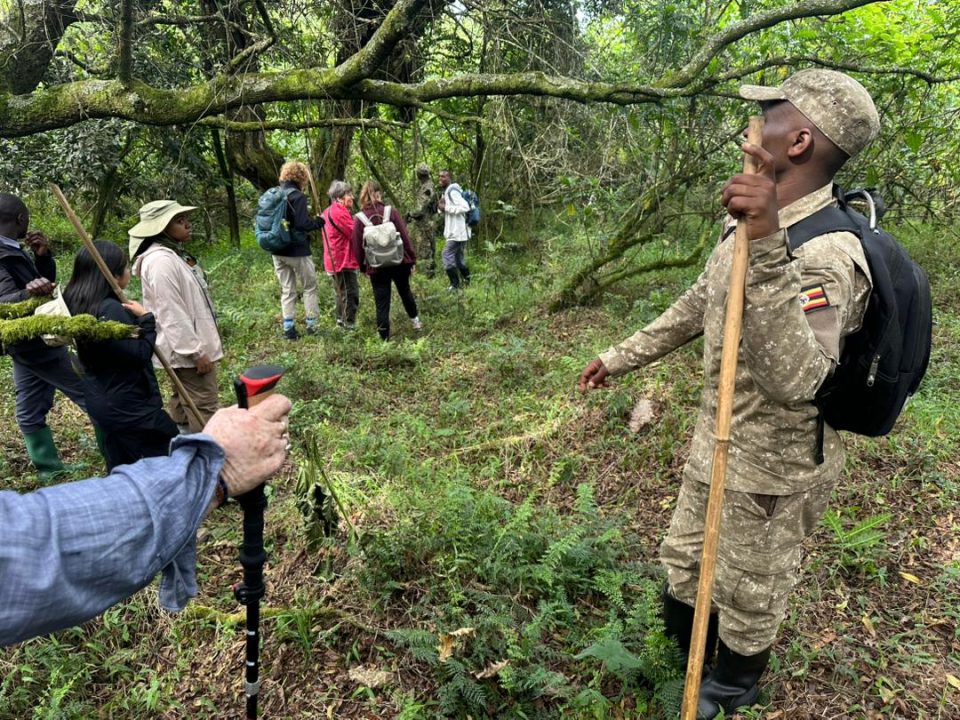
Trekking days begin early. Guests gather at Kinigi park headquarters by 7:00 a.m. for registration, a security briefing, and a short cultural performance by local dancers while rangers finalise the overnight tracker reports on each gorilla family’s location. Groups of up to eight visitors are then assigned to a specific family based on fitness level and interest, and a guide leads the trek toward the previous evening’s location, adjusting the route as trackers radio in updates. Once you’re within range, you’ll leave bags and walking sticks with an assistant guide and approach the final stretch on foot. The rules require staying at least seven metres from the gorillas, though in practice a curious juvenile or a family patriarch sometimes closes that gap on their own terms. You get a full hour with the family: watching them forage, groom each other, and occasionally charge mock-aggressively at nothing in particular. It is, without exaggeration, one of the most emotionally affecting hours most travellers ever spend outdoors. Many guests build this into our 3-day Volcanoes gorilla trekking package, which pairs the trek with a comfortable arrival and departure day. Once your hour is up, the guide leads the group back out to the trailhead, usually arriving by early-to-mid afternoon, where you’ll receive a certificate confirming your trek and have the rest of the day free to rest, explore Kinigi’s craft cooperatives, or simply relive the morning over a late lunch.
Rules and Etiquette for Meeting the Mountain Gorillas
Rwanda enforces strict conservation etiquette because mountain gorillas share roughly 98 percent of human DNA and can catch human illnesses. Anyone with a cold, flu, or other contagious illness is asked to stay behind, for the gorillas’ protection as much as anyone’s. The minimum age for trekking is 15 years old. Visitors must keep voices low, avoid direct eye contact that could be read as a challenge, never point at or reach toward a gorilla, and turn away and crouch calmly if a gorilla approaches too closely rather than backing away suddenly. Flash photography, eating, and smoking are all prohibited inside the park boundary. These rules exist because Rwanda’s gorilla population has grown steadily for over a decade specifically because tourism has been managed this carefully, and every trekker is, in a small way, part of keeping that trend going. Guides carry two-way radios and coordinate constantly with trackers who have often been watching the same family since before sunrise, which is part of why Rwanda’s sighting rate is so consistently high; it’s rare, though not impossible, to trek and not find your assigned family within the allotted time. On the rare occasion a family can’t be located, park authorities typically offer a rescheduled trek where possible or a partial refund, so the financial risk of an unsuccessful sighting is limited, even though the experience itself is never guaranteed with wild animals.
Top Rwanda Gorilla Trekking Tour Packages by Kenlink Tours
We build our Rwanda itineraries around different trip lengths and interests, so there’s a fit whether you have a long weekend or two weeks. Popular options include the classic 3-Day Rwanda Gorilla Safari for travellers with limited time, the 5-Day Gorillas and Wildlife Rwanda Safari that pairs Volcanoes National Park with big-game drives in Akagera, and the 4-Day Golden Monkey and Gorilla Trekking tour for guests who want two primate species in a single trip. For a slower pace with a lake escape, the 6-Day Rwanda Adventure to Lake Kivu combines trekking with a couple of relaxed days on Rwanda’s Great Lakes coastline. Every package is fully customisable on request, and our small-group departures are a good option if you’d rather travel with fellow trekkers than book a fully private safari. Honeymooners and travellers celebrating a special occasion often extend one of these itineraries by a day or two at a lakeside or forest-edge lodge, purely to decompress after the trek, and our team is happy to build that pause into any itinerary above rather than rushing straight to the next activity.
Combine Gorilla Trekking with Nyungwe Forest and Akagera National Park
Because Rwanda is compact, gorilla trekking pairs naturally with the rest of the country’s parks. South of Kigali, Nyungwe Forest National Park is one of Africa’s oldest rainforests and offers chimpanzee tracking, a canopy walkway, and over 300 bird species; our 3-day Nyungwe Forest tour is a favourite add-on for primate enthusiasts, and it’s worth cross-checking details against this independent Nyungwe Forest guide and its companion 2-day Nyungwe chimp tracking itinerary if you’re comparing options. In the east, Akagera National Park delivers the closest thing Rwanda has to classic Big Five savannah safari, with lions, elephants and rhinos reintroduced over the past decade; our 3-day Akagera game drive safari and this outside Akagera National Park overview both give a good sense of what to expect on a game drive there.
Cross-Border Adventures: Combining Rwanda and Uganda Gorilla Safaris
Kigali’s location also makes it the most convenient launch point for gorilla trekking across the border in Uganda’s Bwindi Impenetrable Forest, home to more than half the world’s remaining mountain gorillas. Travellers who want to track two separate gorilla families in two countries on one trip often book our 2-Day Uganda Gorilla Safari from Kigali, our 3-Day Bwindi Gorilla Safari from Kigali, or for the full experience, the 5-Day Uganda-Rwanda Double Gorilla Safari. If you’re mapping out the logistics yourself, it’s worth reading a route breakdown like this one-day Uganda gorilla safari from Kigali guide or this 3-day Uganda gorilla safari from Rwanda itinerary alongside this Bwindi Impenetrable Forest destination profile to understand border-crossing timing before you commit to dates. For travellers with two weeks to spare, our 10-day Rwanda and Uganda safari is the most complete way to see both countries properly rather than rushing the crossing.
Where to Stay Near Volcanoes National Park
Accommodation near Kinigi, the park’s trailhead town, ranges from comfortable mid-range guesthouses to some of the most talked-about luxury lodges in East Africa, several of which look directly onto the volcanoes themselves. Because gorilla permits are allocated the night before trekking, you’ll typically stay two nights near the park: one to arrive and rest, and one after the trek if you’re continuing elsewhere. Budget guesthouses and mid-range lodges cluster around Kinigi and Musanze town, while the region’s higher-end properties sit further up the volcano slopes with private views of Bisoke and Karisimbi, often paired with in-room fireplaces given how cool the highland evenings get. We match accommodation to budget and travel style for every guest, and if you’d like to extend your circuit north-west, our guides can also route you through Gishwati-Mukura National Park, Rwanda’s newest and least-visited reserve, known for chimpanzees and a growing community tourism scene.
Getting There: Transport and Transfers to Volcanoes National Park
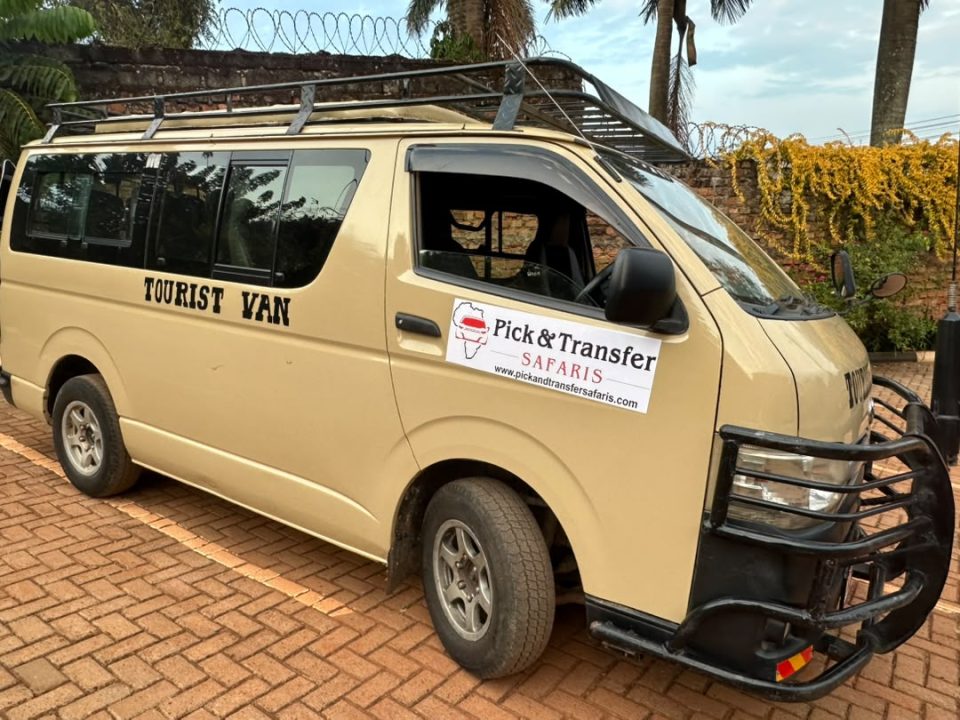
Volcanoes National Park sits roughly 100 to 116 kilometres from Kigali, a drive of two to three hours on well-maintained tarmac through Rwanda’s terraced hillsides. Most of our packages include private 4×4 transport with an English-speaking driver-guide, though independent travellers can also arrange their own vehicle through our car hire in Rwanda service. If your trip starts or ends across the border, ground transfer specialists such as Pick and Transfer Safaris’ transfer desk and their own 5-day Rwanda gorilla and chimpanzee safari itinerary are useful references for comparing cross-border transfer timing and pricing before you lock in your dates. Domestic flights and helicopter transfers to Kinigi exist for travellers short on time, but the vast majority of our guests find the scenic road transfer through Rwanda’s terraced hills, passing roadside markets and volcano viewpoints, to be a memorable part of the trip rather than a leg to rush through.
Gorilla Conservation and Community Impact in Rwanda
Every permit fee does more than fund a single trek. Ten percent of Rwanda’s park revenue is legally required to go directly to communities living around Volcanoes National Park, funding schools, health clinics, and infrastructure projects in villages that once relied on the same land for farming and, decades ago, poaching. That revenue-sharing model, combined with veterinary monitoring of habituated families and a strict daily visitor cap, is widely credited as the reason Rwanda’s mountain gorilla population has grown rather than shrunk since the 1980s, at a time when many other great ape populations across Africa are declining. It’s a rare conservation success story, and it’s one of the reasons operators across the region, including Pick and Transfer Safaris’ gorilla safari programme, continue to promote responsible, low-impact trekking rather than mass tourism. As a traveller, you contribute to this system the moment you book: your permit fee, your porter tip, and even the meals and souvenirs you buy in Kinigi all flow into a local economy that now has a direct financial stake in keeping the forest, and the gorillas within it, intact for the next generation of trekkers.
How to Book Your Gorilla Trekking Safari with Kenlink Tours
Booking early is the single most important piece of advice we can give you. Permits are capped, popular travel months fill up four to six months in advance, and the best lodges near Kinigi sell out even earlier. Our process starts with a short conversation about your travel dates, budget, and interests, whether that’s a fast 3-day trek, a full primate-and-wildlife circuit, or a cross-border Uganda-Rwanda combination. From there we handle permit applications, accommodation bookings, transport, and a day-by-day itinerary tailored to you. Get in touch through our contact page or read more about our guides and safari philosophy on our about us page before you reach out.
Ready to see the mountain gorillas for yourself? Tell us your travel dates and we’ll build a Rwanda gorilla trekking itinerary around them, permits, lodges, transport and all. Start planning your trip.
Frequently Asked Questions About Gorilla Trekking in Rwanda
How much does gorilla trekking cost in Rwanda in 2026?
The standard international permit costs US$1,500 per person, covering park entry, a guide, and one hour with a gorilla family. Total trip cost, including accommodation, transport and meals, typically ranges from $600 to over $1,000 per day depending on lodge category, which is why most travellers book a structured Rwanda gorilla safari package rather than pricing each element separately.
How difficult is gorilla trekking?
It varies day to day. Some treks are under an hour on gentle terrain; others involve several hours of steep, muddy climbing through dense vegetation at altitude. A moderate fitness level, sturdy boots, and a walking stick (provided free at the trailhead) make the vast majority of treks manageable for most reasonably active adults.
Can children go gorilla trekking in Rwanda?
The minimum age is 15, enforced strictly across all three gorilla trekking countries, both for the physical demands of the trek and to limit disease transmission risk to the gorillas.
How many days do I need for a Rwanda gorilla safari?
Three days is the minimum for a comfortable trip: one to arrive and settle near the park, one for the trek itself, and one to depart or connect onward. Most of our guests extend to five to seven days to add Akagera, Nyungwe, or a Uganda border crossing to the itinerary.
Is it better to book gorilla trekking through a tour operator?
Permits, transport, and lodge availability are tightly linked in Rwanda, and a misstep in timing can mean losing a non-refundable permit. Booking through an established operator who handles the whole chain, as we do for every Rwanda safari we run, removes that risk and usually costs the same or less than piecing it together independently.
What happens if it rains during my trek?
Treks go ahead in almost all weather since Volcanoes National Park is rainforest year-round; only extreme conditions would cause a cancellation, and in that rare case the park works with your operator to reschedule. A good rain jacket and waterproof boots matter more than the forecast.
Can I retake photos or video during the hour with the gorillas?
Yes, standard photography and video are welcome and encouraged; only flash photography is restricted, since it can startle or distress the gorillas at close range.
Do I need travel insurance for gorilla trekking?
We strongly recommend it. Given the remote terrain, the altitude, and the non-refundable nature of permits, comprehensive travel insurance that covers trip cancellation, medical evacuation, and adventure activities is one of the smartest investments you can make before departure.
Gorilla trekking in Rwanda isn’t a box to tick off a list; it’s one of the few travel experiences that genuinely changes how people think about wildlife and conservation afterward. Whether you have three days or three weeks, our team at Kenlink Tours is ready to build the itinerary around you. Reach out today and let’s start planning.