- EXPERT'S HELP
- +256789210067
- +256200955001
- info@kenlinktours.com


7 Days Uganda Safari Tour
May 8, 2026
How many Chimpanzees are in Kyambura Gorge
May 8, 2026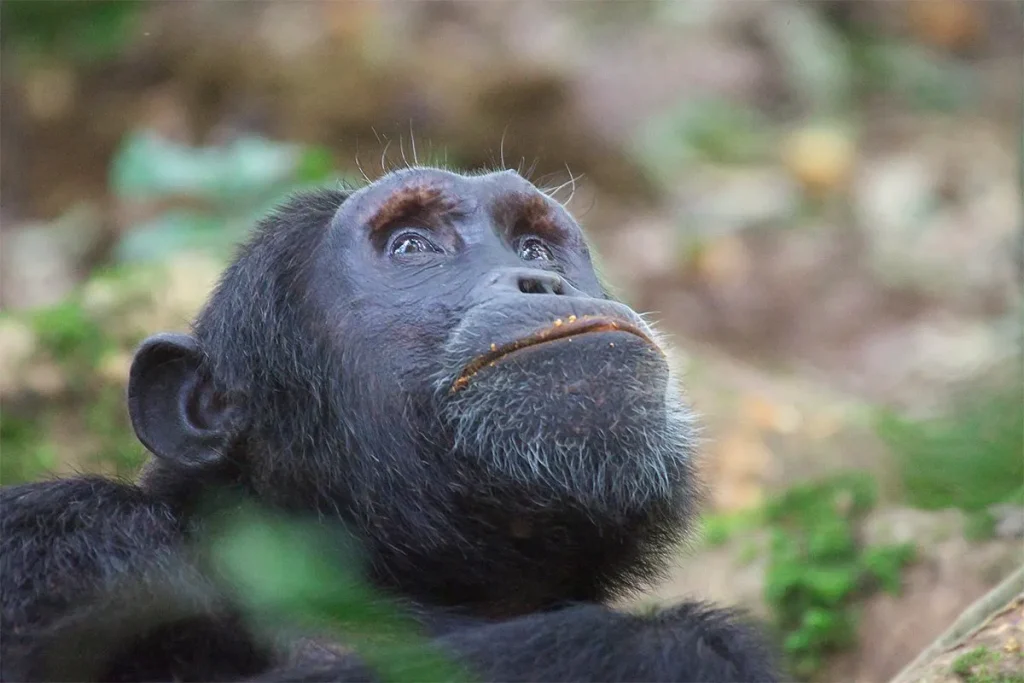
How many Chimpanzees are in Budongo Forest. Nestled in the rolling highlands of northwestern Uganda, Budongo Forest Reserve is one of the most important primate habitats on the African continent. Ancient, dense, and alive with sound, this magnificent semi-deciduous rainforest stretches across approximately 825 square kilometres and forms the southern edge of Murchison Falls National Park — Uganda’s oldest and largest protected area. For wildlife lovers and primate enthusiasts, Budongo holds a very special distinction: it is home to one of Uganda’s largest and most studied populations of wild chimpanzees, making it one of the finest destinations in East Africa for an authentic chimpanzee tracking experience.
At Kenlink Tours, we have been guiding travelers through Uganda’s most extraordinary wild places for over fifteen years. In this guide, we answer the question we are asked most frequently about Budongo — how many chimpanzees actually live there — and we explain exactly what a visit to see them looks like.
How Many Chimpanzees Live in Budongo Forest?
Budongo Forest Reserve is currently home to an estimated 600 to 700 chimpanzees, according to the Budongo Conservation Field Station (BCFS), the research institution that has been monitoring and studying these animals since the 1960s. This makes Budongo one of the four largest chimpanzee populations in Uganda, alongside Kibale National Park, Bugoma Forest Reserve, and the Rwenzori Mountains — each holding more than 500 individuals.
Uganda as a whole is home to an estimated 5,000 eastern chimpanzees (Pan troglodytes schweinfurthii), a figure established through nationwide surveys conducted by the Wildlife Conservation Society Uganda in partnership with the Jane Goodall Institute. Of that national population, Budongo’s 600 to 700 individuals represent a significant and ecologically critical share. Kibale National Park alone accounts for around 25% of Uganda’s total chimpanzee population, but Budongo holds its own as a vital and increasingly well-monitored stronghold.
The chimpanzees of Budongo are organized into several distinct communities. The most researched of these is the Sonso community, which has been studied continuously since 1990 and currently numbers around 85 named and individually identified individuals. A second community, the Waibira group, was habituated more recently to the northeast of Sonso’s range, allowing researchers to study inter-community dynamics for the first time. These habituated communities are also the ones that tourists are able to visit during chimpanzee tracking excursions, guided by experienced Uganda Wildlife Authority rangers.
Why Budongo Is One of Africa’s Most Important Chimpanzee Forests
The history of chimpanzee research in Budongo is long and remarkable. British primatologist Vernon Reynolds first ventured into the forest to study chimpanzees in 1962 — the same year Jane Goodall began her now-famous work at Gombe Stream in Tanzania. Reynolds eventually founded the Budongo Conservation Field Station, which remains an active research hub today and has contributed enormously to our understanding of chimpanzee behavior, communication, and social structure.
Despite its scientific importance, Budongo faces serious conservation pressures. Illegal logging, charcoal burning, agricultural encroachment, and wire snares set for bushmeat have taken a toll on the forest and its wildlife. Estimates suggest that around 20% of Budongo’s chimpanzees carry injuries from accidental snaring — a sobering reminder of the fragile balance between wildlife survival and human livelihoods. The Uganda Wildlife Authority continues to work with conservation partners to address these threats through ranger patrols, snare removal programs, and community engagement initiatives. When you visit Budongo and pay for a chimpanzee tracking permit, your money contributes directly to these conservation efforts.
Chimpanzee Tracking in Budongo: What to Expect
Chimpanzee tracking in Budongo is conducted primarily at two sites: Kaniyo Pabidi, located within the southern boundary of Murchison Falls National Park, and Busingiro, which lies deeper within the forest reserve. Both offer remarkable encounters with wild chimpanzees in a dense, atmospheric forest setting that is entirely different from the open woodland of Kibale.
A standard chimpanzee trekking permit for Budongo costs USD 130 per person for foreign non-residents and USD 120 for foreign residents. The trek itself can last between three and four hours, depending on where the chimpanzees have moved that morning. Once found, you are given one full hour in their presence — a window of time that feels simultaneously too short and deeply transformative. You may witness chimps grooming each other in forest clearings, swinging through the mahogany canopy overhead, foraging for figs along the forest floor, or calling out to each other with the spine-tingling sounds that carry for kilometres through the trees.
Beyond chimpanzees, the forest teems with other primates including black-and-white colobus monkeys, red-tailed monkeys, blue monkeys, olive baboons, and the rarely seen grey-cheeked mangabey. Budongo is also an exceptional birding destination, hosting over 360 recorded bird species — including several west and central African species found almost nowhere else in East Africa. Our 3-Day Chimpanzee Tracking Safari is an ideal option for those who want to experience Budongo as part of a fully guided, professionally arranged itinerary.
Sample 2-Day Budongo Chimpanzee Tracking Itinerary
Day 1 — Kampala/Entebbe Departure | Drive to Budongo Forest | Afternoon Nature Walk
Your journey begins early in the morning when your Kenlink Tours driver and guide collects you from your hotel in Kampala or Entebbe. The drive northwest to Budongo takes approximately four to five hours, passing through Kampala’s outskirts, the agricultural plains of Hoima district, and eventually the spectacular forest-fringed road leading into Masindi town. Along the way, your guide will brief you on what to expect from your chimpanzee tracking experience and share insights about the forest’s ecology and conservation history.
You will arrive at Budongo in time for a late lunch at your lodge before heading out for an afternoon guided nature walk through the forest with a ranger. The Royal Mile — a famous forest trail cutting through an area of towering mahogany trees — is one of the finest short walks in Uganda, offering excellent bird sightings, primate encounters, and views of the ancient forest interior. By early evening you will return to your lodge for dinner, settling in with the sounds of the forest all around you.
Dinner and overnight at Budongo Eco Lodge or an alternative lodge near Kaniyo Pabidi — options available across budget, mid-range, and lodge-standard accommodation.
Day 2 — Morning Chimpanzee Tracking | Debrief | Return to Kampala
Wake up to a forest breakfast before your 7:00 AM briefing at the park’s ranger post. Your guide will explain the trekking rules — maintaining a safe distance of at least seven metres from the chimps, no flash photography, no eating near the animals, and following all ranger instructions at all times. These rules exist to protect both the chimpanzees and the visitors.
The tracking begins as you follow your ranger into the canopy-covered trails, listening for the chimpanzees’ distinctive pant-hoot calls and following the freshly bent vegetation and knuckle prints that indicate where they have passed. When you make contact with the habituated community, the hour you spend with them will be unlike anything else you have experienced. Observe, photograph, and simply be present with one of our closest living relatives in one of their last remaining wild habitats.
After the trek, you will return to the lodge for a hot brunch before beginning the drive back to Kampala, arriving in the capital by late afternoon or early evening. For those who want to extend their adventure, Budongo pairs beautifully with a Murchison Falls safari — see our popular 3-Day Murchison Falls National Park Tour for ideas on combining these two extraordinary destinations.
Conservation, Permits, and Booking
Chimpanzee trekking permits for Budongo Forest must be booked in advance through the Uganda Wildlife Authority or through a licensed tour operator. Because only a limited number of permits are issued per day, early booking is strongly recommended — especially during peak season months of June through September and December through February. For a full overview of Uganda’s primate destinations and what makes each one unique, the Visit Uganda official tourism website is a valuable planning resource.
Whether you are joining us for a quick two-day escape or a longer primate-and-wildlife expedition, the team at Kenlink Tours is ready to plan every detail of your Budongo adventure. Explore our full range of Uganda Safari packages and let us guide you into one of Africa’s most extraordinary forests.