- EXPERT'S HELP
- +256789210067
- +256200955001
- info@kenlinktours.com


How many Chimpanzees are in Budongo Forest
May 8, 2026
Game drive in Queen Elizabeth or Murchison – which is better?
May 8, 2026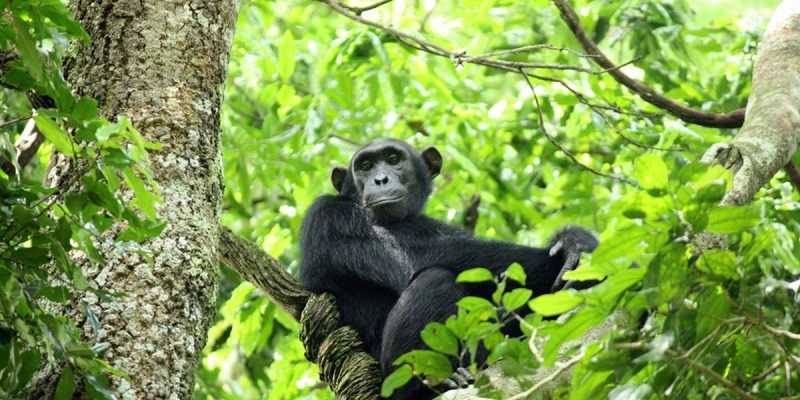
How many Chimpanzees are in Kyambura Gorge.
Hidden within the vast savannah landscape of southwestern Uganda lies one of Africa’s most extraordinary natural secrets — Kyambura Gorge. Known locally as the “Valley of Apes,” this dramatic underground forest plunges nearly 100 metres below the surrounding grasslands and stretches for approximately 16 kilometres through the eastern section of Queen Elizabeth National Park. It is dense, lush, and alive with the sounds of primates — and at its heart lives a small but utterly captivating community of chimpanzees that draws wildlife lovers from every corner of the world.
If you are planning a safari to Queen Elizabeth National Park and wondering exactly how many chimpanzees are in Kyambura Gorge, this guide has the answers — along with everything you need to know about tracking them, what to expect, and how to make the most of your visit.
How Many Chimpanzees Live in Kyambura Gorge?
The chimpanzee community of Kyambura Gorge is one of the most studied — and most discussed — small primate populations in East Africa, and the figures cited by researchers and conservationists vary depending on the year and counting methodology. The most widely accepted current estimate places the habituated population at approximately 25 to 32 individuals, comprising around seven social sub-groups or family units that move together through the forest floor, canopy, and riverbanks of the gorge. Some earlier surveys cited figures as low as 19 to 21 individuals, while broader surveys of the gorge and its connected game reserve occasionally reference populations of up to 80 chimps — though the habituation programme accessible to trekkers is focused on the smaller, core community.
What makes this community particularly remarkable is not its size, but its circumstances. The Kyambura Gorge chimpanzees are effectively hemmed in on all sides by open savannah that they are reluctant to cross, creating a naturally isolated population confined to this narrow forested corridor. Scientists and conservation ecologists refer to them as a “trapped” community, adapting to life in a much smaller territory than most chimpanzee communities require. Despite this isolation, the group led by an alpha male named Mweya has remained stable and continues to thrive — a testament to the resilience of chimpanzees and the importance of protected habitat corridors.
The Uganda Wildlife Authority, which oversees all primate trekking in Uganda, issues just 16 permits per day for Kyambura Gorge — eight for the morning session and eight for the afternoon — ensuring that the community is never overwhelmed by visitor numbers. Only eight trekkers are allowed in the presence of the chimps at any one time, maintaining a safe and undisturbed encounter for both humans and animals.
What Is Kyambura Gorge and Why Is It Special?
Kyambura Gorge — also spelled and pronounced “Chambura” — is a geological wonder carved over millennia by the erosive force of the Kyambura River, itself a product of the tectonic upheaval that formed the East African Rift Valley. The gorge drops sharply into a dense riverine rainforest that feels startlingly different from the open grasslands surrounding it on every side. Standing at the rim and looking down into the green canopy below, you understand immediately why it earned the nickname “Valley of Apes.”
The forest inside the gorge is layered and diverse — towering fig trees, palms, and hardwoods draped in mosses and creepers form an enclosed world entirely separate from the savannah above. The Kyambura River flows through the gorge floor year-round, providing water for a remarkable diversity of wildlife. Beyond chimpanzees, the gorge shelters black-and-white colobus monkeys, red-tailed monkeys, olive baboons, and dozens of forest bird species. Elephant trails weave through the lower sections, and the walls of the gorge ring with bird calls at dawn — making this one of the finest birding spots within Queen Elizabeth National Park.
For anyone exploring Uganda’s wildlife destinations, Kyambura Gorge represents a deeply different kind of primate experience — more intimate, more atmospheric, and more adventurous than many other chimpanzee tracking sites in the region.
How Does Chimpanzee Trekking Work at Kyambura Gorge?
Chimpanzee trekking at Kyambura Gorge follows a structured process managed by Uganda Wildlife Authority rangers. Both morning and afternoon sessions begin with a briefing at the Fig Tree Camp on the gorge rim, where your ranger guide explains the rules of the trek, safe distances from the chimps, photography guidelines, and what to do if you encounter other wildlife en route.
From the briefing point, trekkers descend into the gorge along a steep forest trail, crossing the Kyambura River and moving through the understorey in the direction the trackers have identified as the chimps’ current location. The full trek typically lasts between two and five hours — once the chimps are located, you are given a full 60 minutes in their presence to observe, photograph, and simply experience being close to these extraordinary animals. You may watch them feeding on forest fruits, grooming each other in social clusters, or crashing through the canopy with breathtaking speed and agility.
The permit fee is USD 100 per person for foreign non-residents, USD 80 for foreign residents, and UGX 50,000 for East African citizens — making Kyambura one of the most affordable chimpanzee trekking experiences in Uganda. Booking in advance is strongly recommended, particularly during peak season months of June to September and December to February, when all 16 daily permits can sell out weeks ahead. At Kenlink Tours, we handle all permit bookings and logistics as part of your safari package.
Kyambura Gorge vs. Kibale Forest for Chimpanzee Trekking
A common question among travelers is whether to track chimpanzees in Kyambura Gorge or in Kibale Forest National Park — Uganda’s most famous primate destination. Kibale Forest holds by far the largest chimpanzee population in Uganda, with around 1,500 individuals in the broader ecosystem and over 200 habituated chimps accessible to trekkers. Sightings in Kibale are generally more consistent and the trek is less physically demanding.
Kyambura Gorge, by contrast, offers a smaller community and a more variable sighting experience — but what it trades in certainty it more than compensates for in atmosphere and adventure. Descending into the gorge, crossing the river, and tracking chimps through a dense underground forest is a profoundly different kind of experience. For many travelers, the intimacy and drama of Kyambura leave a deeper impression. Our 3-Day Chimpanzee Tracking Safari covers Kibale in detail, while our Queen Elizabeth National Park packages include Kyambura as a highlight. Many guests choose to combine both destinations for the fullest primate experience Uganda can offer.
Sample Tour Itinerary: Kyambura Gorge Chimpanzee Safari
Day 1 — Transfer from Entebbe / Kampala to Queen Elizabeth National Park
Depart Entebbe or Kampala in the early morning with your Kenlink Tours driver and guide in a comfortable 4×4 safari vehicle. The journey covers approximately 400 kilometres and takes around five to six hours, passing through the tea estates of Fort Portal and the dramatic scenery of the Rwenzori foothills. En route, make a stop at the Equator crossing at Kayabwe for photographs and a brief cultural experience. Arrive at Queen Elizabeth National Park in the early afternoon. Check in to your lodge and enjoy a game drive through the Kasenyi Plains as your first wildlife encounter — lion, elephant, Uganda kob, and buffalo are regularly spotted here. Return to your lodge for dinner and an overnight stay.
Overnight: Lodge inside or on the boundary of Queen Elizabeth National Park.
Day 2 — Kyambura Gorge Chimpanzee Trek | Kazinga Channel Boat Cruise
Wake before sunrise for a light breakfast before transferring to the Fig Tree Camp at Kyambura Gorge for the morning briefing. At 8:00 AM sharp, your ranger guide leads your small group — maximum eight trekkers — down into the gorge. Follow the tracks, sounds, and signs left by the chimp community as you move deeper into the underground forest. When the chimps are located, spend your full hour observing, listening, and photographing these extraordinary animals in their natural world. Ascend back to the gorge rim with memories that will last a lifetime.
After lunch at your lodge, spend the afternoon on a two-hour Kazinga Channel Boat Cruise — one of Uganda’s finest wildlife experiences. This 40-kilometre natural channel connecting Lake George and Lake Edward is home to one of the largest concentrations of hippopotamus in Africa, as well as massive crocodile populations, African fish eagles, and hundreds of water bird species. The boat moves close to the banks where buffalo and elephant frequently come to drink at dusk. Return to your lodge for dinner and overnight.
Overnight: Lodge in Queen Elizabeth National Park.
Day 3 — Morning Game Drive | Return to Entebbe / Kampala
Begin your final day with an early morning game drive through the park, searching for the elusive tree-climbing lions of the Ishasha sector or exploring the savannah around Mweya Peninsula. After breakfast and check-out, begin the drive back to Entebbe or Kampala, stopping for lunch en route. Arrive in the evening.
Plan Your Kyambura Gorge Safari with Kenlink Tours
Whether you are building a standalone Queen Elizabeth adventure or weaving Kyambura into a longer itinerary that includes gorilla trekking in Bwindi, our team is ready to help you design the perfect trip. Explore our 7-Day Gorilla and Wildlife Safari for a comprehensive Uganda experience, or browse our full range of Uganda safaris to find an itinerary that matches your time and budget.
Contact us today and let one of our East Africa safari experts start building your Kyambura Gorge chimpanzee adventure. For further information on permits and conservation, you can also visit the official Uganda Wildlife Authority website and the Visit Uganda tourism portal.