- EXPERT'S HELP
- +256789210067
- +256200955001
- info@kenlinktours.com


Kampala city tour: top things to do before your Uganda safari
May 19, 2026
Tipping guide for Uganda and Rwanda safaris
May 19, 2026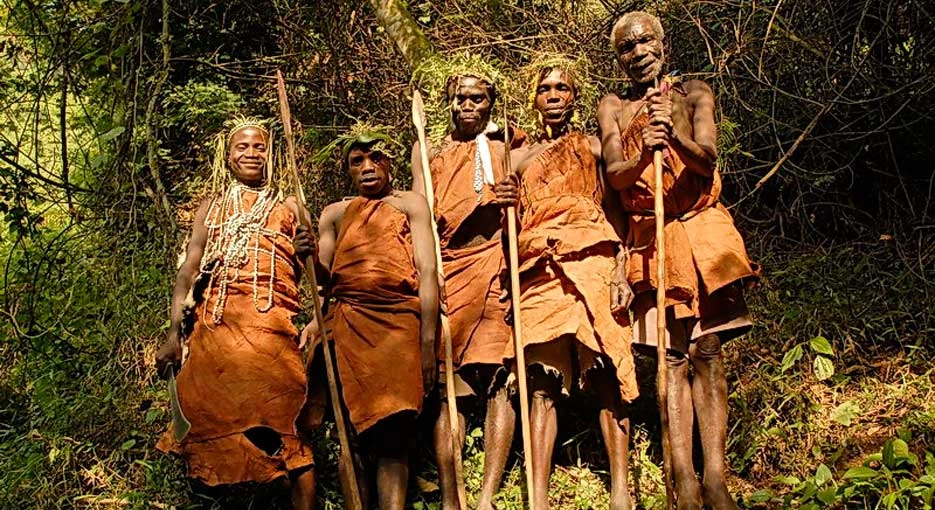
Batwa pygmy cultural experience near Bwindi. There are moments in travel that go far beyond scenery or wildlife — moments that fundamentally shift the way you understand humanity. Visiting the Batwa pygmies near Bwindi Impenetrable National Park is one of those rare, once-in-a-lifetime encounters. Tucked into the mist-wrapped hills of southwestern Uganda, this extraordinary cultural experience invites you into the world of one of Africa’s most ancient and resilient peoples. If you are already planning a gorilla trekking safari in Uganda, adding the Batwa experience is not just a bonus — it is, for many travellers, the most deeply moving part of the journey.
Who Are the Batwa Pygmies?
The Batwa pygmies of Bwindi Impenetrable National Park are a hunter-gatherer tribe, also dubbed the “Keepers of the Forest.” Anthropologists believe this Twa tribe thrived in harmony with Uganda’s wildlife and the ancient Bwindi forest for approximately 60,000 years. They are part of a broader family of pygmy peoples spread across the equatorial forests of Central Africa, from the Democratic Republic of Congo to Rwanda, Burundi, and Uganda.
The Batwa were known as the “Keepers of the Forest” because they lived in harmony with the jungle, in small huts made out of leaves and branches. They hunted small game using bows, arrows, or nets and collected plants and fruits in the rainforest. As hunter-gatherers, they frequently moved in search of fresh supplies and food.
For tens of thousands of years, the Batwa lived as custodians of one of Africa’s most biodiverse ecosystems. Bwindi Impenetrable National Park, located in south-western Uganda on the edge of the Rift Valley, is one of Africa’s most ancient and biologically diverse rainforests, dating back over 25,000 years and home to an incredible 400 plant species. The Batwa knew every root, every medicinal herb, every secret path through this dense canopy — knowledge accumulated over thousands of generations. Uganda Wildlife Authority
A People Displaced: The Story Behind the Experience
It was during the early 1930s and later in the 1990s that major evictions of the Batwa pygmies were carried out in Bwindi Impenetrable Forest and Mgahinga National Park. For thousands of years, the Batwa people lived peacefully in the dense forests found in these two national parks and survived by hunting and gathering fruit.
In 1991, the protected reserves were transformed into Mgahinga Gorilla National Park and Bwindi Impenetrable National Park, and humans were banned from occupying the land, which was instead given over to wildlife protection. While great for conservation, it was terrible for the Batwa. They were forcibly displaced, with no assistance or compensation — abruptly converted by a change in the law into outlaws on their own ancestral soil.
The loss was devastating. Stripped of the forest that had sustained them for millennia, the Batwa lost not only their homes but their entire way of life — their herbal medicines, their spiritual practices, their food systems. The Batwa population estimates number around 6,700 as of 2022, according to the Uganda Bureau of Statistics. That number represents a community that has faced extraordinary pressure on its survival.
Salvation for the Batwa pygmies was brought by American medical missionaries Dr. Scott and Carol Kellermann, who have dedicated themselves to saving the Batwa in southwest Uganda. The Kellermanns purchased land and established development programs to improve conditions for the tribe — home-building, schools, a hospital and clinics, water and sanitation projects, and income generation.
In 2000, the Batwa community took a decisive step by establishing the United Organization for Batwa Development in Uganda (UOBDU), aiming to improve conditions for the Batwa people in areas including education, housing, and employment opportunities. One of the most powerful outcomes of this initiative is the Batwa cultural experience that visitors can enjoy today.
What to Expect on the Batwa Cultural Experience
The Batwa Trail offers an immersive experience that allows visitors to step into the world of the Batwa and learn about their history, culture, and enduring connection to the forest. This unique cultural tourism initiative takes tourists through a journey of discovery, blending storytelling, demonstrations, and a scenic trek through southwestern Uganda.
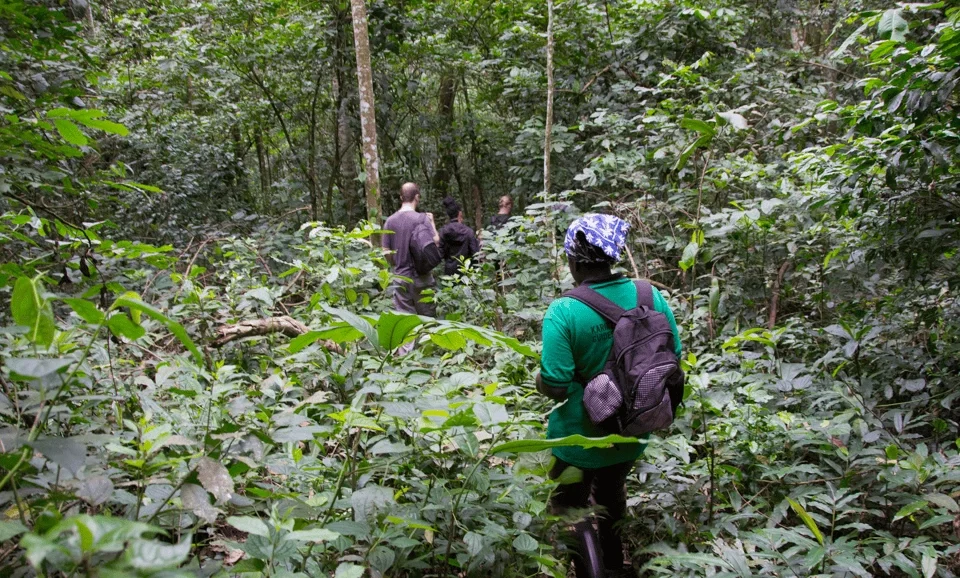
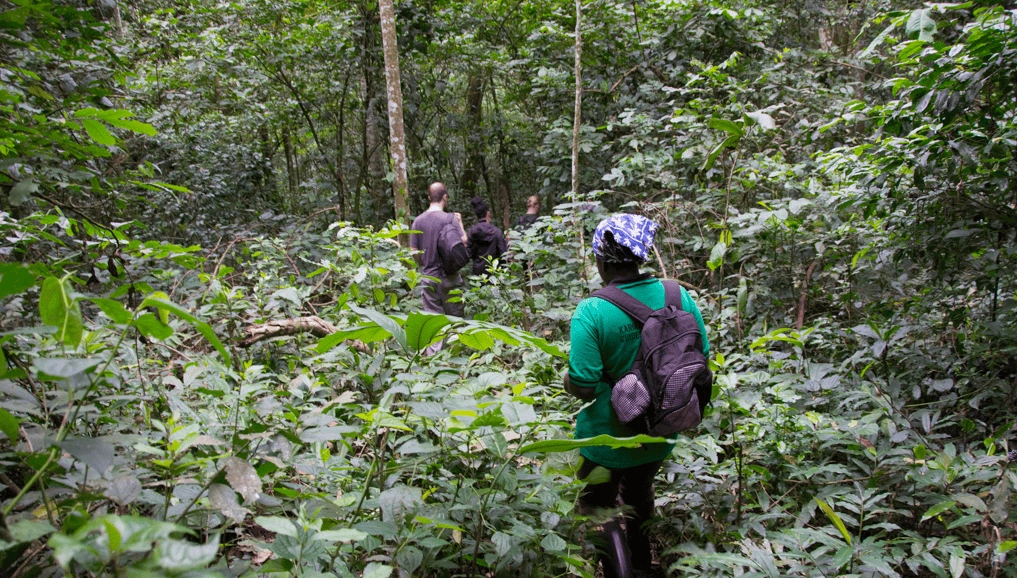
The experience typically begins with a guided nature walk through old-growth forest adjacent to Bwindi Impenetrable National Park, led by Batwa community guides who bring the forest alive through their eyes. Here is what you can look forward to:
Forest Walk & Hunting Demonstrations: You will learn how they hunted the small animals they used for food, what things they gathered, and how traps and nets were used. Watching a Batwa elder demonstrate the use of a bow and arrow — with an accuracy honed over a lifetime — is a humbling and extraordinary sight.
Traditional Medicine & Plant Knowledge: Engage with medicine men and learn about the medicinal properties of the lush forest flora. The Batwa possess encyclopedic knowledge of the forest’s healing plants, remedies that modern science is only beginning to appreciate.
Traditional Shelter & Fire-Making: The Batwa Experience will also show you how they lived in huts made of grass and trees, the use of tree-houses, and caves. You will see how a skilled Batwa can coax fire from friction alone — a skill that connects directly to the earliest chapters of human history.
Music, Dance & Storytelling: The Batwa cultural experience includes a music performance, a visitation by the goddess, a hunting and gathering demonstration, and an opportunity to see how they used to live. Their drumming and singing carry a raw, joyful energy that fills the forest air and is impossible to forget.
Community Life: Experience the Batwa village life of old — the sharing, of living as a community, as a people. Learn the things that they revered and cared for and almost lost.
Most visitors report that spending even a single afternoon with the Batwa fundamentally changes the way they think about human history, conservation, and the relationship between people and nature.
Combining the Batwa Experience With Gorilla Trekking
The Batwa experience pairs beautifully with gorilla trekking, and most travellers choose to do both during the same visit to Bwindi. Bwindi is, after all, one of the most extraordinary places on the planet. Located in south-western Uganda, at the junction of the plain and mountain forests, Bwindi Park covers 32,000 ha and is known for its exceptional biodiversity, with more than 160 species of trees and over 100 species of ferns. It is also a UNESCO World Heritage Site, recognized for its outstanding universal value. UNESCO
At Kenlink Tours, we design safaris that weave together Uganda’s wildlife encounters and cultural highlights into one seamless journey. Our 3-Day Uganda Gorillas Safari is a perfect starting point for those short on time, while our comprehensive 7-Day Wildlife & Primate Safari takes you deeper into Uganda’s wonders — from the mountain gorillas of Bwindi to the chimpanzees of Kibale Forest. If you would like to include the Batwa experience explicitly in your itinerary, simply reach out to our team via our Contact Page and we will tailor the perfect programe for you.
Practical Information: Planning Your Visit
Location: The Batwa cultural experience takes place on community land bordering Bwindi Impenetrable National Park in southwestern Uganda, primarily accessible through the Buhoma, Rushaga, and Nkuringo sectors.
Cost: The Batwa Trail costs $80 per person in Mgahinga, which includes admission to the park, Batwa guides, and a cultural performance. The Batwa experience costs $40 per person in Bwindi Impenetrable National Park. These fees contribute directly to Batwa community development.
Best Time to Visit: The best time for the Batwa Pygmies Cultural Experience in Bwindi Impenetrable Forest National Park is during the drier months of January, February, and June to early September, as this makes it easier to travel to the park.
Getting There: Bwindi is an 8–9 hour drive from Kampala/Entebbe, or accessible by charter flight to Kisoro or Kihihi airstrips. Our team at Kenlink Tours handles all transfers and logistics, so you can simply focus on the experience.
Important Note: When you arrive in Bwindi, you may encounter “guides” who try to sell you tours of Batwa villages. It is vital to exercise caution with these individuals, as they are probably unregulated and may exploit the Batwa. Instead, only opt for official tours run by Batwa community groups like UOBDU, the Uganda Wildlife Authority, or the Batwa Development Programe. Booking through a reputable operator like Kenlink Tours ensures your visit is ethical and that the income reaches the Batwa directly.
Why the Batwa Experience Matters
A visit to the Batwa tribe is an opportunity to connect with one of Africa’s most ancient communities and gain a deeper understanding of humanity’s relationship with nature. The Batwa’s history, resilience, and traditions are a powerful reminder of the importance of preserving cultural and natural heritage.
Beyond the personal enrichment, your visit makes a tangible difference. Every ticket purchased, every piece of Batwa craftsmanship bought, supports families who lost everything and are now rebuilding — not just economically, but culturally, so that future generations of Batwa children can know where they come from.
If you are heading to Bwindi for the gorillas, please do not leave without meeting the Batwa. While the gorillas will take your breath away, the Batwa will touch your soul. Combine it with our 3-Day Chimpanzee Tracking Safari or explore the full range of our Uganda safari packages to build the perfect East African adventure.
Get in touch with the Kenlink Tours team today and let us craft a journey that honors both Uganda’s extraordinary wildlife and the ancient human stories woven into this remarkable land.