- EXPERT'S HELP
- +256789210067
- +256200955001
- info@kenlinktours.com


Two Day Uganda Gorilla Trekking from Kigali
September 5, 2026
2 Day Gorilla Tracking Tour from Kigali to Bwindi Forest
September 5, 2026
2 Day Gorilla Trekking Package from Kigali. Search for a 2-day gorilla trekking package from Kigali and you will quickly discover it is not one single trip. Kigali happens to sit within a manageable drive of two entirely separate gorilla trekking destinations — Rwanda’s own Volcanoes National Park, just outside the city, and Uganda’s Bwindi Impenetrable Forest or Mgahinga Gorilla National Park, reached by crossing the border at Cyanika. Both deliver the same core experience — a ranger-guided trek and a genuine hour with a habituated mountain gorilla family — but the cost, the drive time, and the day-to-day logistics differ enough that choosing between them deserves real thought before you book.
This guide is written as the starting point for that decision. Rather than assuming you have already picked a country, we walk through both options side by side — permit costs, drive times, what a properly built package includes, and how the two-day structure actually plays out on the ground — so you can choose the version of this trip that genuinely fits your dates and budget. Our own 2-Day Uganda Gorilla Safari Starting from Kigali and 2-Day Rwanda to Uganda Gorilla Trekking Safari both grow directly out of the comparison in this guide.
We approach this comparison the same way we would if you called our office and asked us directly, in person, which option we would book for our own family. That answer genuinely changes depending on your dates, your budget, and how much driving you are willing to accept, so rather than pushing you toward one predetermined recommendation, this guide gives you the same facts our own booking team weighs before making that call, laid out in the order we would actually walk through them with you.
What a “2-Day Gorilla Trekking Package from Kigali” Actually Means
At minimum, a 2-day gorilla trekking package from Kigali covers your gorilla permit reserved in your name, private or shared ground transport, one night’s accommodation near your trekking park, all park briefings, and a return transfer to Kigali. That basic structure is identical whether your trek happens in Rwanda or Uganda — what changes is where you sleep, how far you drive, and which government sets your permit fee.
Because “2-day gorilla trekking package” is used loosely across the travel industry to describe genuinely different trips, always confirm which country and which specific park a quoted package actually covers before comparing prices. A Rwanda-based two-day package and a Uganda-based one are not interchangeable line items — they are two different itineraries with two different cost structures, and this guide exists to make that distinction clear from the outset.
Why Kigali Is the Ideal Launch Point for a 2-Day Gorilla Trek
Kigali International Airport’s real advantage is geographic: Rwanda’s Volcanoes National Park sits just two to two-and-a-half hours away with no border crossing required, while the Cyanika border crossing into Uganda sits only around 115 kilometres away, connecting directly to Mgahinga Gorilla National Park and Bwindi’s southern Rushaga and Nkuringo sectors. Few other cities in the region offer this kind of dual access to two separate gorilla trekking countries within a genuinely short drive.
This is exactly why so many travellers researching gorilla trekking end up comparing packages from Kigali specifically, even when their final trek happens in Uganda rather than Rwanda. Our Uganda and Rwanda gorilla safaris comparison covers this dual-access advantage in more detail if you are still deciding which country to fly toward.
Your Two Options: Rwanda’s Volcanoes National Park or Uganda’s Bwindi and Mgahinga
Rwanda’s Volcanoes National Park offers a single, well-known trekking destination on the slopes of the Virunga volcanoes, with twelve habituated gorilla families and generally shorter, though steeper, treks of two to five hours. Uganda offers two separate trekking destinations reachable from Kigali: Mgahinga Gorilla National Park, just thirty minutes past the Cyanika border with a single habituated family, and Bwindi’s Rushaga and Nkuringo sectors, a further one-and-a-half to two-and-a-half hours beyond that, with multiple habituated families across genuinely dense rainforest.
In practice, this means you are choosing between three real destinations, not two: Volcanoes, Mgahinga, or Bwindi. Each has a different permit price, a different drive time from Kigali, and a different trekking terrain, and the right choice depends on which of those three factors matters most to your specific trip.
It is worth naming this upfront because most generic “2-day gorilla trekking package” listings online only describe one of these three destinations without saying so clearly, which is how travellers end up comparing a Rwanda quote against a Uganda quote as if they were the same product. They are not, and the sections below treat them as the genuinely separate decisions they are.
Option A: 2-Day Rwanda Gorilla Trekking Package from Kigali
A Rwanda-based two-day package is the fastest to execute, since Volcanoes National Park sits only two to two-and-a-half hours from Kigali with no border crossing involved. This makes it the most time-efficient of the three options, with the entire round trip completed inside Rwanda and no visa complexity beyond your standard Rwanda entry requirements.
The trade-off is Rwanda’s higher permit price, currently around USD 1,500 per person, compared with Uganda’s roughly USD 800. Our 3-day Rwanda gorilla safari is a natural extension of this option for travellers who decide a slightly longer, less rushed Rwanda-based trip suits them better, and Pick and Transfer Safaris’ 2-day Volcanoes gorilla trek from Kigali is a useful external reference for a Rwanda-based operator’s version of the same itinerary.
Option B: 2-Day Uganda Gorilla Trekking Package from Kigali
A Uganda-based two-day package crosses the Cyanika border to reach either Mgahinga, thirty minutes beyond the crossing, or Bwindi’s Rushaga and Nkuringo sectors, a further one-and-a-half to two-and-a-half hours on. This option costs noticeably less on permit price alone — roughly USD 800 versus Rwanda’s USD 1,500 — but requires more total driving time and the added logistics of an international border crossing.
Our 2-day Uganda gorilla safari from Kigali covers this option in full itinerary detail, including how to choose between Mgahinga and Bwindi based on your own priorities. If cost is your primary driver, this is very likely the right starting point for your booking.
Permit Cost Comparison: Rwanda vs Uganda
Rwanda’s gorilla trekking permit costs approximately USD 1,500 per person for non-East African visitors, covering park entrance, a ranger-guided trek, and up to one hour with the gorillas. Uganda’s equivalent permit costs approximately USD 800 per person, covering the same inclusions, whether you trek in Bwindi or Mgahinga — the fee does not vary by Uganda park or sector.
That roughly USD 700 difference is the single biggest financial factor in this entire comparison, and it is large enough that it comfortably absorbs the extra transport cost of the longer Uganda drive for most travellers. Neither government offers discounts based on package length or operator, so this cost difference is fixed regardless of who books your trip.
Drive Time Comparison: Which Border Crossing Fits Your Schedule
Rwanda requires no border crossing at all: Kigali to Volcanoes National Park is a straightforward two-to-two-and-a-half-hour drive on Rwandan roads. Uganda requires crossing at Cyanika, roughly 115 kilometres and three to four hours from Kigali, plus crossing formalities of thirty minutes to an hour, plus a further thirty minutes to Mgahinga or one-and-a-half to two-and-a-half hours to Bwindi’s southern sectors.
In practical terms, a Rwanda-based two-day trip involves roughly four to five hours of total driving across both days, a Mgahinga-based trip involves roughly eight to nine hours, and a Bwindi-based trip involves roughly eleven to thirteen hours. Our detailed breakdown of driving hours from Kigali to Bwindi covers the Uganda side of this calculation in full.
Comparing the Trekking Terrain: Volcanoes, Mgahinga, and Bwindi Side by Side
Beyond cost and drive time, the actual forest you will walk through differs meaningfully between the three destinations. Volcanoes National Park sits at higher altitude on open hagenia and bamboo slopes, generally producing shorter, steeper treks. Mgahinga shares similar volcanic terrain to Rwanda’s parks, since the two sit on the same Virunga range, but with only one habituated family and correspondingly less variability in trek length. Bwindi is a different ecosystem entirely — dense, tangled lowland and mid-altitude rainforest that lives up to its “impenetrable” name, with the widest range of possible trek durations of the three.
None of these terrains is objectively easier, and each offers a genuinely different atmosphere for your gorilla encounter. Pick and Transfer Safaris’ Volcanoes National Park guide, their Mgahinga Gorilla National Park guide, and their Bwindi Impenetrable Forest National Park guide are all useful external references for picturing each terrain before you decide.
Self-Drive vs Guided Transfer for Either Option
Self-driving is technically possible for both the Rwanda and Uganda options, but the practicalities differ. A Rwanda-only trip involves no border crossing, so self-driving is comparatively simple, requiring only a valid licence and comfort with Rwandan road conditions. A Uganda-based trip requires COMESA cross-border insurance, a temporary import permit, and a cross-border authorisation letter from your rental company, on top of unfamiliarity with rural Ugandan roads near the border.
For most travellers, a guided transfer remains the more reliable choice for either option, and it becomes considerably more valuable once a border crossing is involved. Our car hire page covers what self-drive travellers need to arrange if that route still appeals for the Rwanda-only version of this trip.
What’s Included in a Properly Built 2-Day Gorilla Trekking Package
Regardless of which country you choose, a properly built package should include your permit reserved in your exact passport name, private or shared ground transport for the full round trip, one night’s accommodation near your trekking park, all park briefings, and your return transfer to Kigali. For the Uganda option, this should also explicitly include border-crossing assistance and guidance on visa requirements.
What is typically excluded from both options — and worth budgeting separately — is porter fees at the trailhead, gratuities for your guide and driver, and any visa fees. Always request an itemised breakdown from any operator rather than a single bundled price, so you can see exactly which of these components you are paying for. Our 2-day Uganda gorilla safari from Kigali itemises this before you pay a deposit.
Day 1: What to Expect Regardless of Which Country You Choose
Whichever option you choose, Day 1 follows a similar rhythm: an early pickup in Kigali, a scenic drive through Rwanda’s countryside, arrival at your accommodation by early-to-mid afternoon, and an early night ahead of a pre-dawn Day 2. The main difference is duration and, for Uganda, the addition of border formalities partway through the drive.
Whichever destination you are heading to, resist the urge to fill Day 1 with extra sightseeing before your trek — arriving rested matters more on this trip than seeing one additional viewpoint along the way. Building in a genuinely restful afternoon and evening on Day 1 is one of the simplest ways to improve your experience on Day 2, regardless of which park you have booked.
Day 2: Trekking Day — The Core Experience
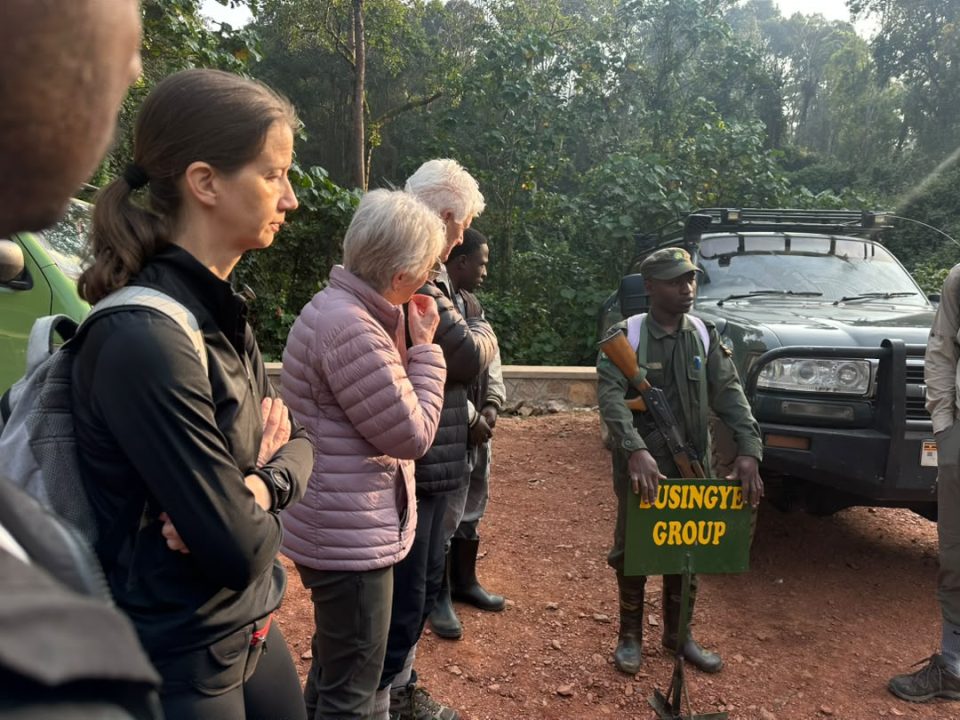
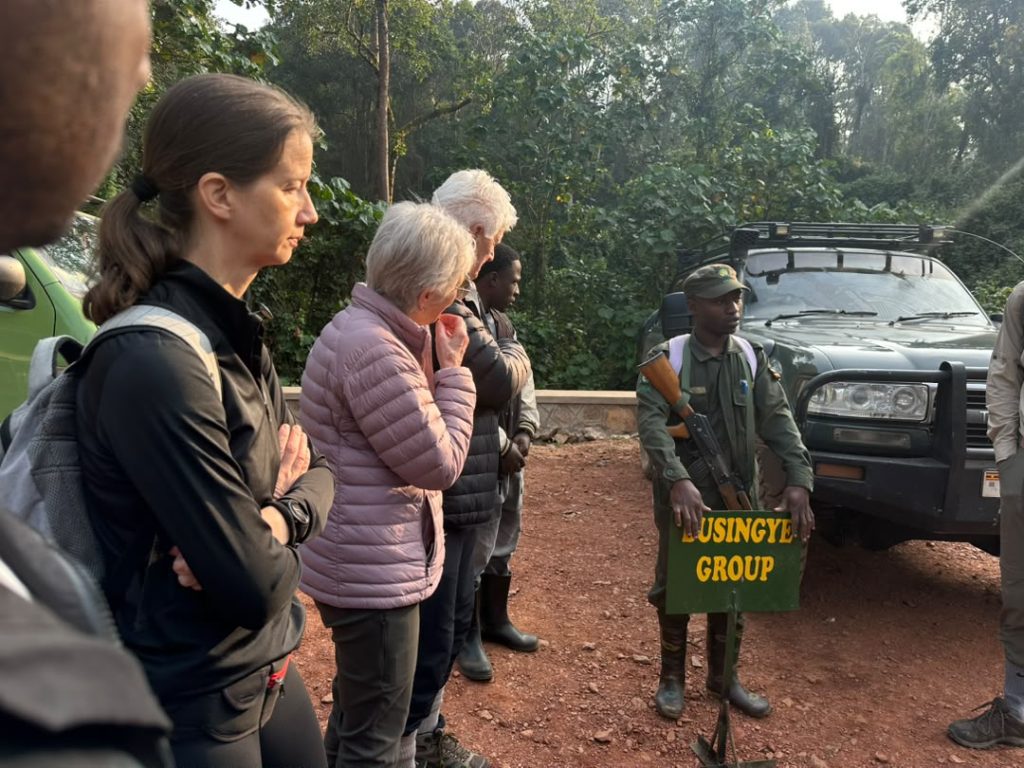
Day 2 is where the two options converge almost entirely: an early breakfast, arrival at the relevant ranger post for registration and briefing by 7:00–7:30 a.m., assignment into a group of no more than eight trekkers per habituated family, and a trek that can run anywhere from ninety minutes to several hours depending on your park and where the family has moved overnight. Rwanda’s Volcanoes National Park tends to produce slightly shorter average treks than Uganda’s denser sectors, but variability exists in both countries.
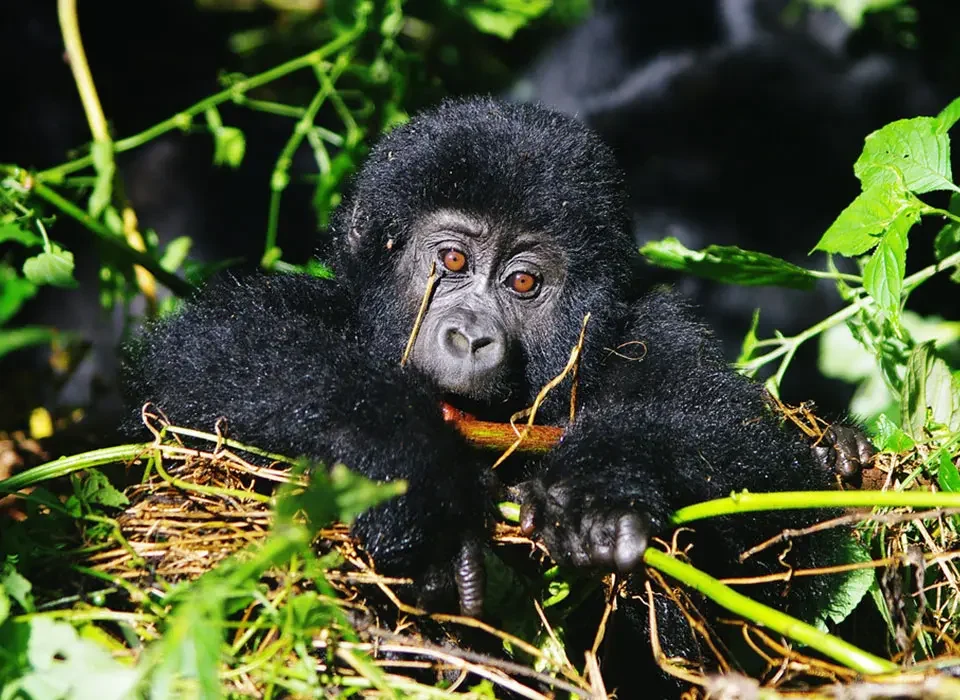
Once located, identical rules apply in both Rwanda and Uganda: a seven-metre minimum distance, no flash photography, quiet voices, and a strictly enforced one-hour limit with the gorillas. The encounter itself — the actual hour spent with the family — is remarkably similar in both countries; what differs is everything around it, not the experience at its centre.
How Much Does a 2-Day Gorilla Trekking Package from Kigali Cost Overall?
A realistic all-inclusive Rwanda-based package typically totals between USD 1,800 and USD 2,600 per person, driven mostly by the higher permit price. A realistic all-inclusive Uganda-based package, whether Mgahinga or Bwindi, typically totals between USD 1,300 and USD 2,000 per person, with the lower permit price more than offsetting the extra transport cost of the longer drive.
Both ranges assume one night of accommodation and a private or shared vehicle appropriate to your budget tier; luxury lodges and fully private vehicles push either option toward the higher end, while shared transfers and simple guesthouses keep costs toward the lower end. Our 2-day Uganda gorilla safari and 2-day Rwanda to Uganda gorilla trekking safari both list current pricing across budget tiers.
Best Time of Year to Book Your 2-Day Gorilla Trekking Package
Both Rwanda and Uganda share broadly similar dry seasons — roughly June to September and December to February — offering firmer trails and more predictable road conditions in both countries. The wetter months (March–May and October–November) bring lusher forest and thinner crowds but demand more buffer time for driving and trekking in either destination.
Permits are capped daily in both countries regardless of season, so book well ahead for peak months. Rwanda’s Volcanoes National Park and Uganda’s Bwindi and Mgahinga all sell out their most popular dates six months or more in advance during June–September and December–February.
How Your Fitness Level Should Influence Your Country Choice
Fitness is a genuine factor in this decision, and it cuts in a slightly counterintuitive direction. Rwanda’s Volcanoes National Park treks are generally shorter in duration but climb steeply at higher altitude, which can be more taxing on cardiovascular fitness even over a shorter distance. Uganda’s Bwindi treks are more variable in length and can run considerably longer on any given morning, but tend to sit at somewhat lower altitude, trading altitude strain for sheer duration and denser, muddier terrain underfoot.
Travellers managing altitude sensitivity or a cardiovascular condition sometimes find Uganda’s Mgahinga or Bwindi more comfortable despite the longer overall trip, since the trekking itself, while variable, avoids Rwanda’s steeper initial climb. Travellers more concerned about enduring a potentially long, muddy trek sometimes prefer Rwanda’s shorter average duration instead. Neither preference is right or wrong — it is worth being honest with your operator about which type of physical demand concerns you more, since it can reasonably tip the decision between countries.
Age Limit, Fitness, and Health Rules — Identical in Both Countries
Both Rwanda and Uganda enforce the same strict minimum age of 15 for gorilla trekking, with no exceptions, and no maximum age provided you are reasonably fit. Health screening happens at the ranger post every morning in both countries — anyone showing symptoms of a cold, flu, or other contagious illness will be asked to sit out that day’s trek.
Groups are capped at eight trekkers per gorilla family in both Rwanda and Uganda, a seven-metre distance is maintained at all times, and porters are available and worth hiring regardless of which country you choose. Travellers with younger children should consider golden monkey tracking, available near both Rwanda’s Volcanoes National Park and Uganda’s Mgahinga, since it carries no age restriction in either country.
What to Pack for a 2-Day Gorilla Trekking Trip, Whichever Country You Choose
Pack sturdy waterproof hiking boots with good ankle support, gaiters, gardening gloves for pushing through nettles, a lightweight rain jacket regardless of season, and quick-dry rather than cotton layers — this list applies identically whether you are trekking in Rwanda or Uganda. A daypack for water, snacks, and documents is essential on both routes, though the Uganda option additionally requires quick access to your passport and yellow fever certificate for the Cyanika crossing.
A zoom lens and spare camera batteries are worth the extra weight for either destination, since the seven-metre distance rule applies everywhere in the region. If you are genuinely undecided between Rwanda and Uganda until close to your trip, packing this same list covers you for either outcome without needing to adjust based on your final decision.
Visa Requirements for Both Countries
A Rwanda-only two-day trip requires only your standard Rwanda entry visa, available on arrival for most nationalities or via the East Africa Tourist Visa if your wider trip includes Kenya or Uganda. A Uganda-based trip crossing at Cyanika requires a valid passport with at least six months’ remaining validity, a yellow fever certificate, and either a single-entry Uganda visa (roughly USD 50) or the East Africa Tourist Visa (roughly USD 100 for 90-day multi-entry access across Uganda, Rwanda, and Kenya).
If there is any chance you might switch between the Rwanda and Uganda options while planning, the East Africa Tourist Visa is the safer choice, since it covers both countries regardless of which one you ultimately book. Apply online in advance rather than at the border or airport to avoid delays either way.
Keep a printed copy of your visa approval and yellow fever certificate with your passport regardless of which country you choose, since both are checked on entry to Rwanda and, for the Uganda option, again at the Cyanika crossing. A digital copy on your phone is a reasonable backup, but a printed copy removes any risk of a dead battery or a slow connection causing a delay at a checkpoint where officials expect to see the physical document.
Where to Stay: Accommodation for Either Option
Because a two-day itinerary allows for only one overnight, choose accommodation based on proximity to your chosen park’s registration point in drive time, not straight-line distance, regardless of which country you pick. Near Volcanoes National Park, this means proximity to Kinigi; near Uganda’s sectors, proximity to the Rushaga, Nkuringo, or Mgahinga ranger posts.
Book well ahead during peak dry-season months in either country, since both permits and the best-located rooms sell out first. Our team at Kenlink Tours can match your lodge choice to whichever park you ultimately choose, rather than locking in accommodation before that decision is finalised.
A Sample Hour-by-Hour Timeline for Each Option
For the Rwanda option: Day 1 involves an 8:00–9:00 a.m. pickup in Kigali, a two-to-two-and-a-half-hour drive to the Kinigi area, afternoon check-in and rest, and an early night. Day 2 begins around 5:00 a.m. with breakfast, a short drive to park headquarters for a 7:00 a.m. briefing, a trek of two to five hours including the return walk, a late lunch, and a mid-afternoon drive back to Kigali, typically arriving in the early evening in time for a same-day onward flight.
For the Uganda option via Bwindi: Day 1 involves a 6:00–7:00 a.m. pickup, a three-to-four-hour drive to Cyanika, border formalities, a further one-and-a-half to two-and-a-half hours to Rushaga or Nkuringo, afternoon check-in, and an early night. Day 2 begins around 5:00 a.m., with a 7:00–7:30 a.m. briefing, a trek that can run from ninety minutes to several hours, a late lunch, and a long afternoon drive back to Kigali, typically arriving in the evening — usually too late for a same-night flight, which is why a next-morning departure is strongly advised for this option specifically.
Photography and Trekking Etiquette — the Same Rules in Both Countries
Whichever country you choose, the photography and etiquette rules are identical, since they are set by park authorities rather than by country. Flash photography is banned near the gorillas in both Rwanda and Uganda, since sudden bright light can startle a family that has grown comfortable with quiet human observers. A telephoto or mid-range zoom lens is worth packing for either destination, given the seven-metre minimum distance rule applies everywhere in the region.
Voices should stay low throughout the encounter in both countries, sudden movements should be avoided, and eating, drinking, or smoking near the gorillas is not permitted anywhere. These shared rules exist for the same reason regardless of which government enforces them: habituated gorilla families across the entire Virunga and Bwindi ecosystem remain calm around visitors specifically because these standards are applied consistently, trek after trek, park after park.
Common Mistakes When Choosing Between Rwanda and Uganda
The most common mistake is comparing headline permit prices without factoring in the extra transport cost and time that Uganda’s longer drive genuinely requires — Uganda is usually still the cheaper overall option, but the gap is smaller once transport is included than the raw permit prices alone suggest. A second mistake is assuming Uganda’s Mgahinga and Bwindi cost differently — they do not; the permit price is identical across both.
A third mistake is booking a same-evening return flight without allowing for how variable trek duration can be, particularly on the Uganda side. Finally, some travellers assume they must choose one country permanently, when in fact a longer itinerary can combine both; our 5-day Uganda Rwanda double gorilla safari covers exactly this combined approach for anyone with a little more time.
Extending Either Option Into a Longer Regional Trip
Many travellers who research a strict two-day package end up extending once they see how naturally either option grows into a longer trip. A Rwanda-based start pairs well with Nyungwe Forest chimpanzee tracking or an Akagera National Park game drive, both reachable without crossing into Uganda at all. A Uganda-based start pairs well with Queen Elizabeth National Park or Kibale Forest chimpanzee tracking, extending the trip deeper into Uganda instead.
Our 3-day Nyungwe Forest National Park tour and 3-day Akagera game drive safari both extend the Rwanda-based option, while our 5-day gorilla trekking safari from Kigali to Uganda extends the Uganda-based one. Pick and Transfer Safaris’ 3-day Uganda gorilla safari from Rwanda is a useful external reference for a similarly extended Uganda-focused itinerary.
Conservation Impact: How Your Permit Fee Is Used in Either Country
Both Rwanda and Uganda channel a meaningful share of gorilla permit revenue into community revenue-sharing programmes that fund schools, health centres, and infrastructure in villages bordering their respective parks. This model, present in both countries despite their different permit prices, is a major reason mountain gorilla numbers have grown across the wider region even as habitat pressure from surrounding communities continues to rise.
Choosing the lower-cost Uganda option does not mean choosing lower conservation impact — both governments direct a comparable proportion of permit revenue back into local communities, just calculated against different base fees. Operators transparent about porter wages and community fees are worth prioritising in either country, a principle covered well by Pick and Transfer Safaris’ about us page from a Rwanda-based operator’s perspective.
Add-On Experiences for Either Option
If your schedule allows even one additional day, golden monkey tracking is available near both Rwanda’s Volcanoes National Park and Uganda’s Mgahinga, offering a lighter, shorter primate encounter with no age restriction. Cultural village visits, Lake Kivu boat trips, and Lake Bunyonyi canoeing are all reasonable low-cost extensions depending on which country you end up trekking in.
Our 4-day Rwanda Uganda golden monkey and gorilla trekking itinerary shows how these add-ons combine with either core option, and Pick and Transfer Safaris’ 3-day Rwanda gorilla tracking and cultural tour is a useful external reference for the Rwanda-side version of this same combination.
Why Book Your 2-Day Gorilla Trekking Package with Kenlink Tours
Because this comparison genuinely depends on your own priorities — cost versus travel time, Rwanda’s shorter drive versus Uganda’s lower permit — the right operator should be equipped to book either option competently, rather than steering you toward whichever is easier for them to arrange. We built our lineup around both the 2-day Uganda gorilla safari from Kigali and the 2-day Rwanda to Uganda gorilla trekking safari specifically so travellers can choose based on their own priorities rather than ours.
We also believe travellers deserve an honest comparison across the whole region, which is why we regularly reference established Rwanda-based operators such as Pick and Transfer Safaris and their destinations overview. Read more about how we operate on our About Us page, browse our full range of safaris on our Uganda safaris and Rwanda safaris pages, or reach out through our contact page.
Is Last-Minute Booking Possible for Either Option?
Both Rwanda and Uganda allocate gorilla permits daily rather than selling them on demand, so genuine last-minute availability depends entirely on cancellations and unsold allocation for your specific dates. In our experience, Uganda’s Bwindi sectors, with multiple habituated families issuing permits each day, occasionally hold slightly more late availability than Rwanda’s single, more famous Volcanoes National Park or Uganda’s single-family Mgahinga.
If your Kigali trip is already booked and you are hoping to add a gorilla trek on short notice, contact an operator directly in either country rather than relying on generic booking platforms that may lag behind real-time allocation. Our contact page and Pick and Transfer Safaris’ contact page are both worth trying in parallel if your dates are close and you are genuinely flexible on which country you end up trekking in.
Your Booking Checklist Before You Choose Rwanda or Uganda
Before you commit to either option, confirm five things: your firm travel dates and how much flexibility you have, your total budget including transport (not permit price alone), your fitness level and comfort with longer drive times, whether your visa choice covers both countries in case your plans shift, and your operator’s rescheduling and refund policy in case of illness or a missed permit.
Working through these five points before comparing specific packages will make the rest of this decision considerably easier. For a broader look at seasonal booking patterns across both countries, our travel news section and group tours page are both worth checking before you fix your dates.
It is also worth writing down your answers to these five points rather than simply thinking them through, particularly if more than one person’s preferences need to be balanced on a shared trip. A companion who cares more about cost than travel time, or vice versa, is easier to reach agreement with once both of your priorities are laid out plainly against the same five questions rather than argued over in the abstract.
Frequently Asked Questions About 2-Day Gorilla Trekking Packages from Kigali
Should I choose Rwanda or Uganda for my 2-day gorilla trek from Kigali?
Choose Rwanda if minimising travel time is your priority, since Volcanoes National Park is only two to two-and-a-half hours away with no border crossing. Choose Uganda if cost is your priority, since its permit is roughly USD 700 cheaper, accepting a longer drive in exchange.
Is the permit price the only real cost difference between the two countries?
It is the biggest difference, but not the only one. Uganda’s longer drive adds modestly to transport costs, which narrows the overall savings compared with the raw permit price gap, though Uganda typically remains the cheaper overall option.
Can I decide between Rwanda and Uganda close to my travel date?
Not too close — both countries cap daily permits, and popular dates in either country can sell out months in advance. Decide as early as realistically possible once your travel dates are fixed.
Is one country’s trek harder than the other’s?
Not definitively. Rwanda’s Volcanoes National Park treks tend to be shorter but steeper on volcanic slopes; Uganda’s Bwindi treks tend to be more variable in length through denser rainforest. Mgahinga sits between the two in most respects.
Can I do both Rwanda and Uganda gorilla treks on the same trip?
Yes, with a longer itinerary. Our 5-day Uganda Rwanda double gorilla safari is built specifically for travellers who want to compare both experiences within a single trip.
Ready to Book Your 2-Day Gorilla Trekking Package from Kigali
Whether Rwanda’s convenience or Uganda’s lower cost matters more to you, a two-day gorilla trekking package from Kigali remains one of the most efficient ways to have a genuine mountain gorilla encounter without reshaping your entire trip around it. The right choice comes down to being honest about your budget, your schedule, and how much driving you are willing to accept — not simply booking whichever country your search results show first.
Compare our 2-day Uganda gorilla safari from Kigali against our 2-day Rwanda to Uganda gorilla trekking safari, or get in touch through our contact page and our team will help you weigh both options against your actual dates and budget before you book a single flight. However you weigh cost against convenience, both routes end the same way: a quiet forest, a habituated family going about an ordinary morning, and an hour you will still be describing to people long after you’ve forgotten the exact price you paid to get there.