- EXPERT'S HELP
- +256789210067
- +256200955001
- info@kenlinktours.com

Cross Boarder Gorilla Tours in Uganda from Rwanda
October 10, 2026
Private Transfers from Kigali to Buhoma Bwindi
October 10, 2026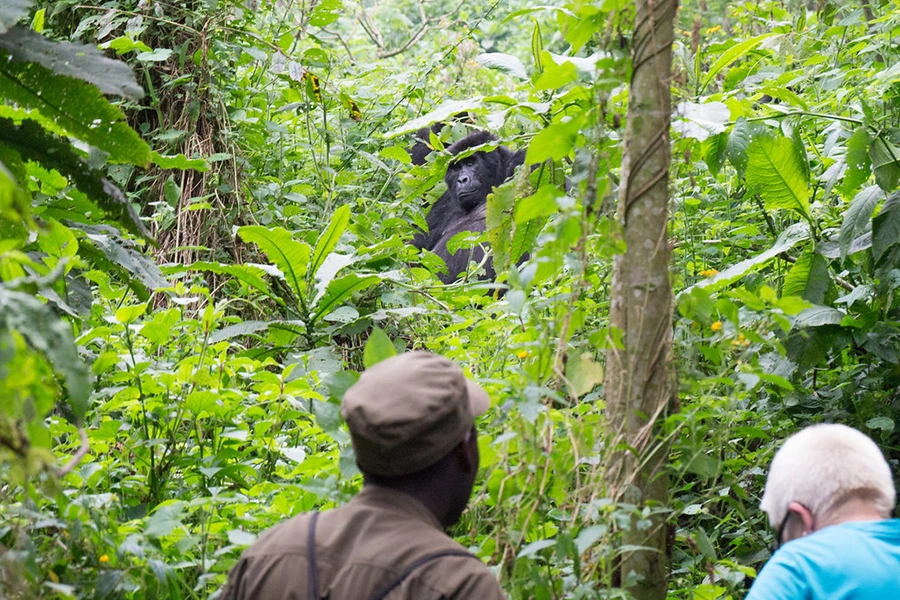
Cross border gorilla tours in Uganda from Rwanda have quietly become the smartest way to see mountain gorillas in East Africa. Instead of flying into Entebbe and spending nine or ten hours on the road to southwestern Uganda, thousands of travellers now land at Kigali International Airport, cross the border at Cyanika or Katuna, and are standing at the edge of Bwindi Impenetrable Forest or Mgahinga Gorilla National Park the same afternoon. You get Rwanda’s convenience and Uganda’s far lower gorilla permit price in one well-planned trip.
At Kenlink Tours, we have been running Uganda gorilla safaris starting from Kigali for years, and this guide puts everything we know in one place: how the cross-border journey works, which border to use, what permits and visas cost in 2026, which gorilla sectors make the most sense from Rwanda, sample itineraries, packing tips and the honest pros and cons. Whether you have two days or two weeks, you will finish this article knowing exactly how to plan your own Kigali-to-Uganda gorilla adventure.
What Is a Cross Border Gorilla Tour from Rwanda to Uganda?
A cross border gorilla tour is a safari that begins in Rwanda, usually with an airport pickup in Kigali, and then crosses overland into Uganda for gorilla trekking in Bwindi Impenetrable National Park or Mgahinga Gorilla National Park. After the trek you either return to Kigali for your flight home or continue deeper into Uganda for chimpanzees, savannah game drives and lakes.
The idea is simple geography. Kigali sits only about four to five hours by road from Uganda’s southern gorilla sectors, while Entebbe is roughly twice as far. The mountain gorillas live in the Virunga Massif and Bwindi, a landscape that straddles the Uganda–Rwanda–DR Congo border, so starting from Rwanda places you on the doorstep of Uganda’s best trekking areas. Our 2 Days Uganda Gorilla Safari Starting from Kigali was designed precisely around this shortcut, and it remains one of our most requested trips.
It is worth comparing how other regional specialists structure the same journey. Pick and Transfer Safaris, who are based in Kisoro near the Cyanika border, run a very tight one-day Uganda gorilla safari starting from Kigali for travellers who truly have no time to spare. It is a long day, but it shows just how close the Ugandan gorillas really are to Rwanda’s capital.
Why Start Your Uganda Gorilla Safari in Kigali?
Travellers choose Kigali as their gateway for very practical reasons. Here are the biggest advantages we see every season.
Shorter drive to the gorillas. From Kigali, the drive via Musanze and the Cyanika border to Kisoro takes around three hours, and the Rushaga and Nkuringo sectors of Bwindi or the Ntebeko gate of Mgahinga are only one more hour beyond that. Compare that with nine to eleven hours from Entebbe, and the time saving speaks for itself.
Big savings on the permit. A Uganda gorilla permit costs USD 800 for foreign non-residents, while Rwanda’s permit costs USD 1,500. For a couple, trekking in Uganda instead of Rwanda saves USD 1,400 on permits alone, money that can pay for extra nights, a chimpanzee trek or a Big Five extension.
Excellent flight connections. Kigali International Airport is served by RwandAir, KLM, Qatar Airways, Turkish Airlines, Brussels Airlines, Ethiopian and Kenya Airways, among others, so it is often as easy or easier to reach than Entebbe.
A clean, safe and easy arrival. Kigali is famous for its tidy streets, good roads and relaxed atmosphere. Many guests add a half-day city tour, a visit to the Kigali Genocide Memorial and a craft market before or after their trek. You can read more about the city on Pick and Transfer Safaris’ Kigali City destination guide.
The option to combine two countries. Because you start in Rwanda, it is easy to add golden monkeys in Volcanoes National Park, chimps in Nyungwe, or a Rwanda gorilla trek for the ultimate double gorilla experience. Our Rwanda safaris page lists every Rwandan add-on we offer.
Uganda vs Rwanda Gorilla Trekking: Which Should You Choose?
Both countries protect the same species, the endangered mountain gorilla, and in both you spend one magical hour with a habituated family in a group of no more than eight visitors. The differences lie in cost, terrain and the overall experience.
Rwanda (Volcanoes National Park): trekking takes place on the bamboo-covered slopes of the Virunga volcanoes. The park is about two to two-and-a-half hours from Kigali, lodges range from mid-range to some of Africa’s most exclusive, and permits cost USD 1,500. It is ideal if you want the shortest possible transfer and are comfortable with the higher price. Our 3-Day Gorilla Trekking in Volcanoes National Park and 3 Days Rwanda Gorilla Safari cover this option beautifully.
Uganda (Bwindi and Mgahinga): Bwindi is an ancient, dense rainforest that shelters roughly half of the world’s remaining mountain gorillas, spread across more than twenty habituated families in four sectors. Mgahinga is Uganda’s slice of the Virunga volcanoes, where “silver meets gold” thanks to its gorillas and rare golden monkeys. Permits cost USD 800, there is a wider choice of families and lodges, and Uganda is the only country offering the four-hour Gorilla Habituation Experience.
For most travellers on a budget or mid-range plan, a cross border gorilla tour into Uganda gives the best value, and many guests eventually come back to do Rwanda too. If you want both on one trip, look at our 5 Days Uganda Rwanda Double Gorilla Safari, which lets you compare the forest of Bwindi with the volcano slopes of the Virungas.
The Main Border Crossings Between Rwanda and Uganda
Choosing the right border post is the most important logistical decision on a cross border gorilla tour, because it determines which gorilla sector you can reach comfortably. Three crossings matter for gorilla travellers.
Cyanika Border (Rwanda) – Cyanika/Kisoro (Uganda)
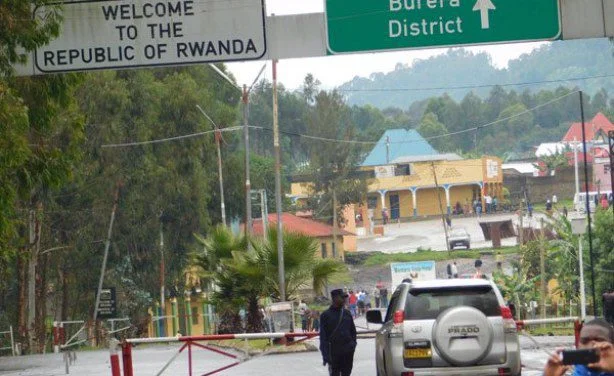
Cyanika is the favourite crossing for gorilla safaris. From Kigali you drive about two hours to Musanze, the town at the foot of the Virunga volcanoes, then another thirty minutes to the border. Once you clear immigration, Kisoro town is only around 12 kilometres away. From Kisoro you are roughly 30 to 45 minutes from Mgahinga Gorilla National Park and about one to one-and-a-half hours from the Rushaga and Nkuringo sectors of Bwindi. Cyanika is small, friendly and usually quick to clear, which makes it perfect for short trips.
Gatuna/Katuna Border (Rwanda–Uganda Main Highway)
Gatuna, called Katuna on the Ugandan side, is the main commercial crossing on the Kigali–Kabale–Kampala highway, about one-and-a-half to two hours north of Kigali. It is the better choice if you are trekking in the Ruhija or Buhoma sectors of northern Bwindi, if you plan to relax at Lake Bunyonyi near Kabale, or if you are continuing to Queen Elizabeth National Park. Because it handles heavy truck traffic, it can occasionally be slower than Cyanika, so we plan extra time.
Kagitumba Border (Northeast Rwanda)
Kagitumba, near Akagera National Park in Rwanda’s northeast, links to Mbarara and is useful mainly for itineraries that combine an Akagera game drive with Lake Mburo or western Uganda. It is rarely used for short gorilla trips but is handy on longer combination safaris.
On every Kenlink trip, your driver-guide handles the paperwork for the vehicle, briefs you before the crossing and waits on the far side while you clear immigration. Our car hire and 4×4 fleet is fully cleared for cross-border travel, so there is no need to change vehicles at the border.
Which Uganda Gorilla Park and Sector Is Best from Kigali?
Uganda’s gorillas are found in two parks, and not every sector is equally convenient from Rwanda. Here is how we match sectors to travellers.
Rushaga Sector, Bwindi Impenetrable National Park
Rushaga, in southern Bwindi, is the top choice for travellers starting in Kigali. It has the largest number of habituated gorilla families in Uganda, which means better permit availability even in peak season, and it is the only sector where the Gorilla Habituation Experience is offered. Rushaga is about four to five hours from Kigali via Cyanika. Our 3 Days Bwindi Gorilla Safari Starting from Kigali usually trek here.
Nkuringo Sector, Bwindi Impenetrable National Park
Nkuringo sits on a ridge with sweeping views of the Virunga volcanoes and is known for steeper, more demanding hikes. It is ideal for fit travellers who want spectacular scenery, and it is also reached through Kisoro. Pick and Transfer Safaris have a detailed guide to Bwindi Impenetrable Forest National Park that explains the character of each sector.
Ruhija and Buhoma Sectors
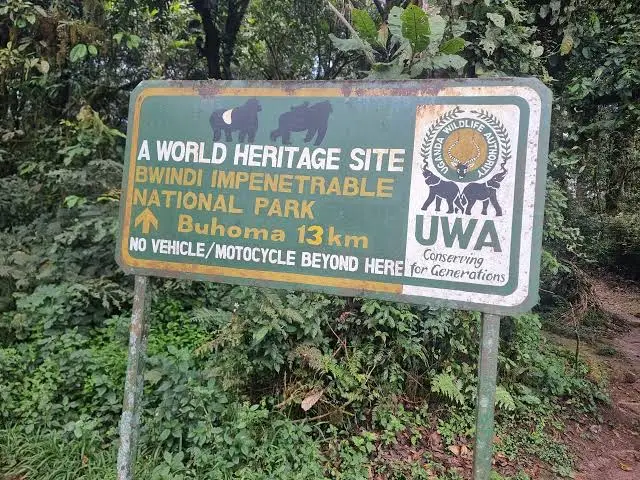
Ruhija, high in the eastern part of the forest, is a birding hotspot and is best reached via Katuna and Kabale, around five to six hours from Kigali. Buhoma in the north is the original gorilla trekking sector, with lovely lodges and community walks, but it is the furthest from Rwanda, so we recommend it mainly on longer trips that continue to Queen Elizabeth National Park.
Mgahinga Gorilla National Park
Mgahinga is Uganda’s smallest national park and the closest gorilla destination to the Rwandan border, just a short drive from Kisoro. It protects one habituated gorilla family, the Nyakagezi group, alongside golden monkeys, Batwa cultural trails and volcano hikes up Muhabura, Gahinga and Sabyinyo. You can learn more on the Mgahinga Gorilla National Park guide from Pick and Transfer Safaris. Our 4-Day Rwanda-Uganda Golden Monkey and Gorilla Trekking tour pairs golden monkeys with gorillas in this magical corner of the Virungas.
Uganda Gorilla Permit Prices and Booking Rules for 2026
Your gorilla permit is the single biggest cost of the trip, and it is also the item you must secure first. Here are the key facts for 2026.
Standard gorilla trekking permit: USD 800 per person for foreign non-residents, USD 700 for foreign residents of East Africa, and lower rates for East African citizens. The permit allows one hour with a habituated gorilla family and includes the ranger guides and park entry for that day.
Low-season discounts: Uganda Wildlife Authority has introduced discounted low-season permits for the rainy months of April, May and November, widely reported at USD 600 for foreign non-residents. If you are flexible about dates and do not mind some rain, this is one of the best gorilla deals in Africa. Always confirm the latest rate with us before booking, as UWA tariffs are reviewed periodically.
Gorilla Habituation Experience: available only in Rushaga, this lets you spend up to four hours with a family that is still being habituated, alongside researchers and trackers. It has cost USD 1,500, with an increase widely reported for 2027.
Booking through a licensed operator: foreign non-residents now book permits through licensed Ugandan tour operators rather than directly. As a licensed company and member of the Uganda Tourism Board and Uganda Wildlife Authority network, Kenlink Tours can reserve your permit as soon as you send us your passport details and a deposit.
Book early. Only eight people may visit each family per day, so permits for June to September and December to February sell out months ahead. We recommend booking three to six months in advance, and longer for the habituation experience.
Visas and Travel Documents for Crossing from Rwanda to Uganda
Getting the paperwork right is what makes a cross border gorilla tour smooth. Here is what most international visitors need.
East Africa Tourist Visa: the most convenient choice for this trip. It costs USD 100, is valid for 90 days and allows multiple entries between Rwanda, Uganda and Kenya. Apply online through the immigration portal of the country you will enter first, which for a Kigali start is Rwanda. Do not leave the region during those 90 days, or the visa becomes invalid.
Separate visas: if you prefer, you can obtain a Rwanda visa and a separate Uganda e-visa. Some nationalities enjoy visa-free or visa-on-arrival access to Rwanda, so check your own situation first.
Passport: valid for at least six months beyond your travel dates, with at least two blank pages for stamps.
Yellow fever certificate: Uganda requires proof of yellow fever vaccination at the border, so carry your original card, not a photocopy.
Gorilla permit copy: your guide will carry this, but it is helpful to have a digital copy on your phone.
A quick tip many first-time visitors miss: Rwanda drives on the right-hand side of the road, while Uganda drives on the left. Your guide will switch sides as soon as you cross the border, and you will also gain an hour, because Uganda is on East Africa Time (UTC+3) while Rwanda is one hour behind.
Sample Cross Border Gorilla Tour Itineraries from Kigali
There is a cross border gorilla tour for almost every schedule. These are the itineraries we recommend most often, with links so you can see full day-by-day details.
1-Day Express Gorilla Trek from Kigali
Pickup from Kigali before dawn, cross at Cyanika, trek in Mgahinga or southern Bwindi, and return to Kigali the same night. It is a very long day and permit timing must be perfect, but it suits business travellers and those with only one free day. See how this works on the Pick and Transfer Safaris one-day option.
2-Day Uganda Gorilla Safari from Kigali
This is the best short option for most people. On day one you drive from Kigali through the green hills of northern Rwanda, cross into Uganda and check in at a lodge near Rushaga or Mgahinga. On day two you trek the gorillas in the morning and drive back to Kigali in the evening. Choose between our 2 Days Uganda Gorilla Safari Starting from Kigali and the 2 Days Rwanda to Uganda Gorilla Trekking Safari. For comparison, Pick and Transfer Safaris offer a similar 2 Days Uganda Gorilla Tour Starting from Kigali.
3-Day Bwindi Gorilla Safari from Kigali
The three-day version adds a relaxed final night after the trek, so you are not rushing back to the airport with muddy boots. Many guests use the free afternoon for a Batwa cultural experience, a canoe trip on Lake Mutanda or a community walk. Book our 3 Days Bwindi Gorilla Safari Starting from Kigali, or compare it with the 3 Days Uganda Gorilla Safari from Rwanda by Pick and Transfer Safaris.
4 to 5-Day Gorilla, Golden Monkey and Chimpanzee Safaris
With four or five days you can combine gorillas with golden monkeys in Mgahinga or Volcanoes, or add chimpanzees. Our 5-Day Gorilla Trekking Safari from Kigali to Uganda gives you time to enjoy Lake Bunyonyi and the Kigezi highlands, while the 5 Days Uganda Rwanda Double Gorilla Safari lets you trek in both countries. Primate lovers can also look at the 5 Days Uganda Gorilla and Chimps Safari Starting from Rwanda.
7 to 15-Day Uganda and Rwanda Combination Safaris
For the full East African experience, longer safaris link gorillas with tree-climbing lions in Ishasha, boat cruises on the Kazinga Channel, chimpanzees in Kibale and the savannah of Akagera. Our 9 Days Uganda & Rwanda Gorilla and Big Five Safari, 10 Days Uganda Rwanda Combining Safari and 15-Day Rwanda–Uganda Primate & Big-Five Safari Adventure are built exactly for this. Pick and Transfer Safaris also run a well-paced 10 Days Uganda Rwanda Safari if you want to compare routes.
What to Expect on Gorilla Trekking Day in Uganda
Gorilla trekking day starts early. After breakfast at your lodge, your driver-guide takes you to the sector headquarters by about 7:30 am for the ranger briefing. Here you learn the gorilla etiquette rules, meet your fellow trekkers and are assigned to a family based on fitness and preference.
The hike itself can take anywhere from 30 minutes to six hours, depending on where the gorillas spent the night. Advance trackers set out at dawn to find the family and radio their location to your ranger, so you are always heading in the right direction. Trails in Bwindi can be steep, muddy and slippery, winding through vines, ferns and towering trees at altitudes of roughly 1,160 to 2,600 metres. Porters are available at the starting point for around USD 15 to 20, and hiring one is strongly recommended: they carry your bag, help you on difficult slopes and earn vital income for local families.
When you reach the gorillas, you leave your bags and walking sticks behind, put on a face mask and quietly approach. For one unforgettable hour you watch the silverback, mothers and playful youngsters feeding, grooming and resting just a few metres away. You must keep a distance of about seven metres where possible, avoid flash photography and stay calm and quiet. Afterwards, you hike back out and receive a gorilla trekking certificate at headquarters.
Gorilla trekking is open to anyone aged 15 and above who is in reasonable health. If you have a cold, flu or any infectious illness, you will not be allowed to trek, because gorillas are highly vulnerable to human diseases.
Best Time for Cross Border Gorilla Tours from Rwanda to Uganda
Gorilla trekking in Uganda runs all year round, but the seasons do shape the experience.
Dry seasons (June to September and December to February): the most popular months, with drier trails, easier hiking and great photography. Permits and lodges fill up early, so plan ahead.
Rainy seasons (March to May and October to November): the forest is lush and green, there are fewer visitors, and you can benefit from low-season permit discounts in April, May and November. Expect afternoon downpours and muddier trails, but the gorillas often stay lower down where fruit is plentiful, sometimes making for shorter treks.
Because Bwindi is a rainforest, rain can fall in any month, so pack a waterproof jacket regardless of the season. Our Uganda destination guide explains the climate across all of the country’s parks.
Where to Stay on a Cross Border Gorilla Safari
Where you sleep depends on your chosen sector and budget. Around Rushaga and Nkuringo, you can choose from budget guesthouses, comfortable mid-range lodges and a handful of luxury options with forest or volcano views. In Kisoro, near Mgahinga and the Cyanika border, there are good-value hotels that work perfectly for short trips. Lake Mutanda and Lake Bunyonyi offer beautiful lakeside lodges for a relaxing extra night.
On the Rwandan side, Kigali has excellent international hotels for your arrival and departure nights, while Musanze offers convenient lodges if you want to break the journey or add a Volcanoes National Park activity. Pick and Transfer Safaris’ Volcanoes National Park guide is a handy overview of the area just south of the Cyanika border. We always match lodges to your style, whether that is a cosy budget room or a luxury suite overlooking the forest canopy.
How Much Does a Cross Border Gorilla Tour Cost?
Prices vary with trip length, accommodation level, group size and season, but here is a realistic guide for 2026.
2-day trips from Kigali typically start from around USD 1,500 per person sharing, including the USD 800 permit, private 4×4 transport, a professional driver-guide, one night of mid-range accommodation, meals and water.
3-day trips usually start from around USD 1,650 per person sharing for mid-range lodges, rising for luxury options.
5 to 10-day combination safaris range widely depending on how many permits (gorillas, chimps, golden monkeys) and how many nights of luxury accommodation you include.
Solo travellers pay more per person because vehicle and guide costs are not shared, while groups of four or more save noticeably. For travellers who want to share costs with others, our group tours and scheduled departures are a great way to cut the price. Remember to budget for extras: visas, tips for guides and porters, drinks, souvenirs and optional activities.
What to Pack for Gorilla Trekking in Uganda
Packing right makes the trek far more enjoyable. Here is our essential list:
- Sturdy, waterproof hiking boots that are already broken in
- A lightweight waterproof jacket and trousers
- Long-sleeved shirts and long trousers to protect against nettles and insects
- Gardening gloves for gripping vines and branches
- Gaiters or long socks to tuck trousers into
- A small daypack with a rain cover
- At least two litres of drinking water and energy snacks
- Insect repellent, sunscreen and a hat
- A camera with spare batteries and memory cards (no flash)
- Face masks, which are required near the gorillas
- Your passport, yellow fever card and some cash in small US dollar notes and local currency
One more tip: Rwanda bans single-use plastic bags, and they can be confiscated at the airport, so pack in reusable bags instead.
Add Chimpanzees, Wildlife and Culture to Your Gorilla Trip
Once you have crossed into Uganda, it would be a shame not to see more of the Pearl of Africa. Popular add-ons include:
Chimpanzee tracking in Kibale Forest, the primate capital of the world. Our 3-Day Chimpanzee Tracking Safari and 5 Days Gorilla & Chimpanzee Tracking Tour pair beautifully with a Bwindi trek.
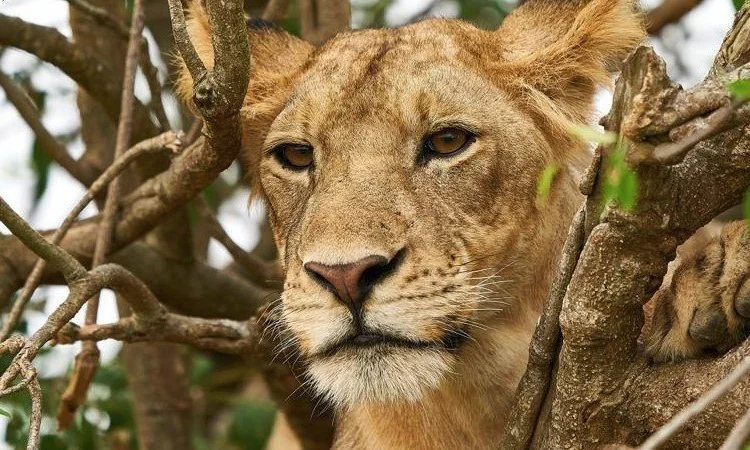
Big game in Queen Elizabeth National Park, home to elephants, buffalo, hippos, and the famous tree-climbing lions of Ishasha, which lies conveniently between Bwindi and the rest of the park. See our 3 Days Queen Elizabeth National Park safari, or read Pick and Transfer Safaris’ Queen Elizabeth National Park guide.
Lake Bunyonyi and Lake Mutanda, perfect for canoeing, swimming and unwinding after the trek.
Batwa cultural experiences, where the former forest people of Bwindi and Mgahinga share their traditions, music and history.
Rwanda highlights such as golden monkey trekking, chimpanzees and the canopy walk in Nyungwe, or a relaxing stay on Lake Kivu. Our 6-Day Rwanda Adventures – Lake Kivu trip is a lovely way to round off a cross-border holiday.
Is a Cross Border Gorilla Tour Safe?
Yes. The Rwanda–Uganda border crossings used for gorilla tourism handle thousands of travellers every year, and both countries place a strong priority on protecting tourists. Gorilla treks are always led by armed Uganda Wildlife Authority rangers, and the lodges near the parks are used to hosting international visitors.
The most important safety factor is travelling with an experienced, licensed operator who knows the roads, the border procedures and the parks. Kenlink Tours has been organising safaris since 2010, and our guides are on the road throughout the year, keeping up with the latest border and park conditions. As with any international trip, we recommend comprehensive travel insurance that includes medical evacuation.
Tips for a Smooth Rwanda-to-Uganda Gorilla Safari
- Book permits first, then build the rest of your itinerary around the permit date.
- Get the East Africa Tourist Visa if you plan to cross the border more than once.
- Pick the right border: Cyanika for Rushaga, Nkuringo and Mgahinga; Katuna for Ruhija, Buhoma and Lake Bunyonyi.
- Arrive the day before your safari if possible, so a delayed flight does not cost you a permit.
- Allow a buffer on your last day, especially if you have an evening flight from Kigali.
- Hire a porter; it helps you and supports the local community.
- Carry small notes for tips, porters and crafts.
- Keep your phone charged and have offline maps, as signal can be weak in the forest.
- Train a little beforehand with hill walks or stairs to enjoy the trek more.
If you would like to compare all the short Uganda gorilla trips that start in Rwanda in one place, the gorilla safaris collection by Pick and Transfer Safaris is a useful reference alongside our own tours.
Why Book Your Cross Border Gorilla Tour with Kenlink Tours?
Kenlink Tours is a licensed Ugandan safari company that has crafted African journeys since 2010. Here is what you get when you book with us:
- Local expertise: our team lives and works in Uganda and spends the whole year on the road across East Africa.
- Permit security: as a licensed operator, we book your UWA gorilla permit directly and confirm availability quickly.
- Seamless border crossings: one vehicle and one guide from Kigali to the gorillas and back, with all cross-border vehicle paperwork handled.
- Private, flexible trips: every safari can start any day and be customised to your interests and budget.
- Well-maintained 4×4 vehicles with pop-up roofs, fridges and charging points.
- Community impact: part of our work supports the Kigezi Foundation and tourism training for young Ugandans.
Browse all of our Uganda safari tours for more ideas, or simply tell us your dates and we will design the perfect cross-border itinerary for you.
Frequently Asked Questions About Cross Border Gorilla Tours
Can I trek gorillas in Uganda starting from Kigali?
Yes. Kigali is the closest international airport to Uganda’s southern gorilla parks. From Kigali you can reach Mgahinga or the Rushaga sector of Bwindi in roughly four to five hours via the Cyanika border.
How long is the drive from Kigali to Bwindi?
Kigali to Rushaga or Nkuringo takes about four to five hours via Cyanika. Kigali to Ruhija takes roughly five to six hours via Katuna, and Kigali to Buhoma can take six to seven hours.
Which border is best for gorilla trekking in Uganda from Rwanda?
Cyanika is best for Mgahinga, Rushaga and Nkuringo. Gatuna/Katuna is better for Ruhija, Buhoma and Lake Bunyonyi.
How much is a Uganda gorilla permit in 2026?
A standard permit costs USD 800 for foreign non-residents and USD 700 for foreign residents, with discounted low-season rates reported for April, May and November. Contact us for the latest confirmed tariff.
Do I need a visa to cross from Rwanda to Uganda?
Most visitors do. The East Africa Tourist Visa (USD 100, 90 days) covers Rwanda, Uganda and Kenya with multiple entries, making it the easiest option for cross-border gorilla tours.
Can I do gorilla trekking in Uganda and Rwanda on the same trip?
Absolutely. Double gorilla safaris that include Bwindi and Volcanoes National Park are very popular and can be done in as little as five days.
Is the one-day gorilla trek from Kigali worth it?
It is possible but very long, often 16 hours or more. We recommend at least two days so you can enjoy the experience without rushing.
Plan Your Cross Border Gorilla Tour Today
A cross border gorilla tour from Rwanda to Uganda gives you the best of both worlds: the easy arrival of Kigali and the outstanding value, choice and wilderness of Bwindi and Mgahinga. Whether you choose a quick two-day trek or a two-week primate and Big Five adventure, standing quietly in the misty forest while a silverback watches over his family is a moment you will never forget.
Gorilla permits are limited and peak-season dates disappear fast, so the sooner you plan, the better your choice of dates and gorilla families. Contact Kenlink Tours today with your travel dates and group size, and our safari experts will reply within 24 hours with a tailor-made cross-border gorilla itinerary from Kigali.