Mountain Gorilla vs. Chimpanzee Trekking: Which East Africa Experience Wins?
East Africa's primate trekking experiences have captured the hearts and imaginations of wildlife travellers for decades. And no wonder — whether you are sitting metres from a silverback gorilla in the ancient forests of Bwindi, or watching a wild chimpanzee community hunt and play in the canopy of Kibale, these are encounters that fundamentally change how you see the natural world.
But which should you prioritise? Which is better value? Which is more physically demanding? And — if budget allows — is combining both on a single itinerary the ultimate East Africa safari? At Kenlink Tours, these are questions our team answers every single day. Here is our comprehensive, head-to-head breakdown.
At a Glance — The Full Head-to-Head Comparison
| Factor | 🦍 Mountain Gorilla | 🦇 Chimpanzee |
|---|---|---|
| Permit Cost | USD $800 (Uganda) • USD $1,500 (Rwanda) | USD $250 (standard) • USD $300 (CHEX full day) |
| Time with Primates | 1 hour strictly enforced | 1 hour (standard) or up to 6 hours (CHEX) |
| Group Size | Max 8 people per gorilla family | Max 6 people per chimp group |
| Physical Difficulty | Moderate to strenuous — steep mountain forest | Moderate — tropical forest, uneven terrain |
| Trek Duration | 2 to 8 hours depending on gorilla location | 30 minutes to 3 hours to locate chimps |
| Best Countries | Uganda, Rwanda, DR Congo | Uganda, Rwanda, Tanzania |
| Sighting Success Rate | 99%+ (gorillas are fully habituated) | 90%+ (Kibale Forest, Uganda) |
| Minimum Age | 15 years old | 12 years old |
| Best Season | Jun–Aug & Dec–Feb (dry season) | Year-round, best Jun–Aug & Dec–Feb |
| Emotional Impact | Profound, deeply moving, often life-changing | Thrilling, energetic, endlessly entertaining |
Round by Round — The Detailed Breakdown
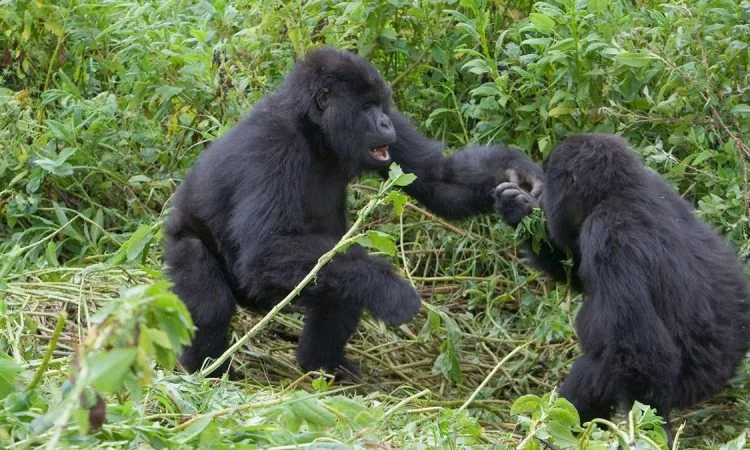
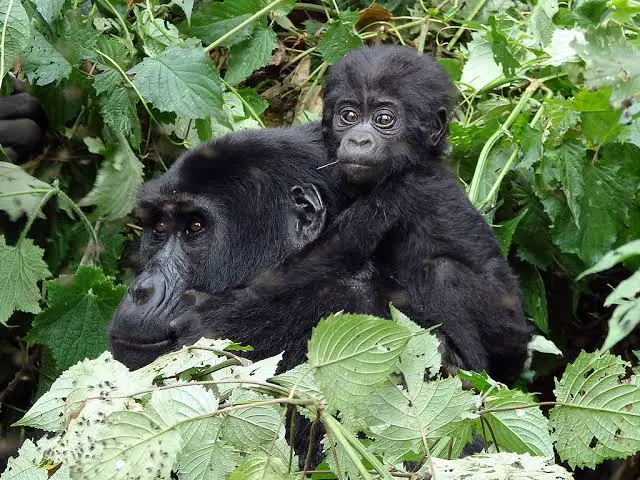
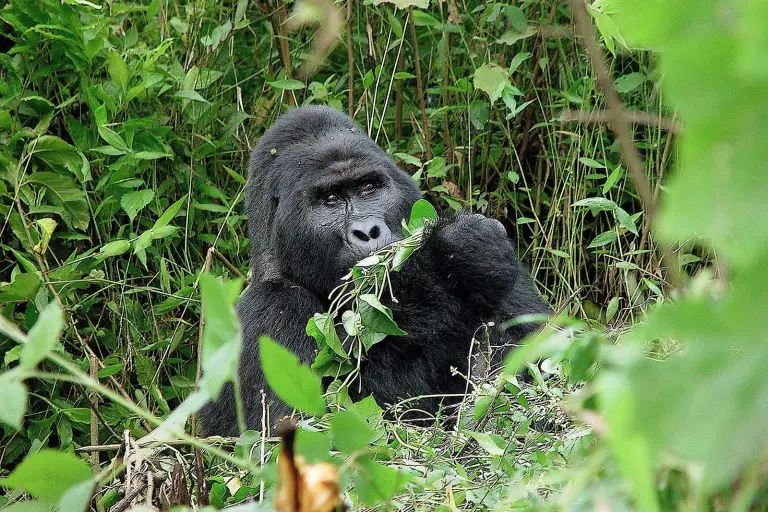
Mountain gorilla trekking is almost universally described as one of the most emotionally overwhelming wildlife experiences in the world. When you first come face to face with a silverback — an animal weighing up to 220 kilograms, sitting just metres away, calmly watching you with amber eyes — the effect is profound and often moves people to tears. The forest goes quiet. Time seems to stop. The one hour you are permitted with the gorilla family feels simultaneously like a lifetime and a heartbeat.
Chimpanzee trekking is a completely different kind of electricity. Chimps are loud, fast, chaotic, and wildly entertaining. They swing through the canopy, screech at each other, wrestle, groom, and occasionally turn their intensely intelligent gaze directly on you. If gorilla trekking is a meditation, chimpanzee trekking is a full-volume performance. Both are extraordinary — they simply move you in completely different ways.
There is no getting around it — mountain gorilla permits are expensive. In Uganda, a gorilla trekking permit currently costs USD $800 per person. In Rwanda, the premium experience at Volcanoes National Park comes in at USD $1,500 per person — one of the most expensive wildlife permits on Earth. That said, the fee directly funds gorilla conservation and community development, and the majority of travellers who pay it say without hesitation that it was worth every dollar.
Chimpanzee trekking permits in Uganda's Kibale Forest cost USD $250 for the standard one-hour experience, or USD $300 for the extraordinary full-day Chimpanzee Habituation Experience (CHEX). For travellers on a tighter budget — or those wanting to maximise their primate encounters per dollar — chimpanzee trekking delivers exceptional value and an experience that is, in many ways, just as remarkable.
Mountain gorilla trekking takes place in high-altitude montane forest — the slopes of Bwindi Impenetrable National Park rise to over 2,500 metres above sea level, and the terrain is steep, muddy, and genuinely demanding. Trek times are unpredictable: on a good day you may reach the gorillas in 90 minutes; on others, the trek can last six to eight hours of hard uphill walking. Altitude adds an extra challenge for visitors coming from low-lying countries. That said, porters are available at both Bwindi and Rwanda's Volcanoes National Park to carry bags and provide physical support on the steepest sections — and we strongly recommend hiring one.
Chimpanzee trekking in Kibale Forest is set at much lower altitude and the terrain, while uneven, is considerably less physically demanding. Trek times to locate the chimps range from 30 minutes to around 3 hours. For travellers with limited mobility, health considerations, or younger family members (minimum age 12), chimpanzee trekking is the more accessible option. For the full-day CHEX experience, however, a higher level of fitness is strongly recommended.
Both standard gorilla trekking and standard chimpanzee trekking give you exactly one hour with the primates once located — a strict rule enforced by Uganda Wildlife Authority and Rwanda Development Board to minimise stress on the animals. For gorilla trekking, that one hour is non-negotiable regardless of conditions or distance travelled to reach the family. For chimpanzee trekking, however, the Chimpanzee Habituation Experience (CHEX) opens up an entirely different dimension — a full day from dawn to dusk alongside the chimps, watching them wake, forage, hunt, and interact across the forest. For photographers, researchers, and passionate wildlife lovers, CHEX is one of the finest wildlife experiences available anywhere in East Africa.
Every permit purchased for gorilla or chimpanzee trekking directly funds wildlife conservation and benefits local communities surrounding the parks. Mountain gorilla numbers have actually increased in recent years — a rare conservation success story — partly because permit revenue funds anti-poaching patrols, veterinary care, and community support programmes. As documented by the World Wildlife Fund↗, responsible primate tourism is one of the most effective conservation tools available for protecting great apes. Chimpanzee trekking permits similarly fund Kibale Forest's management, ranger salaries, and the long-term habituation programmes that make these encounters possible. Your visit — to either species — is an act of conservation as much as adventure.
Our most popular itinerary combines both experiences in one unforgettable Uganda safari — chimpanzee trekking in Kibale Forest followed by mountain gorilla trekking in Bwindi Impenetrable National Park, with a Big Five game drive through Queen Elizabeth National Park in between. It is 8 to 10 days of pure East Africa magic. Ask our team about our Primates & Plains combined safari packages.
Uganda vs. Rwanda — Which Country Should You Choose?
Both Uganda and Rwanda offer mountain gorilla trekking, and both are extraordinary destinations. The choice comes down to budget, travel style, and what else you want to see on your trip.
- Gorilla permit: USD $800
- Larger gorilla population (Bwindi has 19+ habituated families)
- Add chimp trekking in Kibale
- Add Big Five safari in Queen Elizabeth NP
- More budget-friendly lodges available
- Greater overall wildlife diversity
- Longer travel time to gorilla parks from Kampala
- Gorilla permit: USD $1,500
- Premium luxury lodge infrastructure
- Short drive from Kigali to Volcanoes NP (2–3 hours)
- Add chimp trekking in Nyungwe Forest
- Golden monkey trekking available
- Smaller, ultra-premium experience
- Higher overall cost across all services
For travellers who want to combine gorilla trekking with chimpanzee trekking, wildlife drives, and birding — all at exceptional value — Uganda is the clear choice. For those seeking a shorter, ultra-premium gorilla-focused experience with luxurious accommodation and easy logistics, Rwanda delivers one of the finest safari products in Africa. And of course, a cross-border itinerary covering both countries is entirely possible — and increasingly popular.
According to our experience, the choice between Uganda and Rwanda ultimately comes down to how much time and budget you have available — and both deliver encounters that rank among the most powerful in wildlife travel.Should You Do Both? Absolutely — If You Can
If your time and budget allow, combining mountain gorilla trekking and chimpanzee trekking on a single East Africa itinerary is not just a good idea — it is one of the finest wildlife travel experiences on the planet. The two encounters complement each other perfectly: the quiet, humbling immensity of the gorilla encounter followed by the wild, exhilarating energy of a chimpanzee tracking session creates a contrast that stays with travellers for the rest of their lives.
Our classic Uganda Primates & Wildlife Safari takes guests from Kibale Forest for chimpanzee trekking, through Queen Elizabeth National Park for a Big Five game drive and Kazinga Channel boat cruise, and into Bwindi Impenetrable Forest for gorilla trekking — all within 8 to 10 days. It is our most booked itinerary, and for good reason. Add optional birding stops at Bigodi Wetland Sanctuary and the journey becomes one of the most diverse wildlife safaris available anywhere in East Africa.
As the Gorilla Doctors organisation↗ notes, both gorillas and chimpanzees face ongoing threats from habitat loss and disease — and responsible tourism is one of the most powerful tools available to secure their futures. Every trek you book with Kenlink Tours contributes directly to the conservation of these remarkable species.
The Verdict — Which Experience Wins?
Here is the honest answer: neither wins, because they are not really competitors. Mountain gorilla trekking and chimpanzee trekking are two profoundly different wildlife experiences that happen to take place in the same part of the world. Choosing between them is like choosing between a symphony and a jazz concert — both are extraordinary, both will move you, and both are worth experiencing.
If you can only choose one: gorilla trekking is the single most powerful wildlife encounter most travellers will ever have. But if budget is a factor, or if you want more time with the primates — the CHEX full-day chimpanzee experience in Kibale offers extraordinary depth at a fraction of the gorilla permit price.
If you can do both: do both. You will not regret a single step.
Ready to Trek with the Great Apes?
Let Kenlink Tours plan your perfect primate safari — gorillas, chimps, or both. Permits, lodges, expert guides, seamless logistics.
Plan My Primate Safari →Frequently Asked Questions
Can I do gorilla trekking and chimpanzee trekking on the same trip?
Absolutely — and it is one of our most popular itinerary combinations. A well-planned 8 to 10-day Uganda safari can comfortably include chimpanzee trekking in Kibale Forest, a game drive in Queen Elizabeth National Park, and gorilla trekking in Bwindi Impenetrable Forest. Contact the Kenlink Tours team and we will design a seamless itinerary with all permits secured in advance.
Which is easier — gorilla trekking or chimpanzee trekking?
Chimpanzee trekking in Kibale Forest is generally less physically demanding. It takes place at lower altitude on less steep terrain. Gorilla trekking in Bwindi or Rwanda's Volcanoes National Park involves high-altitude mountain forest, steep inclines, and longer trek times. That said, both are manageable with a moderate level of fitness, and porters are available for gorilla trekking to assist with bags and physical support on the trail.
Is gorilla trekking in Uganda cheaper than in Rwanda?
Yes — significantly. A Uganda gorilla trekking permit costs USD $800 per person, compared to USD $1,500 per person in Rwanda. Uganda also offers a wider range of accommodation options across different budget levels. Rwanda's higher price point is reflected in its premium lodge infrastructure and shorter travel distances from Kigali airport to the gorilla parks.
What is the minimum age for gorilla trekking?
The minimum age for mountain gorilla trekking is 15 years old in both Uganda and Rwanda. For chimpanzee trekking in Uganda, the minimum age is 12 years old. Families with younger teens may therefore find chimpanzee trekking a more inclusive option.