- EXPERT'S HELP
- +256789210067
- +256200955001
- info@kenlinktours.com


Rhino tracking in Ziwa Uganda
May 20, 2026
Ebola Outbreak in Uganda and DRC: What Travelers Need to Know
May 22, 2026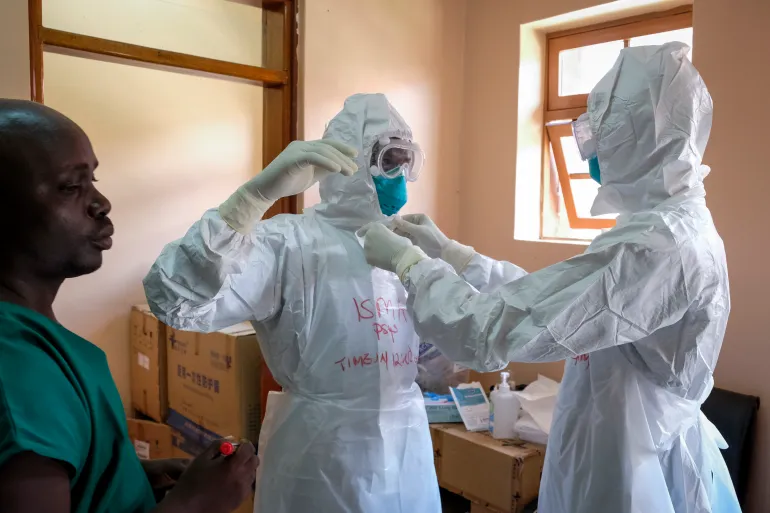
The Truth About the Ebola Outbreak in Uganda – Uganda still safe. If you have been following international health news lately, you may have come across headlines about an Ebola outbreak affecting the Democratic Republic of the Congo (DRC) and Uganda. It is completely natural to have questions, and at Kenlink Tours, we believe our travellers deserve honest, up-to-date information — not fear-driven headlines. So let us break this down clearly: what is actually happening, where it is happening, and why Uganda’s world-famous national parks remain as safe and spectacular as ever for your safari.
What Is the Bundibugyo Ebola Outbreak? Understanding the Facts
On 17 May 2026, the World Health Organization (WHO) declared a Public Health Emergency of International Concern (PHEIC) regarding an outbreak of Ebola disease caused by the Bundibugyo virus. It is important to note that this is a different strain from the more widely known Ebola-Zaire virus. According to the WHO’s official statement , the outbreak is centred primarily in the Ituri Province of the Democratic Republic of the Congo, specifically across health zones in Bunia, Rwampara, and Mongbwalu.
As of 16 May 2026, the DRC had recorded eight laboratory-confirmed cases, 246 suspected cases, and 80 suspected deaths — all concentrated in this specific region of eastern DRC. The epicentre of this outbreak is therefore inside the DRC, not inside Uganda. This is a critical distinction that many alarming headlines fail to make clearly.
In Uganda, the picture is dramatically different. Only two laboratory-confirmed cases have been reported in Kampala — both involving individuals who had recently travelled from the DRC. Both patients were swiftly identified and admitted to intensive care units in the capital. There is no community transmission recorded in Uganda, and no cases whatsoever have been reported anywhere near Uganda’s beloved safari destinations.
Uganda’s Swift and Decisive Government Response
One of the most reassuring aspects of this situation is the speed and professionalism with which the Ugandan government has responded. WHO’s Director-General personally expressed gratitude to Uganda’s leadership for their “commitment to take necessary and vigorous actions to bring the event under control” — a rare and meaningful acknowledgement from the world’s leading health authority.
Uganda activated its national emergency management mechanisms immediately upon detecting the two imported cases in Kampala. The government established cross-border screening at all major entry points, including Entebbe International Airport, to ensure no traveller with symptoms enters or exits undetected. Exit and entry health screenings, contact tracing programes, and dedicated isolation facilities are all fully operational.
Uganda has handled Ebola outbreaks before — most notably in 2000 and 2012 — and the country’s health system has been significantly strengthened with each experience. The Uganda Virus Research Institute (UVRI) has the laboratory capacity to test and confirm cases rapidly, meaning any new infection is detected and contained quickly. This is a country that knows how to respond, and it is doing so effectively.
The Safari Areas Are Entirely Unaffected — Here’s Why That Matters
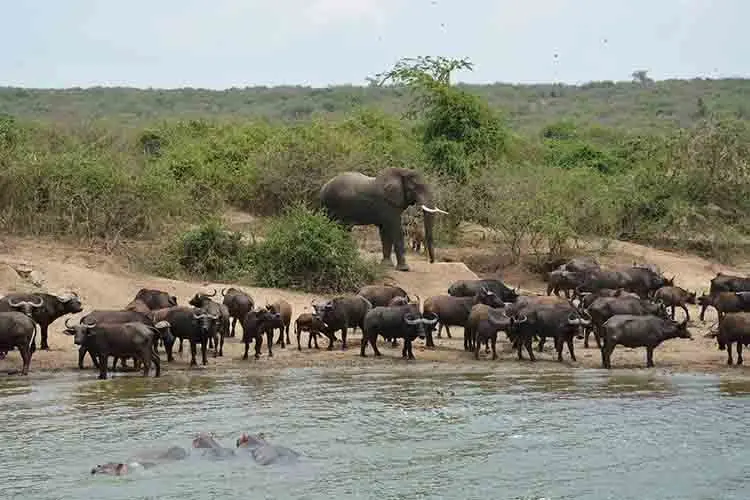
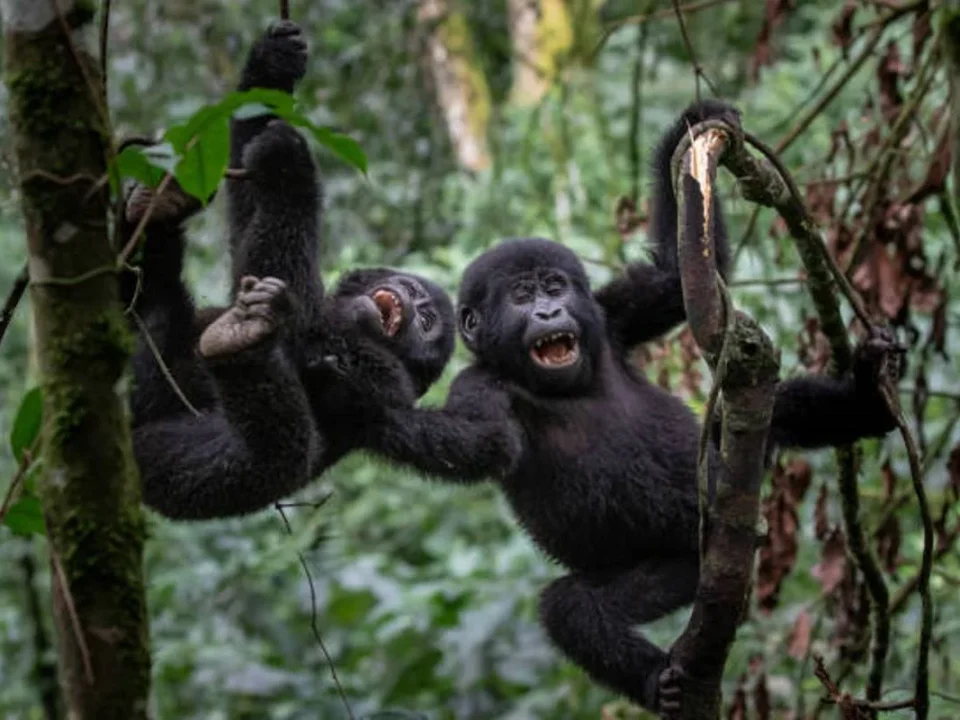
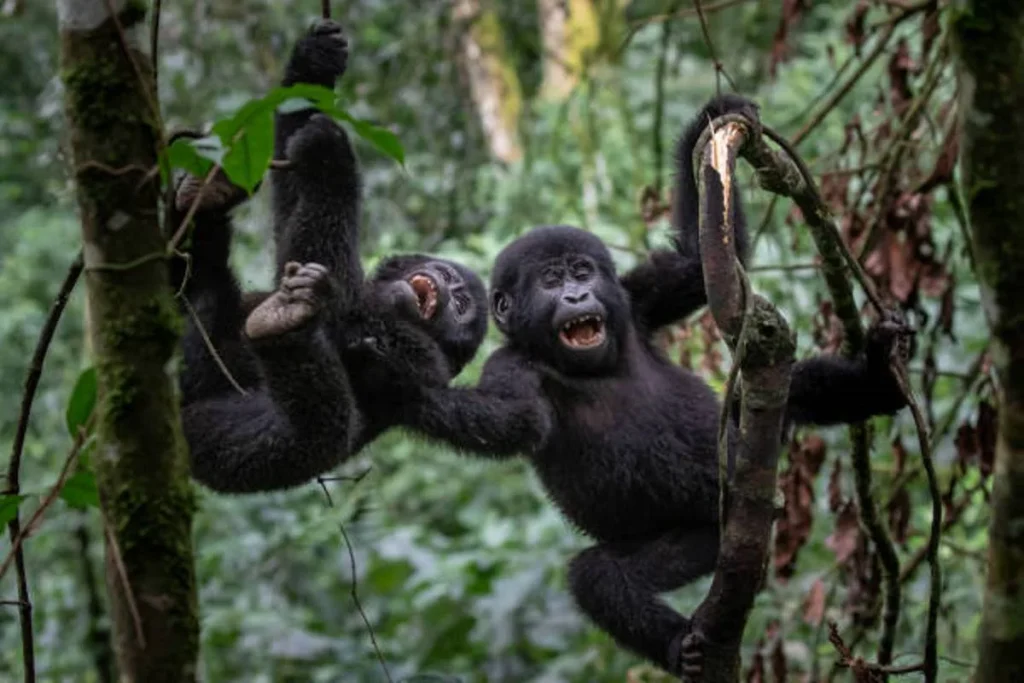
This point cannot be stressed enough: Uganda’s safari destinations are geographically and epidemiologically completely removed from the situation at the DRC border. Places like Bwindi Impenetrable National Park, where you can enjoy the life-changing experience of mountain gorilla trekking with us at Kenlink Tours, are located in southwestern Uganda — far from any affected zone. Similarly, Queen Elizabeth National Park, Murchison Falls National Park, Kibale Forest, and Kidepo Valley National Park continue to operate entirely normally.
The two confirmed Ugandan cases were travel-associated cases identified in Kampala and isolated within hours of detection. There has been no spread to any tourist area, game reserve, forest park, or lodge. Safari travellers visit remote, open wilderness areas — not crowded urban border zones — and their entire experience unfolds in environments that bear absolutely no connection to the outbreak.
If you have been dreaming of tracking chimpanzees through Kibale’s ancient forest canopy or watching the great Nile thunder over Murchison Falls, those experiences are waiting for you exactly as promised. Browse our Uganda safari packages to start planning your adventure.
What WHO Says About Travel — No Restrictions Recommended
Perhaps the most important thing to know is what WHO itself recommends for international travellers. The official WHO guidance is unambiguous: “No country should close its borders or place any restrictions on travel and trade. Such measures are usually implemented out of fear and have no basis in science.”
WHO further advises that entry screening at airports outside the affected region is not considered necessary for passengers arriving from Uganda. In other words, the global health authority is not recommending that travellers avoid Uganda. They are recommending that countries keep their borders open, share information, and maintain normal international traffic — because science, not fear, should guide decision-making.
At Kenlink Tours, we align ourselves completely with this evidence-based position. For more information on WHO’s official guidance, you can read the full PHEIC statement, and review their Ebola fact sheet
Practical Safety Tips for Safari Travellers
While we are confident that your Uganda safari poses no Ebola-related risk, we always encourage travellers to be informed and sensible when visiting any destination. Here are a few straightforward precautions:
Avoid travelling to eastern DRC and particularly the Ituri Province at this time. Do not visit informal markets or healthcare facilities in border towns near the DRC. Follow any temperature screening procedures at Entebbe International Airport without concern — these are quick, professional health measures in place for everyone’s benefit. Carry basic personal hygiene supplies, wash hands regularly, and monitor your health as you would during any international travel. Ensure you have comprehensive travel insurance that covers medical evacuation — something we always advise our clients to arrange regardless of any specific health situation.
Our guides and ground teams are fully briefed and will keep you informed throughout your trip. Your wellbeing is our first priority on every single journey we operate.
Uganda Remains One of Africa’s Greatest Safari Experiences
It would be a true shame to let misleading headlines rob you of what Uganda has to offer. This is the only country on earth where you can track mountain gorillas, chimpanzees, and the Big Five all within a single journey. It is a country of staggering biodiversity, extraordinary landscapes, and some of the warmest, most welcoming people you will ever meet on a continent renowned for its hospitality.
From the mist-covered hills of Bwindi to the papyrus-fringed shores of Lake Victoria, Uganda delivers magic at every turn. Our expertly guided Uganda gorilla trekking and wildlife tours are designed to give you a safe, seamless, and utterly unforgettable experience.
The outbreak is real, but it is being managed. Uganda is safe. Your safari is waiting.
Contact our team today to speak with one of our Uganda specialists, and let us help you plan the adventure of a lifetime with complete confidence and peace of mind. You can send us an email on info@kenlinktours.com for assistance.