Birding Guide • East Africa • Uganda • Kenya • Rwanda • Tanzania
Top 10 Birding Spots in East Africa Every Birder Must Visit
For birders, East Africa is not just a destination — it is a pilgrimage. The region sits at the crossroads of the African-Eurasian migratory flyway, making it a year-round spectacle of avian diversity. Resident forest endemics, savannah specialists, lake-shore waterbirds, and waves of Palearctic migrants all converge here across a landscape that shifts dramatically from snow-capped mountains to sweltering savannah, from papyrus swamps to high-altitude moorland.
Uganda alone records over 1,066 bird species — more than the entire European continent combined. Add Kenya, Tanzania, and Rwanda to your itinerary and you are looking at one of the richest birding circuits in the world. At Kenlink Tours, we have spent years exploring these landscapes with binoculars in hand, and these are the ten spots that consistently take our breath away.
East Africa's Birding Numbers at a Glance
Kibale Forest is best known as Uganda's primate capital — home to the largest population of chimpanzees in East Africa — but serious birders know it equally well as one of the continent's finest forest birding destinations. The park records over 375 bird species, including an extraordinary concentration of Albertine Rift endemics found nowhere else on Earth. The dense tropical rainforest canopy shelters green-breasted pittas, African pitta, blue-headed sunbirds, and the elusive African dwarf kingfisher, while the forest floor offers sightings of the stunning African grey parrot in flocks that darken the sky at dusk.
Birding in Kibale is best combined with a morning chimpanzee trek — the two activities complement each other perfectly, with guides who are equally expert in both primates and birds. Bigodi Wetland Sanctuary, a community-managed wetland just outside the park boundary, adds papyrus wetland specials including the papyrus gonolek, white-winged warbler, and the sought-after papyrus canary. Our Uganda birding tours include dedicated forest walks led by specialist birding guides with decades of Kibale experience.
Key species to look forFor most birders visiting Uganda, the name Mabamba Swamp means one thing above all else: the shoebill stork. This extraordinary bird — standing over 1.2 metres tall, with a bill shaped like a Dutch wooden clog — is one of the world's most prehistoric-looking creatures and one of Africa's most sought-after species. Mabamba, a Ramsar-listed wetland on the northwestern shores of Lake Victoria, offers some of the most reliable shoebill sightings on the continent, reached by canoe through narrow papyrus channels at the break of dawn.
Beyond the shoebill, Mabamba delivers outstanding waterbird diversity — malachite kingfishers perch at arm's length, African jacanas walk on floating vegetation, swamp flycatchers dart through the reeds, and blue-breasted bee-eaters flash overhead in brilliant turquoise arcs. A morning canoe session here is one of the finest birding experiences in all of East Africa, and easily combined with a visit to Entebbe Botanical Gardens — itself a superb birding spot — before or after. As noted by the Ramsar Convention↗, Mabamba Bay is among East Africa's most ecologically significant wetland habitats.
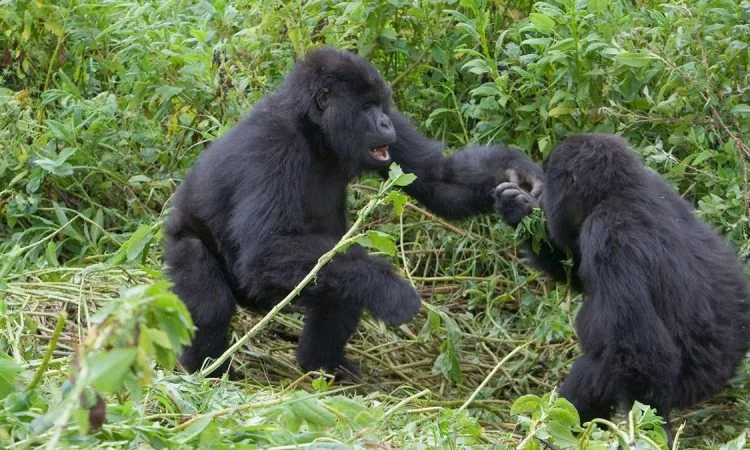
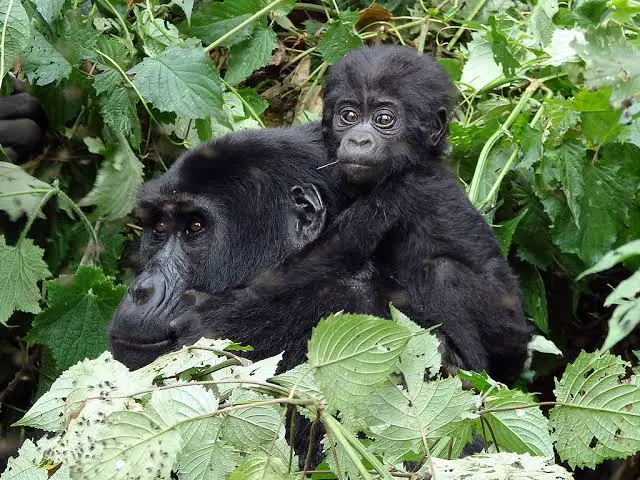
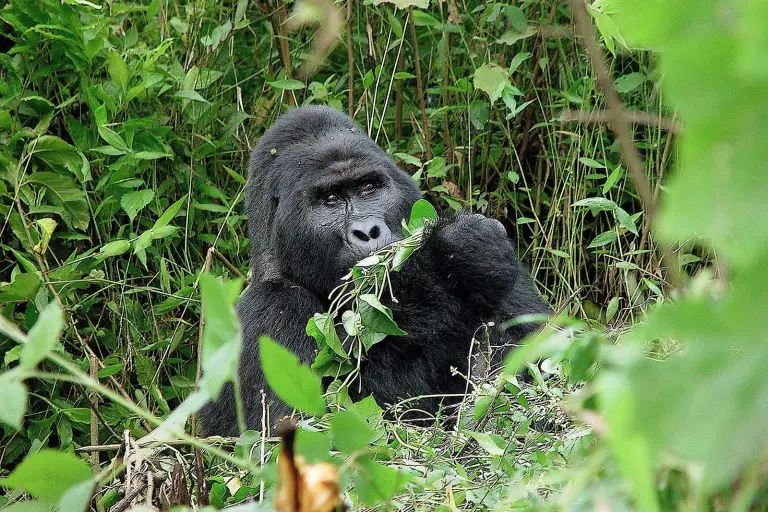
Key species to look forBwindi Impenetrable National Park is world-famous for mountain gorilla trekking, but it ranks among Africa's very finest montane forest birding destinations — and for many specialist birders, the birds are as compelling as the gorillas. The ancient forest holds over 350 bird species, including 23 Albertine Rift endemics — a concentration of range-restricted species unmatched anywhere in Uganda. The African green broadbill, Grauer's broadbill, African emerald cuckoo, and the spectacular Ruwenzori turaco are among the prizes that draw birders from across the world to these mist-shrouded Kigezi highlands.
Birding at Bwindi rewards early risers — pre-dawn walks along the forest edge at Buhoma or Ruhija deliver extraordinary dawn choruses, and the montane forest interior offers species not found in any lowland park. A combined gorilla trekking and birding itinerary at Bwindi is one of Kenlink Tours' most requested safari combinations, and our specialist guides know exactly which trails to walk for the rarest Albertine endemics.
Key species to look forThe Albertine Rift — a chain of ancient lakes, mountains, and forests running along Uganda's western border — is one of the world's most important biodiversity hotspots, sheltering over 50 endemic bird species found nowhere else on Earth. A dedicated Albertine Rift birding itinerary covering Kibale, Bwindi, and the Rwenzori Mountains can yield 30+ endemics in a single trip. Ask our team about our specialist Albertine Rift birding safari.
Queen Elizabeth National Park is Uganda's most diverse ecosystem — and its 612 recorded bird species make it one of the top birding parks in Africa by species count alone. The park's remarkable habitat diversity is the key: open savannah, dense riverine forest, wetlands, the vast Kazinga Channel, and the shores of Lake Edward and Lake George all sit within a single protected area, each delivering entirely different bird communities.
The Kazinga Channel boat cruise is one of East Africa's supreme birding experiences — African fish eagles call from every tree, pied kingfishers hover in their hundreds over the water, and African skimmers skim the glassy surface at dusk in one of the most dramatic avian displays imaginable. The Maramagambo Forest within the park holds specialist forest species, while the open savannah delivers secretary birds, martial eagles, and the comical southern ground hornbill strutting across the grass. For birders combining wildlife drives with serious listing, Queen Elizabeth is an essential destination.
Key species to look forLake Nakuru is one of the most iconic birding spectacles on the planet. A soda lake in Kenya's Rift Valley, Nakuru has historically hosted up to two million lesser flamingos — turning the lake's shores a shimmering, impossible pink that can be seen from space. While flamingo numbers fluctuate with the lake's alkalinity levels, the spectacle when they gather in full force is one of the natural world's most breathtaking sights and an image that defines East African wildlife photography.
Beyond the flamingos, Lake Nakuru National Park delivers exceptional birding year-round — yellow-billed storks wade through the shallows, Goliath herons stand sentinel at the lake edge, and the surrounding fever tree forest shelters Verreaux's eagle-owls, Nubian woodpeckers, and the spectacularly crested Schalow's turaco. The park's rhino sanctuary also makes it a superb wildlife destination for non-birders in the group. According to Kenya Wildlife Service↗, Lake Nakuru remains one of Kenya's most visited national parks and a globally significant flamingo habitat.
Key species to look forMurchison Falls National Park — Uganda's largest protected area — is a powerhouse for birding, particularly along the banks of the Victoria Nile where the river churns through its dramatic gorge and crashes 43 metres into the pool below. The Nile delta at Lake Albert is one of the finest waterbird habitats in East Africa, and a boat trip from Paraa to the base of the falls passes an extraordinary succession of herons, cormorants, kingfishers, bee-eaters, and waders crowding every bank and sandbar. Watch for the localised shoebill stork in the papyrus swamps of the delta — Murchison is one of only a handful of reliable shoebill sites in Uganda.
The open savannah north of the Nile delivers raptors in remarkable variety — long-crested eagles, bateleur eagles, brown snake eagles, and the massive martial eagle all patrol the skies above the game drive tracks. The park's diverse habitats — riverine forest, open savannah, wetland, and highland woodland — give it one of Uganda's most varied bird lists, making it a superb all-round birding destination that easily justifies two to three days of dedicated observation.
Key species to look forNyungwe Forest is one of Central Africa's last great montane rainforests and Rwanda's premier birding destination. Covering over 1,000 square kilometres of ancient forest along the Congo-Nile watershed, Nyungwe records over 310 bird species including 29 Albertine Rift endemics — many of which are shared with Uganda's Bwindi but can be seen here with the added context of one of the region's most spectacular canopy walkways, which offers birding at treetop height through the mist-draped forest interior.
The Albertine owlet — one of Africa's rarest owls — has been recorded here, alongside the stunning red-collared mountain babbler, Rwenzori nightjar, and the iridescent Ruwenzori double-collared sunbird. Nyungwe is also home to chimpanzees and the world's largest troop of Angola colobus monkeys, making it an outstanding combined primate and birding destination when visiting Rwanda alongside a gorilla trek at Volcanoes National Park.
Key species to look forThe Serengeti and Ngorongoro Crater need little introduction as wildlife destinations — but their birding credentials are equally extraordinary and far less celebrated. The Serengeti's vast open plains host one of Africa's greatest raptor assemblages — tawny eagles, martial eagles, lappet-faced vultures, and the majestic bateleur wheel above the grasslands in numbers rarely seen elsewhere. During the Great Migration, the skies above the wildebeest herds are thick with vultures and kites, and the riverine forests along the Grumeti deliver outstanding forest birding with Fischer's lovebird, grey-breasted spurfowl, and the spectacular lilac-breasted roller.
The Ngorongoro Crater floor — a world within a world — hosts an extraordinary density of waterbirds around its central lake, including flamingos, lesser flamingos, and enormous concentrations of wading birds drawn by the alkaline shallows. The crater rim forests add montane species to the mix, giving Ngorongoro a remarkably diverse bird list for a single location. Combined with the Serengeti in a single Tanzania itinerary, this circuit delivers birding of the very highest quality alongside one of Africa's greatest wildlife spectacles.
Key species to look forLake Mburo is Uganda's most accessible birding destination from Kampala — a compact, beautiful park centred on a series of interconnected lakes and papyrus swamps that shelter an outstanding diversity of waterbirds alongside open savannah species found nowhere else in Uganda. The park records over 350 species and is the only place in Uganda to reliably see the African finfoot, the red-faced barbet, and the distinctive impala — Uganda's only national park where the species occurs.
Morning birding walks led by expert guides deliver remarkable close encounters with African water rails, lesser jacanas, and the elusive Tabora cisticola in the lakeshore vegetation, while open savannah drives add secretary birds, bateleur eagles, and the colourful African paradise flycatcher overhead in the acacia woodland. Lake Mburo is an ideal first or final night stop on a western Uganda safari circuit, combining effortlessly with Kibale Forest, Queen Elizabeth, and Bwindi on a single itinerary.
Key species to look forKakamega Forest is Kenya's only tropical rainforest — a remnant of the great Guinea-Congolian forest belt that once stretched across Central Africa — and it holds a collection of bird species found nowhere else in Kenya. Over 360 species have been recorded here, including the spectacular great blue turaco (one of Africa's largest and most striking birds), the Turner's eremomela, the Chapin's flycatcher, and the stunning blue-headed bee-eater. For Kenya-based birders seeking the forest species absent from the savannah parks, Kakamega is an essential and deeply rewarding destination.
The forest is best birded in the very early morning when the canopy is alive with movement and the light filters golden through the trees. Guided walks with specialist local birding guides routinely deliver 80 to 100 species in a single half-day session — an extraordinary hit rate that puts Kakamega among East Africa's most productive birding sites per hour spent in the field. According to the African Bird Club↗, western Kenya's forests remain critically important for the conservation of Guinea-Congolian forest species at the eastern edge of their range.
Key species to look forPlanning Your East Africa Birding Safari
East Africa's birding season is, in the most wonderful sense, year-round. The two rainy seasons — March to May and October to November — bring an influx of Palearctic migratory species from Europe and Asia, making these months paradise for birders who want maximum species diversity. The dry seasons deliver easier forest access, firmer trails, and the best conditions for combining birding with other safari activities like gorilla trekking, chimpanzee tracking, and Big Five game drives.
At Kenlink Tours, our birding safaris are led by specialist guides with decades of field experience across Uganda, Rwanda, Kenya, and Tanzania. We build completely custom itineraries around your target species, your physical ability, and your travel dates — whether you are a dedicated lister chasing Albertine Rift endemics, a photographer seeking the perfect shoebill portrait, or a general wildlife traveller who wants world-class birding woven through a broader East Africa itinerary.
All of our Uganda birding safari packages include specialist birding guides, dedicated birding vehicles with roof hatches for photography, pre-dawn starts for optimal forest birding, and accommodation carefully chosen near the finest birding sites. We also offer cross-border birding circuits combining Uganda, Rwanda, and Kenya for travellers seeking the ultimate East Africa species list.
Ready to Explore East Africa's Birding Paradise?
Let Kenlink Tours build your perfect birding safari — specialist guides, target species lists, and all logistics handled for you.
Plan My Birding Safari →Frequently Asked Questions
Is Uganda better for birding than Kenya or Tanzania?
Uganda consistently ranks among Africa's top three birding destinations and offers something the savannah parks of Kenya and Tanzania cannot — an extraordinary concentration of Albertine Rift endemics and equatorial forest species. With over 1,066 recorded species and habitats ranging from papyrus wetlands to ancient montane forest, Uganda is a birding destination without equal in East Africa for forest and endemic specialists. Kenya and Tanzania excel for savannah and waterbird diversity. The ideal birding circuit combines all three countries.
When is the best time to go birding in East Africa?
Birding is excellent year-round in East Africa, but the migratory seasons (November to April) bring the greatest species diversity as Palearctic migrants join resident populations. For specific Albertine Rift endemics in Uganda's forests, the wetter months of November to April are generally best. For easier physical access and combined birding with other safari activities, the dry seasons of June to August and December to February are recommended.
Do I need a specialist birding guide?
For serious birders targeting specific endemics and range-restricted species — yes, absolutely. Kenlink Tours' specialist birding guides know the precise locations, call patterns, and seasonal behaviour of every significant species in Uganda's parks. General safari guides are excellent for wildlife drives, but for forest birding and endemic hunting, a specialist guide makes an enormous difference to your species list and overall experience.
Can birding be combined with gorilla or chimp trekking?
Absolutely — and this is one of our most popular itinerary combinations. Bwindi's gorilla trekking trails pass through some of the finest Albertine Rift endemic habitat in Uganda, and Kibale Forest's chimpanzee walks deliver extraordinary forest birding alongside the primate encounter. A combined primates-and-birding itinerary gives you the very best of Uganda's wildlife in a single, seamless trip. Contact Kenlink Tours to start planning your itinerary today.