- EXPERT'S HELP
- +256789210067
- +256200955001
- info@kenlinktours.com


Best Short Uganda Safaris for Busy Travelers
May 7, 2026
Exploring Volcanoes National Park
May 7, 2026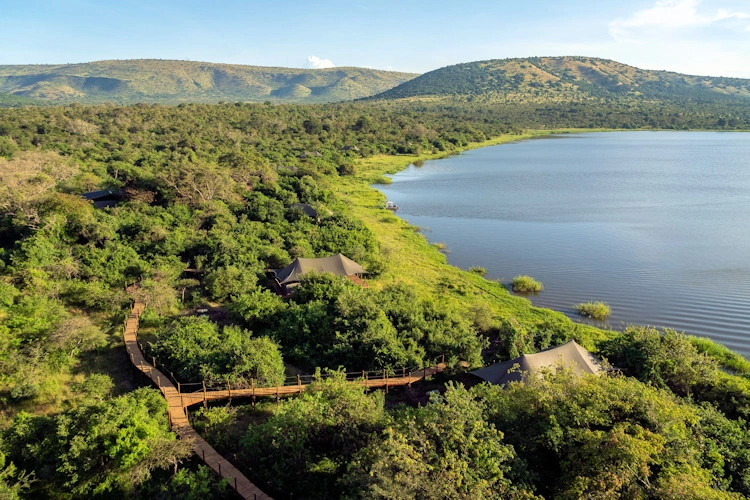
Best Rwanda Safari Experiences for Nature Lovers. Rwanda is small, landlocked, and — to anyone who has not visited — easy to underestimate as a safari destination. But for nature lovers, this compact East African nation is one of the continent’s most concentrated and varied wildlife experiences. Within the borders of a country roughly the size of Wales, you can trek endangered mountain gorillas through volcanic forest, track chimpanzees across one of Africa’s oldest rainforests, walk the only rainforest canopy in East Africa suspended fifty metres above the treetops, watch lions and black rhinos in a savannah that represents one of conservation’s most remarkable comeback stories, and birdwatch across habitats that host over 700 recorded species. Add Rwanda’s well-organised infrastructure, extraordinary cleanliness, and genuine commitment to conservation-driven tourism, and you have a nature safari destination that punches far above its geographic weight. This guide takes you through the very best Rwanda safari experiences for nature lovers, and how to combine them into one extraordinary journey.
Gorilla Trekking in Volcanoes National Park — The Signature Rwanda Experience
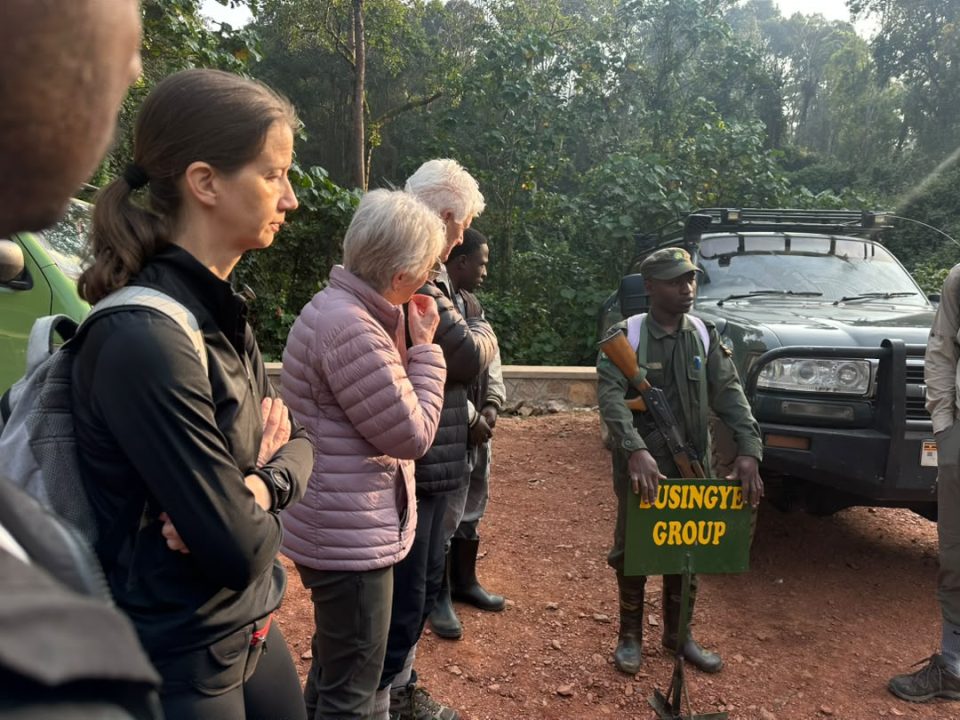
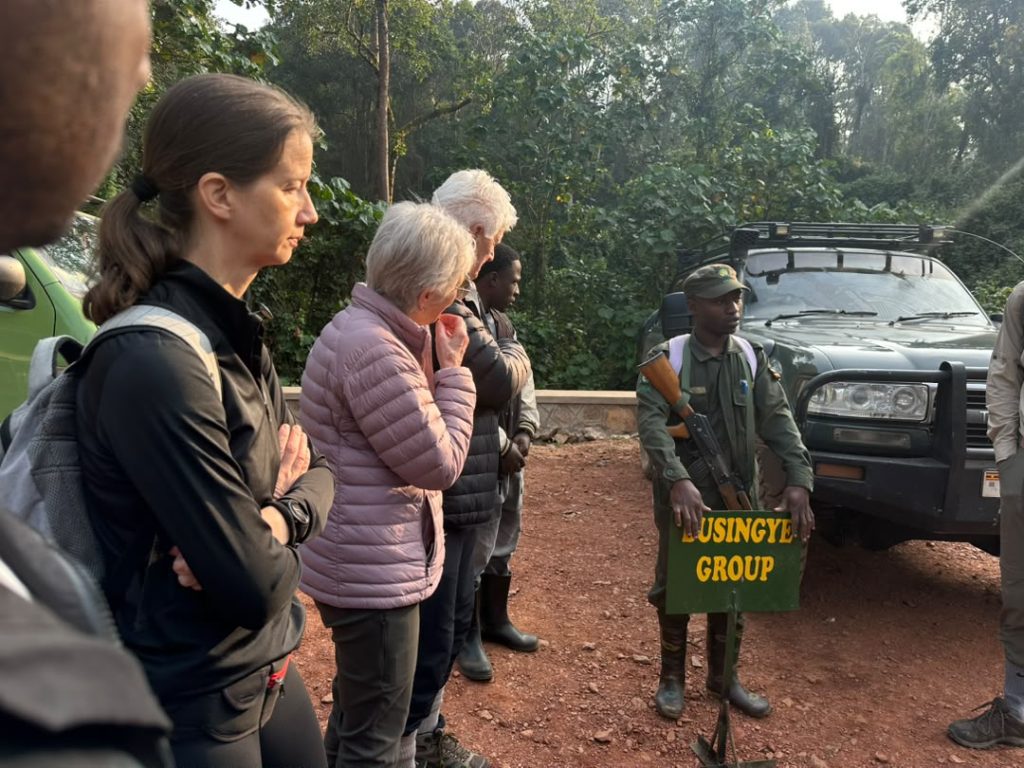
No safari guide to Rwanda begins anywhere other than Volcanoes National Park. Located in the far northwest of the country, bordering Uganda and the Democratic Republic of Congo, this dramatic landscape of mist-shrouded volcanoes and ancient montane forest is home to one of the most significant concentrations of mountain gorillas anywhere on Earth. Approximately 18 gorilla families have been habituated to human presence here, and each trekking day brings a small group of eight visitors face to face with one of these families in their natural environment.
Gorilla trekking in Volcanoes National Park has a character distinct from the Uganda experience. The terrain is generally more moderate — well-marked trails through bamboo forest and open volcanic slopes — making the trek accessible to a wider range of fitness levels. The gorilla families here are typically encountered relatively close to the park’s lower boundary, which means shorter average hiking times before the encounter begins. The backdrop of five Virunga volcanoes — Karisimbi, Bisoke, Sabyinyo, Gahinga, and Muhabura — provides one of Africa’s most photogenic safari settings. And because Rwanda’s conservation investment is so high, the infrastructure, guide quality, and lodge standard around the park are among the finest available anywhere in gorilla trekking territory.
A gorilla trekking permit in Rwanda currently costs USD 1,500 per person for foreign non-residents — significantly higher than Uganda’s USD 800 — but the premium reflects Rwanda’s investment in conservation, lodge quality, and the overall organisation of the experience. According to the IUCN Red List, mountain gorillas remain classified as Endangered, and every permit purchased contributes directly to their ongoing protection. Kenlink Tours offers 3-day gorilla trekking safaris in Volcanoes National Park that include Kigali arrival, a city tour, the trek itself, and comfortable lodge accommodation — efficiently designed for travellers who want the full experience within a tight schedule.
Golden Monkey Tracking — Volcanoes National Park’s Underrated Treasure
Volcanoes National Park harbours a second remarkable primate encounter that many visitors overlook entirely in their focus on gorillas: the golden monkey. This brilliantly coloured primate — vivid orange-gold patches contrasting against jet-black fur — is endemic to the Albertine Rift and found only in the bamboo forests of the Virunga Mountains. Uganda and Rwanda between them hold the only viable golden monkey populations in the world, and Volcanoes National Park’s single habituated group offers a playful and energetically entertaining encounter that is completely different in character from the composed, almost meditative hour spent with gorillas.
Where gorillas are still and dignified, golden monkeys are chaotic and acrobatic — leaping between bamboo stalks, chasing each other through the undergrowth, hanging upside down to feed, and occasionally pausing to regard the watching humans with quick, bright-eyed curiosity. The trek to find them typically takes one to three hours depending on the group’s location, and the encounter lasts one hour. Including golden monkey tracking as a second activity day in Volcanoes National Park — gorillas on Day One, golden monkeys on Day Two — gives nature lovers a pair of primate encounters that complement each other beautifully and make full use of the drive and accommodation investment already made getting to the park. Kenlink Tours’ 5-day Volcanoes Gorillas and Akagera Wildlife Safari incorporates both gorilla trekking and golden monkey tracking alongside a savannah wildlife component, making it one of the most complete short Rwanda safari itineraries available.
Nyungwe Forest National Park — Canopy, Chimpanzees, and Ancient Rainforest
Nyungwe Forest National Park, spread across the mountains of southwestern Rwanda, is one of Africa’s oldest and largest montane rainforests — and one of its most biodiverse. The forest is thought to have served as a glacial refugium during periods when much of Africa’s forest cover retreated, which explains its extraordinary richness: over 1,000 plant species, 75 mammal species, 13 primate species, and more than 300 bird species, including 29 Albertine Rift endemics found nowhere else in Africa.
Chimpanzee trekking in Nyungwe Forest is Rwanda’s second most popular wildlife experience after gorilla trekking. A community of approximately 60 habituated chimpanzees inhabits the park, and the trekking permit at USD 90 for foreign visitors makes this one of the most accessible primate encounters in East Africa. Unlike gorilla trekking, chimpanzee encounters in Nyungwe have no strict one-hour time limit — but keeping up with these fast-moving, energetically unpredictable primates through the forest can be genuinely challenging and exhilarating in equal measure. Along the way, grey-cheeked mangabeys, black-and-white colobus monkeys, L’Hoest’s monkeys, and silver monkeys are commonly encountered as bycatch of the chimpanzee search.
Beyond primates, Nyungwe’s canopy walk is an experience that belongs on every nature lover’s Rwanda itinerary. After a 90-minute approach hike from the Uwinka Visitor Centre, you step onto a 91-metre-long suspension bridge suspended more than 50 metres above the forest floor — the only rainforest canopy walk in all of East Africa. Standing above the canopy, with the forested hills of southwestern Rwanda rolling away in every direction and a chorus of birds visible at eye level for the first time, is an experience of singular beauty. Nyungwe’s 15 marked hiking trails offer additional exploration options for those who want to spend more than a single day in the forest — the Isumo waterfall trail and the Bigugu summit hike being particular highlights.
Akagera National Park — Africa’s Greatest Conservation Comeback Story
For nature lovers who want Rwanda’s equivalent of a classic African savannah safari — open game drives, boat safaris, and the drama of predators and prey — Akagera National Park in eastern Rwanda is the answer. Located along the Tanzanian border approximately two and a half hours east of Kigali, Akagera covers 1,120 square kilometres of savannah, woodland, wetland, and a series of lakes — a landscape that supports over 500 bird species and, following one of Africa’s most remarkable conservation recoveries, the full Big Five.
Akagera’s story is extraordinary. Following Rwanda’s 1994 genocide, the park was almost entirely destroyed — poached, encroached upon, and halved in size. A partnership with African Parks, beginning in 2010, reversed the decline completely. Lions were reintroduced in 2015 after a 15-year absence. Black rhinos followed in 2017, white rhinos in 2021. The elephant population recovered. Today, Akagera’s lions — now a thriving and growing population — patrol a landscape that also supports leopards, elephants, buffalo, hippos, zebras, giraffes, topi, impala, and Nile crocodiles. Game drives in Akagera regularly produce five or six Big Five sightings in a single morning, and the park’s compact size means animal densities are genuinely high relative to the area.
Boat safaris on Lake Ihema — the park’s largest lake — are one of Akagera’s greatest highlights: drifting close to pods of hippos at sunset, watching elephants wade into the shallows, and scanning the papyrus margins for rare water birds including the Shoebill Stork. The lake system also makes Akagera exceptional birding territory, with species including the Papyrus Gonolek, African Fish Eagle, Saddle-billed Stork, and Martial Eagle all reliably encountered. A dedicated one-to-two-day Akagera visit, combined with gorilla trekking in Volcanoes National Park, creates a Rwanda safari that covers every major wildlife ecosystem the country offers.
Lake Kivu — Natural Beauty and Highland Serenity
Between Nyungwe and Volcanoes National Park lies one of Rwanda’s most beautiful and least celebrated natural features: Lake Kivu. This vast highland lake — covering 2,700 square kilometres and surrounded by mist-covered mountains — is one of Africa’s Great Lakes and sits at the heart of the Albertine Rift landscape. Rwanda’s western shoreline, centred on the town of Rubavu in the north and Karongi in the south, offers sandy beaches, calm swimming water (remarkably free of the bilharzia and crocodiles that affect many African lakes), kayaking, sunset boat cruises, and simple, peaceful relaxation amid extraordinary scenery.
For nature lovers travelling between Nyungwe Forest and Volcanoes National Park, a night or two on Lake Kivu’s shores provides a restorative pause between primate adventures. The area around Rubavu is also excellent for birding — the lake surface hosts great concentrations of African fish eagles, herons, and kingfishers, while the surrounding hills support forest species not found in Rwanda’s parks. The cost of a Rwanda safari incorporating Lake Kivu as a transit stop adds minimal expense while significantly enriching the journey’s landscape and atmosphere.
Kigali — A City That Belongs on Every Nature Itinerary
Rwanda’s capital, Kigali, is not a wildlife destination — but it is a city that no first-time Rwanda visitor should skip, and it holds its own natural and conservation stories worth engaging with. The Kigali Genocide Memorial is a sombre and profoundly important site that explains the catastrophe of 1994 and the extraordinary national recovery since. Understanding Rwanda’s recent history makes every conservation success story — the returned lions, the growing gorilla population, the restored national parks — more meaningful and more moving.
Beyond the memorial, Kigali’s craft markets, botanical gardens, and the vibrant Inema Arts Centre offer an introduction to Rwandan culture and creativity that enriches the wildlife experiences that follow. Kenlink Tours’ 4-day Rwanda luxury safari begins in Kigali with a city tour and memorial visit before moving to Volcanoes National Park for gorilla trekking — a structure that contextualises the country’s present natural abundance within its extraordinary human story.
Combining Rwanda with Uganda for the Ultimate Nature Safari
Rwanda’s nature safari experiences are remarkable on their own terms. But the most complete and rewarding experience for serious nature lovers is to combine Rwanda with Uganda — gorilla trekking in both Volcanoes National Park and Bwindi Impenetrable National Park, golden monkeys in the Virungas, chimpanzees in both Nyungwe and Kibale, and Big Five wildlife in Akagera and Queen Elizabeth. The two countries share a border that is easily crossed by road, and a combined Rwanda and Uganda itinerary allows nature lovers to experience the full spectrum of East African wildlife in a single seamless journey.
Kenlink Tours designs Rwanda safari holidays of every length and configuration — from focused three-day gorilla trekking breaks to comprehensive two-week cross-border nature itineraries that cover every major ecosystem in both countries. All logistics, permits, accommodation, and professional guiding are handled end-to-end.
Plan Your Rwanda Nature Safari with Kenlink Tours
Rwanda rewards nature lovers who choose it. Its gorillas, its ancient forests, its recovering savannahs, and its extraordinary landscape make it one of Africa’s most compact and concentrated wildlife destinations. Kenlink Tours has the expertise, the local relationships, and the genuine passion for East Africa’s natural world to design a Rwanda safari that exceeds every expectation. Book your Rwanda safari online or reach out to the Kenlink team to start designing your perfect nature journey.
Rwanda is waiting — and it is more extraordinary than most people imagine.