- EXPERT'S HELP
- +256789210067
- +256200955001
- info@kenlinktours.com


Exploring Volcanoes National Park
May 7, 2026
Rwanda Safari Tips for Solo Travelers
May 7, 2026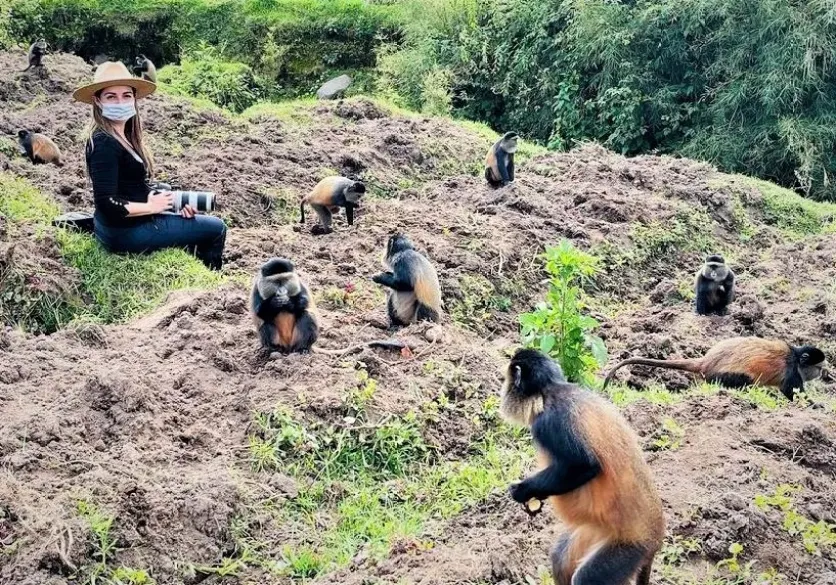
Golden Monkey Tracking in Rwanda. When most travellers arrive at Volcanoes National Park in Rwanda, their eyes and ambitions are fixed entirely on mountain gorillas. This is entirely understandable — gorilla trekking is one of the most profound wildlife encounters on Earth, and it deserves every ounce of the attention it receives. But within the bamboo forests of the same volcanic landscape lives another primate that is rarely given the recognition it deserves: the golden monkey. Brilliantly coloured, acrobatically gifted, and endearingly curious, the golden monkey is one of Africa’s most visually spectacular primates — and one of its most restricted, found only in the Virunga Mountains shared between Rwanda, Uganda, and the Democratic Republic of Congo. Golden monkey tracking in Rwanda is an experience that operates in the shadow of gorilla trekking, and that obscurity is, for the discerning traveller, its greatest virtue. This guide covers everything you need to know: what golden monkeys are, what tracking them involves, how it differs from gorilla trekking, how to combine both, and why it deserves a day of any Rwanda safari itinerary.
What Is the Golden Monkey?
The golden monkey (Cercopithecus kandti) is a medium-sized Old World monkey endemic to the Albertine Rift — one of Africa’s biodiversity hotspots — and specifically to the montane bamboo forests of the Virunga Mountains. Its name comes from the striking colouration of its coat: a jet-black body offset by vivid patches of golden-orange on its back, sides, and cheeks, giving it an appearance that seems almost too colourful to be real when you first see one leaping through a shaft of morning light between bamboo stalks.
According to the IUCN Red List, the golden monkey is classified as Endangered, its population threatened by habitat loss, forest fragmentation, and agricultural encroachment at the boundaries of the Virunga range. Rwanda’s Volcanoes National Park and Uganda’s Mgahinga Gorilla National Park hold the species’ only habituated populations available for tourism, making a golden monkey tracking experience both rare and genuinely meaningful in conservation terms. Unlike mountain gorillas — whose global profile is extremely high — the golden monkey is still largely unknown beyond East African safari circles, which makes each encounter feel like a genuine discovery.
Golden Monkey Tracking vs Gorilla Trekking — Understanding the Difference
Anyone considering golden monkey tracking in Rwanda invariably does so in the context of gorilla trekking, and the comparison is worth making explicitly because the two experiences are fundamentally different in character — different enough that they genuinely complement rather than duplicate each other.
Physical demands: Gorilla trekking in Volcanoes National Park can involve hikes of one to six hours through volcanic forest and bamboo at altitude. Golden monkey tracking is generally shorter and less physically demanding, as the habituated group tends to range at lower altitudes within the bamboo zone. The hike to find them typically takes between 30 minutes and three hours, making it more accessible for travellers with limited fitness or those who want a less strenuous experience. This accessibility also makes golden monkey tracking an excellent choice as a second-day activity for visitors who found gorilla trekking physically challenging on Day One.
Permit cost: A gorilla trekking permit in Rwanda costs USD 1,500 per person — a premium that reflects both the conservation investment and the extraordinary nature of the experience. A golden monkey tracking permit is considerably more affordable — currently priced at approximately USD 100 per person — making it one of the best-value primate encounters available anywhere in Africa. For travellers who want to maximise their time in Volcanoes National Park without the expense of a second gorilla permit, golden monkey tracking on the second day is the natural and economical choice.
The encounter itself: This is where the character difference is most stark. Gorilla trekking is an experience of stillness and gravity. You sit quietly metres from a massive, ancient animal, and the encounter carries a weight and emotional depth that is genuinely difficult to articulate in advance. Golden monkey tracking is its kinetic, joyful opposite. These monkeys are perpetually in motion — leaping between bamboo stalks, chasing each other through the canopy, hanging upside-down to reach bamboo shoots, and occasionally dropping to the forest floor to investigate something in the undergrowth with quick, bright-eyed curiosity. The encounter is energetic, fast-paced, and genuinely fun in a way that leaves most visitors grinning for the rest of the day.
What to Expect on Your Golden Monkey Tracking Day
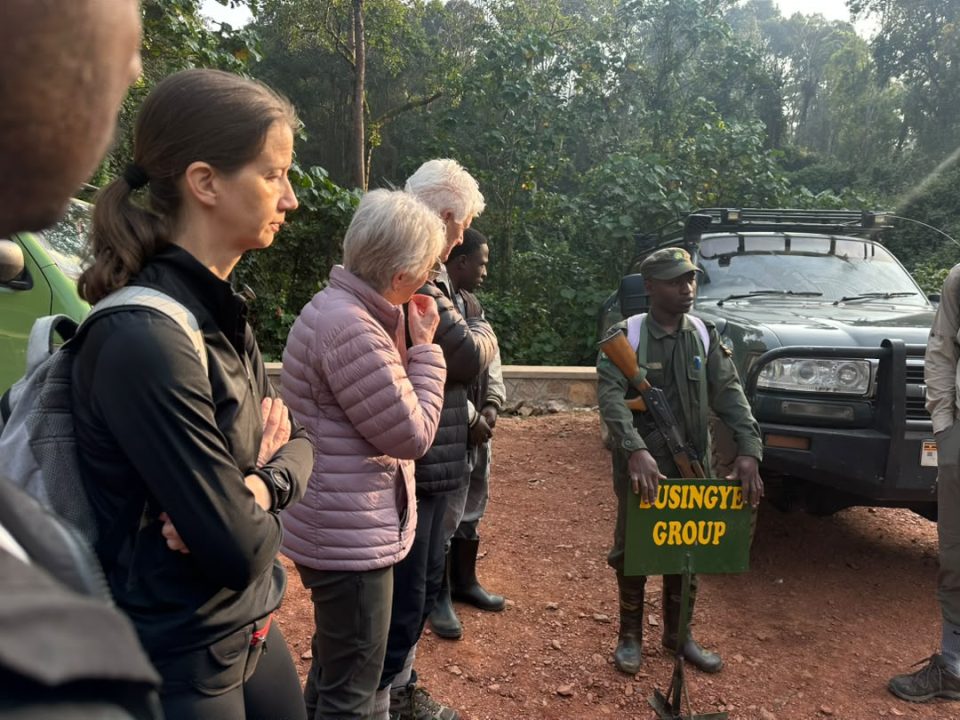
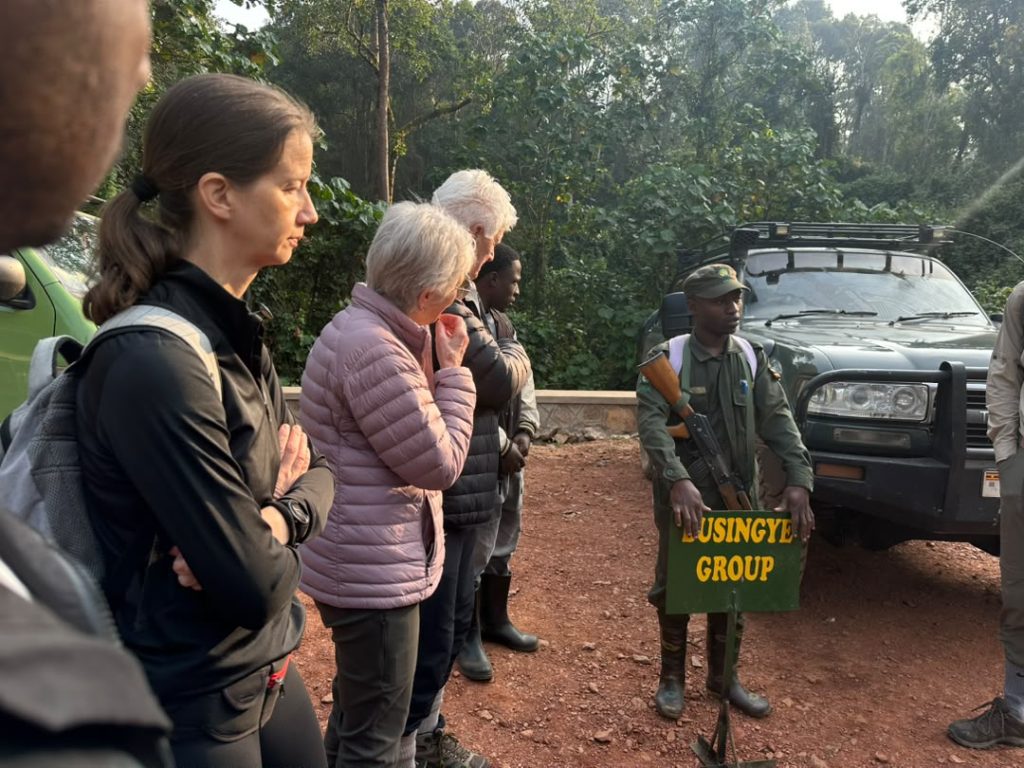
Your golden monkey tracking day begins at the Volcanoes National Park headquarters in Kinigi, where all trekking activities in the park are briefed and organised. Groups assemble by 7:00 AM, and after a short orientation from park rangers — covering the species’ ecology, behaviour, and the rules of the encounter — guides lead the group into the park’s lower bamboo zone in search of the habituated golden monkey group.
The bamboo forest is a distinct ecosystem from the upper montane forest where gorilla families are often found. It is denser, more tunnel-like in character, the stalks rising five to ten metres on either side of the trail in pale green columns that filter the early morning light into something almost theatrical. Golden monkeys are often heard before they are seen — a rustling, crackling, rapid-fire disturbance in the canopy that announces the group’s presence before the first flash of orange-gold fur is spotted. Once the group is located, visitors spend one hour in close proximity to the monkeys, photographing and observing as they feed, play, and go about the particular chaos of their daily social lives.
The group typically numbers between 80 and 100 individuals — a social structure that means there is always activity happening somewhere in the immediate vicinity. Young monkeys practise dominance by chasing each other relentlessly through the bamboo. Adult males display to each other from elevated stalks. Females groom and nurse infants. And occasionally, one individual will drop from the canopy and land a metre away from the watching group, seemingly as surprised by the encounter as everyone else. The guide maintains position to keep the group visible and ensure the one-hour is used to its fullest advantage.
Where to Track Golden Monkeys in Rwanda
In Rwanda, golden monkey tracking takes place exclusively within Volcanoes National Park, in the same Kinigi area that serves as the headquarters for gorilla trekking. There is only one habituated golden monkey group available for regular tourism in the park, which means that unlike gorilla trekking — where multiple families are distributed across different sectors — all golden monkey tracking visitors converge on the same group. The group is, however, large enough and mobile enough within its bamboo territory that the experience is never repetitive. Rangers track the group’s overnight location every evening, so guides know roughly where to find them each morning.
The park is located approximately 100 kilometres northwest of Kigali — a scenic two-and-a-half-hour drive through Rwanda’s terraced hillsides. The gateway town of Musanze (Ruhengeri) sits a short distance from the park and offers a range of accommodation from guesthouses to luxury lodges. For visitors combining gorilla trekking and golden monkey tracking, two nights in Musanze gives the ideal base — one activity per day, with an evening to recover and prepare between them.
How to Combine Golden Monkey Tracking with Gorilla Trekking
The most natural and efficient Rwanda itinerary for any serious wildlife traveller combines gorilla trekking on Day One with golden monkey tracking on Day Two — and the 3-day Rwanda gorilla tour from Kenlink Tours is built precisely around this structure. Arrive in Kigali on Day One, drive to Musanze in the afternoon. Day Two: gorilla trekking at dawn. Day Three: golden monkey tracking in the morning, then drive back to Kigali for an afternoon flight. Two completely different primate encounters, two different ecosystems within the same volcanic landscape, and a Rwanda experience that feels genuinely complete rather than one-dimensional.
For visitors with more time, the 5-day Volcanoes Gorillas and Akagera Wildlife Safari extends the itinerary to include Akagera National Park’s Big Five savannah experience alongside both primate encounters — creating a Rwanda safari that covers forest, montane, and savannah ecosystems in five days. And the 4-day Rwanda luxury safari incorporates the Dian Fossey Gorilla Fund Campus visit alongside gorilla trekking, offering the most culturally and scientifically layered version of the Volcanoes experience available.
Golden Monkeys in Uganda — Mgahinga’s Comparable Experience
For travellers designing a combined Rwanda and Uganda itinerary, it is worth knowing that golden monkey tracking is also available in Uganda’s Mgahinga Gorilla National Park, on the Ugandan side of the same Virunga volcanic range. Mgahinga hosts a habituated golden monkey group that can be tracked by visitors on a Uganda primate tracking safari, and combining gorilla trekking in Bwindi with golden monkey tracking in Mgahinga creates a superb two-park primate itinerary entirely within Uganda.
The Rwanda vs Uganda comparison for golden monkey tracking reveals subtle differences: Rwanda’s Volcanoes group is larger and typically more reliably located, while Mgahinga’s experience is more exclusive and typically less crowded. Both take place within the same Virunga ecosystem and offer comparable encounter quality. For travellers visiting both countries, golden monkey encounters in both Rwanda and Uganda provide an interesting point of comparison — same species, same mountain range, slightly different forest character and visitor experience.
Practical Tips for Golden Monkey Tracking in Rwanda
Book permits in advance through the Rwanda Development Board or, more conveniently, through Kenlink Tours, who handle all permit logistics as part of any Rwanda safari package. Golden monkey permits are more readily available than gorilla permits and can sometimes be arranged at shorter notice, but advance booking remains the safer and more reliable approach.
Wear neutral colours — khaki, olive, brown, and green work best for blending into the bamboo forest environment without startling the monkeys. Bright colours are not recommended. Long sleeves and trousers protect against both insects and the scratching of bamboo stalks on forest trails.
Bring a camera with a fast shutter speed — golden monkeys are in near-constant motion, and the bamboo forest light is filtered and variable. A lens in the 70–300mm range works well for capturing individuals in motion at moderate distances. Wide-angle shots of the forest atmosphere are also worth taking as you approach the group’s location.
Consider the season. The best time to track golden monkeys in Rwanda mirrors the gorilla trekking season — dry months from June to September and December to February offer firmer forest trails and more comfortable walking conditions. The wet season brings lush bamboo and dramatic forest atmosphere, with the trade-off of muddier paths and occasional rain during the trek.
Understand the cost of safaris in Rwanda as a whole before budgeting. The golden monkey permit at approximately USD 100 is one of Rwanda’s most affordable wildlife experiences, but accommodation in Musanze and transfers from Kigali represent additional costs that add up across a multi-day stay.
Book Your Golden Monkey Tracking Safari with Kenlink Tours
Golden monkey tracking in Rwanda is an experience that rewards travellers who include it in their itinerary and invariably surprises those who had not considered it their main priority. It is joyful, energetic, visually extraordinary, and genuinely important for the conservation of an Endangered species that receives far less global attention than its Virunga neighbours. Kenlink Tours designs Rwanda safari holidays that incorporate golden monkey tracking alongside gorilla trekking, volcano hiking, cultural visits, and Akagera wildlife drives — building itineraries that reveal Rwanda’s full natural depth rather than its single most famous attraction.
For travellers wanting to combine the experience with a Uganda component, Kenlink Tours designs seamless combined Rwanda and Uganda journeys that make the most of both countries’ remarkable primate heritage. Browse all available safari packages and book your Rwanda safari online, or reach out to the Kenlink team to start building an itinerary around your priorities and schedule.
The golden monkey is worth a day of your Rwanda trip. Once you have seen one leap through a shaft of volcanic light with that improbable coat blazing orange-gold against the green bamboo, you will understand immediately why.