- EXPERT'S HELP
- +256789210067
- +256200955001
- info@kenlinktours.com


Best Time for Gorilla Trekking in Rwanda
May 7, 2026
How much does a gorilla safari in Mgahinga cost from Kigali
May 8, 2026
Congo Safari Safety Tips for Travelers. The Democratic Republic of Congo is Africa’s most misunderstood safari destination. Mention it to most travellers and the first response is concern — news headlines about conflict, vast and remote terrain, a reputation for instability that has followed the country for decades. And yet every year, a growing number of adventurous travellers make the journey to eastern DRC and return with accounts of gorilla encounters more raw and uncrowded than anything available in Rwanda or Uganda, volcanic landscapes of extraordinary drama, and a wilderness experience that feels genuinely unlike anything else available in Africa. The Congo safari is not for everyone. It demands more preparation, more flexibility, and more honest acknowledgement of risk than a comparable journey to Uganda or Rwanda. But for travellers who understand the context, prepare properly, book with the right operator, and follow sensible safety protocols, a Congo gorilla safari is not only possible — it is one of the most extraordinary wildlife experiences on the planet. This guide covers everything you need to know to travel to the DRC as safely and confidently as possible.
Understanding the Security Landscape — Context Matters
The DRC is a vast country — the second-largest in Africa by area — and its security situation varies enormously by region. The conflict and instability that dominate international coverage are concentrated primarily in parts of North Kivu and South Kivu provinces in the far east of the country. It is precisely this region that contains Virunga National Park, Africa’s oldest national park and the primary destination for tourist gorilla trekking in the DRC. This geographic overlap means the security context cannot be dismissed or minimised. Virunga National Park has experienced periods of closure due to security incidents, and travellers should approach trip planning with clear-eyed awareness of this reality.
That said, the park’s tourist infrastructure — the gorilla trekking sector near Bukima, the road from Goma, the lodges along the trekking routes — has been managed with genuine attention to visitor safety. All gorilla trekking groups in Virunga are accompanied by park rangers throughout the trek, and the park authority maintains active ranger patrols in the areas used for tourism. According to the Virunga National Park official website, the park has welcomed thousands of visitors to its gorilla trekking programme across recent years, with dedicated security arrangements in place for every trekking group. The fundamental requirement for any Congo safari is to stay comprehensively informed about current conditions — which means checking the park’s official communications, consulting your safari operator, and reviewing travel advisories from your home government in the weeks before departure.
Tip 1 — Only Visit When the Park is Officially Open for Tourism
This sounds self-evident but bears stating directly: Virunga National Park has opened and closed for tourism multiple times in recent years in response to security conditions, and any Congo safari must be confirmed as operational at the time of travel rather than assumed to be so. The park authority communicates closures and reopenings through their official channels. Before committing to flights, permits, or accommodation bookings, confirm the park’s operational status with your safari operator and cross-reference with the park’s own official communications.
Kenlink Tours monitors the operational status of all parks across Uganda, Rwanda, and the DRC continuously and will advise clients immediately if conditions change between booking and departure. Booking through an experienced operator who maintains direct relationships with park management on the ground is the single most important safety measure any Congo-bound traveller can take. Gorilla trekking in Virunga National Park is a remarkable experience — but only when the park is open and conditions are confirmed as stable.
Tip 2 — Book All Logistics Through a Licensed, Experienced Operator
Independent travel to Virunga National Park is technically possible but strongly inadvisable for first-time visitors. The border crossing from Rwanda, the road from Goma to the park, the permit system, the accommodation options, and the security protocols surrounding gorilla trekking all require local knowledge and established relationships that an experienced operator provides as a matter of course. An operator who works regularly in the DRC will know which roads to use, which border crossings are operational, which lodges have the strongest security arrangements, and how to respond efficiently if conditions change during a visit.
When selecting an operator, verify their specific experience with DRC and Virunga — not just Uganda and Rwanda. Ask directly about their security protocols, their contingency plans, and their local contacts within the park authority. Operators who cannot answer these questions with specificity and confidence should not be trusted with a Congo safari booking. Kenlink Tours maintains active operational knowledge of Virunga and manages all DRC safari logistics — permits, borders, accommodation, and guiding — as part of a fully managed service.
Tip 3 — Cross at the Right Border and Travel During Daylight Only
The DRC has multiple border crossings accessible from Rwanda and Uganda, and not all of them are equally safe or practical for tourists. The most commonly used entry points for Virunga gorilla trekking are the Goma border crossing from Gisenyi in Rwanda — a busy, well-established crossing point with relatively straightforward immigration procedures — and the Bunagana crossing from Uganda near Kisoro, which provides access to the southern sectors of Virunga.
The Ruzizi border crossing in the south connects Rwanda’s Rusizi District to Bukavu and is the primary entry for travellers visiting Kahuzi-Biega National Park and the eastern lowland gorillas rather than Virunga’s mountain gorillas. Understanding which border crossing matches your specific destination is essential — and your operator will manage this as part of the itinerary.
Regardless of which crossing you use, travel strictly during daylight hours. Night driving in eastern DRC significantly increases risk and is not recommended under any circumstances. Build your itinerary so that all border crossings and inter-destination drives happen between sunrise and mid-afternoon, leaving a comfortable buffer before dark. Your operator should be able to confirm daylight-feasible drive times for every leg of your journey.
Tip 4 — Follow Ranger Instructions at All Times in the Park
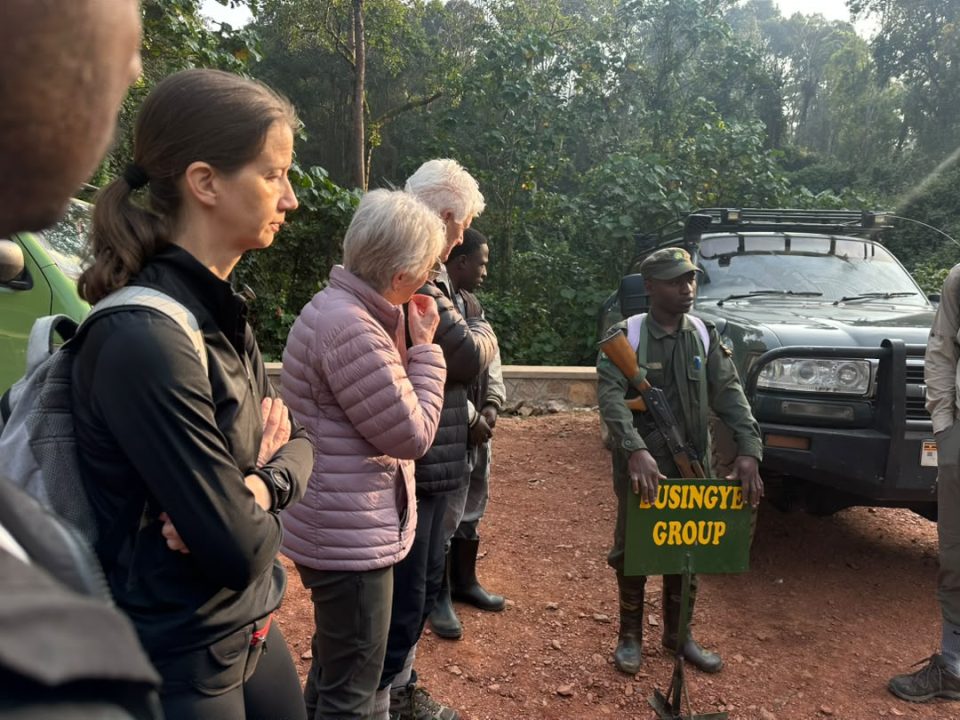
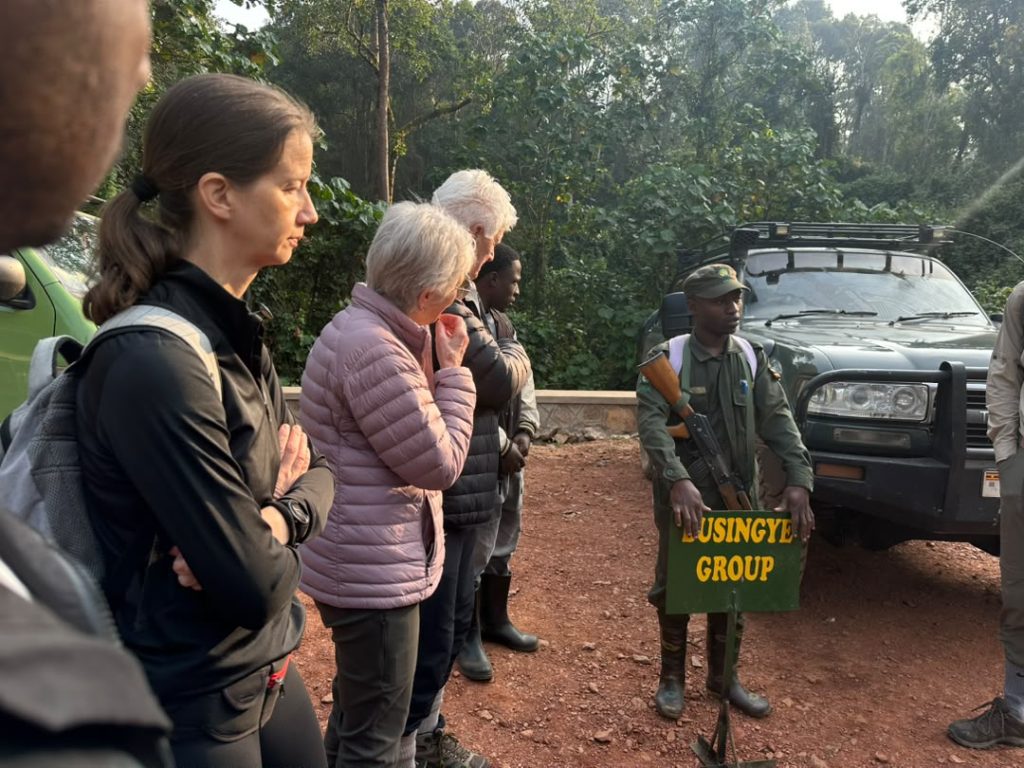
Within Virunga National Park, all gorilla trekking groups are escorted by armed park rangers throughout the trek — a security arrangement that is more visible and more formally structured than the equivalent escort in Uganda or Rwanda. This is not meant to alarm visitors; it is the park’s standard protocol and a genuine layer of protection that has supported thousands of safe trekking experiences. The armed rangers are experienced, professional, and specifically trained in both wildlife management and visitor safety.
The practical implication for travellers is straightforward: follow ranger instructions immediately and without question, stay within the group at all times, do not wander independently, and communicate any concerns directly to your guide or ranger rather than making independent decisions. The rangers’ knowledge of the park — its geography, its wildlife, and its security landscape — is the primary asset protecting you during the trek. The gorilla encounter rules that apply in Uganda and Rwanda — no flash photography, maintain a seven-metre minimum distance from gorillas, do not eat or drink during the encounter, avoid eye contact with silverbacks — apply equally in Virunga. Understanding gorilla behaviour before you trek helps you respond calmly and correctly during the encounter itself.
Tip 5 — Secure Comprehensive Travel Insurance Before Departure
Travel insurance for DRC is genuinely important and more complex to arrange than for Uganda or Rwanda. Many standard travel insurance policies exclude high-risk destinations, and eastern DRC typically falls within that category. Before booking a Congo safari, confirm explicitly with your insurance provider that your policy covers medical evacuation from eastern DRC — not just medical treatment, but actual evacuation to a facility capable of handling serious injuries. Medical facilities in the Goma area are limited by regional standards, and evacuation to Kigali, Rwanda — the nearest city with significant hospital infrastructure — may be necessary in the event of a serious incident.
Policies should also cover trip cancellation due to political instability or park closure — a genuinely relevant risk given Virunga’s history of weather-related and security-related closures. Some specialist travel insurers cover high-risk destinations that standard providers exclude; your safari operator may be able to recommend appropriate providers based on their experience with DRC clients. Do not depart for Congo without evacuation-capable medical coverage in place. This is not optional.
Tip 6 — Get All Required Vaccinations and Health Preparations
The DRC’s health requirements are more extensive than those for Uganda or Rwanda alone. A yellow fever vaccination certificate is mandatory for entry into the DRC — as specified by the World Health Organization — and must be an original certificate administered at least ten days before arrival. Anti-malarial medication is strongly recommended for all areas of eastern DRC, including the Goma region and Virunga National Park environs. Consult a travel medicine clinic six to eight weeks before departure for personalised advice on antimalarials, additional vaccinations (hepatitis A and B, typhoid, and others may be recommended), and any specific health precautions relevant to your itinerary.
Mpox (monkeypox) has been a concern in parts of the DRC in recent years — consult your travel clinic for current guidance on this and any other emerging health advisories. The WHO and your home country’s foreign travel health authority are the authoritative sources for up-to-date health requirements; your safari operator can advise on practical health preparations but is not a substitute for professional medical consultation.
Tip 7 — Pack Appropriately for Congo’s Specific Conditions
Congo’s trekking environment is broadly similar to Uganda and Rwanda — volcanic terrain, dense rainforest, significant altitude in the Virunga sector — but with some specific additions to the standard gorilla trekking packing list. The complete gorilla trekking packing guide covers essentials: sturdy waterproof hiking boots, long-sleeved shirts and trousers, rain jacket, garden gloves, and gaiters for muddy terrain. For Congo specifically, carry more cash than you think you will need in US dollars — card payment infrastructure is limited outside Goma’s main hotels, and having USD available in various denominations is essential for tips, incidentals, and any unexpected expenses.
A headlamp with spare batteries, a basic first aid kit, water purification tablets, and a quality insect repellent (DEET-based, 30–50% concentration) are all more important in Congo than in the more developed tourism infrastructure of Uganda or Rwanda. Phone connectivity outside Goma is unreliable — download offline maps, park information, and your operator’s emergency contacts to your device before crossing the border. The best time to visit Virunga for gorilla trekking mirrors Uganda and Rwanda: the dry seasons of June to September and December to February offer the most manageable trekking conditions, though the park operates trekking year-round subject to security status.
Tip 8 — Stay at Established, Ranger-Adjacent Accommodation
Where you stay in Virunga matters significantly from a safety perspective. The most appropriate accommodation for gorilla trekking visitors is within or immediately adjacent to the park — properties like Bukima Tented Camp, positioned near the gorilla trekking sector at the base of Mikeno Volcano. Staying close to the park headquarters reduces the amount of road travel required each morning and evening, minimises exposure to Goma’s urban environment at night, and keeps you within the park’s active ranger network throughout your stay.
Avoid staying in Goma city unnecessarily beyond your arrival and departure nights. If a Goma night is unavoidable — due to flight timings or permit day scheduling — stay at well-reviewed, security-conscious hotels in the city’s more stable areas, arrange airport transfers directly through your operator, and avoid moving around the city independently after dark.
Tip 9 — Consider Uganda or Rwanda as Safer Alternatives
An honest Congo safari safety guide must include this: for some travellers, the risk calculus simply does not work out in favour of visiting the DRC. If you have significant health vulnerabilities, limited travel insurance options, restricted evacuation coverage, family concerns about security, or a professional situation that cannot accommodate a trip cancellation, Uganda and Rwanda offer genuinely world-class gorilla trekking in environments with far more established and consistent safety records.
Gorilla trekking in Uganda’s Bwindi Impenetrable National Park delivers the same species and the same one-hour encounter at USD 800 per permit, with exceptional infrastructure, reliable roads, and no security escort requirement. Combining Rwanda and Uganda in a single gorilla safari gives you the most comprehensive gorilla experience available in Africa without the additional risk profile of the DRC. These are not lesser alternatives — they are extraordinary destinations in their own right, and for many travellers they are simply the right choice.
Tip 10 — Stay Informed Right Up Until Departure
Security situations in eastern DRC can change relatively quickly. A trip booked six months in advance should be re-evaluated continuously as departure approaches — not with anxiety, but with clear-eyed awareness. Register your travel plans with your home country’s embassy in Kigali or Kampala (the most practical consular presences closest to Virunga). Check your government’s foreign travel advice for the DRC in the final two weeks before departure. Maintain open communication with your safari operator, who will be monitoring conditions on the ground and will advise proactively if anything changes. Have a contingency plan — whether that is a postponed permit, a rerouted itinerary to Uganda or Rwanda, or a full rebooking — agreed with your operator before you fly.
The what it’s like to trek gorillas guide covers the emotional and physical dimensions of the encounter itself, which applies equally in Congo as in Uganda and Rwanda. According to the IUCN Red List, mountain gorillas — including those in Virunga — remain Endangered, and responsible, well-managed tourism visits actively support their conservation through permit revenue that funds ranger patrols, anti-poaching operations, and community programmes.
Plan Your Congo Safari with Kenlink Tours
A Congo safari rewards the well-prepared traveller with an encounter that is more raw, more remote, and more genuinely off the beaten path than anything available in the more established gorilla trekking markets of Uganda and Rwanda. Kenlink Tours has the on-the-ground knowledge, the operator relationships, and the contingency planning capability to organise a safe and extraordinary Congo gorilla safari for the right traveller at the right time. Book your safari or reach out to the Kenlink team to discuss whether a Congo safari is the right fit for your priorities, your risk tolerance, and your travel timeline — and to explore the full range of East and Central African gorilla safari options available.