- EXPERT'S HELP
- +256789210067
- +256200955001
- info@kenlinktours.com


Crossing Rwanda to Uganda’s Bwindi Gorillas
July 14, 2026
Best time to spot Lions and Leopards in Queen Elizabeth
July 15, 2026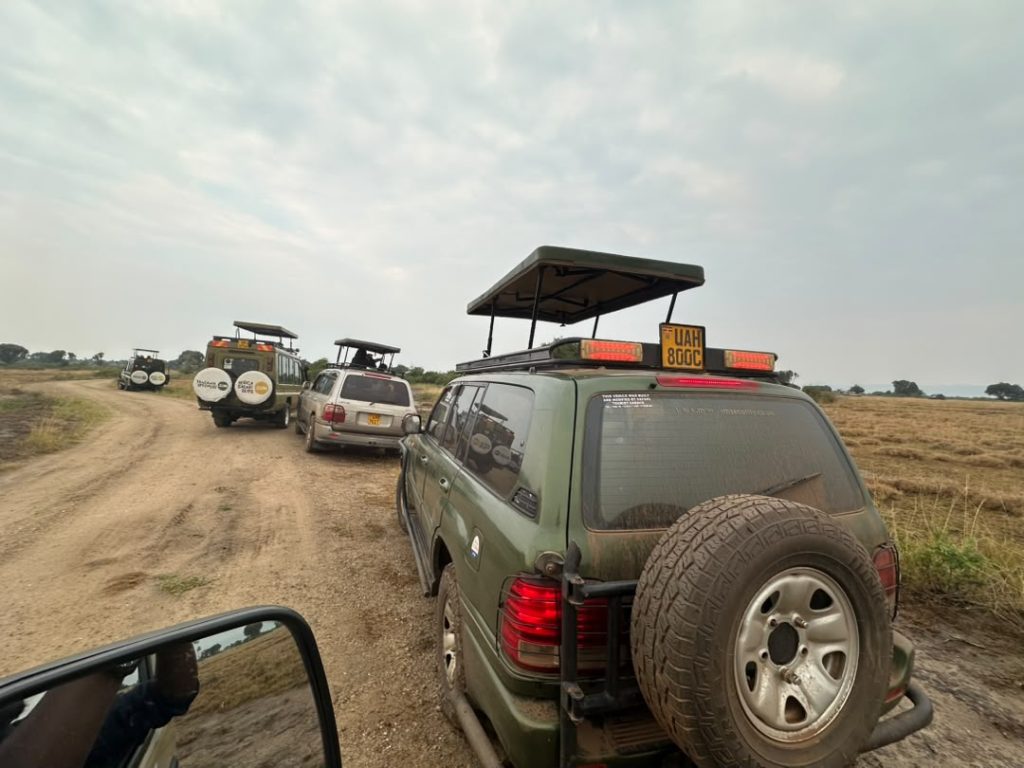
Game Safari and Gorilla Trekking in Bwindi. Uganda is one of a very small number of places on Earth where you can spend a morning watching lions doze in fig trees over open savannah, and a few days later stand a few meters from a wild mountain gorilla in dense, misty rainforest. Most of Africa’s classic safari destinations give you one or the other — big-game plains or primate forest, rarely both in the same country, let alone the same week. Uganda’s combination of savannah parks and Albertine Rift forests makes pairing a game safari with gorilla trekking not just possible, but genuinely one of the most natural itineraries you can build here.
This guide walks through how the two experiences fit together, which parks do each job best, and how to structure a trip that gets you both without wasting days on the road.
Why Uganda Works So Well for Both
Uganda’s geography is the reason this combination works as cleanly as it does. The country’s savannah parks — Queen Elizabeth, Murchison Falls, Kidepo Valley, and Lake Mburo — sit across the western and northern rift valley floor, while its primate forests — Bwindi Impenetrable, Mgahinga, and Kibale — cluster in the southwest, along the same volcanic highlands that give Rwanda and the Democratic Republic of Congo their own gorilla populations. Because several of these parks sit within a few hours’ drive of each other, particularly Queen Elizabeth and Bwindi, it’s entirely possible to build an itinerary that moves from open plains to rainforest canopy without excessive backtracking.
Beyond the logistics, there’s a genuine contrast in experience that makes the pairing so rewarding. A game drive is fast-paced and wide-angle: an open-roofed 4×4, binoculars, the chance of spotting several species in a single morning across sweeping grassland. Gorilla trekking is the opposite — slow, on foot, deliberately unhurried, culminating in a single hour with one family of animals in dense forest. Doing both on the same trip gives you two very different registers of wildlife encounter, and most travelers who’ve done it say the contrast is part of what makes the trip memorable.
The Best Parks for Game Drives
Uganda’s savannah parks each have their own character, and which ones to include depends on how much time you have.
Queen Elizabeth National Park, in the southwest close to Bwindi, is the natural pairing for most gorilla-and-wildlife itineraries. Game drives across the Kasenyi plains turn up elephant, buffalo, Uganda kob, and lion, while the Ishasha sector further south is famous for its tree-climbing lions — a behaviour seen in only a handful of places worldwide. A Kazinga Channel boat cruise, connecting Lake Edward and Lake George, adds one of Africa’s densest hippo concentrations to the mix. Our 3 Days Wildlife Encounter to Queen Elizabeth National Park and 3 Days Tree-Climbing Lions Tour & Boat Cruise both focus on this park specifically.
Murchison Falls National Park, Uganda’s largest and oldest, sits in the north and centres on the Nile itself — a boat cruise to the base of the falls and game drives along the northern bank turn up elephant, giraffe, and large numbers of buffalo, with the falls themselves among the most powerful natural spectacles in Africa. Our 3 Days Tour to Murchison Falls National Park covers this in depth.
Kidepo Valley National Park, tucked into Uganda’s remote northeastern corner, offers a genuinely different feel — dramatic, uncrowded, and rewarding for travellers willing to add the extra travel time, with good chances of cheetah alongside the more usual lion and elephant sightings.
Lake Mburo National Park, Uganda’s smallest savannah park, is the easiest to add onto a southwestern itinerary thanks to its location between Kampala and Bwindi, and is one of the few parks where walking safaris are permitted.
Where to Trek Gorillas
Gorilla trekking in Uganda happens in two national parks, and the choice between them is worth understanding before you book.
Bwindi Impenetrable National Park is the country’s flagship gorilla destination, home to more than half the world’s remaining mountain gorillas across four trekking sectors — Buhoma, Ruhija, Rushaga, and Nkuringo. Its sheer number of habituated families means permit availability here is generally the best of any gorilla park in the world, and its proximity to Queen Elizabeth National Park makes it the natural endpoint of a combined wildlife-and-primate safari.
Mgahinga Gorilla National Park, Uganda’s smaller and less-visited gorilla park, sits on the Ugandan side of the Virunga volcanoes and is home to a single habituated family, the Nyakagezi group. It’s also the only place in Uganda where golden monkey tracking is possible, making it a good choice for travellers who want a quieter, more exclusive trek alongside a second primate experience.
Both require a gorilla trekking permit, currently USD 800 per person for foreign non-residents, issued by the Uganda Wildlife Authority and limited to a fixed number of visitors per gorilla family per day — which is why booking well ahead of your travel dates matters more for this part of the trip than almost anything else.
How to Structure the Trip
The most efficient route through Uganda’s game-and-gorilla combination generally runs west to southwest: start with a savannah park, then finish with the gorilla trek, so the trip builds toward its emotional peak rather than away from it.
A common and highly workable structure looks like this: begin in Queen Elizabeth National Park for game drives and the Kazinga Channel, continue through the Ishasha sector for tree-climbing lions, and finish in Bwindi for gorilla trekking — a route that keeps driving time reasonable while covering two entirely different ecosystems. Our Short Uganda Gorilla Safari with Game Drive is built around exactly this structure for travellers with only four days to spare.
With more time, adding Kibale Forest for chimpanzee trekking rounds the trip out into a full primate-and-wildlife circuit — three of Uganda’s headline experiences in one itinerary. Our 7-Day Wildlife, Gorillas and Chimpanzees Safari and 10 Days Uganda Rwanda Safari – Gorillas Only in Uganda both follow this logic, adding Murchison Falls and a Kigali finish respectively for travellers who want to go further. For a truly comprehensive version that adds Kidepo Valley, Semuliki, and Fort Portal as well, our 25-Day Wildlife, Gorilla, Chimps & Uganda Adventure covers essentially all of it.
Practical Considerations
A few details matter more for this kind of combined trip than for a wildlife-only or gorilla-only safari.
Timing your gorilla permit first. Because permits are allocated to a specific date and gorilla family, it’s worth locking in your Bwindi or Mgahinga trekking day before finalising the rest of the itinerary, and building the game-drive portion of the trip around it rather than the other way round.
Fitness varies considerably between activities. Game drives are effortless — you’re seated in a vehicle for most of it. Gorilla trekking is a different proposition entirely, involving uneven, sometimes steep and muddy forest terrain that can take anywhere from thirty minutes to several hours depending on where the gorillas are that day. If you’re combining the two, it’s worth pacing your itinerary so the trek doesn’t fall immediately after a long travel day.
Season affects both halves of the trip. The dry seasons, June to September and December to February, are best for both game viewing (as wildlife concentrates around remaining water sources) and gorilla trekking (as forest trails are firmer and easier underfoot). The wetter months bring lusher scenery and excellent birding, at the cost of muddier trekking conditions.
Consider the season, but don’t over-plan around it. Uganda genuinely is a year-round destination, and while dry-season logistics are easier, sightings of both wildlife and gorillas are good throughout the year — worth knowing if your travel dates are fixed by other constraints.
Budget for two very different cost structures. Game drives and boat cruises are priced mainly around accommodation and park entrance fees, which scale fairly predictably with trip length. Gorilla trekking is a different kind of expense entirely — the permit alone runs to USD 800 per person, on top of accommodation and transport, so it’s worth treating it as a distinct line item when planning a combined budget rather than assuming it scales the same way as the rest of the trip.
Pack for both environments. Savannah parks call for light, breathable clothing, a hat, and sun protection, while gorilla trekking demands the opposite: long sleeves, waterproof hiking boots with ankle support, and a rain jacket regardless of season, since Bwindi’s rainforest can turn wet with little warning. Packing for a combined trip means covering both kits rather than assuming one wardrobe will do for the whole itinerary.
Decide on porters early. Hiring a porter for the gorilla trek — typically around USD 15–20 — is one of the more worthwhile small expenses on a combined trip. Many porters are former poachers now earning a living through conservation tourism, and having help over the steeper, muddier stretches of forest makes a meaningful difference after several days of game drives that don’t require the same physical effort.
Bringing It All Together
Uganda’s rare ability to deliver both a proper savannah safari and world-class gorilla trekking in a single trip is, more than anything else, what sets it apart from the rest of East Africa. Whether you have four days or three weeks, the two experiences complement each other well enough that most travellers who do one end up wishing they’d built in time for the other.
Browse our full range of Uganda Safaris and gorilla trekking adventures, read more about Uganda as a destination, or get in touch with our team and we’ll help you build the right route, lock in your gorilla permit, and make the most of both halves of this remarkable country.


