- EXPERT'S HELP
- +256789210067
- +256200955001
- info@kenlinktours.com


Combining Bwindi for Gorillas and Kibale for Chimps
July 14, 2026
Game Safari and Gorilla Trekking in Bwindi
July 15, 2026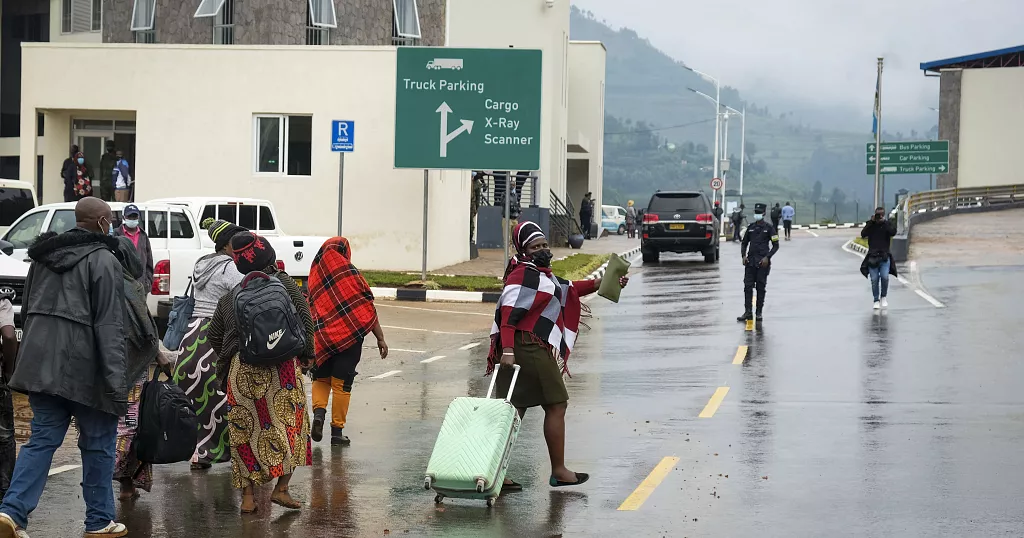
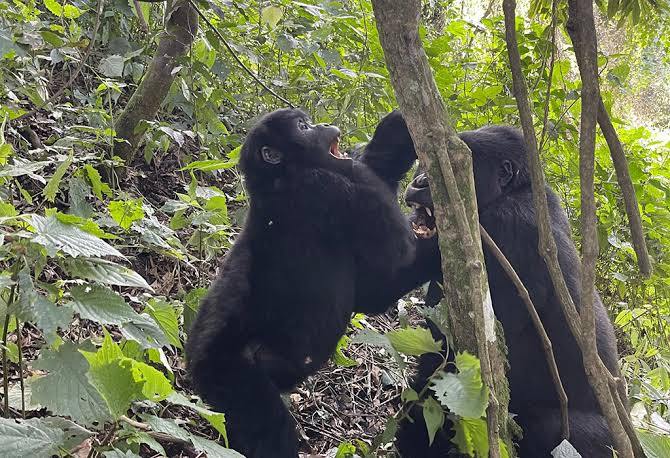
Crossing Rwanda to Uganda’s Bwindi Gorillas. Kigali International Airport has quietly become one of the most convenient gateways to Uganda’s mountain gorillas — not because Rwanda has its own gorillas too (it does, in Volcanoes National Park), but because Kigali often sits closer, and is easier to fly into, than Uganda’s own international airport for travelers coming from certain parts of the world. A growing number of our guests fly into Kigali, spend a night or two, and then cross overland into southwestern Uganda to trek gorillas in Bwindi Impenetrable National Park — sometimes as a standalone gorilla trip, sometimes as the opening leg of a much longer Uganda safari. Here’s what that crossing actually involves, and how to plan around it.
Why Start in Kigali at All?
For travelers arriving from Europe, the Middle East, or parts of the United States, Kigali sometimes has better or more direct flight connections than Entebbe, Uganda’s main international airport. Rwanda’s efficient, well-run capital is also a pleasant place to spend a night adjusting to the time zone before heading into the field — clean, easy to get around, and home to genuinely excellent restaurants and the sobering, essential Kigali Genocide Memorial, worth visiting if your schedule allows.
From Kigali, Bwindi Impenetrable National Park — specifically its southern sectors around Rushaga and Nkuringo — is a shorter overland drive than it is from Entebbe or Kampala. That’s the real draw: instead of a long transfer across Uganda from the northeast, you cross a single land border and you’re within a few hours of the trailhead.
The Route and the Border Crossing
The most commonly used route runs from Kigali through Musanze (the base town for Rwanda’s own Volcanoes National Park) to the Cyanika border post, which sits conveniently close to both Rwanda’s gorilla park and Uganda’s Mgahinga Gorilla National Park on the Ugandan side. From Cyanika, it’s a further drive through Kisoro to reach Bwindi’s southern sectors. Depending on traffic, road conditions, and how many stops you make along the way, the full journey from Kigali to Bwindi typically takes somewhere in the region of 4 to 6 hours.
The border crossing itself is generally straightforward for tourists travelling with a licensed operator: you’ll disembark on the Rwandan side for an exit stamp, walk (or drive) the short distance across, and complete Ugandan entry formalities on the other side. Having your visa and travel documents in order in advance makes this step quick — usually a matter of minutes rather than hours.
Visas: What You Actually Need
This is the detail most first-time travelers underestimate. If your trip only touches Rwanda and Uganda, both countries participate in the East African Tourist Visa, a single visa valid for entry into Rwanda, Uganda, and Kenya, which is often the simplest and most cost-effective option for a Rwanda-to-Uganda gorilla trip. Alternatively, single-entry visas for each country can be arranged separately — Uganda’s through the Uganda e-Visa portal, and Rwanda’s through the Rwanda Directorate General of Immigration and Emigration. Whichever route you choose, apply well ahead of travel, since processing times can vary and you don’t want visa paperwork holding up a trip built around a fixed gorilla permit date.
Proof of yellow fever vaccination is required for entry into both countries, so keep your certificate with your travel documents.
Booking Your Gorilla Permit on the Uganda Side
If you’re crossing specifically to trek gorillas in Bwindi rather than Rwanda’s Volcanoes National Park, your permit needs to be booked through the Uganda Wildlife Authority, not the Rwandan authorities — the two countries’ permit systems are entirely separate, priced differently, and not interchangeable. Uganda’s gorilla permits are considerably less expensive than Rwanda’s, which is one of the practical reasons so many travelers choose to base their trek on the Ugandan side even when flying into Kigali. We handle permit bookings as part of any Kigali-to-Bwindi itinerary, and because permits are allocated to a specific date and gorilla family, it’s worth locking in your trekking day as early as possible, especially in peak season (June–September and December–February).
What a Kigali-to-Bwindi Trip Looks Like
The shortest version of this trip is a fast, focused one: fly into Kigali, transfer overland to Bwindi the same or following day, trek gorillas the next morning, and either fly back out of Kigali or continue into Uganda. Our 2 Days Rwanda to Uganda Gorilla Trekking Safari is built exactly around this — a short, rewarding safari that gets you from Kigali to Bwindi and back with a single gorilla trek at its centre.
With a little more time, our 5-Day Gorilla Trekking Safari from Kigali to Uganda adds proper time to explore the Bwindi area itself — community walks, forest walks, and time to properly settle in rather than trekking and immediately turning back. It’s a good option for travelers who want the Kigali convenience without feeling rushed.
For those who’d rather turn the crossing into the start of a longer Uganda circuit, our 9 Days Uganda & Rwanda Gorilla and Big Five Safari and 10-Days Tour in Rwanda & Uganda both begin in Kigali, cross into Bwindi, and continue on through Queen Elizabeth National Park and beyond — using the Rwanda entry point purely as a convenient gateway into the wider Uganda safari circuit. If you’d like to trek gorillas in both countries and add golden monkeys into the mix as well, our 4-Day Rwanda-Uganda Golden Monkey and Gorilla Trekking does exactly that, while our 15-Day Rwanda–Uganda Primate & Big-Five Safari Adventure is the fullest expression of the idea, weaving together primates and Big Five wildlife across both countries over two weeks.
A Few Practical Tips
Cross with a licensed operator. Border logistics move faster and with far less friction when your guide has done the crossing before and knows the current documentation requirements — these do shift from time to time.
Build in a buffer day if you can. Border posts occasionally have unpredictable queues, and Bwindi’s southern sectors involve some driving on unpaved roads. An itinerary with a little slack is more relaxing than one where your gorilla trek is scheduled the same morning you cross the border.
Pack for both climates. Kigali and Musanze sit at altitude and can be cool, especially in the early morning; Bwindi itself is cooler and often damp given its rainforest setting. Layers, a rain jacket, and sturdy closed shoes are essential regardless of which side of the border you’re on.
Bring cash in USD. While card payments are increasingly common in both countries, cash — particularly clean, newer-series US dollar notes — is still the most reliable currency for incidental expenses, tips, and small purchases along the route.
Planning Your Rwanda-to-Uganda Gorilla Trip
Crossing from Rwanda into Uganda to trek Bwindi’s gorillas is one of the most efficient ways to combine two countries’ worth of scenery and wildlife into a single, well-paced trip — and it’s a route we run regularly, so the logistics are second nature to us. Browse our Rwanda Safaris and gorilla trekking adventures, or get in touch with our team and we’ll help you build the right route, secure your gorilla permit, and take care of the border crossing so all you need to focus on is the trek itself.