Getting your permit right — understanding the cost, who issues it, when to book, and how to secure one without stress — is the foundation of any successful Uganda gorilla safari. This guide walks you through every step of the process, from understanding what a permit actually is, to choosing the right booking method and planning the rest of your itinerary around your trekking date.
What Is a Uganda Gorilla Trekking Permit?
A gorilla trekking permit is an official authorization that grants you access to one of Bwindi Impenetrable National Park’s (or Mgahinga Gorilla National Park’s) habituated mountain gorilla groups for a single trekking session. Each habituated group is visited by a maximum of eight people per day, and each group has just one session available per morning. This strict limitation is not bureaucratic caution — it is a fundamental pillar of mountain gorilla conservation. Limiting human contact protects the gorillas from disease transmission, minimizes stress on the animals, and ensures that the experience remains intimate and meaningful rather than becoming a crowded spectacle.
Permits are issued by the Uganda Wildlife Authority (UWA) — the government body responsible for managing Uganda’s national parks and wildlife. The UWA is the sole legitimate issuer of all gorilla trekking permits in Uganda, and every permit purchased through a licensed tour operator is procured directly through UWA’s centralized permit allocation system.
At Kenlink Tours, we handle permit procurement as a standard part of every Uganda gorilla safari we plan, ensuring that your permit is secured, correctly registered in your name, and matched precisely to your chosen trekking date, sector, and gorilla family.
How Much Does a Uganda Gorilla Permit Cost?
As of 2025–2026, Uganda gorilla trekking permits are priced at USD $800 per person for foreign non-residents, making Uganda significantly more affordable than Rwanda, where the equivalent permit currently costs USD $1,500. This price differential is one of the primary reasons Uganda has become the preferred gorilla trekking destination for international travellers who want the same quality of encounter — one hour with a habituated mountain gorilla family — at a substantially lower cost.
For East African residents, the permit is priced at a reduced rate of USD $700 per person. Ugandan nationals pay UGX 250,000 (approximately USD $70). These discounts reflect the UWA’s commitment to making gorilla trekking accessible to the East African community, not just to international visitors.
It is also worth noting that a higher-tier option exists: the Gorilla Habituation Experience (GHEX), available in Bwindi’s Rushaga sector, allows just four visitors per day to spend up to four hours with a semi-habituated gorilla group that is still being habituated to human presence. This deeper, longer, and more immersive experience costs USD $1,500 per person and is one of the rarest wildlife encounters on Earth. Our 7 Days Gorilla and Wildlife Safari can be tailored to include the GHEX for those who want the ultimate encounter.
How Far in Advance Should You Book?
This is the question that catches the most first-time visitors off guard. Many travellers assume that a permit can be booked a few weeks before travel — particularly during quieter seasons — and are then disappointed to discover that availability in Bwindi is far more limited than they imagined. Here is the reality:
Bwindi Impenetrable National Park currently has over 25 habituated gorilla groups across four sectors — Buhoma, Ruhija, Rushaga, and Nkuringo — giving the park a theoretical daily permit capacity exceeding 200 people. However, during peak season (June to September and December to February), availability is routinely exhausted six months or more in advance. This is because gorilla trekking in Uganda has experienced explosive growth in international interest, and operators worldwide are booking permit blocks well ahead of the travel window.
Our strong advice: book your gorilla permit at least 3 to 6 months in advance for travel between June and September, and at least 2 to 4 months ahead for low-season travel (March to May, October to November). The earlier you commit, the more choice you have over trekking sector, gorilla family, and lodge availability.
If you are planning a short trip specifically for gorilla trekking from Rwanda, our partners at Pick and Transfer Safaris offer some of the most efficiently designed gorilla safaris starting from Kigali — a routing that is significantly faster and more convenient than travelling from Entebbe, given Bwindi’s proximity to the Rwandan border.
Where to Book: Direct vs. Through a Licensed Tour Operator
You have two routes to securing a Uganda gorilla permit: booking directly through the Uganda Wildlife Authority, or booking through a licensed tour operator.
Booking directly with UWA is technically possible through their online portal, and is a suitable option for well-organized independent travellers who have already arranged their own transport, accommodation, and logistics within Uganda. The UWA portal requires full payment upfront in USD, and you will need your passport details and the details of all group members at the time of booking.
Booking through a licensed operator — such as our team at Kenlink Tours — is the far more common and recommended route, particularly for first-time visitors. Here is why: when you book through us, permit procurement is handled on your behalf without any additional handling fees, we match your permit to the most suitable sector and lodge pairing, and we ensure that every logistical detail — border crossings if arriving from Rwanda, transfers, pre-trek briefings — is coordinated around your specific trekking date. If a permit allocation falls through for any reason, we have the relationships and experience to resolve it quickly.
Our partner Pick and Transfer Safaris also offers permit-inclusive gorilla safari packages, including the popular 5-Day Uganda Gorilla and Chimpanzee Safari and the 3 Days Uganda Gorilla Safari — both of which include permit procurement, accommodation, and guided transfers in a single package price.
Choosing the Right Sector in Bwindi
Bwindi Impenetrable National Park is divided into four distinct trekking sectors, each with its own character, gorilla families, and access considerations. Choosing the right sector can significantly affect your overall experience.
Buhoma is the oldest and most established sector, located in the north of the park. It is accessible from Kampala and Entebbe without a border crossing and is often the first choice for travellers flying into Entebbe. The sector has the best-developed infrastructure, several excellent lodges, and multiple habituated groups.
Rushaga and Nkuringo are located in the south of the park, closest to the Rwandan border at Kisoro. If you are arriving via Kigali — a routing our partners at Pick and Transfer Safaris specialise in — these southern sectors involve a shorter drive and are often the most convenient choice. Rushaga is also the only sector where the Gorilla Habituation Experience is available.
Ruhija sits in the eastern sector at high altitude, offering a cooler microclimate and a more remote, less-visited atmosphere. The trek is generally considered more strenuous, but the sense of wilderness is particularly pronounced.
At Kenlink Tours, we advise on sector selection based on your travel routing, fitness level, time available, and the lodge options you prefer — ensuring the permit you hold is matched to the most appropriate and enjoyable experience for your specific situation.
What to Bring on Trekking Day
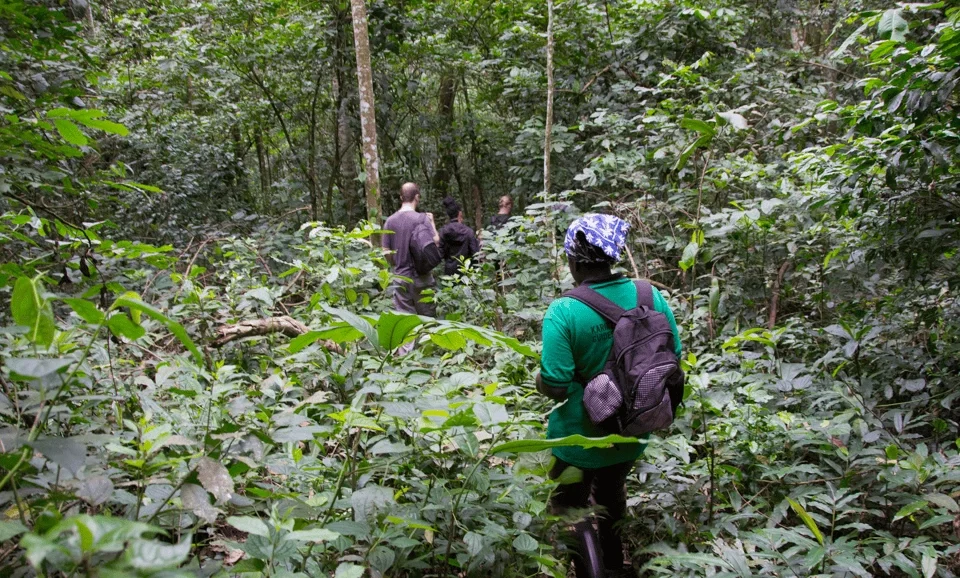
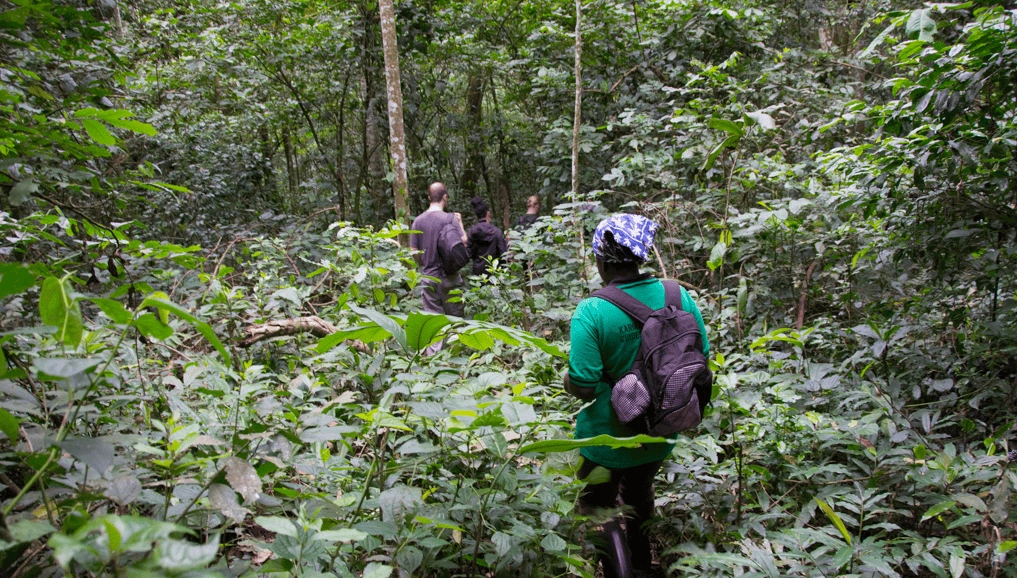
Securing the permit is only half the equation. Arriving well-prepared for the trek itself makes the difference between a comfortable, fully absorbed experience and one spent navigating discomfort. The forest terrain in Bwindi is steep and genuinely dense — the name “impenetrable” was not assigned lightly. Here is what every trekker should carry:
Long-sleeved shirts and long trousers protect against stinging nettles, insects, and branches. Waterproof hiking boots with ankle support are essential regardless of season — the forest is frequently wet. A lightweight rain jacket and a small daypack to carry water, snacks, sunscreen, and insect repellent complete your essentials. A camera without flash is permitted during the one-hour encounter, and binoculars can be useful on the approach through the forest. Sturdy walking sticks are often available at the briefing point and are warmly recommended, particularly for the descent.
Porters are available for hire at the trailhead. Hiring a porter is not an admission of weakness — it is a practical decision that allows you to fully focus on the encounter rather than managing fatigue, and it directly supports the local communities living around Bwindi whose livelihoods are intertwined with gorilla conservation.
Combining Your Gorilla Trek with a Broader Uganda Safari
Most travellers to Bwindi choose to combine their gorilla trek with other park visits — and for good reason. Uganda’s wildlife diversity is extraordinary, and many of the country’s finest parks sit along natural routing between Entebbe and Bwindi. A well-designed itinerary can include chimpanzee trekking in Kibale Forest National Park — the world’s finest chimp trekking destination — game drives across Queen Elizabeth National Park’s open savannah, a boat cruise on the Kazinga Channel, and the thundering spectacle of Murchison Falls, all within a single 7 to 10-day journey.
Our 5 Days Gorilla and Wildlife Safari is one of the most popular starting points, combining Queen Elizabeth and Bwindi in a focused five-day itinerary. Those wanting a fuller experience can explore our 7 Days Gorilla and Wildlife Safari or the landmark 10 Days Uganda Rwanda Combining Safari, which extends the journey into Rwanda for golden monkey trekking in Volcanoes National Park and chimpanzees in Nyungwe Forest.
For travellers looking at a Uganda safari from Kigali, our partners at Pick and Transfer Safaris offer excellent combined itineraries including the 10 Days Uganda Rwanda Safari and the 15 Days Rwanda Uganda Safari — both seamlessly connecting Rwanda and Uganda’s finest parks around the gorilla trekking anchor.
Ready to Book?
Booking a gorilla permit in Uganda is straightforward once you understand the process — but the single most important piece of advice this guide can offer is this: do not leave it too long. The permits are limited, the peak season fills fast, and the mountain gorillas of Bwindi have no slow season as far as demand is concerned.
Contact the Kenlink Tours team today with your preferred travel dates, group size, and trekking sector preference. We will advise on current availability, procure your permits, match you with the right lodge, and build the rest of your Uganda itinerary around the day you meet the gorillas. Because that day — the one where a silverback looks up from the forest floor and holds your gaze for a moment that lasts the rest of your life — deserves to be planned perfectly.