- EXPERT'S HELP
- +256789210067
- +256200955001
- info@kenlinktours.com


How much is a gorilla trekking permit in Uganda vs. Rwanda?
July 21, 2026
Which border points to cross from Kigali to Bwindi or Mgahinga?
July 21, 2026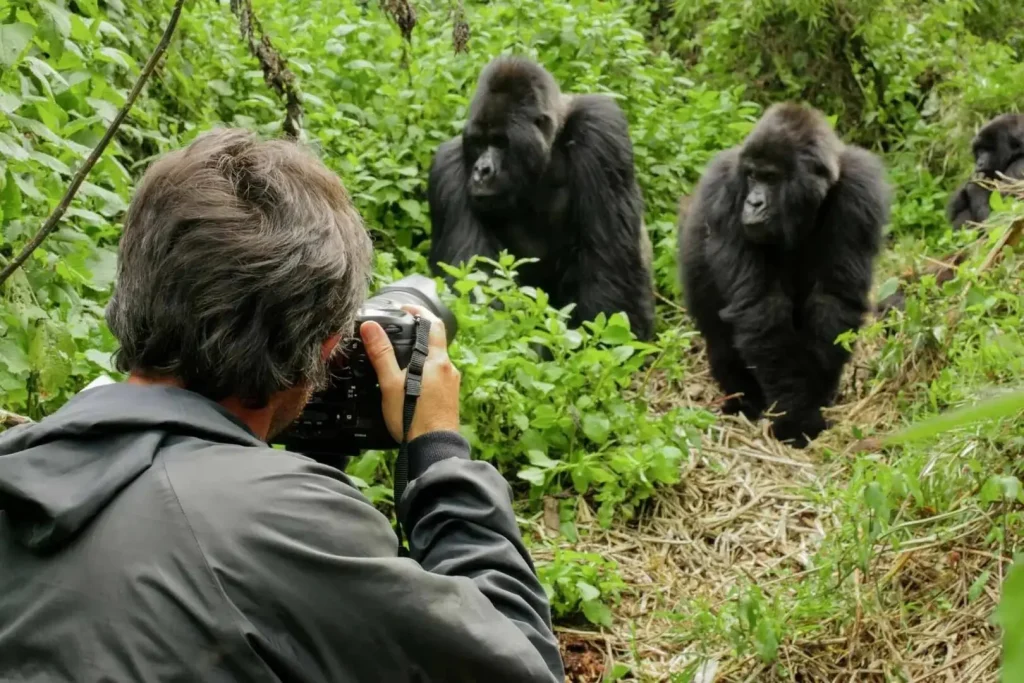
Gorilla Habituation, and how does it differ from standard trekking? Mountain gorilla trekking is already widely regarded as one of the greatest wildlife encounters on earth. But for a small number of travelers each day, there is a version of that encounter that goes considerably further: the Gorilla Habituation Experience, a four-hour immersion with a semi-wild gorilla family that is still being gradually introduced to human presence. It is longer, more physically demanding, more intimate, and in many ways more revealing than a standard gorilla trek, and it is only available in a single sector of a single park anywhere in the world.
If you have done a gorilla trek before and are wondering whether the habituation experience is worth the upgrade, or if you are planning your first gorilla safari and trying to decide which experience is right for you, this guide covers everything you need to know, including what the experience involves, where and when it is available, what it costs, how it compares to standard trekking, and how to decide which one to choose. You can also browse our full range of Uganda safari packages to find the itinerary that fits your schedule and budget, or contact our team to ask about current availability.
What Is the Gorilla Habituation Experience?
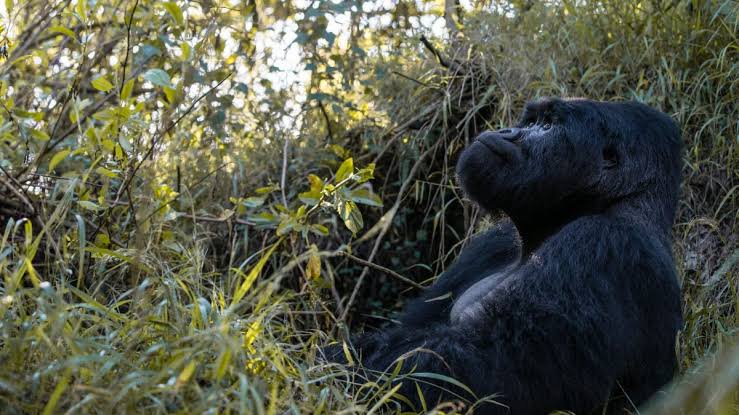
The Gorilla Habituation Experience, commonly abbreviated as GHE, is an extended gorilla encounter with a family that has not yet been fully habituated to human presence. Unlike the gorilla families used for standard trekking, which have been conditioned over years to accept the close, quiet proximity of small human groups, GHE families are still partway through that conditioning process. They are more unpredictable, more reactive, and in many moments more genuinely wild than their fully habituated counterparts, and the experience of spending four hours in their company, following the researchers and rangers who manage the habituation process daily, is fundamentally different from the composed, settled hour that a standard trek typically delivers.
The habituation of a wild gorilla family is a process that takes between two and five years of daily, patient, low-disturbance contact by a dedicated team of researchers, veterinarians, and Uganda Wildlife Authority rangers. The GHE admits a maximum of four visitors per day into that ongoing process, making it both one of the most exclusive and most scientifically significant wildlife experiences available to tourists anywhere in Africa. You are not simply watching gorillas: you are participating, in a minor and carefully managed way, in the long-term conservation work that makes all gorilla trekking possible.
Where Can You Do the Gorilla Habituation Experience?
The Gorilla Habituation Experience is exclusively available at the Rushaga sector of Bwindi Impenetrable Forest National Park in southwestern Uganda. Rushaga is one of Bwindi’s four trekking sectors, the others being Buhoma in the north, Ruhija in the east, and Nkuringo in the southwest, and it holds the largest number of habituated gorilla families of any sector in the park. Within that sector, one family at any given time is typically designated for the habituation program.
Critically, the GHE is not available in Rwanda. Rwanda’s Volcanoes National Park offers only standard gorilla trekking, at the standard permit rate of $1,500 per person. If the Gorilla Habituation Experience is your primary reason for choosing a gorilla safari destination, Uganda is the only option, and Rushaga within Bwindi is the only location. This geographic exclusivity is one of several reasons the GHE has become a significant draw for repeat visitors, wildlife researchers, and serious wildlife photographers who want something beyond the standard trekking format.
From Entebbe, Rushaga is approximately nine to ten hours by road, making it the longest drive of Bwindi’s four sectors. From Kigali, the Rushaga approach via the Cyanika border crossing is considerably shorter, around three to four hours, which is why many GHE visitors choose to travel from Rwanda rather than Uganda. Our 3 Days Best of Uganda Gorilla Safari and 4 Days Gorilla and Cultural Tour both cover Bwindi and can be tailored to include the GHE if Rushaga permits are available for your preferred dates.
How Long Does the Gorilla Habituation Experience Last?
The standard gorilla trek gives you one hour with a habituated gorilla family, a rule that is strictly enforced in both Uganda and Rwanda to protect the gorillas from excessive human contact and minimise stress on the animals. The GHE replaces that one-hour window with up to four hours in the presence of the semi-habituated family.
Those four hours are structured around the gorillas’ natural daily rhythm. The experience typically begins before dawn, earlier than a standard trek, with a briefing at the sector headquarters followed by a walk into the forest to locate the family’s overnight nesting sites. From the nesting sites, the group follows the gorillas as they wake, descend from their nests, and begin the day’s foraging and social activity. Over four hours, you observe feeding behaviours, dominance displays, infant play, and the full cycle of morning social life that a standard one-hour encounter can only ever capture in partial snapshot form.
Because the family is semi-habituated and its movements are less predictable, the rangers and researchers may occasionally ask the group to retreat, hold still, or change direction in response to a gorilla’s reaction to your presence. This unpredictability, which sounds like a limitation, is in practice one of the most compelling aspects of the experience: it gives the encounter an authenticity that a fully habituated, composed family cannot quite replicate.
How Many People Are Allowed Per Session?
Standard gorilla trekking in both Uganda and Rwanda allows a maximum of eight visitors per habituated family per day. This group size has been set by the Uganda Wildlife Authority and Rwanda Development Board to balance tourism revenue with gorilla welfare.
The Gorilla Habituation Experience operates with a maximum of four visitors per day, half the standard group size. This smaller group is essential given the semi-habituated status of the family: fewer people means less stress on the gorillas and a more controlled environment for the ongoing research and conditioning work. For visitors, it also means a far more intimate experience, with significantly more space and quiet around each individual in the group and a closer working relationship with the rangers and researchers leading the session.
How Much Does the Gorilla Habituation Experience Cost?
The current price for a Gorilla Habituation Experience permit in Uganda is USD $1,500 per person, issued by the Uganda Wildlife Authority. This is the same price as a standard gorilla trekking permit in Rwanda, and significantly higher than Uganda’s standard gorilla trekking permit of $800 per person. There is no low-season discount on the GHE permit, unlike the standard Uganda gorilla permit which drops to $600 during April, May, and November.
The higher price reflects the smaller group size, the longer duration, the involvement of dedicated research staff, and the irreplaceable conservation value of the habituation program itself. For travelers who are already considering Rwanda’s $1,500 standard permit, the GHE in Uganda offers the same permit price point but with four times the time in the forest, a dramatically smaller group, and a genuinely different quality of experience. Viewed in those terms, the GHE represents considerably stronger value per hour than a standard Rwanda permit.
The GHE permit does not include transport to Rushaga, accommodation, meals, or porter fees, all of which are arranged separately as part of a wider safari package. Our 5 Days Gorilla and Chimpanzee Tracking Tour and 7 Days Gorilla and Wildlife Safari can both be structured to include the GHE at Rushaga in place of a standard permit, subject to availability.
What Is Standard Gorilla Trekking, and How Does It Work?
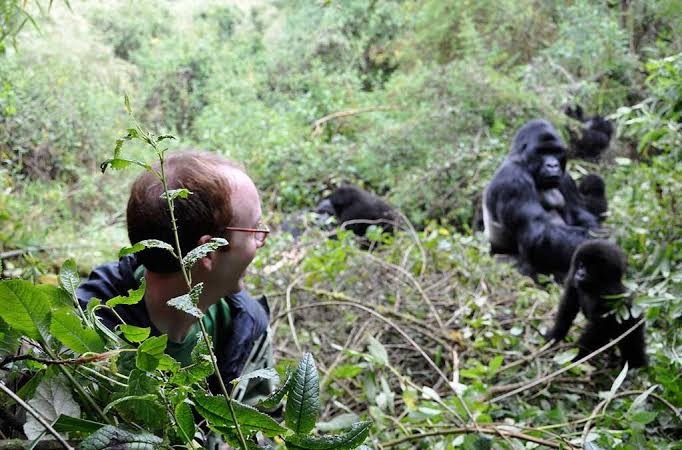
Standard gorilla trekking is the format that most visitors to Uganda and Rwanda participate in, and it is, by any measure, an extraordinary experience in its own right. After a briefing at the sector headquarters, your group of up to eight visitors sets off with ranger guides and trackers to locate a designated fully habituated gorilla family. Trekking time varies from under an hour to several hours, depending on how far the gorillas have ranged, and once found you spend exactly one hour observing them at close range before returning to the trailhead.
The families used for standard trekking have completed the habituation process and are accustomed to the regular, quiet presence of small human groups. Their behaviour during the one-hour visit is typically relaxed: the silverback rests or feeds in the open, the infants tumble nearby, and the family as a whole moves with an unhurried composure that gives the hour a particular quality of stillness and intimacy. Standard trekking permits in Uganda cost $800 per person (or $600 in low season), and in Rwanda $1,500, with all the logistics of a full gorilla safari handled by your operator. For options across both countries, Pick and Transfer Safaris’ gorilla safari hub offers a comprehensive overview of what is available and how each itinerary is structured.
Key Differences Between the GHE and Standard Trekking
To put the comparison clearly in one place, the Gorilla Habituation Experience and standard gorilla trekking differ across five main dimensions. The GHE lasts up to four hours versus one hour for a standard trek. The GHE admits a maximum of four visitors versus eight for a standard trek. The GHE involves a semi-habituated family still in the conditioning process, while standard trekking involves a fully habituated family. The GHE is available only at Rushaga in Bwindi, Uganda, while standard trekking is available across all four Bwindi sectors and at Volcanoes National Park in Rwanda. And the GHE permit costs $1,500 per person regardless of season, while Uganda’s standard permit is $800 (or $600 in low season) and Rwanda’s is $1,500 year-round.
What they share is the fundamental privilege: close, supervised proximity to wild mountain gorillas in their natural forest habitat, guided by experienced rangers in one of the most biodiverse ecosystems in Africa.
Which Experience Is Right for You?
Choose the standard gorilla trek if you are trekking gorillas for the first time, you are working within a tighter permit budget, you prefer a shorter, less physically demanding forest experience, or you are combining the gorilla trek with other Uganda or Rwanda activities on a multi-park itinerary. Our 3-Day Uganda Gorillas Safari, 5 Days Uganda Rwanda Double Gorilla Safari, and 8-Day Uganda Gorilla, Chimpanzee and Wildlife Safari all work excellently with a standard permit.
Choose the Gorilla Habituation Experience if you are a repeat gorilla trekker looking for a deeper encounter, you are a wildlife photographer who wants extended time and a smaller group, you have a particular interest in primate behaviour and conservation research, or you want the most intimate and immersive gorilla experience currently available anywhere in the world. The GHE is also an outstanding choice for travelers flying via Kigali who want to use the shorter Rwanda-to-Rushaga road rather than the long drive from Entebbe, pairing the experience with a pre-or post-trek night in Rwanda. Pick and Transfer Safaris’ Uganda Rwanda Safaris hub is a helpful reference for cross-border routing options that work well for Rushaga-based GHE itineraries.
Both experiences are genuinely extraordinary. The GHE is simply more of one, in every sense: more time, more intimacy, more unpredictability, and more of the living, breathing, ungovernable wildness that makes mountain gorillas unlike anything else you will ever encounter.
Book Your Gorilla Experience with Kenlink Tours
Whether you are planning a standard gorilla trek or the Gorilla Habituation Experience, our team at Kenlink Tours has been arranging both for visitors from around the world since 2010. GHE permits at Rushaga are limited to just four visitors per day and sell out far in advance, particularly during peak season. Contact us today with your preferred dates and we will check availability, confirm your permit, and build a complete safari itinerary around it.