- EXPERT'S HELP
- +256789210067
- +256200955001
- info@kenlinktours.com


3-Day Akagera Safari Rwanda: The Perfect Wildlife Itinerary
August 20, 2026
Can i book a one day Uganda gorilla tour?
August 24, 2026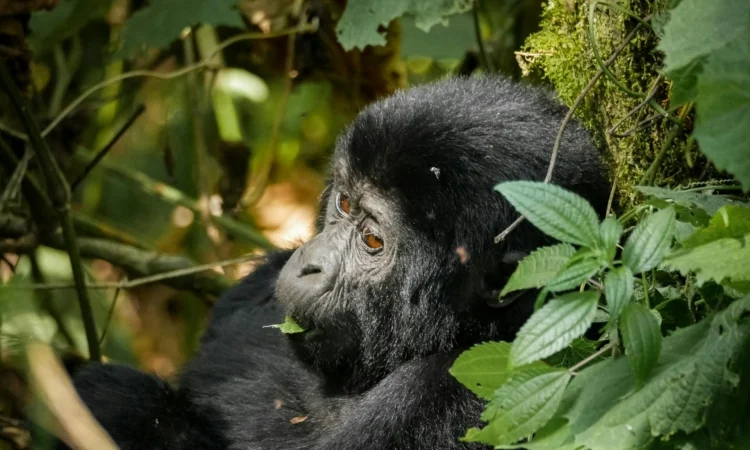
7-Day Rwanda Gorilla, Chimpanzee and Wildlife Safari Itinerary.
Rwanda is one of the only countries on earth where a single week-long trip can realistically deliver mountain gorilla trekking, chimpanzee tracking, and a genuine Big Five safari, all without the long internal flights that similar combinations require elsewhere in Africa. This 7-day Rwanda gorilla, chimpanzee, and wildlife safari itinerary strings together the country’s three flagship parks, Volcanoes National Park, Nyungwe Forest National Park, and Akagera National Park, into one efficient, logically routed loop. Below is a full day-by-day breakdown of how this itinerary works, along with the practical details, permits, costs, packing, and timing, you need to plan it with confidence.
What makes this particular combination special is the sheer contrast packed into a single week. You move from the cool, misty bamboo forests of the Virunga volcanoes, home to some of the last mountain gorillas on the planet, through the ancient rainforest canopy of Nyungwe, and finally out into the open acacia savannah of Akagera, where lion, elephant, and rhino roam grassland that looks more like classic East African plains than anything else in Rwanda. Few countries anywhere allow that range of ecosystems and wildlife experiences within a drive time measured in hours rather than days.
Why a 7-Day Rwanda Itinerary Is the Sweet Spot
Rwanda’s compact size is what makes this itinerary possible in the first place. The country’s three major national parks sit within a few hours’ drive of one another and of Kigali, meaning a week is enough time to properly experience each ecosystem rather than rushing through a single highlight. Shorter trips typically force travelers to choose between gorillas, chimpanzees, and wildlife, while a week allows all three to be combined into one continuous route. For readers weighing this itinerary against other options, our overview of the best Rwanda safari experiences for nature lovers breaks down how different trip lengths and combinations compare.
Day 1: Arrival in Kigali and Transfer to Volcanoes National Park
Your safari begins with arrival at Kigali International Airport, followed by a scenic two-to-three-hour drive north to Musanze, the gateway town for Volcanoes National Park. The route passes through Rwanda’s famous “thousand hills” countryside, terraced farmland climbing steep volcanic slopes, offering an early introduction to the landscapes that make this country so visually distinct. Depending on your flight arrival time, many travelers use the remainder of day one to rest and prepare for the following morning’s early gorilla trekking briefing, since a good night’s sleep genuinely matters ahead of a physically demanding trek. Some itineraries also use this first afternoon for a short cultural visit near Musanze, such as the Iby’Iwacu Cultural Village, giving travelers a gentle introduction to Rwandan community life before the more demanding days ahead.
Day 2: Mountain Gorilla Trekking in Volcanoes National Park
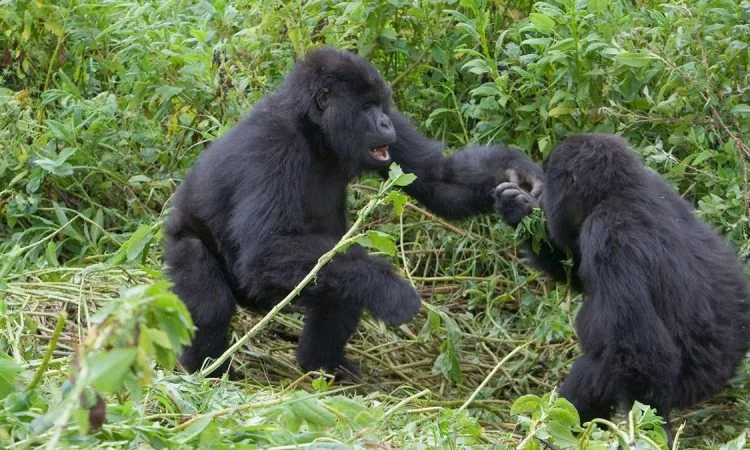
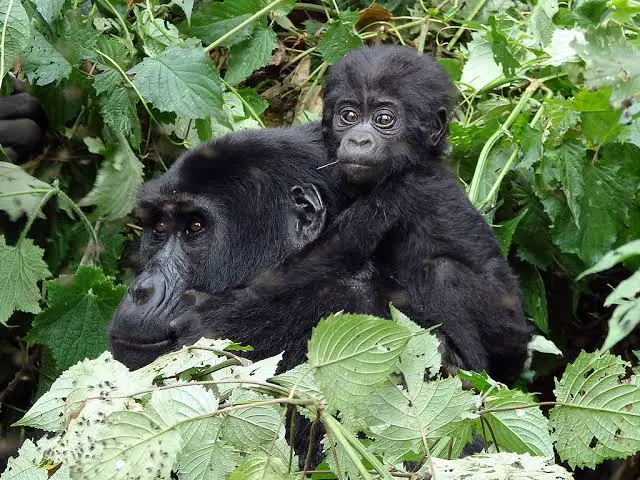
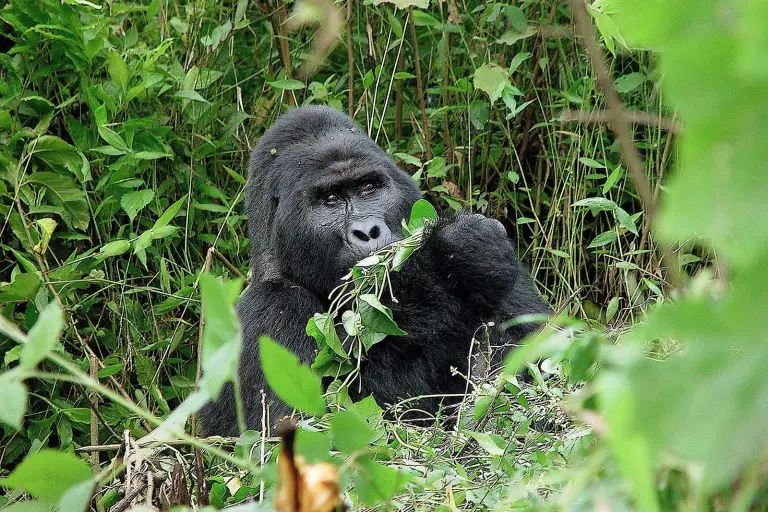
Day two is the itinerary’s headline event: a full day dedicated to mountain gorilla trekking in Volcanoes National Park, home to several habituated gorilla families spread across the forested slopes of the Virunga Mountains. After an early morning briefing at park headquarters, trekking groups of up to eight people set out with armed rangers and trackers, with hikes ranging from thirty minutes to several hours depending on where the assigned family is located that day. Once found, visitors are permitted a full hour in the gorillas’ presence, an experience widely described as one of the most profound wildlife encounters available anywhere in the world. For a deeper look at what the day actually involves, our article on what it’s like to trek gorillas in Uganda and Rwanda is worth reading before you go, and our piece on whether gorilla habituation experiences exist in Rwanda covers the longer, more immersive alternative to standard trekking permits. Trekking difficulty varies considerably by which family you are assigned, since altitude, terrain, and that day’s gorilla movements all play a role, and rangers do their best to match physically demanding assignments to trekkers who have indicated a higher fitness level in advance.
Day 3: Golden Monkey Tracking and Lake Kivu
With gorilla trekking complete, day three offers a lighter but equally rewarding activity: tracking the endangered golden monkey, found only in the bamboo forests of the Virunga region. Golden monkey tracking involves a shorter, less strenuous hike than gorilla trekking and offers a lively, playful contrast, these primates move quickly through the bamboo canopy in large, energetic troops. Our dedicated guide to golden monkey tracking in Rwanda covers exactly what to expect. The afternoon is typically used for the scenic transfer toward Lake Kivu or directly south toward Nyungwe, depending on your chosen route, with an overnight stop that breaks up the longer drive south. Travelers who prefer a slower pace sometimes add a boat trip on Lake Kivu itself, or a relaxed afternoon at a lakeside coffee plantation, both easy ways to unwind after two consecutive mornings of early starts and forest trekking.
Day 4: Transfer to Nyungwe Forest National Park
Day four is largely a travel day, covering the drive from the Lake Kivu region south to Nyungwe Forest National Park, one of Africa’s oldest and most biodiverse montane rainforests. The drive itself is genuinely scenic, tracing the shoreline of Lake Kivu for a stretch before climbing into Nyungwe’s cool, misty highland forest. Arriving in the afternoon leaves time to check into your lodge and, conditions permitting, join an introductory forest walk or visit the park’s well-known canopy walkway, a series of suspended bridges offering rare treetop views over the forest. Nyungwe is also home to more than 300 recorded bird species and thirteen primate species beyond chimpanzees, including large troops of colobus monkeys, making even a short introductory walk worthwhile for wildlife enthusiasts.
Day 5: Chimpanzee Trekking and Canopy Walk in Nyungwe
Day five is dedicated to Nyungwe’s main draw: chimpanzee trekking. Setting out before dawn, trekking groups follow experienced trackers into the forest in search of one of the park’s habituated chimpanzee communities, an experience that tends to involve more walking and less certainty than gorilla trekking, since chimpanzees range more widely and move faster through the canopy. Sightings are rewarded with dramatic vocalizations and active, often playful behavior rarely seen in more sedentary primates. Travelers with extra time or energy can pair this with the canopy walkway in the afternoon if it wasn’t completed the previous day. Our full 3-day Nyungwe Forest National Park tour package covers this park in even greater depth for travelers who want to extend their stay here specifically. As with gorilla trekking, chimpanzee permits are limited in number and should be secured well ahead of your travel dates, particularly during the July to September and December to February dry seasons when demand peaks alongside gorilla permit bookings.
Day 6: Transfer to Akagera National Park and Afternoon Game Drive
Day six marks the itinerary’s dramatic shift from misty rainforest to open savannah, with a transfer east toward Akagera National Park, Rwanda’s only Big Five reserve. Given the distance involved, this transfer typically routes back through Kigali, making it a natural point to swap vehicles or, for travelers with limited time, arrange a short domestic connection. Arriving at Akagera in the afternoon allows time for an initial game drive around Lake Ihema, where elephant, buffalo, and hippo sightings are common even on a first outing. For a full breakdown of how to make the most of your time in the park, our dedicated 3-Day Akagera Game Drive Safari itinerary covers the same territory in greater depth.
Day 7: Final Game Drive, Boat Safari and Departure
Your final day begins with an early morning game drive across the Kilala Plains, Akagera’s most productive zone for lion and large buffalo herds, before returning to your lodge for breakfast. Depending on your departure flight, many itineraries include a shortened boat safari on Lake Ihema before the drive back to Kigali, offering one last chance to see hippos, crocodiles, and elephants along the shoreline. For guidance on exactly where each Big Five species tends to concentrate within the park, our guide to where to see the Big Five in Rwanda and our species-specific piece on where to see lions in Rwanda are both useful references while planning this final stretch.
How Much Does a 7-Day Rwanda Safari Cost
Cost is driven primarily by two factors: gorilla trekking permits, currently priced at $1,500 per person in Rwanda, and your choice of accommodation across the three parks, which can range from comfortable mid-range lodges to Rwanda’s well-known ultra-luxury properties. Ground transport, park fees, chimpanzee permits, and golden monkey permits are typically bundled into a full package price. For a transparent breakdown of what different budget levels actually look like across a trip of this length, our guide to the cost of safaris in Rwanda is essential reading before you request a quote, and our full Rwanda safari holidays collection lets you compare this itinerary against shorter or longer alternatives.
Gorilla Permits: What You Need to Know Before You Go
Rwanda Development Board gorilla permits should be booked well in advance, ideally three to six months ahead of travel during peak season, since only a limited number are issued per day across all habituated gorilla families. Permits include park entrance, ranger and tracker fees, and the guaranteed hour with your assigned gorilla family, though transport to the trailhead and porter fees, genuinely worth hiring for the physical benefit and community income they provide, are arranged separately. Because timing and availability can shift, working with an experienced local operator to secure and manage your permit booking removes most of the stress from this part of the trip. It is also worth noting that a valid passport is required at check-in for every trek, since permits are registered to specific individuals and cannot be transferred or resold on short notice.
Best Time of Year for This 7-Day Itinerary
Rwanda’s dry seasons, June through September and mid-December through mid-February, offer the most favorable conditions across all three parks on this itinerary: drier forest trails for gorilla and chimpanzee trekking, and better game visibility in Akagera as vegetation thins out. That said, gorilla and chimpanzee trekking remain possible year-round since permits are capped regardless of season, and the wetter months bring lush scenery and thinner crowds at a modest cost in trail conditions. Our broader guide to the best Rwanda safari experiences for nature lovers and our specific piece on the best time to see gorillas in Uganda and Rwanda both go into more seasonal detail relevant to this itinerary.
Where to Stay Along This Route
Musanze, near Volcanoes National Park, offers everything from comfortable mid-range lodges to luxury properties with direct volcano views, ideal for the two nights built around gorilla and golden monkey tracking. Nyungwe’s limited lodge options sit directly within or beside the forest, putting you close to the trailhead for an early chimpanzee trekking start. In Akagera, Ruzizi Tented Lodge on Lake Ihema and Akagera Game Lodge in the park’s central sector are both well suited to this itinerary’s final two days, offering easy access to game drives and the boat safari without excessive driving time within the park.
Physical Fitness and Packing for This Itinerary
This itinerary mixes strenuous forest trekking with more relaxed vehicle-based game viewing, so packing needs to cover both. Sturdy, broken-in hiking boots, waterproof layers, and gardening-style gloves for gripping vegetation on steep volcanic slopes are essential for the gorilla and golden monkey days, while lighter, breathable clothing suits the warmer conditions in Akagera. A good pair of binoculars serves both the forest and savannah legs of the trip, and a dry bag or rain cover for cameras is worth carrying throughout, given Rwanda’s unpredictable highland weather. Reasonable fitness is required for both primate treks, though porters are available for hire at every trailhead for travelers who want additional support on steeper sections.
How This Itinerary Compares to Uganda’s Gorilla and Wildlife Circuit
Neighboring Uganda offers a broadly similar combination through parks like Bwindi Impenetrable Forest National Park, Kibale Forest National Park for chimpanzees, and Queen Elizabeth National Park or Murchison Falls National Park for Big Five game viewing, generally at a lower permit cost but across greater driving distances. Rwanda’s advantage is compactness and efficiency, this entire seven-day loop covers less total driving time than a comparable Ugandan itinerary, while still delivering all three headline experiences. Travelers wanting to compare both countries directly, or combine them into a single extended trip, should look at our 10-day Uganda-Rwanda combined safari or browse our regional partners’ wildlife safaris and gorilla safaris collections, along with their combined 5-day Rwanda wildlife and gorillas package and full list of extended safaris for longer multi-country planning, and their overviews of Kigali City, Mgahinga Gorilla National Park, Akagera National Park, and Rwanda’s Gishwati-Mukura National Park as further reference points while comparing routes across the full destinations directory.
For a similar all-in-one trip built around a slightly different pace, our 6-day Rwanda adventures: great apes and Lake Kivu itinerary and our 5-day Volcanoes, Gorillas, and Akagera wildlife safari both offer shorter alternatives that drop one park to save time, while our comprehensive 20-day East Africa safari itinerary shows how this seven-day loop can be extended into a much longer regional trip for travelers with more time available.
A Realistic Look at Daily Driving Times
Understanding the driving involved helps set expectations before you commit to this route. The Kigali to Musanze leg runs roughly two to three hours, while Musanze to Nyungwe is the longest single transfer at around four to five hours, broken up by scenery along Lake Kivu. Nyungwe back toward Kigali and onward to Akagera adds another significant travel day, typically five to six hours depending on your exact route and any stops along the way, before a final shorter transfer of two to three hours back to Kigali on day seven. None of these drives are unreasonable for a safari of this scope, but travelers who dislike long vehicle days should budget an extra night somewhere along the route rather than trying to compress the loop further. Domestic flight connections between some of these points are occasionally available and can be arranged for travelers who prioritize minimizing road time over cost.
Combining This Itinerary with a Beach or City Extension
Because this seven-day loop already covers Rwanda’s three headline parks, many travelers choose to bookend it with a short extension elsewhere in the region rather than adding a fourth Rwandan destination. A few extra days in Kigali at the start or end of the trip allows time for the Kigali Genocide Memorial and the city’s growing café and arts scene, while travelers continuing overland into Uganda often extend directly into gorilla trekking or wildlife viewing there, using our 10-day Uganda-Rwanda combined safari as a template for how the two countries connect. For travelers who would rather unwind after a physically demanding week of trekking, a short Lake Kivu beach extension at the start of the itinerary, before the more strenuous gorilla and chimpanzee days, is also a popular and low-effort addition.
Booking Your 7-Day Rwanda Safari with Kenlink Tours
Coordinating gorilla and chimpanzee permits, lodge availability across three separate parks, and an efficient driving route is genuinely complex, and getting any one piece wrong can cost you a day of your trip. Our team handles every detail of this itinerary end to end, from permit applications through the Rwanda Development Board to private 4×4 transport and accommodation bookings matched to your budget. Learn more about how we work on our About Us page, browse our full Rwanda safari holidays collection, arrange a car hire if you prefer a self-drive element on part of the route, and read about the conservation history behind this region on our pages about the Dian Fossey Gorilla Fund and the Rwandan Genocide of 1994 for essential context before you travel. When you’re ready to lock in permits and dates, our Contact Us page connects you directly with a safari consultant for a tailored quote.
Frequently Asked Questions About This 7-Day Rwanda Itinerary
Is seven days enough for gorillas, chimpanzees, and wildlife in Rwanda? Yes, seven days is the practical minimum to properly cover all three parks without excessive rushing, though extending to eight or nine days adds welcome flexibility around driving days and weather.
How far in advance should I book gorilla permits? Three to six months ahead is recommended for peak season travel, since Rwanda issues a limited number of permits per day across all habituated families.
Is chimpanzee trekking harder than gorilla trekking? Generally yes, chimpanzees range more widely and move faster through the canopy, often requiring longer and more physically demanding hikes than a typical gorilla trek.
Can this itinerary be shortened? Yes, dropping one park, most commonly Nyungwe, brings the trip down to around five days, matching our 5-day Volcanoes, Gorillas, and Akagera wildlife safari itinerary.
Do I need a visa to enter Rwanda? Most nationalities can obtain a Rwanda visa on arrival or through the East Africa Tourist Visa, though requirements vary by nationality and should be confirmed before travel.
Ready to plan your own 7-day Rwanda gorilla, chimpanzee, and wildlife safari? Contact Kenlink Tours today and let our safari specialists build your itinerary around permit availability, your travel dates, and your budget.