- EXPERT'S HELP
- +256789210067
- +256200955001
- info@kenlinktours.com


Short Gorilla Tours in Uganda for African Citizens
September 1, 2026
Can i trek Gorillas in Bwindi and Drive to Kigali Same Day? This is one of the most common questions we get from travellers trying to squeeze a Uganda gorilla trek into an already packed Rwanda itinerary, and it deserves a straight answer rather than a vague “it depends.” So here it is upfront, then we’ll walk through exactly why.
Short answer: Yes, it is possible, but only if you trek in Bwindi’s Rushaga or Nkuringo sector, your gorilla family isn’t tracked too far into the forest that day, you start early, and you accept a genuinely long, tiring day of roughly 12 to 14 hours door to door. If you’re assigned to Buhoma or Ruhija sector, or if the trek runs long, reaching Kigali the same night becomes unrealistic and we don’t recommend planning around it.
We get this question constantly from two overlapping groups: Rwanda-based travellers who want to add a Uganda gorilla family to their trip without losing an extra night in the itinerary, and Uganda-based trekkers with an onward flight or meeting in Kigali the next morning. Both groups are really asking the same underlying question, and the answer depends far more on geography and gorilla behaviour than most travellers expect going in.
Below, we break down the real distances, the border crossing you’ll use, a realistic hour-by-hour timeline, what can go wrong, and when it’s smarter to simply add one more night instead. This is the same planning logic we use whenever we build a Uganda-Rwanda gorilla safari for a guest working with a tight schedule, and it’s worth reading alongside broader route guides such as this regional gorilla safari overview, which covers the same cross-border logistics from a slightly different angle.
The Short Answer: Yes, But Only From the Right Sector
Bwindi Impenetrable Forest is split into four trekking sectors, Buhoma, Ruhija, Rushaga and Nkuringo, and they are not equally close to Rwanda. Rushaga and Nkuringo sit in the south of the park, close to the Cyanika border crossing, while Buhoma and Ruhija sit in the north and west, much closer to Uganda’s interior than to Rwanda. That single detail decides whether a same-day drive to Kigali is a genuinely tight but doable plan or a plan that simply doesn’t add up on a map. If you have any influence over which sector your permit is booked for, and you want to attempt this route, Rushaga is the sector to request. Both southern sectors are covered in detail in this independent Bwindi Impenetrable Forest destination profile, which is worth a read if you want a fuller sense of how the park’s geography is laid out before you request a specific sector.
How Far Is Bwindi From Kigali, Really?
Overall, Bwindi sits roughly 160 to 200 kilometres from Kigali, and total travel time ranges from about 4 hours to 6 hours depending on which sector and which border crossing you use, a gap we break down fully on our own Bwindi-to-Kigali distance guide. That’s the driving time alone, before you add the several hours a gorilla trek itself takes. The honest takeaway is that “Bwindi to Kigali” isn’t a single fixed number; it’s a range that depends heavily on exactly where in the park you end up trekking. Search engines and quick online answers often quote a single figure, “4 hours” or “6 hours,” without specifying which sector or route that number assumes, which is exactly how travellers end up surprised on the day. Always ask your operator to confirm the figure for your specific assigned sector rather than relying on a generic number you found online.
Which Border Crossing You’ll Use: Cyanika vs Katuna
Two border posts connect this corner of Uganda to Rwanda. Cyanika, used for the southern sectors, sits about 115 kilometres and roughly 3 to 4 hours from Kigali on tarmac, and it’s the crossing you’ll use from Rushaga or Nkuringo. Katuna, further north, serves Buhoma and Ruhija and adds noticeably more driving time, typically pushing total Kigali travel to 5 or 6 hours even before the trek is factored in. Both borders are legitimate, well-used crossings, but for a same-day plan, Cyanika is the only realistic option, which is another reason Rushaga and Nkuringo are the sectors this whole plan hinges on. Mgahinga Gorilla National Park, Uganda’s other gorilla-trekking option and also close to Cyanika, follows a similar logic; its destination profile is worth a look if a Mgahinga permit happens to be what’s available on your travel dates instead of Bwindi.
Rushaga and Nkuringo: The Only Sectors Where a Same-Day Drive Is Realistic
From Rushaga, it’s approximately 1.5 to 2 hours to the Cyanika border, and from Nkuringo, about 2.5 hours. Add the 3 to 4 hour Cyanika-to-Kigali leg, and you’re looking at roughly 3 to 4.5 hours of pure driving from trailhead to Rwandan capital, on top of the trek itself. That’s demanding but achievable if the trek finishes at a reasonable hour. This is exactly the geography behind short-format trips like our 3-day Bwindi gorilla safari from Kigali, which uses this same southern route, just spread across a more comfortable multi-night structure rather than compressed into one day.
Why Buhoma and Ruhija Make a Same-Day Kigali Drive Very Risky
Buhoma and Ruhija sit on the opposite side of the park from Rwanda, and reaching Katuna border from either one already eats into most of a working day before you’ve covered any of the distance from the border to Kigali. Stack a full trekking day on top, which can run anywhere from 30 minutes to five hours depending on where the gorilla family is that morning, and the arithmetic stops working for almost anyone. We simply don’t plan same-day Kigali connections from these two sectors, and if you’re assigned to one of them by the Uganda Wildlife Authority, we’d strongly encourage building in an overnight near the park instead, the same structure we use in our 3-day Uganda gorillas safari.
Why Gorilla Trekking Doesn’t Run on a Fixed Schedule
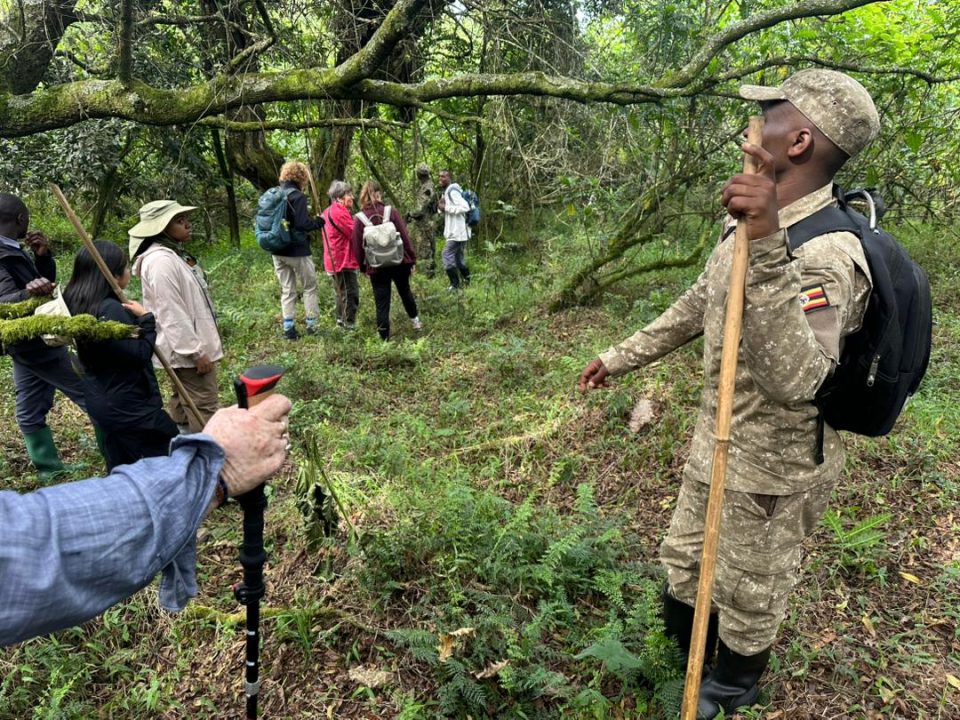
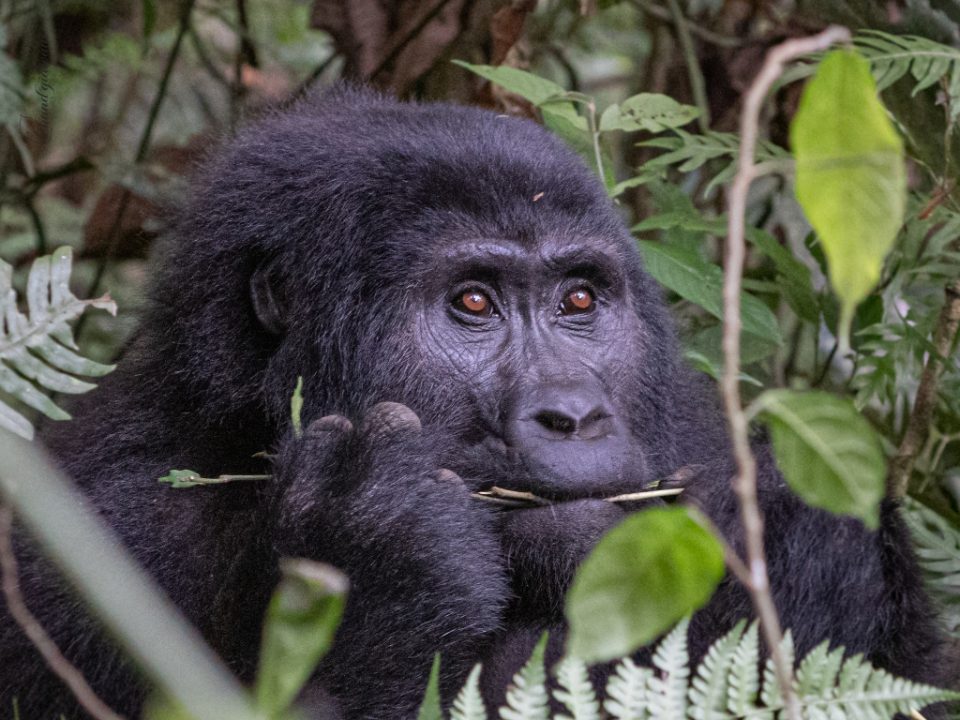
It helps to understand why trek duration is so unpredictable in the first place. Rangers and trackers head into the forest before dawn to locate each habituated family’s overnight nesting site, then radio updates back to the guides leading visitor groups as the family moves through the day. Some families range close to the park boundary and are found within 30 to 45 minutes; others range deep into steep, densely forested terrain and can take three to four hours to reach on a difficult day. Weather, food availability, and even a family’s mood on a given day all influence how far they’ve travelled since the last sighting. This isn’t a flaw in the system, it’s simply wild animal behaviour, and it’s the single reason no operator, including us, can promise an exact finish time before the day begins.
What Time Does the Trek Actually End?
Trekking days start with registration at park headquarters around 7:00 a.m., followed by a briefing, and then the hike itself. Depending on where trackers last located the family, you could be back at the trailhead by late morning or not until mid-afternoon; we cover the full range of possibilities in our guide to how long a gorilla trek actually takes. For a same-day Kigali plan to work, you realistically need to be back at your vehicle by 1:00 or 2:00 p.m. at the absolute latest, which is far from guaranteed on any given day, since gorilla families move independently of anyone’s travel schedule. If you’re the fastest hiker in your group but assigned to trek with slower companions, factor that in too; groups move at the pace of their slowest member, and rangers won’t split a group partway through to speed up one traveller’s return.
A Realistic Same-Day Timeline (Trek in Bwindi, Sleep in Kigali)
| Time | Activity |
|---|---|
| 6:30 a.m. | Arrive Rushaga park headquarters, registration |
| 7:00 a.m. – 1:00 p.m. | Trek to the gorilla family, one hour with them, return hike |
| 1:00 – 1:30 p.m. | Quick lunch, collect luggage, depart for the border |
| 1:30 – 3:30 p.m. | Drive Rushaga to Cyanika border (~1.5–2 hrs) |
| 3:30 – 4:00 p.m. | Immigration formalities at Cyanika |
| 4:00 – 7:30 p.m. | Drive Cyanika to Kigali (~3–4 hrs) |
That schedule gets you into Kigali by early evening, well before the Cyanika border’s evening closing time, but only if the trek stays on the shorter end and nothing along the route causes a delay. It’s a full, tiring day with essentially no slack, which is worth being honest with yourself about before committing to it.
Notice that this timeline assumes almost everything goes right: a moderate trek, a smooth border crossing, and no major delays on either leg of the drive. Build in a personal cutoff time, for example, deciding that if you’re not back at the vehicle by 2:30 p.m. you’ll switch to the overnight plan described further below, so the decision is made calmly in advance rather than under pressure at the trailhead.
Border Crossing Hours and Documents You’ll Need
Cyanika operates seven days a week, generally from around 6:00 a.m. to 7:00 p.m., so an afternoon crossing on a same-day plan is fine as long as you’re not running dramatically behind schedule. You’ll need a valid passport with at least six months’ validity, your Uganda or East African Tourist Visa (printed copies of any e-visa approval are strongly recommended), and, if applicable, your yellow fever vaccination certificate. Because you’re crossing in the same direction as everyone doing a standard cross-border safari, it’s worth reading a general route explainer such as this 3-day Uganda gorilla safari from Rwanda guide or this one-day Uganda gorilla safari from Kigali itinerary, both of which cover the same crossing from the Rwandan side. A similar 2-day structure, described in this 2-day Uganda gorilla tour from Kigali, is also a useful reference if you’d rather see how other operators phase the same crossing across two days instead of compressing it into one.
What Could Go Wrong: The Real Risks of This Plan
The single biggest variable is the trek itself. Gorilla families move daily, and there’s no way to know in advance whether your assigned family will be a comfortable 45-minute walk from the trailhead or a strenuous three-hour climb deep into the forest. A long trek alone can push your return to the vehicle past 3:00 p.m., which unravels the rest of the day. Beyond the trek, road conditions in the mountainous terrain leading to Rushaga can slow a drive considerably after rain, border queues can run longer on busy days, and any vehicle issue on a remote stretch of road has no easy backup plan. None of these risks are exotic, they’re just the ordinary friction of overland travel in a mountainous border region, but they compound quickly on a day with zero built-in buffer.
Fatigue is worth taking seriously too, and it’s easy to underestimate from a spreadsheet. A demanding trek followed immediately by four or more hours of driving on winding mountain roads is a genuinely long day even for a fit, well-rested traveller. If your driver is doing the same drive after an early morning start of their own, factor driver fatigue into the plan as well; a short rest stop at the border rather than pushing straight through is a small trade that meaningfully improves safety on the final stretch into Kigali after dark.
A Safer Alternative: One Night Near the Border
The lower-stress version of this trip simply adds one night, trekking in Rushaga or Nkuringo, staying at a lodge near the southern sectors or just across the border in Musanze that evening, and continuing to Kigali the next morning. It costs one extra night’s accommodation and removes almost all of the schedule pressure described above. A short list of what changes with one extra night: you can trek in any sector rather than being limited to Rushaga or Nkuringo, you’re free to linger with the gorillas without watching the clock, you cross the border the next morning in daylight with fresh energy, and you gain a genuine buffer if the trek or the crossing takes longer than expected. For most travellers who aren’t working against a truly fixed deadline, this trade is an easy one to make. This is precisely the reasoning behind our 5-day Uganda-Rwanda double gorilla safari and our 2-day Uganda gorilla safari from Kigali, both of which build in an overnight rather than gambling on a single trekking day lining up perfectly with a same-day border crossing.
Is It Worth the Risk? Who Should (and Shouldn’t) Attempt This
A same-day Bwindi-to-Kigali plan makes sense for travellers with a hard, unmovable commitment in Kigali the next morning, who are comfortable with a long and physically demanding day, and who have no fallback flight or meeting the following day that a late arrival would jeopardise. It’s a poor fit for anyone travelling with young children, anyone who tends to trek more slowly, or anyone whose Kigali plans genuinely can’t absorb even a two or three hour delay. If you’re unsure which category you fall into, we generally steer guests toward the one-night version described above; the cost difference is small relative to the stress it removes.
It’s also worth being honest about the emotional cost of a rushed hour with the gorillas themselves. Watching the clock during what should be one of the most memorable hours of your trip, worrying about the drive still ahead, can genuinely take the edge off an experience that most travellers wait years to have. Removing that time pressure by adding an overnight isn’t just a safety decision, it often makes for a noticeably better trekking experience too.
Tips to Maximize Your Odds of Making It to Kigali the Same Night
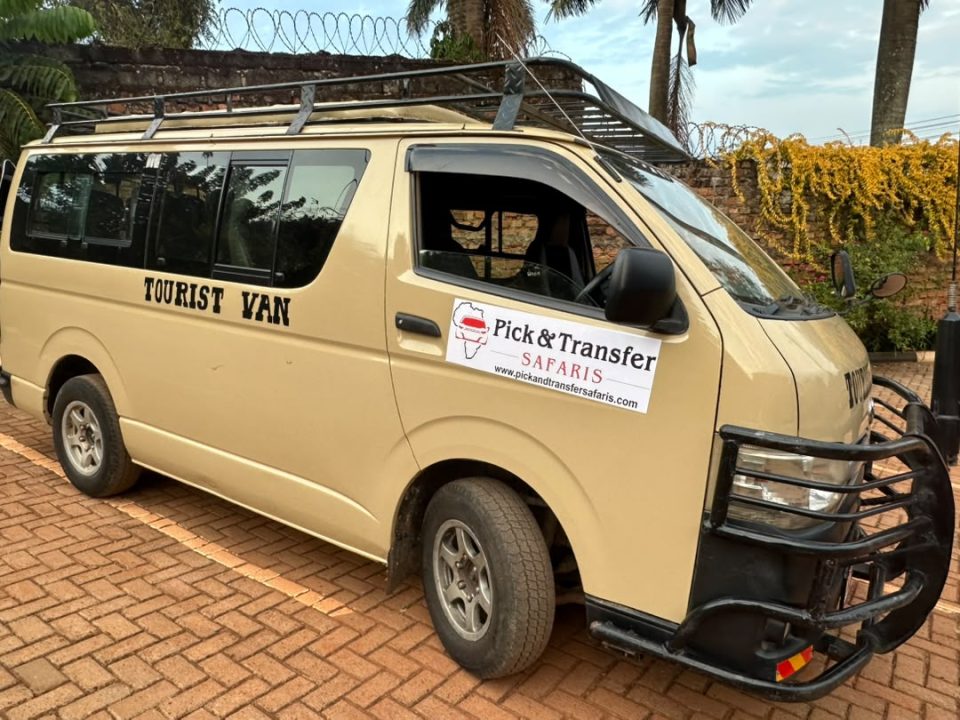
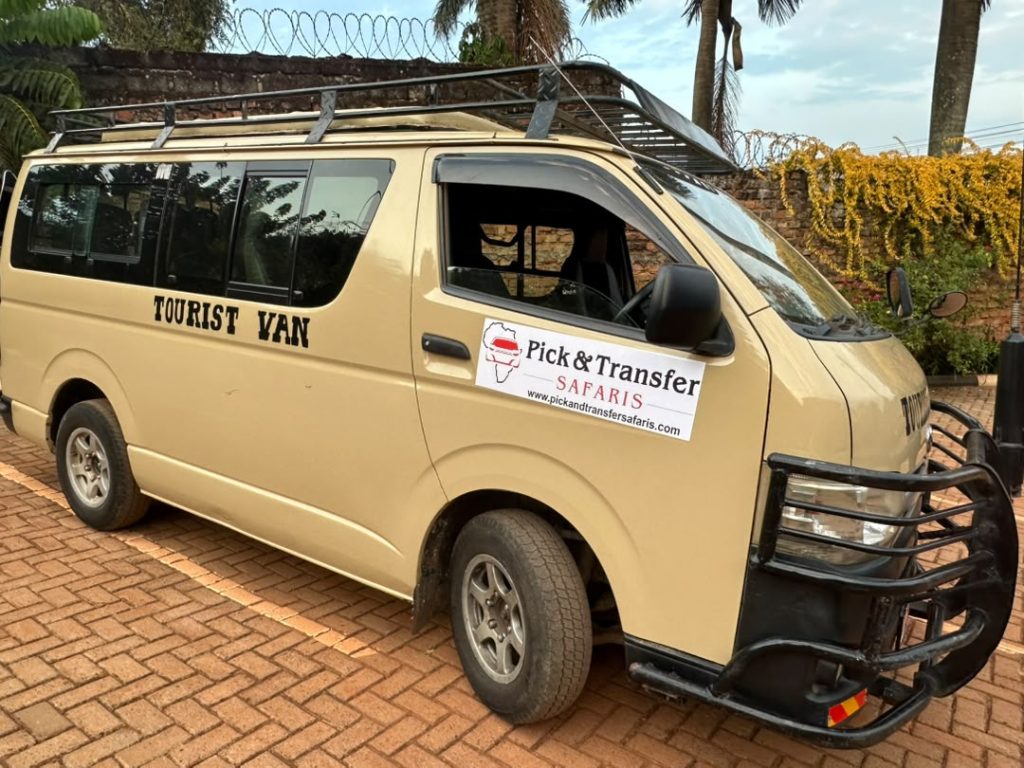
If you decide to attempt the same-day route, a few choices meaningfully improve your odds. Request the Rushaga sector specifically when booking your permit, since it’s the closest to the border by a clear margin. Choose a private vehicle and driver-guide over a shared shuttle, since a private car can leave the moment you’re back from the trek rather than waiting on a group. Pack light and keep your day bag separate from any luggage staying in the vehicle, so there’s no delay repacking at the trailhead. And build in a genuine buffer by telling anyone expecting you in Kigali that you may arrive in the evening rather than the afternoon, so a longer-than-expected trek doesn’t turn into a stressful string of messages on the road. Our private 4×4 transport is set up specifically for this kind of tightly timed, single-day routing. If you’re coordinating a transfer independently from the Rwandan side rather than through a single operator end to end, it’s worth confirming pickup timing directly with a transfer specialist such as Pick and Transfer Safaris a day or two in advance rather than assuming a same-day booking will be available.
Combining This with a Rwanda Gorilla Trek Instead
If the appeal of this plan is really “gorillas plus Kigali in one trip” rather than “gorillas specifically in Bwindi,” it’s worth asking whether a Rwanda-side trek solves the same problem far more comfortably. Volcanoes National Park sits just two to three hours from Kigali on good roads with no border crossing at all, and our 3-day Rwanda gorilla safari covers the same core experience without any of the timing pressure described in this article. The trade-off is cost, since Rwanda’s flat $1,500 permit is considerably higher than Uganda’s Uganda gorilla trekking permit pricing, so which option makes sense really comes down to whether your priority is budget or simplicity. There’s a middle path too: some travellers deliberately choose Rwanda specifically to avoid a border crossing altogether, accepting the higher permit cost as the price of simpler logistics, while others accept the Bwindi same-day plan specifically because the cost saving is large enough to be worth planning carefully around. Neither choice is objectively better; it’s a genuine trade-off between money and margin for error. For a broader look at the Rwandan side of this decision, this Volcanoes National Park overview is a useful comparison point, as is this 5-day Rwanda gorilla and chimpanzee safari, which shows what a fuller, less time-pressured Rwanda-based itinerary looks like once the same-day border-crossing question is off the table entirely.
How Kenlink Tours Plans This Route Safely
When a guest asks us for exactly this same-day itinerary, we start by confirming whether Rushaga permits are available for their date, since that single booking detail determines whether the plan is realistic at all. We then assign a private driver-guide who tracks the trek’s progress and adjusts the departure plan in real time rather than working off a fixed schedule set weeks in advance. If the trek runs long, we’d rather shift you to an overnight in Musanze or near the border than push a rushed, unsafe drive after dark. You can read more about how we structure Uganda safaris and Rwanda safaris generally, or get in touch through our contact page to talk through your specific dates. Our about us page also covers how our driver-guides are trained for exactly this kind of cross-border, time-sensitive routing, and groups travelling together can ask about our small-group departures for the same route. If you’re comparing operators before booking, it’s reasonable to also look at a regional specialist’s own profile, such as this Pick and Transfer Safaris about us page, since cross-border routing experience varies more between operators than most other parts of a safari itinerary.
Considering this exact route? Tell us your travel dates and whether Kigali the same night is a hard requirement, and we’ll tell you honestly whether it’s realistic for your dates or whether one extra night makes more sense. Talk to our team.
Frequently Asked Questions
Which Bwindi sector is closest to the Rwanda border?
Rushaga, at roughly 1.5 to 2 hours from the Cyanika border crossing, is the closest trekking sector to Rwanda, followed by Nkuringo at around 2.5 hours.
What time does the Cyanika border close?
Cyanika generally operates from about 6:00 a.m. to 7:00 p.m. daily. A same-day plan from Rushaga typically crosses in the mid-to-late afternoon, well within that window under normal circumstances.
What if my gorilla trek runs long and I miss the window?
This is the single biggest risk of the plan. If the trek runs past early-to-mid afternoon, plan on an overnight near the park or just across the border in Musanze rather than pushing a late drive through mountainous terrain after dark.
Is it cheaper to trek in Uganda and drive to Kigali, or just trek in Rwanda directly?
Uganda’s permit is meaningfully cheaper than Rwanda’s flat $1,500 rate, so the Bwindi route can save money even after factoring in cross-border transport, provided the timing works. If timing is your bigger concern than cost, trekking directly in Volcanoes National Park removes the border crossing entirely.
Should I book a private vehicle for this route?
Yes. A private driver-guide who can adjust departure time based on how your specific trek unfolds is far safer and more flexible than a shared shuttle running on a fixed schedule.
Can I do this same-day route in the opposite direction, from Kigali to Bwindi and back?
The same logistics apply in reverse, but there’s an added complication: you’d need to cross the border, complete the trek, and return to Kigali all in one day, which stacks even more travel time onto an already tight schedule. We generally don’t recommend this direction for a genuine same-day round trip.
Does the same-day plan work better in the dry season?
Yes, marginally. Drier trail conditions tend to mean somewhat faster, more predictable trek times, and drier mountain roads reduce the risk of a slow, muddy drive to the border. It doesn’t eliminate the underlying uncertainty of gorilla movement, but it does shorten the odds in your favour.
What happens if I miss the Cyanika border’s closing time?
You would need to stay overnight on the Ugandan side and cross the following morning, which is exactly the outcome the safer, one-night alternative is designed to avoid having to manage on short notice.
It’s a fair question with an honest, conditional answer: yes, from the right sector, with the right vehicle, and with realistic expectations about risk. The geography works in your favour if you’re trekking in Rushaga or Nkuringo, and it works against you almost everywhere else in the park, which is exactly the kind of detail a good operator should tell you upfront rather than after you’ve already booked the wrong sector. If you’d rather not gamble a long travel day on how quickly your gorilla family is found, we can build in one extra night without losing much of your itinerary. Get in touch and we’ll map out the option that fits your dates.