- EXPERT'S HELP
- +256789210067
- +256200955001
- info@kenlinktours.com


Short Uganda Gorilla Safaris from Kigali: 1 and 2 Day Itineraries
September 5, 2026
One day Kigali to Bwindi Gorilla Trekking
September 5, 2026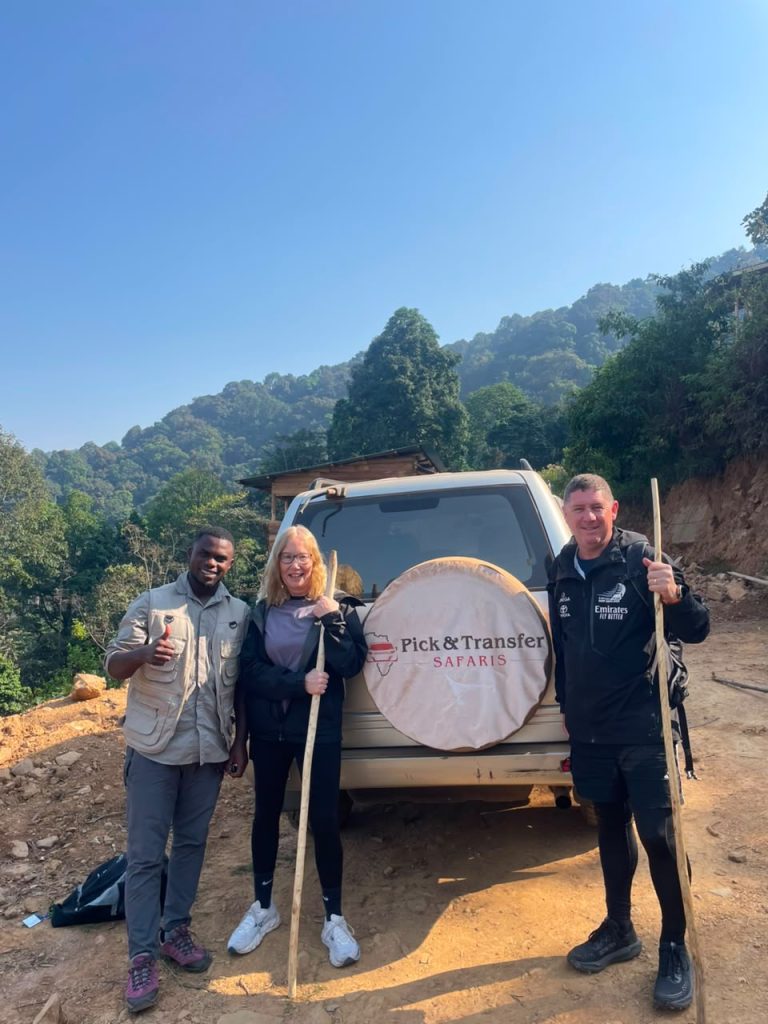
Guide to 1 and 2 Day Gorilla Trekking Tours from Kigali to Uganda. Booking a gorilla trekking tour from Kigali sounds simple until you actually try to do it — permits, border logistics, fitness requirements, packing lists, and two genuinely different tour lengths all land on a first-time traveller at once. This guide walks through the entire process, start to finish, for both the one-day tour to Mgahinga Gorilla National Park and the two-day tour to Bwindi Impenetrable Forest, so you know exactly what to expect and exactly what to prepare before you commit to either one.
Rather than simply comparing schedules or costs, this is a practical, step-by-step process guide: how to reserve your permit, what documents you need, what the trek itself actually involves, what rules govern your time with the gorillas, and what happens once you’re back in Kigali. If you already know which tour length you want, our one-day Uganda gorilla safari from Kigali and 2-day Uganda gorilla tour from Kigali pages cover each as bookable products in full.
This guide is written for travellers who want to understand the mechanics of the trip before they book, not just the highlights — the kind of traveller who would rather read twenty-five short, practical steps once than discover each requirement piecemeal as a deadline approaches. If that’s you, work through the guide in order; if you already have a firm grasp of the basics and just need specific answers, the frequently asked questions near the end cover the handful of details travellers most often ask about after reading everything else.
What “1 Day” and “2 Day” Actually Mean in Practice
A one-day gorilla trekking tour from Kigali means departing before dawn, crossing into Uganda at the Cyanika border post, trekking with the single habituated family at Mgahinga Gorilla National Park, and returning to Kigali the same evening — no overnight stay anywhere in Uganda. A two-day tour means departing later, crossing the same border, continuing on to Bwindi Impenetrable Forest’s Rushaga or Nkuringo sectors, spending one night near the park, trekking the following morning, and returning to Kigali on the evening of the second day.
Both are genuine, regularly booked tours rather than one being a “shortcut” version of the other — they simply serve different travellers with different amounts of time and different tolerances for a demanding single day versus a more paced two-day trip.
Step 1: Decide Roughly Which Length Fits Your Trip
Before diving into permits and paperwork, settle roughly which length you’re working toward, since it determines which park you’ll be assigned to and which permit category you need to reserve. As a rough rule: if you have exactly one day free anywhere in your Rwanda or Uganda itinerary and no ability to add an overnight, the one-day Mgahinga tour is your realistic option. If you have any flexibility at all, most travellers are more comfortable with the two-day Bwindi tour, which spreads the same core experience across a less rushed schedule.
This guide assumes you’ve made a rough choice already, or are choosing between the two as you read. Either way, everything from Step 2 onward applies to both tour lengths unless specifically noted.
Step 2: Reserve Your Gorilla Trekking Permit
A gorilla trekking permit is the single most important document in this entire process, and it is what actually limits how many people can trek on a given day at either park. Uganda issues a strictly limited number of permits per park per day — a single habituated family’s worth at Mgahinga, and several families’ worth split across Bwindi’s sectors — and permits routinely sell out weeks or months ahead during the June-to-September and December-to-February peak seasons.
Your permit should be reserved before you finalise flights or any other part of your trip, not after. Reserving a permit typically requires your full name exactly as it appears on your passport, your passport number, your nationality, and your preferred trek date, submitted through a licensed operator rather than directly to Uganda Wildlife Authority as an individual in most cases. Our contact page is where this reservation process typically begins for either tour length.
Step 3: Confirm Your Visa and Border Requirements
Both tour lengths cross from Rwanda into Uganda at the Cyanika border post, and both require the same visa arrangements regardless of which park or itinerary you’ve chosen. Most nationalities can obtain a Uganda visa on arrival at Cyanika or apply online in advance, while travellers holding an East African Community tourist visa typically cross without needing an additional Uganda-specific visa.
Confirm your specific nationality’s requirement well before your trek date, since a border delay on the morning of a one-day tour in particular can compress an already tight schedule to the point where the trek itself is at risk. Bring your passport, any pre-approved visa documentation, and a printed or digital copy of your permit confirmation to the border regardless of tour length.
Step 4: Understand What’s Included and What Isn’t
Tour pricing structures vary by operator, so it’s worth confirming exactly what’s bundled into your quoted price before booking either tour length. At minimum, expect your permit fee, transport from Kigali, and an English-speaking driver-guide to be included. For the two-day tour, confirm separately whether accommodation and meals are included or quoted as an add-on, since this is the single largest source of price variation between otherwise similar two-day quotes.
Commonly excluded items on both tour lengths include porter tips, ranger and driver gratuities, personal travel insurance, and any optional activities such as a community walk or golden monkey tracking added onto a two-day itinerary. Our destinations overview gives a sense of the parks and activities that can reasonably be layered onto either core tour if you have appetite for more than the gorilla trek itself.
Step 5: Prepare Physically for Either Tour
Gorilla trekking is a genuine hike, not a gentle walk, regardless of which tour length you choose. Trails at both Mgahinga and Bwindi involve steep, often muddy terrain at altitude, and trek duration is never guaranteed in advance since it depends entirely on where the habituated family happens to be that morning. A reasonable baseline fitness level — the ability to hike for two to six hours over uneven ground — is genuinely necessary for both tour lengths, not just a nice-to-have.
The one-day tour adds a further physical dimension: you’ll attempt this hike after a night with essentially no proper sleep, given the pre-dawn departure from Kigali. If you’re not confident in your ability to function physically after a sleepless night, this is worth weighing seriously before committing to the one-day option over the two-day alternative, which allows a real night’s rest beforehand.
Step 6: Pack Correctly for Your Chosen Tour Length
Both tour lengths require the same core kit: sturdy, broken-in waterproof hiking boots, a rain jacket regardless of season, gardening-style gloves for gripping vegetation, long trousers and a long-sleeved shirt in neutral colours, a wide-brimmed hat, and a daypack with a rain cover for your camera and water bottle. Stinging nettles and biting insects are a genuine daily presence in both parks, which is why long sleeves and trousers are non-negotiable rather than optional comfort items.
For the one-day tour, pack as though you won’t get another chance to restock or change for the entire day — more snacks and water than feels necessary, plus a full change of dry clothes left in the vehicle for the long return drive. For the two-day tour, you can pack lighter for the trek itself since you’ll return to a lodge afterward, but bring appropriate evening wear for a highland climate, since nights near both parks can be genuinely cold.
Step 7: Know the Rules Before You Reach the Park
Uganda Wildlife Authority enforces a consistent set of trekking rules across both parks and both tour lengths. You must be at least 15 years old to trek. You must maintain a minimum distance of seven metres from the gorillas at all times. You are limited to exactly one hour with the habituated family once you locate them, regardless of how long the approach hike took. Flash photography is prohibited, eating and smoking are prohibited near the gorillas, and anyone showing symptoms of a communicable illness — including a common cold — may be asked not to trek, since gorillas are highly susceptible to human respiratory illness.
These rules exist for the gorillas’ welfare as much as for visitor safety, and they are enforced identically whether you’re on the one-day Mgahinga tour or the two-day Bwindi tour. Familiarise yourself with them before you arrive rather than being briefed on them for the first time at the ranger post, so you’re not caught off guard on what is likely a once-in-a-lifetime morning.
Rangers take these rules seriously and will intervene immediately if a member of your group drifts too close, raises their voice, or attempts to use flash photography, so treat any in-the-moment correction as routine rather than a sign that something has gone wrong. The rules are simple enough to remember without notes, and reviewing them once beforehand is usually all it takes to trek confidently and respectfully on the day itself.
Step 8: What the One-Day Tour Actually Involves
Pickup from Kigali happens in the early hours of the morning, followed by the drive to Cyanika, border formalities, and a short continuation to Mgahinga’s ranger post for registration and a pre-trek briefing. The trek itself follows, typically two to four hours round trip depending on where the Nyakagezi family is that day, followed by your permitted hour with the gorillas. A packed lunch and the long drive back to Kigali complete the day, with most travellers arriving back in the evening.
This is a long day by any measure — commonly fourteen to sixteen hours door to door — and it rewards travellers who treat the entire day, not just the trekking hour, as part of the experience. Our Mgahinga Gorilla National Park guide covers the park itself, including its shared border with Rwanda’s Volcanoes National Park and Congo’s Virunga National Park, in more depth.
Step 9: What the Two-Day Tour Actually Involves
Day one covers the drive from Kigali to Cyanika, border formalities, and the continuation to Bwindi’s Rushaga or Nkuringo sector, followed by an afternoon of rest and an early night at your lodge. Day two begins early with breakfast and a ranger briefing, followed by the trek itself — genuinely variable in length, from ninety minutes to several hours depending on your assigned family — your permitted hour with the gorillas, a late lunch, and the drive back to Kigali, typically arriving in the evening.
Because Bwindi hosts multiple habituated families across its sectors, your ranger briefing on the morning of Day 2 typically includes some choice or at least visibility into which family you’ve been assigned, based partly on the fitness level you report at check-in. Our Bwindi Impenetrable Forest National Park guide covers the park’s sectors and its status as a UNESCO World Heritage Site in more depth.
Step 10: Choosing Between a Group Tour and a Private Tour
Both tour lengths are available as private tours, where your vehicle and schedule are entirely your own, or as joined group tours, where you share transport costs with other travellers heading to the same park on the same date. Private tours offer more schedule control, which matters more on the tightly timed one-day tour than on the two-day version, while group tours reduce per-person transport cost and suit solo travellers happy to share a vehicle.
Kenlink Tours, a Uganda-based operator we regularly reference for comparison, runs both formats — their group tours page and scheduled departure safaris page are useful references if you’re weighing the group-versus-private decision independently of which operator you eventually book with.
Step 11: Transport and Vehicle Considerations
The vehicle and driver-guide matter more to this trip than travellers often expect, particularly on the one-day tour where there is no schedule buffer to absorb a breakdown or a wrong turn. A 4×4 with a driver-guide experienced on the specific Cyanika-to-Mgahinga or Cyanika-to-Bwindi route is worth insisting on, rather than accepting a generic city vehicle and driver unfamiliar with the terrain.
If you’re extending your trip before or after either tour and need a vehicle for additional days, Kenlink Tours’ car hire page is a useful external reference point for comparing self-drive and chauffeur-driven rates in the region, separate from the guided gorilla tour itself.
Step 12: Currency, Cash, and Tipping Etiquette
Permit fees and most package pricing are quoted and settled in US dollars regardless of tour length, so carry a reasonable amount of clean, newer-series dollar notes for tips and incidental costs. Porter tips are customary on both tours and typically run USD 10–20, paid directly to your assigned porter at the end of the trek — hiring a porter is worth doing even if you’re fit, since it also supports the local community that depends economically on the park.
Ranger and driver-guide tips are separate and usually given at your own discretion at the end of the tour, whether that’s the same evening on a one-day tour or the second afternoon on a two-day tour. Your driver-guide can advise on an appropriate amount if you’re unsure, and this is a normal, expected question to ask rather than an awkward one.
Step 13: What to Expect at the Ranger Briefing
Every trek, on either tour length, begins with a mandatory briefing at the park’s ranger post. Rangers cover the day’s rules, introduce your specific trekking group, assign porters if requested, and give a rough sense of where the assigned gorilla family was last located. This briefing typically also includes basic information about the gorillas themselves — family structure, the dominant silverback’s history, and any recent developments within the group — which many travellers find adds real context to the trek that follows.
Arrive at the ranger post on time, since briefings run on a fixed schedule and a late arrival can mean joining a group already partway through, or in rare cases missing the day’s trek allocation entirely.
Step 14: The Trek Itself — What Actually Happens
Once briefed, your group sets out with rangers and, if hired, porters, following trackers who have typically located the general area of the gorilla family earlier that morning. The pace is set by the terrain and by the slowest comfortable member of your group, not by a fixed schedule, and rangers will call rest stops as needed. As you approach the family’s location, you’ll be asked to leave larger bags with porters and approach quietly in single file.
The permitted hour begins the moment you’re in the gorillas’ presence, not from when you departed the ranger post, which is why trek duration genuinely doesn’t affect how much time you get with the family itself — a two-hour approach and a five-hour approach both end in exactly sixty minutes of observation time.
Step 15: Photography and Etiquette During Your Hour
Flash photography is prohibited on both tours, since sudden bright light can startle gorillas and provoke a defensive reaction from the dominant silverback. Bring a camera capable of reasonable low-light performance, since forest canopy cover means available light is often limited even at midday. Speak quietly, move slowly, and follow your ranger’s instructions immediately if a gorilla approaches closer than the standard seven-metre distance, which does happen periodically and is not typically a cause for alarm when handled correctly.
Resist the urge to spend your entire hour looking through a viewfinder — many travellers on both tour lengths report that the moments they remember most vividly are the ones they watched directly rather than through a screen.
Step 16: What Happens After Your Hour With the Gorillas
Once your hour ends, your ranger leads the group back out of the forest, typically along a more direct route than the approach. On the one-day tour, this is followed immediately by a packed lunch and the drive back to Kigali. On the two-day tour, you’ll usually have a proper lunch either at the park or back at your lodge before the afternoon drive to Kigali begins.
Many operators issue a certificate confirming your successful trek at this point, which is a nice keepsake but not something to plan your schedule around, since it’s a minor administrative step rather than a core part of either itinerary.
Step 17: Health, Safety, and Age Requirements
Uganda’s minimum trekking age of 15 applies identically to both tour lengths and both parks — there is no exception for either. Travellers with chronic health conditions, particularly cardiovascular or respiratory conditions, should consult a doctor before booking either tour given the altitude and physical demands involved. Anyone showing symptoms of a cold, flu, or other communicable illness on the morning of their trek should expect to be asked not to participate, since gorillas can contract human respiratory illnesses with serious consequences for the group’s health.
Comprehensive travel insurance that explicitly covers trekking and emergency evacuation is worth arranging before either tour, given the remote location of both parks relative to advanced medical care.
Step 18: Best Time of Year for Either Tour
Uganda’s gorilla trekking regions have two drier seasons — roughly December to February and June to September — when trails are less muddy and trekking conditions are generally more comfortable on both tour lengths. The wetter months outside these windows aren’t off-limits, and permits are typically easier to secure then, but expect more challenging underfoot conditions and a higher chance of rain interrupting your day, particularly relevant for the one-day tour’s tighter schedule.
Whichever season you’re travelling in, book your permit well ahead of your preferred date rather than assuming late availability, since both Mgahinga’s single-family allocation and Bwindi’s multi-family allocation are limited every day of the year, not just during peak months.
Step 19: How Pricing Typically Breaks Down
Across both tour lengths, the Uganda gorilla permit itself — approximately USD 800 per person — is the single largest and most consistent cost, and it does not vary by park or by tour length. Transport, accommodation (for the two-day tour only), visa costs, and tips make up the remainder, and these vary more by operator and by traveller choices than the permit fee does.
As a rough guide, expect a one-day tour to total somewhere in the region of USD 950–1,150 per person all-in, and a two-day tour to total somewhere in the region of USD 1,300–2,000 per person depending on accommodation category. Always ask any operator for an itemised quote rather than a single bundled number, so you can see exactly what you’re paying for.
Step 20: Choosing an Operator You Can Trust
Given how much of this process depends on accurate permit reservation, reliable transport, and an experienced guide, the operator you choose matters as much as the tour length itself. Look for an operator with a clear, verifiable track record, transparent pricing that itemises the permit fee separately from other costs, and responsive communication before you’ve paid anything — how an operator handles pre-booking questions is often a reliable signal of how they’ll handle your trip itself.
Our About Us page covers our own background and approach, and we’d encourage you to compare it against other established operators in the region — including Uganda-based companies such as Kenlink Tours, whose company background and Uganda safaris page are useful independent references — before finalising your booking with anyone.
Step 21: Common Mistakes First-Time Bookers Make
The most common mistake is booking flights before confirming permit availability, which occasionally leaves travellers with no realistic way to trek on their planned dates. A close second is underestimating the one-day tour’s physical demands, particularly the sleep deprivation component, which catches travellers off guard more often than the hike itself does. A third common mistake is accepting a bundled quote without asking what it excludes, only to discover porter tips, ranger gratuities, or accommodation weren’t included as assumed.
A fourth, less obvious mistake is not building in any schedule buffer around either tour — arriving in Kigali the same day as a one-day trek, for instance, stacks travel fatigue and jet lag on top of an already demanding day. Reviewing this list before you book is one of the simplest ways to avoid a preventable problem on what should be a genuinely memorable trip.
Step 22: Extending Your Trip Beyond Either Tour
Neither tour length has to be the entirety of your Rwanda-Uganda trip. Travellers who complete the two-day Bwindi tour and want more time in the region sometimes extend into a longer circuit — our 3-day Uganda gorilla safari and 5-day Uganda gorilla and chimps safari from Rwanda both build on the same core Bwindi itinerary with additional parks and primates layered in.
For travellers who’d rather explore Rwanda’s side of the border instead of, or alongside, either Uganda tour, our 2-day Volcanoes gorilla trek from Kigali and 3-day Rwanda gorilla tracking and cultural tour cover comparable itineraries entirely within Rwanda, worth considering if Uganda permits for your preferred dates are unavailable.
Step 23: Combining Gorilla Trekking With Other Wildlife
Travellers with more time sometimes combine either core gorilla tour with other East African wildlife experiences rather than returning to Kigali immediately afterward. Our 7-day Uganda-Rwanda safari adventure and 10-day Uganda primates and wildlife safari both fold a gorilla trek into a broader circuit covering savannah game drives and additional primate tracking, worth a look if either core tour turns out to be just the starting point of a longer trip.
Queen Elizabeth National Park, in particular, is a common add-on for travellers extending a Bwindi-based two-day tour, and our Queen Elizabeth National Park guide covers what’s involved in combining the two.
Step 24: What to Do If Your Preferred Dates Are Unavailable
If permits for your preferred dates are sold out on either the one-day Mgahinga or two-day Bwindi route, don’t assume your trip is off — check availability on the other tour length first, since Mgahinga and Bwindi maintain separate permit allocations and one being full doesn’t mean the other is. Kenlink Tours’ travel news section and Kigali-to-Bwindi travel time guide are useful independent references for understanding how flexible your routing options genuinely are.
If both parks are unavailable for your exact dates, shifting by even a few days, or considering Rwanda’s Volcanoes National Park as an alternative entirely, are both more productive paths than abandoning the trip altogether.
Step 25: A Simple Pre-Booking Checklist
Before you commit to either tour length, confirm: your passport is valid for at least six months beyond your travel dates, your visa arrangements are settled, your permit has been reserved and confirmed in writing by your operator, your quoted price is itemised rather than bundled, your fitness level realistically matches your chosen tour length, and your travel insurance explicitly covers trekking activities.
Working through this checklist methodically, rather than assuming everything will be handled automatically, is the single most effective thing you can do to avoid a last-minute problem with either the one-day or two-day tour.
It’s worth revisiting this checklist once more roughly a week before departure, not just at the time of booking, since visa approvals, permit confirmations, and insurance documents can all shift status in the weeks between reserving your tour and actually travelling. A short final review catches the rare case where something that was confirmed months earlier has quietly lapsed or changed, and it takes only a few minutes against the cost of discovering a problem at the border itself.
Kigali as Your Base for Either Tour
Both tour lengths begin and end in Kigali, which makes the city itself worth a moment’s thought even if your focus is entirely on the gorilla trek. A one-day tour’s pre-dawn departure means your Kigali accommodation and how close it sits to your pickup point genuinely matters — a hotel on the wrong side of the city can eat into already limited sleep before a demanding day. Our Kigali city guide covers accommodation and logistics in more depth if this is your first visit.
Kenlink Tours, the Uganda-based operator we’ve referenced throughout this guide as an independent comparison point, is reachable via their main site if you’d like a second operator’s perspective on Kigali-based logistics for either tour length before you finalise your own booking.
Considering the Rwanda Side of the Border
Everything in this guide has focused on Uganda’s Mgahinga and Bwindi parks, but it’s worth knowing that Rwanda’s own Volcanoes National Park sits just across the border and offers a comparable gorilla trekking experience with its own separate permit system. Some travellers choose a Rwanda-based tour instead of either Uganda option entirely, particularly when Uganda permits for their preferred dates are unavailable.
If you want to compare a Rwanda-side itinerary directly against the two Uganda tour lengths covered in this guide, Kenlink Tours’ Rwanda safaris page and 2-day Rwanda-to-Uganda gorilla trekking safari are both useful independent references, alongside our own 3-day Uganda gorilla safari from Rwanda, which bridges both countries in a single itinerary.
Frequently Asked Questions About 1 and 2 Day Gorilla Trekking Tours from Kigali
How far in advance should I book?
As early as possible, and ideally several months ahead for peak season dates in June–September or December–February, since permit availability — not price — is the real constraint on both tour lengths.
Can I do the two-day tour and stay longer in Uganda afterward?
Yes. Many travellers use the two-day Bwindi tour as the starting point of a longer Uganda circuit rather than returning to Kigali immediately, extending into Queen Elizabeth National Park or further afield.
Is one gorilla permit valid for both tour lengths?
No. Permits are park-specific and tour-specific — a Mgahinga permit for the one-day tour is entirely separate from a Bwindi permit for the two-day tour, and you cannot switch parks on the day using the same permit.
What happens if it rains during my trek?
Treks proceed in rain on both tour lengths, since both parks are genuine rainforest environments where rain is a normal, expected condition. Pack proper rain gear rather than hoping to avoid it.
Do I need travel vaccinations for either tour?
Requirements vary by traveller and by home country, so check with a licensed travel health provider rather than relying on general guidance, particularly regarding yellow fever documentation, which is commonly required for entry into the region.
Can I hire a porter even if I consider myself fit?
Yes, and it’s worth doing regardless of fitness level. Porters carry your daypack, offer a steadying hand on steep sections, and their fee — a modest tip, typically USD 10–20 — directly supports the local communities bordering both parks, which is a meaningful part of the parks’ long-term conservation model.
What’s the single biggest difference travellers notice between the two tour lengths?
Almost universally, it’s sleep. Travellers on the one-day tour consistently describe the sleep deprivation as the hardest part of the day, harder than the hike itself, while travellers on the two-day tour rarely mention fatigue as a significant factor at all.
Is it possible to see gorillas without trekking at all?
No. There is no viewing option that skips the hike — reaching a habituated family always requires walking into the forest, on foot, for however long it takes rangers to locate them that day, on both tour lengths and at both parks.
Ready to Book Your 1 or 2 Day Gorilla Trekking Tour from Kigali
Whichever length fits your trip, the process above — permit first, documents second, physical and packing preparation third, and a trustworthy operator throughout — applies whether you’re pushing through a single demanding day at Mgahinga or taking the more paced two-day route to Bwindi. Both end in the same genuinely rare hour with a habituated mountain gorilla family, and getting the process right beforehand is what makes that hour feel earned rather than rushed or uncertain.