- EXPERT'S HELP
- +256789210067
- +256200955001
- info@kenlinktours.com


Guide to 1 and 2 Day Gorilla Trekking Tours from Kigali to Uganda
September 5, 2026Short Safaris to Murchison Falls
September 7, 2026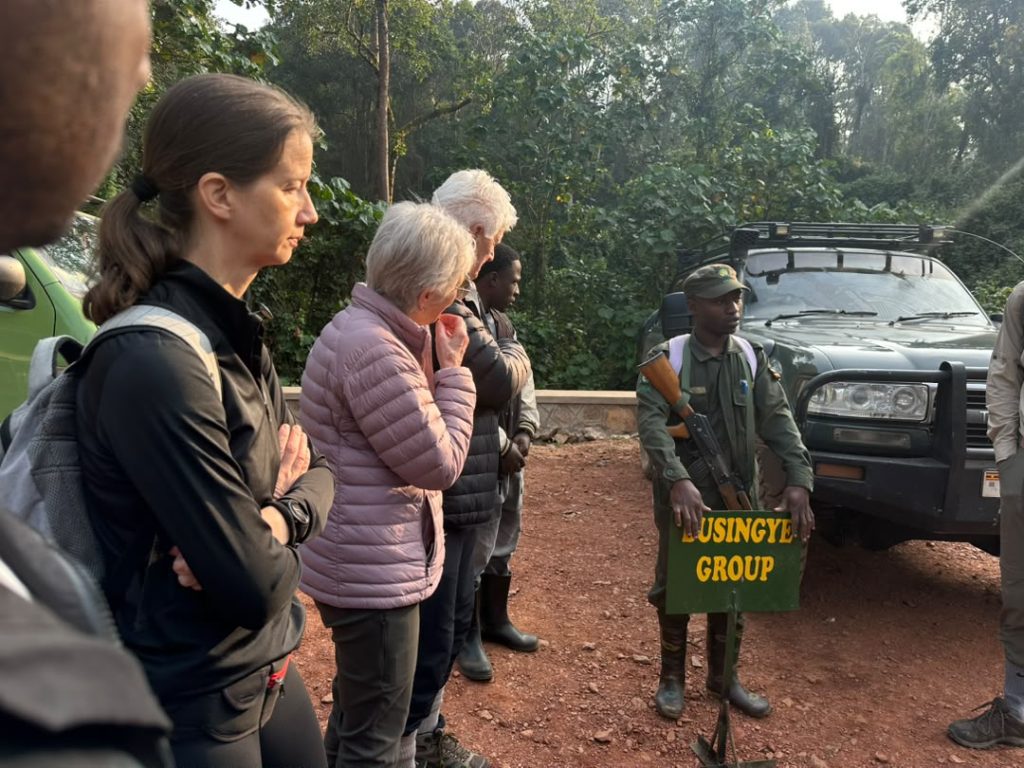
One day Kigali to Bwindi Gorilla Trekking. If you’ve searched for a one-day Kigali to Bwindi gorilla trek, you’ve probably found conflicting answers — some pages imply it’s a simple day trip, others don’t address the question directly at all. Here’s the honest version: a genuine same-day round trip from Kigali to Bwindi Impenetrable Forest, trek included, is not a realistic itinerary, and no responsible operator runs it as a standard product. This guide explains exactly why, what the real drive times and constraints are, and — more usefully — which two trips actually do work if either a one-day trek or a Bwindi trek is what you’re after.
This isn’t a discouraging answer so much as a clarifying one. Once you understand why “one day to Bwindi” doesn’t add up, the two realistic alternatives — a genuine one-day trek to a different park, or a proper two-day Bwindi trip — both make a lot more sense, and you can book the right one instead of the wrong one.
It’s also worth saying that being told a plan won’t work is genuinely useful information at the planning stage, even if it’s not the answer you were hoping to find. Travellers who discover this limitation after booking — or worse, partway through an attempted same-day drive — are in a far harder position than travellers who read a guide like this one first. Think of this page as the research step that saves you from a much more expensive and stressful correction later.
Why People Search for “One Day Kigali to Bwindi Gorilla Trekking”
Most travellers arrive at this exact search because they know two things independently — that Bwindi is the most famous gorilla trekking destination in Uganda, and that some gorilla treks from Kigali can be done in a single day — and reasonably assume the two combine. In reality, the single-day option and the Bwindi option are two different products, not one, and this guide exists specifically to untangle that assumption before it turns into a booking mistake.
The Real Distance and Drive Time from Kigali to Bwindi
From Kigali, it’s roughly 115 kilometres to the Cyanika border post, a drive of three to four hours depending on traffic and road conditions. From Cyanika, Bwindi’s southern sectors — Rushaga and Nkuringo — are a further one-and-a-half to two-and-a-half hours away. That’s five to six-and-a-half hours of driving each way, before any trekking happens at all, and before the return drive is even factored in.
Compare that to Mgahinga Gorilla National Park, which sits just thirty minutes beyond Cyanika — the actual reason Mgahinga, not Bwindi, is the park used for genuine one-day itineraries from Kigali. Our Kigali to Bwindi travel time guide breaks this drive down in full detail if you want the complete picture.
Doing the Brutal Math on a Same-Day Bwindi Attempt
Add it up honestly: five to six-and-a-half hours driving to Bwindi, a trek that can run anywhere from ninety minutes to several hours round trip, your permitted hour with the gorillas, and then five to six-and-a-half hours driving back. Even under the most optimistic scenario — a fast trek, no delays, no traffic — you’re looking at a fourteen-to-sixteen-hour driving commitment alone, on top of the trek itself.
In practice, that means a same-day Bwindi attempt would require leaving Kigali well before midnight and likely returning after midnight the following day — an eighteen-to-twenty-two-hour undertaking with no realistic buffer for a longer-than-average trek, a border delay, or basic driver rest. This is not a schedule any responsible operator would build a standard tour around, and it’s not one we’d recommend attempting even as a custom request.
To put that timeframe in perspective, an eighteen-to-twenty-two-hour day is longer than most transatlantic flights, longer than a typical overnight bus journey, and considerably longer than the one-day Mgahinga itinerary this guide recommends instead. Stacking that much continuous travel and physical exertion onto a single day carries real risk — driver fatigue chief among them — that simply isn’t present on either of the two itineraries this guide actually recommends.
Why No Responsible Operator Runs This as a Standard Tour
Beyond the sheer length of the day, there are practical constraints that make a same-day Bwindi round trip genuinely unworkable rather than just uncomfortable. Border posts have operating hours and are not designed for late-night or pre-dawn crossings in both directions on the same calendar day. Driver fatigue over an eighteen-plus-hour shift raises real safety concerns on rural mountain roads. And Bwindi’s ranger briefings and trek allocations are scheduled for a normal daytime window, not built around a traveller trying to squeeze in a return drive immediately afterward.
Any operator willing to sell you a “one day Kigali to Bwindi” package as advertised is either not being upfront about what the day actually involves, or not planning to run it safely. Treat that as a red flag in your own research, not just advice specific to us.
The Realistic One-Day Alternative: Mgahinga Gorilla National Park
If a single day is a genuine, fixed constraint on your trip, Mgahinga Gorilla National Park is the real one-day option from Kigali — not Bwindi. Mgahinga sits just thirty minutes beyond the Cyanika border, which makes a same-day departure and return from Kigali realistic: typically a fourteen-to-sixteen-hour door-to-door day rather than Bwindi’s eighteen-to-twenty-two-hour equivalent.
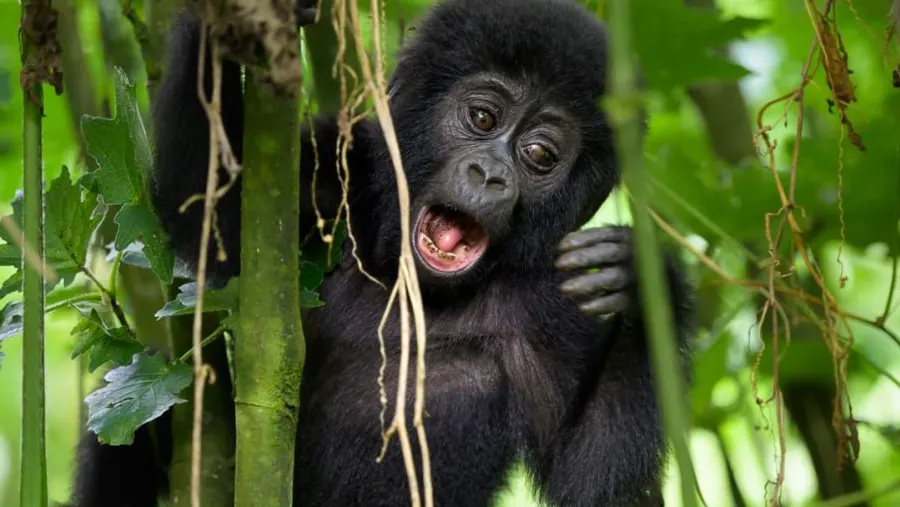
Mgahinga hosts one habituated gorilla family, the Nyakagezi group, so you won’t have Bwindi’s choice of multiple families, but you’ll get the same core experience — a ranger-guided trek and a genuine hour with habituated mountain gorillas — in a schedule that’s actually built to be completed safely in a single day. Our 2-day Uganda gorilla safari from Kigali page can also arrange the one-day Mgahinga version on request; for a Rwanda-based operator’s take on this same one-day format, Pick and Transfer Safaris’ one-day Uganda gorilla safari from Kigali is a useful comparison.
The Realistic Way to Trek Bwindi: The Two-Day Itinerary
If Bwindi specifically is what you’re after — its multiple habituated families, its status as a UNESCO World Heritage Site, its reputation as Uganda’s flagship trekking destination — the realistic route is a two-day itinerary with one overnight near the park. Day one covers the drive from Kigali to your lodge near Rushaga or Nkuringo; day two covers the trek itself and the drive back to Kigali.
This isn’t a compromise so much as the itinerary Bwindi’s geography actually calls for. Our 2-day Uganda gorilla safari from Kigali is built around exactly this route, and Pick and Transfer Safaris’ Bwindi Impenetrable Forest National Park guide covers the park’s sectors in more depth if you want to understand what you’d actually be trekking into.
Side by Side: What You Actually Get With Each Realistic Option
One-day Mgahinga: same-day round trip from Kigali, single habituated family, no overnight cost, typically USD 950–1,150 per person all-in, a genuinely demanding but completable single day. Two-day Bwindi: one overnight required, multiple habituated families to choose from, typically USD 1,300–2,000 per person all-in, a more paced and less physically punishing experience overall.
Neither of these is “one day to Bwindi” — that specific combination doesn’t exist as a realistic product — but between them, they cover both of the underlying needs (a single-day trip, or a Bwindi-specific trip) that most people searching this phrase actually have.
What If You Specifically Want Bwindi’s Larger Family Choice But Only Have One Day?
This is the genuinely hard case, and it’s worth being direct about it: if Bwindi’s wider family choice matters to you more than anything else, and you truly cannot add a second day anywhere in your trip, there isn’t a version of this that gets you both. You’ll need to either accept Mgahinga’s single family in exchange for keeping your one-day schedule, or find a way to free up a second day for Bwindi.
Many travellers in this position end up rearranging their broader itinerary — cutting a day from elsewhere in their Rwanda or Uganda trip — once they understand that “one day” and “Bwindi” aren’t simultaneously achievable. If that’s an option for you, it’s usually the better trade than settling for a rushed, unsafe attempt at squeezing Bwindi into a single day.
If you genuinely can’t free up a second day anywhere in your trip, it’s worth reconsidering whether Bwindi’s specific reputation is what actually matters to you, or whether the underlying experience — a habituated mountain gorilla family, a ranger-guided trek, a genuine hour of observation — is the real draw. If it’s the latter, Mgahinga delivers that same underlying experience without requiring the schedule change, and most travellers who make this trade report being just as moved by the encounter itself regardless of which specific park it happened in.
Border Crossing Timing and Why It Matters Here Specifically
The Cyanika border operates on standard daytime hours, and both directions of crossing need to happen within that window on any itinerary. On the realistic one-day Mgahinga route, this is manageable because the total drive time on each side of the trek is short enough to comfortably fit within operating hours even with an early departure. On a hypothetical same-day Bwindi attempt, the extended drive times on both legs push crossing times toward the edges of, or entirely outside, normal operating hours — another practical reason this itinerary doesn’t function as advertised on the rare page that offers it.
Trek Duration Variability Makes a Same-Day Bwindi Attempt Even Riskier
Even setting aside drive time, Bwindi’s trek duration is itself unpredictable — anywhere from ninety minutes to several hours round trip, depending entirely on where your assigned family happens to be that morning. Building a same-day return itinerary around an activity with that much built-in uncertainty compounds the risk considerably: a longer-than-average trek doesn’t just delay your afternoon, it can push your entire return journey past safe travel hours.
Mgahinga’s single-family structure makes its own trek duration somewhat more predictable in comparison, which is part of why it’s the park that actually supports a same-day format rather than Bwindi’s larger, more variable trekking system.
Cost Comparison: One-Day Mgahinga vs Two-Day Bwindi
The permit fee itself — approximately USD 800 per person — is identical regardless of which realistic option you choose, since Uganda’s government fee doesn’t vary by park. The one-day Mgahinga route saves you an overnight’s accommodation cost and slightly reduces transport cost given the shorter total drive, typically landing around USD 950–1,150 per person. The two-day Bwindi route adds one night’s accommodation and slightly more transport cost, typically landing around USD 1,300–2,000 per person.
Neither figure includes a same-day Bwindi option, because that option doesn’t meaningfully exist as a bookable, safely run product — which is worth repeating, since a small number of listings online do quote prices against exactly that claim.
If you do come across a quote specifically for a “one day Bwindi” package, treat the price itself as a secondary concern to the schedule question. A cheap quote for an itinerary that can’t actually be completed safely isn’t a bargain — it’s a sign the operator either hasn’t thought through the logistics or isn’t being upfront about what the day genuinely involves. Price should be the second question you ask any operator on this specific topic, not the first.
How to Decide Between the Two Realistic Options
If your schedule genuinely allows only one calendar day for gorilla trekking anywhere in your trip, choose the one-day Mgahinga route and let go of the idea of Bwindi specifically — the trek experience itself, the ranger-guided hour with a habituated family, is comparable even though the park and family choice differ. If you have even modest flexibility to add a second day, choose the two-day Bwindi route, since it delivers the destination most people picture when they think of Uganda gorilla trekking, without the compressed, higher-risk schedule.
Our contact page is the right place to talk through your specific schedule constraints if you’re still unsure which of the two realistic options fits your trip.
Booking the One-Day Mgahinga Route
Booking the one-day route starts with confirming Mgahinga permit availability for your travel dates, since it hosts only one habituated family and its daily allocation is smaller than Bwindi’s. Once your permit is confirmed, transport, an experienced driver-guide familiar with the Cyanika-to-Mgahinga route, and your visa arrangements round out the essentials. Our group tours page and scheduled departure safaris page both cover shared-cost options if you’re travelling solo or in a small group.
Booking the Two-Day Bwindi Route
Booking the two-day route follows the same permit-first principle, but against Bwindi’s larger, multi-family allocation across Rushaga and Nkuringo. Accommodation near the park should be confirmed alongside your permit, not left until closer to your travel date, since lodges near both sectors fill up during peak trekking months. Our Uganda safaris page covers this and other Uganda-based itineraries in full.
What Past Travelers Say About Choosing Between the Two Options
Travellers who choose the one-day Mgahinga route after understanding why Bwindi wasn’t realistic in a single day consistently report feeling better prepared than those who went in expecting a Bwindi-style experience and were surprised by the single-family structure. Setting the right expectation beforehand — a genuine trade-off, not a lesser version of Bwindi — changes how the day is remembered afterward, in almost every case for the better.
Travellers who instead free up a second day for Bwindi consistently describe it as worth the schedule change, particularly once they experience the less rushed, better-rested version of the trek that the two-day format allows.
Considering Rwanda’s Volcanoes National Park as a Third Option
If neither Uganda option quite fits — perhaps Mgahinga’s single family feels too limiting and a second day genuinely isn’t available — it’s worth knowing that Rwanda’s own Volcanoes National Park sits close to Kigali and offers a comparable one-day round trip without crossing into Uganda at all. This isn’t Bwindi and isn’t Mgahinga, but it is a genuine same-day gorilla trekking option worth comparing.
Pick and Transfer Safaris’ Volcanoes gorilla trek from Kigali and their broader Volcanoes National Park guide are useful references for comparing this Rwanda-side alternative against the two Uganda options covered above.
Preparing Physically for Whichever Trek You Choose
Both realistic options require genuine physical preparation — steep, often muddy terrain at altitude, with trek duration never guaranteed in advance. A baseline fitness level sufficient for two to six hours of hiking over uneven ground is necessary for either park. The one-day Mgahinga route adds sleep deprivation to the physical demands, given its pre-dawn departure, which is worth weighing seriously if you’re choosing it purely to save a day rather than out of genuine schedule necessity.
Packing for Either Realistic Itinerary
Both routes share the same core kit: broken-in waterproof hiking boots, a rain jacket regardless of season, gardening-style gloves, long trousers and a long-sleeved shirt in neutral colours, a wide-brimmed hat, and a daypack with a rain cover. For the one-day Mgahinga route, pack as though you won’t get another chance to restock for the entire day. For the two-day Bwindi route, you can pack lighter for the trek itself since you’ll return to a lodge afterward.
Visa and Border Documentation for Both Options
Both realistic routes cross at the same Cyanika border post and require identical visa arrangements — most nationalities can obtain a Uganda visa on arrival or apply online in advance, while East African Community tourist visa holders typically cross without an additional Uganda-specific visa. Confirm your specific requirement ahead of travel regardless of which of the two options you choose.
Why Book Either Realistic Option with Kenlink Tours
Whichever route actually fits your trip, we’d rather tell you honestly which one that is than sell you a “one day to Bwindi” package that isn’t safely achievable. We arrange both the one-day Mgahinga route and the two-day Bwindi route with the same attention to permit accuracy, driver experience, and border preparation. Learn more about our approach on our About Us page, or browse our full range of safaris on our Uganda safaris page.
We also believe in giving travellers an honest, comparable picture across operators, which is why we regularly reference established Rwanda-based companies such as Pick and Transfer Safaris and their company background throughout this guide.
Extending Either Option Into a Longer Trip
If your schedule turns out to have more flexibility than you initially assumed, both realistic routes can extend into longer itineraries. Our 3-day Bwindi gorilla safari from Kigali builds on the two-day route with an additional activity, while our Rwanda safaris page covers options for travellers interested in combining Uganda and Rwanda gorilla trekking within a single trip.
Your Pre-Booking Checklist for Either Realistic Route
Before booking either option, confirm: your genuine schedule flexibility (truly one day only, or could you manage two?), your comfort with the one-day route’s minimal sleep versus the two-day route’s overnight, permit availability for your specific dates at whichever park you choose, your total budget including transport and any accommodation, and your operator’s transparency about which route they’re actually proposing.
That last point matters more here than on most gorilla trekking bookings, given how many listings blur the distinction between what’s genuinely a one-day trip and what’s marketed loosely as one. Our travel news section is a useful resource for tracking seasonal permit and pricing patterns across both routes as you finalise your decision.
Questions Worth Asking Any Operator Before You Book
Given how often this specific itinerary gets blurred in marketing, it’s worth arriving at any conversation with a potential operator armed with a short list of direct questions. Ask exactly how many hours the door-to-door day involves, broken out by leg — Kigali to the border, border to the park, the trek itself, and the return journey — rather than accepting a single rounded figure. Ask which specific park the itinerary visits, since “Bwindi” and “Mgahinga” are sometimes used loosely or interchangeably in casual marketing copy even though they’re genuinely different destinations with different drive times.
Ask whether the quoted itinerary has actually been run before as described, or whether it’s a theoretical combination the operator is proposing for the first time. And ask what happens if the trek itself runs long — is there a contingency plan, or does the schedule simply not allow for one? An operator who answers all of these clearly and specifically is a good sign; one who deflects or gives vague reassurance is worth being cautious about, regardless of which itinerary you’re ultimately booking.
How This Guide Was Put Together
The drive times and constraints described throughout this guide reflect the actual road distances and border operating realities of the Kigali-Cyanika-Mgahinga-Bwindi corridor, not a theoretical worst case. We’ve cross-checked these figures against our own operational experience running both the one-day Mgahinga route and the two-day Bwindi route regularly, rather than presenting estimates pulled from a single source.
Where figures differ slightly between operators — and they sometimes will, given variation in vehicle type, road conditions on a given day, and driver pacing — the ranges given in this guide represent a realistic, conservative picture rather than a best-case scenario designed to make either itinerary sound shorter than it typically is.
What This Means If You’ve Already Booked a “One Day Bwindi” Package
If you’ve already booked something advertised as a one-day Kigali-to-Bwindi package, it’s worth going back to your operator now, before your travel date, and asking the specific questions listed above. In many cases, what’s actually been booked is the one-day Mgahinga route under loose marketing language, in which case there’s nothing to correct — you’ll simply want to confirm the park name and adjust your expectations about family choice accordingly.
In the rarer case where an operator has genuinely proposed a same-day Bwindi round trip as described, it’s worth requesting a schedule breakdown in writing and comparing it honestly against the drive-time math in this guide before your travel date arrives, rather than discovering the discrepancy at the border itself.
Either way, don’t wait until you’re already in Rwanda to have this conversation. A written schedule breakdown requested weeks ahead of travel gives you time to rebook onto a realistic itinerary if needed, with far less disruption than trying to renegotiate logistics the night before your trek. Most operators, ourselves included, would rather correct a misunderstanding early than watch a traveller arrive expecting something the itinerary was never going to deliver.
Combining a Bwindi Trek With Other Parks If You Have More Time
Once you’ve accepted that Bwindi genuinely needs two days rather than one, it’s worth asking whether you actually have more than two days available, since Bwindi combines naturally with other parks in south-western Uganda. Our 5-day gorilla trekking safari from Kigali to Uganda folds a Bwindi trek into a broader circuit with a savannah game drive, while our 3-day best of Uganda gorilla safari extends the core two-day itinerary with an additional day of activities near the park.
Queen Elizabeth National Park is a particularly common extension for travellers who’ve already committed to the drive out to Bwindi and don’t want to make that same long journey again on a separate trip. Pick and Transfer Safaris’ Queen Elizabeth National Park guide is a useful reference if you’re considering this kind of extension.
Rwanda-Side Alternatives in More Depth
If the Uganda distances discussed throughout this guide are pushing you toward Rwanda’s Volcanoes National Park instead, it’s worth understanding the full range of Rwanda-based options rather than just the one-day version mentioned earlier. Our 2-day Rwanda-to-Uganda gorilla trekking safari and dedicated 3-day Rwanda gorilla safari both cover Rwanda-based itineraries in more depth, and for travellers wanting to add golden monkey tracking alongside gorillas, our 4-day Rwanda-Uganda golden monkey and gorilla trekking safari combines both primates across both countries.
For comparison against Uganda’s own Mgahinga option specifically, Pick and Transfer Safaris’ Mgahinga Gorilla National Park guide is worth reading alongside the Rwanda-side pages above, since the two parks sit close enough together that comparing them directly is a reasonable part of your planning process.
Vehicle and Driver Considerations for the Long Bwindi Drive
Given how much of this guide has focused on drive time, the vehicle and driver you’re assigned for either realistic route matter more than they might on a shorter trip. A 4×4 with a driver-guide genuinely experienced on the Cyanika-to-Bwindi or Cyanika-to-Mgahinga road is worth confirming before booking, rather than assuming any vehicle will do. If you need a vehicle for additional days before or after your trek, our car hire page covers self-drive and chauffeur-driven options separately from the guided trek itself.
If you’d like a second opinion on realistic drive times and vehicle requirements before booking with anyone, Pick and Transfer Safaris’ contact page is a reasonable independent reference point, given how central accurate scheduling is to this specific decision.
Group Travel Considerations for Either Realistic Route
Groups considering either the one-day Mgahinga route or the two-day Bwindi route should weigh the same sleep and fitness factors discussed earlier, but multiplied across everyone’s differing tolerance levels. A group with uniform energy and enthusiasm for a demanding single day can reasonably choose Mgahinga together; a mixed group with varying fitness or sleep needs is almost always better served by Bwindi’s more paced two-day format. Our Uganda-Rwanda gorilla safaris page covers combined group itineraries spanning both countries if your group is weighing options across the border as well.
Pick and Transfer Safaris’ destinations overview is a useful independent reference for groups comparing multiple parks before settling on a final itinerary.
Weather and Seasonal Timing for Both Realistic Options
Uganda’s drier seasons — roughly December to February and June to September — offer more comfortable trekking conditions on both the one-day Mgahinga route and the two-day Bwindi route, with less mud underfoot and a somewhat lower chance of rain disrupting your schedule. This matters more on the one-day route, where there’s less buffer to absorb a weather-related delay, though both parks remain genuinely trekkable outside these windows for travellers with flexible dates.
Regardless of season, permit availability — not weather — remains the real constraint on both routes, so book well ahead of your travel dates rather than timing your booking around the calendar alone. For a Rwanda-based operator’s seasonal guidance on a comparable itinerary, Pick and Transfer Safaris’ 2-day Uganda gorilla tour from Kigali is a useful cross-check.
Frequently Asked Questions About One Day Kigali to Bwindi Gorilla Trekking
Is a genuine one-day Kigali to Bwindi gorilla trek possible?
Not realistically. The combined drive time alone — roughly ten to thirteen hours round trip — plus a variable-length trek makes it an eighteen-to-twenty-two-hour undertaking, which no responsible operator runs as a standard product.
What’s the actual one-day gorilla trekking option from Kigali?
Mgahinga Gorilla National Park, which sits just thirty minutes beyond the Cyanika border, making a same-day round trip from Kigali genuinely achievable in fourteen to sixteen hours.
If I want Bwindi specifically, what’s the minimum realistic itinerary?
Two days, with one overnight near the park. This is the itinerary Bwindi’s distance from Kigali actually supports.
Why do some websites advertise a one-day Bwindi trip?
Some listings use “one day” loosely to describe the trekking portion itself, or simply aren’t precise about drive times. Always confirm the full door-to-door schedule, including both legs of driving, before booking anything described as a one-day Bwindi trek.
Is the one-day Mgahinga trek a lesser experience than Bwindi?
Different, not lesser. You’ll get the same core experience — a ranger-guided trek and a genuine hour with habituated mountain gorillas — with a single family rather than Bwindi’s wider choice, in exchange for a schedule that’s actually built to be completed safely in one day.
Could a private helicopter or charter flight make a same-day Bwindi trip possible?
In theory, air transport would remove the road-drive constraint, but this isn’t a standard option offered by mainstream gorilla trekking operators, and it introduces its own cost, availability, and weather-dependency issues. For the vast majority of travellers, it’s not a realistic path to a same-day Bwindi trip.
Does the two-day Bwindi route always require exactly one overnight?
Yes, under any realistic version of the itinerary. A single overnight is what makes the schedule work without the extreme compression of a same-day attempt, and it’s the minimum, not a padded add-on.
Is Mgahinga less crowded than Bwindi because it only has one family?
Generally, yes. Mgahinga’s daily visitor numbers are naturally capped by its single habituated family, which some travellers actually prefer over Bwindi’s larger, busier trekking system, independent of the schedule question this guide focuses on.
Ready to Book the Right Trek for Your Actual Schedule
Whether that turns out to be the one-day Mgahinga trek, the two-day Bwindi trek, or a Rwanda-side alternative, the goal of this guide has been to get you to the right itinerary for your real schedule rather than one built around a search phrase that doesn’t match a bookable, safely run product. Reach out through our contact page and we’ll help you settle on whichever of these genuinely works for your trip.
Gorilla trekking, on either itinerary, is the kind of experience most travellers only get to have once, and getting the logistics right beforehand is what allows you to actually be present for that hour rather than distracted by a schedule that never quite added up. Start with an honest look at your real available days, match that to the option built for it, and the rest of the planning in this guide follows naturally from there.