- EXPERT'S HELP
- +256789210067
- +256200955001
- info@kenlinktours.com


Which Companies offer tours in Mgahinga National Park
September 16, 2026
Gorilla Trekking in Rushaga from Kigali Rwanda
September 16, 2026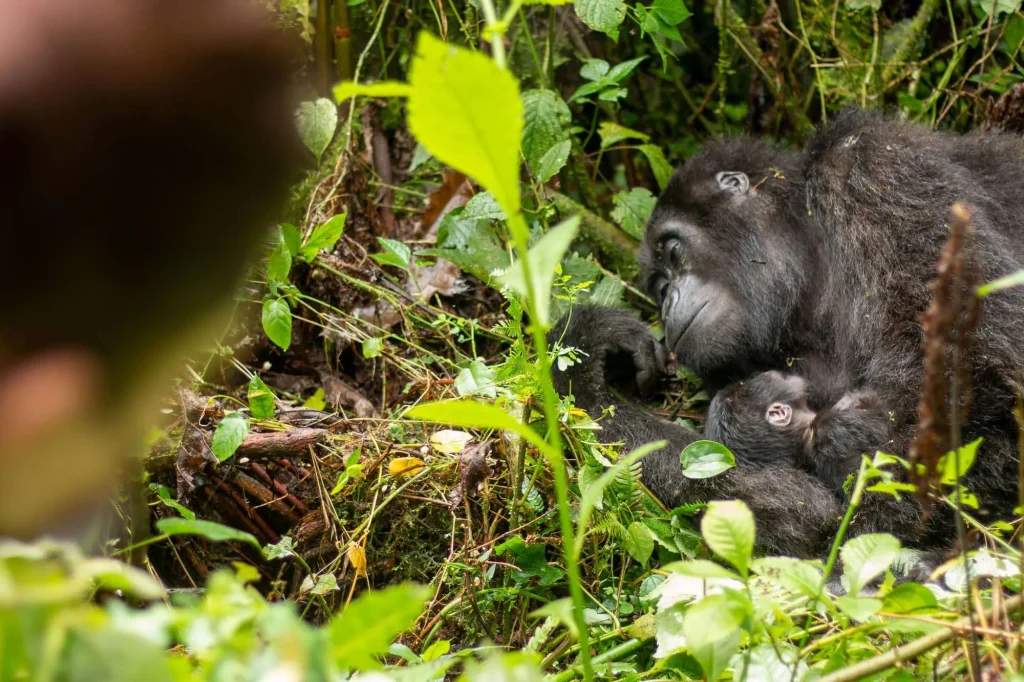
Gorilla Trekking in Rushaga or Nkuringo Sector – Which is better. Bwindi Impenetrable National Park is split into four gorilla trekking sectors — Buhoma, Ruhija, Rushaga, and Nkuringo — and two of them, Rushaga and Nkuringo, sit side by side in the park’s remote southern reaches near Kisoro. Because both are booked through the same permit system and both promise the same core experience — an hour with a habituated mountain gorilla family — travelers planning a Bwindi gorilla safari often get stuck comparing them directly. This guide breaks down the real differences between Rushaga and Nkuringo sector: gorilla families, terrain, scenery, permit availability, accommodation, and which one actually suits your trip better.
At Kenlink Tours, we run treks into both sectors regularly, so this comparison draws on what our guests actually experience on the ground rather than a generic overview.
How Rushaga and Nkuringo Compare to Buhoma and Ruhija
Before comparing Rushaga and Nkuringo head to head, it helps to place them within Bwindi’s full sector map. Buhoma, in the park’s north, is generally regarded as the easiest and most established sector, with the gentlest trails and the widest range of nearby lodges, while Ruhija sits in between on both difficulty and crowd levels. Rushaga and Nkuringo, by contrast, are both southern sectors reached via Kisoro rather than Buhoma’s northern gateway, and both trend toward more remote, less crowded trekking than their northern counterparts.
This southern positioning is also what ties Rushaga and Nkuringo so closely to Bwindi Impenetrable Forest National Park as a single southern circuit, often paired with Mgahinga or a Rwanda crossing rather than treated as a standalone northern Bwindi visit the way Buhoma frequently is.
Where Rushaga and Nkuringo Sit Within Bwindi Impenetrable National Park
Rushaga and Nkuringo are the two southernmost trekking sectors in Bwindi, both accessed from the Kisoro–Rubuguri road rather than from Buhoma in the park’s north. This southern location puts both sectors within easy reach of Mgahinga Gorilla National Park and the Cyanika border crossing into Rwanda, which is why many multi-park itineraries pair a Rushaga or Nkuringo trek with a Mgahinga add-on or a crossing into Volcanoes National Park.
Despite sitting only around 20–30 kilometres apart by road, the two sectors feel distinct once you are on the trail, largely because of how each one’s terrain and gorilla families are distributed across the forest.
Rushaga Sector: What to Expect
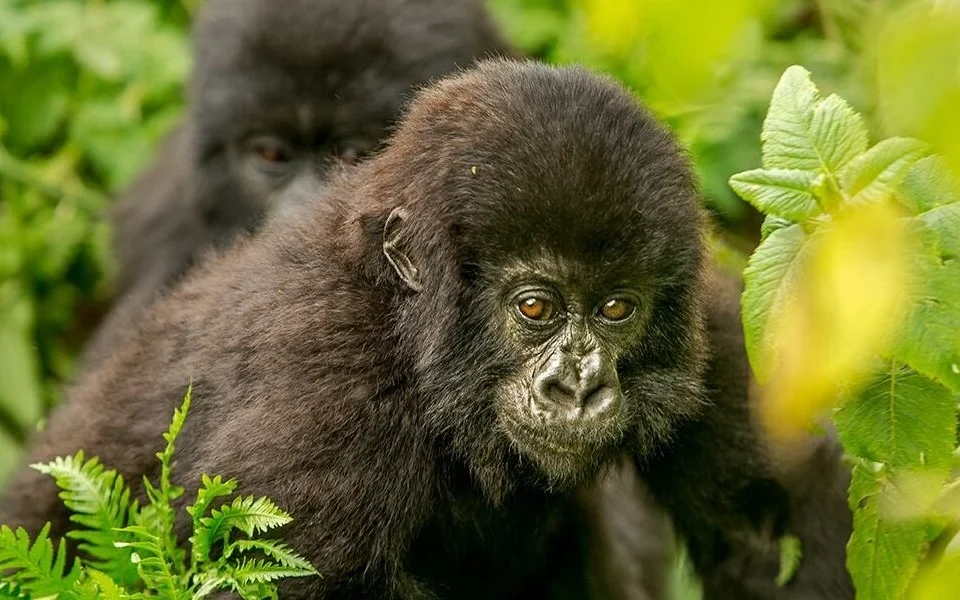
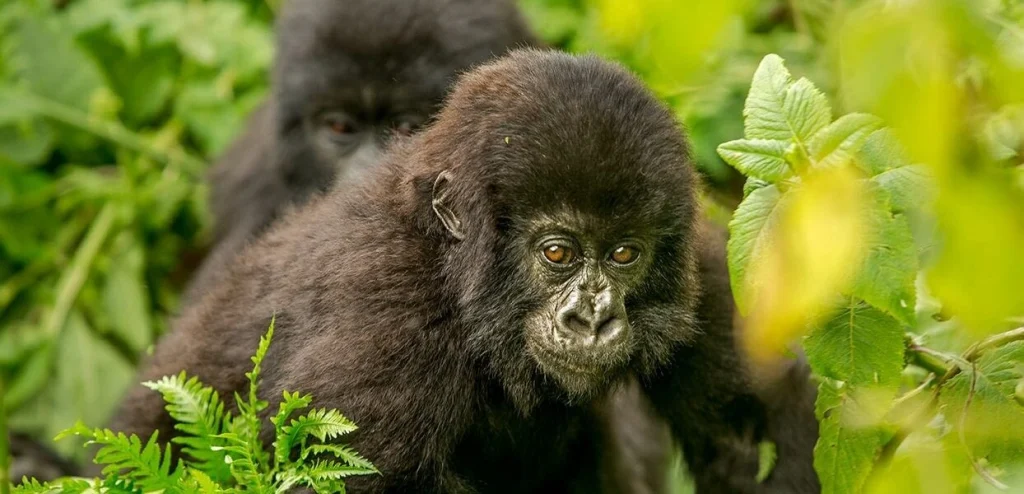
Rushaga is Bwindi’s largest trekking sector by gorilla family count, hosting more habituated groups than any other part of the park. This gives it the widest permit availability of Bwindi’s four sectors, which matters if you are booking on short notice or traveling with a larger group that needs several permits on the same day. Rushaga is also the only sector in Bwindi offering the gorilla habituation experience, a longer, research-style encounter unavailable in Nkuringo, Buhoma, or Ruhija.
Access to Rushaga is comparatively straightforward, and the sector is described by seasoned guides as “easily accessible from both Kampala and Entebbe” relative to the park’s more remote corners, making it a popular choice for travelers who want strong gorilla-family numbers without the longest possible drive. The sector’s broader trail network also means rangers have more room to route trekkers toward whichever family is ranging closest to the trailhead on a given morning, which can meaningfully shorten an otherwise long trekking day compared to sectors with fewer alternative groups to fall back on.
Nkuringo Sector: What to Expect
Nkuringo sits on a ridge on Bwindi’s southwestern edge and is consistently described as home to the park’s most physically demanding treks. The payoff for that extra effort is scenery: Nkuringo’s elevated position delivers sweeping views over the forest canopy toward the Virunga volcanoes on a clear day, a vista none of Bwindi’s other three sectors can match in quite the same way.
Nkuringo also has a smaller number of habituated gorilla families than Rushaga, which means fewer daily permits and a real risk of sold-out dates in peak season. It is a sector favored by trekkers who prioritize dramatic landscapes and a lower-crowd, more rugged experience over guaranteed permit flexibility. Because fewer operators actively promote Nkuringo compared to Rushaga or Buhoma, it also tends to feel noticeably quieter on the trail itself, even accounting for its smaller daily permit allocation, which some travelers count as an advantage in its own right.
Gorilla Families: Rushaga vs Nkuringo
Rushaga’s larger family count includes long-established groups such as Nshongi, Mishaya, Busingye, Kahungye, and Bweza, along with additional families reserved specifically for the habituation experience. This breadth means Rushaga can typically absorb more trekkers on any given day and offers rangers more flexibility in matching a family’s likely location to a trekker’s fitness level.
Nkuringo’s habituated groups, including the Nkuringo family itself along with a small number of others in the area, are fewer in number but well established, having been among the first gorilla groups habituated for tourism in southern Bwindi. Because Nkuringo issues fewer permits daily, a gorilla trekking company with strong local booking relationships is especially valuable here to avoid missing out on a date.
This family-count gap is worth keeping in perspective: it is a difference of degree, not of quality. A trek with a smaller Nkuringo family is not a lesser wildlife experience than a trek with a larger Rushaga group; it simply means Nkuringo has less room to absorb demand on any single day, which is the practical factor that should influence your booking timeline rather than your expectations of the encounter itself.
Trekking Difficulty: Which Sector Is Tougher
If raw difficulty is your deciding factor, Nkuringo is widely regarded as the toughest of Bwindi’s four sectors, with steep descents into the valley on the way out to find the gorillas and, notoriously, an even steeper climb back up to the trailhead afterward. Rushaga’s terrain is also hilly and can be demanding, but its trails are generally considered more moderate than Nkuringo’s, and its larger number of families gives rangers more room to assign fitter trekkers to farther-ranging groups and less-fit trekkers to closer ones.
Neither sector is officially rated “easy” — that label in Bwindi tends to go to Buhoma — but between the two, most experienced Uganda gorilla trekking guides will tell prospective trekkers that Nkuringo demands a noticeably higher fitness baseline than Rushaga. Trekkers with joint issues, limited hiking experience, or concerns about steep, muddy descents should weigh this difference carefully, since the return climb out of the Nkuringo valley in particular has ended more than a few otherwise well-prepared trekkers’ patience by the final switchback.
The Gorilla Habituation Experience: Why Rushaga Has the Edge
For travelers weighing Rushaga against Nkuringo specifically because of the habituation experience, the decision is straightforward: Rushaga is currently the only sector in Bwindi offering it. The experience allows up to four hours with a semi-habituated gorilla group in groups capped at four people, compared to the standard one-hour visit with up to eight trekkers per family available in every sector, including Nkuringo.
This makes Rushaga the clear choice for travelers specifically seeking a longer, more research-oriented encounter, while Nkuringo remains limited to the standard trekking format. Anyone drawn to Rushaga primarily for this reason should confirm habituation permit availability well ahead of time with their chosen gorilla trekking company, since habituation slots are even more limited than standard permits.
Scenery and Views: Nkuringo’s Signature Advantage
Where Rushaga wins on family numbers and habituation access, Nkuringo wins decisively on scenery. Its ridge-top position offers panoramic views across the Bwindi forest canopy and, on clear days, toward the Virunga volcano chain shared by Uganda, Rwanda, and the DRC — a backdrop many travelers rank among the most memorable parts of their entire Uganda trip, independent of the gorilla encounter itself.
For photographers and travelers who weight scenery heavily in their decision, this view alone can tip the balance toward Nkuringo despite its tougher trails and thinner permit availability.
Permit Availability: Why Rushaga Wins on Numbers
Because Rushaga hosts more habituated families than any other Bwindi sector, it consistently offers the most daily permits, which translates into more flexibility for last-minute bookings, larger groups, and specific date requests. Nkuringo’s smaller family count means its permits can sell out faster relative to demand, particularly during the June-to-September and December-to-February peak seasons.
Travelers with flexible dates may find Nkuringo permits easier to secure outside peak months, while those booking on a fixed schedule, especially in high season, often find Rushaga the more reliable option through an established gorilla safari operator.
Accommodation Compared: Rushaga vs Nkuringo Lodges
Both sectors have grown their lodge offerings substantially in recent years, though the character of each differs. Rushaga’s accommodation cluster includes well-regarded properties such as Ichumbi Gorilla Lodge and other options across budget to luxury tiers, generally positioned for straightforward access to the sector’s trailhead. Nkuringo’s lodges, by contrast, tend to sit along the same ridge that gives the sector its famous views, meaning your accommodation often delivers the scenery before you have even started trekking.
Our Bwindi accommodation guide and roundup of budget lodges in Bwindi National Park cover options across all four sectors, while travelers seeking a specific view-oriented stay near Rushaga sometimes also consider the Mountain Gorilla View Lodge.
Getting There: Access and Travel Time
Both sectors are reached via the southern route through Kisoro rather than the northern approach used for Buhoma, so the choice between them rarely changes your overall driving distance from Kampala or Entebbe significantly. What it does affect is your final approach: Rushaga’s access roads are generally considered more straightforward, while Nkuringo’s final stretch involves more climbing given its ridge-top position.
Travelers coming from Rwanda via Kigali also find both sectors reasonably close to the Cyanika border post, similar to the routing used for Mgahinga gorilla safaris, and our guide on landing in Kigali or Entebbe for a gorilla safari walks through which airport makes more sense depending on your chosen sector and broader itinerary. Our page on how far Bwindi is from Kigali breaks the drive time down further for travelers weighing a Rwanda-based start against flying into Entebbe first.
Whichever route you take, a private 4×4 with an experienced driver-guide is strongly recommended over public transport for both sectors, since the final approach roads to either trailhead are unpaved in sections and registration times at both park offices begin early in the morning.
Batwa Culture and Community Experiences Near Nkuringo
Nkuringo sector is closely associated with Batwa cultural experiences, since several indigenous Batwa communities live near the sector’s trailheads and offer guided walks explaining their traditional forest life before Bwindi became a protected park. This gives Nkuringo an additional half-day activity option that pairs naturally with a gorilla trek, particularly for travelers interested in cultural tourism alongside wildlife.
Rushaga also offers community and cultural add-ons, but Nkuringo’s proximity to well-established Batwa programs gives it a slight edge for travelers specifically prioritizing this kind of experience over a second wildlife activity. These walks typically run a few hours, can be scheduled either before or after your gorilla trek depending on flight and lodge timings, and are usually arranged directly through the same operator handling your trekking permit rather than booked separately on arrival.
Combining Rushaga or Nkuringo With Mgahinga or Queen Elizabeth
Because both sectors sit in Bwindi’s south, they combine naturally with a Mgahinga extension for golden monkey tracking or volcano hiking, an itinerary structure covered in more detail on regional Mgahinga destination guides. Travelers heading north afterward toward Queen Elizabeth National Park for game drives can also route through either sector, though Rushaga’s road connections are generally the more direct of the two.
Cross-border travelers coming from Kigali sometimes book short combined itineraries through Rwanda-based operators such as Pick and Transfer Safaris, whose packages like the three-day Uganda gorilla safari from Rwanda, five-day Uganda gorilla and chimps safari starting from Rwanda, one-day Uganda gorilla safari starting from Kigali, and two-day Uganda gorilla tour starting from Kigali illustrate how Rushaga and Nkuringo are typically folded into a broader regional route. Reviewing a few of these Kigali-based itineraries alongside a Uganda-based quote can also be a useful way to sanity-check pricing before you commit to either sector.
Travelers extending north instead of east sometimes route through Queen Elizabeth National Park for game drives after their gorilla trek, using Rushaga’s slightly more direct road network as the easier starting point for that leg of the journey.
Cost Comparison: Is One Sector More Expensive Than the Other
The Uganda gorilla trekking permit costs the same US$800 per person regardless of which sector you are assigned to, so neither Rushaga nor Nkuringo carries a higher government fee. Cost differences between the two therefore come down to accommodation choice and, to a lesser extent, transport, since Nkuringo’s lodges skew slightly toward the higher end given their premium ridge-top locations.
The one exception is the gorilla habituation experience in Rushaga, which is priced separately and significantly higher than a standard permit given its longer duration and smaller group size — a cost worth budgeting for specifically if that experience is your reason for choosing Rushaga over Nkuringo. A full gorilla trekking pricing breakdown helps set expectations before you book either sector, and comparing a Uganda-based quote against a Rwanda-routed package such as a standard three-day Uganda gorilla safari can help confirm whether a quoted price reflects the sector itself or simply a different operator’s service fees.
Which Sector Should You Choose? A Decision Framework
If you want the widest permit availability, the option of the gorilla habituation experience, and slightly gentler (though still hilly) trails, Rushaga is the stronger choice. If you are reasonably fit, want the most dramatic scenery in Bwindi, and are drawn to pairing your trek with a Batwa cultural walk, Nkuringo is worth the extra physical effort.
Travelers who cannot decide, or who are booking a longer trip anyway, sometimes solve the dilemma by combining Rushaga’s habituation experience on one day with a shorter cultural stop near Nkuringo on another, an itinerary a flexible Bwindi gorilla safari can be built around.
What Kenlink Tours Recommends
Our honest recommendation depends entirely on your fitness level and priorities rather than a blanket answer. For first-time trekkers, travelers in a larger group, or anyone specifically wanting the gorilla habituation experience, we generally steer clients toward Rushaga. For fit travelers chasing the best views in Bwindi and an added cultural dimension, we route them to Nkuringo instead.
Either way, our about us page outlines our experience across all four Bwindi sectors, and our best-time-to-visit guide on when to see gorillas in Uganda and Rwanda helps align your sector choice with the right season for trail conditions.
We also encourage undecided travelers to think about their trip as a whole rather than the trek in isolation. A honeymoon or milestone celebration built around scenery and a touch of adventure often leans naturally toward Nkuringo, while a family reunion, a multi-generational group, or anyone traveling with trekkers of mixed fitness levels is usually better served by Rushaga’s flexibility. Neither choice is a compromise; both sectors deliver a genuine, once-in-a-lifetime gorilla encounter, and the difference lies almost entirely in the journey around it.
Frequently Asked Questions About Rushaga and Nkuringo Sectors
Is Rushaga or Nkuringo better for beginners? Rushaga, since its terrain is generally considered more moderate than Nkuringo’s steep descents and climbs, and its larger number of families gives guides more flexibility in matching trekkers to appropriate groups.
Can I do the gorilla habituation experience in Nkuringo? No. As of 2026, the gorilla habituation experience is offered exclusively in Rushaga sector; Nkuringo only offers standard one-hour gorilla trekking.
Which sector has better views? Nkuringo, thanks to its ridge-top position overlooking the Bwindi forest canopy and, on clear days, the Virunga volcanoes.
Are permits harder to get in Nkuringo? Generally yes, since Nkuringo has fewer habituated families than Rushaga, making its limited daily permits more likely to sell out during peak season.
Can I combine a trek in Rushaga or Nkuringo with Mgahinga National Park? Yes, both sectors sit close to Mgahinga in Bwindi’s south, and a gorilla trekking company can build a combined itinerary covering both parks.
Does the trek difficulty depend on the sector, or just the gorilla family? Both. Base terrain differs by sector — Nkuringo’s trails are inherently steeper — but within any sector, where a specific family is ranging that day also affects how long and how strenuous your particular trek turns out to be.
Can I book Rushaga or Nkuringo from Rwanda rather than flying into Uganda directly? Yes. Several Kigali-based operators, including Pick and Transfer Safaris, run short cross-border itineraries into southern Bwindi via the Cyanika border post, which can work well if your trip is otherwise centred in Rwanda; their contact page is a useful starting point for comparing that routing against a Uganda-based booking.
Is one sector more family-friendly than the other? Neither sector accepts trekkers under the minimum age of 15, but Rushaga’s generally gentler terrain and larger number of families make it the more forgiving choice for mixed-fitness groups traveling together.
Book Your Rushaga or Nkuringo Gorilla Trek Today
Rushaga and Nkuringo both deliver an unforgettable mountain gorilla encounter, but they suit slightly different travelers: Rushaga for flexibility, permit numbers, and the habituation experience; Nkuringo for scenery, a tougher physical challenge, and Batwa culture. Whichever sector fits your trip, working with an operator experienced across both parts of southern Bwindi makes the planning far simpler, from confirming permit availability months ahead to matching your accommodation to an early trailhead registration.
Kenlink Tours organizes gorilla treks in both Rushaga and Nkuringo sectors as part of our wider Uganda gorilla trekking portfolio, and our contact page is the fastest way to check current permit availability for either sector and start building your Bwindi itinerary.