- EXPERT'S HELP
- +256789210067
- +256200955001
- info@kenlinktours.com


Gorilla Trekking in Rushaga from Kigali Rwanda
September 16, 2026
Which Airport is Near Bwindi National Park-Kigali or Entebbe
September 16, 2026
Start my tour from Kigali not Entebbe. “Can I start my Uganda gorilla safari from Kigali instead of Entebbe?” is one of the most common questions we get from travelers planning a Uganda trip, and the short answer is yes — for a large share of Uganda’s gorilla trekking parks, starting from Kigali is not just possible, it is often the faster, more efficient choice. This guide walks through exactly when a Kigali start makes sense, which parks it works best for, what changes about visas and border crossings, and how to structure an itinerary around it.
At Kenlink Tours, a meaningful share of our Uganda bookings now begin with a Kigali pickup rather than an Entebbe one, so this guide reflects how these trips actually run in practice, not just the theory.
Landing in Kigali: First Impressions and Practical Prep
Kigali International Airport is modern, efficient, and generally considered one of the easiest arrival experiences in East Africa, which is part of why so many travelers are comfortable using it as a Uganda gateway even though it sits in a different country. Most visitors spend at least one night in the city before heading toward the border, using the time to recover from long-haul flights, confirm permit and transfer arrangements with their operator, and explore Kigali itself, a city covered in more detail on general Kigali city guides.
Because a Kigali start effectively turns a Uganda trip into a two-country itinerary from the first day, it is worth using that first night to double-check your documentation — visas, yellow fever certificate, and your operator’s confirmed border crossing — rather than assuming everything will sort itself out once you are on the road.
Why More Travelers Are Choosing to Start Their Uganda Tour From Kigali
The core reason is geography. Uganda’s southern gorilla trekking sectors — Rushaga and Nkuringo in Bwindi, plus Mgahinga Gorilla National Park — sit much closer to Kigali than to Entebbe. Travelers who are already flying into Rwanda, whether for a Volcanoes National Park trek or simply because Kigali offers convenient international connections, often realize partway through planning that looping back to Entebbe adds an entire extra day of travel for no real benefit.
There is also a growing awareness that Kigali International Airport is a genuinely well-connected hub in its own right, with direct flights from Europe, the Middle East, and across Africa, which means starting a Uganda trip there is rarely a compromise on flight convenience compared to Entebbe.
A smaller but real factor is simply comfort with Rwanda as a destination. Kigali has built a strong reputation as one of Africa’s cleanest, safest, and most walkable capital cities, and travelers who have already researched Rwanda thoroughly sometimes feel more confident starting their whole East Africa trip there, even when Uganda is the primary wildlife destination, rather than researching Entebbe and Kampala logistics from scratch as well.
Kigali vs Entebbe: The Core Trade-Off
The decision comes down to one trade-off: Entebbe gives you land access to all four of Bwindi’s trekking sectors — Buhoma, Ruhija, Rushaga, and Nkuringo — plus easy onward travel to Queen Elizabeth, Kibale, and Murchison Falls, without a border crossing. Kigali gets you to the southern sectors and Mgahinga dramatically faster, but reaching Bwindi’s northern sectors or Uganda’s other major parks from Kigali involves a much longer drive that usually negates the advantage.
In practice, this means the “start from Kigali” question really has one clean answer: if your Uganda plans center on Rushaga, Nkuringo, or Mgahinga, start from Kigali. If they center on Buhoma, Queen Elizabeth, Kibale, or Murchison Falls, Entebbe remains the more practical gateway. The mistake to avoid is treating “Kigali or Entebbe” as a generic preference rather than a question that should be answered by your itinerary first — decide where you are trekking, and the airport choice follows from that, not the other way around.
The Three Border Crossings From Rwanda Into Uganda
Travelers starting from Kigali typically cross at one of three points, each suited to a different part of Uganda. The Gatuna (Katuna) crossing is the most direct route toward Kabale, Kisoro, and Bwindi generally. The Cyanika crossing, near Kisoro, connects specifically to Mgahinga and the southern Bwindi sectors, and is the route most gorilla trekking itineraries from Kigali actually use. The Mirama Hills (Ntungamo) crossing, further north, is the better option for travelers heading toward Mbarara, Queen Elizabeth National Park, or Kampala rather than the gorilla sectors.
Choosing the right crossing matters more than travelers expect, since picking the wrong one can add hours to an already long drive. A visa and border crossing guide is worth reading in advance so you know which post your operator should be routing you through.
How Much Time You Actually Save Starting From Kigali
For Rushaga and Nkuringo specifically, the drive from Kigali takes roughly 4 to 5 hours, compared to 8 to 10 hours from Entebbe by road. Entebbe travelers can shortcut this with a domestic flight (around 1 hour 15 minutes via a regional carrier) to an airstrip near Bwindi, but that adds a flight cost and a connection to manage. For Mgahinga, the Kigali route is even shorter, at around 2 to 3 hours.
Our detailed comparison of travel time and cost from Kigali versus Kampala to Bwindi or Mgahinga breaks these numbers down further, and our page on how far Bwindi is from Kigali covers the southern-sector route specifically.
Which Uganda Parks Are Realistic From a Kigali Start
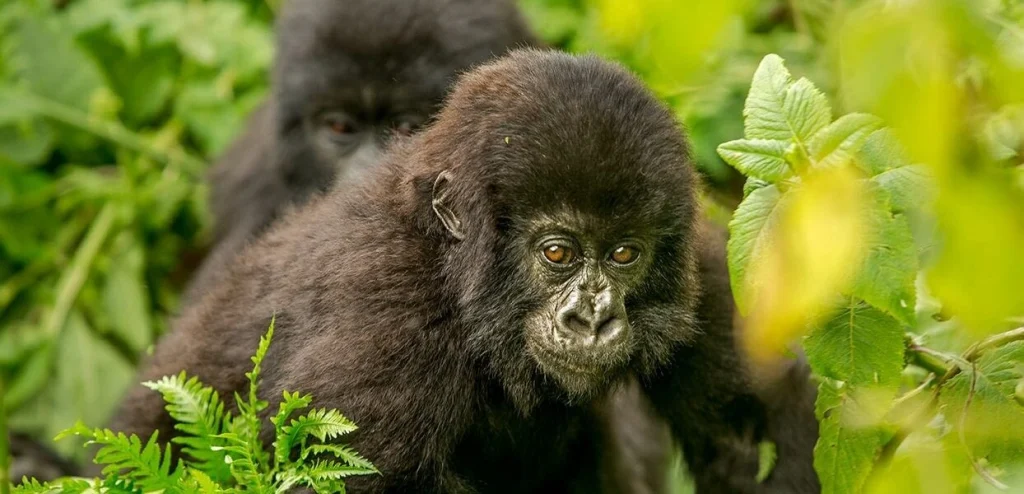
Rushaga and Nkuringo, Bwindi’s two southern gorilla trekking sectors, are the clearest fit for a Kigali start, both reachable within half a day. Mgahinga Gorilla National Park, with its single Nyakagezi gorilla family and golden monkey tracking, is arguably the single best-suited Uganda park for a Kigali-based trip, given how close it sits to the Cyanika crossing.
Queen Elizabeth National Park is a borderline case: reachable from Kigali via Mirama Hills, but the drive is long enough that most travelers approaching it from Rwanda instead route through southern Bwindi first and continue north overland, rather than treating Queen Elizabeth as a direct Kigali add-on. Kibale Forest and Murchison Falls, both firmly in Uganda’s north and west, are not realistic Kigali add-ons and remain best accessed from Entebbe or Kampala.
Travelers researching general gorilla safari options across the region will notice that most Kigali-departure itineraries cluster tightly around these southern parks for exactly this reason — the moment an itinerary reaches further into Uganda, the calculus shifts back toward an Entebbe start.
Visa and Documentation: What Changes When You Start From Kigali
Starting from Kigali usually means dealing with two countries’ entry requirements instead of one. Uganda’s standard single-entry visa costs around US$50, while the East Africa Tourist Visa, valid across Uganda, Rwanda, and Kenya, costs about US$100 but allows multiple entries, which can be useful if your trip involves crossing back and forth. Rwanda’s own visa runs roughly US$30.
A yellow fever vaccination certificate is mandatory when entering Uganda from Rwanda, and travelers should carry a passport valid for at least six months with blank pages. Because visa costs and requirements shift over time, confirming current fees with your operator before booking flights is worth the extra step.
Vehicles and Transfers: What to Expect Crossing From Rwanda
Cross-border transfers are typically run in 4×4 safari vehicles, chosen for comfort on the mixed paved-and-gravel roads and for handling the mountainous terrain near the border. Our Kigali-to-Uganda transfer service covers both private transfers, better suited to families or small groups wanting flexibility, and shared transfers for more budget-conscious travelers.
One detail that surprises first-time cross-border travelers: Rwanda drives on the right, while Uganda drives on the left, so vehicles and driving patterns change noticeably right at the border. A private car hire with an experienced local driver-guide is strongly preferable to self-driving across this transition for anyone unfamiliar with the switch.
Cost Comparison: Kigali Start vs Entebbe Start
For a trip focused on Rushaga, Nkuringo, or Mgahinga, a Kigali start is often the more cost-efficient option once you account for the shorter drive, the avoided domestic flight, and, in many cases, one fewer overnight stay. The main added cost is the second country’s visa and, if applicable, the higher East Africa Tourist Visa fee compared to Uganda’s single-entry visa.
For trips centered on Uganda’s northern or western parks, Entebbe usually works out cheaper overall, since routing through Kigali for those destinations adds hours of driving without a corresponding savings elsewhere. A full gorilla trekking pricing breakdown helps clarify how permit costs, transfers, and accommodation combine under either routing.
Sample Itinerary: Uganda Gorilla Safari Starting From Kigali
A common structure runs: arrival in Kigali and an overnight to rest, a morning drive across the Cyanika border to a Rushaga-area lodge, an early-morning gorilla trek on day two, and a return drive to Kigali (or onward into Rwanda) on day three. Our 2-day Uganda gorilla safari starting from Kigali and 3-day Bwindi gorilla safari starting from Kigali both follow variations of this pattern.
Travelers wanting to see gorillas in both countries on the same trip often extend this into a 5-day Uganda-Rwanda double gorilla safari, pairing a Rushaga trek with a Volcanoes National Park trek without needing to fly to Entebbe at all. Comparable Kigali-departure structures appear in packages from other operators as well, such as Pick and Transfer Safaris‘s two-day tour, their three-day Uganda gorilla safari from Rwanda, and a longer five-day Uganda gorilla and chimps safari starting from Rwanda for travelers wanting to add chimpanzee tracking to the mix, all useful for comparing pacing and pricing.
Travelers on an especially tight schedule sometimes ask about compressing this into a single very long day, similar to a one-day Uganda gorilla safari starting from Kigali; this is technically possible for the southern sectors but leaves no buffer for delays, so most operators recommend it only for travelers who genuinely cannot spare a second day.
Common Mistakes Travelers Make Planning a Kigali Start
The most frequent mistake is booking flights before confirming the routing with a tour operator, which sometimes leaves travelers with a Kigali arrival and departure booked for a trip that actually centers on Buhoma or Queen Elizabeth, destinations far better served from Entebbe. Working out your park choice before locking in flights avoids this entirely.
A second common mistake is underestimating the border crossing itself. Even a well-run crossing at Cyanika or Gatuna can take 30 to 60 minutes with an experienced operator, longer if documentation is incomplete, and travelers who schedule a same-day trek immediately after crossing sometimes arrive at the park office later than planned. Building in a buffer, rather than assuming the crossing will be instant, keeps the rest of the itinerary on track.
A third mistake is assuming a Rwanda-based operator automatically has strong Uganda logistics, or the reverse. As covered below, it is worth confirming directly how often a prospective company runs this specific crossing rather than assuming general regional experience translates smoothly.
When Entebbe Still Makes More Sense
If your Uganda plans include Buhoma sector, Queen Elizabeth’s game drives, Kibale’s chimpanzee tracking, or Murchison Falls, Entebbe remains the better starting point, since these destinations sit far enough from the Rwanda border that a Kigali start adds significant driving time without a matching benefit. Entebbe also makes sense for travelers who want to see multiple Ugandan parks in one trip without crossing a border at all.
Some travelers split the difference: flying into Entebbe for a longer Uganda circuit and exiting overland through Kigali at the end of the trip, or vice versa, which lets you experience both entry points without doubling back. This open-jaw approach works particularly well for a two-to-three-week trip that genuinely covers both countries in depth, since it avoids the wasted mileage of returning to your arrival airport just to fly home.
Combining a Kigali Start With Rwanda’s Own Parks
Because a Kigali start naturally puts you near Volcanoes National Park, Lake Kivu, and Kigali city itself, many travelers use the days before or after their Uganda crossing to fit in a Rwanda gorilla safari or a stop in Bwindi Impenetrable Forest National Park on the Uganda side, effectively building a single regional trip rather than two separate ones.
This is also where the East Africa Tourist Visa’s multiple-entry benefit becomes genuinely useful, since it lets you cross the Cyanika or Gatuna border more than once without paying for a second single-entry visa, an option worth discussing with your operator when structuring a Uganda-Rwanda gorilla safari.
What to Tell Your Tour Operator If You Want to Start From Kigali
Be specific from the first conversation: tell your operator you want to fly into Kigali, and confirm which Uganda park or sector you are trekking so they can route you through the correct border crossing. Operators who default to an Entebbe-based itinerary template may not automatically adjust for a Kigali start unless you flag it early, which can lead to inefficient routing if it is added as an afterthought.
It is also worth asking directly whether your chosen operator books Uganda permits themselves or subcontracts that step, since a company experienced with Uganda gorilla safaris starting from Kigali will typically have this process well established rather than treating it as a special request.
Choosing an Operator Experienced With Kigali Starts
Not every Uganda-focused company runs Kigali-start trips regularly, and not every Rwanda-based company crosses into Uganda often either, so it is worth asking directly how frequently an operator handles this specific routing. A company that runs it regularly will know current border wait times, have established relationships at Cyanika or Gatuna, and can advise honestly on whether your particular park choice genuinely benefits from a Kigali start.
Both Kenlink Tours, based in Uganda, and Kigali-based operators such as Pick and Transfer Safaris, are worth comparing directly, since each brings a different vantage point on the same crossing and comparing quotes from both sides of the border tends to surface a more realistic price and itinerary. Neither location is inherently the “right” base for a good operator; what matters is demonstrated, recent experience running the specific route you are planning, which is easy enough to confirm with a direct question before you commit a deposit.
Frequently Asked Questions About Starting a Uganda Tour From Kigali
Is it actually cheaper to start from Kigali than Entebbe? For Rushaga, Nkuringo, or Mgahinga specifically, usually yes, once shorter transfer times and an avoided domestic flight are factored in; for Uganda’s other parks, Entebbe is typically the more cost-effective start.
Which border crossing should I use starting from Kigali? Cyanika for Mgahinga or southern Bwindi (Rushaga and Nkuringo), Gatuna (Katuna) for a more general route toward Kabale and Kisoro, and Mirama Hills for Queen Elizabeth or Kampala-bound travel.
Do I need a different visa if I start from Kigali? You will generally need both a Rwanda visa and a Uganda visa, or a single East Africa Tourist Visa covering both countries plus Kenya, depending on which suits your itinerary and budget.
Can I fly into Kigali and out of Entebbe, or do I need to return to the same airport? Yes, many travelers do exactly this, flying into one city and out of the other, which avoids backtracking and works well for a trip covering both Rwanda and a broader Uganda circuit.
Will my Uganda gorilla permit be affected by starting from Kigali? No. The permit itself is booked with the Uganda Wildlife Authority regardless of which airport or border you use to reach the park; only your transport and border logistics change.
Is the drive from Kigali safe and well maintained? Yes. Roads on the Rwanda side are generally well paved, and while sections on the Uganda side near the border can be hilly or gravelled, they are used regularly by safari vehicles and considered safe with an experienced driver-guide.
Can a Kigali-based operator handle my entire Uganda booking, or do I need a separate Uganda company? Either can work. Kigali-based operators such as Pick and Transfer Safaris regularly book Uganda permits and cross-border transport as part of a single itinerary, while a Uganda-based company can equally arrange your pickup from a Kigali hotel; the key is confirming direct experience with the crossing rather than the company’s home country alone.
Does starting from Kigali change how far in advance I need to book my gorilla permit? No. Uganda permits remain equally limited regardless of your starting airport, so the same three-to-four-month advance booking guidance for peak season applies whether you are arriving via Kigali or Entebbe.
Plan Your Kigali-Start Uganda Safari Today
Starting your Uganda gorilla safari from Kigali instead of Entebbe is a smart choice for a specific set of destinations — Rushaga, Nkuringo, and Mgahinga chief among them — and a less efficient one for Uganda’s northern and western parks. Getting this decision right from the outset saves both time and money, provided your operator routes you through the correct border crossing for your chosen park.
Kenlink Tours arranges Uganda gorilla safaris starting from Kigali regularly, handling permit booking, border logistics, and transfers from your Kigali hotel straight through to the trailhead. Whether you compare our routing against a Rwanda-based operator’s own Uganda packages or come to us directly, contact our team today to tell us which Uganda park you have in mind, and we will confirm whether starting from Kigali is the right call for your trip.