- EXPERT'S HELP
- +256789210067
- +256200955001
- info@kenlinktours.com


4 Days Safari to Sipi Falls and Kidepo National Park
October 4, 2026
Which Animals are found in Murchison Falls National Park
October 4, 2026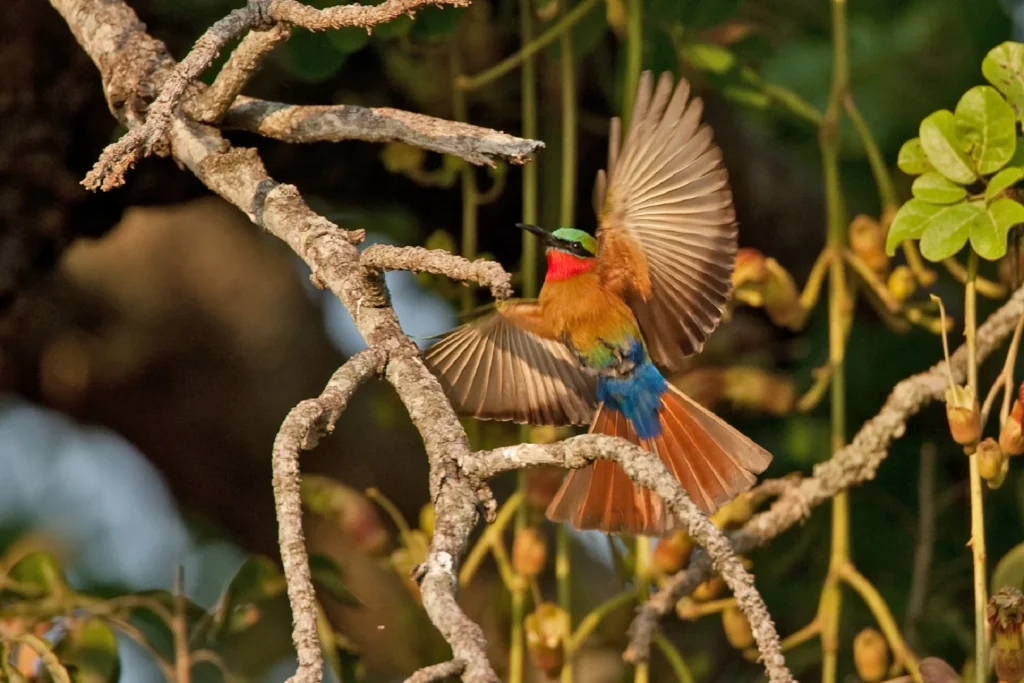
Why Semuliki National Park is best for Birding Trips in Uganda. Uganda is one of the world’s finest birding destinations, with more than 1,000 recorded bird species packed into a country roughly the size of the United Kingdom. Among its many birding hotspots, one park stands apart for serious birders: Semuliki National Park. Tucked into Uganda’s far west on the border with the Democratic Republic of Congo, Semuliki is a slice of the great Central African rainforest, home to birds you simply cannot find anywhere else in East Africa.
At Kenlink Tours, we guide birding trips across Uganda, and Semuliki is always a highlight for our guests. In this guide, we explain why Semuliki National Park is the best place for birding trips in Uganda, which special birds to look for, the best trails and times to visit, how to get there, where to stay and how to combine Semuliki with other top birding sites on an unforgettable birding safari.
A Piece of Central Africa in Uganda
Semuliki National Park covers about 220 square kilometres of lowland tropical forest in Bundibugyo District, on the floor of the Albertine Rift Valley. What makes it extraordinary is that it is an eastern extension of the vast Ituri Forest of the Democratic Republic of Congo. While most of East Africa’s forests are montane or mid-altitude, Semuliki’s low-lying, humid forest is ecologically part of the Guinea-Congo forest biome that stretches across Central and West Africa.
As a result, Semuliki shelters many plants, mammals, butterflies and especially birds that are typical of the Congo Basin and found nowhere else in Uganda or East Africa. The Semliki River, which forms the border with Congo, winds through the area, and the snow-capped Rwenzori Mountains rise dramatically to the southeast. For birders, this unique location makes Semuliki one of the most exciting forests on the continent. Learn more in our overview of Semuliki Valley National Park.
Reason 1: Central African Birds Found Nowhere Else in East Africa
The single biggest reason Semuliki is the best place for birding in Uganda is its collection of Central African specialities. Around 440 bird species have been recorded in the park, including more than 200 forest species, and dozens of species from the Guinea-Congo forest biome that are found nowhere else in East Africa. For birders who have already explored Kenya, Tanzania or other parts of Uganda, Semuliki offers a rare chance to add a whole new group of species to their lists without travelling to Central or West Africa.
This concentration of range-restricted species is why international birders plan entire itineraries around Semuliki, and why it features on almost every serious Uganda birding trip. Our guide to the top birding safari destinations in Uganda explains how Semuliki fits among the country’s other hotspots.
Reason 2: Uganda’s Best Hornbill Destination
Semuliki is famous among birders as the best place in Uganda to see hornbills. Several species can be found here, including the black-casqued wattled hornbill, white-crested hornbill, piping hornbill, black dwarf hornbill and red-billed dwarf hornbill. Hearing the loud wing beats of large hornbills flying over the canopy, or spotting the tiny dwarf hornbills moving quietly through the mid-storey, is one of the great thrills of birding in Semuliki.
Hornbills often gather in fruiting trees, so an experienced guide who knows where trees are fruiting greatly improves your chances of seeing several species in a single morning.
Reason 3: Sought-After Forest Specials
Beyond hornbills, Semuliki is home to a remarkable list of sought-after forest birds. Highlights that birders travel to Semuliki to find include:
- Nkulengu rail, a secretive forest rail whose loud duetting calls echo through the forest at dawn and dusk.
- Congo serpent eagle, an elusive raptor of the forest interior.
- Lyre-tailed honeyguide, famous for its unusual display flight and the sound made by its tail feathers.
- Yellow-throated cuckoo, a colourful and often heard but hard-to-see species.
- Spot-breasted ibis, found along streams and wet forest floors.
- Hartlaub’s duck, a shy forest duck of streams and pools.
- Long-tailed hawk, a striking forest raptor.
- Capuchin babbler, Maxwell’s black weaver and swamp palm bulbul, among many other Central African species.
Read about other highlights in our guide to 10 must-see bird species on a Uganda birdwatching safari.
Reason 4: A Variety of Habitats in a Small Area
Although Semuliki is a compact park, it offers a range of habitats that boost bird diversity. Dense lowland forest dominates, but there are also swampy areas, riverine forest along the Semliki River, open areas around the Sempaya hot springs and grasslands at the forest edge. Each habitat supports different species, so a day of birding can move from canopy specials to swamp dwellers and edge species in just a few kilometres.
Nearby, the Toro-Semliki Wildlife Reserve adds open savannah, woodland and the shores of Lake Albert, where the shoebill is sometimes seen in the papyrus swamps. This combination of forest and savannah makes the Semuliki area one of the most diverse birding regions in Uganda.
Reason 5: Uncrowded, Wild and Authentic
Unlike some of Uganda’s more famous parks, Semuliki receives relatively few visitors. That means quiet trails, minimal disturbance and a genuine sense of wilderness. For birders, fewer people on the trails often means better chances of seeing shy forest species that are easily frightened by noise. The atmosphere is intimate and rewarding, giving you time to listen, watch and enjoy the forest at your own pace.
Reason 6: Birding with Bonus Wildlife and Hot Springs
Semuliki’s forests are home to more than just birds. You may also see primates such as grey-cheeked mangabeys, red-tailed monkeys, black-and-white colobus and De Brazza’s monkeys, along with forest buffalo, forest elephants, water chevrotains and pygmy antelopes, though larger mammals are shy and rarely seen. The forest is also exceptionally rich in butterflies, with hundreds of species recorded, including many Central African specials.
A highlight of any visit is the Sempaya hot springs, where boiling water bubbles up from the ground and steam rises through the forest. Local tradition recognises two springs: the male spring, Bintente, and the female spring, Nyasimbi, where water erupts in a bubbling fountain. Birding along the trail to the springs is excellent. Read about the Sempaya hot springs.
Toro-Semliki Wildlife Reserve: Savannah Birds and the Shoebill
Just north of the park, the Toro-Semliki Wildlife Reserve is one of Uganda’s oldest protected areas and a superb addition to a Semuliki birding trip. Its mix of open grassland, acacia woodland, riverine forest and the swampy southern shore of Lake Albert supports a completely different set of birds from the forest. Savannah species such as Abyssinian ground hornbills, raptors and bee-eaters are common, while the lakeshore near Ntoroko attracts waterbirds, waders and, with luck, the shoebill.
Boat trips on Lake Albert from Ntoroko are one of the best ways to search for the shoebill in western Uganda, and they also offer views of fishing villages and the mountains of Congo across the water. The reserve is also known for a habituated chimpanzee community in its gallery forests, making it a fascinating destination for travellers who want birds and primates together. Read our guide to the shoebill stork safari.
Primates and Culture Around Semuliki
A Semuliki birding trip offers rewarding primate encounters along the way. Besides the forest monkeys of Semuliki itself, the region includes Kibale Forest, home to around 13 primate species including chimpanzees, and Toro-Semliki’s chimpanzees. Pick and Transfer explains more about primate tracking safaris in Uganda.
Culturally, the area around Semuliki is home to the Bwamba and Bakonjo peoples and a Batwa community, whose traditional forest knowledge offers insights into plants, animals and survival in the rainforest. A guided cultural visit is a meaningful way to end a day of birding. Read our guide on where to do a Batwa experience in Uganda.
The Best Birding Trails in Semuliki National Park
- Sempaya Nature Trail: A short, accessible trail to the hot springs through forest and swamp, ideal for birding and wildlife viewing in a few hours.
- Kirumia Trail: A long trail of around 13 kilometres through the heart of the forest to the Semliki River. It is the best trail for serious birders and typically takes a full day, starting early in the morning.
- Red Monkey Trail: Follows the eastern edge of the park towards the Semliki River, offering good birding and chances to see the rare red monkey and other primates.
For the best results, start at dawn when birds are most active, walk slowly with frequent stops and let your guide use calls and local knowledge to locate species.
Best Time for Birding in Semuliki
Birding in Semuliki is rewarding throughout the year, as the forest is green and resident species are always present. The drier months from December to February and June to September are generally considered best, as trails are easier to walk and birding activity is good. From November to April, migratory birds from Europe and Asia add extra variety to Uganda’s birding sites, and many resident species are breeding and calling.
Semuliki is one of the wettest parks in Uganda, so expect rain at any time and pack accordingly. Rain usually comes in showers, and birds are often very active straight after the rain stops.
How to Get to Semuliki National Park
Semuliki is located about 52 kilometres from Fort Portal town. The drive from Fort Portal winds over the northern foothills of the Rwenzori Mountains, with spectacular views over the Semliki Valley and into Congo. A good tarmac road now makes the journey much quicker than in the past, taking around an hour to an hour and a half.
From Kampala, the drive to Fort Portal takes around five to six hours, so most birding trips spend a night in Fort Portal or near Kibale Forest before continuing to Semuliki. Domestic flights to Kasese or charter flights to the region are also possible for travellers short on time. Read our guide to the crater lakes in Fort Portal to make the most of time in the area.
Where to Stay on a Semuliki Birding Trip
Accommodation options include the Uganda Wildlife Authority’s simple bandas and campsite inside the park, convenient for early starts, and lodges in the nearby Toro-Semliki Wildlife Reserve, such as Semliki Safari Lodge and Ntoroko Game Lodge on the shores of Lake Albert. Many birders base themselves in Fort Portal or around the crater lakes, where there is a wide range of comfortable lodges, and drive to Semuliki early in the morning.
Combining Semuliki with Kibale and Bigodi
Semuliki combines perfectly with Kibale Forest National Park and Bigodi Wetland Sanctuary, both less than two hours away. Kibale offers outstanding forest birding, including the green-breasted pitta, one of Africa’s most sought-after birds, as well as chimpanzee tracking. Bigodi Wetland Sanctuary is a community-run swamp famous for the great blue turaco, papyrus gonolek and many other species.
Read our guide to Bigodi Wetland Sanctuary, and see Pick and Transfer Safaris’ page on Kibale Forest National Park. Our Two Days Chimpanzee Tour in Uganda shows how easily chimp tracking fits into a western Uganda trip.
Other Top Birding Destinations to Combine with Semuliki
Semuliki is the jewel of a Uganda birding trip, but combining it with other key sites builds a truly impressive bird list:
- Mabamba Swamp: The best place near Kampala to see the shoebill. See our guide to birding at Mabamba Swamp and Pick and Transfer’s one-day Kampala city tour combined with Mabamba shoebill.
- Bwindi Impenetrable National Park: Home to many Albertine Rift endemics, such as the African green broadbill. Read about birdwatching in Bwindi and Pick and Transfer’s guide to birdwatching during gorilla habituation in Bwindi.
- Mgahinga Gorilla National Park: Montane species such as the Rwenzori turaco; see our guide to birdwatching in Mgahinga.
- Queen Elizabeth National Park: Over 600 species in savannah, wetlands and along the Kazinga Channel. See Pick and Transfer’s 3 Days Safari to Queen Elizabeth National Park.
- Murchison Falls National Park: Savannah and river birding, with the shoebill possible in the Nile delta; see Pick and Transfer’s tour to Murchison Falls and Kibale National Park.
Our guides to where to see the shoebill in Uganda and combined gorilla trekking and birding safaris in Uganda offer more ideas.
Sample Semuliki Birding Itineraries
3-day Semuliki and Kibale birding trip. Drive from Kampala to Fort Portal with birding stops along the way; spend a full day birding the Kirumia Trail or Sempaya Trail in Semuliki; and finish with a morning in Kibale or Bigodi before returning to Kampala.
5-day western Uganda birding safari. Combine Semuliki, Kibale, Bigodi and the Toro-Semliki Wildlife Reserve, with an optional search for the shoebill on Lake Albert and chimpanzee tracking in Kibale.
10 to 15-day ultimate Uganda birding safari. Combine Mabamba, Semuliki, Kibale, Queen Elizabeth, Bwindi and Mgahinga for one of the most diverse birding trips in Africa, potentially recording several hundred species. See our 7-Day Birdwatching Safari in Uganda, the 15 Days of Uganda Birding and Cultural Encounter and Pick and Transfer’s 18 Days Uganda Birding and Wildlife Safari.
Why a Specialist Bird Guide Makes a Difference
Forest birding is challenging. Many of Semuliki’s specials are shy, live high in the canopy or skulk in dense undergrowth, and are far more often heard than seen. A specialist bird guide who knows the calls, habits and favourite spots of each species can turn a frustrating day into a spectacular one. Uganda has a strong community of skilled bird guides, many of them trained locally, who know Semuliki’s trails intimately.
At Kenlink Tours, we pair birding guests with experienced birding guides and plan each day around the best times and trails for your target species. Tell us which birds you most want to see, and we will design the trip around them. Explore our Uganda birding safaris.
What to Pack for Birding in Semuliki
- Good-quality binoculars, ideally 8×42 or 10×42 for forest conditions
- A camera with a telephoto lens, plus rain protection
- A field guide to the birds of East Africa or a birding app with offline sounds
- Lightweight, waterproof hiking boots
- Long trousers and long-sleeved shirts in neutral, muted colours
- A lightweight rain jacket and a waterproof bag for electronics
- Insect repellent, as the forest can be humid and buggy
- A notebook or app to record sightings
- Water, snacks and a packed lunch for full-day trails
Responsible Birding in Semuliki
Semuliki’s forests and wildlife are fragile, and responsible birding helps protect them. Stay on trails, keep noise to a minimum and use call playback sparingly and only under your guide’s direction, as overuse can stress birds, especially during the breeding season. Support local communities by hiring local guides, buying crafts and visiting the Batwa community near the park with a respectful, guided visit. Park fees help fund conservation and community projects around Semuliki.
Costs and Park Fees for Semuliki Birding Trips
Visiting Semuliki involves a park entrance fee per person per day, set by the Uganda Wildlife Authority, along with fees for guided nature walks and birding. Additional costs include transport, accommodation and a specialist bird guide. Combining Semuliki with Kibale and Bigodi on one trip keeps transport costs efficient. Because fees change from time to time, we always provide an up-to-date, tailored quote. Travellers who prefer to drive themselves can use our car hire service, and Pick and Transfer explains whether you can do a self-drive safari in Uganda.
Birding Trips for Groups, Clubs and Photographers
Semuliki is popular with bird clubs, photography groups and friends travelling together. Small groups of up to six birders work best on forest trails, keeping noise low and giving everyone a good view. Photographers should plan for low light in the forest and spend extra time at forest edges, the Sempaya clearing and the Toro-Semliki savannah, where light is better. Travelling as a group also lowers per-person costs for vehicles and guides. Pick and Transfer shares ideas on the best group safaris in Uganda, and our guide to the top birdwatching destinations in Uganda helps you plan a wider itinerary. For non-birding companions, Pick and Transfer’s list of top tourist attractions in Uganda offers plenty of other ideas.
Frequently Asked Questions About Birding in Semuliki
Why is Semuliki the best place for birding in Uganda? Semuliki is an extension of Congo’s Ituri Forest and protects many Central African bird species found nowhere else in East Africa, along with Uganda’s best variety of hornbills.
How many bird species are found in Semuliki? Around 440 species have been recorded, including more than 200 forest species.
What are the top birds to see in Semuliki? Highlights include the Nkulengu rail, Congo serpent eagle, lyre-tailed honeyguide, black dwarf hornbill, red-billed dwarf hornbill, white-crested hornbill and yellow-throated cuckoo.
How many days do I need for Semuliki? At least one full day of birding, ideally two, plus travel time. Most birders combine Semuliki with Kibale and Bigodi over three to five days.
When is the best time for birding in Semuliki? Birding is good all year, with the drier months from December to February and June to September offering easier trails, and November to April adding migratory species.
Can beginners enjoy birding in Semuliki? Yes. With a skilled guide, even beginners can see many colourful and exciting species, especially along the Sempaya Trail.
Book Your Semuliki Birding Trip with Kenlink Tours
Semuliki National Park is the best place for birding trips in Uganda because it offers something no other East African park can: a genuine piece of the Central African rainforest, full of hornbills, rare forest specials and species found nowhere else in the region. Combined with Kibale, Bigodi and Uganda’s other birding hotspots, it forms the heart of one of Africa’s greatest birding adventures.
Learn more about Kenlink Tours, then email info@kenlinktours.com with your travel dates, target species and birding experience. For more inspiration, see Pick and Transfer’s guide to what you can see in Uganda that you cannot see in Rwanda, and let us plan a birding trip to Semuliki that exceeds your expectations.