- EXPERT'S HELP
- +256789210067
- +256200955001
- info@kenlinktours.com


How Much Does a 2 Day Gorilla Trekking Tour from Kigali Cost?
September 5, 2026
Short Uganda Gorilla Safaris from Kigali: 1 and 2 Day Itineraries
September 5, 2026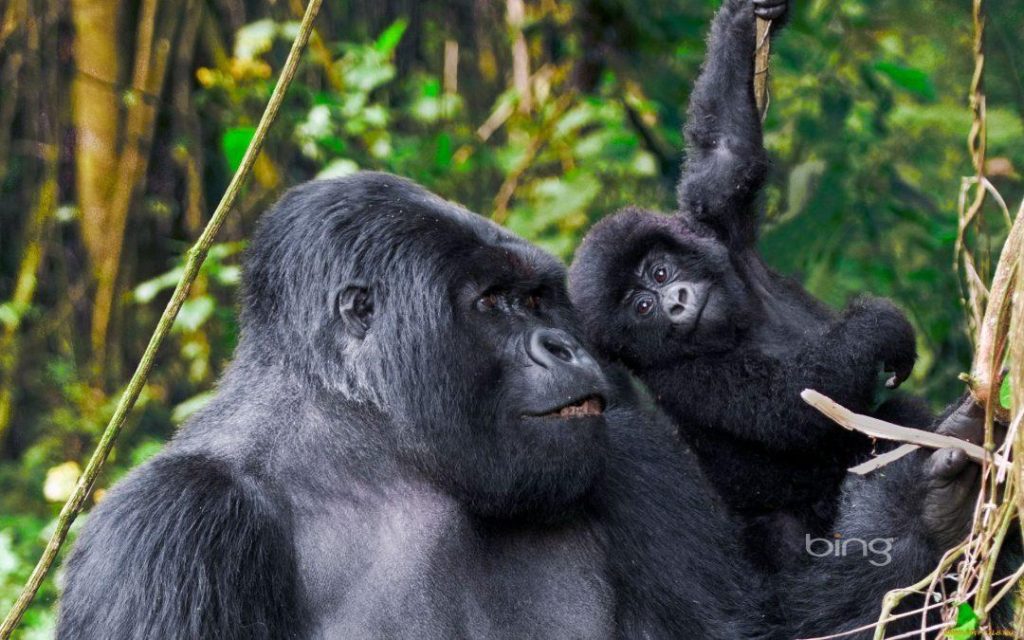
Book a One Day Gorilla Trekking Tour from Kigali to Uganda. If your calendar has exactly one free day and mountain gorillas are still on your list, a one-day gorilla trekking tour from Kigali to Uganda is a real, bookable option — not a compromise, not a shortened version of “the real thing,” but a genuinely complete trek to Uganda’s Mgahinga Gorilla National Park and back, done entirely within a single (very long) day. It asks more of your body and your alarm clock than a two-day trip, and it is not for everyone, but for the right traveller it is one of the most efficient wildlife experiences available anywhere in the world.
This guide covers everything you need to know before booking: exactly what the day looks like hour by hour, what it costs, who it genuinely suits, and how to book it properly. Our own One-Day Uganda Gorilla Safari Starting from Kigali is built specifically around this route, and everything below explains exactly how it works.
We’ve written this specifically to answer the questions we hear most often when someone calls asking about this exact itinerary: is it really possible, is it safe, will I be too exhausted to enjoy it, and is it actually worth doing in a single day rather than waiting for a trip with more time. Every section below addresses one of those questions directly, using the real schedule and real numbers from the trips we run on this route, not a hypothetical best-case version of the day.
Why Book a One-Day Gorilla Trekking Tour from Kigali to Uganda
The case for a one-day tour is simple: it lets you have a genuine mountain gorilla encounter without adding a single night to your itinerary. For business travellers with one gap day, stopover passengers connecting through Kigali, or anyone whose schedule simply cannot accommodate an overnight away from the city, this is the only version of Uganda gorilla trekking that fits without compromise elsewhere in your trip.
It also unlocks Uganda’s lower permit price — roughly USD 700 less than Rwanda’s Volcanoes National Park — for travellers who would otherwise default to a Rwanda-based trek purely because it requires less time. If cost matters to you and an overnight genuinely isn’t an option, this is the route that makes both priorities compatible. Our one-day Uganda gorilla safari from Kigali is built around exactly this trade-off.
What “One Day” Actually Means: The Real Door-to-Door Schedule
Be clear-eyed about this before you book: “one day” means roughly fourteen to sixteen hours door to door, starting with a pickup around 3:00–3:30 a.m. and ending with a return to Kigali in the early evening, in time for dinner. This is not a relaxed day trip — it is a long, full day built entirely around reaching Mgahinga Gorilla National Park, trekking, and returning, with almost no slack built in for anything else.
Understanding this upfront is the single most important part of deciding whether this trip is right for you. If the idea of a 3:00 a.m. departure and a sixteen-hour day sounds genuinely appealing rather than daunting, keep reading — this route was built for exactly that traveller. Our one-day Uganda gorilla safari from Kigali confirms this exact schedule in writing before you book.
Mgahinga Gorilla National Park: Your One-Day Destination
A one-day trip from Kigali is only possible because of one specific park: Mgahinga Gorilla National Park, which sits just thirty minutes past the Cyanika border crossing — close enough that the entire round trip, including a full trek, fits within a single long day. Bwindi’s sectors, by contrast, sit a further one-and-a-half to two-and-a-half hours beyond Cyanika, which makes a genuine one-day round trip from Kigali unrealistic there.
Mgahinga sits on the same Virunga volcanic range as Rwanda’s Volcanoes National Park, sharing similar terrain — open, higher-altitude slopes rather than Bwindi’s dense lowland rainforest. Our Mgahinga Gorilla National Park destination guide covers this terrain and the wider park in more depth.
Meet the Nyakagezi Family: Uganda’s Most Accessible Gorilla Group
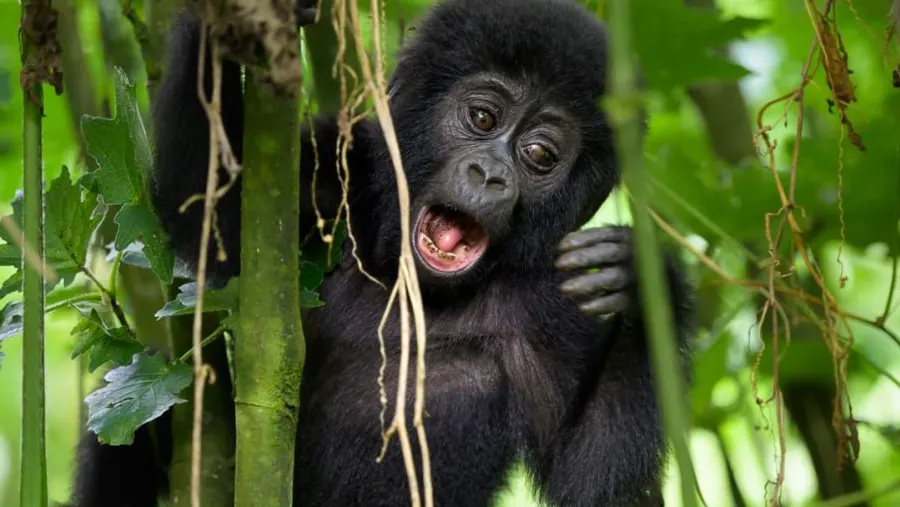
Mgahinga hosts a single habituated gorilla family, the Nyakagezi group, one of the longest-studied and most well-known families in the entire region. Known for occasionally roaming across the borders into neighbouring Rwanda and the Democratic Republic of Congo before returning to Mgahinga, this family has been followed by park staff for years, giving trackers an unusually deep understanding of their typical movements and habits.
Because there is only one family to track, permit allocation for Mgahinga is more limited than Bwindi’s multiple-family sectors, which makes early booking genuinely important if a one-day trip is your plan. Our one-day Uganda gorilla safari from Kigali reserves this permit under your exact passport name as soon as your dates are confirmed.
Is a One-Day Gorilla Trek Actually Possible? Addressing the Skepticism
Most first-time researchers assume this must be some kind of marketing exaggeration, and it’s a fair instinct — the idea of driving to another country, trekking a mountain gorilla family, and returning home the same day sounds implausible until you see the actual numbers. The reality is straightforward: Cyanika is only about 115 kilometres from Kigali, Mgahinga is a further thirty minutes past the border, and Mgahinga’s trek durations tend to be shorter and more predictable than Bwindi’s.
Add those pieces together with a genuinely early start, and the arithmetic works, even if the day itself is long and tiring. This isn’t a shortcut or a diluted version of gorilla trekking — it’s the same permit, the same trek, the same one hour with the gorillas, simply compressed into a single day through smart routing rather than through cutting anything out. Kenlink Tours’ Rwanda-to-Uganda gorilla trekking safari is a useful external reference if you want a second operator’s confirmation of the same route’s feasibility.
Hour-by-Hour: What Your One Day Actually Looks Like
3:00–3:30 a.m.: pickup from your Kigali hotel or a pre-arranged meeting point. 3:30–7:00 a.m.: the drive to Cyanika, largely in darkness for the first stretch, with the Virunga volcanoes emerging as dawn breaks. 7:00–8:00 a.m.: border crossing formalities. 8:00–8:30 a.m.: the short final drive to Mgahinga’s ranger post. 8:30–9:00 a.m.: registration and briefing.
9:00 a.m. onward: your trek begins, typically running two to four hours round trip including the return walk, followed by your permitted hour with the Nyakagezi family. Early-to-mid afternoon: a packed lunch, either at the park or on the road, before the return drive begins. Evening: arrival back in Kigali, typically in time for dinner. Every stage of this schedule is built into our one-day Uganda gorilla safari from Kigali itinerary in writing before you travel.
How Much Does a One-Day Gorilla Trekking Tour from Kigali Cost?
The Uganda gorilla trekking permit costs approximately USD 800 per person, identical to any other Uganda sector. Because a one-day trip requires no overnight accommodation, your total cost is typically lower than an equivalent two-day trip — a realistic all-inclusive one-day package, covering the permit, private 4×4 transport, fuel, a packed lunch, bottled water, and government taxes, generally lands between USD 950 and USD 1,150 per person.
This makes the one-day option not just the fastest but often the cheapest way to trek gorillas in Uganda from Kigali, since eliminating a night’s accommodation removes one of the larger variable costs in any multi-day itinerary. Our one-day Uganda gorilla safari from Kigali itemises this exact breakdown before you pay a deposit.
What’s Included When You Book
A properly built one-day package should include your Mgahinga gorilla permit reserved in your exact passport name, private round-trip 4×4 transport with an English-speaking driver-guide, fuel and all ground transport costs, bottled water and a packed lunch, and all applicable government taxes. Because there’s no overnight, accommodation is the one major inclusion that simply doesn’t apply here.
What remains excluded, as with any gorilla trek, is porter fees at the trailhead and gratuities for your guide. Always confirm this exact inclusion list in writing before booking. Our one-day Uganda gorilla safari from Kigali spells this out clearly, and Kenlink Tours’ 2-day Uganda gorilla safari from Kigali is a useful external comparison for what an overnight version includes by contrast.
Who Should (and Shouldn’t) Book a One-Day Tour
This trip genuinely suits travellers who are fit, comfortable with minimal sleep, and working within a single available day — business travellers on a stopover, cruise or flight passengers with a long layover in the region, or anyone whose itinerary simply cannot absorb an overnight. It does not suit travellers hoping for a relaxed pace, anyone with health conditions affected by sleep deprivation, or groups where even one member prefers a gentler schedule.
If any of those caveats give you pause, our 2-day Uganda gorilla tour from Kigali delivers the same core experience with a proper night’s sleep built in, at a modest increase in total cost. Being honest with yourself here matters more than being honest with your operator, since a miserable one-day trip cannot be undone once you’re on the road at 3:00 a.m.
Fitness Requirements for a One-Day Trek
Beyond the standard fitness needed for any gorilla trek — two to four hours of uneven, sometimes steep walking — a one-day trip adds the compounding factor of doing that trek on minimal sleep after a long overnight drive. Travellers in good general health and reasonable cardiovascular fitness in their twenties through fifties typically manage this comfortably; anyone with joint, back, or sleep-related health concerns should weigh this route carefully against the two-day alternative.
Porters are available at the Mgahinga trailhead and are worth hiring on this route just as on any other, both for physical support and because sleep deprivation, more than trail difficulty, is usually what makes a one-day trek feel harder than expected. Mentioning any fitness concerns to your operator at booking, rather than at the trailhead, lets us plan accordingly.
Age Limit and Health Rules — No Different for a One-Day Trip
Uganda enforces the same strict minimum age of 15 for gorilla trekking regardless of itinerary length, with no exceptions. Health screening happens at the ranger post on the morning of your trek — anyone showing symptoms of a cold, flu, or other contagious illness will be asked to sit out that day, since mountain gorillas are highly susceptible to human disease.
These rules apply identically whether you’re trekking on a one-day, two-day, or longer itinerary. Groups remain capped at eight trekkers, though since Mgahinga has only one habituated family, your group will typically be everyone booked to trek that specific day, drawn from various operators and itineraries.
What to Pack for a One-Day Trip
Pack exactly as you would for any gorilla trek — sturdy waterproof hiking boots, gaiters, gardening gloves, a lightweight rain jacket, and quick-dry layers — plus a few items specific to the long single-day format: a travel pillow for the overnight drive, extra snacks beyond the provided packed lunch, and a change of clothes for the drive home, since a full day of trekking rarely leaves clothing clean by evening.
A working phone charger or power bank is worth packing specifically for this route, given the pre-dawn departure and long hours without access to charging points. Keep your passport, yellow fever certificate, and visa approval easily accessible rather than buried in a bag, since you’ll need them at Cyanika while still half-asleep in the early hours of the morning.
Visa and Border Crossing for a Same-Day Round Trip
Crossing at Cyanika requires a valid passport with at least six months’ remaining validity, a yellow fever vaccination certificate, and a valid visa — either a single-entry Uganda visa (roughly USD 50) or the East Africa Tourist Visa (roughly USD 100 for 90-day multi-entry access across Uganda, Rwanda, and Kenya). Because this is a same-day round trip, you’ll cross the border twice within about twelve hours, so having your documents in easily accessible order matters even more than on a two-day trip.
Apply for your visa online well in advance rather than at the border, since any delay at Cyanika has a proportionally bigger impact on a schedule this tight. Kenlink Tours’ breakdown of driving hours from Kigali to Bwindi is a useful external reference for understanding Cyanika’s typical processing times, even though this specific route continues to Mgahinga rather than Bwindi.
One Day vs Two Days: Which Should You Book?
Choose one day if your absolute constraint is calendar time — you genuinely have only one free day and no ability to add an overnight anywhere in your schedule. Choose two days if you have even slightly more flexibility, since the added overnight substantially improves comfort, opens up Bwindi’s wider choice of gorilla families in Rushaga and Nkuringo, and removes the compounding fatigue of trekking on essentially no sleep.
Cost is a secondary factor here: the one-day option is typically cheaper due to no accommodation cost, but the difference is often smaller than travellers expect once they compare it against a budget-tier two-day trip. Our 2-day Uganda gorilla tour from Kigali is worth comparing side by side against this one-day option before you commit either way.
How Mgahinga Compares to Rwanda’s Volcanoes National Park
Because Mgahinga sits on the same Virunga volcanic range as Rwanda’s Volcanoes National Park, the terrain and general trekking experience share real similarities — open, higher-altitude slopes with bamboo and hagenia forest, generally shorter and more predictable treks than Bwindi’s dense rainforest sectors. The genuine difference is permit price: Mgahinga’s roughly USD 800 fee sits well below Volcanoes National Park’s roughly USD 1,500, while both parks offer a broadly comparable trekking experience underfoot.
For travellers deciding between a one-day Mgahinga trek and a similarly quick Rwanda-based option, our Volcanoes National Park destination guide is worth reading alongside this page. Rwanda has no equivalent one-day product from Kigali, since Volcanoes National Park, while closer, still typically pairs with an overnight in most itineraries rather than a single marathon day.
Golden Monkey Tracking: Worth Adding If Your Schedule Ever Loosens
Mgahinga’s bamboo zones are also home to golden monkeys, a lighter, shorter tracking activity with no age restriction, typically taking around an hour. It genuinely cannot be added to a strict one-day gorilla trekking itinerary — there simply isn’t time within the day’s tight schedule — but it’s worth knowing about for a future trip, or if you ever extend this same route into a two-day version.
Travellers who complete the one-day gorilla trek and find themselves wanting more from the region often return specifically to add golden monkey tracking on a subsequent, less rushed visit. Our 2-day Uganda gorilla tour from Kigali can be adapted to include this add-on for exactly that reason.
Group Bookings and Solo Travellers on This Route
Because Mgahinga has only one habituated family, your trekking group on any given day is typically made up of travellers from several different operators and itineraries, all converging on the same permit allocation. This means solo travellers are never trekking genuinely alone — you’ll be grouped with up to seven other trekkers regardless of how you booked.
Vehicle arrangements are more flexible: solo travellers can request a private vehicle for the full round trip, or ask about joining a shared transfer to reduce cost, similar to options on our two-day itineraries. Groups of four or more travelling together typically see a meaningful reduction in per-person transport cost on this route, since the largest single cost after the permit — the vehicle — is split across more people.
Weather and Seasonal Considerations for a Single-Day Trek
Mgahinga’s terrain, similar to Rwanda’s volcanic slopes, holds up reasonably well in most conditions, but the dry seasons — roughly June to September and December to February — still offer the most predictable road conditions for the long overnight drive, which matters more on a schedule this tight than it might on a more flexible multi-day trip. The wetter months bring a genuine risk of slower road conditions on the pre-dawn drive, which can compress an already tight schedule further.
If your one-day trip falls during a wetter month, build in extra buffer by confirming with your operator that the pickup time accounts for potentially slower road conditions. This is a route where a delay of even thirty minutes has an outsized effect on the rest of the day, unlike a two-day itinerary with more natural slack built in.
The Driver-Guide’s Role on This Route
More than on almost any other itinerary we run, the driver-guide’s experience matters enormously on a one-day Mgahinga trip. They are responsible for navigating pre-dawn roads safely, managing border formalities efficiently at an hour when queues can be unpredictable, and keeping the day’s tight schedule on track without ever rushing the actual trekking experience itself.
Ask specifically about your assigned driver-guide’s experience with this exact route when booking — this is not the itinerary to trust to someone doing their first early-morning Cyanika crossing. Our About Us page covers how we select and train drivers for exactly this kind of demanding, precisely timed route.
A good driver-guide on this route also functions as your timekeeper and morale support through what is, honestly, a genuinely long day. Ours are briefed to build in short, deliberate rest stops on the overnight drive specifically to keep everyone alert and comfortable, rather than treating the drive as something to simply push through as fast as possible. That small difference in approach is often what separates a one-day trip guests remember fondly from one they remember only as exhausting.
Common Concerns About Booking a One-Day Tour (Answered)
“Is it safe to drive through the night?” Yes — our vehicles and drivers are equipped and experienced for early-hours departures, and the route is well-travelled by tour operators daily. “What if I fall asleep and miss something important?” The schedule is built with enough buffer that dozing during transit legs is expected and fine; your guide wakes the group well ahead of each key stop.
“What if the trek runs long and we can’t make it back the same day?” This is genuinely rare given Mgahinga’s typically shorter, more predictable trek durations, but any reputable operator should have a contingency plan, including emergency accommodation near the border, for the unlikely event of a significantly delayed return. Ask about this specifically when booking. Our contact page is the right place to raise any remaining concerns before you commit.
“Will I actually enjoy the trek if I’m exhausted from the overnight drive?” Almost universally, yes — guests consistently describe the adrenaline of the final approach to the gorillas as overriding any tiredness accumulated during the night, at least for the duration of the encounter itself. The exhaustion tends to catch up afterward, on the drive home, rather than during the part of the day that actually matters most.
What If Mgahinga Is Sold Out for Your Dates?
Because Mgahinga hosts only one habituated family, its daily permit allocation is smaller than Bwindi’s multi-family sectors, and popular dates can sell out further in advance than you might expect. If your preferred date is unavailable, you have two realistic alternatives: shift to a nearby date if your schedule allows even a day or two of flexibility, or reconsider whether a two-day Bwindi trip, with its wider family availability, might actually suit your dates better despite requiring an overnight.
Our 2-day Uganda gorilla tour from Kigali and our fuller 3-day Uganda gorilla safari from Rwanda both draw on Bwindi’s larger permit pool, making them more likely to have availability on short notice than the single-family Mgahinga route.
Extending Your Trip: What Comes After a One-Day Trek
Plenty of travellers treat this one-day trek as the opening chapter of a longer trip rather than a standalone experience. Some continue on to Bwindi Impenetrable Forest for a second, different gorilla encounter days later; others pivot toward Akagera National Park for a savannah game drive as a complete change of pace after the forest.
Our 3-day Akagera National Park safari from Kigali and 5-day Uganda gorilla and chimps safari from Rwanda both work well as a follow-on booking once your one-day trek is behind you, and browsing our full destinations page is a good way to see what else fits your remaining travel dates.
How to Book Your One-Day Gorilla Trekking Tour Step by Step
First, confirm your travel date and check Mgahinga permit availability, since the single-family allocation sells out faster than Bwindi’s multiple sectors during peak months. Second, provide your exact passport name for permit reservation. Third, confirm your pickup location and time in Kigali, along with your visa status. Fourth, review the full inclusion list in writing. Fifth, pay your deposit to lock in your permit.
Our one-day Uganda gorilla safari from Kigali page walks through this exact process, and our contact page is the fastest way to start a booking or ask a question before committing.
Tips for Surviving (and Enjoying) the Long Day
Sleep as much as possible in the days leading up to your trek, not just the night before, since a single early night rarely fully offsets a genuinely demanding travel schedule. Eat a proper meal before your 3:00 a.m. pickup rather than relying solely on the packed lunch provided later in the day, and bring caffeine in whatever form works for you, since the early hours of the drive are exactly when energy dips hardest.
Resist the urge to plan anything for the evening of your trek — arriving back in Kigali and going straight to bed is not a failure of ambition, it’s the correct way to close out a sixteen-hour day. Several of our own guests on this route have told us the best decision they made was booking a rest day immediately afterward rather than an early flight the next morning.
Dress in layers rather than a single heavy jacket, since the pre-dawn drive is genuinely cold while the midday trek can turn warm quickly once the sun is up and you’re working hard on the trail. A small travel pack of wet wipes or a change of socks partway through the day is a small comfort that several returning guests specifically mention appreciating, particularly after a muddy descent back to the vehicle. None of these tips require much extra planning, but together they meaningfully change how the day feels by the time you’re back in Kigali that evening.
What Happens If You Can’t Find the Gorillas Quickly
Trek duration at Mgahinga is generally shorter and more predictable than Bwindi’s, but it isn’t guaranteed — trackers must still locate the Nyakagezi family’s current position each morning, and on rare occasions this takes longer than average. Your ranger guide manages timing carefully throughout the day specifically because of the one-day format’s tighter schedule, adjusting the return drive plan if needed.
If a family is not located within a reasonable window, park protocols still apply as they would on any trek: a 75% refund is typically available if the day ends without a sighting, and your operator should have a clear contingency plan for this scenario. Ask about this specifically when booking, since it matters more on a one-day itinerary than a two-day one.
In our experience running this route, a significantly delayed trek is genuinely uncommon — Mgahinga’s single, well-studied family and its comparatively open terrain make this one of the more predictable gorilla treks in the region precisely because trackers know this specific group’s habits so thoroughly. But asking your operator how they’d handle the rare exception is a fair, sensible question, and a confident, specific answer is a good sign you’re booking with a team that has genuinely thought this route through rather than simply assuming everything will go to plan.
Combining a One-Day Trek with Other Kigali Activities
Because a one-day trek consumes your entire day, it pairs best with activities either before or after your travel dates rather than on the same day. A city tour of Kigali, including its genocide memorial and vibrant craft markets, works well the day before or after your trek, once you’ve had proper rest.
If you decide afterward that one gorilla encounter wasn’t enough, our 2-day Volcanoes gorilla trek from Kigali and 3-day Rwanda gorilla tracking and cultural tour are both realistic add-ons for a second trek later in the same trip, and Kenlink Tours’ Uganda and Rwanda gorilla safaris comparison is a useful external reference for planning that second trek from the Uganda side instead.
Alternative Booking Routes If You Want a Second Opinion
We believe every traveller should feel confident comparing options before committing, particularly on a route with as little margin for error as this one. Kenlink Tours’ Rwanda safaris page and their 3-day Rwanda gorilla safari are worth reading if you’re weighing this one-day Uganda route against a Rwanda-based alternative from a Uganda operator’s own perspective.
If your dates are flexible and you’re comparing seasonal pricing or group departure options more broadly, Kenlink Tours’ travel news section and their group tours page are both useful external references, even though this specific one-day itinerary is one we run ourselves rather than as a shared departure.
Why Book Your One-Day Gorilla Trekking Tour with Pick and Transfer Safaris
A same-day cross-border trek leaves essentially no room for logistical error — a late pickup, a permit mix-up, or an inexperienced driver on unfamiliar pre-dawn roads can genuinely derail a schedule this tight. We built our one-day Uganda gorilla safari from Kigali specifically around drivers experienced with this exact route and schedule, with your permit and border paperwork confirmed well before your 3:00 a.m. departure.
We also believe in giving travellers an honest comparison across every reasonable option, which is why we regularly reference established Uganda-based operators such as Kenlink Tours and their Uganda safaris overview. Read more about how we operate on our About Us page, or reach out through our contact page to check current availability for your dates.
Frequently Asked Questions About Booking a One-Day Gorilla Trekking Tour from Kigali
Is a one-day gorilla trek from Kigali to Uganda really possible?
Yes. Mgahinga Gorilla National Park sits close enough to the Cyanika border, roughly thirty minutes beyond it, that a full round trip with a complete trek fits within a single, long day of roughly fourteen to sixteen hours.
What time do I need to be ready for pickup?
Typically 3:00–3:30 a.m., in order to reach the border, complete formalities, and arrive at Mgahinga’s ranger post in time for the morning briefing.
Is the one-day option cheaper than a two-day trip?
Generally yes, since it requires no overnight accommodation. A realistic all-inclusive total runs USD 950–1,150 per person, compared with USD 1,300–2,000 for an equivalent two-day trip.
Can I trek in Bwindi on a one-day itinerary instead of Mgahinga?
Not realistically. Bwindi’s sectors sit a further one-and-a-half to two-and-a-half hours beyond Cyanika, making a genuine same-day round trip from Kigali impractical.
What if I’m not confident I can handle a sixteen-hour day?
Our 2-day Uganda gorilla tour from Kigali delivers the same core experience with a proper overnight, and is the better choice if the one-day format sounds more exhausting than exciting.
Ready to Book Your One-Day Gorilla Trekking Tour from Kigali to Uganda
A one-day gorilla trekking tour from Kigali to Uganda is a genuine, fully realised trek, not a shortcut — the same permit, the same forest, the same hour with a habituated gorilla family, simply compressed into a single demanding day through smart routing via Mgahinga Gorilla National Park. For the traveller with exactly one day to spare and the energy to make the most of it, it remains one of the most efficient wildlife experiences available anywhere.
Book your One-Day Uganda Gorilla Safari from Kigali directly, or get in touch through our contact page and our team will confirm your permit, pickup time, and border logistics before you commit to a single flight. Set your alarm, trust the schedule, and by the time you’re back in Kigali that evening, the 3:00 a.m. wake-up will already have become the part of the story you tell first.