- EXPERT'S HELP
- +256789210067
- +256200955001
- info@kenlinktours.com


Best Luxury Lodges Near Bwindi
August 14, 2026
4 Days Gorilla Safari from Kigali
August 15, 2026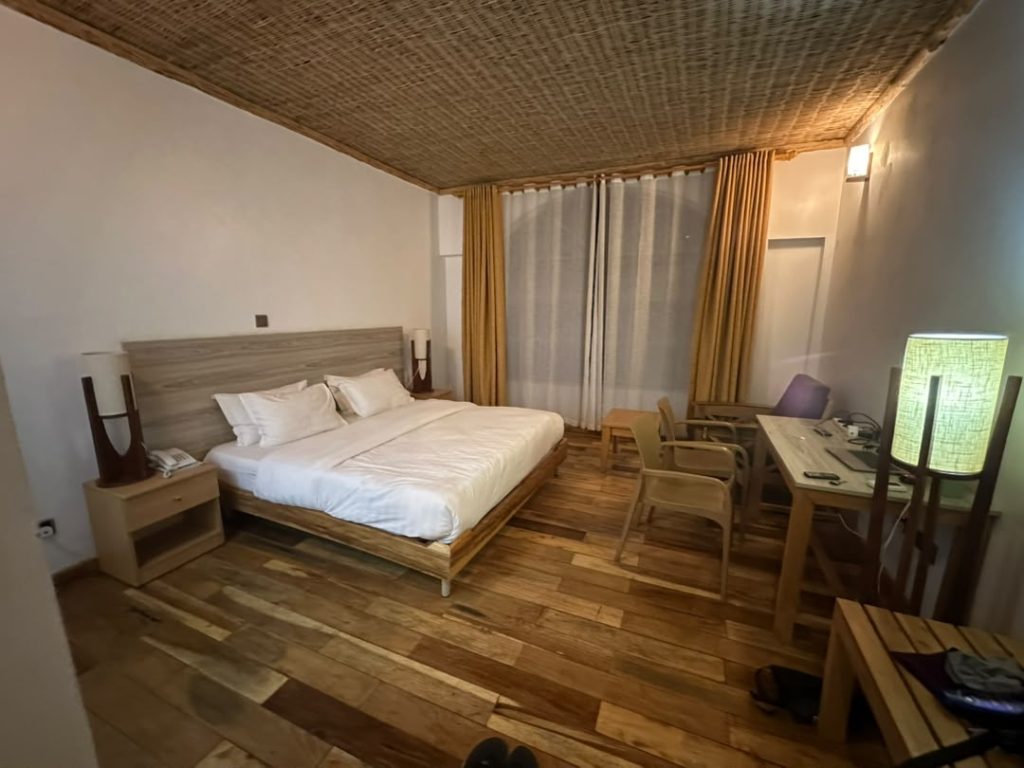
Budget Lodges for Gorilla Trekking. Our earlier roundup of the most budget-friendly lodges in Bwindi lists specific properties by price. This guide takes a step back and answers a different question: what actually changes when you choose a budget lodge over a mid-range or luxury one, what stays completely identical regardless of price, and how lodge choice fits into a broader budget strategy that also includes transport, timing, and other cost levers. If you’re deciding whether budget accommodation is the right call for your gorilla trip at all, this is the guide for that decision — and it covers both Bwindi and Mgahinga, since budget planning shouldn’t stop at one park’s boundary.
What Actually Changes at a Budget Lodge — and What Doesn’t
This is the most important thing to understand before comparing specific properties: the gorilla trek itself — the permit, the ranger guide, the one hour with the gorilla family — is completely identical regardless of where you sleep. A traveler at the cheapest guesthouse in Buhoma has exactly the same trekking experience as a traveler at the most expensive lodge in the sector. What changes at a budget property is everything around the trek: simpler rooms, often with shared rather than en-suite bathrooms, more modest dining, less consistent hot water and electricity, and fewer staff per guest. Understanding this distinction clearly is what makes budget travel for gorilla trekking genuinely sensible rather than a compromise on the actual experience you came for.
It’s worth internalizing this point specifically because marketing language across the tourism industry tends to blur it. Luxury lodge websites often imply, without saying so directly, that a more expensive stay produces a better wildlife encounter. It doesn’t. Uganda Wildlife Authority sets identical rules, group sizes, and viewing time regardless of who’s paying for the permit or where they’re sleeping that night. Once you separate the trek from the accommodation in your own planning, budget decisions become considerably easier, since you’re weighing genuine comfort trade-offs rather than worrying you might be shortchanging the core experience.
Shared vs. Private Bathroom: Worth the Upgrade?
Shared bathroom facilities are one of the most common features distinguishing true budget properties from mid-range ones, and it’s worth thinking honestly about whether this specific trade-off matters to you. After a long, often muddy trek, many travelers find a private bathroom is one of the few genuine comfort upgrades worth paying for, even while keeping other costs down elsewhere. If budget is tight but a private bathroom matters, it’s often possible to find a small step up from the very cheapest option that adds this one feature without jumping all the way to a mid-range property’s full price.
Camping and Dormitory Options
Below even the standard budget guesthouse tier, camping and dormitory-style accommodation exist around several of Bwindi’s sectors for travelers on the tightest possible budget. These options strip accommodation down to its most basic function — a safe place to sleep before and after the trek — and they’re a genuinely viable choice for travelers prioritizing the permit and the trek itself over any comfort beyond the essentials. Our overview of budget trips in Uganda covers this end of the spectrum in more detail, including how camping options fit into a broader shoestring itinerary beyond just the gorilla trekking leg.
Camping specifically requires a little more advance planning than a standard budget room booking, since not every campsite offers equipment rental, and cold mountain nights at Bwindi’s elevation can catch underprepared campers off guard. A warm sleeping bag rated for genuinely cool nighttime temperatures, rather than a lightweight summer bag, is worth prioritizing if camping is your chosen route, since Bwindi’s nights are considerably cooler than many travelers expect from an equatorial destination.
Self-Catering vs. Full Board
Meal arrangements are another lever worth considering separately from room type. Many budget and some mid-range properties offer a self-catering option, where guests handle their own meals rather than paying for a full-board package, which can meaningfully reduce the total cost of a stay for travelers willing to plan their own food. This works particularly well for longer stays or for travelers who’ve brought supplies from Kampala, though it’s worth checking kitchen access and facilities in advance rather than assuming every self-catering listing includes the same level of equipment.
For most travelers on a short two or three-day trekking trip, however, full board still tends to work out simpler and not dramatically more expensive than self-catering once the cost and hassle of sourcing groceries in a remote area is factored in. Self-catering makes the most financial sense on longer stays of five days or more, or for travelers already road-tripping with their own supplies as part of a broader independent Uganda itinerary rather than a focused, short gorilla trip.
Electricity and Wi-Fi Realities at Budget Properties
It’s worth setting realistic expectations here rather than being surprised on arrival. Many budget properties in Bwindi run on generator power for limited hours each day rather than round-the-clock grid electricity, meaning charging camera batteries and phones needs some planning around when power is actually available. Wi-Fi, where offered at all, is often slow and unreliable compared to what travelers might expect from a budget hotel in a city. Neither of these limitations affects the trekking experience itself, but they’re worth knowing about in advance so you can plan device charging and communication accordingly, particularly if you’re relying on a phone for photos throughout a multi-day trip.
Budget Options by Sector: Buhoma
Buhoma has the deepest budget accommodation stock of any Bwindi sector, a natural byproduct of being the park’s oldest and most developed trekking base. Our overview of the Buhoma sector and our general page on Bwindi accommodations both give a sense of how many budget-tier options exist here compared to the park’s other, less developed sectors, making Buhoma often the easiest sector for a budget-focused trip to find genuine choice rather than a single default option.
Budget Options in Rushaga and Nkuringo
Rushaga and Nkuringo, in Bwindi’s south, have historically had a thinner budget accommodation market than Buhoma, though this has grown considerably alongside both sectors’ rising overall popularity. Rushaga in particular is worth prioritizing for budget travelers focused on permit flexibility, since it has the largest number of habituated gorilla families and correspondingly better odds of last-minute permit availability, which can matter as much to an overall budget as accommodation price does.
Budget Options Near Mgahinga
Budget planning for gorilla trekking shouldn’t stop at Bwindi’s boundary, since Mgahinga Gorilla National Park offers its own trekking permits and its own accommodation market. Our guide to accommodation near Mgahinga covers the budget-to-luxury range serving that park specifically, and our roundup of the best hotels in Kisoro is worth checking too, since Kisoro town often has more competitive budget pricing than accommodation immediately inside either park’s boundary, given the wider range of properties competing for business there.
Combining Budget Lodging With Other Cost Levers
Lodge choice is only one part of an overall budget strategy, and it’s worth thinking about it alongside the other levers available. Our broader guide to doing a cheap gorilla safari in Uganda covers the full picture, including group tours that share transport costs, off-peak season timing when both permits and lodges are more competitively priced, and self-drive options for travelers comfortable navigating independently. Our detailed piece on how much a budget gorilla safari costs in Uganda and our practical guide to getting around Uganda on a budget-friendly cost both fill in the transport side of this equation, which for many travelers ends up being just as significant a cost lever as accommodation choice.
What Not to Cut Corners On
While lodge tier is one of the more flexible budget levers, a few things are worth protecting regardless of how tightly you’re managing costs. The gorilla permit itself is non-negotiable and shouldn’t be sourced through unofficial or unverified channels chasing a discount, since a fraudulent or improperly issued permit risks the entire trip. Reliable transport with a reputable driver matters more than accommodation comfort, given the road conditions on some approaches to Bwindi. And basic travel insurance covering medical evacuation is worth the cost even on the tightest overall budget, given Bwindi’s remoteness from major medical facilities. Our detailed breakdown of gorilla trekking permit prices in Uganda is worth reviewing so you understand exactly what this fixed, non-negotiable cost actually covers.
Is Budget Accommodation Safe?
Budget doesn’t mean unsafe, and it’s worth being clear about that distinction. Reputable budget lodges around Bwindi and Mgahinga maintain the same basic security standards as pricier properties — secure rooms, on-site staff, and established relationships with local guides and operators. What differs is comfort and amenity level, not fundamental safety. As with any accommodation booking, it’s worth choosing a property with genuine reviews and a track record rather than the absolute cheapest unlisted option you can find, but there’s no need to assume budget automatically means a compromise on basic safety standards.
A useful practical test when evaluating an unfamiliar budget property is simply whether it appears consistently across multiple independent booking platforms and travel forums with a genuine review history, rather than existing only on a single listing with no track record. Established budget lodges that have served trekkers for several years, even without luxury amenities, generally have ironed out basic safety and reliability issues in a way a brand-new, untested property hasn’t yet had the chance to.
Comparing Budget Options Across Multiple Sectors Before Deciding
Because sector choice and lodge choice interact so directly, it’s worth comparing budget availability across two or three candidate sectors before committing to a permit date, rather than locking in a sector first and then discovering limited budget options once you start looking at accommodation. This is easier to do earlier in the planning process than later, since gorilla permits are tied to a fixed date and sector once booked, while lodge research costs nothing and can be done freely before any commitment is made.
Booking Timing for Budget Properties
Budget lodges generally have more total rooms and more flexible booking timelines than the smaller luxury properties in the same sectors, which means they’re usually easier to secure on shorter notice. That said, during peak season — July through September and the December holidays — even budget accommodation can fill up as overall demand across the park rises, so it’s still worth booking a few months ahead rather than assuming availability will simply be there closer to your travel dates.
Budgeting the Full Trip, Not Just the Lodge
It’s worth stepping back and budgeting the complete trip rather than optimizing lodge cost in isolation. Our comprehensive guide to how much a Uganda safari costs and our related breakdown of how much money a Uganda safari actually costs both help put lodge savings in context against the permit, transport, and other fixed costs that make up the bulk of a gorilla trekking trip’s total price. In many cases, the difference between a budget and mid-range lodge is a relatively small percentage of the overall trip cost once the permit is factored in, which is worth knowing before assuming lodge choice alone will make or break your total budget.
Packing Smart to Reduce Costs Elsewhere
Budget travel isn’t only about lodge and transport choice — a few packing decisions can meaningfully reduce incidental costs during the trip itself. Bringing your own reusable water bottle rather than buying bottled water daily, packing snacks and basic first-aid supplies rather than sourcing them at inflated prices near the park gate, and bringing a headlamp for navigating a budget property’s limited-hours electricity all add up over a multi-day trip. None of this replaces the bigger levers of lodge and transport choice, but it’s a genuinely useful supplementary habit for travelers optimizing every part of the budget rather than just the largest line items.
When It’s Worth Spending More on Just One Night
A hybrid approach worth considering is spending most of the trip at budget properties but splurging on a single more comfortable night specifically around the trekking day itself, when a private bathroom and reliable hot water matter most after a long, muddy hike. This targeted approach lets you keep the overall trip cost low while still getting the one comfort upgrade most likely to matter on the day it counts, rather than either paying for comfort across the whole trip or going fully budget throughout. It’s a compromise worth discussing with your tour operator when planning, since not every itinerary structure makes this kind of single-night upgrade straightforward to arrange.
Traveling With Family on a Budget
Families balancing a budget gorilla trip with younger, non-trekking children face a slightly different calculation than a solo traveler or couple, since a family often needs either a larger room configuration or two connecting rooms, which can change the budget math meaningfully. Our guide to the top kid-friendly safari parks in Uganda is a useful complementary read if your budget trip includes family members who won’t be trekking themselves, since it points toward parks and activities that keep costs down for the group as a whole rather than just the trekking portion.
Booking a Budget Trip as a Coordinated Itinerary
Even on a tight budget, it’s worth coordinating your permit, lodge, and transport through a single operator rather than piecing the trip together independently across multiple unrelated bookings. Our page on Uganda gorilla safari on self-drive is a useful read if you’re considering handling transport independently as a further cost-saving measure, though it’s worth weighing the genuine savings against the added complexity and risk of unfamiliar roads before committing to that approach on top of every other budget decision in the trip.
Negotiating and Timing Discounts
Budget lodges, unlike gorilla permits which are fixed by the Uganda Wildlife Authority, sometimes have more flexibility on pricing than travelers assume, particularly during shoulder and off-peak months when occupancy runs lower. It’s worth asking directly about multi-night discounts, group rates if traveling with more than two people, or off-peak promotional pricing rather than assuming the first quoted rate is final. This is far more common at independently owned budget properties than at larger chain-affiliated mid-range or luxury lodges, where pricing tends to be more fixed regardless of season or occupancy.
Making the Most of a Budget Stay
A few small habits can meaningfully improve a budget stay without spending more money. Asking the lodge directly about generator hours before your trek day means you can plan device charging around the actual schedule rather than discovering a dead battery on trekking morning. Requesting an early or packed breakfast in advance, rather than assuming it will simply be ready, avoids a rushed or missed meal before an early departure. And confirming your room’s proximity to the property’s common areas can help you choose a quieter spot if noise from shared spaces matters to you, since budget properties often have less physical separation between guest rooms and communal areas than pricier ones.
Frequently Asked Questions
Does choosing a budget lodge affect the gorilla trekking experience itself? No — the permit, ranger guide, and gorilla encounter are completely identical regardless of accommodation tier. Budget lodges affect comfort around the trek, not the trek itself.
Which sector has the most budget accommodation choice? Buhoma, given its status as Bwindi’s oldest and most developed trekking base, though Rushaga’s budget options have grown considerably in recent years.
Should I consider Mgahinga instead of Bwindi for a budget trip? It’s worth comparing both — Mgahinga and nearby Kisoro sometimes offer more competitive budget pricing, and permit availability differs between the two parks as well.
Is it safe to stay at the cheapest available lodge? Reputable budget properties maintain the same fundamental safety standards as pricier ones; the difference is comfort and amenities, not security. Choose based on genuine reviews rather than price alone.
What’s the biggest mistake budget travelers make when planning? Cutting costs on the permit source, transport reliability, or travel insurance rather than on accommodation comfort — these three are worth protecting even on the tightest overall budget.
Final Thoughts
Budget accommodation for gorilla trekking is a genuinely sound choice, not a compromise on the experience that actually matters — the permit and the trek itself stay identical no matter where you sleep. The real budget decision is less about which specific lodge to book and more about which comforts you’re willing to trade for savings, and how that trade-off fits into a broader strategy that also includes transport, timing, and permit planning. If you’d like help building a genuinely budget-conscious itinerary without cutting corners on what actually matters, get in touch with our team at Kenlink Tours and we’ll put it together around your priorities.
For travelers also arranging transport and safaris on the Rwanda side of the region, our colleagues at Pick and Transfer Safaris offer their own gorilla safari packages, including a one-day gorilla safari from Kigali and a two-day gorilla tour from Kigali, alongside a detailed look at Bwindi Impenetrable Forest National Park itself. Travelers extending further can also browse their broader wildlife safari options, including a 3-day safari to Murchison Falls and a 3-day safari to Queen Elizabeth National Park. Learn more about their team on their about us page, browse their Kigali city guide, or reach out through their contact page.