- EXPERT'S HELP
- +256789210067
- +256200955001
- info@kenlinktours.com


Can I do a 1-day or 2-day Uganda gorilla trek starting from Kigali?
July 21, 2026
Group Gorilla Tracking Safaris
July 23, 2026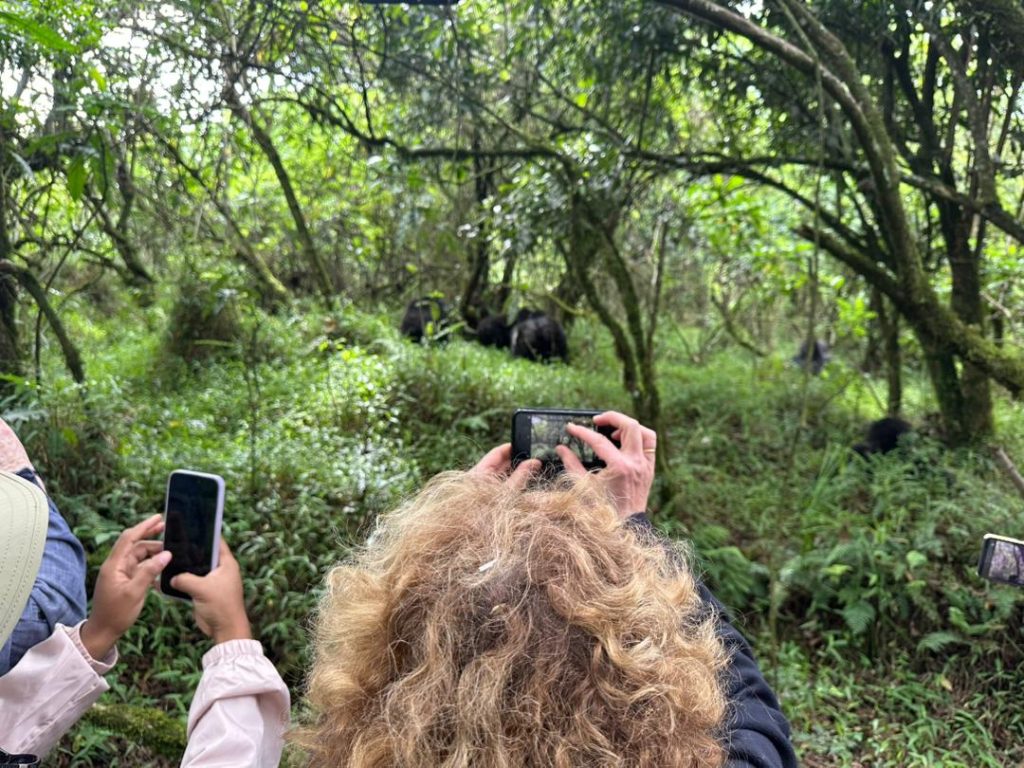
Can book a Uganda Gorilla Safari Now. If you have been dreaming about locking eyes with a 200-kilogram silverback in the misty forests of Bwindi, you are probably asking yourself one very practical question: can you actually book a Uganda gorilla safari right now, today, without months of uncertainty? The short answer is yes. Uganda’s gorilla trekking industry is open, permits are available for booking throughout 2026 and into 2027, and travelers from every corner of the world are securing dates as you read this. The slightly longer answer is that “booking now” involves a handful of moving parts — permit availability, park selection, itinerary length, travel logistics, and the right ground operator — and getting each of these right is what separates an average trip from the kind of once-in-a-lifetime encounter people talk about for the rest of their lives.
This guide walks through everything you need to know to book with confidence, from how gorilla permits actually work, to which park suits your travel style, to what a realistic budget looks like, to the exact steps you can take this week to secure your trekking date. Whether you are flying into Entebbe or crossing overland from Kigali, the goal here is simple: give you enough clarity that you can stop researching and start planning.
Why Uganda Is Still the Gold Standard for Gorilla Trekking
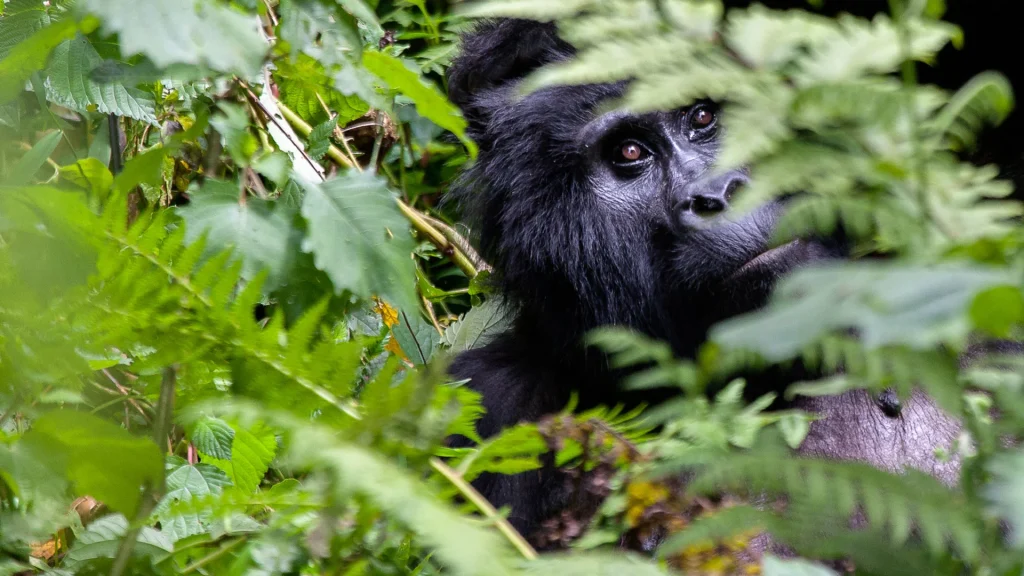
Mountain gorillas survive in only three countries on Earth — Uganda, Rwanda, and the Democratic Republic of Congo — and nowhere is the experience more varied or more accessible than in Uganda. The country is home to roughly half of the world’s remaining mountain gorilla population, spread across two protected areas: Bwindi Impenetrable Forest National Park and Mgahinga Gorilla National Park. Uganda offers more permits per day than its regional neighbors, a wider range of trekking sectors, and permit pricing that keeps the experience within reach for a broader range of travelers.
Beyond the gorillas themselves, Uganda’s landscape does a lot of the heavy lifting. Bwindi is exactly what its name promises — an ancient, tangled rainforest draped over a chain of steep hills in the country’s southwest, alive with birdsong, waterfalls, and hundreds of plant species. Trekking here is not a walk through a manicured reserve; it is a genuine hike through wild, high-altitude jungle, which is precisely what makes the eventual encounter with a gorilla family feel so earned. Add in Uganda’s exceptional value for money, its friendly, English-speaking guides, and its position as a launchpad for combining gorillas with savannah wildlife, chimpanzee tracking, and Nile boat cruises, and it becomes clear why so many seasoned safari travelers rank Uganda above its regional competitors.
Yes, You Can Book Right Now — Here Is What “Booking” Actually Involves
Booking a Uganda gorilla safari is not a single click-and-confirm transaction the way booking a hotel room might be. It is a short process involving a few sequential steps, and understanding them upfront removes almost all of the anxiety people feel when they start researching this trip.
First, you choose your travel dates and decide which park and trekking sector you want — Bwindi’s Buhoma, Ruhija, Rushaga, or Nkuringo sector, or Mgahinga near the Rwanda-Congo border. Second, your ground operator submits a permit reservation to the Uganda Wildlife Authority (UWA) in your name, using your passport details. Third, once the permit is confirmed, you pay a deposit to lock in the date, because UWA releases permits on a first-paid, first-secured basis. Fourth, your operator builds out the rest of the itinerary around that date — accommodation, transport, park entry, and any additional activities. From the moment you decide on your dates to the moment your permit is confirmed can take as little as 24 to 48 hours, which is why so many travelers are surprised at how quickly they go from “just researching” to “trip booked.”
The one thing that can slow this process down is availability during peak months, so if you already have a date range in mind, the smartest move is to start the permit reservation conversation now rather than waiting until a few weeks before travel.
Understanding Gorilla Permits: The Single Most Important Piece of the Puzzle
Everything about timing your Uganda gorilla safari revolves around the gorilla trekking permit, so it is worth spending real time understanding how this system works.
A gorilla permit is a dated, numbered document issued by the Uganda Wildlife Authority that grants one person the right to spend one hour with one specific habituated gorilla family on one specific day. UWA issues a strictly limited number of permits per day — typically eight per gorilla family, with roughly twenty habituated families spread across Bwindi’s four sectors and one family group in Mgahinga. Because the number of permits is capped by conservation policy rather than by demand, they genuinely can and do sell out, particularly around Uganda’s peak trekking seasons and around Christmas, New Year, and Easter.
As of the current 2026 pricing structure, a gorilla trekking permit costs 800 US dollars for foreign non-resident adults, 700 US dollars for foreign residents, and a heavily discounted rate in Ugandan shillings for East African citizens. This fee funds park management, ranger salaries, anti-poaching patrols, and community development projects around the parks — a portion of every permit fee goes directly to villages bordering the forest, which is part of why community attitudes toward gorilla conservation in Uganda have shifted so dramatically over the past two decades.
Permits must be paid for in full at the time of booking to be considered secured; a verbal reservation without payment can be released to another traveler. This is the main reason operators encourage early booking rather than a “we’ll figure it out closer to the date” approach — once your permit is paid for, your date is locked, and no one else can take it.
How Far in Advance Should You Actually Book?
There is a persistent myth that gorilla trekking requires booking six months to a year in advance no matter what. That was truer a decade ago, before Uganda expanded its habituated gorilla families and increased daily permit numbers. Today, the honest answer is: it depends entirely on when you want to go.
For travel during the peak dry seasons — roughly June through September and December through February — booking three to six months ahead gives you the best selection of dates and sectors, particularly if you want a specific gorilla family or need multiple permits for a group. For travel during the shoulder or “green” seasons — March through May and October through November — permits are often available with just a few weeks’ notice, since these months see lighter tourist traffic even though the trekking conditions remain excellent. If you are flexible on dates and traveling solo or as a couple, it is genuinely possible to book a Uganda gorilla safari with as little as two to three weeks’ lead time and still get a confirmed permit, especially outside the Christmas and Easter rush.
The practical takeaway is this: the question is never really “is it too late to book,” it is “which dates are still open,” and the only way to answer that is to check current availability rather than assume based on outdated advice. If you already have a window in mind, reaching out now to confirm live availability costs you nothing and removes the guesswork entirely.
Choosing Your Trekking Location: Bwindi’s Four Sectors vs. Mgahinga
One decision that trips up a lot of first-time bookers is which part of the park to trek in, so it is worth breaking down the options plainly.
Buhoma, in the north of Bwindi, was the original trekking sector and remains the most established, with the widest range of lodges from budget to ultra-luxury and generally the gentlest terrain of the four sectors — a good pick for travelers who want comfort alongside adventure. Ruhija, in the east, sits at higher altitude and offers a quieter, less-visited experience along with genuinely excellent birding for anyone interested in Uganda’s incredible avian diversity. Rushaga, in the south, has the greatest concentration of habituated gorilla families of any sector and is also where UWA runs the Gorilla Habituation Experience, a longer, more immersive four-hour permit for travelers who want to watch researchers in the process of habituating a wild family rather than doing a standard one-hour visit. Nkuringo, also in the south, has a reputation for steeper, more physically demanding treks but rewards visitors with some of the most dramatic Virunga volcano views in the park.
Mgahinga Gorilla National Park, Uganda’s smallest park, sits in the extreme southwest corner of the country where Uganda, Rwanda, and Congo meet. It typically hosts a single habituated gorilla family, the Nyakagezi group, which has a notable habit of wandering across the borders into neighboring countries — meaning trekking here is not always guaranteed on a given day, though the odds are generally good. What Mgahinga offers that the Bwindi sectors cannot is the added bonus of the Virunga volcanoes themselves; travelers here can combine gorilla trekking with a golden monkey trek or a hike up Mount Sabinyo, Mount Gahinga, or Mount Muhabura.
For a first-time gorilla trekker without strong preferences, Buhoma or Rushaga tend to be the most recommended starting points, and a well-designed short, focused gorilla trekking itinerary is often the simplest way to experience either sector without overcomplicating the logistics of a first trip.
How Physically Demanding Is Gorilla Trekking, Really?
This is one of the most common — and most reasonable — concerns people raise before booking, and the honest answer is that it varies enormously depending on where the gorilla family happens to be on the day of your trek. Gorillas move through the forest to feed, so trekking distances and difficulty are not fixed; some mornings a family is found within an hour’s walk of the trailhead on relatively gentle terrain, while other days the trek can stretch to four, five, or even six hours through dense, muddy, high-altitude jungle with real elevation gain.
What you can control is your own preparation. Bwindi sits between 1,160 and 2,607 meters above sea level, so a reasonable baseline level of fitness — the ability to walk briskly uphill for an hour or two without stopping — makes a meaningful difference to how much you enjoy the day rather than endure it. Trekking poles, which most lodges and operators can provide or arrange locally, take real pressure off your knees on the descents. Porters, who are almost always available to hire at the trailhead for a modest fee, will carry your daypack and, if needed, physically assist you over difficult sections; hiring one is also one of the most direct ways your money supports the local community, since porter fees go straight to residents of villages bordering the park.
If mobility is a genuine concern, it is worth telling your operator in advance, since UWA can often assign travelers to the more accessible gorilla families and sectors, and in some cases a sedan chair carried by a team of local porters can be arranged for travelers unable to walk the full distance.
What a Day of Gorilla Trekking Actually Looks Like
Understanding the shape of the day helps set realistic expectations. Trekking begins early, with a briefing at the park headquarters around 7:30 or 8:00 in the morning, where rangers divide the day’s visitors into small groups and assign each group to a specific gorilla family based on that family’s last known location, trekkers’ fitness levels, and permit type. This briefing is also where rangers explain the rules of the encounter — keeping a minimum distance of seven meters from the gorillas, speaking quietly, not using flash photography, and staying together as a group.
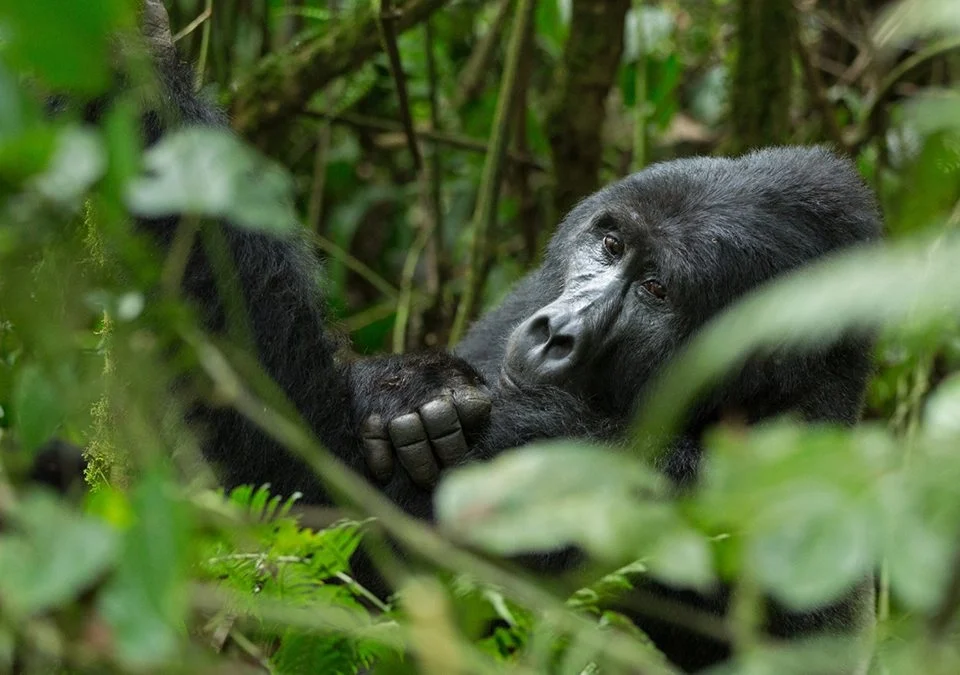
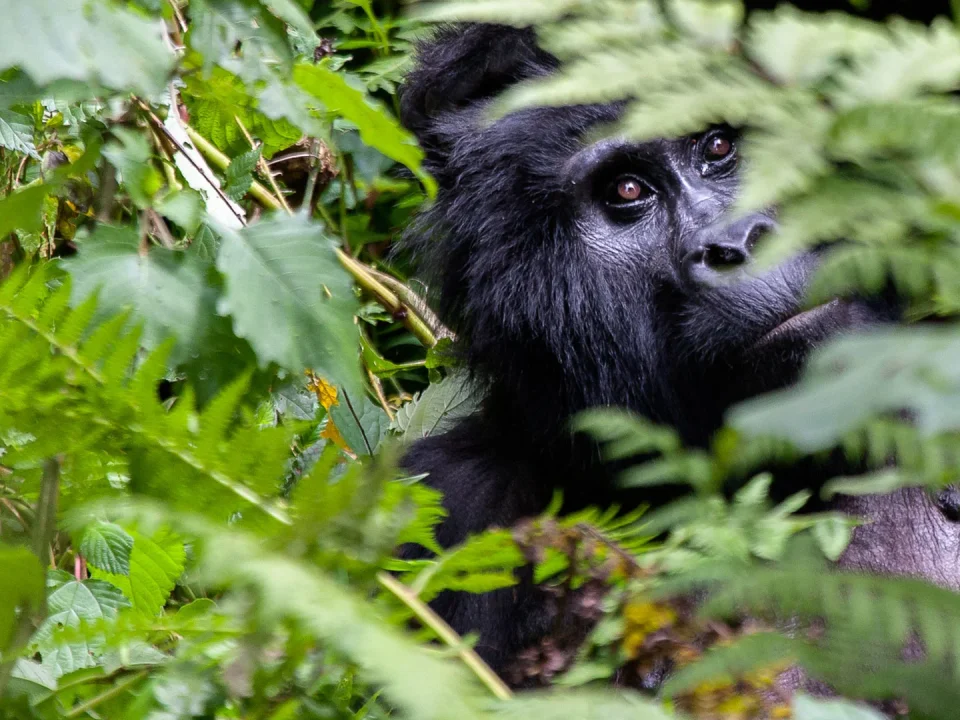
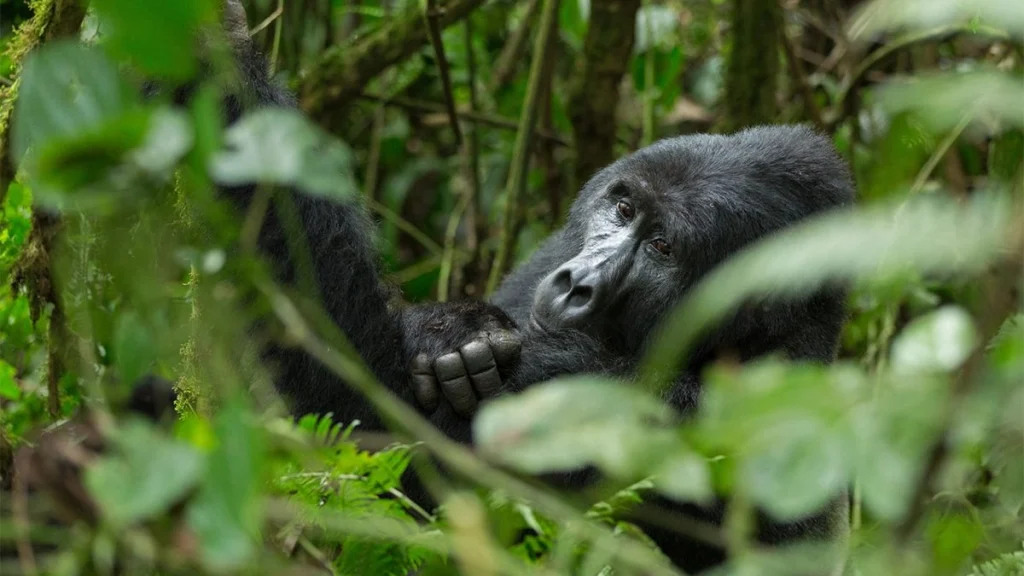
From there, trackers who have often already located the family’s general area that morning lead the group into the forest. The walk itself varies wildly in length and difficulty, as noted above, but the destination is always the same: a moment when the guide raises a hand, the group falls silent, and suddenly there they are — a silverback the size of a small car resting in the undergrowth, juveniles tumbling over each other nearby, a mother cradling an infant. Visitors get exactly one hour with the family once located, a rule strictly enforced by UWA to minimize stress on the gorillas and reduce disease transmission risk. That hour passes remarkably fast, and most travelers describe it less as sightseeing and more as something closer to a genuine, quiet encounter with another intelligent species watching you back.
After the hour ends, the group treks back out, usually arriving back at the trailhead by early to mid-afternoon, tired, muddy, and — almost universally — completely unbothered by either fact.
Best Time of Year to Go: Dry Season, Green Season, and Everything In Between
Uganda’s equatorial climate means gorilla trekking is technically possible year-round, but the two dry seasons — December to February and June to September — are generally considered the easiest months to trek, since trails are less slippery and the forest floor is more forgiving underfoot. These months are also, unsurprisingly, the most popular with international travelers, which means both permits and premium lodge rooms book up faster.
The so-called green or rainy seasons, running roughly March to May and October to November, bring more frequent afternoon showers, muddier trails, and a genuinely tougher physical trek, but they also bring lush, vivid forest scenery, fewer crowds at the trailhead, lower lodge rates in many cases, and — because gorillas tend to stay closer to lower, more accessible elevations when fruit is abundant — sometimes shorter treks than during the dry months. Neither season is objectively “wrong” for a first trek; the choice comes down to your tolerance for mud versus your tolerance for crowds and your flexibility around travel dates.
For travelers weighing a July or August trip against an April or November one purely on permit availability, the practical difference is this: peak season requires booking further ahead, while green season offers more last-minute flexibility. Either way, a rain jacket, waterproof daypack cover, and gaiters belong in your bag regardless of which month you choose.
Budgeting for a Uganda Gorilla Safari: What It Really Costs
One of the most common questions travelers have once they accept that gorilla trekking is possible is simply: what will this actually cost? Breaking the expense down into its parts makes the number far less intimidating.
The permit itself, as covered above, runs 800 US dollars per person for most international travelers. Beyond the permit, the largest variable cost is accommodation, which in the areas around Bwindi and Mgahinga spans an enormous range — from simple guesthouses and community-run lodges charging well under 100 US dollars a night, through comfortable mid-range lodges in the 150 to 300 US dollar range, up to luxury properties with private verandas overlooking the forest canopy that can run 500 US dollars a night or considerably more. Ground transport, typically in a 4×4 safari vehicle with a driver-guide, is usually priced into a packaged itinerary rather than billed separately, and covers everything from airport transfers to the drive between parks if your trip combines gorilla trekking with wildlife viewing elsewhere in the country.
Meals are generally included at your lodge on a full-board basis once you are in the gorilla trekking region, since these areas are remote enough that eating outside your accommodation is rarely practical. Tips for guides, drivers, and porters are customary and worth budgeting for separately — a reasonable guideline is 10 to 20 US dollars per day for your driver-guide and 10 to 20 US dollars per porter, paid directly at the end of the trek.
Put together, a realistic all-inclusive per-person budget for a short, well-organized gorilla trekking trip — permit, transport, mid-range accommodation, meals, and park fees — tends to land somewhere between 1,200 and 2,500 US dollars for a three-day trip, scaling up from there depending on lodge category and how many additional days, parks, or activities you add. Longer combination itineraries that pair gorillas with chimpanzee tracking and savannah game drives naturally cost more in total but often deliver a lower cost per experience, since fixed costs like flights and vehicle hire are spread across more days.
Choosing the Right Itinerary Length for Your Trip
Not every traveler has the same amount of time, and Uganda’s gorilla trekking region is flexible enough to accommodate trips ranging from a fast two-day dash to a full three-week grand tour of the country.
For travelers with limited time, a focused, dedicated gorilla safari gets you from Entebbe to Bwindi, into the forest for your trekking day, and back out again, with no wasted time and a single, powerful centerpiece experience. This is an excellent option for travelers extending a business trip, adding an African leg onto a longer international journey, or simply preferring shorter, high-intensity trips over long, sprawling ones.
For travelers who want to see more of what makes Uganda genuinely special beyond the gorillas, a longer gorilla and wildlife combination safari is one of the most popular formats, typically weaving gorilla trekking together with game drives in Queen Elizabeth National Park, a boat cruise on the Kazinga Channel, and often a chimpanzee tracking excursion in Kibale Forest — giving travelers Uganda’s full “big ticket” primate and wildlife experience in a single well-paced week.
Travelers arriving via Kigali, Rwanda, rather than Entebbe have their own excellent shortcut, since Bwindi’s southern sectors sit only a few hours’ drive from the Rwanda border — considerably closer than the nine-to-eleven-hour drive from Entebbe. For this route, a combined itinerary that treks gorillas in both countries, experiencing Bwindi’s dense rainforest and Rwanda’s Volcanoes National Park within a single trip, is one of the most popular formats for travelers with five days or more. Travelers researching this cross-border route in more depth can find useful background reading on short gorilla trekking options starting from Kigali, which lays out why so many international visitors now treat Kigali, rather than Entebbe, as their gateway into Uganda’s gorilla parks.
And for travelers with the luxury of two or three weeks, Uganda rewards a slower pace extraordinarily well — long safaris covering Murchison Falls in the north, Kibale’s chimpanzees in the west, Queen Elizabeth’s tree-climbing lions in the southwest, and Bwindi’s gorillas, sometimes even extending into Rwanda or Kenya for a genuinely comprehensive East African journey.
Entebbe or Kigali: Choosing Your Point of Entry
A decision that quietly shapes your entire itinerary is which airport you fly into, and this is worth thinking through before you book flights.
Entebbe International Airport is Uganda’s primary gateway and the natural choice if your trip focuses on the north and center of the country — Murchison Falls, Kibale, Queen Elizabeth — with Bwindi as one stop among several. The drive from Entebbe to Bwindi’s Buhoma sector takes roughly eight to nine hours by road, or can be shortened to under two hours with a domestic flight to Kihihi or Kisoro airstrip, an option many travelers on tighter schedules choose specifically to avoid the long drive.
Kigali International Airport in Rwanda, on the other hand, has become an increasingly popular entry point specifically for gorilla trekking, because it sits just three to five hours by road from Bwindi’s Rushaga and Nkuringo sectors — dramatically closer than Entebbe. Rwanda’s excellent road infrastructure, straightforward visa process, and reputation as a clean, easy-to-navigate capital make it an appealing first stop, particularly for travelers whose trip centers primarily on gorillas rather than a broader Uganda circuit. Independent research on this route, including a full range of gorilla safaris starting from Kigali, is a useful cross-check if you are still weighing which airport makes more sense for your specific dates.
The practical rule of thumb: if gorillas are your singular focus and you want the shortest possible trip, look seriously at flying into Kigali. If you want to see Uganda more broadly — savannah, waterfalls, chimpanzees, and gorillas together — Entebbe remains the more natural hub.
Visas, Entry Requirements, and East Africa Tourist Visa
Most nationalities require a visa to enter Uganda, and the good news is that the process is straightforward and almost entirely online. The single-entry Uganda tourist visa can be applied for through the official Uganda electronic visa portal in advance of travel, and approval typically takes a matter of days.
Travelers planning to cross between Uganda and Rwanda as part of a combined gorilla trekking itinerary should look into the East Africa Tourist Visa, a single visa valid for multiple entries across Uganda, Rwanda, and Kenya within a 90-day period. This is particularly useful for anyone doing a Uganda-Rwanda double gorilla trek, since it removes the need to apply for two separate single-entry visas and pay two separate fees. It is worth applying for the correct visa type well before departure, since arranging it at the last minute — while sometimes possible on arrival for a limited number of nationalities — adds an unnecessary layer of stress to what should be an exciting trip.
A yellow fever vaccination certificate is also a standard entry requirement for Uganda, and travelers should check current guidance well ahead of departure, since immigration officials do check for this on arrival.
What to Pack for Gorilla Trekking
Packing well for a gorilla trek is less about volume and more about a handful of specific, non-negotiable items. Sturdy, broken-in hiking boots with good ankle support and grip are the single most important item in your bag, since Bwindi’s trails are frequently muddy, root-strewn, and steep. Waterproof outerwear matters regardless of season, since equatorial rainforest weather can shift quickly even in the dry months. Gardening gloves are a small but genuinely useful addition, since Bwindi’s vegetation includes stinging nettles and thorny undergrowth that trekkers regularly grab onto for balance.
Long trousers and a long-sleeved shirt, tucked in and worn with the trousers tucked into socks, protect against both plant life and biting insects — Bwindi’s trekking dress code exists for practical reasons, not aesthetics. A daypack to carry water, snacks, and a rain jacket, insect repellent, sunscreen, a hat, and a reasonably powerful camera or phone with a zoom lens round out the essentials; flash photography is prohibited during the gorilla encounter itself, so a camera that performs reasonably well in low forest light is worth prioritizing over one that simply has the most megapixels. Binoculars, while optional, add a lot to the birding opportunities along the trail and in the surrounding forest.
Where to Stay: Choosing Accommodation Near Bwindi and Mgahinga
Accommodation around Uganda’s gorilla parks has expanded enormously over the past decade, and the range now genuinely spans every budget and travel style. Budget travelers will find simple, clean guesthouses and community-run lodges just outside the park boundaries, many of them employing local staff and reinvesting profits directly into nearby villages — a good option for travelers prioritizing value and community impact over creature comforts. Mid-range lodges, the most popular category by booking volume, typically offer comfortable ensuite cottages, hot showers, generator or solar power, and restaurant-style dining, often with views over the forest canopy or surrounding tea plantations.
At the top end, a handful of genuinely exceptional luxury lodges perch directly on the edge of Bwindi’s escarpment, with private verandas, personal butlers, and floor-to-ceiling windows looking straight into the forest canopy where black-and-white colobus monkeys and forest birds are visible without ever leaving your room. Which category makes sense for your trip depends less on budget alone and more on how you want to spend your evenings — recovering quietly after a demanding trek, or socializing over dinner with other travelers who have just had the same extraordinary day you have.
One detail worth flagging: because Bwindi’s four sectors are physically separated by hours of driving on mountain roads, choosing a lodge matched to your assigned trekking sector matters far more here than it would at a typical safari lodge. Booking a lodge in Buhoma when your permit is allocated to Rushaga, for example, can add several unnecessary hours to your trekking morning. This is one of the small but important details a good operator sorts out automatically when building your itinerary, rather than leaving you to discover the mismatch after arrival.
Photographing Gorillas: A Few Practical Tips
Gorilla trekking produces some of the most sought-after wildlife photographs in the world, and a little preparation goes a long way toward coming home with images that actually capture what the encounter felt like. Because flash photography is prohibited — the sudden light can startle or distress the gorillas — camera performance in low, dappled forest light matters more than raw resolution. A camera or lens capable of shooting comfortably at a higher ISO, or a phone with a strong low-light mode, will generally outperform a higher-megapixel setup that struggles once the sun dips behind the canopy.
A mid-range zoom, somewhere in the 70-200mm equivalent range, tends to be the most versatile choice, since the mandated seven-meter distance from the gorillas means you rarely need extreme telephoto reach, but you do want the flexibility to frame both close portraits and wider shots that include the forest setting. Because the trek itself can be muddy, wet, and physically demanding, a simple rain cover or dry bag for your camera is worth packing regardless of season, and a lightweight, well-padded case that does not add significant bulk to your daypack makes the walk considerably more comfortable.
Perhaps the most important tip is the least technical one: put the camera down for at least part of the hour. Travelers who spend the entire encounter squinting through a viewfinder consistently report the experience feeling less immersive than those who alternate between photographing and simply watching. A one-hour encounter with a wild gorilla family is rare enough that it is worth experiencing directly, not only through a screen.
Cultural Experiences Around Bwindi and Mgahinga
Gorilla trekking is the headline draw, but the communities living around Bwindi and Mgahinga offer some of Uganda’s richest cultural encounters, and many travelers choose to build an extra half-day into their itinerary specifically for this. The Batwa, often referred to as the original forest people of the Bwindi region, lived within the forest itself for generations before it was gazetted as a national park in 1991. Batwa-led cultural walks and trail experiences, run in partnership with several lodges and community organizations, offer visitors a chance to learn traditional forest skills — fire-making, medicinal plant knowledge, hunting techniques once used within the forest — directly from Batwa guides, alongside performances of traditional song and dance.
Beyond the Batwa experience, several community walks around Buhoma and Ruhija combine visits to local schools, traditional healers, banana beer breweries, and blacksmiths, giving travelers a grounded sense of daily life in the hills surrounding the park. These add-ons are inexpensive, typically require only a few hours, and directly support local livelihoods, making them a natural complement to a trekking day rather than a competing use of your time.
Health Preparation Before You Travel
A small amount of health preparation goes a long way toward making sure nothing gets in the way of your trekking day. Beyond the yellow fever certificate mentioned earlier, most travel health authorities recommend routine vaccinations be up to date — tetanus, typhoid, and hepatitis A are commonly advised for East Africa travel — and malaria prophylaxis is strongly recommended, since Uganda sits within a malaria zone even at Bwindi’s relatively cool, high altitude. It is worth discussing your specific itinerary with a travel health clinic or doctor several weeks before departure, since recommendations vary depending on personal medical history and the exact regions you plan to visit.
One rule specific to gorilla trekking is worth taking seriously: UWA does not permit anyone showing symptoms of a communicable illness, including a common cold or flu, to trek on a given day, since gorillas share close to 98 percent of human DNA and are highly susceptible to human respiratory illnesses, which can be genuinely dangerous for the species. If you wake up unwell on the morning of your trek, tell your guide honestly rather than pushing through it — operators can usually rearrange your permit to a later date within the same trip where possible, and doing so protects both you and one of the world’s most endangered great apes.
Travel insurance covering both medical evacuation and trip cancellation is strongly recommended for any Uganda gorilla safari, given the remote location of the trekking parks relative to major hospitals. Most reputable operators will ask to see proof of travel insurance before your trek, and it is one of the easiest pre-trip tasks to arrange well in advance.
Combining Gorillas with Uganda’s Wider Wildlife Circuit
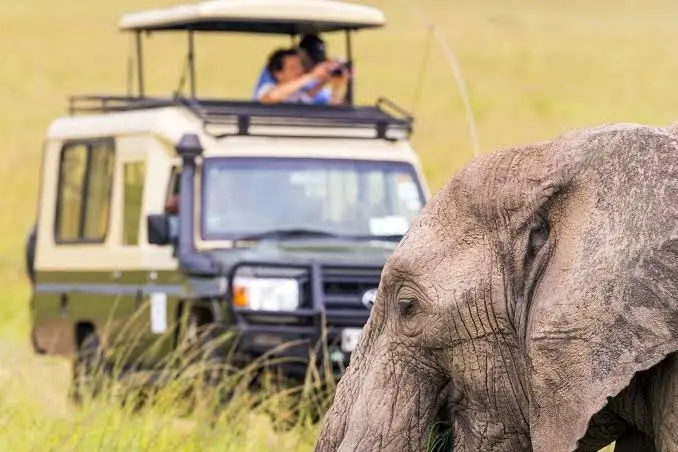
Gorilla trekking is, for most travelers, the anchor of a Uganda trip, but building an itinerary around gorillas alone leaves a great deal of the country’s wildlife untouched. Queen Elizabeth National Park, roughly two to three hours from Bwindi, is famous for its tree-climbing lions in the Ishasha sector, its enormous elephant and buffalo herds, and the Kazinga Channel boat cruise, widely considered one of the best wildlife-viewing boat trips in Africa for the sheer density of hippos, crocodiles, and birdlife along its banks. Kibale Forest National Park, a further drive north, holds the title of primate capital of Africa, with habituated chimpanzee communities that offer trekking experiences almost as moving as gorilla trekking itself, alongside eleven other primate species.
Murchison Falls National Park, in Uganda’s far north, centers on the dramatic point where the entire Nile River forces itself through a gap barely seven meters wide before plunging into a churning gorge below — a genuinely spectacular sight, paired with excellent game drives across the park’s savannah plains and a boat cruise to the base of the falls themselves. Travelers who build these parks into a longer circuit alongside their gorilla trekking day generally come away describing Uganda not just as a gorilla destination but as one of Africa’s most complete, most underrated all-round safari countries.
Combining a Uganda Gorilla Trek with Rwanda
For travelers with a bit more time and a taste for cross-border adventure, pairing Uganda’s Bwindi gorillas with Rwanda’s Volcanoes National Park gorillas is one of the most rewarding combinations available anywhere in Africa. The two experiences are genuinely different — Bwindi’s dense, low-altitude rainforest trekking contrasts with Volcanoes National Park’s more open bamboo and heather zones on the slopes of the Virunga volcanoes themselves — and seeing both within a single trip gives travelers a much fuller picture of mountain gorilla habitat and behavior.
A well-designed double gorilla trekking itinerary spanning both countries typically starts trekking in Bwindi, crosses the land border into Rwanda — a straightforward crossing that usually takes no more than an hour or two including immigration formalities — and finishes with a second trek in Volcanoes National Park before flying home via Kigali. This is also a natural fit for travelers who found their way to Uganda through a Kigali-based route, since the logistics of shuttling between the two countries’ gorilla parks are already well established, as reflected in the range of short Uganda gorilla tours starting from Kigali that ground operators in the region now run regularly.
The Habituation Experience: A Longer, Deeper Alternative
For travelers who want more than the standard one-hour gorilla encounter, Uganda offers something no other country currently does at scale: the Gorilla Habituation Experience, available exclusively in Bwindi’s Rushaga sector. Rather than visiting a fully habituated family for a strictly timed hour, participants spend up to four hours with a family still in the process of being habituated to human presence, accompanied by the researchers and trackers actively doing that work.
This experience costs more than a standard permit — currently 1,500 US dollars per person — and only four permits are issued per day, making it considerably more exclusive. In exchange, travelers get a slower, more observational encounter, closer in spirit to a scientific expedition than a typical tourist visit, and the rare chance to watch habituation work unfold in real time. It is not necessary for a great gorilla trekking trip, but for repeat visitors or travelers specifically drawn to conservation work, it is worth knowing this option exists and can be booked alongside a standard itinerary.
Responsible Travel: How Your Trip Supports Gorilla Conservation
It is worth pausing on why gorilla trekking costs what it does, because the pricing structure is directly tied to one of conservation’s genuine modern success stories. Mountain gorillas were once projected toward extinction, with global populations dropping into the low hundreds by the late twentieth century. Today, thanks largely to community-based conservation tourism models pioneered in Uganda and Rwanda, the mountain gorilla is the only great ape species whose population is currently increasing rather than declining, with numbers now estimated at over a thousand individuals across their entire range.
A meaningful share of every permit fee funds ranger patrols that protect gorillas from poaching and snares originally set for other animals, park infrastructure, and — critically — revenue-sharing programs that direct a percentage of tourism income to communities living along the park boundary. This model has transformed local attitudes toward the forest from viewing it as a barrier to farmland into viewing it as a source of livelihood worth protecting, and it is a large part of why gorilla numbers keep climbing even as human population pressure around the parks continues to grow. Choosing to hire local porters, staying at community-linked lodges, and buying crafts from cooperatives near the park entrance all extend this same principle a little further, turning your trip into something that benefits the people and wildlife of the region well beyond the single hour you spend with the gorillas.
Traveling Solo, as a Couple, or in a Group
Gorilla trekking accommodates every group configuration, but the logistics and cost structure shift slightly depending on who you are traveling with, and it is worth understanding these differences before you book.
Solo travelers are a significant and well-served portion of Uganda’s gorilla trekking market. Because permits are issued per person rather than per group, solo travelers can join a shared vehicle and shared trekking group organized by their operator, which both reduces per-person transport costs and often leads to genuinely enjoyable shared moments with fellow trekkers from around the world. Solo travel does typically carry a single-supplement accommodation charge, since most lodge pricing is built around double occupancy, so it is worth asking your operator about this upfront rather than being surprised by it later.
Couples represent the most common booking type, and most standard itineraries are priced and paced with two travelers in mind, sharing a room and a private vehicle with driver-guide throughout.
Groups and families benefit from meaningful economies of scale, since a private vehicle, driver-guide, and often a private safari can be shared across the whole party while permits are simply purchased per individual trekker over the minimum age of fifteen. Larger groups should book earlier rather than later, since securing several permits for the same gorilla family on the same date becomes more difficult the closer you get to your travel window, particularly during peak season.
Common Questions About Booking a Uganda Gorilla Safari
A handful of questions come up constantly from first-time travelers, and answering them plainly here should resolve most remaining hesitation.
Is it too late to book if my trip is only a few weeks away? Generally, no — outside of the absolute peak weeks around Christmas and Easter, permits regularly remain available with just a few weeks’ notice, particularly during the shoulder seasons. The only way to know for certain is to check live availability for your specific dates.
Can children go gorilla trekking? UWA sets a minimum age of fifteen for gorilla trekking permits, a rule based on the physical demands of the trek and the need for quiet, controlled behavior around wild gorillas rather than any arbitrary cutoff.
What happens if it rains on trekking day? Trekking proceeds regardless of rain, since Bwindi is rainforest by definition and light showers are common year-round. Only in cases of extreme weather posing genuine safety risk would a trek be postponed, and this is rare.
Is gorilla trekking safe? Yes, when conducted through licensed operators following UWA protocols. Habituated gorilla families are calm around human visitors who follow the rules — keeping distance, staying quiet, avoiding direct eye contact with the silverback — and incidents are extremely rare. Rangers accompany every trek, both for gorilla monitoring and general safety.
What if I don’t find the gorillas? This is exceptionally rare given UWA’s tracking systems, but on the very rare occasion a family cannot be located, most trekking permits include a follow-up day or partial refund policy, which your operator can clarify at the time of booking.
Why the Right Operator Matters as Much as the Right Park
With the permit system, park selection, cross-border logistics, and seasonal timing all in play, the single biggest factor in how smoothly your Uganda gorilla safari comes together is the operator handling it. A ground operator with genuine local presence — one that has actually driven these roads, stayed at these lodges, and worked directly with UWA and Rwanda Development Board rather than simply reselling packages — is what turns a complicated set of logistics into a smooth, well-paced trip.
This is the philosophy behind how Kenlink Tours builds every itinerary: years of firsthand experience across Uganda and Rwanda’s parks, direct relationships with lodges ranging from community guesthouses to luxury forest camps, and a team that spends the majority of the year on the road rather than behind a desk. Whether the goal is a fast three-day gorilla trek, a full week combining primates and savannah wildlife, or a cross-border double gorilla experience through Rwanda, that on-the-ground knowledge is what allows permit reservations, transport, and accommodation to come together quickly rather than through weeks of back-and-forth.
How to Actually Book: Your Next Steps
If everything above has confirmed that a Uganda gorilla safari is something you want to move forward with, the process from here is refreshingly simple. Decide on a rough date range, even a loose one — a specific month is enough to start. Decide roughly how many days you have available and whether you want gorillas alone or gorillas combined with wildlife, chimpanzees, or a Rwanda extension. Reach out with your passport details and preferred dates so your permit reservation can be submitted to UWA promptly, since this is the step that actually locks in your trekking day. From there, your operator handles the remaining logistics — lodges, transport, park fees, and a day-by-day itinerary tailored to your pace and interests.
The team at Kenlink Tours can walk through live permit availability, help you choose between Bwindi’s sectors or a Rwanda-Uganda combination, and build a full itinerary around your travel dates. You can start that conversation directly with our travel experts, who typically respond within 24 hours with real, current availability rather than generic information.
Final Thoughts: The Best Time to Book Is When You Are Ready
There is no perfect universal date for booking a Uganda gorilla safari — there is only the right date for your own schedule, budget, and travel style, and the sooner you commit to a rough plan, the more options remain open to you. Uganda’s permit system, park infrastructure, and tourism industry are fully operational and actively welcoming travelers right now, with availability across most months of the year for travelers willing to plan even a few weeks ahead. What waits at the end of that planning process is genuinely difficult to overstate: an hour spent a few meters from a family of mountain gorillas, in a forest that has hosted them for longer than human memory, on a continent that offers very few experiences quite like it.
The gorillas are not going anywhere, but the specific date, sector, and itinerary that fit your life best are worth securing sooner rather than later. If you have made it this far, you already have most of what you need to book — the rest is simply picking up the conversation with an operator who can turn a plan on paper into a confirmed permit in your name.