- EXPERT'S HELP
- +256789210067
- +256200955001
- info@kenlinktours.com


Short Uganda Gorilla Safari with game drive
July 14, 2026
Crossing Rwanda to Uganda’s Bwindi Gorillas
July 14, 2026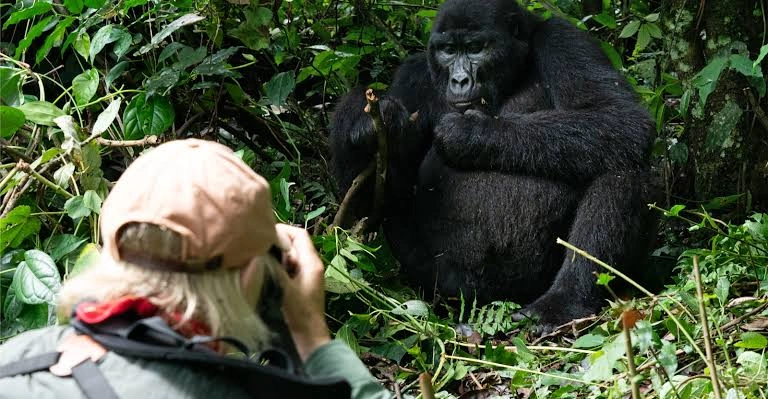
Combining Bwindi for Gorillas and Kibale for Chimps. Ask any first-time visitor what they want from a Uganda safari, and two answers come up more than any others: mountain gorillas and chimpanzees. The good news is you don’t have to choose. Bwindi Impenetrable National Park and Kibale Forest National Park sit close enough together, in the same corner of southwestern Uganda, that combining the two is not only possible but one of the most natural pairings on the entire Uganda circuit. This is our guide to how the combination works, what to expect from each park, and how to fit it into a trip that suits your time and budget.
Why Bwindi and Kibale Belong Together
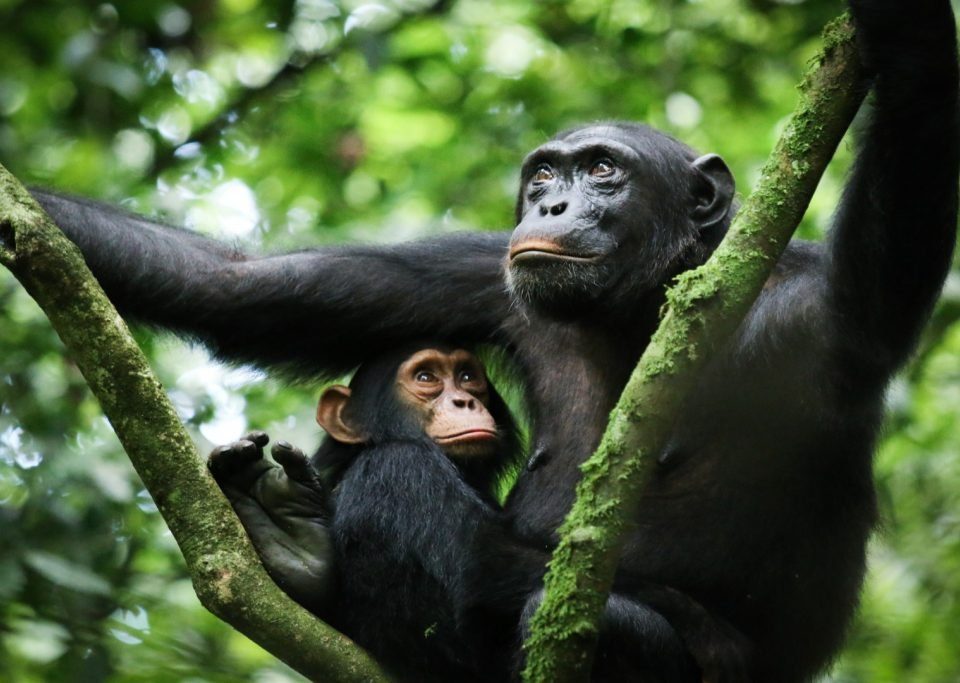
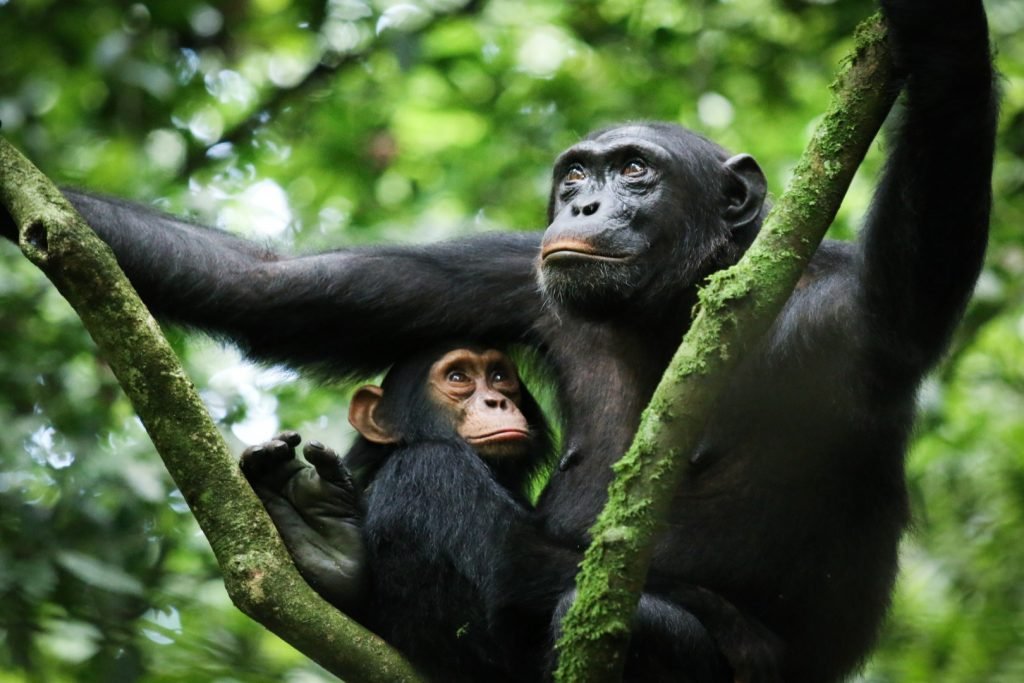
Bwindi and Kibale aren’t just geographically convenient — they’re genuinely complementary experiences. Bwindi is about scale and drama: dense, ancient rainforest, steep volcanic terrain, and the humbling experience of standing a few meters from a 200-kilogram silverback. Kibale, by contrast, is lighter on its feet — flatter, easier walking, and built around speed and agility rather than size, as you follow a troop of chimpanzees swinging and calling through the canopy overhead.
Together they cover both of Uganda’s headline primate experiences without repeating themselves. You get the profound, slow-paced encounter with gorillas and the noisier, more energetic experience of tracking our closest living relatives — chimpanzees share around 98% of our DNA — through one of Africa’s most primate-rich forests. Kibale alone hosts 13 primate species, so even beyond the chimps you’ll likely spot red-tailed monkeys, black-and-white colobus, and grey-cheeked mangabeys along the way.
How the Two Parks Fit Together on the Map
Kibale Forest sits in western Uganda, a comfortable few hours’ drive from Fort Portal, while Bwindi lies further south in the Kigezi Highlands near the borders with Rwanda and the DRC. They’re not neighbours, but they’re linked by one of Uganda’s classic overland routes — most itineraries travel between them via Queen Elizabeth National Park, which conveniently means a gorilla-and-chimp trip can pick up a proper savannah wildlife safari along the way almost for free.
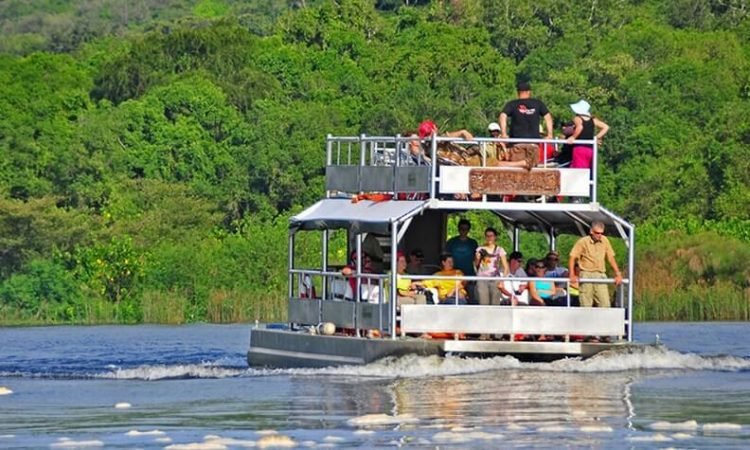
A typical routing looks like this: fly or drive into Kibale first for chimpanzee trekking, then continue south through Queen Elizabeth National Park — worth at least a night for a game drive and a Kazinga Channel boat cruise — before finishing in Bwindi for the gorillas. Doing it in this order means you build up to the trip’s emotional high point rather than following it with a long drive back to the airport.
What a Combined Itinerary Actually Looks Like
The shortest realistic version of this trip runs about five days: one day to reach Kibale and trek chimps, a transfer day through Queen Elizabeth, and two days at Bwindi to allow a buffer for the gorilla trek itself, since permit days are fixed regardless of weather or road conditions. Our 5-Day Wildlife & Gorilla Safari and 5 Days Gorilla & Chimpanzee Tracking Tour both follow close variations of this route, and our 5 Days Chimps & Gorilla Safari is built specifically around this Kibale–Bwindi combination.
A week gives you noticeably more breathing room. Our 7-Day Wildlife, Gorillas and Chimpanzees Safari and 7-Day Chimpanzee & Gorilla Trekking add proper time in Queen Elizabeth National Park for game drives and the Kazinga Channel, rather than treating it purely as a stopover. If you’d like to add golden monkeys into the mix as well, our 7 Days Gorillas, Chimps and Golden Monkeys extends the route to Mgahinga Gorilla National Park in the far southwest.
For travelers who want the fullest version of this combination, the 8-Day Uganda Gorilla Chimpanzee & Wildlife Safari covers Kibale, Queen Elizabeth, and Bwindi at an unhurried pace, with proper time for photography, cultural visits, and simply being in each place rather than rushing between them. And if you’d rather combine this same pairing with Rwanda’s Big Five parks, our 9 Days Uganda & Rwanda Gorilla and Big Five Safari shows how far the same core idea can stretch.
What to Expect on Each Trek
Chimpanzee tracking in Kibale typically begins early in the morning with a briefing at the park headquarters, followed by a guided walk through the forest that usually lasts one to three hours before you find a chimp community. Once located, you get an hour with them — watching them feed, groom, and call to one another through the canopy. It’s a more physically forgiving trek than gorilla trekking, generally on flatter terrain, and it’s a good match for travelers who’d rather not commit to the more strenuous Bwindi hike, or who want to build up to it.
Gorilla trekking in Bwindi is a different kind of experience altogether. Treks can run anywhere from one to several hours, over steep, often muddy terrain through genuinely dense rainforest — the “impenetrable” in the park’s name is not just for show. But the payoff is extraordinary: a full hour spent within a few metres of a wild gorilla family, watching them go about entirely ordinary business — eating, resting, caring for infants — as if you weren’t there at all. Most travelers who’ve done both treks describe gorilla trekking as the more physically demanding of the two, but also the more emotionally overwhelming.
Permits, Timing, and a Few Practical Notes
Both experiences require permits booked well in advance, particularly in peak season (June–September and December–February), when availability tightens considerably. Gorilla permits currently cost USD 800 per person and are issued directly by the Uganda Wildlife Authority, while chimpanzee permits are considerably less expensive — generally in the USD 150–250 range. We handle both as part of your booking, so you don’t need to navigate the reservation process yourself.
One detail worth planning around: because gorilla permits are allocated to a specific date and gorilla family, your Bwindi day is essentially fixed once booked, whereas chimp tracking has a bit more flexibility if your schedule shifts. If you’re building your own dates, it’s worth locking in the gorilla trekking day first and working the rest of the itinerary around it.
Fitness matters more for Bwindi than Kibale, but neither requires technical hiking experience — just a reasonable level of general fitness, sturdy closed shoes, and a willingness to get a little muddy. Porters are available at both parks and are genuinely worth hiring; the small fee goes directly to local community members and makes the uphill sections considerably easier.
Which Should You Do First?
There’s no wrong order, but there is a logical one. Doing Kibale first lets the chimp trek serve as a warm-up — a good introduction to forest trekking and primate etiquette before the more demanding gorilla experience. It also means your itinerary builds toward its emotional peak rather than away from it, ending the trip with Bwindi’s gorillas rather than following that experience with a long transfer and an “anticlimax” day. If your travel dates are dictated primarily by your gorilla permit, though, don’t be afraid to reverse the order — the trip works well either direction.
Planning Your Own Bwindi–Kibale Safari
Whether you have five days or two weeks, combining Bwindi and Kibale is one of the most rewarding things you can do on a Uganda safari, and one of the easiest to build a route around thanks to how naturally Queen Elizabeth National Park bridges the two. Browse our full range of gorilla trekking adventures and Uganda Safaris, or get in touch with our team and we’ll help you work out the right order, the right number of days, and the right permits to make your own gorilla-and-chimpanzee trip come together.