Gorilla trekking in Ruhija Sector Bwindi. Ruhija is Bwindi's highest, least-visited, and most ecologically rich trekking sector — a place where serious birdwatchers and gorilla trekkers share the same misty forest trails, and where the sense of true wilderness is stronger than anywhere else in the park. Here is everything you need to know about trekking in Ruhija.
Tucked into the eastern edge of Bwindi Impenetrable National Park at an elevation that makes it the highest of the four gorilla trekking sectors, Ruhija occupies a distinct place in the landscape of Uganda gorilla safaris. While Buhoma draws the first-timers and Rushaga holds the most gorilla families, Ruhija attracts a particular kind of traveller — one who wants fewer vehicles at the trailhead, a more intimate encounter, and the extraordinary bonus of Bwindi's finest birding added to their gorilla trekking day. At Kenlink Tours, we recommend Ruhija to experienced safari travellers, serious birdwatchers, and anyone who wants a gorilla trek that feels genuinely off the beaten track.
Where is Ruhija Sector?
Ruhija sits on the eastern boundary of Bwindi Impenetrable National Park in Kabale District — the highest sector in the park, perched at an altitude that brings with it cooler temperatures, more frequent mist, and a forest character that feels more montane and more primordially atmospheric than the lower sectors. The sector headquarters and gorilla trekking briefing point are in the small community of Ruhija, approximately 36 kilometres from Kabale town on roads that are scenic, sometimes demanding, and always rewarding.
Accessibility to Ruhija differs from the other Bwindi sectors. The most direct approach is from Kabale town — a two-hour drive through the rolling hills of Kigezi, passing through some of Uganda's most densely terraced agricultural landscape. From Buhoma in the north, the drive to Ruhija takes approximately two hours. Our guide on the best route to Bwindi from Queen Elizabeth National Park specifically notes the Ishasha–Ruhija route — approximately 170 kilometres and five to six hours — as the best option for travellers combining a Queen Elizabeth game drive with a Ruhija gorilla trek, with excellent birding opportunities along the way.
Important: Uganda Wildlife Authority (UWA) issues gorilla trekking permits for Ruhija sector, as it does for all four Bwindi sectors. Each permit costs USD $800 per person. Because Ruhija has fewer habituated families than Rushaga, daily permit numbers are more limited — making early booking particularly important here. Kenlink Tours handles all permit procurement for our clients. Contact our Uganda safari bookings team as early as possible, particularly for peak season dates.
The Gorilla Families of Ruhija Sector
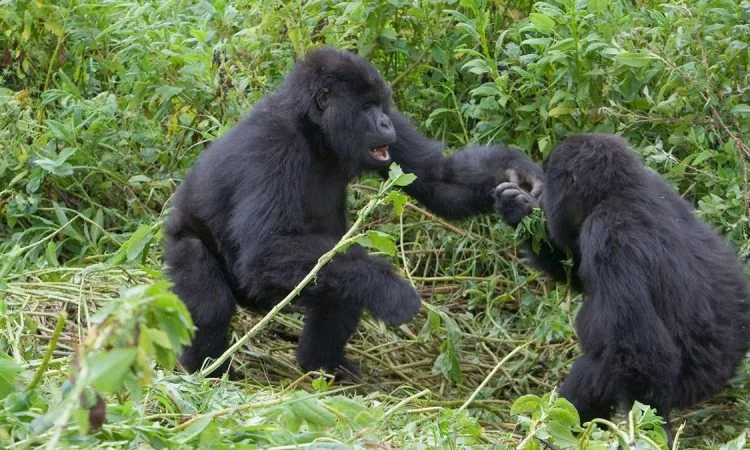
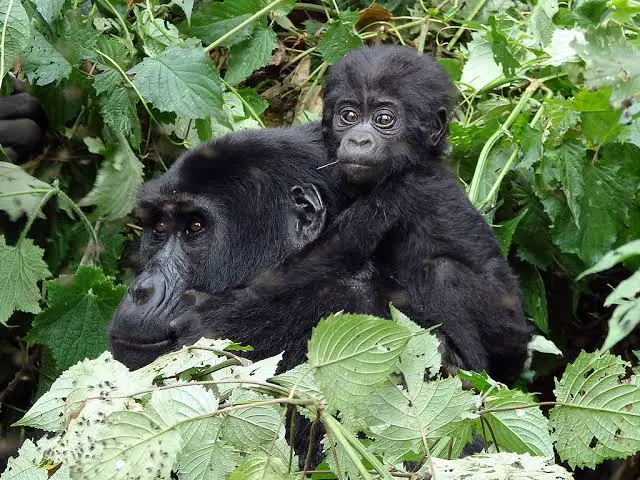
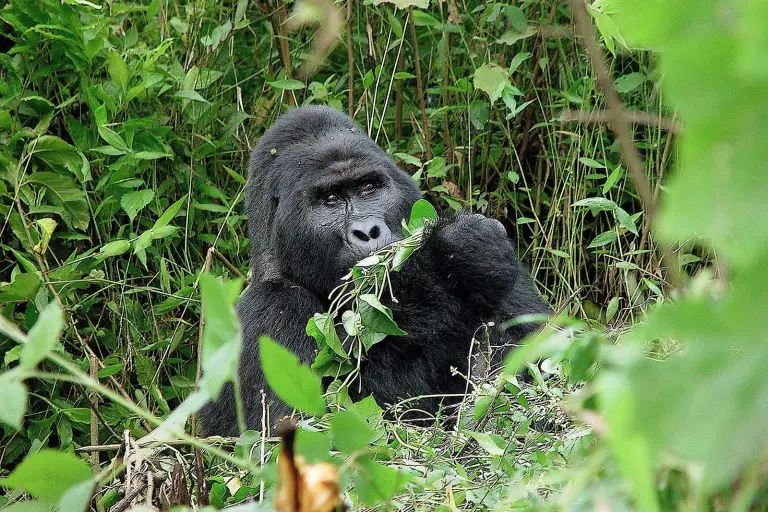
Ruhija is home to four gorilla groups, three of which are fully habituated for standard trekking. The fourth — the Kyaguliro group — is primarily used for research purposes and requires a separate formal application to the Uganda Wildlife Authority. The sector opened as a gorilla trekking destination in October 2008 with the habituation of the Bitukura group — making it the most recently established of Bwindi's four trekking sectors and giving it a freshness of infrastructure and experience that more established sectors sometimes lack.
| Gorilla Family | Character & History | Trek Difficulty |
|---|---|---|
| Bitukura Group | The pioneering family of Ruhija — the group whose habituation in 2007 opened this sector to gorilla trekking in 2008. Named after the river where they were first sighted, Bitukura is notable for having multiple silverbacks — at its peak four — making inter-male dynamics a particularly compelling aspect of the encounter. The group ranges between the roadside trailhead and the Mubwundi Swamp below Ruhija Ridge. | Moderate to challenging — steep descent to swamp valley possible |
| Oruzogo Group | Opened for trekking in 2011, Oruzogo is one of Bwindi's younger habituated families and has developed a reputation for being relaxed and well-settled in the presence of visitors. The group ranges through the middle and upper altitudes of the Ruhija forest, giving treks a character that showcases the sector's most atmospheric highland forest terrain. | Moderate — typically found in upper-altitude forest zones |
| Mukiza Group | A smaller group that offers an intimate, quieter encounter — Mukiza's compact size means the family dynamics are clearly visible and the pace of the observation hour is more still and contemplative than the larger families allow. A particularly good choice for photographers wanting sustained time with individual animals at close range. | Moderate — variable daily range within the eastern forest |
| Kyaguliro Group | Primarily a research group — Kyaguliro has been at the centre of long-term behavioural study and is not open to standard trekking visitors. A small number of permits (up to six persons) may be available with formal prior permission from UWA. Contact our bookings team for current availability and application requirements. | Research access only — separate UWA application required |
Understanding what it is like to trek gorillas in Uganda and Rwanda prepares you for the emotional reality of Ruhija: that the combination of the mist-laden highland forest, the relative solitude of a less-visited sector, and the extraordinary closeness of the gorilla encounter creates an experience that many of our clients describe as the most quietly overwhelming wildlife moment of their lives. Read our guide on which part of Bwindi is easiest for gorilla trekking to see how Ruhija compares with the other three sectors across all the key variables.
Ruhija's Defining Feature — World-Class Birding
No guide to Ruhija sector is complete without giving its birding its due. Ruhija is one of the finest birding destinations in East Africa — not just one of the best in Uganda, but genuinely one of the best on the continent. The sector sits at the heart of the Albertine Rift endemic bird zone, and the combination of its altitude, forest type, and ecological position gives it an avian community of extraordinary rarity and richness. BirdLife International recognises Bwindi — with Ruhija as a key component — as an Important Bird Area (IBA), and the Mubwundi Swamp trail in particular is regarded by ornithologists as one of the most rewarding single birding walks in Africa.
Ruhija's Most Sought-After Bird Species
- African Green Broadbill — Ruhija's most celebrated rarity
- Grauer's Swamp Warbler — found in the Mubwundi Swamp
- Shelley's Crimsonwing — Albertine Rift endemic
- Handsome Francolin — highland forest specialist
- Ruwenzori Turaco — spectacular Albertine Rift bird
- Strange Weaver — endemic to the Albertine Rift
- Red-throated Alethe — forest understorey species
- African Hill Babbler — highland forest species
- Grauer's Rush Warbler — Mubwundi Swamp specialist
- Yellow-eyed Black Flycatcher — Albertine Rift endemic
Bwindi as a whole records over 350 bird species including 23 Albertine Rift endemics — more than anywhere else in Uganda. BirdLife International's IBA designation for Bwindi reflects the exceptional concentration of globally threatened and range-restricted species found here. For Uganda safari visitors with any interest in birds, Ruhija is not a supplement to their gorilla trek — it is a co-equal destination in its own right. Many of our clients who visit Ruhija specifically for birding add a gorilla trek as the headline experience of what is already a compelling multi-day programme.
The Mubwundi Swamp trail — a forest walk from the Ruhija briefing point that descends steeply through primary rainforest to the valley-floor swamp — is one of the most celebrated short walks in Ugandan wildlife tourism. The trail itself passes through forest that gives extraordinary access to the highland bird community, and the swamp below is the primary location for Grauer's Rush Warbler and Grauer's Swamp Warbler — two of East Africa's most sought-after restricted-range species. A dedicated birding walk with a specialist guide can be arranged through our Uganda safari bookings team.
The Trekking Experience — What Ruhija Feels Like
Gorilla trekking in Ruhija begins at 7:30am at the sector briefing point, where groups are assigned their gorilla family based on the tracking team's dawn report, group fitness, and permit allocation. The forest at Ruhija is notably different from what you encounter in Buhoma or Rushaga: the higher altitude brings cooler air, more frequent mist, and a forest canopy that feels denser and more enclosed. The trails at Ruhija are demanding — steeper and more physically challenging than Buhoma — but the reward is a trekking experience that feels more remote and more primordially wild than the more accessible sectors.
The gorilla encounter itself — one hour, maximum eight visitors — unfolds here in a forest atmosphere that many of our clients describe as uniquely meditative. The mist, the altitude, the quiet of a less-visited sector, and the extraordinary proximity of the animals create a combination that is difficult to anticipate from a description and impossible to forget once experienced. To understand the best time to see gorillas in Uganda, note that Ruhija's higher altitude makes the wet season particularly muddy and demanding — good waterproof boots and gaiters are even more important here than at lower-altitude sectors.
Conservation context: According to the Gorilla Doctors organisation — which provides veterinary care to mountain gorillas across Uganda, Rwanda and the DRC — the mountain gorilla population has grown steadily over the past two decades as a direct result of the managed trekking system, veterinary monitoring, and community benefit revenue that permit fees generate. The gorillas of Ruhija benefit directly from this system: every permit you purchase contributes to the ranger patrols, veterinary support, and community programmes that have made Bwindi one of Africa's most successful conservation stories. Gorilla safari holidays in Uganda are therefore as much a conservation act as a wildlife experience.
Where to Stay — Accommodation in Ruhija
Ruhija has a more limited lodge selection than Buhoma or Rushaga — reflecting its status as the least-visited and most specialist of Bwindi's sectors. Our dedicated page on accommodations in Bwindi Impenetrable National Park covers all sectors in detail, but the key Ruhija options are:
Bakiga Lodge — Eco-Friendly, Mid-Range
Located just 10 minutes from the Ruhija trekking briefing point, Bakiga Lodge is an eco-friendly property with 12 self-contained cabins offering private balconies and stunning views across the forested valley. Warm Ugandan hospitality, excellent food, and reliable Wi-Fi. Our recommended Ruhija base for most clients.
Ruhija Gorilla Safari Lodge — Luxury
A luxury lodge within Ruhija sector, listed on our Bwindi accommodations page, offering high-end comfort and forest views at the sector's top price point. For clients on a Uganda luxury gorilla tour.
Broadbill Forest Camp — Budget
A well-positioned budget option in Ruhija sector, listed on our most budget lodges in Bwindi page. Named after the African Green Broadbill — Ruhija's most celebrated bird — it offers simple, comfortable accommodation at the best value in the sector.
Kabale as a Base
Kabale town, 36km from Ruhija, offers a wider range of accommodation at all price points. Staying in Kabale and making the two-hour early-morning drive to the briefing is a practical option that gives access to the town's facilities. Ask our bookings team about Kabale hotel options.
What to Pack for Ruhija Trekking
-
1Waterproof hiking boots with ankle support — Ruhija's terrain is the most demanding of all four Bwindi sectors. The steep volcanic slopes, particularly on the Bitukura descent to the swamp valley, require solid ankle support. Invest in proper hiking boots — this is not a sector for trainers or light trail shoes.
-
2Warm base layer — Ruhija's altitude makes it noticeably cooler than the other sectors, particularly in the early morning before the trek and in the mist. A light fleece or warm base layer under your trek shirt is worthwhile, especially between June and August when nights and mornings can be surprisingly cold for an equatorial forest.
-
3Rain jacket and gaiters — Ruhija receives more rainfall than any other Bwindi sector and its trails become genuinely muddy during the wet seasons. Even in the dry season, mist and morning dew can soak trouser legs quickly. Gaiters are strongly recommended here — more so than at Buhoma or Rushaga. See our Uganda preparation guide for full packing advice.
-
4Binoculars — Ruhija is the only Bwindi sector where we actively recommend bringing binoculars as essential equipment rather than optional. The birding along the approach trails and around the briefing point is exceptional, and the forest between trailhead and gorilla family location offers numerous opportunities to spot Albertine Rift endemics on the walk in and out.
-
5Camera without flash, with a good zoom — the mist and filtered light of Ruhija's highland forest means a camera capable of performing in lower light will reward you significantly. No flash is permitted on any gorilla trek. For the birding component, a zoom lens is essential — the primate and bird photography opportunities in Ruhija are genuinely exceptional.
-
6Two litres of water and energy snacks — the Ruhija trek can run to six or more hours on days when the gorilla family has moved deep into the forest. Carry more water than you think you need and bring high-energy trail snacks. Your lodge or the Kenlink Tours team can arrange a packed lunch for full-day trekking days.
Building a Ruhija Itinerary — How to Plan Your Visit
Ruhija works best as part of a broader Uganda safari that gives the sector the time it deserves. A minimum of two nights in or near Ruhija allows one full gorilla trekking day and one dedicated birding walk or nature trail day — an itinerary that does justice to the sector's dual identity as a gorilla and birding destination. For travellers doing a multi-sector double gorilla trek, combining Ruhija with Buhoma gives the most dramatically contrasted pair of Bwindi experiences: the historic, accessible north and the misty, remote east.
The most popular Ruhija itinerary combination from our Uganda safari packages pairs Ruhija with a Queen Elizabeth National Park game drive and Kazinga Channel boat cruise — using the Ishasha–Ruhija route to combine the tree-climbing lions of Ishasha with the highland forest of Ruhija in a single scenic transfer. This circuit — Queen Elizabeth, Ishasha, Ruhija — is one of the most satisfying three-to-four-day wildlife combinations in western Uganda, and one that most visitors to the more popular northern circuit never experience. Our Uganda–Rwanda connecting safari also routes conveniently through Kabale and Ruhija for travellers crossing between the two countries.
Bwindi Impenetrable National Park is a UNESCO World Heritage Site, recognised for its exceptional biodiversity and as one of the most important protected areas in Africa for mountain gorilla conservation. The park's four trekking sectors collectively protect one of Earth's most irreplaceable ecosystems. Every gorilla trek permit purchased — whether for Ruhija, Buhoma, Rushaga, or Nkuringo — directly funds the ranger patrols, community benefit programmes, and conservation infrastructure that UNESCO and the Uganda Wildlife Authority have built around this remarkable forest.
To start planning your Ruhija gorilla trekking safari, contact the Kenlink Tours team. We are a locally owned Uganda safari company with over fifteen years of experience, and our team knows Ruhija's gorilla families, birding trails, and lodge options in detail. You can also explore our current Uganda tour packages, check our guide on how much a Uganda safari costs, or read our guide to choosing the best safari package in Uganda and Rwanda. For travellers considering a self-drive approach, our Uganda gorilla safari on self-drive page covers the logistics of reaching Ruhija independently. And if you are also weighing up a Rwanda gorilla trek, our guide on combining Rwanda and Uganda gorilla trekking shows how the two countries complement each other perfectly within a single East Africa itinerary.