- EXPERT'S HELP
- +256789210067
- +256200955001
- info@kenlinktours.com


Hotels Near Mgahinga Gorilla National Park
September 29, 2026
Two days gorilla tour Uganda
October 3, 2026
Hiking Experiences in Kisoro. Hiking experiences in Kisoro are some of the most spectacular in East Africa. This small town in the far southwest of Uganda sits in the shadow of the Virunga Volcanoes, a chain of towering cones that rise along the borders of Uganda, Rwanda and the Democratic Republic of Congo. From Kisoro you can climb to the summit of a 4,000-metre volcano, stand in three countries at once, walk through ancient bamboo forests with the Batwa people, follow jungle trails through Bwindi Impenetrable Forest, and wander along the shores of island-dotted crater lakes.
For keen hikers, Kisoro offers the rare chance to combine serious mountain adventure with gorilla trekking, golden monkey tracking and rich cultural encounters, all in one compact region. At Kenlink Tours, we have guided many travellers through this corner of Uganda. In this guide we cover the best hiking experiences in Kisoro, how difficult each hike is, what it costs, when to go, what to pack, and how to fit hiking into a wider Uganda or Rwanda safari.
Why Kisoro Is a Hiker’s Paradise
Kisoro’s appeal for hikers comes from its extraordinary geography. Within a short drive of town you will find volcanoes, montane rainforest, bamboo zones, alpine vegetation, swamps and crater lakes. The landscape is intensely green, dotted with terraced farms and small villages, and framed on clear days by the dramatic silhouettes of Muhabura, Gahinga and Sabyinyo.
Here is why hiking lovers are drawn to Kisoro:
- Variety: Choose from gentle lakeside walks, half-day cultural trails, full-day volcano summits and long forest crossings.
- Uncrowded trails: Compared with Africa’s famous peaks, Kisoro’s hikes are quiet and feel wonderfully remote.
- Wildlife on the trail: You may encounter golden monkeys, birds found only in the Albertine Rift, and signs of buffalo and elephant.
- Culture: Many hikes pass through villages or are led by Batwa guides, adding depth to the experience.
- Easy combinations: Hiking fits naturally alongside gorilla trekking in Mgahinga, Bwindi and Rwanda’s Volcanoes National Park.
Where Is Kisoro?
Kisoro is the main town of Kisoro District in southwestern Uganda. It sits close to the Cyanika border with Rwanda and the Bunagana border with the Democratic Republic of Congo. The town is about 14 kilometres from Ntebeko Gate, the headquarters of Mgahinga Gorilla National Park, and within a couple of hours of Bwindi Impenetrable National Park’s southern sectors, Rushaga and Nkuringo.
Kisoro is easiest to reach from Kigali, Rwanda, a drive of roughly three to four hours including the border crossing. From Kampala or Entebbe, the journey takes around eight to ten hours by road. Our guide to Uganda safaris starting from Kigali explains why so many visitors now reach Kisoro through Rwanda.
Hiking in Mgahinga Gorilla National Park
Most of the best hiking experiences in Kisoro take place in Mgahinga Gorilla National Park, Uganda’s smallest national park. It protects the Ugandan slopes of three Virunga volcanoes and is part of the wider Virunga Conservation Area shared with Rwanda and the DRC. For a full overview of the park and its wildlife, read this Mgahinga Gorilla National Park destination guide.
All hikes in Mgahinga are guided by Uganda Wildlife Authority rangers, and armed escorts accompany groups for safety. Hikes start early in the morning from the park headquarters at Ntebeko or from designated trailheads, after a short briefing. Each volcano hike requires a hiking permit, which costs far less than a gorilla permit. We always confirm the latest fees with the park when you book.
Mount Muhabura Hike: Kisoro’s Highest Summit
Mount Muhabura, also spelled Muhavura, is the tallest of Mgahinga’s volcanoes at about 4,127 metres above sea level. Its near-perfect cone dominates the skyline around Kisoro, and its name is often translated as “the guide”, because travellers once used it to find their way across the region.
The hike to the summit is challenging and usually takes around eight hours round trip. The trail climbs steadily through farmland edges, montane forest, heath and alpine vegetation before reaching the rocky upper slopes. At the top, you are rewarded with a small crater lake and, on clear days, sweeping views across Uganda and Rwanda. Hikers often describe seeing other Virunga volcanoes, Bwindi’s forested ridges and distant lakes from the summit.
- Height: about 4,127 metres.
- Duration: roughly 7 to 9 hours round trip.
- Difficulty: Strenuous. Good fitness and stamina are essential.
- Highlights: Summit crater lake, alpine vegetation, panoramic views.
- Best for: Experienced hikers seeking a genuine mountain challenge.
Because of the altitude and steep terrain, Muhabura is not recommended as your very first activity on arrival. Try to spend a night or two in the area first, perhaps doing an easier walk or golden monkey tracking to acclimatise.
Mount Gahinga Hike: Swamp Crater and Bamboo Forests
Mount Gahinga, at about 3,474 metres, is the smallest and most accessible of Mgahinga’s three volcanoes. The name Gahinga refers to the piles of stones that local farmers cleared from their fields, which look a little like the mountain’s rounded shape.
The hike takes around six hours round trip and passes through a beautiful bamboo forest, which is prime golden monkey habitat. As you climb higher, the vegetation changes to montane forest and giant lobelias. At the top lies a wide crater filled with swamp vegetation, a fascinating and peaceful place to rest before descending.
- Height: about 3,474 metres.
- Duration: roughly 5 to 6 hours round trip.
- Difficulty: Moderate. Suitable for reasonably fit hikers.
- Highlights: Bamboo forest, swampy crater, chance of golden monkeys.
- Best for: First-time volcano hikers and those short on time.
Mount Sabyinyo Hike: Stand in Three Countries at Once
Mount Sabyinyo, about 3,669 metres high, is the oldest of the three volcanoes and the most dramatic in shape. Its jagged, worn peaks are said to resemble an old man’s teeth, which is where its name comes from. Sabyinyo is famous for one unforgettable highlight: on its highest peak, the borders of Uganda, Rwanda and the Democratic Republic of Congo meet, allowing you to stand in three countries at the same time.
The Sabyinyo hike covers around 14 kilometres round trip and takes about eight hours. The route passes the Sabyinyo Gorge, crosses steep ridges and includes a number of wooden ladders on the upper sections that help hikers over the steepest parts. It is a thrilling climb with dramatic drops and far-reaching views across the Virunga range.
- Height: about 3,669 metres.
- Duration: around 8 hours round trip.
- Distance: about 14 kilometres.
- Difficulty: Strenuous, with steep ladders and exposed sections.
- Highlights: The three-country peak, Sabyinyo Gorge, jagged summit views.
- Best for: Adventurous hikers comfortable with heights.
Comparing the Three Mgahinga Volcano Hikes
If you only have time for one volcano, here is a simple way to choose:
- Choose Gahinga if you want a rewarding but manageable hike with bamboo forests and a chance of golden monkeys.
- Choose Sabyinyo if you want adventure, ladders and the bragging rights of standing in three countries.
- Choose Muhabura if you want the highest summit, the best views and a true test of endurance.
Very fit hikers with extra days sometimes climb two or even all three volcanoes on consecutive days, resting between climbs at a lodge near the park. Our team can plan a multi-day hiking programme that balances challenge and recovery.
The Batwa Trail: Hiking with the Forest’s First People
The Batwa Trail is one of the most meaningful hiking experiences in Kisoro. The Batwa lived as hunter-gatherers in the forests of Mgahinga and Bwindi for centuries before the parks were created. On this guided walk, Batwa guides lead you through the forest on the lower slopes of the volcanoes, showing you how their ancestors hunted, gathered honey, collected medicinal plants and made fire.
A highlight of the trail is Garama Cave, a long lava tube once used by the Batwa as a refuge and a meeting place for their king and council. Inside the cave, the Batwa often perform traditional songs and share stories, a moving experience that brings their history to life.
- Duration: Usually a half day, depending on the route.
- Difficulty: Easy to moderate.
- Highlights: Batwa culture, Garama Cave, traditional music and storytelling.
- Best for: All ages and fitness levels, and anyone interested in culture.
Revenue from the trail directly supports Batwa communities, making this a responsible and rewarding way to spend a morning or afternoon. Our 4 Days Uganda Cultural and Gorilla Tour includes cultural experiences of this kind.
Golden Monkey Tracking: A Hike with a Primate Reward
Golden monkey tracking is technically a primate activity, but it is also a lovely hike through Mgahinga’s bamboo forest. These endangered monkeys, with golden-orange backs and playful personalities, live in troops in the bamboo zone on the lower slopes of the volcanoes. The walk is shorter and gentler than gorilla trekking, making it a great way to warm up before a big volcano climb.
Our 4-Day Rwanda–Uganda Golden Monkey and Gorilla Trekking safari combines golden monkeys and gorillas, and hiking days can easily be added.
Gorilla Trekking: The Ultimate Kisoro Hike
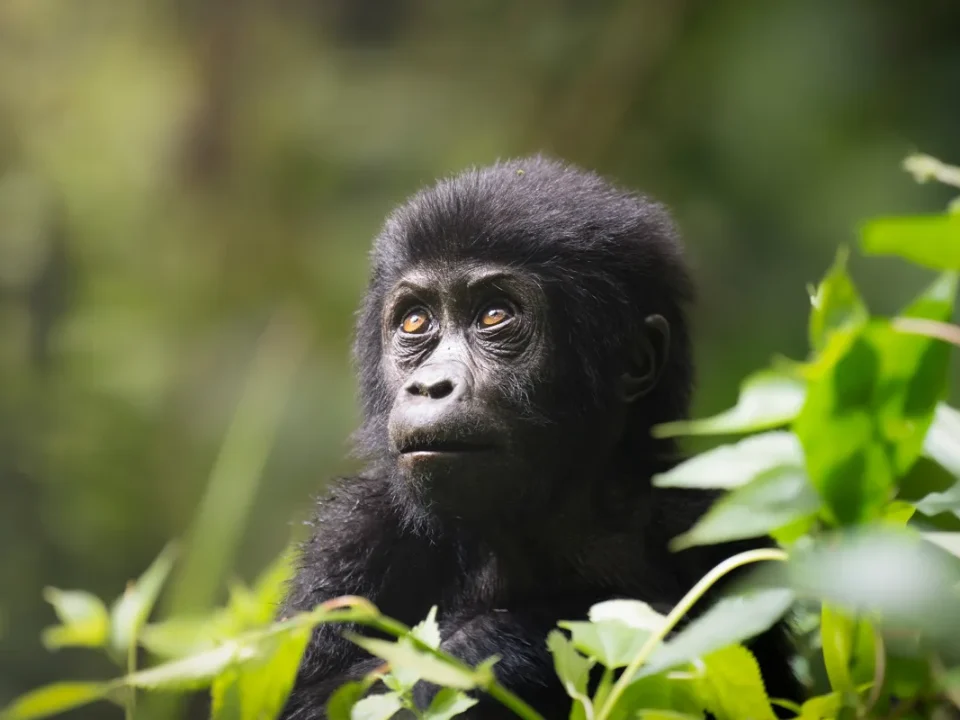
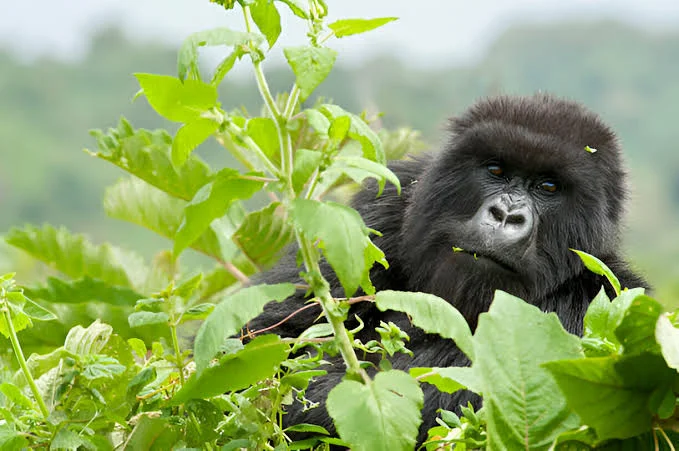
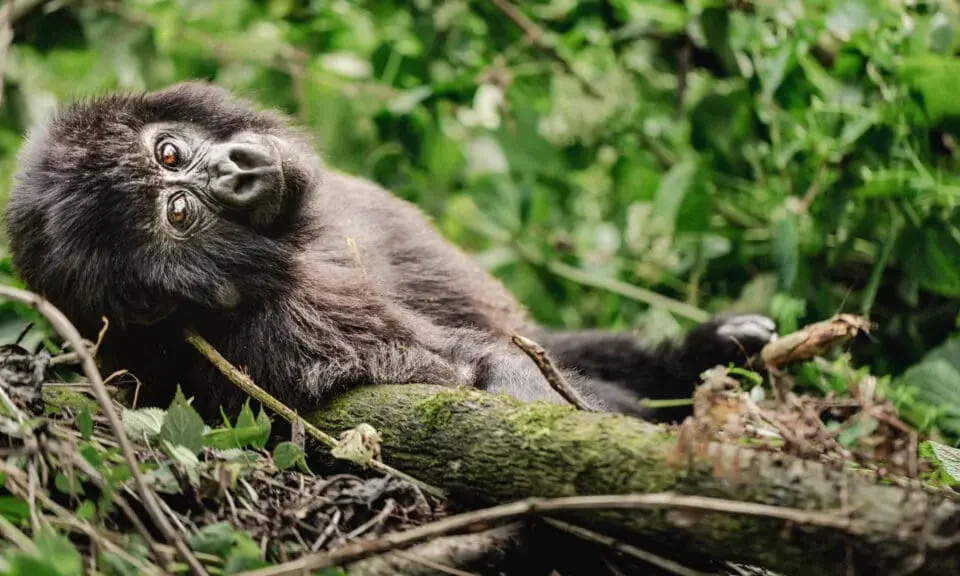
For many visitors, gorilla trekking is the most memorable hike of their lives. From Kisoro, you can trek the Nyakagezi gorilla family in Mgahinga, or gorilla families in Bwindi’s Rushaga and Nkuringo sectors. Treks follow forest trails and sometimes cut through dense vegetation up steep slopes, and can last anywhere from two hours to most of the day. The reward is one unforgettable hour with a family of mountain gorillas.
Uganda gorilla permits currently cost US$800 per person for foreign non-residents. Short trips such as our 2 Days Uganda Gorilla Safari Starting from Kigali and 3 Days Bwindi Gorilla Safari Starting from Kigali can be extended with a day or two of hiking in Kisoro. You can also compare this 3 Days Uganda Gorilla Safari from Rwanda or browse more gorilla safari packages.
Hiking in Bwindi: The Ivi River Trail and Nkuringo Walks
Bwindi Impenetrable National Park, a short drive from Kisoro, offers some of the finest forest hiking in Africa. Its ancient rainforest is one of the most biodiverse places on Earth and home to around half of the world’s mountain gorillas. Learn more in this Bwindi Impenetrable Forest National Park guide.
The standout hike is the Ivi River Trail (sometimes written Ivy River Trail), a forest crossing of about 13 kilometres that links the Nkuringo and Buhoma sectors. It takes around four to six hours and follows old paths through deep forest, crossing streams and passing waterfalls. Along the way, you may spot monkeys, forest birds such as turacos, and signs of forest elephants. It is also a practical way to move between sectors while your vehicle drives around to meet you.
Around Nkuringo and Rushaga, shorter guided nature walks follow ridges with stunning views of the Virunga Volcanoes on one side and Bwindi’s forested hills on the other. Community walks through local villages introduce you to farming, crafts and traditional healers. For ideas on how to spend your days after trekking, see this guide on what to do after a gorilla tour in Bwindi.
Lake Mutanda Hikes and Canoe Walks
Lake Mutanda, just north of Kisoro, is one of the most photogenic places in Uganda. Its calm waters are scattered with islands, and on clear days the Virunga Volcanoes rise directly behind the lake. Gentle hikes around the lakeshore pass through villages and farmland, with plenty of chances to chat with local people and photograph the scenery.
Many visitors combine a lakeside walk with a dugout canoe trip, paddling to islands and quiet inlets. It is the perfect half-day activity after a demanding volcano hike or gorilla trek, and it suits all fitness levels.
Lake Chahafi and Lake Mulehe Walks
For travellers looking for quieter trails, the smaller lakes around Kisoro are rewarding. Lake Chahafi, close to the Rwanda border, is surrounded by wetlands and farmland and is excellent for birdwatching. Lake Mulehe, on the road towards Rushaga, offers peaceful walks and canoe trips with views of the volcanoes. These walks show a gentler side of Kisoro, where daily rural life and birdlife take centre stage.
Echuya Forest Reserve: A Birder’s Hike
Echuya Forest Reserve lies between Kisoro and Kabale, straddling the high road that connects the two towns. This montane forest, with large stands of bamboo and a central swamp, is famous among birders as one of the best places in Uganda to find several Albertine Rift endemic species. Guided walks through the forest are quiet and atmospheric, and the drive itself is one of the most scenic in the region. Echuya makes an excellent stop on the way between Lake Bunyonyi and Kisoro.
Kisoro Town and Countryside Walks
Even without a park permit, Kisoro offers enjoyable walking. Local guides lead village walks through terraced farms, markets and craft cooperatives, often with a visit to a local school, a banana beer brewer or a traditional healer. The busy Kisoro market days are colourful and lively, with farmers selling potatoes, beans and fresh produce grown on the volcanic soils. These walks are a great way to meet the Bafumbira people and understand everyday life in the highlands.
Cross-Border Hiking: Mount Bisoke and Rwanda’s Volcanoes
Just across the Cyanika border, Rwanda’s Volcanoes National Park offers more Virunga hikes. Mount Bisoke, with its beautiful crater lake, is a popular day hike, while the walk to Dian Fossey’s grave at the former Karisoke research site is a meaningful half-day hike through the forest where she studied mountain gorillas. Rwanda also offers the challenging two-day Mount Karisimbi climb for serious mountaineers. Read more in this Volcanoes National Park overview.
Our 5-Day Volcanoes Gorillas and Akagera Park Wildlife Safari includes a hike to the Dian Fossey Tomb on Mount Bisoke, and our 3-Day Gorilla Trekking in Volcanoes National Park can be combined with a Kisoro hiking itinerary. Travelling from Kigali? This 2 Days Volcanoes Gorilla Trek from Kigali shows how quickly you can reach the Virungas from the Rwandan capital.
How Difficult Are the Hikes in Kisoro?
Kisoro’s hikes range from easy strolls to demanding mountain climbs. Here is a quick guide to difficulty levels:
- Easy: Lake Mutanda walks, Lake Chahafi and Mulehe walks, Kisoro village walks.
- Easy to moderate: The Batwa Trail, golden monkey tracking, Echuya forest walks.
- Moderate: Mount Gahinga, Nkuringo and Rushaga ridge walks, the Ivi River Trail.
- Challenging: Gorilla trekking (varies by day), Mount Sabyinyo, Mount Muhabura.
Altitude is an important factor. Kisoro itself sits at around 1,900 metres, while the volcano summits reach well above 3,400 metres. Walk at a steady pace, drink plenty of water, and let your guide know if you feel dizzy, nauseous or unusually breathless.
How to Prepare Physically for Hiking in Kisoro
You do not need to be a professional mountaineer to enjoy Kisoro’s hikes, but preparation makes a big difference, especially for the volcanoes. In the weeks before your trip:
- Take regular long walks or hikes, ideally on hilly terrain.
- Use stairs or a stair-climbing machine to build leg strength and endurance.
- Carry a daypack on training walks to get used to the weight.
- Build up to walks of several hours so you are comfortable with long days on your feet.
- Break in your hiking boots well before you travel.
If you have any medical conditions, especially heart, lung or joint problems, consult your doctor before attempting high-altitude hikes.
What to Pack for Hiking in Kisoro
Weather in the Virungas changes quickly, and summits can be cold, windy and wet even on sunny days. Pack the following:
- Sturdy, waterproof hiking boots with good ankle support and grip.
- A waterproof and windproof jacket.
- Warm layers such as a fleece, thermal top and hat for the summits.
- Lightweight long trousers and long-sleeved shirts for forest sections.
- Gardening gloves for gripping ladders, rocks and vegetation.
- A daypack with at least two to three litres of water.
- High-energy snacks and a packed lunch from your lodge.
- Sunscreen, sunglasses and a sun hat, as the high-altitude sun is strong.
- Insect repellent.
- A camera or phone with spare batteries.
- A small first-aid kit and any personal medication.
Walking sticks are usually available at trailheads, and hiring a local porter is highly recommended. Porters carry your bag, help on steep sections and earn important income for local families.
Safety Tips for Hiking in Kisoro
Kisoro’s trails are well managed and guided, but mountain hiking always carries some risk. Keep these safety tips in mind to make sure your adventure is enjoyable from start to finish:
- Listen to your ranger: Rangers know the terrain, weather and wildlife. Follow their instructions on pace, route and when to turn back.
- Pace yourself: Walk slowly and steadily on steep sections, especially above 3,000 metres. Taking short, regular breaks helps you avoid exhaustion.
- Stay hydrated and fuelled: Drink regularly even if you do not feel thirsty, and eat small snacks throughout the hike.
- Watch your footing: Volcanic rock, roots and mud can be slippery, and ladders on Sabyinyo require care. Use walking sticks and gloves for extra grip.
- Know the signs of altitude sickness: Headache, nausea, dizziness and unusual breathlessness are warning signs. Tell your guide immediately and descend if symptoms worsen.
- Turn back if needed: There is no shame in stopping short of a summit. Your safety always matters more than reaching the top.
- Get travel insurance: Make sure your policy covers hiking at altitude and medical evacuation.
With sensible preparation, good boots and an experienced guide, most reasonably fit travellers can enjoy Kisoro’s hikes safely and come home with memories that last a lifetime.
Best Time for Hiking in Kisoro
You can hike in Kisoro throughout the year, but the seasons affect trail conditions and views:
- Dry seasons (June to September and December to February): The best time for volcano hikes. Trails are firmer, ladders and rocks are less slippery, and skies are more often clear for summit views.
- Wet seasons (March to May and October to November): Expect muddy, slippery trails and more cloud on the summits. The landscape is lush and there are fewer visitors, but volcano climbs are harder and views less reliable.
Whatever the season, start early. Mornings tend to be clearer, and afternoon clouds and showers are common in the mountains.
Where to Stay for Hiking in Kisoro
Choosing a lodge close to your trailhead makes early starts easier. Popular bases for hikers include lodges near Mgahinga’s Ntebeko Gate, hotels in Kisoro town, and lakeside properties at Lake Mutanda and Lake Mulehe. For a detailed review of one of Kisoro’s best-known hotels, including distances to Mgahinga and Bwindi, see this guide to Ikoro Hotel in Kisoro. You can browse more options in this safari accommodation collection.
After a long volcano climb, you will appreciate a lodge with hot showers, a warm fireplace and a hearty dinner. Our team matches your accommodation to your hiking plans and budget.
Getting Around: Transport for Kisoro Hikes
Trailheads around Kisoro are reached by rough murram roads, and early starts are the norm, so reliable transport is essential. A 4×4 vehicle with an experienced driver-guide is the easiest and safest option. Your driver takes you to each trailhead, waits or meets you at the finish, and makes sure you are back at your lodge for a well-earned rest. Kenlink Tours offers well-maintained safari vehicles; see our car hire page for our fleet.
If you are arriving from Rwanda, our guide to starting a trip from Rwanda to Uganda explains the Cyanika border crossing, and this article on starting in Kigali and ending in Entebbe shows how to plan a smooth one-way route through Kisoro.
Sample Kisoro Hiking Itineraries
Here are a few ways to build hiking into your trip:
- Two days in Kisoro: Day one, golden monkey tracking in the morning and a Lake Mutanda walk and canoe trip in the afternoon. Day two, a Mount Gahinga or Sabyinyo hike.
- Three to four days: Add gorilla trekking in Mgahinga or Bwindi, the Batwa Trail and a volcano hike, with a relaxing lakeside evening in between.
- Five days or more: Combine two volcano climbs, gorilla trekking, the Ivi River Trail through Bwindi, and a cross-border hike to Mount Bisoke or Dian Fossey’s grave in Rwanda.
For a ready-made framework, consider our 5 Days Uganda–Rwanda Double Gorilla Safari, our 3 Days Best of Uganda Gorilla Safari or the longer 10 Days Uganda–Rwanda Combining Safari, all of which can include extra hiking days. For a gorilla-and-chimp combination through the southwest, see this 5 Days Uganda Gorilla and Chimps Safari Starting from Rwanda.
Extending Your Hiking Adventure Beyond Kisoro
Once you have explored Kisoro’s trails, Uganda and Rwanda offer many more adventures. Head north to Queen Elizabeth National Park for game drives, the Kazinga Channel boat cruise and the chimpanzees of Kyambura Gorge; read more in this Queen Elizabeth National Park guide. Serious mountaineers can travel on to the Rwenzori Mountains, while Rwanda offers Lake Kivu, Nyungwe Forest and Akagera National Park. Browse our full range of Uganda safaris, Rwanda safaris and cross-border Uganda and Rwanda gorilla safaris for inspiration.
Responsible Hiking in Kisoro
The Virunga Volcanoes and Bwindi are fragile ecosystems and home to endangered species, so responsible behaviour on the trail matters:
- Stay on marked trails and follow your ranger’s instructions.
- Carry out all rubbish, including food waste.
- Do not pick plants or disturb wildlife.
- Respect local communities and ask permission before photographing people.
- Hire local porters and guides, and buy crafts directly from community groups.
- Do not hike if you are sick, particularly on trails where you may encounter primates.
Park fees and community tourism income help protect these landscapes and support the people who live around them. At Kenlink Tours, we are committed to responsible travel; learn more on our About Us page.
Why Plan Your Kisoro Hiking Experience with Kenlink Tours?
- Local expertise: Our guides know Kisoro’s trails, lodges and parks intimately.
- Permits handled: We book hiking, gorilla and golden monkey permits for you.
- Tailor-made itineraries: We design hiking programmes that match your fitness, interests and schedule.
- Reliable transport: Comfortable 4×4 vehicles and experienced driver-guides for early trailhead starts.
- Cross-border expertise: Start in Kigali or Entebbe and hike on both sides of the Virungas.
- Private and group options: Choose one of our Uganda private tours or join our group tours.
Frequently Asked Questions About Hiking Experiences in Kisoro
What is the best hike in Kisoro?
It depends on your fitness and interests. Mount Sabyinyo is the most adventurous, Mount Muhabura the highest and most scenic, Mount Gahinga the most accessible volcano, and the Batwa Trail the most culturally rewarding.
Can beginners hike the volcanoes near Kisoro?
Beginners with reasonable fitness can manage Mount Gahinga. Muhabura and Sabyinyo are best left to fit, experienced hikers.
Do I need a guide to hike in Kisoro?
Yes. All hikes inside Mgahinga and Bwindi must be done with Uganda Wildlife Authority rangers. For community and lake walks, local guides greatly enrich the experience.
How long does it take to climb Mount Muhabura?
Around seven to nine hours round trip, depending on your pace and the weather.
Can I really stand in three countries on Mount Sabyinyo?
Yes. On Sabyinyo’s highest peak, the borders of Uganda, Rwanda and the Democratic Republic of Congo meet.
When is the best time for hiking in Kisoro?
The dry seasons, from June to September and December to February, offer the best trail conditions and clearest views.
Can I combine hiking with gorilla trekking?
Absolutely. Most travellers combine gorilla trekking in Mgahinga, Bwindi or Rwanda with one or more hikes in and around Kisoro.
Plan Your Hiking Adventure in Kisoro Today
From volcano summits and three-country peaks to bamboo forests, Batwa caves and island-studded lakes, the hiking experiences in Kisoro are as varied as they are unforgettable. Add gorilla trekking and golden monkeys, and you have one of the most complete adventure destinations in Africa.
Let Kenlink Tours plan every detail, from permits and lodges to transport and expert guides, so you can focus on the trail ahead. Contact our team today to start planning your Kisoro hiking adventure.