- EXPERT'S HELP
- +256789210067
- +256200955001
- info@kenlinktours.com


2 Day Gorilla Tracking Tour from Kigali to Bwindi Forest
September 5, 2026
How Much Does a 2 Day Gorilla Trekking Tour from Kigali Cost?
September 5, 2026
Kigali to Bwindi 2 Day Gorilla Trekking Tour. Most articles about a Kigali to Bwindi 2-day gorilla trekking tour read like a spreadsheet — permit costs, drive times, packing lists. All of that matters, and we cover it here too, but we wanted to write down what the trip actually felt like: the pre-dawn nerves, the border crossing that took less time than we expected, the moment the forest seemed to simply open onto a family of gorillas. This is that account, written the way we’d tell it to a friend over dinner, with the practical details folded in exactly where they came up for us.
If you’d rather skip straight to the logistics, our 2-Day Uganda Gorilla Tour Starting from Kigali page lays out the itinerary in reference form. But if you want to know what two days on this exact route are genuinely like before you commit, read on.
We’ve deliberately left in the parts a marketing page would usually trim — the restless night before the trek, the mud that ruins a good pair of trousers, the long, quiet drive home. Not because we want to talk you out of the trip, but because the travellers who enjoy it most are the ones who arrived with accurate expectations rather than a polished highlight reel. Consider this the version of the story we wish someone had told us before we booked.
Why We Turned This Trip Into a Diary, Not Just an Itinerary
Every operator, ourselves included, publishes a clean bullet-point version of this trip: Day 1, Day 2, inclusions, price. What that format can’t capture is how the schedule actually feels once you’re living it — how the early alarm on Day 2 lands differently once you know what’s waiting in the forest, or how quickly a three-hour border-to-border drive stops feeling long once the volcanoes come into view. We recorded this trip in detail specifically to fill that gap, and we’ve kept the practical numbers accurate throughout, cross-checked against our own 2-day Uganda gorilla tour from Kigali itinerary.
What follows isn’t a single traveller’s private diary so much as a composite of what this trip consistently looks like for the guests we send down this route — the timings, the reactions, the small surprises are all genuine and typical, even where we’ve smoothed several trips into one narrative for readability.
Before Sunrise: Leaving Kigali for the Cyanika Border
6:15 a.m., and Kigali is only just waking up. Our driver-guide is already outside the hotel, engine running, a flask of coffee in the cupholder for the road. The city thins out fast once you’re past the airport road, and within twenty minutes you’re winding through Rwanda’s famous thousand hills — terraced tea plantations catching the early light, motorbikes weaving past with sacks of produce balanced impossibly on the back.
The drive to Cyanika covers roughly 115 kilometres, and on good tarmac it takes three to four hours — long enough to properly wake up, short enough that it never drags. Somewhere past Musanze, the Virunga volcanoes start appearing on the horizon, and that’s usually the point where whoever’s in the car stops checking their phone and just watches the window instead. If you’re combining this trip with time in Rwanda itself, our Kigali city destination guide is worth a look for what to do if you have a spare morning before or after.
The Border at Cyanika: Rwanda to Uganda in Under an Hour
Cyanika is a small, functional border post, not the sprawling checkpoint you might picture — a low building, a few immigration desks, and a genuinely efficient process if your paperwork is in order. Passport, yellow fever certificate, and printed visa approval, all checked in turn on the Rwandan side, then a short walk across to the Ugandan side to repeat the process. Total time: about forty minutes, most of it spent simply waiting in a short queue rather than dealing with any actual complication.
This is the part of the trip most first-timers worry about most and remember least once it’s done. Having your documents organised in advance — not buried in a suitcase, not only on your phone — is genuinely the difference between a routine forty minutes and a stressful one. For a full breakdown of what Uganda’s visa options actually cost and cover, Kenlink Tours’ breakdown of driving hours from Kigali to Bwindi is a solid external reference we point our own guests toward.
Into the Virungas: The Drive Toward Rushaga
On the Ugandan side, the road narrows and climbs, and the scenery shifts again — smaller farm plots, terraced hillsides, the occasional glimpse of Lake Mutanda catching the light far below. This stretch, from the border to the Rushaga area, takes a further hour and a half to two hours, and it’s genuinely one of the more scenic legs of the whole trip, even though by this point most people are starting to feel the morning’s early start.
Conversation in the car tends to shift here too — less small talk, more questions about tomorrow. What are the chances of finding the gorillas quickly? What happens if it rains? Our driver-guides have heard every version of these questions and answer them the same honest way every time: it depends on the gorillas, not on us, and that’s exactly what makes tomorrow interesting rather than scripted. If Rushaga’s variability makes you want to compare it against Rwanda’s shorter Volcanoes National Park route instead, our 2-day Volcanoes gorilla trek from Kigali is worth reading before you book either.
Settling In: Our First Afternoon Near Bwindi
By early-to-mid afternoon, the lodge finally appears — usually somewhere with a view over the ridgelines toward the forest itself, close enough to the Rushaga ranger post that tomorrow’s early start won’t feel punishing. There’s a real temptation to fill this afternoon with more activity, but the honest advice, repeated by every guide we’ve worked with on this route, is to rest properly instead.
A short walk around the lodge grounds, an early meal, a runthrough of tomorrow’s timing with your guide — that’s the extent of what most guests actually do, and it’s the right call. Anyone tempted to squeeze in an extra activity this afternoon should weigh it against how the 5:00 a.m. wake-up is going to feel tomorrow. Our Bwindi Impenetrable Forest National Park destination guide covers what’s realistically possible in this window if you do want to make use of it.
A Restless Night Before the Big Day
Almost everyone admits to sleeping worse than usual the night before a gorilla trek — not from discomfort, but from the same low-grade excitement you’d expect before any genuinely rare experience. Bags get packed and repacked. Camera batteries get checked twice. Someone always asks the guide one more question about what to expect, even after a full afternoon of briefing.
None of this is a problem, and it rarely affects the trek itself the next day — adrenaline tends to cover for a short night’s sleep once the forest actually comes into view. Still, it’s worth building this into your expectations: this is not a trip where you arrive fully rested for Day 2, and that’s fine, because everyone else on your trek is in exactly the same position.
5:00 AM: Waking Up for Gorillas
The alarm goes off in genuine darkness, and breakfast is deliberately simple — enough to fuel a long morning without weighing anyone down on the trail. By 6:00–6:30 a.m., the vehicle is loaded and moving toward the Rushaga ranger post, headlights catching mist rising off the surrounding hills. There’s a particular quality to this early light in Uganda’s south-west that’s genuinely hard to describe and impossible to forget.
Nobody talks much on this drive. It’s short, maybe twenty to thirty minutes depending on your exact lodge, but it’s the point where the trip stops being abstract and starts being real. For travellers wondering whether they’ve packed correctly for this exact morning, our Mgahinga Gorilla National Park guide covers a similar early-morning routine if you’ve chosen that park instead of Bwindi.
The Briefing at Rushaga Ranger Post
The ranger post itself is a low, functional building surrounded by other trekkers doing exactly what you’re doing — nervous energy, cameras being checked, walking sticks being handed out. Registration confirms your permit against your passport, and then comes the briefing: the rules everyone hears but rarely internalises until they’re actually standing seven metres from a silverback — quiet voices, no flash, no sudden movements, a maximum of one hour once you’re found.
Groups of no more than eight are assigned to a specific gorilla family based on fitness level, stated honestly during registration rather than exaggerated for the sake of a “better” family. This is also the moment trackers, already hours into their morning, radio back the first updates on where your assigned family was last seen. Our Bwindi destination page covers what determines which family you’re likely to be assigned in more depth.
Into the Impenetrable Forest
Bwindi does not ease you in. Within minutes of leaving the trailhead, the trail narrows, the canopy closes overhead, and the ground turns to the kind of mud that swallows a boot if you’re not paying attention. This is exactly what “impenetrable” means in practice — not a marketing flourish, but a genuinely accurate description of terrain that requires real effort to move through.
Porters, hired at the trailhead for a modest fee, earn their money almost immediately, offering a steadying hand on the steeper, slicker sections. Conversation drops to a minimum, partly from exertion and partly because everyone is quietly listening for the first sign — a distant rustle, a snapped branch — that might mean the family is close. On our trip, that first hour of walking passed in something close to total concentration, the kind that makes an hour feel like both nothing and a genuine effort at the same time.
The Moment We Found the Gorillas
Our ranger guide’s hand went up without warning, and the group simply stopped. For a few seconds there was nothing to see — just forest, thicker than ever — and then the sound arrived first: a low, contented rumble, branches shifting, something large moving unhurriedly just ahead. And then the forest, in the way Bwindi seems to specialise in, simply opened.
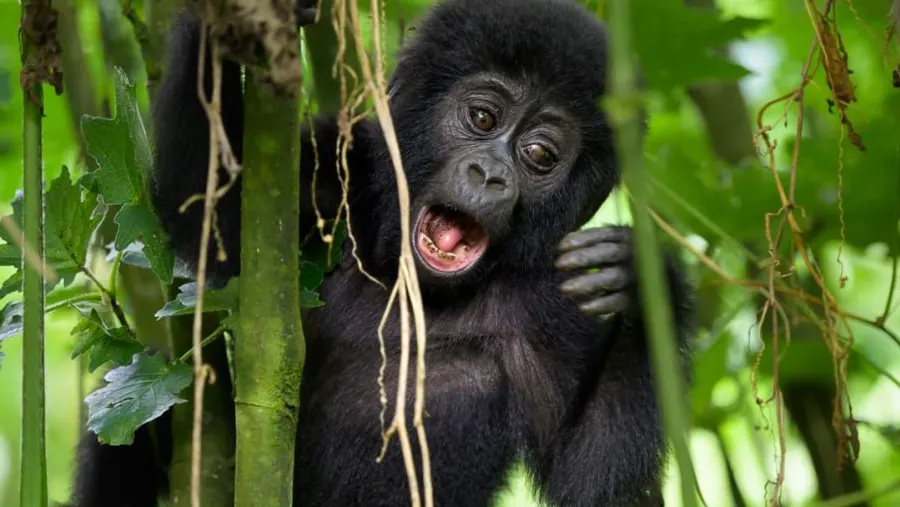
A silverback sat perhaps eight metres off, entirely unbothered, while two juveniles wrestled nearby and a mother groomed an infant a short distance away. Nobody said anything for what felt like a full minute. This is the moment every practical guide, ours included, tries and fails to fully prepare you for — the sheer, immediate scale of the animal in front of you, and how quickly the earlier exhaustion of the climb simply stopped mattering.
The Hour That Felt Like Five Minutes
Our ranger narrated quietly throughout — this particular silverback’s name and age, which juveniles were siblings, a scar on one female’s arm from a territorial dispute years earlier. The seven-metre rule held, mostly through the gorillas’ own disinterest in testing it, though one curious juvenile did wander closer at one point, prompting a quiet, practised repositioning from the group rather than any real concern.
Cameras came out, though several people in our group later admitted they’d put theirs down for long stretches, deciding the moment was worth more unfiltered than through a viewfinder. The one-hour limit, so rigid on paper, felt genuinely arbitrary once you were living it — not because it seemed too short exactly, but because no amount of time would have felt like quite enough. When the ranger finally signalled it was time to go, nobody argued, but nobody was ready either.
The Long Walk Back
The return trek covers the same ground as the walk in, but it feels different — lighter, somehow, despite the same mud and the same climb. Conversation returns almost immediately, everyone comparing notes on what they’d noticed, what they’d missed, whether the encounter matched what they’d expected. For most people, on this specific route, it exceeds it.
Back at the trailhead, there’s a small but genuinely warm ritual: certificates handed out, a final chance to tip porters and rangers, and a slightly dazed group photo before everyone piles back into their vehicles. Our 3-day chimpanzee tour in Uganda is where several of our previous guests have gone next, having decided one primate encounter simply wasn’t enough.
The Drive Home: Kigali by Nightfall
Lunch back at the lodge is usually eaten quickly and gratefully, and by early-to-mid afternoon the vehicle is loaded for the long drive back — Rushaga to Cyanika, the border crossing again, then Cyanika to Kigali. Total time, door to door, tends to run five to seven hours, meaning most groups arrive back in Kigali well into the evening.
This return leg is quieter than the outbound one, partly from tiredness and partly from something closer to reflection. Several guests on our trips have described this drive as the point where the trip actually sinks in — not during the encounter itself, which happens too fast to fully process, but on the long, dark drive home afterward. If your schedule allows it, we consistently recommend booking a next-morning flight rather than a same-night one, a point our 2-day Uganda gorilla tour from Kigali itinerary builds in as standard.
The People We Trekked With: Rangers, Porters, and Fellow Travellers
Every account of a gorilla trek tends to focus on the gorillas themselves, understandably, but the human side of the day left just as strong an impression. Our ranger guide had spent over a decade working these specific sectors, and it showed in the small, unhurried confidence with which he read the forest — pointing out a nest site here, a feeding trail there, long before anything visible to the rest of us suggested we were close. Porters, several of them supporting family members through school fees earned this way, worked with a quiet competence that made the steepest sections feel manageable rather than treacherous.
Our fellow trekkers, an eight-person group assembled from three different countries and two different continents, arrived as strangers and left the forest trading contact details. There’s something about shared physical effort followed by a genuinely rare shared experience that compresses that kind of bond into a single morning. If you’re travelling solo and hoping for exactly this kind of built-in company, our 2-day Uganda gorilla tour from Kigali is regularly booked by solo travellers for precisely this reason.
A Side Note on Bwindi’s Other Wildlife
Focused as everyone understandably is on the gorillas, it’s worth pausing on what else moves through Bwindi’s canopy. Birdsong was near-constant throughout both the walk in and the walk out, and our ranger pointed out at least three species found nowhere outside the wider Albertine Rift region, rattling off names too quickly for most of us to note down properly. A troop of L’Hoest’s monkeys crossed our path early in the descent, entirely unbothered by our presence, a reminder that Bwindi’s density of life extends well beyond its most famous residents.
None of this was part of the planned itinerary — it simply happened, the way it does on most treks here, and it added a texture to the day that a bullet-pointed itinerary genuinely can’t convey. Our Bwindi Impenetrable Forest National Park guide covers this wider biodiversity in more depth if it’s part of what draws you to this specific park over Rwanda’s more open volcanic terrain.
Weather on the Day We Went — and What It Would Have Meant in the Rain
We travelled during the June–September dry season, and the morning held clear until roughly an hour into the walk back, when a short, sharp shower reminded everyone why gaiters had made the packing list. Rangers and porters treated it as entirely unremarkable, continuing at the same pace while several of us fumbled with rain jackets we’d nearly left folded at the bottom of our bags.
Guides on this route are consistent that a wet-season trek — March to May or October to November — simply means more of this, more often, rather than a fundamentally different experience. Trails get slicker, treks can run a little longer, but the encounter itself is unaffected by weather in any way that matters. If your travel dates fall in a wetter month, our Kenlink Tours’ breakdown of driving hours from Kigali to Bwindi is a useful external reference for how road conditions, not just trail conditions, can shift with the season.
What We’d Do Differently Next Time
Almost every guest who does this trip mentions the same two things afterward. First, they wish they’d packed lighter, more practical clothing rather than anything remotely nice — Bwindi’s mud has no respect for good intentions. Second, several wish they’d built in a third day, either before or after, simply to arrive less rushed and leave less exhausted. Our 3-day Uganda gorilla safari from Rwanda exists specifically for travellers who read accounts like this one and decide the extra day is worth it.
A smaller, more specific regret: not carrying enough small-denomination cash for porters and tips. Card payment simply isn’t an option at the trailhead, and scrambling for the right currency mid-morning is an avoidable frustration on an otherwise smooth day.
One more thing worth flagging honestly: two people in our group underestimated how tired they’d feel on the drive back to Kigali, having assumed the hard part of the day ended once the trek was over. It didn’t, quite — five to seven more hours of driving on legs that had just spent a morning climbing through mud is a genuinely different kind of tired than the trek itself produces. Neither of them regretted the trip, but both said, in hindsight, they’d have appreciated someone warning them the day wasn’t finished once the gorillas were.
Comparing Notes: Friends Who Chose Rwanda Instead
Two friends from our group had originally planned a Rwanda-based trek and switched to this Uganda route only weeks before departure, largely on cost. Comparing notes afterward, their account of Volcanoes National Park’s shorter, steeper trail through open bamboo forest sounded almost like a different sport compared with our long, muddy push through Bwindi’s tangled undergrowth — neither of us envied the other’s experience, exactly, just recognised how genuinely different the two countries feel on the ground despite delivering the same core encounter.
If you’re still torn between the two as you read this, our Volcanoes National Park destination guide is worth reading alongside this diary, and Kenlink Tours’ Uganda and Rwanda gorilla safaris comparison lays out the same decision from a Uganda-based operator’s perspective.
What Came After: Extending Our Trip Beyond Bwindi
Two people in our group continued on toward Queen Elizabeth National Park the following day, chasing a savannah game drive to contrast with the previous day’s dense rainforest. Another extended into a full week, adding chimpanzee tracking and a stretch of Lake Kivu before flying home. Nobody in our group treated the gorilla trek as a standalone box to tick — almost everyone, in conversation on the drive back to Kigali, was already talking about what came next.
Our Queen Elizabeth National Park destination guide and 10-day Uganda primates and wildlife itinerary both cover exactly this kind of extension, and Kenlink Tours’ 7-day amazing gorilla and wildlife safari in Uganda is a useful external reference for a similarly extended route from a Uganda-based operator.
The Practical Side: What This Trip Actually Costs
Stepping out of the narrative for a moment: the Uganda gorilla permit costs approximately USD 800 per person in 2026, covering park entrance, the trek, and up to one hour with the gorillas. Add a private or shared vehicle for the full Kigali–Cyanika–Rushaga round trip, one night’s accommodation, porter fees of roughly USD 15–20, and guide and driver gratuities, and a realistic all-inclusive total lands between USD 1,300 and USD 2,000 per person depending on lodge category.
Our 2-day Uganda gorilla tour from Kigali itemises this exact breakdown, and Kenlink Tours’ 2-day Uganda gorilla safari from Kigali is a useful external comparison if you want a second operator’s pricing structure for the same route.
Permits, Visas, and Paperwork We Handled in Advance
Everything that made the border crossing feel routine rather than stressful was arranged well before departure day: the permit reserved under exact passport names, the East Africa Tourist Visa (roughly USD 100 for 90-day multi-entry access across Uganda, Rwanda, and Kenya) applied for online rather than at the border, and yellow fever certificates confirmed as current and printed, not just saved as a photo on someone’s phone.
None of this is complicated, but all of it needs to happen before you’re standing at Cyanika at 11:00 a.m. wishing you’d sorted it sooner. Kenlink Tours’ car hire page is a useful external reference if you’re weighing self-driving this same route instead of using a guided transfer, though we’d note the paperwork burden is considerably higher if you go that way.
One small detail nearly caught us out: a member of our group had a yellow fever certificate saved only as a photo on their phone, and the battery died at exactly the wrong moment at the border. A borrowed charger from a fellow traveller solved it that day, but it’s a genuinely avoidable stress. Print everything. It sounds obvious written down, and it is obvious, right up until you’re the one holding a dead phone at an immigration desk.
Packing List: What Actually Mattered on the Trail
In hindsight, the items that genuinely earned their place in the bag were waterproof hiking boots already broken in before the trip, gardening gloves for the nettles nobody warns you about enough, gaiters that kept mud out far better than expected, and a simple rain jacket that got used even in what was technically the dry season. A zoom lens mattered more than a wide-angle for the actual encounter, given how close the seven-metre rule keeps you regardless of how curious an individual gorilla gets.
What mattered less than expected: elaborate trekking poles (the free walking stick at the trailhead did the job fine), a full change of “smart” clothes for the evening (nobody dresses up after a day like this), and excessive snack quantities (the packed lunch was more than enough). Our Nyungwe Forest National Park guide is worth a look if you’re packing for a two-microclimate trip that adds chimpanzee tracking on the Rwanda side afterward.
Budget Diary: What We Actually Spent, Line by Line
Because we’d read plenty of vague pricing before booking, we kept an honest running total of our own spend. Permit: USD 800. Shared vehicle transfer split across our group: roughly USD 180 per person for the full round trip. One night at a comfortable mid-range guesthouse near Rushaga: USD 95 per person including dinner and breakfast. Porter fee: USD 15. Guide and driver tips, combined: USD 40. Visa: USD 100 for the East Africa Tourist Visa, which also covered a side trip into Kenya later in our journey. Total, all in: just under USD 1,250 per person, comfortably inside the realistic range we’d been quoted before booking.
Nothing about this budget required cutting corners on safety or permit legitimacy — it simply reflected sensible choices on vehicle sharing and accommodation category. For a wider look at how seasonal pricing shifts across this same route, Kenlink Tours’ travel news section and their group tours page are both worth a look if you’re trying to time your own trip for the best value.
Who This 2-Day Tour Is (and Isn’t) Right For
Based on the guests we’ve sent down this exact route, this trip suits travellers with a genuinely tight schedule, reasonable fitness, and a clear preference for Uganda’s lower permit price over Rwanda’s shorter drive. It does not suit travellers hoping for a relaxed pace — the two long drive days on either side of a demanding trek are simply part of the deal, not an unfortunate side effect of poor planning.
If a more comfortable pace matters more to you than we’ve made it sound here, our 3-day Rwanda gorilla tracking and cultural tour or 5-day Uganda gorilla and chimps safari from Rwanda both spread the same core experience over a gentler timeline, and Kenlink Tours’ 3-day Bwindi gorilla safari from Kigali is a useful external reference for the same trade-off from a Uganda-based operator’s perspective.
How to Book Your Own Kigali to Bwindi Gorilla Trekking Tour
If this account has convinced you the trip is worth the long drive days, the practical next step is straightforward: confirm your travel dates, reserve your permit under your exact passport name, and book accommodation matched to your confirmed sector rather than the other way around. Our 2-day Uganda gorilla tour from Kigali handles all three steps as a single package, and our About Us page covers how our team runs this specific route day to day.
We also believe in pointing travellers toward good information wherever it lives, which is why we regularly reference established Uganda-based operators such as Kenlink Tours and their Uganda safaris overview alongside our own material. Reach out through our contact page whenever you’re ready to turn this diary into your own itinerary.
Frequently Asked Questions From Readers of This Diary
Is this trip as demanding as the diary makes it sound?
The two drive days are genuinely long, and the trek itself is a real physical effort, but nothing here requires more than reasonable fitness and a realistic expectation of two full, tiring days. Most guests describe it as demanding but entirely manageable, not gruelling.
How much of this account is typical rather than a one-off lucky day?
The border crossing time, drive times, and general trekking structure are consistently accurate across our trips on this route. Trek duration and which gorilla family you encounter vary genuinely by day, since trackers locate each family fresh every morning.
Should I read the practical guide or this diary first?
Either order works. Our 2-day Uganda gorilla tour from Kigali page gives you the itemised logistics; this diary gives you a sense of what living through those logistics actually feels like.
What surprised previous guests most about this specific route?
Consistently, it’s how quickly the long drive days stop mattering once the gorilla encounter happens — and, almost as consistently, how much colder and muddier Bwindi is than people expect from photos alone.
Would you recommend this exact route to a first-time gorilla trekker?
Yes, provided their expectations match what’s described here — a genuinely rewarding trip that asks real effort of you across both days, rather than a gentle, scenic add-on to a Rwanda holiday.
Final Thoughts: Was It Worth It?
Every account of this kind risks sounding like marketing dressed up as honesty, so we’ll say this plainly: the two long drive days are real, the early starts are real, and the mud is genuinely as bad as described. None of that changed how every single guest we’ve sent down this route has described the hour with the gorillas themselves — as something that made every tired, muddy hour on either side of it feel like a fair trade.
If that trade sounds right to you, our 2-Day Uganda Gorilla Tour from Kigali is where this diary turns into your own itinerary. Get in touch through our contact page and we’ll help you plan the version of this trip that fits your dates, your fitness, and how much long-drive-day patience you’re genuinely willing to bring to it.
We’ve written a fair amount of practical content on this route elsewhere — permit rules, cost breakdowns, packing checklists — and all of it is accurate and worth reading before you book. But if you remember only one thing from this diary, let it be this: the version of the trip that exists on paper and the version that exists in the forest are the same trip, told two different ways, and it’s genuinely worth experiencing both.