- EXPERT'S HELP
- +256789210067
- +256200955001
- info@kenlinktours.com


Best Bwindi Gorilla Trekking sector near from Rwanda
July 20, 2026
How much is a gorilla trekking permit in Uganda vs. Rwanda?
July 21, 2026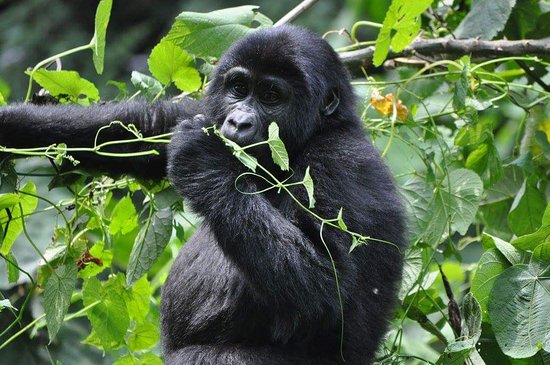
Why book a Uganda gorilla safari starting from Rwanda? Most travelers planning a mountain gorilla trekking trip assume they need to start from Uganda’s own capital. They book a flight to Entebbe, arrange a long transfer south, and spend the better part of two days driving to and from Bwindi Impenetrable Forest National Park before they have even seen a single primate. What many of those same travelers do not realize until they speak to a specialist is that there is a faster, cheaper, and in many ways more rewarding way to do exactly the same trek: starting from Kigali, the capital of Rwanda, just across the border.
A Uganda gorilla safari starting from Rwanda has become one of the most popular itinerary choices among travelers who are spending time in both countries, or who simply want to minimize the driving time between the airport and the gorilla forest. At Kenlink Tours, we arrange these cross-border gorilla trips regularly, and the questions our clients ask before booking are always the same. This blog answers all of them.
Kigali Is Much Closer to Bwindi Than Entebbe
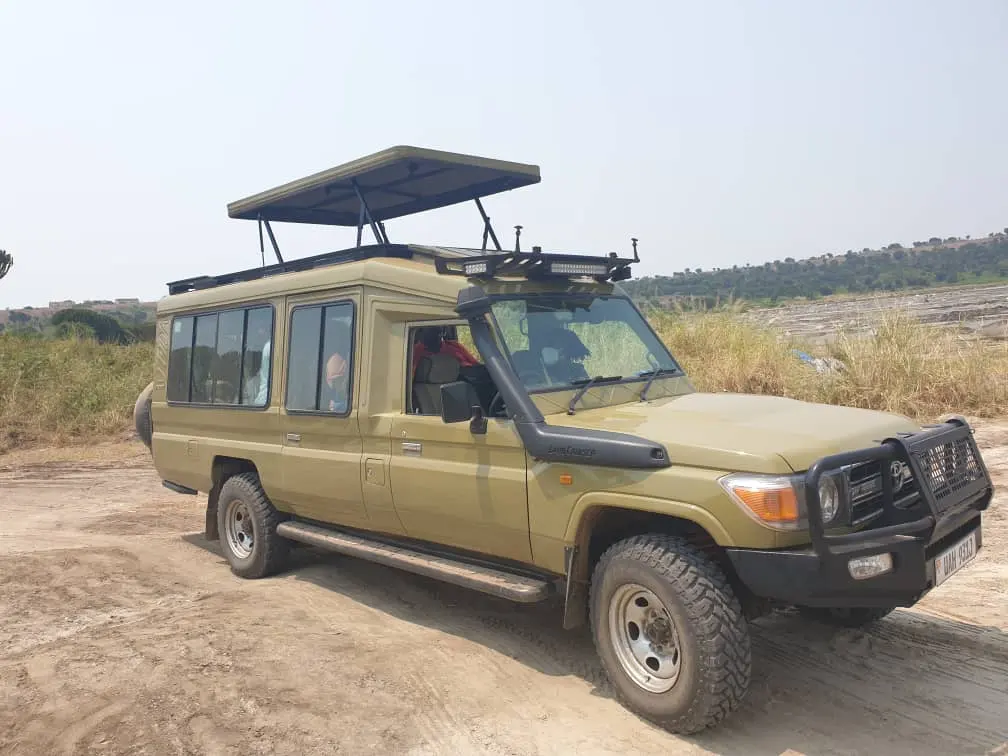
The single most practical reason to start a Uganda gorilla safari from Kigali is distance. Bwindi Impenetrable Forest National Park sits in Uganda’s southwestern highlands, close to the borders of both Rwanda and the Democratic Republic of Congo. From Entebbe, the journey to Bwindi covers approximately 500 kilometers by road and takes between eight and ten hours. From Kigali, the same destination is only 160 to 220 kilometers away, depending on which sector of Bwindi you are trekking in, and the drive takes just three to five hours.
That difference is not a minor detail. It is the difference between spending two full days of a short trip on the road and spending one comfortable morning getting there. For travelers on a 5-day or 7-day itinerary, recovering those four to six hours of driving means two more active safari days, a longer night’s rest before the trek, or the freedom to add a completely different activity to the schedule without extending the trip.
Uganda Gorilla Permits Cost Almost Half of Rwanda’s
Rwanda’s gorilla trekking permit is one of the most expensive wildlife permits in Africa, currently priced at USD $1,500 per person per trek. Uganda’s gorilla permit, issued by the Uganda Wildlife Authority, is currently $800 per person, a saving of $700 for every single traveler in your group. For a couple, that is $1,400 saved on permits alone. For a group of four, it is $2,800.
The gorilla experience itself is not meaningfully different between the two countries. Both Rwanda’s Volcanoes National Park and Uganda’s Bwindi Impenetrable Forest National Park are home to habituated mountain gorilla families, both limit each group to eight visitors per family per day, and both give you exactly one hour in the company of the gorillas. The terrain, forest type, and trek duration vary between individual families and sectors, but the quality and intimacy of the encounter is comparable in both countries.
Starting your Uganda gorilla trek from Kigali gives you the lower Uganda permit cost without sacrificing the proximity advantage that makes Rwanda such a popular gorilla destination. You cross the border once, spend far less time in the vehicle than an Entebbe-to-Bwindi approach requires, and pay significantly less for the permit at the other end. For budget-conscious travelers and groups, this combination is difficult to argue against.
The Border Crossing Is Simpler Than You Expect
A common concern for first-time cross-border safari travelers is the border crossing itself. The two crossings most commonly used for a Kigali-to-Bwindi safari are Cyanika, which gives access to the southern Rushaga and Nkuringo sectors of Bwindi, and Katuna, which is the more commonly used crossing for travelers heading to Buhoma or Ruhija. Both are well-established, regularly used by international tourists, and straightforward with an experienced driver-guide who knows the process on both sides.
At Kenlink Tours, our driver-guides handle all the formalities at the crossing, assist with entry documentation, and ensure that the process moves efficiently without you needing to navigate the queue yourself. Most of our clients are through both sides of the border in 30 to 45 minutes, after which the drive into the Bwindi highlands begins immediately. The road on the Ugandan side is mountainous, winding, and genuinely beautiful, climbing through the terraced hills of the Kigezi region before the forest canopy of Bwindi comes into view.
Which Bwindi Sector Should You Choose from Kigali?
Bwindi Impenetrable Forest National Park has four trekking sectors: Buhoma in the north, Ruhija in the east, Rushaga in the south, and Nkuringo in the southwest. For travelers coming from Kigali, the southern sectors, Rushaga and Nkuringo, are the most naturally accessible, as they sit closest to the Cyanika border crossing and can be reached in under two hours from Kigali. Buhoma is accessible via the Katuna crossing and takes around four to five hours from Kigali.
The Rushaga sector is also home to the highest number of habituated gorilla families in all of Bwindi, which means more permit availability, more scheduling flexibility, and for those interested in an upgrade, the only place in Uganda offering the Gorilla Habituation Experience, a four-hour encounter with a semi-habituated family that is arguably the most immersive primate experience on the continent. We discuss sector options in detail when you begin planning with us, and our recommendation will depend on your dates, group size, and the permit availability at the time of booking.
How Many Days Do You Actually Need?
The short answer is two days at a minimum, and three days for a significantly more comfortable experience. Our 2-day Uganda gorilla safari starting from Kigali is designed for travelers with a very tight schedule: Kigali to Bwindi on day one, gorilla trekking and return to Kigali on day two. It is a genuine whirlwind, but it works well for travelers who have already spent time in Rwanda and want to add gorilla trekking in Uganda without a major itinerary change.
Our 3 days Bwindi gorilla safari starting from Kigali is the most popular option and the format we recommend to most clients. The extra day gives you a comfortable arrival in Bwindi the evening before the trek, a relaxed trekking morning, an optional afternoon activity (the Batwa Cultural Trail is a favorite), and a return to Kigali the following day without rushing. Three days from Kigali to Bwindi and back is enough time to do the trip properly.
For travelers who want to combine gorilla trekking with other Uganda parks, our 5-day gorilla trekking safari from Kigali to Uganda extends the itinerary through Queen Elizabeth National Park for a game drive and Kazinga Channel cruise, ending in Entebbe, while our 5-day Uganda Rwanda double gorilla safari goes further by including gorilla trekking in both countries on a single trip, ticking both Rwanda’s Volcanoes National Park and Uganda’s Bwindi within five days.
Combine Rwanda’s Culture with Uganda’s Gorillas
One of the most rewarding aspects of starting a Uganda gorilla trek from Kigali is the natural opportunity it creates to pair Rwanda’s cultural highlights with Uganda’s wildlife. A day spent at the Kigali Genocide Memorial, the Kimironko Market, or the creative energy of the Inema Arts Centre the morning before your border transfer adds genuine historical and cultural depth to what might otherwise be a purely wildlife-focused trip.
Rwanda and Uganda are complementary destinations rather than competing ones. Rwanda offers extraordinary cultural experiences, exceptional city infrastructure, Volcanoes National Park’s gorillas, Nyungwe Forest’s chimpanzees, and Akagera National Park’s Big Five. Uganda offers lower permit prices, Bwindi’s gorillas, Kibale’s chimpanzees, Murchison Falls, and Queen Elizabeth’s open savannah. Our 10-day Uganda Rwanda combining safari and our Rwanda safaris cover the full breadth of both countries for travelers who want to explore the region deeply across a longer itinerary.
For those wanting to keep things focused, even a short Kigali pre-trip of one night gives the journey a sense of place that a purely transit-based border crossing would not.
What Happens on the Gorilla Trek Itself
Regardless of which Bwindi sector you trek in, the format of the day is consistent. You arrive at the sector headquarters by 7:00 am for a briefing from Uganda Wildlife Authority rangers, who assign your gorilla family, explain trekking etiquette, and prepare you for the terrain. Trekking times vary from under an hour to several hours depending on where the gorillas have moved overnight, and the forest environment of Bwindi, one of Africa’s oldest and most biodiverse montane rainforests, rewards the journey itself even before the encounter begins.
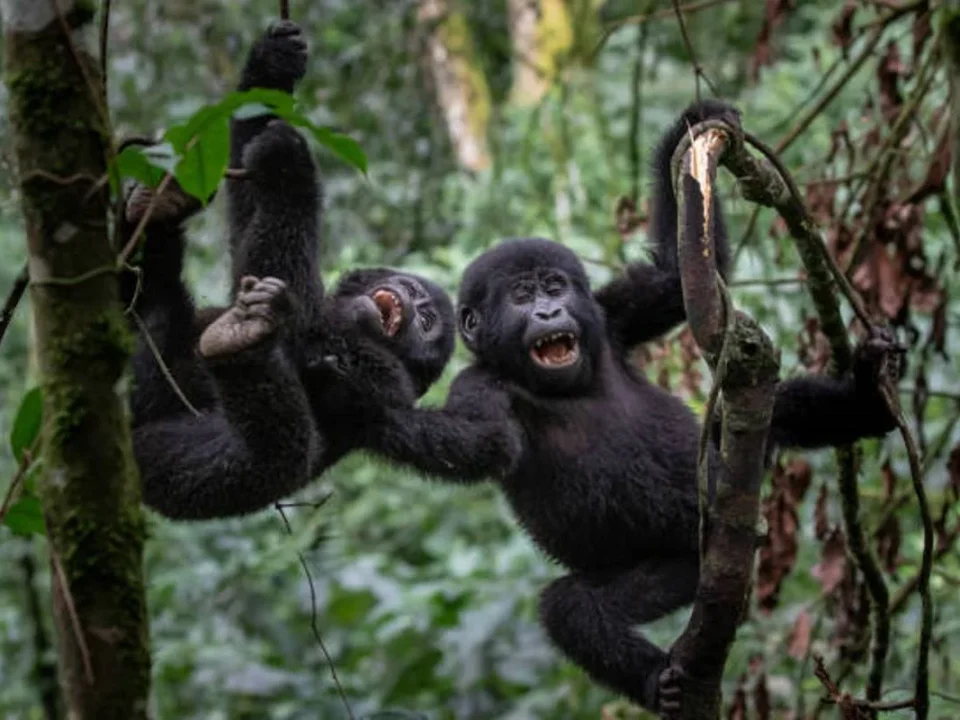
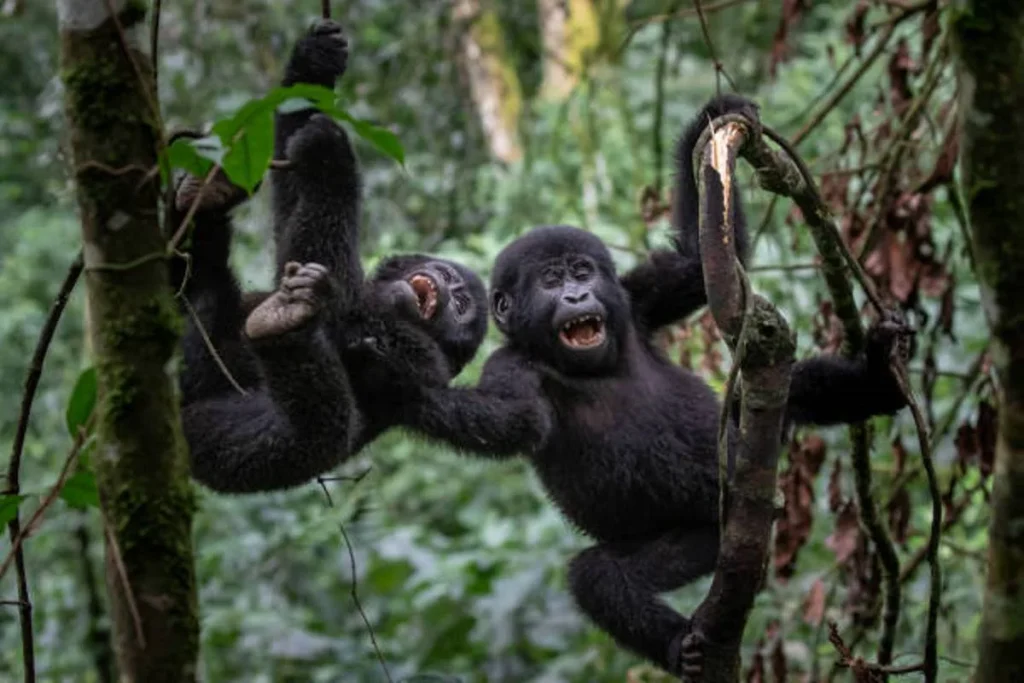
When the family is found, you will have exactly one hour with them. The silverback, the infants, the social dynamics of a community of mountain gorillas at rest and in motion: it is an experience that consistently produces a complete loss of words in people who consider themselves perfectly good at describing things. The hour ends. You collect your trekking certificate. You begin the walk back. And almost every traveler, without exception, spends a significant portion of the return journey trying to explain what just happened to themselves.
Plan Your Kigali-to-Bwindi Gorilla Safari with Kenlink Tours
At Kenlink Tours, we have been running Uganda safaris and Rwanda gorilla trips since 2010. Our driver-guides know the Cyanika and Katuna border crossings, the Kigezi highland roads, and every sector of Bwindi thoroughly. We secure gorilla permits directly through the Uganda Wildlife Authority, choose lodges for their proximity to the trekking trailheads, and manage the full cross-border logistics so that the only thing left for you to think about is what to wear on the trek.
For further reading on specific Uganda gorilla safari options starting from Rwanda, the team at Pick and Transfer Safaris has also produced excellent route guides covering different sector options and day-by-day structures.
To start planning your Kigali-to-Bwindi gorilla safari with us, contact our team with your preferred travel dates and group size. We will check permit availability, confirm the best sector and lodge options for your dates, and send you a detailed, no-obligation quote within 24 hours.
The gorillas are waiting. Kigali is closer than you think.