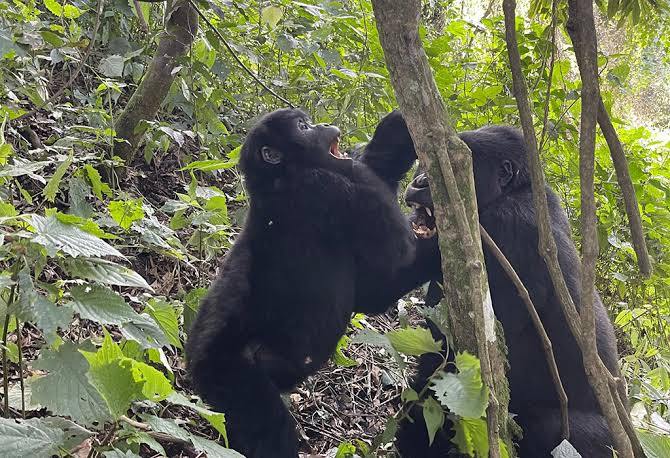
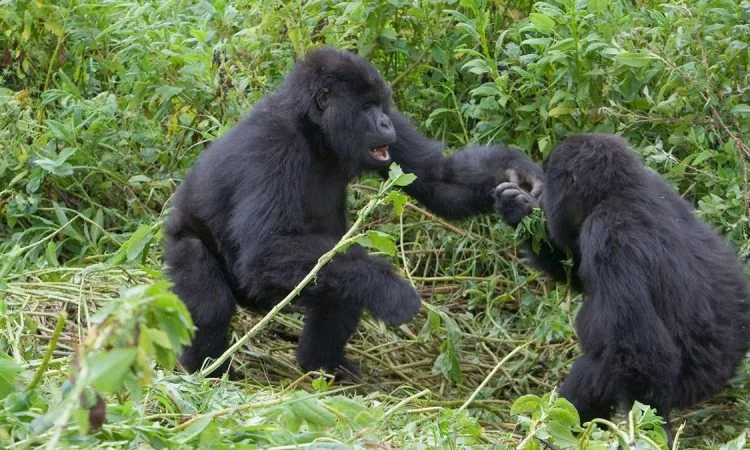
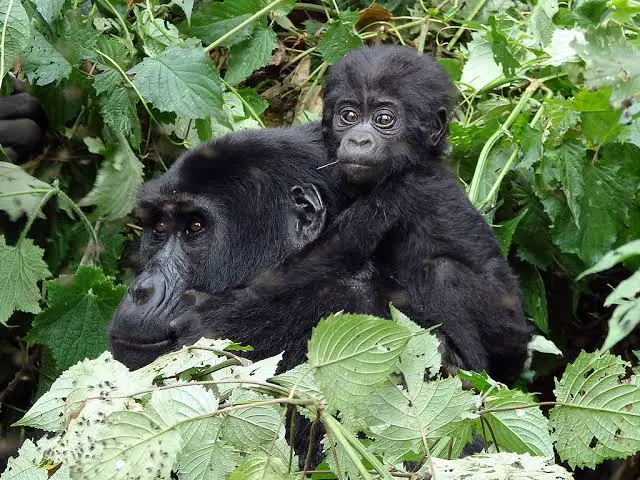
Gorilla trekking in Uganda and Rwanda during the rainy season (March to May, October to November) offers unique advantages and challenges. Both countries provide exceptional opportunities to encounter mountain gorillas, but their experiences differ.
Uganda features gorilla trekking in Bwindi Impenetrable Forest and Mgahinga Gorilla National Park, characterized by dense vegetation and rugged terrain. The rainy season intensifies the adventure, with muddy trails and slippery slopes. However, it’s a rewarding time as the lush greenery makes for stunning photography, and discounted permits (around $700) attract budget travelers. Gorilla sightings remain consistent since the animals rarely stray far, and reduced tourist numbers provide a more intimate experience.
Note that: A normal gorilla trekking in Uganda is USD 800 per person, and the gorilla habituation experience is USD 1500 per person as per this year 2025.
In Rwanda, trekking occurs in Volcanoes National Park, known for its bamboo forests and relatively shorter, gentler hikes. The rainy season in Rwanda is less challenging compared to Uganda due to easier trails. Permits, though pricier ($1,500), ensure fewer tourists, and the country’s excellent infrastructure mitigates weather-related inconveniences. Rwanda’s compact size makes travel between destinations quicker, even in rain.
Both destinations offer thrilling encounters despite the rain, but Uganda appeals to adventurers seeking affordability, while Rwanda suits those prioritizing accessibility and luxury. Whichever you choose, the rainy season’s lush environment enhances the gorilla trekking experience.
Why is Rwanda Gorilla Trekking more expensive than Uganda?
Gorilla trekking in Rwanda is notably more expensive than in Uganda, primarily due to the difference in permit costs. Rwanda charges $1,500 per gorilla trekking permit, compared to Uganda’s $800. This significant price gap reflects Rwanda’s deliberate strategy to position itself as a luxury destination. The high permit fees attract affluent travelers, allowing Rwanda to focus on offering premium experiences while controlling tourist numbers to ensure minimal environmental impact.
Uganda, on the other hand, targets a broader audience by providing more affordable safari options, making gorilla trekking accessible to budget-conscious travelers. The country offers equally exceptional gorilla trekking experiences in Bwindi Impenetrable Forest and Mgahinga Gorilla National Park, which host over half of the world’s mountain gorilla population.
Despite the cost differences, both countries allocate a portion of their permit revenues to gorilla conservation efforts and community development. These funds support anti-poaching initiatives, habitat preservation, and local livelihoods, ensuring the long-term survival of mountain gorillas.
Ultimately, the choice between Rwanda and Uganda depends on budget and preferences. Rwanda appeals to luxury travelers seeking exclusivity and shorter treks, while Uganda offers affordable, adventurous experiences with equally remarkable gorilla encounters. Both destinations contribute meaningfully to gorilla conservation.
How Long Does Gorilla Trekking Take?
The duration of gorilla trekking varies, typically ranging from 4 to 8 hours depending on factors such as the location of the gorilla family, the terrain, and the group’s pace.
The trek begins with a briefing at the park headquarters early in the morning, followed by a hike led by experienced guides and trackers. The time spent trekking to locate the gorillas can vary greatly; some families are found within an hour, while others require several hours of hiking through dense forests, steep slopes, and sometimes muddy terrain.
Once the gorillas are located, visitors are allowed one hour to observe and photograph these incredible primates in their natural habitat.
The entire experience is physically demanding but immensely rewarding, as it offers an up-close encounter with one of the world’s most endangered species. Proper preparation and fitness are recommended to ensure an enjoyable and memorable trekking experience.
How Easy is Gorilla Trekking in Uganda and Rwanda?
The ease of gorilla trekking in Uganda and Rwanda depends on several factors, including terrain, accessibility, and individual fitness levels.
In Uganda, gorilla trekking occurs in Bwindi Impenetrable Forest and Mgahinga Gorilla National Park. Bwindi’s rugged terrain, dense vegetation, and steep, uneven trails can make trekking challenging, especially during the rainy season when trails are muddy. Gorilla families in Bwindi are spread across four sectors, requiring varying trek durations. Mgahinga, with its bamboo forests and volcanic landscapes, is slightly easier to navigate but still physically demanding. A moderate to high level of fitness is recommended for Uganda treks.
In Rwanda, trekking takes place in Volcanoes National Park, which offers relatively easier access. The park’s bamboo forests and well-maintained trails, along with shorter hikes to some gorilla families, make trekking more manageable. Additionally, Rwanda’s compact size and excellent infrastructure simplify travel logistics.
Why Choose Kenlink Tours for Gorilla Trekking Safari?
Kenlink Tours is your ideal partner for a memorable gorilla trekking safari, offering expertly crafted experiences in Uganda, Rwanda, and Congo. Our commitment to excellence ensures seamless journeys tailored to your preferences, whether you’re seeking adventure, luxury, or affordability.
With Kenlink Tours, you’ll benefit from experienced guides passionate about wildlife and conservation, ensuring insightful and safe treks. We prioritize sustainability by supporting local communities and funding conservation efforts to protect the endangered mountain gorillas.
Our customized itineraries include well-selected accommodations, convenient transportation, and exciting add-ons like cultural encounters or multi-destination tours. Whether you’re exploring Uganda’s Bwindi Impenetrable Forest, Rwanda’s Volcanoes National Park, or Congo’s Virunga National Park, our dedicated team guarantees an unforgettable safari.
Choose Kenlink Tours for unparalleled expertise, personalized service, and meaningful travel experiences.