- EXPERT'S HELP
- +256789210067
- +256200955001
- info@kenlinktours.com


Kibale Forest chimpanzee trekking Tour
May 24, 2026
Private gorilla trekking experience in Uganda
May 24, 2026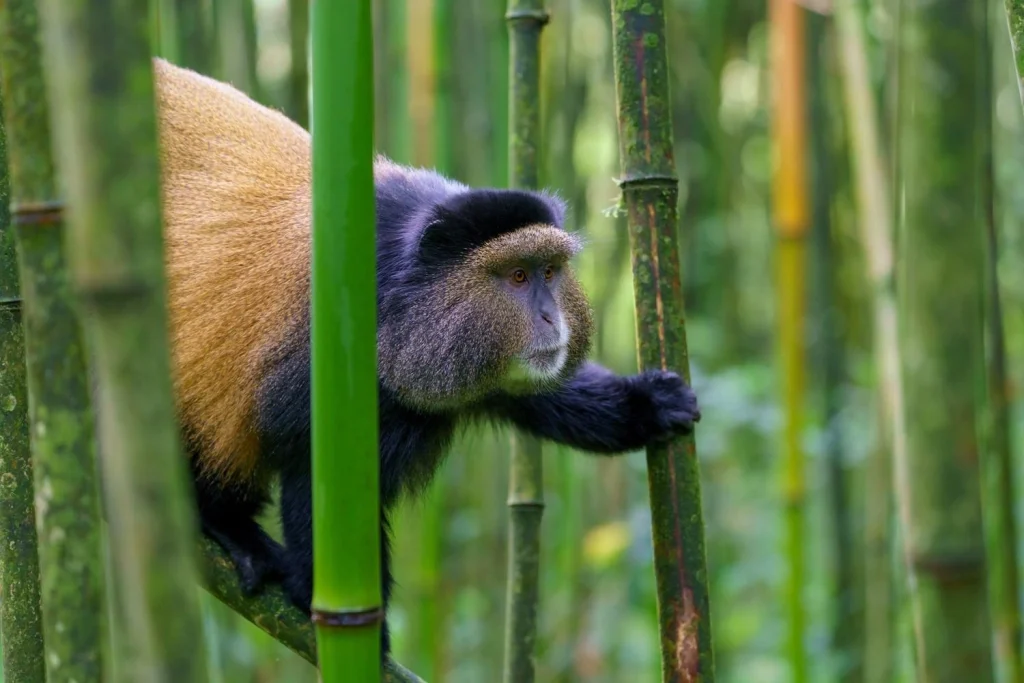
Golden monkeys in Rwanda: Volcanoes National Park. Rwanda is a land of extraordinary wildlife encounters, and tucked within the mist-draped slopes of the Virunga Mountains lives one of Africa’s most captivating and rarely seen primates — the golden monkey. While mountain gorillas often steal the headlines, the golden monkey of Volcanoes National Park is equally mesmerizing, dazzling visitors with its striking orange-gold fur, playful acrobatics, and tight-knit social bonds. If you are planning a Rwanda safari, experiencing golden monkey trekking should be high on your bucket list.
What Are Golden Monkeys? Meet Cercopithecus kandti
The golden monkey (Cercopithecus kandti) is a subspecies of the blue monkey and one of Africa’s most visually striking primates. What sets this species apart at first glance is its vibrant coat — a brilliant splash of orange-gold fur that covers the back, flanks, and base of the tail, contrasting dramatically against its jet-black limbs, crown, and face. The combination creates an almost jewel-like appearance that photographers and wildlife lovers find irresistible.
These are “Old World monkeys,” meaning they are native to Africa and Asia, and they possess distinctive nostrils that point upward and to the sides — a subtle but fascinating detail that separates them from their New World counterparts. Adult males can weigh up to 12 kilograms, making them slightly larger than most monkey species found in the region. Their social structure is just as fascinating as their appearance: golden monkeys live in large troops that can number anywhere from 30 to over 100 individuals, led by a dominant male and built around a core of females and their young. According to the IUCN Red List, the golden monkey is classified as an endangered subspecies, making every sighting a genuinely rare and precious experience.
Where Are Golden Monkeys Found in the World?
Golden monkeys are endemic to the Albertine Rift — one of Africa’s most biodiverse regions. In practical terms, this means they exist in only a handful of locations on Earth: the high-altitude bamboo forests of Rwanda’s Volcanoes National Park, Uganda’s Mgahinga Gorilla National Park, and the Kahuzi-Biega and Virunga National Parks in the Democratic Republic of Congo. Outside these four parks, you will not find them anywhere else on the planet.
Within Rwanda, the population residing in Volcanoes National Park is considered the most significant and viable long-term population of the species. A smaller group is thought to survive in Gishwati Forest, and there are possible sightings reported near the bamboo zones of Nyungwe Forest, but the Virunga slopes remain their true stronghold. Their habitat is the high-altitude bamboo forest, typically between 2,500 and 4,000 metres above sea level, where cool mist, dense vegetation, and an abundance of bamboo shoots create ideal living conditions.
Volcanoes National Park: Rwanda’s Primate Treasure Chest
Situated in the northwestern corner of Rwanda and covering approximately 160 square kilometers, Volcanoes National Park is part of the larger Virunga Massif — a chain of dramatic volcanic peaks that straddles Rwanda, Uganda, and the DRC. The park is home to eight volcanoes, including Mount Karisimbi, Rwanda’s highest peak, and Mount Bisoke, both of which shelter golden monkey troops on their forested slopes.
The park became world-famous through the pioneering work of primatologist Dian Fossey, who established the Karisoke Research Center here in 1967 and devoted her life to protecting its primate inhabitants. Today, the park is jointly managed by the Rwanda Development Board (RDB), which oversees all trekking permits, conservation programs, and visitor guidelines. Two groups of golden monkeys have been habituated to peaceful human presence within the park — the most accessible group lives on the slopes of Mount Karisimbi and comprises around 90 individuals, offering visitors an extraordinary window into wild primate behavior.
If you are ready to explore everything this iconic park has to offer, our 5-Day Gorillas and Wildlife Rwanda Safari combines golden monkey trekking with mountain gorilla encounters and a game drive in Akagera National Park for the ultimate Rwanda wildlife experience.
What to Expect on a Golden Monkey Trek
Golden monkey trekking is an adventure the whole family can enjoy. Unlike gorilla trekking, which has a minimum age requirement of 15, golden monkey trekking has no age limit — making it the perfect wildlife activity for families travelling with younger children. The trek begins early in the morning at the park headquarters in Kinigi, where visitors receive a detailed briefing from RDB rangers covering golden monkey behavior, safety guidelines, and photography etiquette.
Groups are limited in size to minimize disturbance to the monkeys and are accompanied by experienced trackers who know the movement patterns of each habituated troop. The actual trek through the bamboo forest takes between one and four hours depending on where the monkeys are found on any given day. Once you locate the troop, you are given a full hour to observe them at close range — watching them leap between bamboo stems, groom each other, forage for shoots and fruits, and care for their young.
The experience is dynamic and joyful. Unlike the quiet reverence that characterizes a mountain gorilla encounter, golden monkeys are energetic, fast-moving, and endlessly entertaining. Their acrobatic leaps and the way their golden coats flash in the filtered forest light make for some of the most spectacular wildlife photography in East Africa. Carry a camera without a flash, wear muted clothing, and move slowly to get the most out of your hour with these remarkable primates.
Golden Monkey Trekking Permits: Cost and How to Book
A golden monkey trekking permit in Volcanoes National Park costs USD $100 per person, making it one of the most affordable primate encounters in Africa. Permits are issued by the Rwanda Development Board and must be purchased in advance through a licensed tour operator. The relatively accessible price compared to gorilla permits (which cost USD $1,500) means golden monkey trekking is a popular choice for travellers looking to experience a truly rare primate encounter within a more modest budget.
Booking well in advance is strongly recommended, particularly during peak season. Our expert team at Kenlink Tours handles all permit acquisition and logistics seamlessly — contact us to secure your permit as part of one of our tailor-made Rwanda packages.
The Best Time to Go Golden Monkey Trekking in Rwanda
Golden monkeys are active and observable year-round, which means trekking is possible in every month of the year. However, the experience varies significantly depending on the season.
The dry seasons — from June to September and December to February — are widely considered the best time for golden monkey trekking. During these months, the forest trails are less muddy and slippery, making the hike considerably more comfortable. Visibility through the forest is also slightly improved, and the risk of rain during your hour with the monkeys is reduced.
The rainy seasons (March to May and October to November) bring lush, vivid greenery to the Virunga slopes, creating a dramatically beautiful backdrop for photography. Trekking is still fully operational during these months, though you should come prepared with waterproof gear and sturdy boots. Fewer tourists travel during the rains, which can make for a more intimate and peaceful experience on the trail.
For a full picture of when to visit Rwanda, Visit Rwanda offers updated seasonal guides and destination information to help you plan.
Combining Golden Monkey Trekking With Other Rwanda Experiences
One of the great joys of visiting Volcanoes National Park is that golden monkey trekking pairs beautifully with Rwanda’s other world-class wildlife and cultural experiences. Most visitors combine it with mountain gorilla trekking — the park’s most famous activity — as well as hikes to the crater lakes of Mount Bisoke, visits to Dian Fossey’s grave and the Karisoke Research Center, or cultural encounters with local communities.
Our 4-Day Rwanda-Uganda Golden Monkey and Gorilla Trekking itinerary is one of our most beloved packages, offering guests a side-by-side comparison of two of Africa’s most extraordinary primate encounters across two countries. Alternatively, our 6-Day Rwanda Adventures — Great Apes and Lake Kivu extends the journey to include relaxation on the shores of the breathtaking Lake Kivu, one of Africa’s most scenic freshwater bodies.
For those who wish to explore both Rwanda and Uganda on a single extended trip, our 10-Day Fantastic Tour in Rwanda and Uganda covers the very best of both countries, from the gorilla forests of Bwindi to the savannah of Akagera.
Conservation: Why Your Trek Makes a Difference
Every golden monkey trekking permit purchased contributes directly to conservation. Revenue generated through ecotourism is reinvested into anti-poaching patrols, habitat restoration, veterinary care for habituated primate groups, and community development programs in the villages surrounding Volcanoes National Park. The Rwanda Development Board, in collaboration with international conservation partners, actively monitors the golden monkey population and works to ensure their long-term survival in the Virunga ecosystem.
The threats facing golden monkeys — habitat destruction through agricultural expansion, illegal charcoal production, and climate-driven changes to their bamboo forest habitat — remain real and ongoing. By choosing responsible wildlife tourism through a trusted operator, you are not just witnessing one of Africa’s most extraordinary wildlife spectacles; you are funding the future of a species that exists nowhere else on Earth.
Plan Your Golden Monkey Trek With Kenlink Tours
At Kenlink Tours, we believe the most memorable wildlife encounters are those guided by expertise, built on passion, and underpinned by genuine commitment to conservation. Our Rwanda safari specialists will help you design the perfect itinerary around golden monkey trekking, whether you are a solo adventurer, a couple celebrating a special occasion, or a family looking for a once-in-a-lifetime experience together.
Explore our full range of Rwanda safari packages and let us take care of every detail — from permit booking and airport transfers to lodge selection and in-park guidance. Rwanda is waiting, and the golden monkeys of Volcanoes National Park are ready to steal your heart.