- EXPERT'S HELP
- +256789210067
- +256200955001
- info@kenlinktours.com


Our Responsible Tourism
August 15, 2026
Rwanda Big Five Safari: Can You See the Big Five in Akagera?
August 20, 2026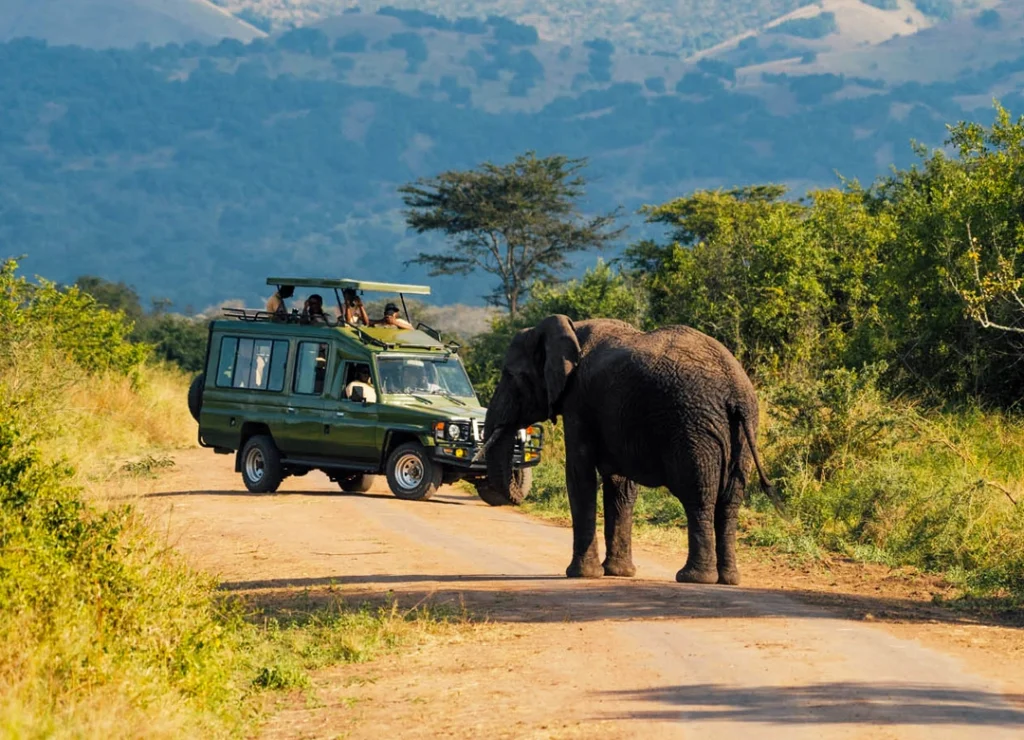
Akagera National Park Safari: The Complete Travel Guide. Tucked against Rwanda’s eastern border with Tanzania, Akagera National Park is the country’s only true savannah wilderness and the single best place in Rwanda to see the Big Five in one trip. While most travelers arrive in Rwanda thinking only of mountain gorillas, those who venture two and a half hours east of Kigali discover a completely different Africa: rolling grass plains, papyrus-fringed lakes, prowling lions, black and white rhinos, and herds of elephant and buffalo moving against a backdrop of acacia woodland. This guide walks you through everything you need to plan an unforgettable Akagera National Park safari, from the park’s remarkable conservation story to wildlife, accommodation, costs, and the best ways to combine it with gorilla trekking and other Rwanda safaris organized by Kenlink Tours.
Whether you have a single day to spare or want to build a full two-week East African itinerary, Akagera deserves a place on your list. It is affordable compared with gorilla permits, family-friendly, malaria-risk manageable with precautions, and increasingly recognized as one of Africa’s great conservation comeback stories.
What Makes Akagera National Park Rwanda’s Hidden Gem
Akagera National Park is Rwanda’s largest protected area, covering roughly 1,122 square kilometers of savannah, wetland, and low mountain terrain. It is named after the Kagera River, which feeds Lake Ihema and a chain of smaller lakes that together make up more than a third of the park’s surface area. This mix of habitats is what makes Akagera so rewarding for wildlife watching: dry acacia savannah supports lions, leopards, giraffes, zebras, and antelope, while the lakes and papyrus swamps shelter hippos, crocodiles, and one of the richest birding checklists in East Africa, with over 500 recorded species.
Unlike the misty, high-altitude forests of Volcanoes National Park or Nyungwe, Akagera feels like classic East African bush. Game drives here resemble a Kenyan or Tanzanian safari more than a Central African rainforest trek, which is exactly why so many visitors pair the two experiences on a single trip. For travelers who want to see gorillas and lions in the same country, within the same week, Akagera is what makes that possible. Regional safari specialists such as Pick and Transfer Safaris echo this same point in their own coverage of the park, describing it as home to Rwanda’s only Big Five sightings.
Where Is Akagera National Park Located
Akagera lies in the Eastern Province of Rwanda, bordering Tanzania, roughly 110 kilometers from the capital, Kigali. The drive takes about two and a half to three hours on a mostly paved road, making Akagera one of the most accessible savannah parks in the region. Its proximity to Kigali International Airport is a major advantage for travelers with limited time, since it is entirely possible to do a day trip from the capital or a short two-day Akagera safari without cutting into a longer gorilla trekking itinerary in the northwest.
The park’s varied terrain includes the Kilala Plains in the south, prime for game drives and lion sightings, and Lake Ihema in the east, the second-largest lake in Rwanda and the setting for the park’s popular boat safaris. If you’re routing your trip through the capital first, it’s worth browsing a Kigali city guide to plan a stopover before or after your time in the park.
A Brief History: From Near Collapse to Conservation Triumph
Akagera’s history is one of the most dramatic conservation turnarounds on the continent. The park was established in 1934 by the Belgian colonial administration and originally covered more than double its current size, around 2,500 square kilometers. Following the 1994 genocide against the Tutsi, hundreds of thousands of returning refugees settled inside the park’s boundaries, and large sections were degazetted for agriculture and cattle grazing. Poaching accelerated, and by the early 2000s, Akagera had lost its entire lion population and its rhinos.
The turning point came in 2010, when African Parks entered into a partnership with the Rwanda Development Board to co-manage Akagera. A predator-proof fence was completed along the park’s western and southern boundaries to reduce human-wildlife conflict, anti-poaching units were professionalized, and a phased reintroduction program began. Seven lions were reintroduced from South Africa in 2015, the first lions Akagera had seen in over fifteen years. Eastern black rhinos followed in 2017 after a decade-long absence, with additional rhinos translocated from European zoos in 2019. In 2021 and again in a record-breaking translocation in 2025, southern white rhinos were introduced, restoring Akagera’s Big Five status and cementing its reputation as one of Africa’s fastest-recovering ecosystems. Travelers curious about Rwanda’s broader recovery since 1994 can also read our reflection on the Rwandan Genocide of 1994, which offers helpful context for understanding how far the country, and this park, have come.
The Big Five and Beyond: Wildlife in Akagera
Akagera is the only park in Rwanda where you can realistically hope to see the Big Five: lion, leopard, elephant, buffalo, and both black and white rhino. Lion numbers have grown from just two founding males in 2015 to more than seventy individuals today, spread across several prides that roam the Kilala Plains and the areas around Lake Ihema. Leopards are present but elusive, more often spotted on night drives than on standard day game drives.
Beyond the Big Five, Akagera supports healthy populations of Masai giraffe, plains zebra, topi, eland, roan antelope, and defassa waterbuck. Hippos and Nile crocodiles are almost guaranteed sightings on a Lake Ihema boat safari, and elephants are frequently seen browsing near the lakeshore in the dry season. Birders should not miss the chance to search for the rare shoebill stork in the papyrus swamps, alongside African fish eagles, herons, and a long list of migratory species. If comparing wildlife density and habitat type against Uganda’s savannah parks is useful for your planning, our detailed breakdown of Akagera National Park versus Queen Elizabeth National Park explains the key differences.
For travelers specifically hoping to tick lions off their list, we’ve also put together a guide on where to see lions in Rwanda, which covers the best zones and times of day for predator sightings inside the park.
Best Time to Visit Akagera National Park
Akagera can be visited year-round, but the experience shifts noticeably with the seasons. The long dry season, from June to September, and the short dry season, from mid-December to mid-February, are considered the best time to visit Akagera National Park for wildlife viewing. Vegetation thins out, animals concentrate around Lake Ihema and other permanent water sources, and road conditions are at their easiest for game drives.
The wetter months, March through May and October through mid-December, bring lush green scenery, dramatic skies, and significantly better birdwatching, since migratory species are present and resident birds are in breeding plumage. Some remote tracks can become muddy, but the core game-viewing circuits generally remain accessible. Rates at some lodges also drop in the wetter shoulder months, which can make this a good time for budget-conscious travelers willing to trade a small amount of game-viewing certainty for lower costs and fewer vehicles on the tracks.
Top Things to Do in Akagera National Park
Game Drives on the Kilala Plains. The classic Akagera experience is an open-vehicle game drive through the savannah, where sightings of lion, buffalo, giraffe, and zebra are common. Morning drives, starting near sunrise, tend to produce the best predator activity.
Boat Safari on Lake Ihema. A boat cruise on Lake Ihema is one of the most memorable additions to any Akagera itinerary. It offers close, safe encounters with pods of hippos and basking crocodiles, along with excellent birding opportunities that are impossible to replicate from a vehicle.
Night Game Drives. Akagera is one of the only parks in Rwanda offering official night drives, run with spotlights and a trained ranger guide. This is the best chance to see leopards, genets, civets, and other nocturnal species that rarely appear during the day.
Behind-the-Scenes Conservation Experience. For travelers interested in conservation, Akagera offers a behind-the-scenes tour that includes a visit to the anti-poaching canine unit and insight into the park’s rhino and lion monitoring programs, a fitting complement to the story told in our piece on the Dian Fossey Gorilla Fund and Rwanda’s wider conservation efforts.
Sport Fishing. Licensed catch-and-release fishing for tilapia is available on parts of Lake Shakani, a relaxed option for travelers who want a slower-paced activity between game drives.
Guided Nature Walks and Birding. In select areas near the lodges, guided walks allow visitors to focus on smaller details of the ecosystem, from insects to woodland birds, under close ranger supervision given the presence of dangerous game.
For a full sense of how these activities fit together across a multi-day trip, see our sample 3-day Akagera game drive safari itinerary.
Where to Stay: Akagera National Park Accommodation
Accommodation inside and around Akagera spans the full range from luxury tented camps to budget campsites, so the park suits nearly every travel style and budget.
At the top end, Magashi Camp sits on the shores of Lake Rwanyakazinga in the park’s exclusive northern sector, offering a low-density, high-comfort safari experience with excellent guiding. Ruzizi Tented Lodge, on the shore of Lake Ihema, is a strong mid-to-upper range choice known for its lake views and proximity to the boat safari jetty. Karenge Bush Camp offers a more rustic, adventurous tented experience deep in the park’s wilder western section.
For travelers looking for value, Akagera Game Lodge, perched on a hill overlooking Lake Ihema, remains the most established mid-range option, complete with a swimming pool and restaurant. Budget travelers and those road-tripping through Rwanda can also use the park’s designated campsites, a good fit for self-drive visitors exploring in combination with a car hire from Kenlink Tours.
Because room availability at Magashi and Ruzizi can be limited during peak dry-season months, we recommend booking your Akagera accommodation at least two to three months in advance if you are traveling between June and September or over the December holidays.
How to Get to Akagera National Park from Kigali
Most visitors reach Akagera by road from Kigali, a drive of roughly two and a half to three hours covering about 110 kilometers, largely on tarmac with a final stretch of good-quality gravel inside the park. This makes Akagera one of the more logistically simple parks in the region to add onto a broader Rwanda itinerary, whether you are coming straight from the airport or from a gorilla trekking base in Volcanoes National Park.
Self-driving is possible and popular, particularly for confident travelers comfortable navigating rural roads, though most visitors prefer a private guided transfer, which removes the stress of navigation and adds an experienced guide’s eye for wildlife along the way. Charter flights into the park’s airstrip are also available for travelers short on time, typically arranged as part of a fly-in safari package.
If you are combining Akagera with time in Uganda, our guide on starting a trip from Rwanda to Uganda covers border logistics and travel times between the two countries.
Akagera National Park Entry Fees and Park Rules
Entry fees at Akagera are charged per person per day and vary by residency status, with separate rates for East African citizens, other African residents, and international non-resident visitors, plus additional charges for children. On top of the base park entry fee, activities such as the boat safari, night game drive, and behind-the-scenes experience carry their own per-person charges, while vehicle entry and guide fees may also apply depending on how you arrange your visit.
Because published rates change periodically and can differ depending on the season or promotional periods, we recommend confirming current pricing directly with our team before booking. Kenlink Tours builds park fees, activity charges, and transport into a single transparent package, so there are no surprise costs once you arrive. For a broader sense of what a Rwanda trip costs overall, our guide to the cost of safaris in Rwanda breaks down typical budget, mid-range, and luxury pricing across the country’s main parks.
Standard park rules apply throughout Akagera: visitors must remain inside vehicles except at designated stops, night drives require a licensed park guide, speed limits are enforced for animal safety, and all rubbish must be carried out. Because the park reintroduced dangerous predators, walking outside authorized guided areas is not permitted.
Combining Akagera with Other Rwanda and Uganda Safari Experiences
One of Akagera’s greatest strengths is how easily it combines with Rwanda’s other flagship experiences. Many travelers pair a two or three-day Akagera safari with gorilla trekking in Volcanoes National Park, golden monkey tracking, or chimpanzee trekking in Nyungwe Forest National Park, creating a complete Rwanda experience that covers primates, Big Five game viewing, and pristine rainforest within a single trip.
Our 5-day Volcanoes, Gorillas, and Akagera wildlife safari is one of our most popular itineraries for exactly this reason, giving travelers gorilla trekking and Big Five game drives without the long flights required to see similar wildlife elsewhere in Africa. For those who also want golden monkeys, our 4-day Rwanda-Uganda golden monkey and gorilla trekking itinerary crosses the border to include both experiences.
Travelers with more time often extend into Uganda for a second round of gorilla trekking or wildlife viewing. Our 5-day Uganda-Rwanda double gorilla safari and 10-day Uganda-Rwanda combined safari both include Akagera as a component, alongside Uganda’s Bwindi Impenetrable Forest and Queen Elizabeth National Park. If you are starting your trip from Kigali specifically, the 2-day Uganda gorilla safari from Kigali and 3-day Bwindi gorilla safari from Kigali are both designed to connect smoothly with an Akagera add-on.
For a wider regional perspective while planning, it can help to see how neighboring destinations compare. Uganda’s Bwindi Impenetrable Forest National Park, Mgahinga Gorilla National Park, Kibale Forest National Park, Queen Elizabeth National Park, and Murchison Falls National Park each offer their own take on East African savannah and forest safaris, while within Rwanda itself, Volcanoes National Park, Nyungwe Forest National Park, and the lesser-visited Gishwati-Mukura National Park round out the country’s full protected-area network. Full regional gorilla safaris and wildlife safaris itineraries, including a combined 5-day Rwanda wildlife and gorillas package, illustrate just how naturally Akagera fits into a broader cross-border safari plan; the full destinations directory is a useful reference while you compare options.
Sample Itinerary: 3-Day Akagera Game Drive Safari
A well-paced three-day Akagera itinerary typically looks like this. Day one covers the drive from Kigali, arrival at your lodge by early afternoon, and an evening game drive as animals become active in the cooler hours. Day two is dedicated to a full day of exploration, usually a morning game drive across the Kilala Plains followed by an afternoon boat safari on Lake Ihema, with an optional night drive for leopard and nocturnal species sightings. Day three includes a final early-morning game drive before departing back to Kigali, timed to allow an onward flight or connection to another destination the same afternoon.
This structure mirrors our own 3-day Akagera game drive safari, which can be shortened into a two-day version for time-limited travelers or extended with an extra day for sport fishing, deeper birding, or the behind-the-scenes conservation tour. Travelers wanting a broader regional overview before deciding on trip length may also enjoy our roundup of the 11 must-see attractions and activities in Rwanda, which places Akagera in context alongside the country’s other top experiences.
Packing Tips for Your Akagera Safari
Pack light, breathable clothing in neutral colors such as khaki, olive, and brown, along with a warm layer for early morning and night drives when temperatures can drop noticeably. A good pair of binoculars significantly improves the experience, particularly for birding and distant predator sightings on the open plains. Sunscreen, a wide-brimmed hat, and insect repellent are essential given the low-altitude, warmer climate compared with Rwanda’s mountain parks, and it’s worth discussing malaria prophylaxis with your doctor before traveling. A camera with reasonable zoom capability, extra batteries, and a dust-proof bag will help you capture sightings across Akagera’s open landscapes, where wildlife is often spotted at a greater distance than in dense forest parks.
Why Book Your Akagera Safari with Kenlink Tours
Planning an Akagera National Park safari involves coordinating park permits, activity bookings, accommodation, and transport, and getting the timing right matters for making the most of a limited trip. Our team has deep, first-hand experience across Rwanda and Uganda, and we tailor every itinerary, from a simple two-day Akagera add-on to a full multi-country 20-day East Africa safari itinerary, around your interests, budget, and timeframe.
We handle logistics end to end: airport pickup, private 4×4 transport with pop-up roofs for game viewing, park fees, activity bookings, and accommodation reservations at the lodges that best match your budget. To learn more about our approach and experience across the region, visit our About Us page, browse our full range of Rwanda safari holidays, or read our thoughts on the best Rwanda safari experiences for nature lovers before you decide. When you’re ready to start planning, our Contact Us page is the fastest way to reach our safari consultants for a tailored quote.
Frequently Asked Questions About Akagera National Park
Is Akagera National Park worth visiting? Yes. It is Rwanda’s only Big Five park and offers a genuinely different landscape and wildlife experience compared with gorilla trekking in the northwest, making it an excellent complement to a primate-focused trip.
How many days do you need in Akagera? Two full days is generally enough to cover the main game drive circuits and a boat safari, though three days allows time for a night drive and a more relaxed pace.
Can you see gorillas and lions in Rwanda on the same trip? Yes. Akagera’s lion and Big Five population, combined with gorilla trekking in Volcanoes National Park, is exactly what makes a combined Rwanda safari so appealing to first-time visitors to East Africa.
Is Akagera safe for a self-drive safari? Akagera permits self-driving on its main circuits, though many visitors prefer a guided transfer for easier navigation and better wildlife spotting, particularly on a first visit.
What is the closest airport to Akagera National Park? Kigali International Airport is the main gateway, roughly two and a half to three hours from the park by road, with charter flight options available directly to the park’s airstrip.
Ready to add Akagera National Park to your Rwanda itinerary? Reach out to Kenlink Tours today and let our safari specialists design a trip built entirely around your travel dates, budget, and bucket list.