- EXPERT'S HELP
- +256789210067
- +256200955001
- info@kenlinktours.com


Can do gorilla trek in Uganda and Rwanda on one tour?
August 24, 2026
Gorilla trek in Mgahinga Beginning
August 26, 2026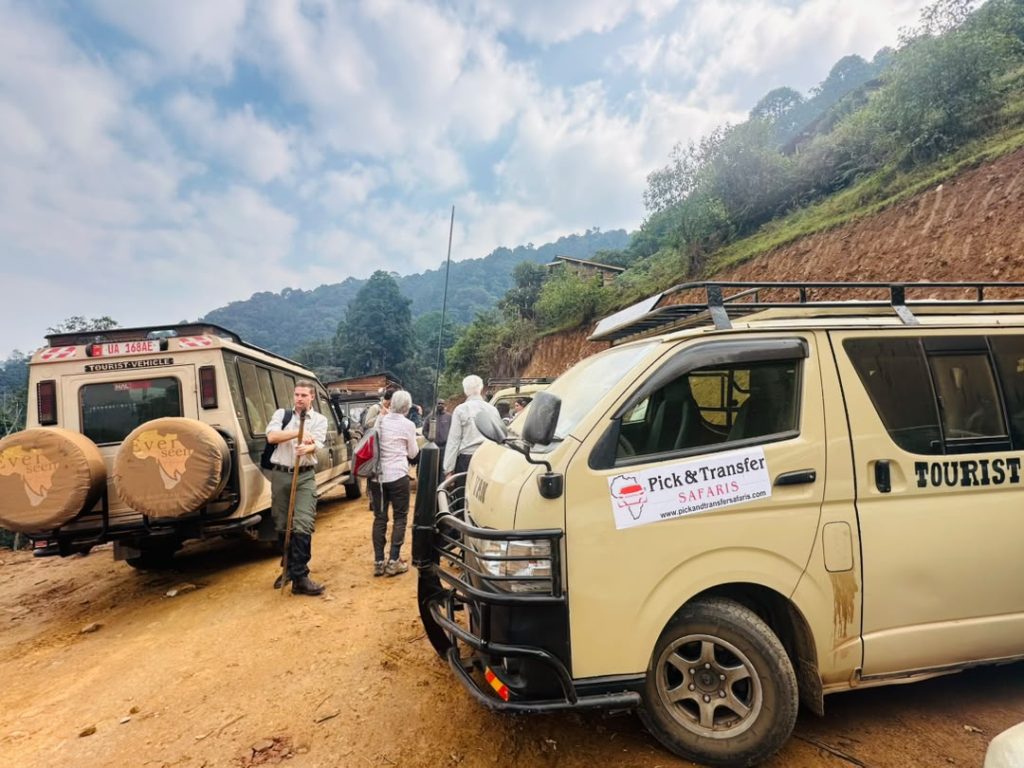
How far in advance should I book gorilla trekking permit. As a general rule, you should book a gorilla trekking permit three to six months ahead of your travel date, and six to twelve months ahead if you are travelling during peak season or want a specific date, sector, or gorilla family. That is the short answer, but the real answer depends on which country you are trekking in, which time of year you are travelling, and how flexible your dates are. This guide breaks down exactly how far ahead to book in every scenario, so you can plan with confidence rather than guessing. To check live permit availability for your dates, contact Kenlink Tours or browse the full Uganda safaris and Rwanda safaris collections.
The Short Answer: 3 to 6 Months, Longer in Peak Season
For most travellers visiting during Uganda and Rwanda’s shoulder or low season, booking three to six months ahead gives you a comfortable buffer to secure your preferred sector and date without paying a premium for last-minute changes, and this holds true whether you are basing your trip in Kigali, as covered in this Kigali city guide, or approaching from elsewhere in the region. For travellers visiting during the June-to-September or December-to-February peak seasons, or those who want a specific gorilla family, sector, or a group booking for several people travelling together, six to twelve months ahead is the safer target. There is no single fixed rule enforced by either country’s wildlife authority — this is about managing the real risk of your first-choice date selling out, not a hard booking window imposed from above. Think of it less as a deadline and more as a probability curve: the further out you book, the more of the calendar and the more sectors are genuinely open to you, and the closer you get to your travel date, the narrower that pool becomes, sometimes to nothing at all for the most in-demand dates.
Why Gorilla Permits Sell Out
Gorilla permits are strictly limited because each habituated family can only be visited by a small group of trekkers once per day, a rule designed to protect the gorillas from stress and disease. Uganda’s Bwindi Impenetrable Forest spreads this limited capacity across four sectors and roughly twenty habituated families, while Mgahinga Gorilla National Park has just one family, the Nyakagezi group, meaning its daily capacity is far smaller. Rwanda’s Volcanoes National Park similarly limits access per family per day. Because demand for gorilla trekking has grown steadily in recent years, particularly for the most convenient sectors close to Kigali, popular dates during peak months can sell out weeks or months before the actual travel date. This growth has been driven partly by improved flight connectivity into Kigali and partly by rising awareness of gorilla trekking as a bucket-list experience, both trends that show no sign of reversing and that make early booking an increasingly sound habit rather than an overcautious one. Background on this demand is covered in Kenlink Tours’ 3-day Bwindi gorilla safari from Kigali page.
Uganda Permit Booking Timeline
Uganda Wildlife Authority permits for Bwindi’s four sectors and Mgahinga are generally easier to secure with less lead time than Rwanda’s, given the higher total number of daily permits available across Bwindi’s roughly twenty families. That said, Rushaga and Nkuringo — the sectors closest to Kigali and therefore the most requested by travellers doing a Kigali-based trip — can still sell out three to four months ahead during peak season. Mgahinga, with only one family, has the tightest availability of any single Uganda sector and should be booked as early as possible for a specific date. A general booking timeline is covered in Kenlink Tours’ 3-day Uganda gorillas safari page, and this Mgahinga Gorilla National Park guide covers the park’s single-family structure in more detail.
Rwanda Permit Booking Timeline
Rwanda’s Volcanoes National Park permits tend to sell out faster than Uganda’s, partly because the park is smaller and its proximity to Kigali makes it the default choice for travellers with limited time, and partly because its higher price point has not dampened demand from travellers prioritising convenience. Peak-season dates, particularly around Christmas, New Year, and Easter, can sell out six months or more in advance. For a Rwanda-based trip, booking as early as your travel dates are confirmed is the safest approach, especially if you have a fixed itinerary with little flexibility. This Volcanoes National Park destination guide and Kenlink Tours’ 3-day Rwanda gorilla safari both provide useful context on the park’s popularity.
Peak Season vs Low Season: How Timing Changes
| Season | Months | Recommended Booking Window |
|---|---|---|
| Peak (dry season) | June–September, December–February | 6–12 months ahead |
| Shoulder | Late May, early October | 3–6 months ahead |
| Low (wet season) | March–May, October–November | 1–3 months ahead often sufficient |
The wetter months generally offer more flexibility, since fewer travellers book gorilla trekking trips around this time despite the trekking itself remaining entirely viable. Travellers comfortable with occasional showers and muddier trails can often secure permits with considerably less lead time during these months. Kenlink Tours’ 2-day Uganda gorilla safari from Kigali and similar shorter itineraries can sometimes be arranged with just a few weeks’ notice outside of peak season.
Booking Timeline by Sector (Bwindi’s Four Sectors)
Within Bwindi specifically, booking timelines vary by sector based on both popularity and total capacity. Rushaga, the closest sector to Kigali and home to several gorilla families including the option for the gorilla habituation experience, tends to book up fastest among travellers doing a Kigali-based trip. Nkuringo follows a similar pattern given its own proximity to the border. Buhoma and Ruhija, further from Kigali and more commonly booked by travellers approaching from Entebbe, often have slightly more availability at shorter notice, though this varies by season. A sector-by-sector breakdown is available through this Bwindi Impenetrable Forest National Park guide, and Kenlink Tours’ guide to hours from Kigali to Bwindi covers the same sectors from a distance perspective.
How Group Size and Travel Dates Affect Availability
Booking for a larger group requires more lead time than booking for one or two people, since your entire party needs to be assigned permits within the same family and sector on the same date, and daily capacity per family is capped at eight trekkers. A group of six or more should book considerably earlier than a solo traveller or couple, particularly for a popular sector during peak season, since a smaller number of remaining slots may not be enough to accommodate the full group together. Fixed travel dates tied to flights already booked, or a milestone occasion like an anniversary, also reduce your flexibility and argue for booking earlier rather than later. Kenlink Tours’ group and private tour options are structured to handle exactly this kind of coordinated group booking.
Can You Book Last-Minute? What’s Actually Possible
Last-minute permit bookings, inside of four to six weeks before travel, are sometimes possible, particularly during the wetter, lower-demand months or if a cancellation frees up a slot in a popular sector. However, relying on this is genuinely risky, especially during peak season, when your preferred dates may simply be unavailable at any price. If your travel dates are fixed and non-negotiable, treat last-minute booking as a backup plan rather than your primary strategy. Kenlink Tours regularly checks for late cancellations and can sometimes secure a permit on shorter notice than expected, but the honest advice remains to book as early as your plans allow through the Kenlink Tours contact page, rather than assuming a last-minute option will always be there when you need it.
Payment Schedules and Deposits
Most operators, including Kenlink Tours, require a deposit to secure your permit application, with the balance due closer to your travel date, since the Uganda Wildlife Authority and Rwanda Development Board require payment in full before actually issuing the permit. Booking early does not necessarily mean paying the full amount immediately — a staged payment schedule is standard practice and lets you lock in your preferred date without a large upfront cash outlay months before travel. It is worth clarifying your specific operator’s payment schedule and cancellation policy before booking, since terms can vary. A transparent example of how this is structured is available through this 3 days Uganda gorilla safari from Rwanda package.
What Happens If You Need to Change Your Dates
Gorilla permits are generally non-refundable and difficult to transfer to a different date once issued, so changing your travel dates after a permit has been confirmed can mean losing the cost of that permit entirely, depending on the circumstances and how far ahead the change is requested. This is one of the strongest arguments for confirming your travel dates as firmly as possible before booking a permit, rather than booking speculatively and hoping to adjust later. Some operators can request a date change with the relevant wildlife authority if enough notice is given, though this is not guaranteed. Kenlink Tours advises clients on realistic change policies before booking through its Kenlink Tours about us page.
Booking Timeline for Special Circumstances
Certain circumstances warrant booking even further ahead than the general guidance above. A honeymoon or anniversary trip tied to a specific date, travel during a major holiday period like Christmas or Easter, or a large family group all benefit from booking nine to twelve months out rather than the standard three to six. Conversely, a solo traveller with genuinely flexible dates and no strong preference for a specific sector has the most room to book closer to travel, particularly outside peak season. Kenlink Tours’ scheduled departure safari programme is a useful option for flexible solo travellers who want to join a small group on a date that already has permits secured.
A Sample Booking Timeline Countdown
| Timeframe | Action |
|---|---|
| 9–12 months before | Ideal window for peak season, groups, or a fixed milestone date |
| 6 months before | Safe general target for most peak-season travel |
| 3–4 months before | Reasonable for shoulder season or flexible peak-season dates |
| 1–2 months before | Often workable for low season, riskier otherwise |
| Under 4 weeks before | Possible only with flexibility and some luck, mainly in low season |
Working backwards from this table against your actual travel dates gives a clear, practical target rather than a vague “book early” suggestion. Kenlink Tours’ 3-day best of Uganda gorilla safari page reflects current booking lead times and can be checked against your specific dates directly.
Booking Timing for the Gorilla Habituation Experience
The Gorilla Habituation Experience, available in Bwindi’s Rushaga and Nkuringo sectors, deserves its own timing consideration since it is capped at just four people per day compared with the standard eight for regular trekking. This considerably smaller daily capacity means habituation permits sell out faster relative to demand than standard permits, even though overall interest in the activity is lower. Travellers set on this specific experience should treat the upper end of the booking window, nine to twelve months ahead for peak season, as the safer target rather than the general three-to-six-month guidance that applies to standard trekking. Kenlink Tours can check current habituation permit availability alongside standard trekking permits through the 3-day Uganda gorillas safari booking process.
How Timing Differs for Same-Day and Short Itineraries
Booking timing matters even more on a compressed itinerary, since a one-day or two-day trip from Kigali has no slack to shift dates if your preferred permit is unavailable. A traveller planning a one day Uganda gorilla safari from Kigali should book Mgahinga’s single family as early as possible, since there is no second sector to fall back on if the date sells out. A 2 days Uganda gorilla tour from Kigali has slightly more flexibility across Bwindi’s closer sectors but still benefits from early booking given the tight overall schedule. Longer itineraries, by contrast, can sometimes absorb a shift of a day or two if a specific date is unavailable, giving slightly more room to book closer to travel.
Common Booking Timing Mistakes
The most common mistake is assuming permit booking works like a hotel room, available right up until the date if you are willing to pay, when in reality a sold-out date is simply sold out regardless of budget. A second frequent error is booking flights before confirming permit availability, leaving travellers locked into dates that may not have permits left in their preferred sector. Some travellers also underestimate how far ahead group bookings need to move, assuming the same timeline that would work for a solo traveller applies equally to a party of six. Avoiding these mistakes largely comes down to sequencing: confirm permit availability first, then book flights and other logistics around it, a principle Kenlink Tours builds into every Rwanda safari and Uganda safari booking, including combined itineraries that add a Rwanda gorilla tracking and cultural tour onto a Uganda-based trip, where two separate permit timelines need to be coordinated at once.
Why Book Your Permit Through Kenlink Tours
Booking a gorilla trekking permit directly involves navigating two different government wildlife authorities’ systems, each with their own timelines, payment rules, and availability quirks, and getting the timing wrong can mean losing your preferred date entirely. Kenlink Tours books permits directly with both the Uganda Wildlife Authority and the Rwanda Development Board, tracks real-time availability across sectors and seasons, and advises honestly on realistic booking windows rather than a generic “book early” line. Beyond permit booking, the company also arranges self-drive and chauffeur car hire and combined itineraries such as the 5-day gorilla and wildlife safari. Learn more on the Kenlink Tours Uganda travel guide.
Frequently Asked Questions
What is the absolute minimum notice needed to book a gorilla permit?
There is no fixed minimum, but four to six weeks is a realistic floor outside peak season, and even that is not guaranteed; peak-season dates can require six to twelve months of notice instead.
Is Rwanda or Uganda harder to book a permit for?
Rwanda’s Volcanoes National Park generally sells out faster given its smaller size, single park, and higher demand from Kigali-based travellers, while Uganda’s larger total capacity across Bwindi’s four sectors and Mgahinga offers slightly more flexibility, though popular sectors still sell out during peak season.
Should I book my permit before or after my flights?
Confirm permit availability for your preferred dates before booking flights, since permits are more likely to be unavailable on short notice than flights are, and a locked-in flight date with no matching permit is a difficult position to be in.
Do permit booking windows differ for the gorilla habituation experience?
Yes, the Gorilla Habituation Experience is capped at four people per day rather than the standard eight, making it considerably scarcer and generally requiring earlier booking than standard trekking permits.
Book Your Gorilla Trekking Permit Today
How far in advance you should book a gorilla trekking permit ultimately depends on your season, sector, and group size, but as a reliable general rule, three to six months ahead covers most situations, while six to twelve months protects you for peak season, larger groups, or a fixed milestone date. The team at Kenlink Tours can check live permit availability for your exact travel dates and advise honestly on how much time you realistically have to plan. Contact Kenlink Tours today to check gorilla permit availability and start planning your trip.
Further reading for the Rwanda side of your journey: Pick and Transfer Safaris specialises in Kigali airport transfers and cross-border safari logistics, and their contact page can help with questions specific to arrival and departure timing around Kigali.