- EXPERT'S HELP
- +256789210067
- +256200955001
- info@kenlinktours.com


Can i trek Gorillas in Bwindi and Drive to Kigali Same Day?
September 1, 2026
Short Uganda Primate Safaris
September 1, 2026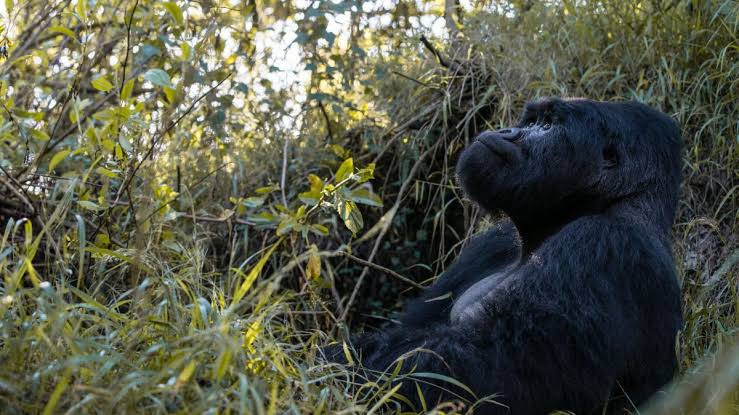
Short Gorilla Trips Uganda. “I’d love to trek gorillas, but I don’t have two weeks” is one of the most common things we hear from travellers planning a trip to Uganda. The good news is that you don’t need two weeks, or even one. A well-planned short gorilla trip in Uganda can realistically be done in two to three days, and thousands of travellers do exactly that every year: business visitors extending a Kampala trip, honeymooners adding a bucket-list detour before a beach leg elsewhere, and regional travellers crossing in from Rwanda or Kenya for a focused, fast encounter with one of the world’s rarest great apes. We plan this exact kind of trip constantly, and the questions are almost always the same: how few days can I actually get away with, which route is fastest from where I’m starting, and how do I stop a short trip from turning into a stressful sprint against the clock.
This guide is the complete playbook for a short Uganda gorilla trip: realistic minimum timeframes, which of Bwindi’s four trekking sectors actually make a short trip possible, sample 2-day and 3-day itineraries, permit prices, the best season, what to pack, what can go wrong, and how to book it through our Uganda safari packages without losing a single unnecessary day.
Why Uganda Works So Well for a Short Gorilla Trip
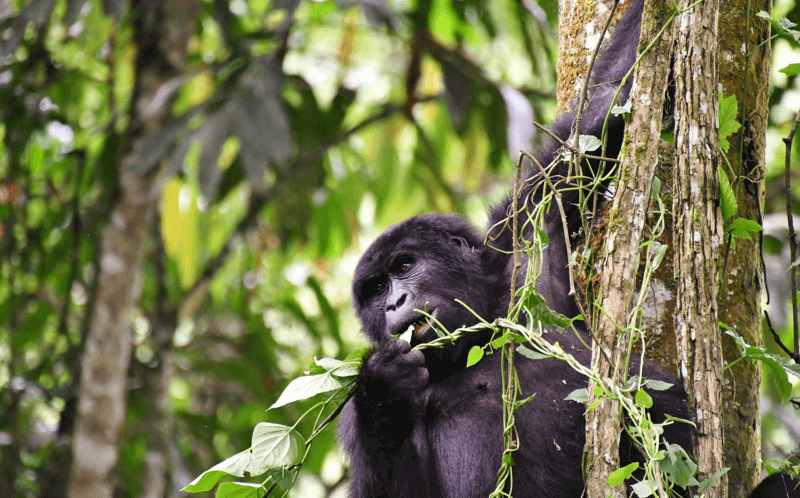
Uganda is home to more than half of the world’s remaining mountain gorillas, split between Bwindi Impenetrable Forest and the smaller Mgahinga Gorilla National Park, both tucked into the country’s mountainous southwest corner. What makes a short trip realistic is Uganda’s flexibility: multiple domestic flight options into airstrips near the park, four separate trekking sectors spread around Bwindi so you’re never trekking from a single bottleneck location, and a well-developed network of lodges and driver-guides used to fast-turnaround itineraries. Compare that to some other primate destinations where a single access road or a single trekking base creates a hard floor on how quickly a trip can move, and it’s clear why Uganda has become the region’s most flexible short-trip gorilla destination. Regional operators covering the wider Virunga and Bwindi corridor, including broader gorilla safari route guides that compare Uganda against Rwanda and Congo side by side, consistently point to Uganda’s sector flexibility as the reason it accommodates compressed schedules better than its neighbours.
How Many Days Do You Really Need for Gorilla Trekking in Uganda?
Two full days is the realistic minimum: one to arrive and reach the park, one to trek. Three days removes almost all of the schedule pressure and is what we recommend for most first-time visitors. A genuine one-day trip, flying in and trekking the same morning, is technically possible from certain sectors with a very early charter flight, but it leaves no room for a delayed flight, a slow border queue, or simple exhaustion, so we only build it for guests who have explicitly accepted that risk. For nearly everyone, think in terms of “2 nights, 3 days” as the sensible short-trip baseline, the same logic we use when building a 3-Day Uganda Gorillas Safari.
Uganda’s Four Gorilla Trekking Sectors (and Why They Matter for a Short Trip)
Bwindi Impenetrable Forest is divided into four trekking sectors: Buhoma in the north, Ruhija in the east, and Rushaga and Nkuringo in the south. Each has its own access road, its own cluster of lodges, and its own set of habituated gorilla families. For a short trip, which sector you’re assigned to matters enormously, because it determines your driving time from Entebbe or Kampala, and, if you’re routing through Rwanda, your driving time to the Cyanika border. Buhoma is the most established and closest to central/northern approach roads; Rushaga and Nkuringo sit closest to the Rwandan border; Ruhija sits roughly in between. If you have any ability to request a sector when booking your permit, tell your operator your travel direction first, arriving from Entebbe versus arriving from Kigali call for different sectors entirely. This independent Bwindi Impenetrable Forest destination profile is a useful companion read if you want a fuller picture of how the park’s geography and sectors are laid out before requesting one specifically.
Beyond Bwindi, Mgahinga Gorilla National Park offers a second, much smaller gorilla-trekking option right on the Rwandan border, historically with a single habituated family and correspondingly limited permit availability. It’s worth checking Mgahinga’s current status with your operator if Bwindi permits are sold out on your exact dates; this Mgahinga Gorilla National Park overview covers what to expect there in more detail.
As a quick reference, Buhoma tends to suit travellers driving in from Kampala on the classic northern route; Ruhija sits a little further east and is often paired with a stop near Bwindi’s community projects; Rushaga has the largest number of habituated families and sits closest to Cyanika; and Nkuringo, perched on a ridge with sweeping views over the forest, is a close second for Rwanda-side access but has a reputation for a steeper return climb than the other three. None of these differences should be a dealbreaker on their own, but knowing them in advance helps you set realistic expectations for both the drive and the hike.
The 2-Day Short Gorilla Trip Itinerary
For travellers who genuinely cannot spare a third day, our fastest itinerary uses a domestic flight rather than the eight-to-nine hour road transfer from Kampala. You fly into an airstrip near Bwindi on day one, transfer to your lodge, rest, and trek first thing on day two before flying back out that same evening. This compressed structure works best from Buhoma or Ruhija, both served by the same regional airstrips, and it’s the same approach behind our 2-day Uganda gorilla safari from Kigali for travellers approaching from the Rwandan side instead. It’s worth comparing timing against a similar route such as this 2-day Uganda gorilla tour from Kigali if you’re weighing flight versus road options for your dates.
The Classic 3-Day Uganda Gorilla Safari
Three days is the sweet spot for almost every short-trip traveller. Day one covers arrival and transfer, whether by road or air; day two is the full trekking day; day three is a relaxed morning, sometimes with a stop at a nearby Batwa cultural encounter, before heading back out. This is exactly the structure of our 3-Day Uganda Gorillas Safari and our 3-Day Best of Uganda Gorilla Safari, both built to deliver the complete trekking experience without a single wasted day. If a cultural stop is a priority rather than an optional extra, our 4-Day Uganda Cultural and Gorilla Tour extends the same core trip by one additional day.
Flying vs Driving to Bwindi: Which Saves More Time?
The overland drive from Entebbe or Kampala to Bwindi takes roughly eight to nine hours on a good day, which effectively consumes an entire travel day each way. A domestic flight cuts that to under an hour, landing at one of the airstrips serving the park, and is the single biggest lever for compressing a Uganda gorilla trip into two or three days rather than four or five. The trade-off is cost: charter and scheduled light-aircraft flights run considerably more than road transport, though for a short trip the time saved is often worth it, particularly when that saved day can instead be spent trekking, resting, or adding a second activity rather than sitting in a vehicle. If you’re arriving via Rwanda instead, the calculation flips, since the drive from Kigali to the southern sectors is only two to four hours, making road transport perfectly reasonable on that side of the border.
Gorilla Trekking Permit Prices in Uganda (2026)
| Category | Standard Gorilla Trekking Permit |
|---|---|
| Foreign Non-Resident | US$800 per person |
| Foreign Resident | US$700 per person |
| Other African Citizen | US$500 per person |
| East African Citizen | UGX 300,000 per person |
Permit fees are set by the Uganda Wildlife Authority and revised periodically; treat these as a planning guide and confirm the current rate at booking. We cover the full breakdown, including what’s included and what isn’t, in our dedicated gorilla trekking price guide.
The permit covers park entry, a ranger-guided trek, and up to one hour with a habituated gorilla family. It does not cover accommodation, transport, porter fees, or guide and ranger tips, all of which factor into a realistic short-trip budget. As a rough planning figure, a lean 3-day trip using mid-range accommodation and a private vehicle typically runs from just over a thousand dollars per person up to several thousand at the luxury end, with the permit itself as the single largest fixed cost regardless of which lodge category you choose. For travellers watching costs closely, our budget gorilla safari cost guide breaks down a lean itinerary in detail.
The Gorilla Habituation Experience: Usually Not a Fit for Short Trips
Alongside the standard one-hour trekking permit, Uganda also offers the Gorilla Habituation Experience in Bwindi’s Rushaga sector, allowing up to four hours with a family still being acclimatised to human presence. It costs considerably more than the standard permit and is capped at just four visitors per group, which means significantly less availability at short notice. For a short trip specifically, the standard permit is almost always the better choice: it’s cheaper, the sighting is every bit as memorable, and the larger eight-person group size means far better odds of finding an open slot when you’re booking only a few weeks out. Save the habituation experience for a future trip with more planning lead time, rather than building a short-trip itinerary around a permit type that’s hardest to secure quickly.
What If You’re Coming From Kenya, Tanzania, or Elsewhere in the Region?
Most of this guide focuses on the two most common entry points, Entebbe and Kigali, but a growing number of our short-trip guests fly in via Nairobi or connect through Kilimanjaro. From Nairobi, a direct flight into Entebbe followed by a domestic charter to Bwindi is usually the fastest combination, while travellers already in northern Tanzania sometimes find it faster to route through Kigali instead, given Rwanda’s shorter road distance to the southern trekking sectors. Whichever direction you’re coming from, the underlying planning logic is identical: work backwards from your entry airport, pick the Bwindi sector that minimises driving time from that point, and build your permit request around that sector rather than the other way around.
How Weather and Trail Conditions Affect Your Timeline
Beyond the broad dry-season and rainy-season pattern covered later in this guide, day-to-day weather can shift a trek’s duration meaningfully. A morning of heavy rain can slow the return hike by turning forest trails to mud, adding thirty minutes to an hour compared to dry conditions on the same route. Because a short trip has little buffer to absorb this kind of delay, it’s worth building in a slightly wider window than you think you need on the day of the trek itself, particularly if you have any onward travel booked for later that same afternoon. Trail conditions also vary by sector: Rushaga and Nkuringo’s steeper terrain tends to be more affected by rain than Buhoma’s gentler approach trails, which is one more reason to factor sector choice into your weather planning rather than treating Bwindi as a single uniform hiking environment.
What Documents and Preparations You Need Before You Go
Beyond your passport, which needs at least six months’ validity, you’ll need proof of yellow fever vaccination if arriving from a country with transmission risk, and either a Uganda visa or the East African Tourist Visa if you’re planning to cross into Rwanda or Kenya as part of the same trip. Because a short itinerary has little slack, sort out visas and vaccination certificates well in advance rather than assuming they can be handled on arrival. It’s also worth confirming your permit booking in writing before you fly, since permits are allocated to named individuals and are non-transferable.
It’s also worth packing everything trek-critical into carry-on luggage rather than checked bags, particularly if any leg of your journey involves a domestic charter flight, since small aircraft sometimes carry stricter baggage weight limits than international carriers. A separate, smaller daypack that you can bring straight from the plane to the trailhead without repacking saves valuable time on a schedule that doesn’t have much to spare.
Combining a Short Gorilla Trek with Chimpanzee Tracking
If your route already passes near Kibale Forest, famous for having Africa’s highest density of chimpanzees, it’s possible to add a chimp trek without derailing a short schedule, provided you plan the driving distances carefully. Our 3-day chimp tracking safari to Kibale and our 3-day chimpanzee tracking safari both work well as standalone short trips if gorillas and chimps in the same few days feels like too much driving, while our 5-day gorilla and chimpanzee tour combines both properly with a comfortable amount of road time between them. For comparison, this 3-day Uganda chimpanzee tour outlines a similar chimp-only short format worth checking against your own dates.
Adding Queen Elizabeth National Park to a Short Trip
Queen Elizabeth National Park sits between Bwindi and Kibale, making it a natural stop for travellers with one extra day who want a classic savannah game drive alongside their primate trekking. Tree-climbing lions, elephants, and the Kazinga Channel’s hippo and bird life are the main draws. Our 3-day Queen Elizabeth wildlife encounter can be tacked onto a gorilla trek if your schedule stretches to four or five days, and for a broader look at the park itself, this Queen Elizabeth National Park destination guide is a useful reference before you decide whether it fits your route.
Cross-Border Short Trips: Uganda Gorillas from Kigali
Because Bwindi’s southern sectors sit close to Rwanda, Kigali is often the fastest entry point for a short Uganda gorilla trip, even for travellers not otherwise visiting Rwanda. Our 3-day Bwindi gorilla safari from Kigali and broader Uganda-Rwanda gorilla safaris both use this route, crossing at Cyanika in two to four hours from Kigali depending on the exact sector. For guests planning this independently, a route breakdown such as this one-day Uganda gorilla safari from Kigali or this 3-day Uganda gorilla safari from Rwanda itinerary is useful for understanding realistic border timing before locking in flights.
Best Time of Year for a Quick Gorilla Trek in Uganda
Uganda’s two dry seasons, June through September and December through February, offer firmer trails and generally faster, more predictable trek times, which matters most when your itinerary has little room to absorb delay. The rainier months, March to May and October to November, bring fewer crowds and sometimes easier last-minute permit availability, at the cost of muddier, occasionally slower trekking conditions. Since a short trip depends on tight timing more than a longer one does, we lean toward recommending dry-season travel whenever a guest’s schedule is genuinely fixed and inflexible. Peak dry-season months also tend to have more direct flight options into Entebbe and more frequent domestic charter departures to airstrips near Bwindi, which reduces the connection risk that a tight itinerary can least afford to absorb; the trade-off is that permits and lodge rooms in those same months sell out earliest, so book several months ahead if your dates fall in July, August, or the December holiday period.
Fitness, Packing and Preparing for the Trek
The trek itself is identical in difficulty whether your trip is two days or two weeks: expect anywhere from 30 minutes to five hours of hiking through dense, often steep terrain, depending on where the assigned gorilla family happens to be that morning. Pack sturdy waterproof boots that are already broken in, a rain jacket, gardening gloves for gripping vegetation, and a daypack with water and snacks. Hire a porter at the trailhead regardless of your fitness level; the small fee supports the local community and the extra pair of hands is genuinely useful on slippery terrain. On a short trip specifically, pack all trekking gear into your carry-on rather than checked luggage, since there’s no spare day to wait out a delayed bag. A short packing list worth running through before departure: broken-in waterproof boots, a rain jacket, gardening gloves, long trousers tucked into socks, a wide-brimmed hat, insect repellent, a basic first-aid kit, small-denomination US dollars or Ugandan shillings in cash for porter and guide tips, and a zoom-lens camera rather than a flash unit, since flash photography is prohibited near the gorillas.
What Happens on Trekking Day
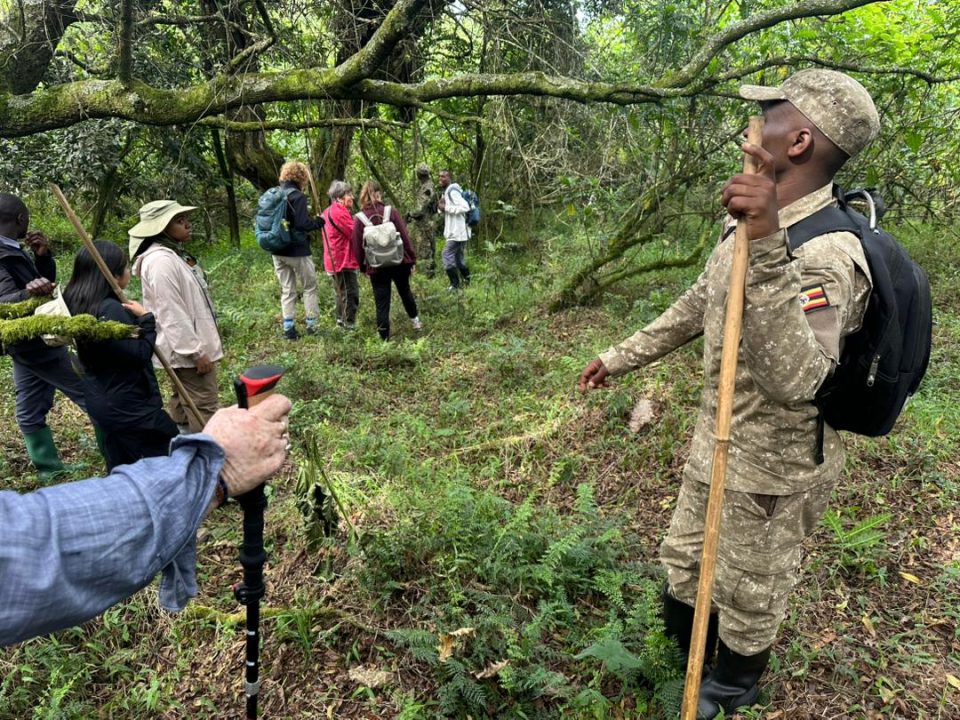
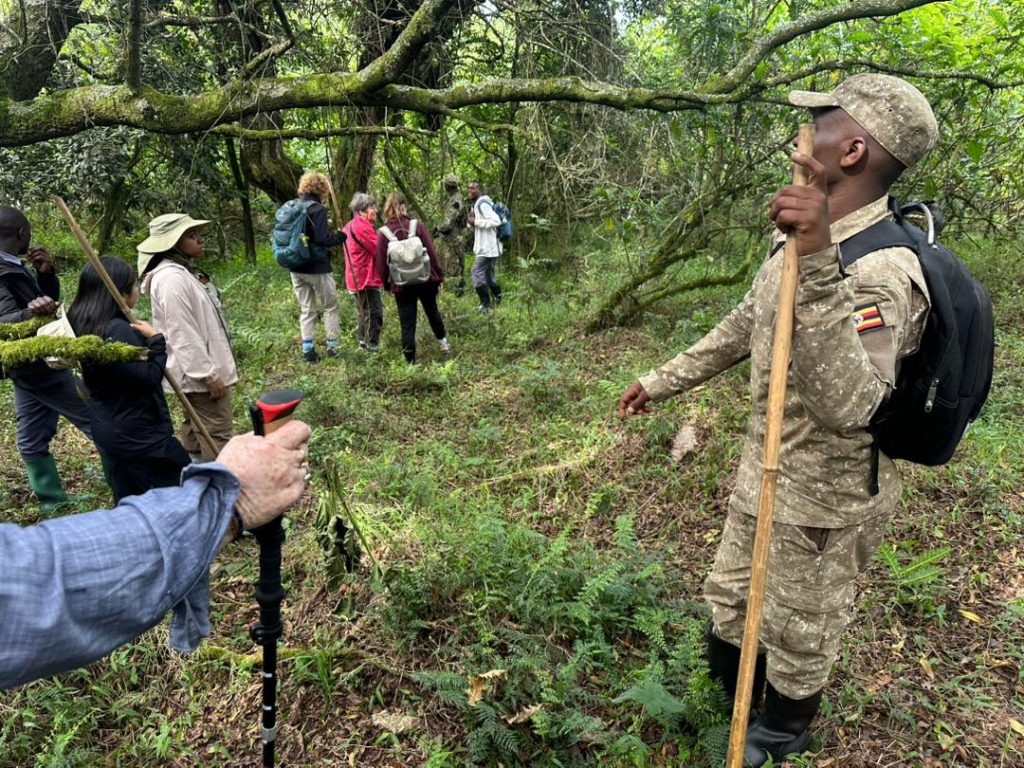
Trekking days start with registration at your sector’s park headquarters around 7:00 a.m., followed by a safety briefing and group assignment based on fitness level. Rangers then lead your group of up to eight trekkers toward the gorilla family’s last known location, adjusting the route as trackers, who’ve often been following the family since dawn, radio in updates. Once you’re close, you’ll leave bags with an assistant guide and approach on foot, keeping at least seven metres from the gorillas. You get a full hour with the family before heading back to the trailhead. Total time away from your vehicle can range from two hours to a full day, which is exactly why the timing details in this guide matter so much for a short trip. We cover this in more depth in our guide to how long a gorilla trek actually takes. It’s worth understanding why: rangers and trackers head out before dawn to locate each family’s overnight nesting site, then follow their movement through the morning, radioing updates back to the guide leading your group. Some families are found within a short, easy walk of the trailhead on a given day; others have moved deep into difficult terrain overnight and take several hours of strenuous hiking to reach. This isn’t a flaw in the system, it’s simply wild animal behaviour, and no operator can promise an exact finish time before the day begins.
Rules and Etiquette Every Trekker Must Follow
The minimum age for trekking is 15, groups are capped at eight visitors per gorilla family, and anyone showing signs of a contagious illness will be asked to sit the trek out, since gorillas can contract human diseases. Flash photography, loud noise, and sudden movements near the family are all discouraged. These rules exist regardless of how short or long your trip is, and they’re part of the reason Uganda’s gorilla population has grown steadily over recent decades rather than declined the way many other great ape populations have. Rangers carry two-way radios and coordinate constantly with trackers, which is why sighting rates are consistently high; it’s rare, though not impossible, to trek and not find your assigned family within the day. On the uncommon occasion a family can’t be located, park authorities typically offer a rescheduled trek or a partial refund, which limits the financial risk of an unsuccessful day even though the experience itself is never guaranteed with wild animals.
Where to Stay for a Fast-Paced Uganda Trip
On a short trip, staying in one lodge for both nights near your assigned sector saves valuable time versus shuttling between properties. Accommodation options range from simple guesthouses to high-end lodges with volcano or forest views, and matching your lodge to your specific sector, rather than picking one that looks appealing but adds an extra hour of driving to reach the trailhead, is one of the most overlooked details in short-trip planning. We match lodge and sector together for every guest rather than booking either in isolation. It’s also worth thinking about lodge location relative to your departure route rather than only the trailhead: a lodge that’s perfectly placed for trekking day can still add unnecessary backtracking on your departure morning if it isn’t also convenient to your onward road or airstrip, so we plan both legs of the stay together rather than optimising for the trek alone.
Sample Day-by-Day Itinerary for a 3-Day Trip
| Day | Activity |
|---|---|
| Day 1 | Fly or drive to Bwindi, transfer to lodge, evening briefing and rest |
| Day 2 | 7:00 a.m. registration, full-day gorilla trek, return to lodge by afternoon |
| Day 3 | Relaxed morning or optional cultural visit, transfer/flight back out |
This is the same rhythm behind our 3-Day Uganda Gorillas Safari, and it scales cleanly to four or five days if you decide on arrival that you’d like to add chimpanzee tracking or a Queen Elizabeth game drive.
Budget-Friendly Tips for a Short Gorilla Trip
A few practical choices lower the total cost of a short trip beyond the fixed permit fee. Travelling as a small group splits private transport costs across more people; choosing a mid-range guesthouse over a luxury lodge can cut accommodation costs substantially without affecting the trekking experience; and travelling in shoulder-season months just before or after peak season often secures better lodge rates with only a modest increase in rain risk. Road transport is also considerably cheaper than a domestic flight if your schedule can absorb the extra travel time, so it’s worth weighing time saved against money saved for your specific trip. Booking your permit for a weekday rather than a weekend can also help on short notice, since weekend slots in popular sectors tend to fill first, and travelling just before or after a major public holiday avoids the sharpest spikes in both permit demand and lodge pricing.
Top Short Gorilla Tour Packages by Kenlink Tours
Beyond the 2 and 3-day options already covered, our full list of available gorilla tours in Uganda is the best starting point for comparing every current short-format departure at a glance. Travellers who want gorillas, chimpanzees, and wildlife in a single slightly longer trip often choose our 8-day Uganda gorilla, chimpanzee and wildlife safari, while those who’d rather stay closer to Uganda’s classic Big Five safari circuit can look at our 7-day gorilla and wildlife safari as a slightly longer, more complete alternative to the short-trip formats above.
Common Mistakes to Avoid on a Short Gorilla Trip
The most common mistake is booking a permit in a sector that doesn’t match your travel direction, ending up with an unnecessarily long drive on both ends of an already tight trip. The second is cutting the arrival buffer too close, trekking the morning after a long-haul flight lands, which increases both fatigue and the odds of altitude discomfort. The third is assuming trek duration will be short and building a tight onward connection around that assumption; gorilla families move independently of anyone’s flight schedule, and a same-day departure after trekking should always have a buffer built in. Finally, some travellers underestimate how physically demanding the terrain can be and skip proper footwear or a porter, both of which make an already long day meaningfully harder. A less obvious mistake is booking accommodation purely on review scores without checking its distance from the assigned sector’s trailhead; a beautifully reviewed lodge an hour further away than necessary can quietly cost you the exact buffer that would have absorbed a longer-than-expected trek.
Who a Short Gorilla Trip Is Right For
A short gorilla trip suits a specific kind of traveller well, and it’s worth being honest about who that is before booking. It’s an excellent fit for anyone extending a business trip through East Africa, for couples adding a bucket-list encounter onto a longer trip elsewhere in the region, for repeat visitors who’ve already explored Uganda’s parks and are back specifically for the gorillas, and for anyone whose leave simply doesn’t stretch to two weeks but who doesn’t want to give up on the experience altogether. It’s a less natural fit for first-time visitors to East Africa who haven’t yet seen the region’s landscapes, culture, or wider wildlife, and who would likely regret compressing everything into a single narrow activity. If that describes you, a 6 to 8-day itinerary pairing gorillas with Queen Elizabeth or Kibale is usually the better starting point than a tightly compressed short trip.
Booking Your Short Gorilla Trip with Kenlink Tours
Short itineraries actually require more precise planning than long ones, since there’s no slack to absorb a permit mismatch or a missed connection. Our process starts with confirming your nationality, travel direction, and exact dates, then applying for a permit in the sector that best matches your route before booking transport and accommodation around it. Read more about how we plan trips on our Uganda travel guide and about us pages, or reach out directly through our contact page for a quote on your specific dates. Groups travelling together should also ask about our small-group departures, and if you need a vehicle for independent travel around your trip, our car hire service covers both Uganda and cross-border routes. If you’re arranging a cross-border transfer independently rather than through a single operator end to end, it’s worth confirming pickup and timing directly with a specialist such as Pick and Transfer Safaris a few days ahead rather than assuming last-minute availability, and comparing a regional operator’s own profile, such as this Pick and Transfer Safaris about us page, is a reasonable way to sanity-check who you’re booking cross-border logistics through.
Short on time but not on ambition? Tell us your travel dates and direction and we’ll build a 2 or 3-day Uganda gorilla trip around them, permit, transport, and lodge included. Start planning your trip.
Frequently Asked Questions About Short Gorilla Trips in Uganda
Can I really trek gorillas in Uganda in just 2 days?
Yes, particularly with a domestic flight into Bwindi or a short road transfer from Kigali. It’s tight, so we generally recommend it only for travellers with a firm reason they can’t spare a third day.
Which sector is best for a short trip?
It depends on your entry point. Rushaga and Nkuringo suit travellers arriving via Kigali; Buhoma and Ruhija suit travellers flying in from Entebbe. Matching sector to route is the single biggest factor in how short your trip can realistically be.
How much does a short gorilla trip cost in total?
The permit itself is fixed regardless of trip length, but a shorter trip needs fewer accommodation nights and less ground transport, so total cost drops. Our budget cost guide breaks this down by lodge category.
Is flying or driving better for a short trip?
Flying saves the most time, cutting an eight-to-nine hour drive to under an hour, but costs considerably more. If your schedule can absorb the extra driving time, road transport is the cheaper option, especially from the Rwandan side.
What happens if my trek runs longer than expected?
Build a buffer into your onward travel plans. A same-day departure flight or long drive booked immediately after trekking leaves no room for a family that’s harder to reach than usual that day.
Should I book through a tour operator rather than independently?
Yes, especially for a short trip. Permits, sector assignment, transport, and lodging all need to line up precisely, and an established operator removes the risk of a mismatch that a compressed schedule can’t absorb.
Can I combine a short Uganda gorilla trip with chimpanzee tracking in the same trip?
Yes, though it usually stretches the trip to four or five days once you account for driving distance between Kibale and Bwindi. If time is genuinely tight, choose one primate experience rather than trying to fit both into a 2 or 3-day window.
Is a short gorilla trip suitable for solo travellers?
Yes. Solo trekkers join the standard eight-person groups regardless of trip length, and a private 2 or 3-day itinerary is just as straightforward to arrange for one traveller as for a family or group.
What’s the single biggest factor in whether a short trip goes smoothly?
Sector-to-route matching. Booking a permit in the sector that’s genuinely closest to your entry point, rather than whichever sector happens to have availability first, does more to protect a tight schedule than any other single decision.
A short trip doesn’t mean a diminished one. With the right sector, the right transport choice, and a realistic timeline, two or three days in Uganda is enough to stand face to face with a wild mountain gorilla family and come home changed by it. The country’s mix of flight options, four separate trekking sectors, and well-developed lodge network were practically built to make this kind of focused, high-impact travel possible. Our team at Kenlink Tours plans short gorilla trips every week, matching sector to route down to the specific airstrip or border crossing where it matters, so get in touch and tell us your dates.