- EXPERT'S HELP
- +256789210067
- +256200955001
- info@kenlinktours.com


Cheap 2 Day Gorilla Trekking Tour from Kigali to Bwindi
September 5, 2026
2 Day Gorilla Trekking Package from Kigali
September 5, 2026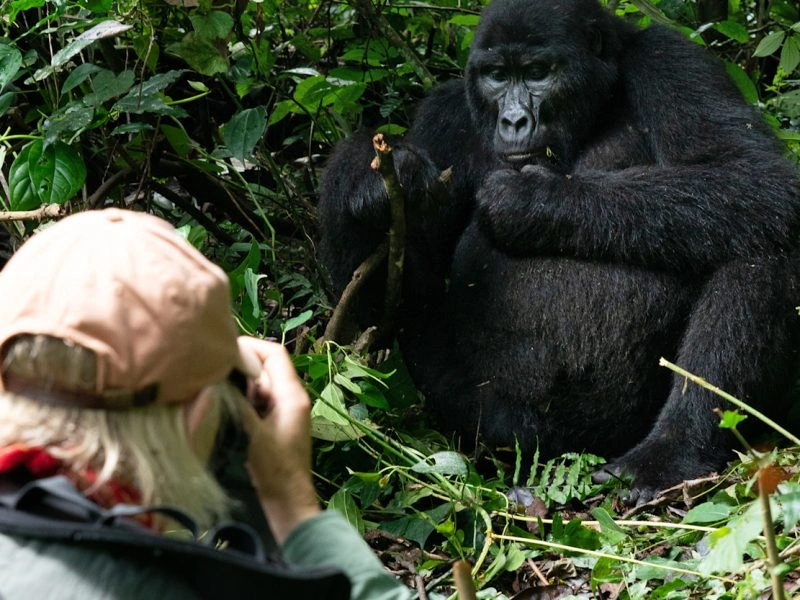
Two Day Uganda Gorilla Trekking from Kigali. Two-day Uganda gorilla trekking from Kigali has become one of the most sought-after short safaris in East Africa, and for good reason: it combines Uganda’s lower gorilla permit price with a genuinely manageable window of time, launched from a capital city with excellent international flight connections. What surprises many first-time researchers is that “Uganda gorilla trekking from Kigali” is not one single itinerary — it can mean a trek in Bwindi Impenetrable Forest’s southern sectors, or a trek in the smaller, closer Mgahinga Gorilla National Park, and choosing correctly between the two matters enormously for a trip this tightly timed.
This guide walks through everything a first-time or returning trekker needs to plan a genuinely well-run two-day Uganda gorilla trek from Kigali: which park and sector actually fits a two-day window, the real border-crossing logistics, permit costs, fitness and age rules, what to pack, and how to book it properly. Our own 2-Day Uganda Gorilla Safari Starting from Kigali is built around exactly the logistics described below, and this guide explains the reasoning behind every part of that itinerary.
We have written this as the comprehensive starting point for the whole topic, rather than a single fixed itinerary, because the single biggest planning decision on this route — Bwindi or Mgahinga — genuinely depends on your own priorities rather than on a universally correct answer. Treat the sections below as a sequence of decisions: which park, which sector, which season, and which budget tier, each building on the last, so that by the end you have a specific, workable itinerary rather than a general sense of what a Uganda gorilla trek involves.
What a 2-Day Uganda Gorilla Trekking Trip from Kigali Actually Involves
At its core, this trip has three moving parts: crossing from Rwanda into Uganda at the Cyanika border, reaching a habituated gorilla family in either Bwindi’s southern sectors or Mgahinga Gorilla National Park, and returning to Kigali within the same two-day window. Every other decision — which lodge, which vehicle, which visa — sits on top of that basic structure, and getting the structure right is what separates a smooth two-day trip from a genuinely stressful one.
Unlike a Rwanda-only itinerary, this trip crosses an international border, which adds real logistics that a good operator manages quietly in the background: permit reservation under your exact passport name, visa guidance, and a driver-guide who treats the crossing as routine rather than a source of delay. Our 2-day Uganda gorilla safari from Kigali handles all of this as standard, and it is worth understanding each piece before you book anywhere.
Why Kigali Is Uganda’s Best-Kept Gorilla Trekking Secret
Most travellers assume a Uganda gorilla trek must start from Entebbe, Uganda’s own international airport, but for the south-western trekking sectors — Bwindi’s Rushaga and Nkuringo, and Mgahinga — Kigali is frequently the faster, more convenient gateway. The Cyanika border crossing sits only around 115 kilometres from Kigali, whereas the equivalent drive from Entebbe involves considerably more time crossing the length of Uganda itself.
This is precisely why Kigali has quietly become the preferred launch point for short Uganda gorilla safaris, particularly for travellers already visiting Rwanda or connecting through Kigali on a wider East Africa itinerary. Our Uganda and Rwanda gorilla safaris comparison covers this routing logic in more depth if you are still deciding between the two gateway cities.
Choosing Your Park: Bwindi Impenetrable Forest vs Mgahinga Gorilla National Park
This is the single most important decision in planning a two-day trip, and it is one many generic itineraries gloss over. Bwindi’s Rushaga and Nkuringo sectors host multiple habituated gorilla families across a genuinely large stretch of dense rainforest, offering more permit availability and a wider variety of family sizes and personalities, but sitting a further one-and-a-half to two-and-a-half hours beyond the Cyanika border.
Mgahinga Gorilla National Park, by contrast, sits just thirty minutes past the border and hosts a single habituated family, the Nyakagezi group — smaller in scale, but considerably faster to reach, which matters if your two-day window has any tightness to it at all. Neither choice is wrong; Bwindi suits travellers who want the widest possible choice of gorilla families and are comfortable with the longer drive, while Mgahinga suits travellers for whom minimising road time is the priority. Our 2-day Uganda gorilla safari from Kigali can be arranged around either park depending on which trade-off matters more to you.
What’s Included in a 2-Day Uganda Gorilla Trekking Package from Kigali
A properly built two-day package should include your Uganda gorilla trekking permit reserved in your name, a private or shared vehicle and experienced driver-guide for the full Kigali–Cyanika–park round trip, all border-crossing assistance, one night’s accommodation near your chosen park, the morning ranger briefing, and your return transfer to Kigali. What is usually excluded — and worth budgeting separately — is your Uganda entry visa fee, porter fees at the trailhead, and gratuities for your guide and driver.
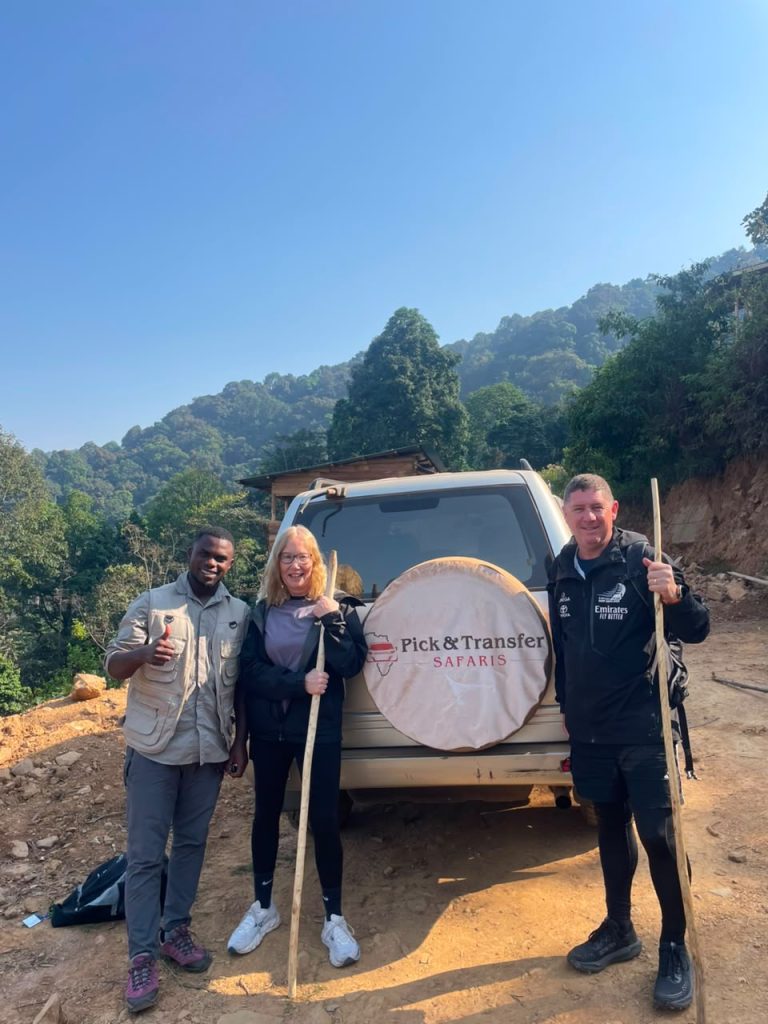
Because this itinerary crosses an international border, always ask exactly which documents your operator prepares versus which you must arrange yourself before you pay a deposit. Pick and Transfer Safaris’ 2-day Uganda gorilla tour from Kigali is a useful external reference for comparing what a properly itemised cross-border package should look like.
Day 1: Crossing the Cyanika Border into Uganda
Your trip begins with an early pickup in Kigali, ideally by 6:00–7:00 a.m., followed by a three-to-four-hour drive to the Cyanika border post, which operates daily from 6:00 a.m. to 7:00 p.m. Crossing formalities typically add thirty minutes to an hour once your passport, yellow fever certificate, and visa are checked on both sides. From Cyanika, the drive continues either thirty minutes to Mgahinga, or a further one-and-a-half to two-and-a-half hours to Bwindi’s Rushaga or Nkuringo sectors, depending on which park you have chosen.
Arriving at your lodge by early-to-mid afternoon leaves time to rest, review your guide’s briefing notes for the following morning, and pack a lean day bag for the trek. We never recommend crossing the border on the morning of the trek itself — building in this overnight buffer is what keeps Day 2 realistic rather than rushed.
Day 2: Trekking Day — What Actually Happens in the Forest
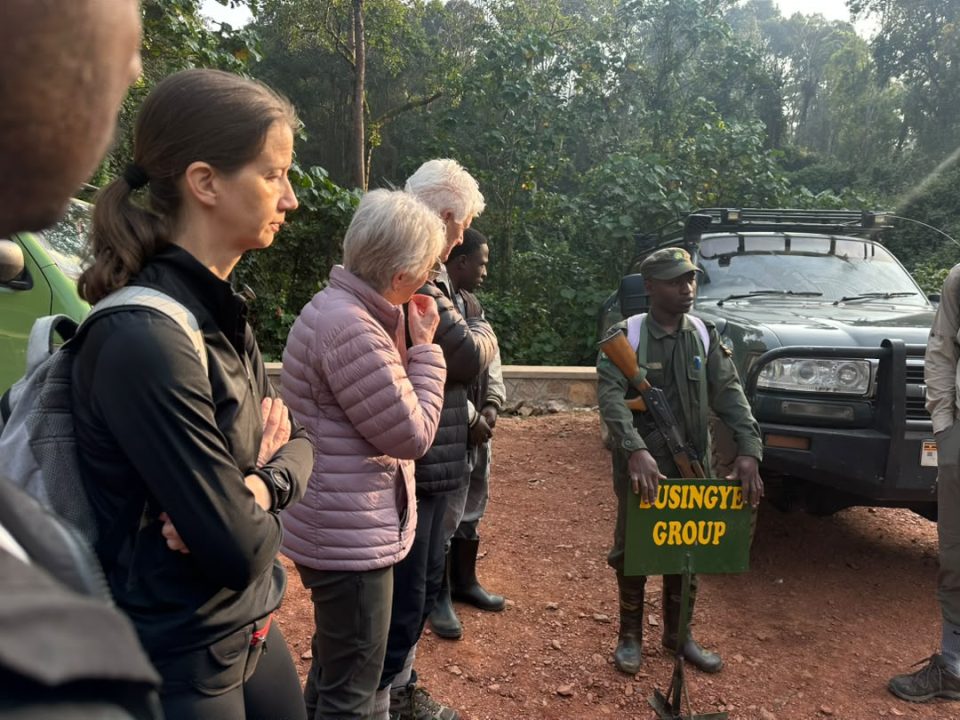
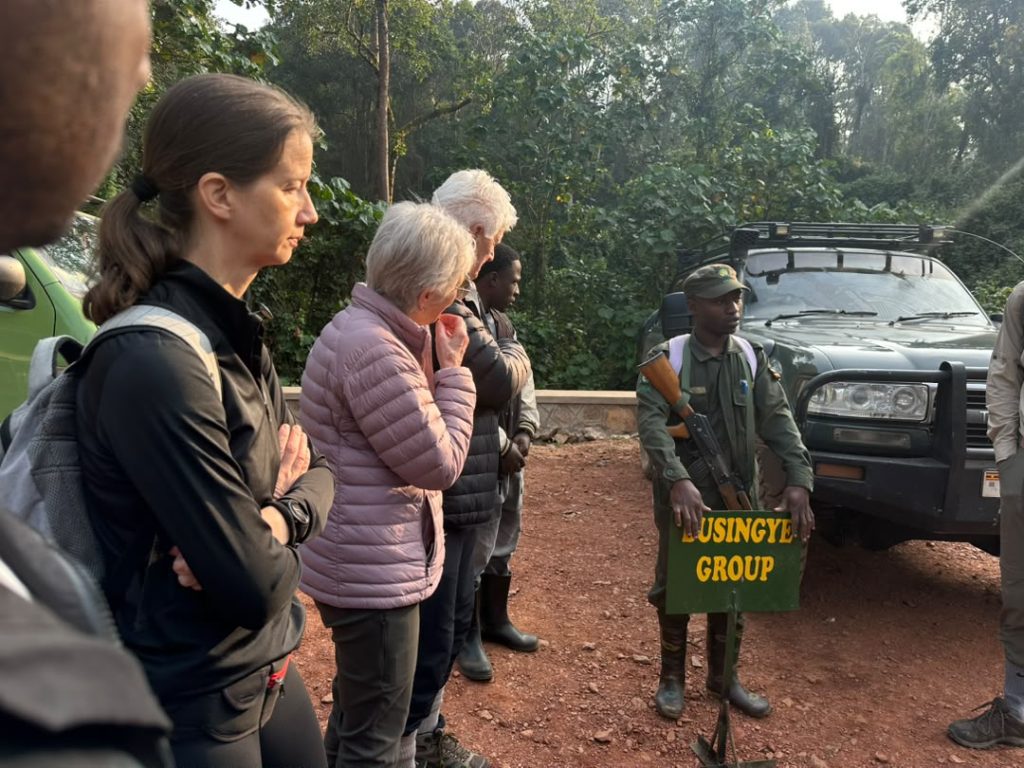
Day two starts early, typically 5:00–5:30 a.m., with a light breakfast before departing for your park’s ranger post for registration and briefing, usually underway by 7:00–7:30 a.m. Rangers organise trekkers into groups of no more than eight people per habituated gorilla family. In Mgahinga, this means everyone treks together toward the single Nyakagezi family; in Bwindi’s Rushaga or Nkuringo, you are assigned to one of several families based on your stated fitness level.
Trek duration varies genuinely by location: Mgahinga’s terrain tends to produce shorter treks, often two to four hours round trip, while Bwindi’s Rushaga and Nkuringo sectors can run anywhere from ninety minutes to several hours depending on where the family has moved overnight. Once located, the same rules apply everywhere: a seven-metre minimum distance, no flash photography, quiet voices, and a strictly enforced one-hour limit with the gorillas. Afterwards, you return to your lodge for a late lunch before the drive back to Kigali, typically arriving in the evening.
How Much Does a 2-Day Uganda Gorilla Trek from Kigali Cost?
The Uganda gorilla trekking permit costs approximately USD 800 per person in 2026, covering park entrance, a ranger-guided trek, and up to one hour with the gorillas — identical in price whether you trek in Bwindi or Mgahinga, since the fee is set by the Uganda Wildlife Authority rather than by park or sector. On top of the permit, budget for your private or shared vehicle across the full round trip, one night’s accommodation, your Uganda visa or East Africa Tourist Visa, porter fees, and guide/driver gratuities.
A realistic all-inclusive two-day package typically lands between USD 1,300 and USD 2,000 per person depending on lodge category and vehicle exclusivity, noticeably less than an equivalent Rwanda-based trip once the lower permit price is factored in, even after accounting for the extra transport. Our 2-day Uganda gorilla safari from Kigali itemises this cost breakdown before you pay a deposit, and Pick and Transfer Safaris’ 2-day Volcanoes gorilla trek from Kigali is a useful external reference if you want to run the same comparison against Rwanda’s Volcanoes National Park.
Uganda vs Rwanda Permits: Making the Right Call for a 2-Day Window
The decision between trekking in Uganda or Rwanda from Kigali comes down to a straightforward trade-off. Rwanda’s Volcanoes National Park sits only two to two-and-a-half hours from Kigali with no border crossing required, but its permit costs roughly USD 1,500. Uganda’s permit costs roughly USD 800, a saving of around USD 700 per person, but requires the Cyanika crossing and considerably more driving time to reach either Mgahinga or Bwindi.
For travellers whose absolute priority is minimising travel time, Rwanda remains the more time-efficient choice. For travellers prioritising cost, or who specifically want Uganda’s wilder, denser Bwindi forest, the itinerary in this guide is the better fit. Pick and Transfer Safaris’ Volcanoes National Park destination guide is worth reading alongside this one before you commit either way.
Best Time of Year to Trek in Uganda from Kigali
Uganda’s two dry seasons — roughly June to September and December to February — offer firmer trails and more predictable road conditions on the long drive from Kigali, both of which matter more on a tightly scheduled two-day trip than on a longer, more flexible one. The wetter months (March–May and October–November) bring lusher forest and thinner crowds at the ranger post, but demand more buffer time for both driving and trekking.
Permits are capped daily regardless of season — Mgahinga has a limited number tied to its single family, and Bwindi’s Rushaga and Nkuringo sectors allocate a set number per habituated family per day. Book well ahead for peak months, since popular sectors can sell out six months or more in advance.
Age Limit, Fitness, and Health Requirements
Uganda enforces a strict minimum age of 15 for gorilla trekking across every sector, with no exceptions, and no maximum age provided you are reasonably fit. Health screening happens at the ranger post every morning — anyone showing symptoms of a cold, flu, or other contagious illness will be asked to sit out that day’s trek, since mountain gorillas are highly susceptible to human disease.
Bwindi’s terrain is generally steeper and denser than Mgahinga’s, so travellers with any fitness concerns may find Mgahinga’s shorter average trek more comfortable, while still assigning porter support on either route. Groups remain capped at eight trekkers per gorilla family, a seven-metre distance is maintained at all times, and travellers with younger children should consider golden monkey tracking instead, which carries no age restriction.
What to Pack for a 2-Day Uganda Gorilla Trekking Trip
Pack sturdy waterproof hiking boots with good ankle support, gaiters to keep mud and biting ants out, gardening gloves for pushing through nettles, a lightweight rain jacket regardless of season, and quick-dry rather than cotton layers, since both Bwindi and Mgahinga stay humid well into the dry season. A daypack for water, snacks, and border-crossing documents is essential, since you will need quick access to your passport and yellow fever certificate at Cyanika.
A zoom lens and spare camera batteries are worth the extra weight for photography, since the seven-metre distance rule applies regardless of park. A change of clothes for the drive back to Kigali is a small but genuinely useful addition, since trekking gear rarely finishes the day clean.
Visa and Border Crossing Requirements
Crossing at Cyanika requires a valid passport with at least six months’ remaining validity, a yellow fever vaccination certificate, and a valid visa. Most travellers use the East Africa Tourist Visa, priced at roughly USD 100 for 90-day multi-entry access across Uganda, Rwanda, and Kenya — excellent value if your trip touches more than one of these countries. A single-entry Uganda visa, at roughly USD 50, suits travellers for whom Uganda is a one-time add-on to an otherwise Rwanda-based trip.
Apply online in advance rather than at the border, since this avoids delays that eat into an already tight schedule. If you are self-driving rather than using a licensed operator, you will also need COMESA insurance and a temporary import permit; our car hire page covers what self-drive travellers need to arrange separately.
Keep both your yellow fever certificate and your printed visa approval in an easily accessible bag rather than buried in checked luggage, since immigration officers on both sides of Cyanika check these documents in person. Travellers occasionally assume a digital copy on a phone is sufficient; while this is often accepted, a printed copy avoids any risk of a dead battery or a slow connection turning a routine check into an unnecessary delay on a schedule that has little slack to spare.
How Your Fitness Level Should Shape Your Park Choice
Fitness is a bigger factor in choosing between Bwindi and Mgahinga than most travellers initially assume. Mgahinga’s terrain, while still a genuine hike through volcanic slopes and bamboo forest, tends to produce shorter average treks with less variability, making it a sensible choice for travellers who are reasonably fit but wary of an unpredictable multi-hour climb. Bwindi’s Rushaga and Nkuringo sectors offer more variety in family location, which also means more variability in trek length and difficulty — some mornings a family is reached within ninety minutes, others require several hours of steep, muddy climbing.
Neither park should be attempted casually. Both require a base level of fitness for two to five hours of uneven walking, sometimes at altitude, and both benefit from hiring a porter regardless of how fit you consider yourself. If you are travelling with a companion whose fitness level differs meaningfully from your own, Mgahinga’s more predictable trek length is often the safer shared choice, since it reduces the chance of one person’s pace putting real strain on the group’s schedule.
If you have any pre-existing joint, knee, or cardiovascular concerns, raise them with your operator when booking rather than at the ranger post on the morning of your trek. A good operator can arrange a second porter or a more gradual pace for Bwindi’s steeper sections, or steer you firmly toward Mgahinga if that is genuinely the better fit for your health. Being upfront here costs nothing and meaningfully reduces the chance of a difficult morning turning into a genuinely unsafe one.
Where to Stay Near Bwindi and Mgahinga
Because a two-day itinerary allows for only one overnight, choose accommodation based on proximity to your chosen park’s ranger post in drive time, not straight-line distance. Lodges and guesthouses near Rushaga and Nkuringo range from simple, comfortable options to striking ridge-top properties with forest views, while accommodation near Mgahinga tends to be smaller in number but similarly well positioned given the park’s proximity to the border.
Book well ahead during the June–September and December–February dry seasons, when both permits and the best-located rooms sell out first. Our team at Kenlink Tours matches your lodge choice to your confirmed park and permit assignment rather than booking a lodge before that decision is finalized.
It is worth resisting the temptation to lock in a lodge purely from attractive photos before your park and sector are confirmed. A comfortable, well-reviewed guesthouse fifteen minutes from the ranger post consistently beats a more scenic property forty-five minutes away on a schedule this tight, since those extra minutes compound at both ends of an already long trekking day.
Meeting the Gorillas: What to Expect on the Day
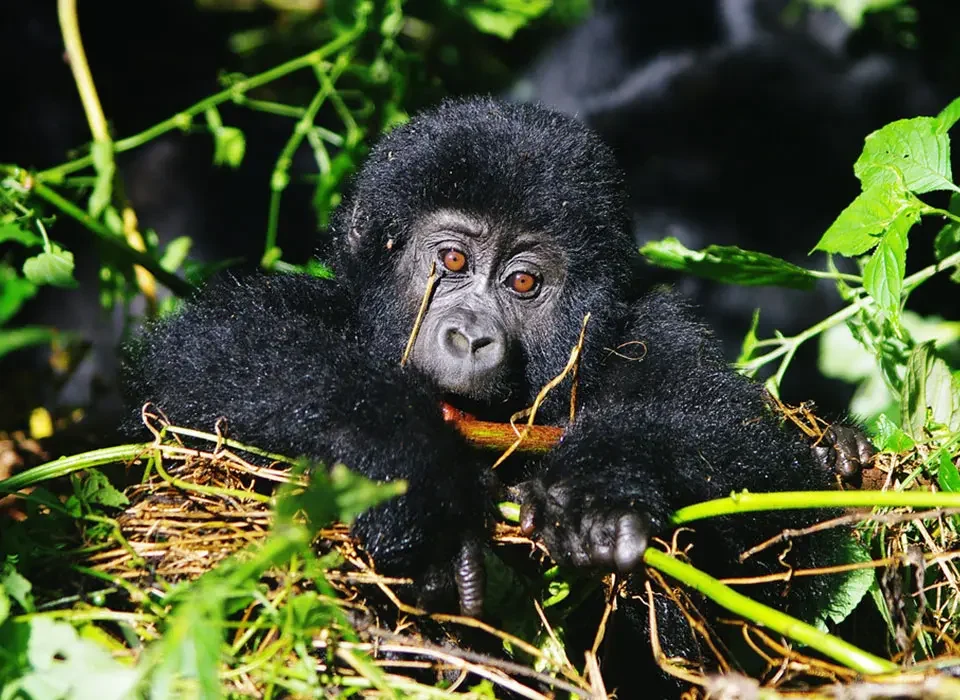
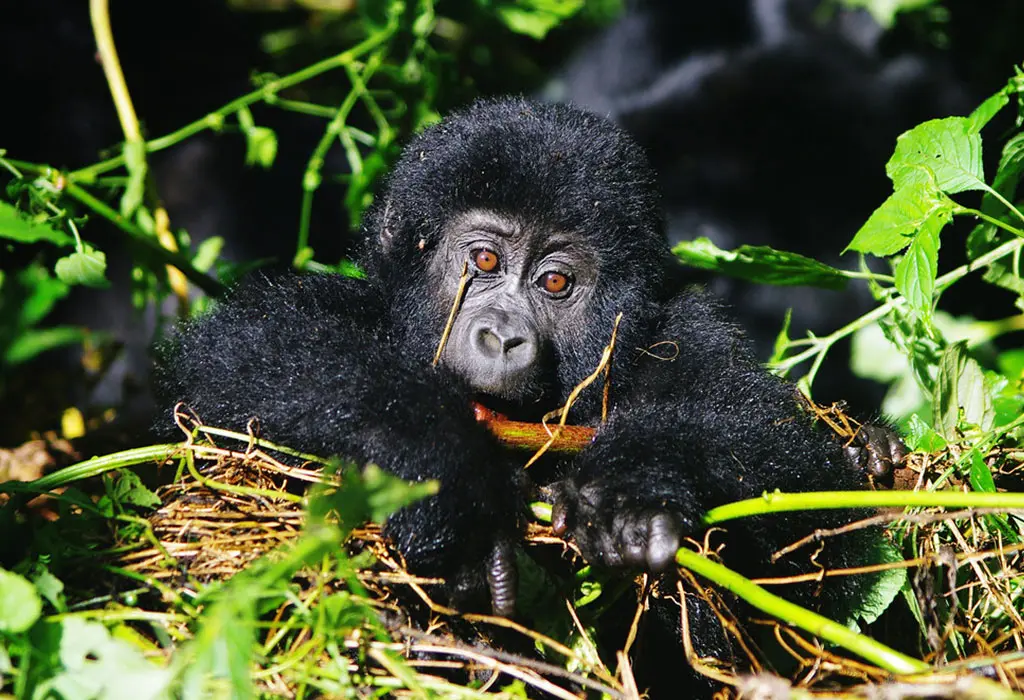
Whether you trek in Bwindi’s dense, tangled forest or Mgahinga’s more open volcanic slopes, the encounter itself follows the same rhythm: a quiet approach guided by your ranger, the first glimpse of a family going about an entirely ordinary morning, and an hour spent watching a silverback, playful juveniles, and attentive mothers at a respectful distance. Your guide narrates throughout — who is dominant, which members are related, which behaviors are typical for that specific family.
Many trekkers describe Mgahinga’s Nyakagezi family as particularly characterful, given how long they have been studied and habituated, while Bwindi’s larger families in Rushaga offer more scale and variety. Neither experience is objectively better — both deliver the same core encounter that makes this trip worth the journey in the first place.
Gorilla Habituation Experience: An Upgrade Worth Considering
Rushaga sector offers a small number of permits for a gorilla habituation experience — a longer, up-to-four-hour encounter with a family still being acclimatized to human presence, rather than the standard one-hour visit. This costs more than a standard permit and is booked separately, but for photographers or travellers wanting a deeper, less rushed encounter, it is worth asking your operator about directly when planning a Bwindi-based two-day trip.
Because habituation experience permits are limited and specific to Rushaga, they are not available if you choose Mgahinga instead — one more factor worth weighing when deciding between the two parks described earlier in this guide. Our 2-day Uganda gorilla safari from Kigali can be adapted to include this upgrade on request.
A Sample Hour-by-Hour Timeline for Your 2-Day Uganda Trek
Because so much of this trip’s success depends on timing, it helps to see it laid out hour by hour. Day 1: 6:00–7:00 a.m. pickup in Kigali, 7:00–11:00 a.m. drive to the Cyanika border, 11:00–11:30 a.m. border formalities, then either a further 30 minutes to Mgahinga or one-and-a-half to two-and-a-half hours to Rushaga or Nkuringo, afternoon check-in and rest, an early dinner, and an early night ahead of the pre-dawn wake-up.
Day 2: 5:00–5:30 a.m. breakfast, 6:00–6:30 a.m. departure for the ranger post, 7:00–7:30 a.m. registration and briefing, 8:00 a.m. departure into the forest, a trek of anywhere from ninety minutes to several hours depending on your park and family, one hour with the gorillas, a return trek, a late lunch, and an afternoon departure for the drive back to Kigali, typically arriving in the evening. Building this exact structure into your booking, rather than a vaguer “two days” description, is precisely what our 2-day Uganda gorilla safari from Kigali commits to in writing before you travel.
Which Gorilla Family Will You Track in Rushaga or Nkuringo?
If you choose Bwindi over Mgahinga, Rushaga is Bwindi’s most gorilla-dense sector, home to several large habituated families, some with more than twenty members, and the only sector offering the extended gorilla habituation experience described earlier in this guide. Nkuringo, just south of Rushaga, is smaller but known for dramatic ridge-top scenery and quieter trails.
Rangers assign you to a specific family on the morning of your trek based on your stated fitness level, not in advance, so being candid about how you are feeling genuinely shapes which family and trail you get. Our 3-day Bwindi gorilla safari from Kigali is worth considering if you specifically want more flexibility around which family or sector you are matched with, and Pick and Transfer Safaris’ Bwindi Impenetrable Forest National Park guide covers all four Bwindi sectors in more depth as an external reference.
Combining Uganda and Rwanda: Double Gorilla Safaris from Kigali
Because Kigali sits so close to both Uganda’s southern trekking sectors and Rwanda’s own Volcanoes National Park, some travellers choose to trek in both countries on a single trip rather than picking one. A double gorilla safari lets you compare Rwanda’s shorter volcanic-slope trails against Uganda’s denser rainforest terrain within one itinerary, at the cost of an extra permit and a few additional days.
Our 5-day Uganda Rwanda double gorilla safari and 3-day Rwanda gorilla safari both build on the same Cyanika crossing described throughout this guide, and Pick and Transfer Safaris’ 3-day Rwanda gorilla tracking and cultural tour is a useful external reference for the Rwanda side of that combination.
Extending a 2-Day Trek Into a Longer Uganda Safari
Many travellers who complete a two-day Uganda gorilla trek from Kigali find themselves wishing they had built in more time, and the good news is that this itinerary extends naturally into a longer Uganda circuit without needing to restart your planning. Our 5-day gorilla and wildlife safari and 7-day amazing gorilla and wildlife safari in Uganda both pick up naturally from a gorilla trek in Bwindi or Mgahinga, adding savannah game drives and chimpanzee tracking to the itinerary.
For travellers planning a genuinely comprehensive Uganda trip, our 10-day Uganda adventure safari itinerary shows how far the same starting point can stretch, and Pick and Transfer Safaris’ 10-day Uganda primates and wildlife itinerary is a useful external comparison for a similarly extended route.
Common Planning Mistakes on This Route
The most common mistake is choosing a park before understanding the drive-time trade-off — travellers sometimes book a Bwindi itinerary assuming it is as close to Kigali as Mgahinga, then find their schedule tighter than expected. A second common error is booking a same-evening return flight without allowing for how variable trek duration can be, particularly in Bwindi’s denser sectors. A third is arranging Uganda and Rwanda visas separately without checking whether the East Africa Tourist Visa already covers both.
Finally, some travellers assume permit price varies by park and choose Mgahinga purely expecting a discount — it does not; the USD 800 fee is identical everywhere. Choose your park based on drive time and family variety, not on a price difference that doesn’t exist. Our breakdown of driving hours from Kigali to Bwindi is a useful independent gut-check before you fix your itinerary.
Photography and Trekking Etiquette on Any Uganda Route
Whether you trek in Bwindi or Mgahinga, the same photography and etiquette rules apply, set by park authorities rather than by location. Flash photography is banned near the gorillas, since sudden bright light can startle a family that has otherwise grown comfortable with quiet human observers, and a telephoto or mid-range zoom lens is worth the extra weight in your daypack given the seven-metre minimum distance rule.
Voices should stay low throughout the encounter, sudden movements should be avoided, and eating, drinking, or smoking near the gorillas is not permitted. These rules exist because habituated families remain calm around visitors specifically due to consistent, careful behaviour on every single trek — a standard worth holding yourself to regardless of which park you end up trekking in.
Add-On Experiences: Golden Monkeys and Lake Bunyonyi
If your schedule allows even one extra day, golden monkey tracking in Mgahinga’s bamboo zones is a lighter, shorter activity with no age restriction, easily combined with a Bwindi-based trip if you have time to visit both parks. Lake Bunyonyi, roughly an hour from the Rushaga area, offers a restful afternoon of canoeing and birdwatching that pairs well with a trekking day on either side.
Our 4-day Rwanda Uganda golden monkey and gorilla trekking itinerary shows how these add-ons combine naturally with the core two-day route, and Pick and Transfer Safaris’ Mgahinga Gorilla National Park guide is a useful external reference covering the golden monkey experience in more depth.
Is Last-Minute Booking Possible for This Route?
Because permits are allocated daily by the Uganda Wildlife Authority rather than sold on demand, true last-minute availability depends entirely on cancellations and unsold allocation for your specific travel dates. Mgahinga’s single family typically sells out fastest during peak months given its limited daily allocation, while Bwindi’s multiple Rushaga and Nkuringo families occasionally hold a little more flexibility, simply because there are more permits issued across more families each day.
If your Kigali trip is already booked and you are hoping to add a gorilla trek on short notice, contact an operator directly rather than relying on generic booking platforms that may not reflect real-time allocation. A local team with direct relationships at park headquarters can often confirm availability within hours rather than days. Our contact page is the fastest route to a same-day availability check across both parks.
Conservation Impact of Your Uganda Gorilla Permit
Uganda channels a meaningful share of its gorilla permit revenue into the Uganda Wildlife Authority’s community revenue-sharing scheme, funding schools, clinics, and infrastructure in villages bordering both Bwindi and Mgahinga. This model, alongside similar programmes in Rwanda, is a major reason mountain gorilla numbers have grown across the region even as habitat pressure from surrounding communities continues to rise.
Choosing Uganda’s lower-cost permit does not mean choosing lower conservation impact — the revenue-sharing structure means your fee is felt directly in the communities you drive through on both sides of the border. Operators who are transparent about porter wages and community fees are worth prioritizing over those who treat them as an afterthought.
Why Book Your 2-Day Uganda Gorilla Trek with Kenlink Tours
A cross-border two-day itinerary has more moving parts than a single-country trip — permit reservation across two possible parks, border paperwork, and a driver-guide who genuinely knows both the Cyanika crossing and the trade-offs between Bwindi and Mgahinga rather than defaulting to whichever is easiest to book. We built our 2-day Uganda gorilla safari from Kigali specifically to let you choose the park that fits your priorities, with every border document prepared before you leave Kigali.
We also believe travellers deserve an honest comparison of every reasonable option, which is why we regularly reference trusted Rwanda-based operators such as Pick and Transfer Safaris and their destinations overview when a traveller’s dates or preferences genuinely suit a Rwanda-based itinerary instead. Read more about how we operate on our About Us page, browse our full range of safaris on our Uganda safaris page, or reach out through our contact page.
Your Booking Checklist Before You Pay a Deposit
Confirm five things in writing before committing: which park and sector you will actually trek (Mgahinga, Rushaga, or Nkuringo), the exact door-to-door schedule including drive times on both days, whether your visa choice correctly matches the rest of your itinerary, what happens if your trek runs longer than average and threatens a return flight, and the operator’s rescheduling and refund policy in case of illness or a missed permit.
Provide your operator with your exact passport name early, since permits cannot be transferred between travellers once booked. For a broader look at how permit-first planning works across the region, our travel news section and group tours page both cover useful seasonal booking patterns worth understanding before you fix your dates.
Frequently Asked Questions About Two-Day Uganda Gorilla Trekking from Kigali
Should I choose Bwindi or Mgahinga for a 2-day trip from Kigali?
Choose Mgahinga if minimising drive time is your priority, since it sits just thirty minutes past the Cyanika border. Choose Bwindi’s Rushaga or Nkuringo sectors if you want a wider choice of gorilla families and are comfortable with a further one-and-a-half to two-and-a-half hours of driving.
Does the permit cost differ between Bwindi and Mgahinga?
No. The Uganda gorilla permit costs approximately USD 800 per person regardless of which park or sector you trek in, since the fee is set by the Uganda Wildlife Authority rather than by location.
Is Uganda cheaper than Rwanda for a 2-day gorilla trek from Kigali?
Yes, on permit price alone — roughly USD 800 versus Rwanda’s USD 1,500. Rwanda remains faster to reach from Kigali, so the right choice depends on whether cost or travel time matters more to you.
Can I visit both Bwindi and Mgahinga on the same 2-day trip?
Not comfortably within a strict two-day window, since each requires its own trek day. Combining both parks is possible on a 4-day or longer itinerary, such as our 4-day Rwanda Uganda golden monkey and gorilla trekking package.
What is the minimum age for gorilla trekking in Uganda?
Uganda enforces a strict minimum age of 15 across both Bwindi and Mgahinga, with no exceptions.
Ready to Book Your Two-Day Uganda Gorilla Trek from Kigali
A two-day Uganda gorilla trekking trip from Kigali is one of the most efficient ways to have a genuine mountain gorilla encounter without committing a full week to your safari — provided you choose the right park for your priorities and plan the border crossing properly from the start. Whether Mgahinga’s convenience or Bwindi’s variety appeals more to you, the logistics above give you a realistic, honestly-timed plan to work from.
Explore our full 2-Day Uganda Gorilla Safari from Kigali package, compare Uganda against a Rwanda-based alternative through Pick and Transfer Safaris’ contact page, or get in touch through our own contact page and our team will confirm your park, permit, and border logistics before you book a single flight. Two days is genuinely enough time to make this trip work — the only real decision left is which forest, Bwindi’s dense tangle or Mgahinga’s volcanic slopes, you would rather spend that hour in.