- EXPERT'S HELP
- +256789210067
- +256200955001
- info@kenlinktours.com


Short mountain gorilla tours in Uganda
September 3, 2026
Two Day Uganda Gorilla Trekking from Kigali
September 5, 2026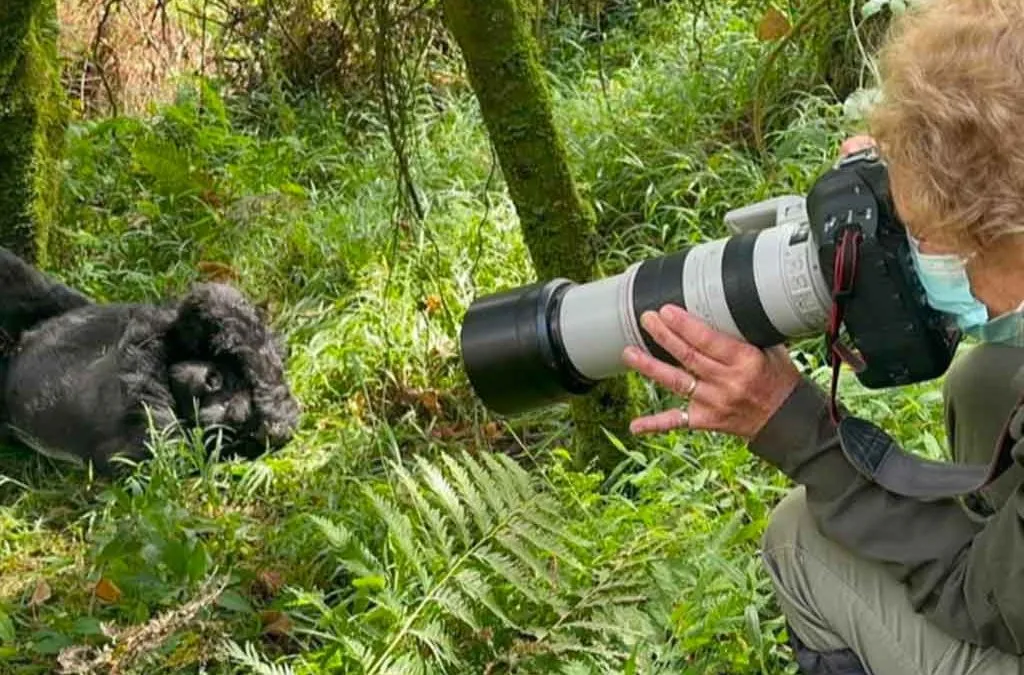
Cheap 2 Day Gorilla Trekking Tour from Kigali to Bwindi. Searching for a genuinely cheap 2-day gorilla trekking tour from Kigali to Bwindi usually means one thing: you want the real mountain gorilla encounter, without paying for extras you don’t need, and without accidentally cutting a corner that matters. The good news is that this is entirely possible. Uganda’s gorilla permit is already the more affordable of the two regional options, and a well-planned 2-day itinerary from Kigali can be run lean without touching safety, permit legitimacy, or the quality of your actual trek.
This guide breaks down exactly where the real costs sit, which parts of a package are genuinely negotiable, which parts should never be discounted, and how to structure a 2-day Kigali-to-Bwindi trip that keeps your total spend as low as it can honestly go. Our own 2-Day Uganda Gorilla Safari Starting from Kigali is built around exactly this budget-conscious approach, and everything below explains the reasoning behind it.
We wrote this specifically for the traveller comparing quoted prices from several operators and struggling to tell which one is genuinely fair, rather than the traveller who has already decided on a fixed maximum budget and just needs a checklist. Every section below is written to answer one practical question: does this cost more because it is genuinely better, or does it cost more simply because it can? By the end, you should be able to look at any 2-day Bwindi quote and know exactly which parts of it are worth paying for.
Why “Cheap” Doesn’t Have to Mean Low Quality on This Route
There is an important distinction between a cheap gorilla trek and a bad one, and travellers researching this topic online often struggle to tell the two apart. A genuinely cheap 2-day Bwindi trek from Kigali keeps costs down by choosing efficient routing, sensible accommodation, and smart timing — not by skipping your permit’s legitimacy, cutting your driver-guide’s experience, or using an unlicensed vehicle for a long cross-border drive. Every dollar saved on the things that don’t affect your safety or your actual gorilla encounter is a dollar well saved; every dollar saved on the things that do is a false economy.
The trek itself — the one hour spent with a habituated gorilla family — is identical whether you paid the cheapest legitimate price or a premium one, since the permit, the ranger guide, and the park rules are all set by the Uganda Wildlife Authority regardless of which tour operator books them for you. That single fact is the foundation of this entire guide: the experience does not get better with a bigger budget, it only gets more comfortable around the edges. Our 2-day Uganda gorilla safari from Kigali is priced around that principle, keeping every cost that touches your actual trek non-negotiable while trimming everything else.
Understanding the Real Cost Breakdown of a 2-Day Gorilla Trek from Kigali to Bwindi
A genuinely cheap package still needs to cover the same fixed components as any other: the Uganda gorilla trekking permit, a private or shared vehicle for the Kigali–Cyanika–Bwindi round trip, one night’s accommodation near your trekking sector, park fees, and driver/guide costs. What separates a cheap package from an expensive one is almost entirely accommodation category and vehicle exclusivity — a shared or budget-tier vehicle and a simple guesthouse near Rushaga will run considerably less than a private luxury vehicle and a high-end lodge, while delivering an identical permit, an identical trek, and an identical hour with the gorillas.
Understanding this breakdown before you shop around protects you from two common traps: paying inflated “all-inclusive” prices that bundle in unnecessary extras, and being lured by an unrealistically low headline price that turns out to exclude the permit itself. Ask any operator quoting you a price to itemise exactly what is and is not included, and compare that itemised list against our own 2-day Uganda gorilla safari from Kigali before you book anywhere.
The Uganda Gorilla Permit: Your Biggest Fixed Cost (and How to Avoid Overpaying)
The Uganda gorilla trekking permit costs approximately USD 800 per person for foreign non-resident visitors in 2026 — a fixed government fee that no legitimate operator can discount, regardless of how “cheap” their advertised package looks. This is the single most important fact in this entire guide: if a tour is priced meaningfully below what a legitimate USD 800 permit plus even minimal transport and accommodation would cost, the permit is either not actually included, not actually reserved, or not actually legitimate. None of those scenarios end well on the morning of your trek.
The genuine way to avoid overpaying on your permit is not to find a discount that doesn’t exist, but to avoid the markup some operators quietly add on top of the government rate. Ask directly whether the quoted price reflects the exact government permit fee or includes an undisclosed margin, and request to see the permit confirmation once it is booked in your name. A transparent operator will have no hesitation sharing this; one that dodges the question is worth reconsidering.
How the Kigali-to-Bwindi Route Works: Cyanika Border, Rushaga, and Nkuringo
Every 2-day Bwindi gorilla trek from Kigali runs through the same corridor: a roughly 115-kilometre drive from Kigali to the Cyanika border post, three to four hours on well-paved Rwandan roads, followed by a further one-and-a-half to two-and-a-half hours into Uganda to reach the Rushaga or Nkuringo trekking sectors. This route, rather than the longer Katuna crossing used for Bwindi’s northern sectors, is what makes a genuine two-day round trip from Kigali realistic at all.
Understanding this routing matters for your budget too: Rushaga and Nkuringo are close enough to the border that a single vehicle and driver can comfortably manage the whole round trip without an extra overnight for the driver, which keeps vehicle costs down compared with a Buhoma or Ruhija itinerary. Our detailed breakdown of driving hours from Kigali to Bwindi covers this routing in full, and it is worth reading alongside this guide before you book.
Cheapest Way to Travel: Shared Shuttle vs Private Transfer vs Self-Drive
Transport is one of the few genuinely flexible costs on this itinerary, and it is where most of the real savings live. A private 4×4 with a dedicated driver-guide is the most comfortable and the most expensive option, since you are paying for exclusive use of the vehicle for the full round trip. A shared shuttle or group transfer, where your cost is split with other trekkers heading to the same sector on the same dates, can meaningfully lower your per-person transport cost, though it comes with less flexibility around departure times.
Self-driving is the cheapest option on paper but rarely the cheapest in practice once you account for cross-border insurance (COMESA), a temporary import permit, unfamiliarity with rural Ugandan roads, and the genuine risk of delays that jeopardise your tight two-day schedule. For most budget-conscious travellers, a shared or small-group transfer offers the best balance of cost and reliability. Our Pick and Transfer Safaris’ 2-day Uganda gorilla tour from Kigali is a useful external comparison if you want to see how a Rwanda-based operator structures the same transport decision.
Budget Accommodation Options Near Rushaga and Nkuringo
Because your 2-day itinerary only requires one overnight, accommodation is one of the biggest levers you have over total cost. Simple guesthouses and budget tented camps near the Rushaga and Nkuringo ranger posts offer clean, safe, no-frills rooms at a fraction of the price of the region’s luxury lodges, and since you will only be in your room for a few hours of sleep between a long drive and an early trek, the case for splurging here is genuinely weak.
What matters more than star rating is proximity: a budget guesthouse fifteen minutes from the ranger post is a far better choice than a similarly priced option forty-five minutes away, since every extra minute of driving compounds on an already tight schedule. Always ask for the lodge’s actual drive time to the ranger post in minutes, not its marketed “near Bwindi” description, before booking based on price alone.
Best Time to Book for the Lowest Prices: Off-Peak Season Savings
Uganda’s gorilla permit price itself does not fluctuate by season, but accommodation and transport costs often do. Booking during the shoulder or lower-demand months — roughly March to May and October to November, avoiding the peak dry-season crowds of June–September and December–February — can meaningfully reduce lodge rates and, occasionally, vehicle hire costs, since operators are more willing to negotiate when demand is lower.
The trade-off is wetter trails and a slightly higher chance of a longer trek, which is a fair exchange for many budget-focused travellers. If your dates are flexible, ask your operator directly which weeks currently show the lowest accommodation pricing near your target sector rather than assuming any one month is universally cheaper — local pricing can shift year to year based on lodge occupancy rather than season alone.
Group Tours: The Easiest Way to Cut Your Per-Person Cost
If you are travelling solo or as a couple, joining a small group tour rather than booking a fully private itinerary is one of the most effective ways to reduce your per-person transport and, in some cases, accommodation cost, since both are split across more travellers. Group departures also tend to run on fixed, well-tested schedules, which reduces the risk of the kind of planning error that can be costly on a tight two-day itinerary.
Our group tours page and scheduled departure safaris both list upcoming shared departures that can be joined by solo travellers and small groups looking to reduce cost without sacrificing a properly organised itinerary. Booking onto an already-scheduled departure, rather than requesting a fully custom private trip, is consistently one of the simplest ways to bring the total price down.
What a Genuinely Cheap Package Should (and Shouldn’t) Cut Corners On
A responsibly priced budget package can reasonably cut costs on vehicle exclusivity (shared rather than private), accommodation category (simple rather than luxury), and meal inclusions (basic rather than gourmet). It should never cut costs on permit legitimacy, driver-guide experience, vehicle roadworthiness for a long cross-border drive, or basic safety equipment such as a properly stocked first-aid kit.
If a quoted price seems too good given the fixed USD 800 permit fee alone, ask precisely which of these categories has been reduced. A transparent answer — “we use shared vehicles and partner guesthouses to keep costs down” — is a good sign. A vague or evasive answer about how the price is so low is a reason to look elsewhere, regardless of how attractive the number looks on a booking page.
Red Flags: How to Spot an Unlicensed or Risky “Cheap” Gorilla Tour
The gorilla trekking industry, like most high-demand tourism sectors, attracts operators who advertise unrealistically low prices to generate enquiries and then either add hidden fees later or fail to deliver a genuinely reserved permit. Common red flags include a refusal to name the specific gorilla family or sector you will be assigned, an unwillingness to share permit confirmation details before you pay a deposit, prices that sit well below the government permit fee with no clear explanation, and no verifiable physical address or years of operating history.
Always confirm that your permit will be booked directly through the Uganda Wildlife Authority under your exact passport name, request written confirmation before your final payment, and check independent reviews rather than relying solely on an operator’s own website. Comparing a quoted price against a transparent, itemised package such as our 2-day Uganda gorilla safari from Kigali is a useful sanity check before committing to an unfamiliar operator’s offer.
Which Bwindi Sector Keeps Costs Lowest: Rushaga, Nkuringo, or the Northern Sectors?
Sector choice affects your budget more than most travellers realise. Rushaga and Nkuringo, reached via the Cyanika border, are not only the sectors that make a genuine two-day round trip from Kigali realistic — they are also the cheaper choice in practice, since the shorter drive keeps vehicle hours, and therefore vehicle cost, lower than a trip to Bwindi’s northern sectors. Buhoma and Ruhija, reached via the longer Katuna crossing, generally require a third day and an additional night’s accommodation, which meaningfully raises the total cost of the trip even though the permit price itself is identical everywhere in the park.
For a traveller whose priority is genuinely minimising cost, Rushaga is usually the better of the two southern sectors, since it hosts the largest number of habituated families and therefore the most permit availability, which can translate into more flexibility around dates and, occasionally, better group-transfer pricing. Our 3-day Bwindi gorilla safari from Kigali and 3-day best of Uganda gorilla safari both cover the northern-sector alternative for travellers who decide the extra day is worth it, and Pick and Transfer Safaris’ Bwindi Impenetrable Forest National Park destination guide is a useful external reference covering all four sectors in more depth.
Age Limit, Fitness, and Health Rules: Where You Should Never Try to Save
Uganda enforces a strict minimum age of 15 for gorilla trekking, with no exceptions regardless of how a package is priced, and health screening happens at the ranger post every morning — anyone showing symptoms of a cold, flu, or other contagious illness will be asked to sit out that day’s trek. These rules exist to protect the gorillas, who share close to 98% of human DNA and are highly susceptible to our diseases, and no discount, however attractive, should ever come with an operator suggesting a way around them.
Genuine cost savings never touch these fundamentals. If you are travelling with younger children who cannot legally trek, a cheaper alternative activity such as golden monkey tracking, which carries no age restriction, is a better solution than looking for an operator willing to bend the rules. Pick and Transfer Safaris’ Mgahinga Gorilla National Park guide covers this lower-cost, no-age-limit alternative in more detail.
Self-Drive vs Guided Transfer: A Closer Cost Comparison
Self-driving from Kigali to Bwindi can look cheaper on a simple mileage calculation, but the full cost picture usually favours a guided shared or private transfer once every expense is counted. Self-drive travellers need COMESA cross-border insurance, a temporary import permit, and a cross-border authorisation letter from their rental company, on top of fuel and the rental fee itself — costs that a guided package already bundles into a single, predictable price. Unfamiliarity with rural Ugandan roads and border procedures also raises the real risk of a costly delay on an already tight two-day schedule.
Our car hire page covers what self-drive travellers need to arrange if that route still appeals, but for most budget-focused travellers, a shared guided transfer remains the more reliably cheap option once hidden costs are accounted for.
Affordable Ways to Extend Your Trip Beyond Two Days
If your budget has a little room but your schedule doesn’t stretch to a full week, a handful of low-cost extensions pair naturally with this route. Nyungwe Forest’s chimpanzee tracking, on the Rwanda side of the border, adds a second primate encounter at a permit price well below a second gorilla trek, and our 3-day Nyungwe Forest National Park tour shows how this combines with a Bwindi trek without requiring a completely separate trip.
For travellers who decide the two-day squeeze isn’t worth the savings after all, our 5-day gorilla trekking safari from Kigali to Uganda spreads the same route over a more comfortable timeline. Pick and Transfer Safaris’ 3-day Uganda gorilla safari from Rwanda and their 5-day Uganda gorilla and chimps safari from Rwanda are both useful external references for comparing how cost per day changes as an itinerary lengthens.
Day 1: A Budget-Friendly Border Crossing and Transfer Itinerary
A cost-conscious Day 1 still follows the same reliable structure as any other version of this trip: an early departure from Kigali by 6:00–7:00 a.m., the three-to-four-hour drive to the Cyanika border, straightforward crossing formalities with your passport, yellow fever certificate, and visa ready, and a further drive to your chosen sector, arriving by early-to-mid afternoon. The only real budget adjustment here is vehicle choice — a shared transfer rather than a fully private one — and accommodation, checking into a simple guesthouse rather than a premium lodge.
Keeping Day 1 efficient matters for your budget too: arriving with enough daylight left avoids the need for a rushed, potentially costlier last-minute lodge booking, and gives you time to review the next morning’s briefing details calmly rather than under time pressure. Our 2-day Rwanda-to-Uganda gorilla trekking safari lays out this same Day 1 structure in more detail.
Day 2: Trekking Day Without the Extra Costs
Day 2 begins early with a simple breakfast before departing for the ranger post by 6:00–6:30 a.m., registration and briefing by 7:00–7:30 a.m., and a trek that typically runs anywhere from ninety minutes to several hours depending on your assigned family’s location that morning. None of the actual trekking experience changes based on budget — the same rangers, the same seven-metre distance rule, and the same one-hour limit with the gorillas apply to every visitor in the sector that day, regardless of what they paid for their accommodation the night before.
Where costs can quietly creep in on trekking day is porter fees and optional add-ons offered at the ranger post — a porter is genuinely worth hiring (both for support on steep trails and because the fee directly supports the local community), but be clear in advance about which optional extras, like a certificate or souvenir photo package, you do and don’t want, since these are sometimes offered as an afterthought at a premium price once you’re already at the trailhead.
Money-Saving Packing Tips for a Budget Gorilla Trek
The single best way to save money on gear is to avoid buying anything gorilla-trekking-specific that you can rent, borrow, or substitute with items you already own. A sturdy pair of existing hiking boots, broken in well before your trip, works just as well as an expensive new pair bought specifically for this trek. Gardening gloves from a hardware store cost a fraction of “trekking gloves” marketed for the same purpose and perform identically against nettles and thorny undergrowth.
Walking sticks are provided free at most ranger posts, so there is no need to buy one in advance. Porters are available to rent at the trailhead for a modest fee rather than needing any special equipment purchase. The only areas genuinely worth spending a little more on are a decent rain jacket and gaiters, since Bwindi’s terrain punishes cheap, non-waterproof gear more than almost anything else on the packing list.
Visa Costs and How to Minimize Them
Crossing from Rwanda into Uganda at Cyanika requires a valid visa, and choosing the right one can genuinely save you money depending on the rest of your trip. The East Africa Tourist Visa costs roughly USD 100 for 90-day multi-entry access across Uganda, Rwanda, and Kenya — excellent value if your trip touches more than one of these countries, since it replaces what would otherwise be two or three separate visa fees. A single-entry Uganda visa, at roughly USD 50, is the cheaper choice if Uganda is purely a one-time add-on to an otherwise Rwanda-only trip.
Apply online in advance rather than at the border; not only does this avoid delays, some visa categories carry a modest surcharge when processed on arrival compared with the online application fee. Confirm with your operator which visa genuinely suits your itinerary before assuming the more expensive multi-entry option is automatically necessary.
Comparing Uganda’s Cheaper Permit to Rwanda’s Higher-Priced Option
The core financial logic behind choosing Uganda over Rwanda for this trip is straightforward: Uganda’s permit costs roughly USD 800, compared with Rwanda’s USD 1,500 for Volcanoes National Park — a difference of roughly USD 700 per person that comfortably covers the extra transport cost of the longer Kigali-to-Bwindi drive, often with money left over. For budget-focused travellers, this makes the Uganda route the financially rational choice in almost every scenario, provided you have the extra time the longer drive requires.
If your schedule is so tight that even the extra driving time is not workable, it may be worth comparing the full cost of a Rwanda-based trip instead, since the shorter drive can offset some of Rwanda’s higher permit price through lower transport and single-night accommodation costs. Pick and Transfer Safaris’ 2-day Volcanoes gorilla trek from Kigali is a useful external reference for running that comparison yourself before deciding.
Tipping and Porter Fees: Budgeting the “Hidden” Costs Honestly
No genuinely cheap gorilla trek should try to eliminate porter fees or guide tips entirely — these are modest costs that directly support the local community and your guide’s livelihood, and skipping them to save a few dollars is not the kind of saving this guide recommends. Budget roughly USD 15–20 for a porter and a reasonable discretionary tip for your driver-guide and trekking guide, paid in cash in either US dollars or local currency.
Building these costs into your total budget from the start, rather than treating them as a surprise at the trailhead, is the difference between a well-planned cheap trip and one that quietly overspends on the day because nobody accounted for cash needs in advance. Carry small denominations specifically for this purpose, since card payment is generally unavailable at the ranger post.
It is worth mentioning porter fees specifically because some travellers, trying to trim every possible cost, decide to skip hiring one altogether. We would gently discourage this: beyond the physical support a porter offers on Bwindi’s steeper trails, the fee is one of the most direct ways your trip’s spending reaches the community living alongside the park, and the amount involved is small enough that cutting it barely moves your total budget while meaningfully reducing the trip’s positive local impact.
How to Combine This Trek with Other Budget-Friendly Activities
If your schedule allows even one additional day, a handful of low-cost add-ons pair naturally with this route without requiring a significant extra outlay. Golden monkey tracking in Mgahinga Gorilla National Park, just thirty minutes from the Cyanika border, costs considerably less than a gorilla permit and adds a genuinely worthwhile primate encounter to your trip. A stop at Lake Bunyonyi for an inexpensive canoe outing is another low-cost way to extend your itinerary without adding a second expensive permit.
Our 4-day Rwanda Uganda golden monkey and gorilla trekking itinerary shows how these lower-cost add-ons combine with a Bwindi trek, and our 3-day Akagera game drive safari is a similarly affordable option for travellers wanting a savannah wildlife day without the cost of a second primate permit.
Stretching Your Budget Further: Combining with Queen Elizabeth National Park
Travellers with a little more time and budget flexibility sometimes ask whether it makes sense to combine this route with a savannah game drive, since Rushaga and Nkuringo sit reasonably close to Uganda’s Queen Elizabeth National Park. A short add-on here costs considerably less than a second gorilla or chimpanzee permit, since standard game-drive park fees are a fraction of a primate trekking permit, making it one of the better value extensions available on this route for travellers who want variety without a second major expense.
Pick and Transfer Safaris’ Queen Elizabeth National Park destination guide is a useful external reference for understanding what this add-on typically involves and costs, even though our own itineraries route travellers there from the Rushaga and Nkuringo side rather than from Rwanda.
Sample Budget Itinerary and Total Cost Estimate
Putting the pieces together: a realistic, honestly budgeted 2-day gorilla trekking tour from Kigali to Bwindi using a shared or small-group transfer and a simple guesthouse near Rushaga or Nkuringo typically totals between USD 1,050 and USD 1,300 per person. That figure covers your USD 800 permit, a shared vehicle transfer, one night of budget accommodation, basic meals, park fees, and a reasonable allowance for porter fees and tips — with no corners cut on permit legitimacy, guide experience, or vehicle safety.
Compare that figure carefully against any quote you receive: a price meaningfully above this range without a clear justification (private luxury vehicle, high-end lodge) may include an unnecessary markup, while a price meaningfully below it is worth questioning closely, since it likely means the permit itself is not genuinely included at the full government rate. Treat this range as a working benchmark rather than a fixed rule — exchange rates, fuel prices, and lodge occupancy all shift it slightly year to year, but any quote wildly outside it deserves a direct question about exactly why. Our 2-day Uganda gorilla safari from Kigali is priced within this realistic budget range as a transparent, itemised package.
Why Kenlink Tours Offers the Best Value 2-Day Bwindi Gorilla Trek from Kigali
Keeping a cross-border itinerary genuinely affordable without cutting corners requires exactly the kind of local knowledge and established relationships that come from years of running this specific route — knowing which guesthouses near Rushaga and Nkuringo offer the best value without compromising on safety, which shared transfer schedules run reliably, and how to keep permit booking transparent rather than marked up. We built our 2-day Uganda gorilla safari from Kigali around exactly this approach.
We also believe budget-conscious travellers deserve an honest comparison across the whole region, which is why we regularly reference established Rwanda-based operators such as Pick and Transfer Safaris, their destinations overview, and their about us page when a traveller’s dates or budget genuinely suit a Rwanda-based itinerary instead. Read more about how we operate on our About Us page, browse our full range of Uganda safaris on our Uganda safaris page, or get in touch through our contact page.
Booking Tips to Lock In the Cheapest Legitimate Rate
Book your permit and accommodation as early as possible — pricing on both tends to rise, not fall, as your travel dates approach, since limited daily permit allocations and the best-value guesthouses near Rushaga and Nkuringo sell out first. Ask specifically about joining an already-scheduled shared departure rather than requesting a fully custom itinerary, since shared departures are consistently the lowest-cost way to access the same permit and trek.
Always request an itemised quote rather than a single bundled figure, confirm your permit will be booked in your exact passport name, and ask about rescheduling terms in case of illness or a missed border crossing. For a wider view of how seasonal pricing patterns work across the region, our travel news section and scheduled departure safaris page are both worth checking before you commit to specific dates.
Frequently Asked Questions About Cheap 2-Day Gorilla Trekking from Kigali to Bwindi
What is a realistic total cost for a cheap 2-day gorilla trek from Kigali to Bwindi?
A responsibly budgeted, all-inclusive trip typically totals between USD 1,050 and USD 1,300 per person, covering the USD 800 permit, shared transport, one night of budget accommodation, meals, and porter/guide costs.
Can the Uganda gorilla permit price ever be legitimately discounted?
No. The permit fee is set by the Uganda Wildlife Authority and does not vary by operator. Any “discount” on the permit itself, rather than on transport or accommodation, is a red flag rather than a genuine saving.
Is a shared group tour actually cheaper than a private one?
Yes, generally. Splitting vehicle costs across a small group is one of the most reliable ways to reduce your per-person price without affecting your permit, trek, or the actual gorilla encounter.
Is it safe to choose the cheapest available accommodation near Bwindi?
Yes, provided it is a legitimate, reviewed guesthouse or budget camp with a genuine proximity to the ranger post. Choosing based on drive time rather than star rating is the smarter way to save money on this specific leg of the trip.
Should I be suspicious of a price that seems too low?
Yes. Given the fixed USD 800 permit fee, any quote well below the roughly USD 1,050–1,300 realistic range deserves close questioning about exactly what is and isn’t included before you pay any deposit.
Ready to Book Your Cheap 2-Day Gorilla Trekking Tour from Kigali to Bwindi
A genuinely cheap 2-day gorilla trekking tour from Kigali to Bwindi is entirely achievable without compromising on safety, permit legitimacy, or the quality of your actual gorilla encounter — the trick is knowing exactly which costs are fixed, which are flexible, and which corners should never be cut regardless of the savings on offer. With the right sector, the right transport choice, and the right accommodation, this remains one of the best-value wildlife experiences available anywhere in the world.
Explore our full 2-Day Uganda Gorilla Safari from Kigali package, browse our wider Uganda safaris and Rwanda safaris collections, or get in touch through our contact page and our team will put together a transparent, itemised quote before you commit to a single dollar. If you are still weighing a Rwanda-based alternative against this route, Pick and Transfer Safaris’ contact page is a fair place to request a comparable quote for that side of the border before you decide.