- EXPERT'S HELP
- +256789210067
- +256200955001
- info@kenlinktours.com


Book a Gorilla Safari in Uganda Today
November 25, 2026
Can i book a gorilla safari in Uganda on short notice?
November 25, 2026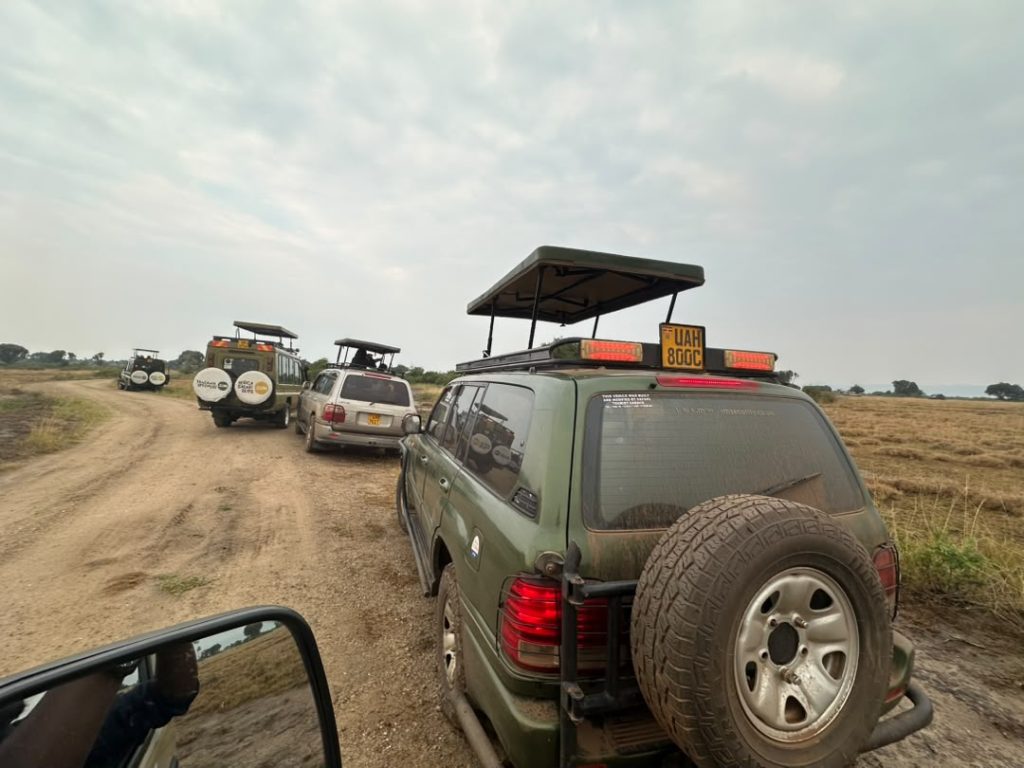
What to see on game safari in Uganda. When most people picture an African game safari, they think of Kenya or Tanzania. But travellers who discover Uganda quickly realise they have found one of the continent’s best-kept secrets. Here you can watch lions lounging in fig trees, elephants bathing in the Nile, thousands of hippos wallowing along a single channel, giraffes silhouetted against volcanic hills and, in the same trip, track chimpanzees and mountain gorillas in ancient rainforests. Few countries on Earth pack so much variety into such a compact, easy-to-explore area.
So, what can you see on a game safari in Uganda? In this complete guide, the team at Kenlink Tours and Travel takes you through the animals you can expect to see, the best national parks for game drives, the experiences that make Uganda unique, the best time to visit and how to plan the perfect safari. Whether you are a first-time safari-goer or a seasoned traveller looking for somewhere new, this guide will help you get the most out of your wildlife adventure in the Pearl of Africa.
Why Choose Uganda for a Game Safari?
Uganda sits where the East African savannah meets the West African rainforest. This unique position gives the country an extraordinary mix of habitats: open grasslands, acacia woodlands, crater lakes, papyrus swamps, snow-capped mountains, mighty rivers and dense tropical forest. The result is remarkable biodiversity in a country roughly the size of the United Kingdom.
Here is why Uganda deserves a place on your safari wish list:
- Big game without the crowds. You can enjoy lions, elephants, buffalo and leopards with only a handful of other vehicles around, unlike the busiest parks elsewhere in East Africa.
- Unmatched primate diversity. Uganda is home to more than half of the world’s mountain gorillas, thousands of chimpanzees and over a dozen other primate species.
- Over 1,000 bird species. With more than 1,000 recorded species, Uganda is one of the top birding destinations in Africa.
- Water-based safaris. Boat cruises on the Nile and the Kazinga Channel bring you face to face with hippos, crocodiles, elephants and waterbirds in a way few safari destinations can match.
- Excellent value. Park fees, lodges and private guided safaris generally cost less than in many other safari countries.
- Friendly people and easy travel. English is an official language, and Ugandans are famous for their warm hospitality.
To learn more about the country before you travel, visit our About Uganda page.
The Big Five in Uganda: Can You See Them All?
The “Big Five” (lion, leopard, elephant, buffalo and rhino) is the classic safari checklist. The good news is that you can see all five in Uganda, although not in a single park.
Lions
Uganda’s lions are found mainly in Queen Elizabeth, Murchison Falls and Kidepo Valley National Parks. The most famous are the tree-climbing lions of Ishasha, in the southern sector of Queen Elizabeth National Park, which spend hot afternoons draped across the branches of giant fig and acacia trees. Murchison Falls offers excellent lion sightings on the northern Buligi plains, often with prey animals such as Uganda kob grazing nearby. In remote Kidepo, lions are frequently seen resting on rocky outcrops.
Leopards
Leopards are shy and mostly nocturnal, but Uganda offers good chances of a sighting. Queen Elizabeth National Park’s Kasenyi plains and the Mweya Peninsula, Murchison Falls’ Buligi area and Lake Mburo are all reliable spots. Night game drives, available in some parks, greatly increase your chances of seeing a leopard on the hunt.
Elephants
Uganda’s elephant population has recovered strongly since the difficult years of the 1970s and 1980s. Large herds roam Queen Elizabeth and Murchison Falls National Parks, and Kidepo Valley is home to some impressive bulls. Watching elephants drink and bathe along the Kazinga Channel or the Victoria Nile from a boat is one of the highlights of any Uganda safari. Kibale Forest also has forest elephants, which are smaller and shyer than their savannah cousins.
Cape Buffalo
Buffalo are abundant in almost every savannah park in Uganda. You will see large herds in Queen Elizabeth, Murchison Falls, Kidepo and Lake Mburo, often accompanied by oxpeckers and cattle egrets. Old bulls, nicknamed “dagga boys”, like to wallow in muddy pools near water.
Rhinos
Rhinos were wiped out in Uganda by the early 1980s, but they are making a comeback. The Ziwa Rhino Sanctuary, located on the road between Kampala and Murchison Falls, protects a growing population of southern white rhinos. Here you can track rhinos on foot with experienced rangers — an exciting and rare experience. Most of our northern circuit safaris stop at Ziwa on the way to Murchison Falls, so you can tick off the fifth member of the Big Five.
Other Wildlife You Can See on a Uganda Game Safari
Beyond the Big Five, Uganda’s parks are full of fascinating animals. Here are some of the most memorable species you can expect to encounter.
- Hippopotamus: Uganda has some of the highest hippo densities in Africa, especially along the Kazinga Channel and the Victoria Nile.
- Nile crocodile: Huge crocodiles bask on the riverbanks below Murchison Falls, some of the largest in Africa.
- Rothschild’s giraffe: One of the most endangered giraffe subspecies, found in Murchison Falls, Kidepo Valley and Lake Mburo National Parks.
- Uganda kob: The graceful antelope that appears on Uganda’s coat of arms. Huge numbers graze in Queen Elizabeth and Murchison Falls.
- Zebra: Plains zebras are found in Lake Mburo and Kidepo Valley National Parks.
- Cheetah: Uganda’s only regular cheetah population lives in the open plains of Kidepo Valley.
- Spotted hyena: Commonly seen in Queen Elizabeth, Murchison Falls and Kidepo, especially early in the morning.
- Eland, topi, waterbuck, impala and Jackson’s hartebeest: A wide variety of antelope are found across the savannah parks. Lake Mburo is the only national park in Uganda with impala.
- Giant forest hog and warthog: Warthogs are everywhere, while the rare giant forest hog can sometimes be seen on Queen Elizabeth’s Mweya Peninsula.
- Ostrich: Kidepo is one of the few places in Uganda where you can see ostriches.
- Sitatunga: This shy, swamp-dwelling antelope can be spotted in papyrus wetlands around Lake Mburo and Bigodi.
Primates: Uganda’s Wildlife Superpower
No guide to what you can see on a Uganda safari would be complete without its primates. Uganda is often called the “primate capital of the world”, and many visitors combine game drives with forest treks.
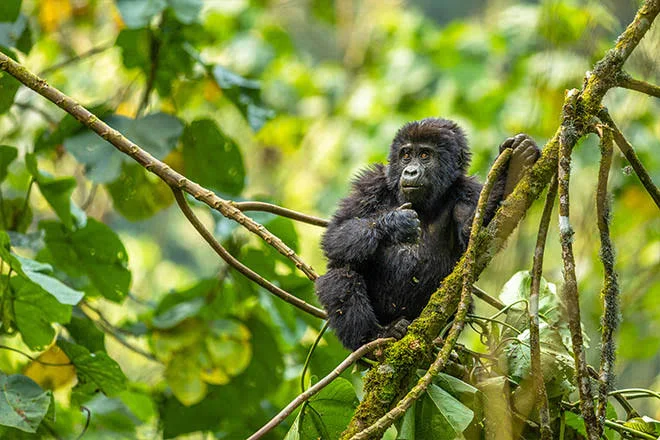
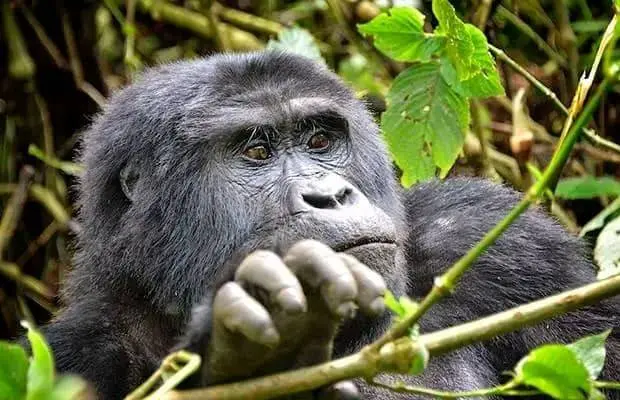
- Mountain gorillas: Found in Bwindi Impenetrable and Mgahinga Gorilla National Parks. Spending an hour with a gorilla family is one of the greatest wildlife encounters on Earth. Read more about Bwindi Impenetrable National Park.
- Chimpanzees: Kibale Forest National Park has one of the highest densities of chimpanzees in Africa. You can also track chimps in Kyambura Gorge in Queen Elizabeth, Budongo Forest near Murchison Falls and Kalinzu Forest.
- Golden monkeys: These rare, colourful monkeys live in the bamboo forests of Mgahinga Gorilla National Park.
- Other monkeys: Look out for black-and-white colobus, red colobus, L’Hoest’s monkey, red-tailed monkey, grey-cheeked mangabey, blue monkey, vervet monkey and olive baboon. Kibale alone has 13 primate species.
If chimpanzees are high on your list, our 3-Day Chimpanzee Tracking Safari is a great short trip, while our 4 Days Uganda Primate Tour combines chimps and gorillas.
Birdlife: A Paradise for Birdwatchers
Even if you have never considered yourself a birder, Uganda’s birds will win you over. The country has recorded more than 1,000 species, roughly half of all the bird species found in Africa, packed into a relatively small area.
Highlights include:
- The shoebill stork: A prehistoric-looking giant and Uganda’s most sought-after bird. It can be seen in Mabamba Swamp near Entebbe, on the Nile delta in Murchison Falls and in the swamps of Lake Mburo.
- Grey crowned crane: Uganda’s national bird, which features on the national flag.
- African fish eagle: Its haunting call is the soundtrack of Uganda’s lakes and rivers.
- Albertine Rift endemics: Bwindi and the Rwenzori Mountains host rare species such as the African green broadbill, Rwenzori turaco and handsome francolin.
- Great blue turaco, African jacana, saddle-billed stork, kingfishers and bee-eaters: Colourful and easy to spot on game drives and boat cruises.
For dedicated birders, we offer a specialist 7-Day Birdwatching Safari in Uganda. You can also compare a longer 18-day Uganda birding and wildlife safari to see how a full birding circuit is planned.
The Best National Parks for a Game Safari in Uganda
Uganda has ten national parks and several wildlife reserves and sanctuaries. These are the best destinations for a classic game safari.
Queen Elizabeth National Park
Queen Elizabeth National Park is Uganda’s most visited savannah park, and with good reason. Stretching from the Rwenzori Mountains to the shores of Lake Edward, it offers a wonderful variety of landscapes: open grassland, crater lakes, swamps and forest. Over 95 mammal species and more than 600 bird species have been recorded here.
What to see in Queen Elizabeth:
- Tree-climbing lions in the Ishasha sector
- Elephants, buffalo, Uganda kob, waterbuck and warthogs on the Kasenyi plains
- Leopards around the Mweya Peninsula and Kasenyi
- Huge numbers of hippos and crocodiles on the Kazinga Channel boat cruise
- Chimpanzees in the dramatic Kyambura Gorge
- Explosion craters and salt mining at Lake Katwe
Our 3 Days Wildlife Encounter in Queen Elizabeth National Park is a perfect short safari from Kampala. You can also browse this sample 3-day safari to Queen Elizabeth National Park for ideas.
Murchison Falls National Park
Uganda’s largest national park, Murchison Falls National Park, is named after the spectacular waterfall where the entire Victoria Nile forces its way through a gap just seven metres wide before plunging 43 metres. It is one of the most powerful waterfalls in the world.
What to see in Murchison Falls:
- Lions, leopards, elephants, buffalo and large herds of Rothschild’s giraffe on the Buligi game tracks
- Hippos, crocodiles and elephants on the Nile boat cruise to the bottom of the falls
- The shoebill on the Nile delta boat trip
- The “Top of the Falls” hike for dramatic views
- Chimpanzee tracking in nearby Budongo Forest
- White rhinos at Ziwa Rhino Sanctuary on the way
Take a look at this example 3-day safari to Murchison Falls, or ask us to include Murchison in a longer Kenlink itinerary.
Kidepo Valley National Park
Tucked away in the far north-east, on the borders of South Sudan and Kenya, Kidepo Valley is Uganda’s wildest and most remote park. It is often described as one of Africa’s finest true wilderness areas. Few tourists make the journey, so you may have whole valleys to yourself.
What to see in Kidepo Valley:
- Cheetahs, found nowhere else in Uganda
- Large buffalo herds, elephants, lions and leopards
- Zebras, ostriches, Rothschild’s giraffes, elands and Jackson’s hartebeest
- Striped hyena, bat-eared fox and caracal, species rarely seen elsewhere in the country
- Visits to the Karamojong and Ik communities
Kidepo is best reached by a scheduled or charter flight, or as part of a longer road safari such as our 18-Day Adventure Tailored Safari Holiday in Uganda or our 20-Day Wildlife and Nature Experience in Uganda.
Lake Mburo National Park
Lake Mburo is the closest savannah park to Kampala, about four hours’ drive away, and makes an ideal stopover on the way to Bwindi or Queen Elizabeth. It is a small, beautiful park of rolling hills, acacia woodland and lakes.
What to see in Lake Mburo:
- Zebras, impalas (found in no other Ugandan national park), elands, topis and buffalo
- Leopards, hyenas and the occasional lion
- Hippos, crocodiles and fish eagles on a boat trip on Lake Mburo
- Walking safaris, horseback safaris and cycling safaris, allowing you to see wildlife outside a vehicle
Semuliki National Park and Toro-Semliki Wildlife Reserve
In the far west, Semuliki National Park protects a lowland rainforest that is an extension of the Congo’s Ituri Forest. It is a hotspot for Central African bird species and famous for the Sempaya hot springs. The nearby Toro-Semliki Wildlife Reserve offers savannah wildlife, chimpanzees and shoebills.
Pian Upe and Other Hidden Gems
For truly off-the-beaten-path travellers, Pian Upe Wildlife Reserve in eastern Uganda offers rugged scenery, roan antelope and cheetah sightings, while Mount Elgon and the Rwenzori Mountains National Park are best for hikers who want to combine wildlife with mountain adventures.
Top Safari Experiences in Uganda
A game safari in Uganda is about much more than driving around looking for animals. These experiences make a Uganda trip truly special.
Game Drives
Morning and evening game drives in a pop-up-roof 4×4 vehicle are the backbone of any safari. Early morning drives are best for predators returning from the night’s hunt, while late-afternoon drives offer beautiful golden light and active animals. Some parks also offer night drives with a ranger and spotlight, giving you the chance to see leopards, hyenas, bushbabies and genets.
Boat Cruises
Uganda’s boat safaris are among the best in Africa. The Kazinga Channel cruise in Queen Elizabeth National Park lets you drift past hundreds of hippos, buffalo, elephants and countless birds in just two hours. In Murchison Falls, the Nile cruise to the base of the falls offers views of crocodiles, hippos and elephants, ending with the thundering waterfall itself. On Lake Mburo, a quieter boat trip is great for birds and hippos.
Rhino Tracking on Foot
At the Ziwa Rhino Sanctuary, you walk with rangers to observe white rhinos grazing in the bush. Being on foot, close to these huge animals, is a thrilling and humbling experience.
Walking and Horseback Safaris
Lake Mburo is one of the few parks in East Africa where you can explore on foot, on horseback or by bicycle among zebras, giraffes and antelopes. These experiences give a completely different perspective on the bush.
Chimpanzee and Gorilla Tracking
Combining savannah game drives with forest primate tracking is what sets Uganda apart. Very few countries let you see lions in the morning and track chimpanzees the next day. Our 5 Days Gorilla and Wildlife Safari and 8-Day Uganda Gorilla, Chimpanzee and Wildlife Safari were designed with exactly this combination in mind.
Cultural Encounters
Uganda has more than 50 ethnic groups and a rich cultural heritage. Along the way you can visit the Batwa people near Bwindi, the cattle-keeping Banyankole near Lake Mburo, the Karamojong in Kidepo or the Bigodi Wetland community near Kibale. You can also stop at the Equator, where many travellers enjoy the famous water experiment. Our 10 Days Uganda Primate, Wildlife and Cultural Tour combines wildlife with authentic local experiences.
The Source of the Nile and Adventure Activities
In Jinja, you can visit the source of the River Nile, enjoy a sunset cruise, or try world-class white-water rafting, kayaking, bungee jumping and quad biking. It is the perfect way to add a little adrenaline to the start or end of your safari.
A Typical Day on a Uganda Game Safari
If you have never been on safari before, you might wonder what a typical day actually looks like. While every itinerary is different, most safari days follow a natural rhythm set by the animals themselves.
- Wake-up call (around 5:30–6:00 am). A hot cup of Ugandan coffee or tea and a light snack before you head out at first light.
- Morning game drive (6:30–10:30 am). This is prime time for wildlife. Predators are still active after the night, and the cool air means animals are on the move. Your guide follows fresh tracks, listens for alarm calls and checks favourite lion and leopard spots.
- Brunch or late breakfast at the lodge. Return to camp for a hearty meal and a chance to share sightings with fellow travellers.
- Midday rest. Animals seek shade during the hottest hours, and so do people. Relax by the pool, read on your veranda or watch for birds and monkeys around the lodge.
- Afternoon activity (from about 2:00 pm). This might be a boat cruise on the Kazinga Channel or the Nile, a nature walk or a community visit.
- Evening game drive (4:00–6:30 pm). Golden light, active animals and the chance of catching predators as they begin to hunt.
- Sundowners and dinner. End the day with a drink as the sun sets over the savannah, followed by dinner and stories around the campfire, often to the sound of hippos grunting and hyenas calling in the distance.
On travel days between parks, your guide will plan the route so you enjoy game viewing en route, stopping at viewpoints, local markets, the Equator and craft shops along the way.
Where to Stay on a Uganda Game Safari
Uganda’s parks offer accommodation for every taste and budget, and where you stay shapes your safari experience.
- Budget camps and bandas: Simple, clean rooms or permanent tents, often run by the Uganda Wildlife Authority or local communities. Perfect for travellers who want to maximise their wildlife time on a tight budget.
- Mid-range lodges: Comfortable en-suite rooms or tented cottages, good food, swimming pools and lovely views. This is the most popular choice for Kenlink guests.
- Luxury lodges and tented camps: Exclusive properties with private decks overlooking the savannah, river or crater lakes, gourmet dining, spa treatments and personalised service.
Location matters as much as luxury. Staying inside or right on the edge of a park means less driving and more time watching wildlife. In Queen Elizabeth National Park, for example, lodges on the Mweya Peninsula overlook the Kazinga Channel, while camps in Ishasha place you close to the tree-climbing lions. In Murchison Falls, staying on the northern bank of the Nile puts you closest to the best game-drive circuits. Our team will recommend lodges that suit both your budget and your wildlife priorities.
Safari Photography Tips for Uganda
Uganda is a dream destination for wildlife photographers. A few tips will help you capture the shots you hope for.
- Bring a zoom lens. A lens in the 100–400 mm range is ideal for savannah wildlife and birds. A wider lens is great for landscapes and the drama of Murchison Falls.
- Use a beanbag. Resting your camera on a beanbag on the vehicle’s window or roof gives much more stability than a tripod.
- Shoot in the golden hours. The soft light just after sunrise and before sunset makes colours glow and adds atmosphere to your images.
- Think beyond portraits. Capture behaviour (lions yawning, elephants dust-bathing, hippos fighting) and include the landscape to tell a story.
- Protect your gear from dust. Uganda’s roads can be dusty in the dry season, so bring a camera bag and a cleaning kit.
- Ask your guide to position the vehicle. Experienced guides know how to place you with the light behind you and a clear line of sight.
Best Time to Go on a Game Safari in Uganda
Uganda’s location on the Equator means the climate is pleasant all year, with daytime temperatures typically between 20°C and 30°C. However, there are two dry and two wet seasons.
- Dry seasons (June–September and December–February): This is the best time for game viewing. Grass is shorter, animals gather near water sources, and roads and trails are in better condition. These are the busiest months, so book early.
- Wet seasons (March–May and October–November): The landscape turns green and lush, and it is a wonderful time for birdwatching, as migratory species arrive. Rain usually falls in short, heavy showers rather than all day. Lodges often offer lower rates, and there are fewer visitors.
In short, any time can be a good time for a Uganda safari. If big game viewing is your top priority, aim for the dry seasons. If you love birds, lush scenery and good deals, the green season is a fantastic choice.
Sample Uganda Game Safari Itineraries
How long you need depends on how much you want to see. Here are some of our most popular options.
Short Safaris (3–5 Days)
- 3 days: Queen Elizabeth National Park, with game drives and a Kazinga Channel boat cruise. Ideal if you are short on time.
- 3 days: Murchison Falls, with Ziwa rhino tracking on the way, a Nile cruise and game drives.
- 5 days: Queen Elizabeth wildlife combined with gorillas in Bwindi, or chimps in Kibale.
One-Week Safaris (7–10 Days)
A week is the sweet spot for most travellers, giving you enough time to combine savannah wildlife with primates. Our 7 Days Amazing Gorilla and Wildlife Safari in Uganda covers Kibale chimps, Queen Elizabeth game drives and Bwindi gorillas. Our 10 Days Uganda Adventure Safari adds more parks and a slower, more relaxed pace. For inspiration, you can also compare this 7-day Uganda safari one-week tour.
Long Safaris (2–4 Weeks)
If you want to see Uganda in depth, including Murchison Falls, Kidepo, Lake Mburo and the primate forests, consider our 25-Day Wildlife, Gorilla and Chimps Uganda Adventure. A sample 14-day Uganda wildlife and primates safari shows how a two-week route flows from north to south.
Multi-Country East Africa Safaris
Uganda combines beautifully with its neighbours. Add the Great Migration in Kenya or Tanzania, or Rwanda’s Akagera National Park, to create the ultimate East African journey. See our 10-Day Gorilla Trekking and Great Migration Safari, our 15-Day Rwanda–Uganda Primate and Big Five Safari Adventure, or explore our Kenya safaris. For Rwanda’s savannah wildlife, read about Akagera National Park.
You can see all our trips on the Uganda safaris page.
How Much Does a Game Safari in Uganda Cost?
The cost of a Uganda game safari depends on several factors:
- Length of the trip: Longer trips cost more in total, but often less per day.
- Accommodation level: Choose from budget tented camps, comfortable mid-range lodges or luxury safari lodges.
- Transport: Road safaris in a private 4×4 are the most popular and affordable option. Domestic flights to Kidepo, Kihihi, Kasese or Pakuba save time but add to the cost.
- Activities: Park entrance fees, boat cruises, rhino tracking, chimpanzee and gorilla permits all add to the price.
- Group size: Sharing a vehicle and guide reduces the cost per person.
As a rough guide, a private mid-range game safari in Uganda typically costs around US$200–350 per person per day, excluding gorilla permits. Budget safaris and group departures can cost less, while luxury safaris can cost much more. Contact us for an accurate, tailor-made quote.
A typical Kenlink safari package includes: private 4×4 safari vehicle with pop-up roof, an English-speaking professional driver-guide, fuel, accommodation, meals as specified, park entrance fees, activities listed in the itinerary, drinking water and airport transfers.
Usually not included: international flights, visas, travel insurance, tips, drinks and personal expenses.
Travelling on a budget or on your own? Join one of our group tours to share costs, or rent a reliable vehicle through our 4×4 car hire service for a self-drive safari.
Safari Tips: How to Get the Most From Your Game Drives
A few simple tips will help you see more wildlife and enjoy your safari to the fullest.
- Start early. The first two hours after sunrise are the best time to see predators and active animals.
- Be patient. The best sightings often come to those who wait quietly at a waterhole or riverbank.
- Trust your guide. Experienced guides read tracks, listen for alarm calls and know where animals like to rest.
- Bring good binoculars. One pair per person makes a huge difference, especially for birds and distant animals.
- Stay in the vehicle. Unless your guide or ranger tells you otherwise, stay inside the vehicle for your safety and to avoid disturbing the animals.
- Keep noise to a minimum. Speak softly and turn off phone ringtones.
- Respect the animals. Never feed wildlife, and keep a respectful distance.
- Stay a few nights in each park. Rushing from park to park means more time on the road and less time watching wildlife.
What to Pack for a Uganda Game Safari
- Lightweight, neutral-coloured clothing (khaki, beige, olive or brown)
- A warm fleece or jacket for chilly early mornings and evenings
- A rain jacket, especially in the wet seasons
- Comfortable walking shoes, plus hiking boots if you are tracking primates
- A wide-brimmed hat, sunglasses and sunscreen
- Insect repellent
- Binoculars and a camera with a zoom lens, spare batteries and memory cards
- A small daypack and a reusable water bottle
- Any personal medication, and anti-malaria tablets as recommended by your doctor
- Your passport, visa and yellow fever vaccination certificate
Most lodges offer laundry services, so you can pack light. Soft-sided bags are best, especially if you are taking a domestic flight.
Travel Requirements for Uganda
- Visa: Most visitors need a visa, which can be obtained online through the official Uganda e-visa portal. The East Africa Tourist Visa covers Uganda, Kenya and Rwanda.
- Yellow fever vaccination: A valid certificate is required for entry.
- Malaria: Uganda is a malaria-risk country, so speak with your doctor about prevention before you travel.
- Travel insurance: Comprehensive insurance that covers medical evacuation is strongly recommended.
- Currency: The local currency is the Ugandan shilling. US dollars are widely accepted for tourism services, but bring notes printed in 2013 or later, as older notes are often refused.
Always check the latest entry requirements with your embassy or the official government portal before you fly.
Uganda vs Kenya and Tanzania: How Does a Uganda Game Safari Compare?
Many travellers weigh Uganda against its famous neighbours. Kenya and Tanzania are hard to beat for vast open plains and the Great Migration, with its enormous herds of wildebeest and zebra. If seeing huge concentrations of plains game is your top priority, they are wonderful choices.
Uganda shines in different ways. Its parks are quieter, so you rarely share a sighting with a crowd of vehicles. Its landscapes are more varied, moving from savannah to rainforest, crater lakes, rivers and mountains within a few hours’ drive. Above all, Uganda combines classic game viewing with world-class primate experiences: mountain gorillas, chimpanzees and golden monkeys, which Kenya and Tanzania cannot match in the same way. Uganda’s boat safaris on the Nile and the Kazinga Channel are also among the best on the continent.
The good news is that you do not have to choose. Uganda pairs perfectly with Kenya’s Masai Mara or Tanzania’s Serengeti, giving you the Great Migration and the great apes on one unforgettable East African journey.
Responsible Wildlife Tourism in Uganda
Tourism is one of the strongest forces protecting Uganda’s wildlife. Park entrance fees and activity permits fund rangers, anti-poaching patrols and community projects in villages surrounding the parks. Uganda’s elephant, lion and gorilla populations have all benefited from this approach.
As travellers, we can all help by choosing licensed operators, following park rules, supporting community-based businesses and buying locally made crafts. At Kenlink, we work with local guides, lodges and communities so that the money you spend stays in Uganda and supports conservation.
Why Plan Your Uganda Game Safari With Kenlink Tours and Travel
- Local experts since 2010. We are a Ugandan company based in Kampala, and our guides know every park, track and lodge. Find out more about us.
- Licensed and trusted. We are members of USAGA, the Uganda Tourism Board and other professional bodies.
- Private, tailor-made safaris. Every trip is built around your dates, interests and budget.
- Comfortable 4×4 vehicles. Our well-maintained safari vehicles have pop-up roofs for game viewing and photography.
- Excellent guest reviews. Our travellers consistently praise our knowledgeable guides and personal service.
- Support from start to finish. From your first enquiry until you fly home, our team is always available.
Frequently Asked Questions About Game Safaris in Uganda
Can you see the Big Five in Uganda? Yes. You can see lions, leopards, elephants and buffalo in Queen Elizabeth, Murchison Falls and Kidepo Valley National Parks, and white rhinos at the Ziwa Rhino Sanctuary.
What is the best national park in Uganda for a game safari? Queen Elizabeth and Murchison Falls are the most popular and offer the widest variety of wildlife. Kidepo Valley is best for remote wilderness and cheetahs, while Lake Mburo is ideal for a short safari close to Kampala.
Where can I see tree-climbing lions in Uganda? In the Ishasha sector of Queen Elizabeth National Park, in south-western Uganda.
How many days do I need for a Uganda game safari? Three days is enough for one park, but seven to ten days lets you combine savannah wildlife with chimpanzees and gorillas. Two weeks or more lets you explore Uganda in depth.
Is Uganda good for a first safari? Absolutely. Uganda is friendly, English-speaking and easy to travel around with a guide, and it offers a remarkable variety of wildlife and experiences in a relatively small area.
When is the best time for a game safari in Uganda? The dry seasons, from June to September and December to February, offer the best game viewing. The wet seasons are excellent for birdwatching, lush scenery and lower prices.
Can I combine a game safari with gorilla trekking? Yes, and we highly recommend it. Most of our one-week-plus itineraries combine game drives in Queen Elizabeth National Park with gorilla trekking in Bwindi.
Is a Uganda safari safe? Uganda’s national parks are well managed and popular with international visitors. Travelling with a licensed operator and an experienced guide, and following your guide’s advice, ensures a safe and enjoyable safari.
Start Planning Your Uganda Game Safari Today
From tree-climbing lions and Nile crocodiles to giraffes, rhinos, shoebills and chimpanzees, a game safari in Uganda delivers far more variety than most travellers expect. Add the friendly people, stunning landscapes and fewer crowds, and you have the recipe for an unforgettable African adventure.
The best lodges and dates for 2027 are already being booked. Contact Kenlink Tours and Travel today or email info@kenlinktours.com for a free, tailor-made quote, and let our team design the perfect Uganda game safari for you.
For more inspiration, explore this overview of wildlife safaris in Uganda and Rwanda and a sample 4-day wildlife and primate safari.