- EXPERT'S HELP
- +256789210067
- +256200955001
- info@kenlinktours.com


1 Day Gorilla Trek in Uganda to Bwindi Forest; Short Tours
September 3, 2026
Cheap 2 Day Gorilla Trekking Tour from Kigali to Bwindi
September 5, 2026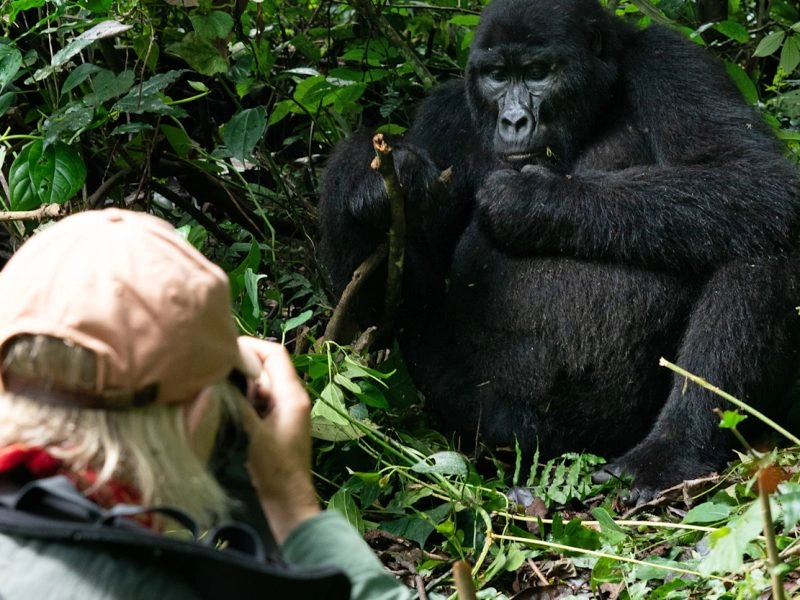
Short mountain gorilla tours in Uganda. Before you book a single flight, it is worth knowing exactly what you are travelling to see. A mountain gorilla is not simply “a gorilla” in the generic sense most people picture — it is one of the rarest great apes on Earth, found in only three countries, living in family groups led by an enormous silverback, and recovering from the brink of extinction thanks to one of conservation’s genuine modern success stories. Understanding that context changes how you plan a short mountain gorilla tour in Uganda, because it explains why the trek is structured the way it is, why permits are so tightly limited, and why even a short trip is worth doing properly.
This guide starts with the gorillas themselves — what makes the species distinct, how they live, and the two very different ways you can encounter them — before walking through how to fit that encounter into a short trip through Kenlink Tours’ Uganda safaris. If you already know your trip length and just want the logistics, our companion guide to gorilla trekking in Uganda and our dedicated comparisons of short tour lengths cover that ground in more depth than we will repeat here.
Most gorilla trekking content jumps straight to itineraries and prices, which is useful but skips something worth knowing first: why the experience is structured the way it is. Every rule, every price tag, and every permit cap traces back to the same root cause — this is a critically endangered species that came astonishingly close to disappearing entirely within living memory, and every trek is still, in a real sense, part of the reason it did not.
What Makes Mountain Gorillas Different From Other Gorillas
Mountain gorillas (Gorilla beringei beringei) are a subspecies found nowhere else on the planet except the Virunga Massif, spanning Uganda, Rwanda and the Democratic Republic of Congo, and the separate Bwindi Impenetrable Forest population in southwestern Uganda. They are larger and carry noticeably thicker fur than their lowland gorilla relatives, an adaptation to the cold, high-altitude forest they call home. Travellers sometimes assume “gorilla trekking” and “chimpanzee tracking” are interchangeable experiences; our article on the Difference Between Gorillas and Chimpanzees explains why they are not, both in terms of the animals themselves and the very different trekking experience each involves — chimpanzee tracking tends to be faster-paced and noisier, following a more mobile, vocal group through the canopy, while gorilla trekking is quieter and more deliberate, ending in an extended, still encounter on the forest floor. If you want a fuller species breakdown before you go, our guide to the Types of Gorillas covers how mountain gorillas compare to eastern and western lowland gorillas found elsewhere in Africa, including the size, diet and habitat differences between subspecies that most first-time visitors never realise exist.
How Many Mountain Gorillas Are Left, and Where They Live
The mountain gorilla population has grown from a low of barely 250 individuals in the 1980s to just over 1,000 today, one of the very few great ape conservation stories moving in the right direction. Roughly half of that population lives in Bwindi Impenetrable National Park in Uganda, with the remainder spread across the Virunga Massif’s three national parks — Mgahinga in Uganda, Volcanoes in Rwanda, and Virunga in DR Congo. Our article How Many Gorillas Are in Mgahinga Gorilla National Park? breaks down the smaller Ugandan population specifically, which is worth reading if you are weighing Mgahinga against Bwindi for your trek. That recovery from roughly 250 individuals decades ago is the direct result of intensive, hands-on conservation work — daily ranger monitoring of every habituated family, veterinary intervention when snares or injuries are spotted, and a tourism revenue model that funnels permit fees directly back into park protection and neighbouring communities. Every trekking permit sold, short trip or long, contributes to that same funding cycle.
Mountain Gorillas in Bwindi vs Mgahinga
Bwindi Impenetrable National Park, covered in full in our Bwindi Impenetrable National Park guide, hosts the vast majority of Uganda’s habituated gorilla families across four trekking sectors, giving it by far the greatest permit availability and flexibility for a short trip. Mgahinga Gorilla National Park, by contrast, sits on the Rwanda-DR Congo border and has historically had far fewer habituated families, though it offers golden monkey tracking and Virunga volcano scenery alongside its gorillas. For most short tours we recommend Bwindi specifically, and within Bwindi, the Buhoma sector for its comparatively gentler terrain — a genuinely useful distinction when your itinerary does not have much room for a long, difficult hike. It is worth noting that gorilla families do not stay fixed to a single sector permanently — rangers track each group’s general home range daily, and permit assignment reflects where a family was last located, which is exactly why booking through an operator with current, on-the-ground relationships with park rangers matters more than picking a sector name off a map.
Inside a Gorilla Family: Silverbacks, Females and Infants
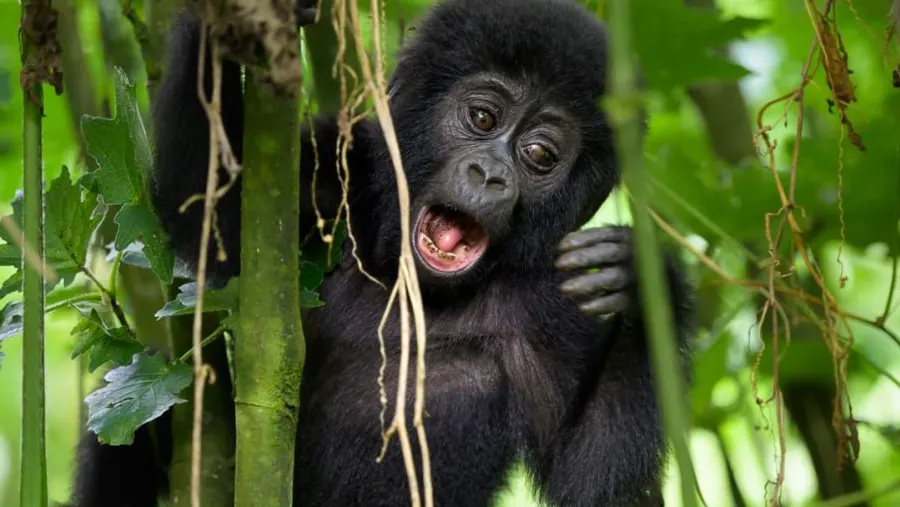
A mountain gorilla family, or troop, is typically led by a single dominant silverback — a mature male, usually over twelve years old, named for the distinctive saddle of silver-grey hair that develops across his back. A troop can range from a handful of individuals to well over twenty, including multiple adult females, their infants, and sometimes younger subordinate males waiting to eventually lead or split off to form their own group. The silverback’s role is protective and directional: he decides where the group forages, mediates disputes, and, if a trekking group gets too close or a real threat appears, positions himself between his family and the danger. Understanding this social structure is part of what makes the hour you eventually spend with a family so absorbing — you are not just watching individual animals, you are watching a functioning society. Female gorillas typically move between troops during adolescence, choosing to join a different silverback’s group, which means the makeup of any given family shifts gradually over the years even as the group’s overall structure and hierarchy remain stable. Infants stay close to their mothers for the first several years, nursing and riding on her back much like human toddlers cling to a parent, which is often the single most captivating part of a trek for visitors who arrive expecting something more intimidating than what they actually encounter.
How Long Do Silverbacks Live, and What Threatens Them
In the wild, a silverback typically lives around 35 to 40 years under good conditions, a figure our article How Long Does a Silverback Live For? explores in more detail, including how age affects a troop’s leadership over time. Despite their size and strength, mountain gorillas face real threats, mostly indirect — habitat pressure from surrounding human populations, disease transmission from humans (which is precisely why trekking rules exist), and historically, snares set for other forest animals that can injure gorillas as an unintended side effect. Our piece on the Predators of Mountain Gorillas covers the more natural side of this picture, including why adult gorillas have remarkably few natural predators once fully grown — a silverback’s size and strength alone are usually enough to deter would-be threats, which is one reason human-related risks, rather than predation, dominate modern conservation efforts around the species.
Standard Gorilla Trekking vs the Gorilla Habituation Experience
Most short tours are built around standard gorilla trekking: one hour with a fully habituated family, accompanied by park rangers, at a permit cost of USD 800 per person. A separate, less well-known option exists for travellers who want considerably more time and are willing to pay for it: the Gorilla Habituation Experience, offered specifically in Bwindi’s Rushaga sector, which allows small groups to spend up to four hours with a gorilla family that is still in the process of becoming fully habituated to human presence. Our detailed guide, Gorilla Habituation Experience in Rushaga Sector, explains exactly how this differs from standard trekking, including the significantly higher permit cost and the smaller group sizes involved. For a short but unforgettable trip, the habituation experience is worth serious consideration if your budget allows it, since it turns your one gorilla encounter into a genuinely immersive half-day rather than a strictly timed hour. Because a habituation permit is capped at a smaller number of visitors than standard trekking, it also feels considerably more personal — you are trekking alongside researchers and trackers still actively building trust with the family, rather than joining a fully settled routine, which gives the whole encounter a slightly different, more observational character.
Why “Short” and “Mountain Gorilla” Go Together So Well
Unlike many wildlife encounters that reward weeks of patient searching, a mountain gorilla encounter is, by design, a single concentrated event: one trek, one family, one hour (or, with the habituation experience, up to four). This is precisely why a short tour genuinely works for this particular species in a way it would not for, say, a multi-park big-game safari built around unpredictable sightings. You are not compressing a naturally long experience into a short trip — you are simply trimming the travel time around an activity that was always going to be a single, defined encounter.
Compare this to a classic savannah safari, where a longer trip genuinely does improve your odds — more game drives mean more chances at a rare sighting, better light, a pride on the move rather than resting in shade. Gorilla trekking does not work that way. Every trekking group that sets out on a given day is virtually guaranteed to find their assigned family, since rangers monitor each group’s whereabouts daily specifically to make this possible. The variable is not whether you will see gorillas, but how long the hike takes to reach them — which is exactly the kind of variable a well-planned short trip can absorb without diminishing the outcome itself.
Short Tour Option 1: The 2 to 3-Day Trekking Trip
For most travellers, a two or three-day trip built around standard trekking is the sweet spot: enough time for a relaxed overnight before the trek, the trek itself, and a comfortable return, without the schedule pressure of a same-day itinerary. Our 2-Day Uganda Gorilla Safari and 3-Day Uganda Gorillas Safari both follow this structure, and Pick and Transfer Safaris’ 2 Days Uganda Gorilla Tour and 3-Days Uganda Gorilla Safari are useful benchmarks if you want a second quote for the same basic route.
Short Tour Option 2: Adding the Habituation Experience
If four hours with a gorilla family sounds more appealing than one, several of our short itineraries can be adapted to swap a standard trekking permit for a habituation permit instead, provided you are trekking in Bwindi’s Rushaga sector specifically. This does not meaningfully change your overall trip length — it is still a single-day activity — but it does change the permit cost, the group size (capped smaller than standard trekking), and, for many travellers, the depth of the experience itself. Ask about this option directly when you contact us, since not every short itinerary is automatically built around Rushaga.
Short Tour Option 3: Starting From Kigali Airport
Kigali International Airport sits only four to five hours by road from the Bwindi and Mgahinga border region, considerably closer than Entebbe, which is why so many short mountain gorilla tours are built around a Kigali start. Our own 2-Day Uganda Gorilla Safari Starting from Kigali and the wider range of Kigali-starting itineraries we run cover this route in depth, and Pick and Transfer Safaris’ One Day Uganda Gorilla Safari Starting from Kigali and their Kigali City overview are worth a look if your flights are routed through Rwanda rather than Uganda.
Short Tour Option 4: The 1-Day Trek (and Why We’re Cautious About It)
A genuine same-day trek — flying or driving in, trekking, and returning the same evening — is technically possible and is attempted regularly by travellers based in Kigali with only one free day. We are honest with every traveller who asks about this option: it works, but it leaves almost no margin for a border delay, a flight delay, or a gorilla family that has moved deep into the forest that morning, and the USD 800 permit fee is generally not refundable if you simply arrive too late for your trekking slot. If a single day is genuinely your only option, it is worth reading further before committing to it, since the trade-offs are real and worth understanding upfront.
If Time Allows: Extending Beyond a Short Tour
Not every traveller who starts researching a short mountain gorilla tour ends up booking one — some discover, once they understand what a longer itinerary can add, that a few extra days genuinely change the trip rather than simply extending it. A longer safari can pair your gorilla trek with chimpanzee tracking, big game viewing in Queen Elizabeth National Park, or a Rwanda extension into Volcanoes National Park. If that appeals, it is worth browsing beyond the short-tour category: the Wildlife Safaris collection at Pick and Transfer Safaris is a useful benchmark for how a longer, multi-park itinerary is typically structured once the single fixed cost of the gorilla permit is no longer the only consideration driving your budget.
What a Mountain Gorilla Encounter Actually Feels Like
No amount of planning fully prepares you for the moment itself. Our article What It’s Like to Trek Gorillas in Uganda and Rwanda captures this well: the quiet, the sudden stillness among your group when the guide signals the family is close, and then the strange, disarming ordinariness of watching a gorilla family simply live their lives a few metres away — feeding, grooming, infants tumbling over each other while an enormous silverback watches, entirely unbothered by your presence. Many travellers describe it as far more emotionally affecting than they expected, precisely because the gorillas’ behaviour feels so recognisably, unsettlingly familiar — the way a juvenile play-wrestles a sibling, the way a mother patiently redirects a wandering infant, the exasperated glance a silverback occasionally throws toward his more boisterous offspring. Our guide to whether mountain gorillas are friendly to people is worth reading beforehand, since it sets realistic expectations for how the animals typically behave around a trekking group.
Gorilla Trekking Rules Built to Protect the Species
Every rule around a gorilla trek — the seven-metre minimum distance, the strict one-hour limit, the ban on trekking while sick, the minimum age of fifteen — exists specifically because this is an endangered species with no natural immunity to many human illnesses and a population still recovering from near-extinction. Our full explainer, Gorilla Trekking Rules and Regulations in Uganda, is essential reading regardless of how short your trip is, since these rules apply identically whether you are on a one-day dash or a two-week safari. The illness policy in particular deserves attention: because mountain gorillas share close to 98% of their DNA with humans, they are genuinely susceptible to human respiratory infections, and a single sick visitor has the potential to seriously harm an entire family. Park rangers will turn away a visibly unwell trekker even after the USD 800 permit has been paid, which is a rule worth respecting rather than resenting if it ever applies to you.
Permit Costs for Trekking vs Habituation
As of 2026, a standard Uganda gorilla trekking permit costs USD 800 per person for foreign non-residents, while a Gorilla Habituation Experience permit costs significantly more, reflecting the smaller group size and much longer time with the family. Both permits are issued by Uganda’s national wildlife authority and are strictly capped per day, which means both need to be booked well ahead of travel, particularly for the June–September and December–February peak seasons. Reach out through our Contact Us page as early as possible with your preferred permit type and travel dates, and we will confirm availability before you commit to flights. It is worth budgeting for the habituation experience as a distinct decision rather than an upgrade you can add on a whim at the park gate — permits for both experience types are allocated separately and in advance, so switching from standard trekking to habituation (or the reverse) close to your travel date is often simply not possible if the alternative permit type is already sold out.
Best Time of Year to See Mountain Gorillas
Because mountain gorillas are resident rather than migratory, trekking runs year-round, but the two dry seasons offer firmer, less muddy trails, which matters more on a short trip with limited buffer for slow hiking conditions. Our detailed breakdown, What Is the Best Time to See Gorillas in Uganda and Rwanda?, covers month-by-month conditions in more depth, including how the wetter months can mean better availability and occasionally lower permit-adjacent costs for flexible travellers.
What to Pack and How to Prepare
Pack waterproof hiking boots, a lightweight rain jacket, gardening gloves, long trousers and sleeves in neutral colours, a hat, sunscreen and insect repellent, and bring your yellow fever vaccination certificate, since Uganda requires proof of vaccination at entry. Our What Vaccinations Do I Need to Go to Uganda? guide covers the fuller health-preparation checklist. If you have opted for the Gorilla Habituation Experience rather than standard trekking, pack a little extra water and a light snack, since your time in the forest will run considerably longer than a standard one-hour trek. A telephoto or zoom camera lens is worth the extra weight if photography matters to you, though the seven-metre minimum distance and generally excellent visibility once a family is located mean even a modest phone camera captures usable, memorable images.
Choosing the Right Operator for a Mountain Gorilla Tour
Because permits, sector assignment and group composition all affect the quality of your encounter, choose an operator with genuine, specific experience in gorilla trekking logistics rather than one treating it as a single line item on a broader wildlife itinerary. Confirm whether your permit is for standard trekking or the habituation experience, which sector you are assigned to, and how your operator handles a rare no-show gorilla family. It is also worth asking how many years the specific driver-guide assigned to you has worked this exact route, since local knowledge of ranger contacts, sector conditions and border timing genuinely shapes how smoothly a short, tightly scheduled trip actually runs. Our guide to Choosing the Best Uganda Safari covers this in more depth, and it is always worth comparing at least one other established regional operator, such as Pick and Transfer Safaris and their Gorilla Safaris collection, their Bwindi destination overview, and their Mgahinga destination overview, and their contact page for a direct second quote, before you settle on a booking.
Frequently Asked Questions
What is the difference between a mountain gorilla and other gorillas? Mountain gorillas are a distinct subspecies found only in the Virunga Massif and Bwindi Impenetrable Forest, with thicker fur and a larger build adapted to cool, high-altitude forest, unlike lowland gorillas found elsewhere in Central Africa.
Is the Gorilla Habituation Experience worth the extra cost? For travellers who want significantly more time with the gorillas and can afford the higher permit fee, yes — four hours instead of one is a meaningfully different, more immersive experience, though it is only offered in Bwindi’s Rushaga sector.
How many mountain gorillas are left in the world? Just over 1,000, roughly half in Bwindi Impenetrable National Park and the rest across the three Virunga Massif parks in Uganda, Rwanda and DR Congo.
Can I see mountain gorillas on a short trip without compromising the experience? Yes — because the encounter itself is a single, defined event rather than something that improves with more days in the field, a well-planned two or three-day trip delivers essentially the same core experience as a much longer safari.
Which is better for a short trip, Bwindi or Mgahinga? Bwindi, in almost every case, thanks to its far greater number of habituated families and trekking sectors, which gives a short, date-constrained itinerary much better permit flexibility.
Do gorilla permit fees actually help conservation? Yes — a significant share of permit revenue is reinvested directly into park protection, ranger salaries and community programmes around Bwindi and Mgahinga, which is a large part of why the mountain gorilla population has grown rather than declined over the past few decades.
Is it true that mountain gorillas share almost all their DNA with humans? Yes, roughly 98%, which is both part of what makes the encounter feel so striking and the exact reason strict health rules apply to every visitor.
Choosing Short mountain gorilla tours in Uganda
A short mountain gorilla tour in Uganda is not a compromised version of a longer safari — it is simply a trip built tightly around a single, extraordinary encounter with one of the rarest great apes left on the planet. Whether that means a relaxed two or three-day trek, a Kigali-starting itinerary, or the deeper immersion of a Gorilla Habituation Experience in Rushaga, the species itself, and the strict, well-earned rules protecting it, stay exactly the same regardless of how many days you have. Get in touch through our Contact Us page with your available dates and preferred experience, and our team will help you build the right short tour around it, or browse our full range of Uganda safari packages to compare every option side by side.
Fewer than a thousand mountain gorillas remain anywhere on Earth, and Uganda is home to more of them than any other country. That single fact is worth sitting with for a moment — a short trip is still, genuinely, a rare and privileged encounter with a species that very nearly did not survive to be seen at all.