- EXPERT'S HELP
- +256789210067
- +256200955001
- info@kenlinktours.com


Murchison Falls tour with Bwindi and Kibale
October 24, 2026
Uganda Tours to Murchison Falls Ziwa Rhinos and Kibale
October 24, 2026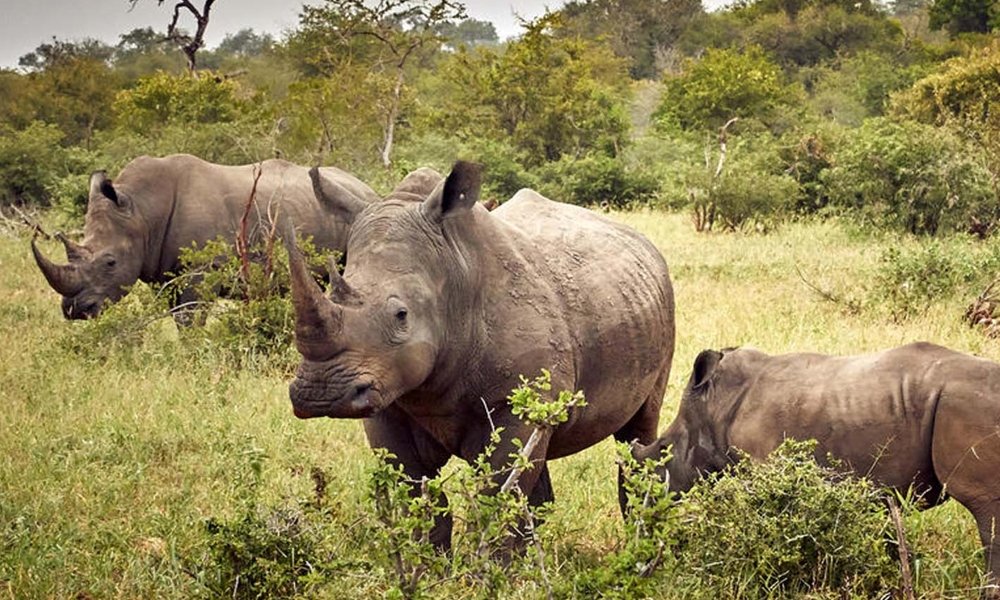
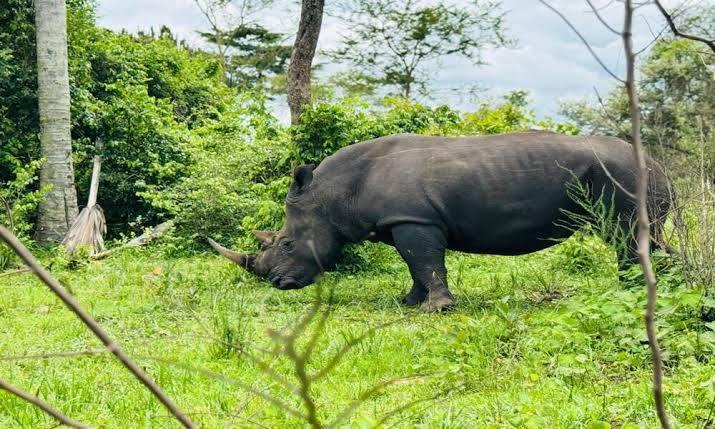
Combining Murchison Falls with Ziwa Rhinos. Few safaris start as dramatically as this one. Within three hours of leaving Kampala, you are walking quietly across the grassland of Ziwa Rhino Sanctuary, following a ranger towards a family of southern white rhinos grazing just metres away. By the same evening, you can be standing above the roaring Murchison Falls, watching the entire River Nile explode through a narrow gorge in a cloud of spray.
Combining Murchison Falls with Ziwa rhinos is one of the smartest ways to experience northern Uganda. Ziwa sits directly on the road to Murchison Falls National Park, so adding rhino tracking costs you almost no extra travel time. Together, the two destinations let you see four of the Big Five — rhinos at Ziwa plus elephants, buffalo and lions in Murchison, with leopards a bonus for the lucky — along with giraffes, hippos, crocodiles and hundreds of bird species.
In this guide, we explain everything you need to know: the story of Uganda’s rhinos, what to expect on a rhino tracking walk, the highlights of Murchison Falls, sample itineraries from two to five days, current fees, costs, lodges and practical tips.
At Kenlink Tours, we have run Uganda safaris since 2010, and the Ziwa–Murchison route is one of our most popular trips. It suits first-time visitors, families, photographers and anyone looking for a short but rewarding wildlife adventure.
About Ziwa Rhino Sanctuary
Where Is Ziwa?
Ziwa Rhino Sanctuary — also called Ziwa Rhino and Wildlife Ranch — lies in Nakasongola District, along the Kampala–Gulu highway near the River Kafu bridge. It is about 176 kilometres north of Kampala, a drive of roughly three hours. The sanctuary covers about 70 square kilometres of savannah, woodland and swamp, protected by a secure perimeter fence and round-the-clock ranger patrols.
How Uganda Lost and Regained Its Rhinos
Uganda was once home to both northern white rhinos and eastern black rhinos. Years of civil conflict and poaching wiped them out, and by 1983 there were no rhinos left in the wild anywhere in the country.
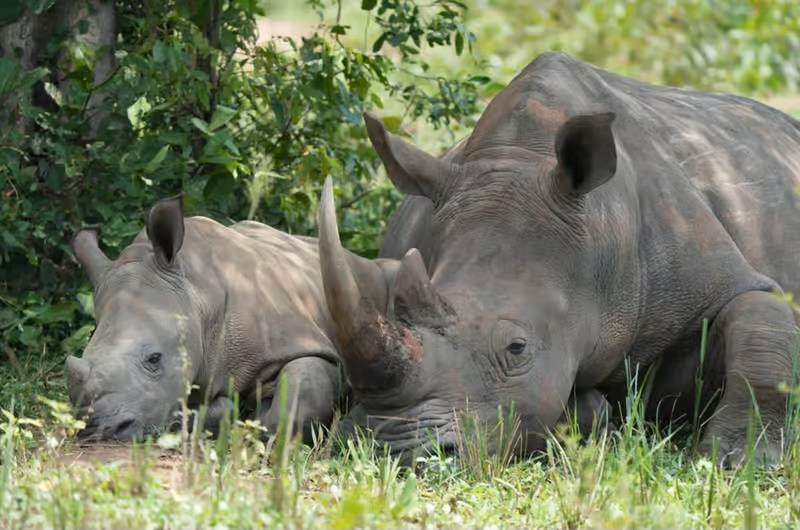
In 2005, Rhino Fund Uganda and the Uganda Wildlife Authority established Ziwa as a safe breeding ground. Six founder rhinos — four from Kenya and two from Disney’s Animal Kingdom in the United States — started the new population. Two decades of careful protection and breeding have been a remarkable success: by late 2025, Ziwa was home to around 49 rhinos, and at World Rhino Day 2025 seventeen rhino calves were named in a public ceremony.
A Historic Moment for Uganda’s Rhinos
The sanctuary is now entering an exciting new chapter. In December 2025, eight more southern white rhinos arrived from South Africa to strengthen the gene pool. In January 2026, the Uganda Wildlife Authority moved four rhinos from Ziwa to Ajai Wildlife Reserve in West Nile — the first time rhinos had been translocated between protected areas inside Uganda. It is the first phase of a plan to restore 20 rhinos to Ajai, with Kidepo Valley and eventually Murchison Falls also in line for reintroductions.
For now, Ziwa remains the only place in Uganda where visitors can reliably see rhinos, with Uganda Wildlife Authority figures from 2026 recording about 53 rhinos at the sanctuary. Every visitor who tracks rhinos here contributes directly to this conservation success story.
More Than Just Rhinos
Ziwa is a rich wildlife habitat in its own right. The sanctuary shelters antelopes such as Uganda kob, oribi, waterbuck, bushbuck and the shy sitatunga, plus hippos, crocodiles, warthogs, and occasionally leopards, aardvarks and honey badgers. More than 350 bird species have been recorded, including the shoebill in the neighbouring Lugogo swamp.
Rhino Tracking at Ziwa: What to Expect
Rhino tracking is the main reason visitors stop at Ziwa, and it is one of the most accessible wildlife experiences in Uganda.
How It Works
On arrival, you check in at the sanctuary headquarters and receive a short briefing from a Uganda Wildlife Authority ranger about the rhinos, the rules and the other wildlife you might see. Because the rhinos are monitored around the clock, the rangers know roughly where each group is. You drive a short distance towards them, then continue on foot for the final approach.
The walk usually lasts one to two hours. The terrain is flat and easy, making it suitable for most ages and fitness levels. Once you reach the rhinos, you can watch them graze, wallow or rest in the shade from a safe distance, often with oxpeckers or piapiac birds riding on their backs. Your ranger will share the names and personalities of individual rhinos and explain the sanctuary’s breeding programme.
Best Time of Day
Rhinos are most active in the early morning and late afternoon. During the heat of the day, they often rest under trees, which still makes for good viewing but less movement. If your schedule allows, track first thing in the morning or arrive in the late afternoon and stay overnight.
Rhino Tracking Rules
- Always stay behind your ranger and keep at least 20 to 30 metres from the rhinos.
- Move slowly and speak quietly; rhinos have poor eyesight but excellent hearing and smell.
- Never stand between a mother and her calf.
- If a rhino moves towards you, follow the ranger’s instructions — usually to move calmly behind a tree.
- Wear closed shoes, as the grass hides thorns (gum boots are available to borrow).
Other Activities at Ziwa
- Shoebill canoe trip: An early morning canoe ride through the Lugogo swamp gives an excellent chance of seeing the prehistoric-looking shoebill stork.
- Birdwatching walks: Over 350 species, including turacos, kingfishers and many raptors.
- Nature walks: Guided walks reveal antelopes, monkeys and the sanctuary’s smaller creatures.
- Night walks: With an armed ranger, search for nocturnal animals such as bushbabies, genets and nightjars.
Keen birders will love combining Ziwa’s shoebill with Murchison’s Nile delta. Our 7-Day Birdwatching Safari in Uganda shows how to build a full birding trip around these habitats.
Murchison Falls National Park Highlights
After Ziwa, the journey continues north to Murchison Falls National Park, Uganda’s largest and oldest national park, covering about 3,840 square kilometres. It is divided by the Victoria Nile, with rolling savannah to the north and woodland and forest to the south.
The Top of the Falls
The park takes its name from its most famous feature. At Murchison Falls, the Nile squeezes through a gap just seven metres wide and plunges about 45 metres into the gorge below. Standing at the top, you feel the ground tremble and the spray on your face. A short walking trail leads to several viewpoints, and many itineraries visit in the late afternoon when the light is at its best.
The Nile Launch Cruise
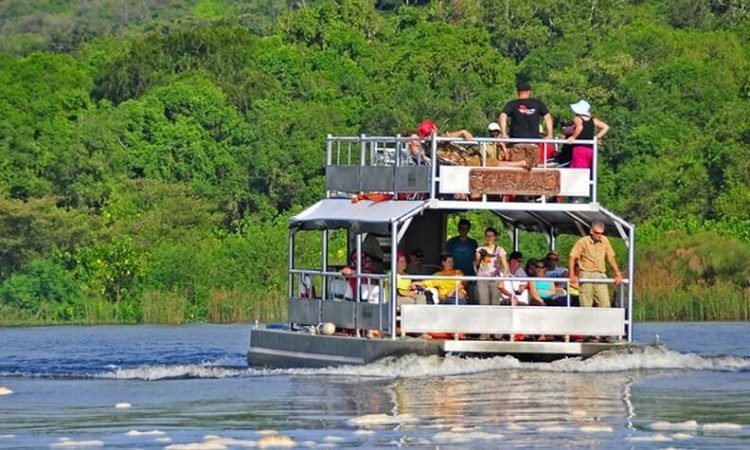
The classic afternoon boat trip travels upstream from Paraa towards the base of the falls. Along the way, you pass huge pods of hippos, basking Nile crocodiles, elephants and buffalo drinking at the water’s edge, and countless water birds. The cruise ends with a spectacular view of the falls from below. You can also take a morning cruise downstream to the Nile delta, one of the best places in Uganda to search for the shoebill.
Game Drives on the Northern Bank
The northern plains around Buligi and the Albert Nile delta offer some of Uganda’s best game viewing. Expect large herds of elephants, buffalo, Uganda kob, Jackson’s hartebeest and oribi, along with the park’s famous Rothschild’s giraffes. Lions are seen regularly, and leopards occasionally appear in the evening. Early morning drives offer the best light and the most predator activity.
Chimpanzee Tracking in Budongo Forest
On the park’s southern edge, Budongo Forest is home to habituated chimpanzees. Tracking here is a great add-on for travellers who will not visit Kibale, and it pairs neatly with a Ziwa–Murchison safari. For a primate-focused trip, see our 3-Day Chimpanzee Tracking Safari.
Other Experiences
- Hot air balloon flights over the savannah at sunrise
- Guided nature walks in Rabongo Forest
- Sport fishing for Nile perch below the falls
- Hiking from the boat landing to the top of the falls
- Visits to the Mubako community and local craft markets near Paraa
Sample Ziwa and Murchison Falls Itineraries
The Ziwa–Murchison combination works for almost any schedule. Here are the most popular options.
2-Day Ziwa Rhinos and Murchison Falls Express
Day 1: Leave Kampala early and drive to Ziwa for rhino tracking. Continue to Murchison Falls, visiting the top of the falls in the late afternoon before checking into your lodge.
Day 2: Take an early ferry across the Nile for a morning game drive on the northern bank, then return to Kampala via Masindi.
This trip suits travellers with limited time, but it involves long drives and leaves no room for the launch cruise. We recommend it only if you cannot spare a third day.
3-Day Ziwa Rhinos and Murchison Falls Safari (Most Popular)
Day 1 – Kampala to Ziwa and Murchison Falls: Depart Kampala after breakfast, track rhinos on foot at Ziwa and enjoy lunch at the sanctuary. Continue to Murchison Falls and visit the top of the falls before dinner at your lodge.
Day 2 – Game drive and Nile cruise: Cross the Nile at sunrise for a morning game drive in search of lions, elephants, giraffes and buffalo. After lunch, board the launch cruise to the base of the falls, passing hippos, crocodiles and birdlife.
Day 3 – Return to Kampala: Optional early Nile delta cruise to look for the shoebill, then drive back to Kampala or Entebbe, arriving in the late afternoon.
This is the itinerary we recommend most often, and it covers everything in a relaxed way. Compare it with the 3 Days Safari to Murchison Falls for a budget-friendly version.
4-Day Ziwa, Murchison Falls and Budongo Chimps
Add a fourth day for chimpanzee tracking in Budongo Forest, a Nile delta cruise, a hot air balloon flight or simply more time on game drives. You could also spend a night at Ziwa itself for early morning rhino tracking and the shoebill canoe trip. The 4 Days Wildlife and Primate Safari shows how wildlife and primates fit together on a short trip.
Extending to Kibale and Queen Elizabeth
From Murchison Falls, the road continues south to Kibale Forest National Park for chimpanzee tracking and Queen Elizabeth National Park for the Kazinga Channel and tree-climbing lions. A 6–8 day trip covering Ziwa, Murchison, Kibale and Queen Elizabeth gives you an outstanding overview of Uganda’s wildlife. See our 7 Days Gorilla and Wildlife Safari and 3 Days Queen Elizabeth National Park safari, or the 7 Days Uganda Safari – One Week Tour.
Adding Gorillas: The Complete Uganda Safari
Many travellers start with Ziwa and Murchison and finish with mountain gorillas in Bwindi Impenetrable National Park. A 10-day safari covers rhinos, big game, chimps and gorillas. Our 8-Day Uganda Gorilla, Chimpanzee & Wildlife Safari, 10 Days Uganda Adventure Safari and 10 Days Best of Primate & Culture are excellent options, as is the 10 Days Uganda Primates and Wildlife itinerary, which also begins with Ziwa and Murchison.
Long Safaris of Two Weeks or More
With more time, add Kidepo Valley, Lake Mburo, Jinja or Rwanda. Explore our 18-Day Adventure in Uganda, 20-Day Wildlife and Nature Experience and 25-Day Wildlife, Gorilla and Chimps Adventure, or compare the 14-Day Uganda Primates and Safari Adventure.
Fees for Ziwa and Murchison Falls
Ziwa is now managed by the Uganda Wildlife Authority, which also sets the fees for Murchison Falls. These are the rates for foreign non-resident visitors under the most recently published tariff; UWA updates its fees every two years, and we always quote the rates in force on your travel dates.
| Fee (foreign non-resident) | Price | Notes |
|---|---|---|
| Ziwa entry | US$20 | Per person |
| Ziwa rhino tracking | US$30 | In addition to entry; lower rates for children |
| Murchison Falls entry (per 24 hours) | US$45 | Children 5–15: US$25; under 5: free |
| Murchison game drive fee | US$30 | Per person per drive |
| Launch cruise to the bottom of the falls | About US$30–US$35 | Approximately three hours |
| Hike to the top of the falls | US$15 | Optional |
| Hot air balloon safari | US$380 | Early morning flight |
How Much Does a Ziwa and Murchison Falls Safari Cost?
A private 3-day Ziwa and Murchison Falls safari typically costs about US$700–US$950 per person on a budget, US$950–US$1,400 mid-range and US$1,400–US$2,500+ for luxury, based on two travellers sharing. Prices usually include a private 4×4 vehicle with a driver-guide and fuel, park and sanctuary fees, rhino tracking, the launch cruise, game drives, accommodation and meals.
Groups of four to six travellers pay noticeably less per person because they share vehicle costs. Solo travellers can save by joining our group tours or scheduled departure safaris. Budget-conscious travellers can also compare the Uganda wildlife safaris from Pick and Transfer Safaris.
Where to Stay
- At or near Ziwa: The sanctuary offers chalets with a swimming pool, budget rooms and a campsite. Amuka Safari Lodge, about 12 kilometres away, provides upmarket cottages. Staying here lets you track rhinos early and take the shoebill canoe trip at dawn.
- Murchison Falls – budget: Rest camps, safari tents and simple cottages near Paraa, from about US$50–US$120 per person per night.
- Murchison Falls – mid-range: Comfortable lodges with en-suite cottages, pools and Nile or savannah views, typically US$150–US$300 per person per night.
- Murchison Falls – luxury: Elegant riverside lodges with suites, fine dining and spa services, from about US$300 to more than US$800 per person per night.
Staying inside the park or on the northern bank saves driving time and extra park fees, so it is often better value than a cheaper lodge outside the gates.
Getting There
Most travellers make the trip by road in a 4×4 safari vehicle. Kampala to Ziwa takes about three hours, and Ziwa to Murchison Falls about two to three more. You can view our vehicles on the car hire page, available with or without a driver-guide. Travellers short on time can fly from Entebbe to Pakuba or Bugungu airstrips in Murchison, although flying means skipping Ziwa unless you drive one way.
Best Time to Combine Ziwa and Murchison Falls
Both destinations are open all year.
- Dry seasons (June to September and December to February): The best time for game viewing in Murchison, as animals gather near the Nile and grass is shorter. Rhinos at Ziwa are easy to find, and roads are in good condition. These months are busiest, so book lodges early.
- Wet seasons (March to May and October to November): The landscape turns green, birdlife is at its best and lodges often offer lower rates. Tracking at Ziwa continues normally, though some walks can be muddy.
For shoebill sightings, early mornings in any season give the best chance, both at Ziwa’s Lugogo swamp and in the Murchison delta.
What to Pack
- Neutral-coloured, lightweight clothing with long sleeves for walks
- Closed walking shoes or light boots for rhino tracking
- A hat, sunglasses and high-factor sunscreen
- Insect repellent, especially for evenings by the Nile
- A light rain jacket and a warm layer for early game drives
- Binoculars and a camera with a zoom lens
- A refillable water bottle
- Your passport and yellow fever vaccination certificate
Tips for the Best Experience
- Leave Kampala early to reach Ziwa before the rhinos settle in the midday shade.
- Spend at least two nights in Murchison so you can enjoy both a game drive and the launch cruise without rushing.
- Visit the top of the falls in the late afternoon for the best light and fewer visitors.
- Take the morning ferry to be among the first vehicles on the northern bank, when predators are most active.
- Book the delta cruise if you are a birder — the shoebill is a highlight.
- Stay overnight at Ziwa if you want the shoebill canoe trip or a more relaxed rhino experience.
- Tip your ranger at Ziwa and your boat crew in Murchison if you enjoy the service.
Frequently Asked Questions
Can I see rhinos in Murchison Falls National Park?
Not yet. Uganda’s rhinos currently live mainly at Ziwa Rhino Sanctuary, with a small group moved to Ajai Wildlife Reserve in January 2026. Murchison Falls is planned as a future reintroduction site, but for now Ziwa is the place to see them — conveniently on the way.
How long does rhino tracking at Ziwa take?
The tracking walk usually lasts one to two hours, plus a short briefing. Most visitors spend two to three hours at the sanctuary, including lunch, before continuing to Murchison Falls.
Is rhino tracking safe?
Yes. Southern white rhinos are generally calm, and you are always accompanied by experienced Uganda Wildlife Authority rangers who know each animal well. Following the ranger’s instructions and keeping a safe distance makes the experience very safe.
Can children track rhinos at Ziwa?
Yes. Unlike gorilla and chimpanzee trekking, rhino tracking has no strict age restriction, and the flat terrain suits families. Children pay lower fees, and young visitors usually find it one of the most exciting parts of the trip.
How many days do I need for Ziwa and Murchison Falls?
Three days is ideal. It allows rhino tracking, the top of the falls, a full game drive, the Nile launch cruise and a comfortable drive back. Two days is possible but rushed, while four days lets you add Budongo chimps or a balloon flight.
Can I see the Big Five on this trip?
You can see four of them: rhinos at Ziwa, plus elephants, buffalo and lions in Murchison Falls. Leopards are present in Murchison but are elusive. To learn more about the rest of the country, visit our About Uganda page or browse more East African destinations.
Where can I find longer safari ideas?
See the long safari trips from Pick and Transfer Safaris, or ask our team to design a custom itinerary starting with Ziwa and Murchison.
Book Your Ziwa Rhinos and Murchison Falls Safari
Combining Murchison Falls with Ziwa rhinos gives you one of Uganda’s most rewarding short safaris. In just a few days, you walk with rhinos in a sanctuary that has brought the species back from extinction in Uganda, feel the power of the Nile at Murchison Falls, cruise among hippos and crocodiles, and search for lions, elephants and giraffes on the open plains. It is also a chance to witness one of Africa’s great conservation comebacks as Uganda’s rhinos begin returning to the wild.
Kenlink Tours makes the planning easy. We handle every detail — fees, lodges, transport and an experienced driver-guide who knows both Ziwa and Murchison well — so you can relax and enjoy the adventure.
Ready to go? Contact our safari experts with your travel dates and group size, and we will send you a tailor-made Ziwa and Murchison Falls itinerary within 24 hours.
Call or WhatsApp: +256 789 210 067 | Email: info@kenlinktours.com