- EXPERT'S HELP
- +256789210067
- +256200955001
- info@kenlinktours.com


What makes Buhoma the best for gorilla tracking
October 6, 2026
Why Choose Rushaga Sector if you are from Kigali Rwanda
October 6, 2026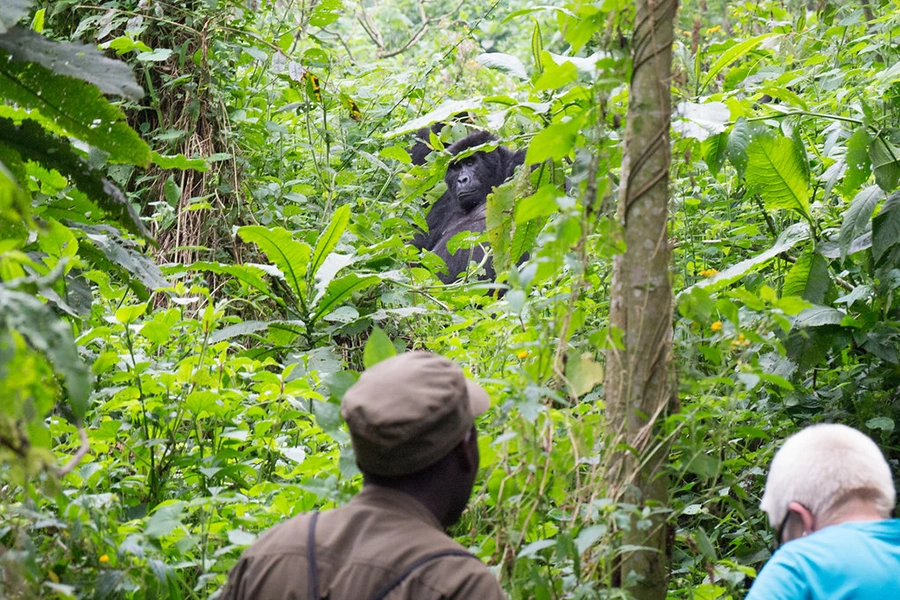
Gorilla Families of Buhoma Sector Bwindi. Every gorilla trek ends with a meeting, not a sighting. The moment you step into a clearing and see a silverback raise his head, you are meeting a family with its own leaders, rivalries, friendships and history. Nowhere in Uganda is that history richer than in Buhoma, the northern sector of Bwindi Impenetrable National Park, where gorilla tourism in Uganda began more than three decades ago.
In this guide, the team at Kenlink Tours introduces the gorilla families of Buhoma sector, Bwindi. We tell the story of each habituated group, from the pioneering Mubare family to newer groups such as Katwe and Muyambi. We explain their silverbacks, how they formed, what trekking each family is usually like and how permits are allocated, so you can arrive at your briefing already knowing the characters you are about to meet.
An Introduction to Buhoma Sector
Buhoma lies on the northern edge of Bwindi Impenetrable National Park in Kanungu District, southwestern Uganda. It is the oldest, best-developed and, for many travellers, most accessible of Bwindi’s four gorilla sectors. The others are Ruhija in the east and Rushaga and Nkuringo in the south.
Buhoma’s headquarters sits at roughly 1,500 metres above sea level, lower than the other sectors, and its trails are generally gentler. The area offers the widest choice of lodges in Bwindi, good road links to Queen Elizabeth National Park and quick access from Kihihi Airstrip. We explore these advantages in detail in our companion article on which part of Bwindi is easy for gorilla trekking.
But what truly sets Buhoma apart is its gorillas. The families here include Uganda’s first habituated group and several others with fascinating stories of leadership changes, peaceful separations and dramatic takeovers.
What Is a Habituated Gorilla Family?
Mountain gorillas are wild animals and naturally wary of people. Before a family can be visited by tourists, it goes through habituation, a slow process in which researchers and rangers visit the group every day over two to three years. Gradually, the gorillas learn that humans are not a threat and begin to carry on their normal lives in their presence.
Once a family is fully habituated, the Uganda Wildlife Authority (UWA) opens it to tourism. Each habituated family can be visited by a maximum of eight trekkers per day, for exactly one hour. That strict limit reduces stress on the gorillas and lowers the risk of human diseases spreading to them.
The process never really ends. Rangers and trackers visit habituated families every day of the year, monitoring health, recording births and deaths and protecting the gorillas from poachers and snares. Their knowledge is why Buhoma’s guides can tell you the name, age and personality of almost every gorilla you see.
How Gorilla Families Are Structured
Understanding gorilla family structure makes your hour with them far more meaningful. A typical group includes:
- The dominant silverback: An adult male, usually over 12 years old, named for the silver hair across his back. He leads the group, decides where it travels and feeds, mediates disputes and defends the family.
- Other silverbacks: Some families include additional mature males who are subordinate to the leader.
- Blackbacks: Younger males, roughly 8 to 12 years old, who have not yet developed silver hair.
- Adult females: Mothers who give birth roughly every four years and care for infants for several years.
- Sub-adults, juveniles and infants: The youngsters, who are often the most entertaining members to watch as they play, climb and tumble.
The silverback’s role is central to everything. Gorilla families stay together largely because of their bond with him, which is why the death or defeat of a leader can cause a family to break apart, as happened with Mubare. A strong, respected silverback, by contrast, can hold a large group together for many years, attracting females from other families and raising generations of young gorillas.
Families change constantly. Females transfer between groups, young males leave to form their own families, silverbacks age and are replaced, and sometimes groups split in two. That is why the group sizes in this guide are approximate. Numbers shift from year to year, and your ranger will give you the latest count at your briefing.
How Many Gorilla Families Are in Buhoma?
Buhoma is home to several habituated families. The four most frequently tracked are Mubare, Habinyanja, Rushegura and Katwe. Some sources also list newer groups, such as Muyambi and Binyindo, which formed through splits and have been habituated in more recent years.
The exact number open to tourism at any time depends on UWA’s management decisions, the movements of the gorillas and whether any group is temporarily unavailable. When you book with a tour operator, your permit is issued for the Buhoma sector, and rangers assign your group to a specific family at the morning briefing.
For an overview of gorilla families across Uganda and Rwanda, see our Uganda and Rwanda gorilla safaris guide.
The Mubare Gorilla Family: Uganda’s Pioneers
The Mubare family holds a unique place in conservation history. It was the first gorilla group in Uganda to be habituated for tourism, and it received its first visitors in 1993. The family takes its name from the Mubare Hills deep in the forest, where it was first encountered.
For many years, Mubare was led by a legendary silverback called Ruhondeza. At its peak, the family numbered around 18 members. Ruhondeza was known for his calm temperament around visitors, and his tolerance helped prove that gorilla tourism could work in Uganda. As he aged, however, the family began to shrink. Rival silverbacks attacked the group, some females left to join other families, and Ruhondeza eventually retired from leadership. He died in 2012 and was buried near the park headquarters, a sign of how much he meant to the Buhoma community.
Leadership passed to Kanyonyi, who led the group until his death. A powerful outsider silverback, Maraya, then took control of the family. Today Mubare is a small, intimate group of roughly six to eight members.
Mubare’s small size can make for a peaceful, close encounter, and tracking the family that started it all carries a special emotional weight for many visitors. The terrain they range over can be hilly, so trek length varies.
The Habinyanja Gorilla Family: A Story of Leadership and Splits
The Habinyanja family was habituated in the late 1990s and opened to tourism around 1999. Its name comes from “Nyanja,” a local word for a body of water, after the swamp in the forest where the group was first seen.
When it was first habituated, Habinyanja was a large family of around 30 members, originally led by a silverback known as Mugurusi, meaning “old man.” After his death, leadership tensions emerged between two brothers, Rwansigazi and Mwirima. Rwansigazi was adventurous and liked to roam, while Mwirima preferred to stay closer to home. In 2002, the family split peacefully. Mwirima left with his followers to form a new group, Rushegura, while Rwansigazi remained with Habinyanja.
Today Habinyanja is led by the silverback Makara and has roughly 13 to 18 members. Families of this size offer plenty of activity during your hour: infants playing, juveniles climbing, mothers grooming and the silverback keeping a watchful eye.
Habinyanja’s home range can be some distance from the trailhead, and treks can involve steep climbs. It is a great choice for trekkers with reasonable fitness who want to see a lively, sizeable family.
The Rushegura Gorilla Family: Calm and Close to Home
The Rushegura family was born from the peaceful 2002 split of Habinyanja. Its name comes from “ebishegura,” a tree species that grew abundantly in the area where the separation took place.
Rushegura was founded and led for many years by the gentle silverback Mwirima. After his death, leadership passed to Kabukojo, who leads the family today. The group has typically numbered around 15 to 19 members, with many females and youngsters.
Rushegura has a well-earned reputation as one of Bwindi’s calmest families. It also often ranges close to the park headquarters and lodges. In fact, the group is known to wander out of the forest and through lodge gardens from time to time, to the delight of surprised guests. Because of this, Rushegura treks are frequently among the shortest in Buhoma, which makes the family a favourite for older travellers and anyone concerned about fitness.
Rushegura is also known for occasionally crossing into the Democratic Republic of Congo, since Bwindi’s northern edge is close to the border, before returning to Ugandan forest.
The Katwe Gorilla Family: Rising from the Mubare Story
The Katwe family is one of Buhoma’s newer groups. Its story is linked to the decline of Mubare. When the Mubare family fragmented during its leadership struggles, some of its habituated females went their own way. Rangers later found that several of these former Mubare females had joined a new group, led by a silverback named Muhaane (sometimes spelled Mahaane).
Because some members were already used to people, habituation progressed smoothly, and Katwe was opened to tourism around 2018. The family takes its name from the hilltop area where it was formed. It is a relatively small group, usually around eight members, including the silverback, blackbacks, adult females and youngsters.
Katwe’s addition was important for Buhoma, as it increased the number of permits available in the sector at a time of growing demand. Its smaller size means a more intimate encounter, and the family’s history connects visitors directly to the original Mubare story.
The Muyambi Gorilla Family: The Newest Chapter
The Muyambi family is among the most recently habituated groups associated with Buhoma. It is named after its dominant silverback, Muyambi, and is reported to have formed from members who broke away from the Mubare family.
Muyambi is a small group, typically around seven members, and has been noted for having several infants, which makes for an especially entertaining hour as the youngsters play and explore. Because the family is still relatively new to tourism, it can feel particularly wild and exciting to visit.
Availability of newer families such as Muyambi can vary from season to season, so check with your tour operator about which families are currently open in Buhoma.
The Binyindo Gorilla Family
The Binyindo family is another newer group sometimes listed in the Buhoma area. It is named after its leading silverback, Binyindo, who is easily recognised by his distinctively broad nose. The group formed in the mid-2010s and, after several years of habituation, was opened for trekking around 2018.
Binyindo is a small to medium-sized family of roughly nine members. Like other newer groups, its availability for tourism depends on UWA’s management decisions, so it may not be offered every season.
Buhoma Gorilla Families at a Glance
| Family | Opened to Tourism | Current Silverback | Approx. Members | Known For |
|---|---|---|---|---|
| Mubare | 1993 | Maraya | 6–8 | Uganda’s first habituated family; historic legacy |
| Habinyanja | Late 1990s | Makara | 13–18 | Large, lively group; dramatic leadership history |
| Rushegura | 2002 | Kabukojo | 15–19 | Calm family, often close to the lodges |
| Katwe | c. 2018 | Muhaane | About 8 | Formed by former Mubare females |
| Muyambi | Recent | Muyambi | About 7 | Newest chapter; several infants |
| Binyindo | c. 2018 | Binyindo | About 9 | Silverback with a distinctive broad nose |
Note: Gorilla family sizes and leadership change over time through births, deaths, transfers and splits. Figures are approximate; rangers give the latest information at your briefing.
Which Buhoma Gorilla Family Is Easiest to Trek?
No gorilla trek is guaranteed to be easy, because families move every day. However, some patterns are well known among guides:
- Rushegura is often the closest to the headquarters and lodges, making it a common choice for older or less fit trekkers.
- Mubare and Katwe are small families whose treks vary from short to moderate.
- Habinyanja often ranges further into the forest, with steeper climbs on many days.
You cannot choose your family when you book your permit; allocation happens at the briefing. However, rangers do try to match trekkers to families according to fitness. Tell them honestly about any health issues or limited mobility, and ask your guide to speak up for you. In our experience, rangers are very accommodating.
How Gorilla Families Are Allocated at the Buhoma Briefing
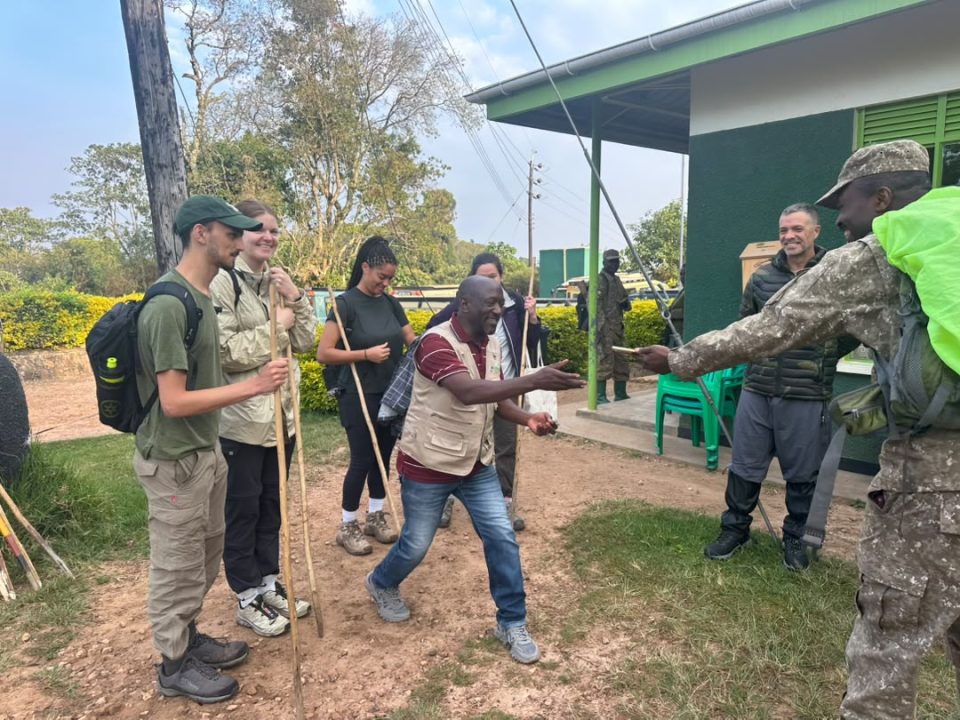
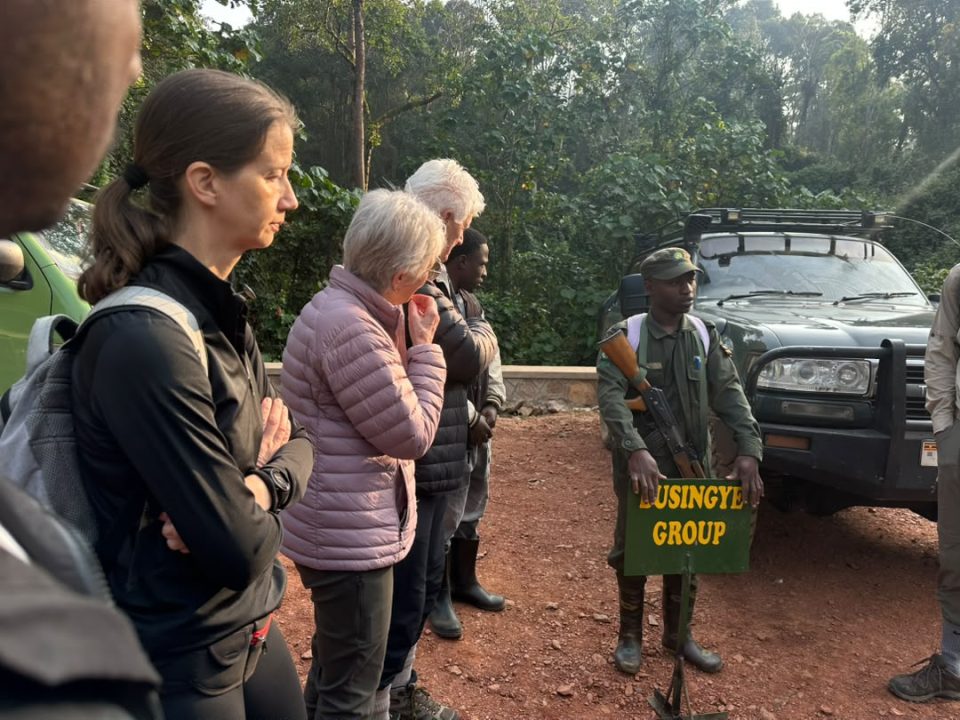
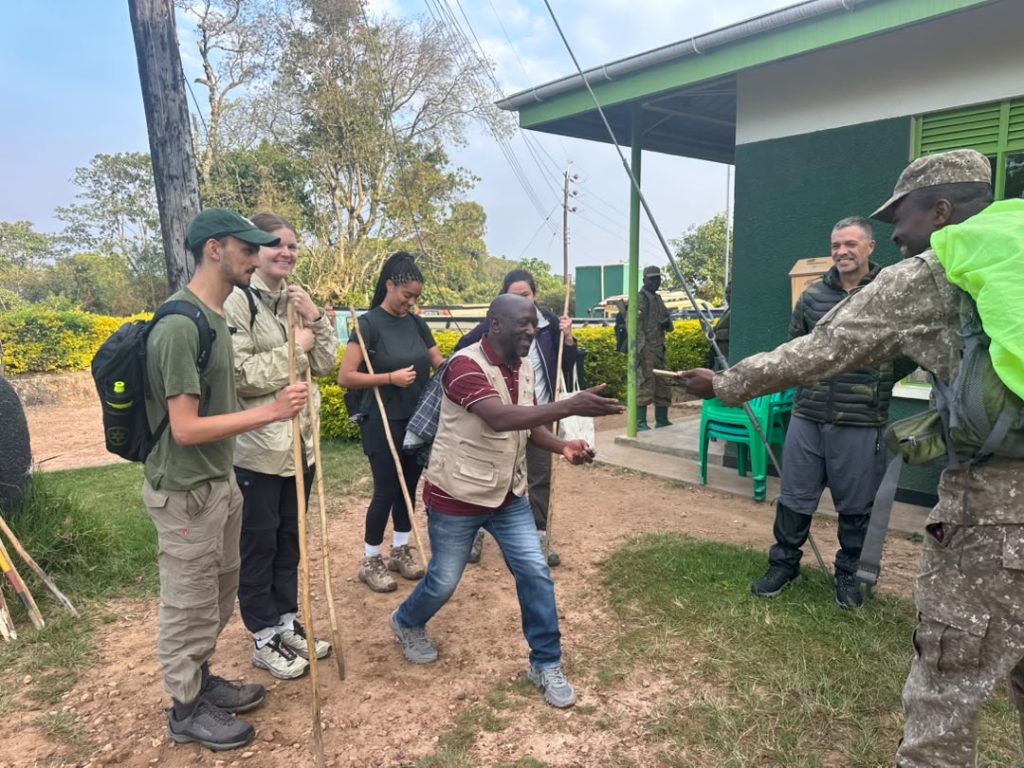
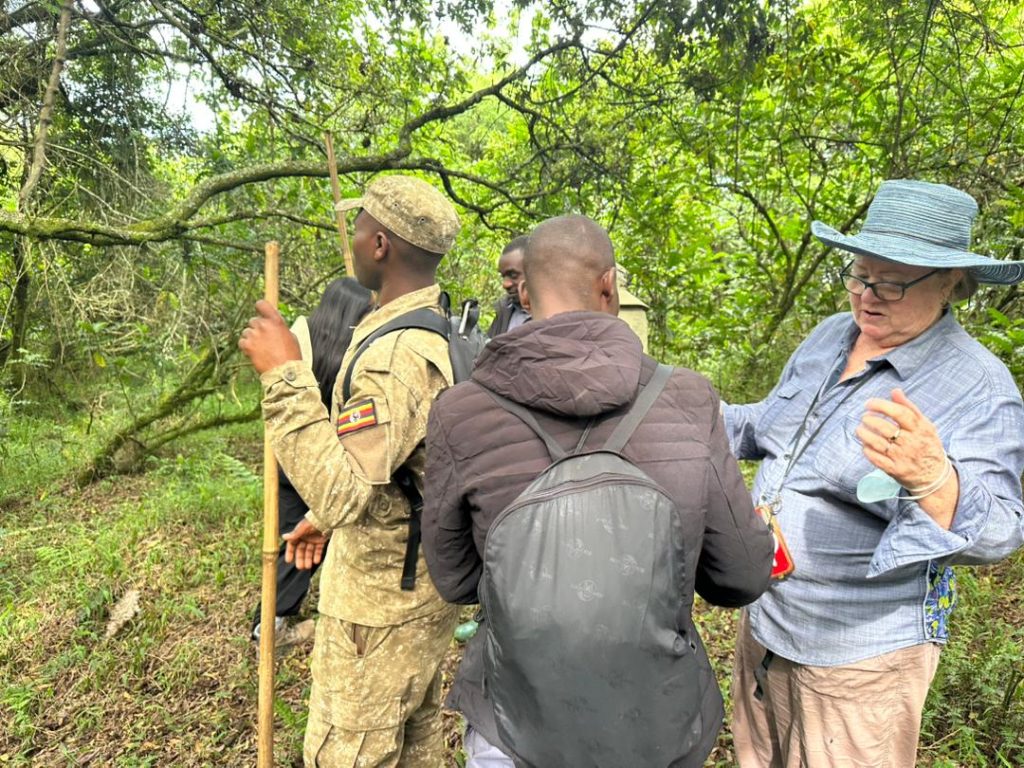
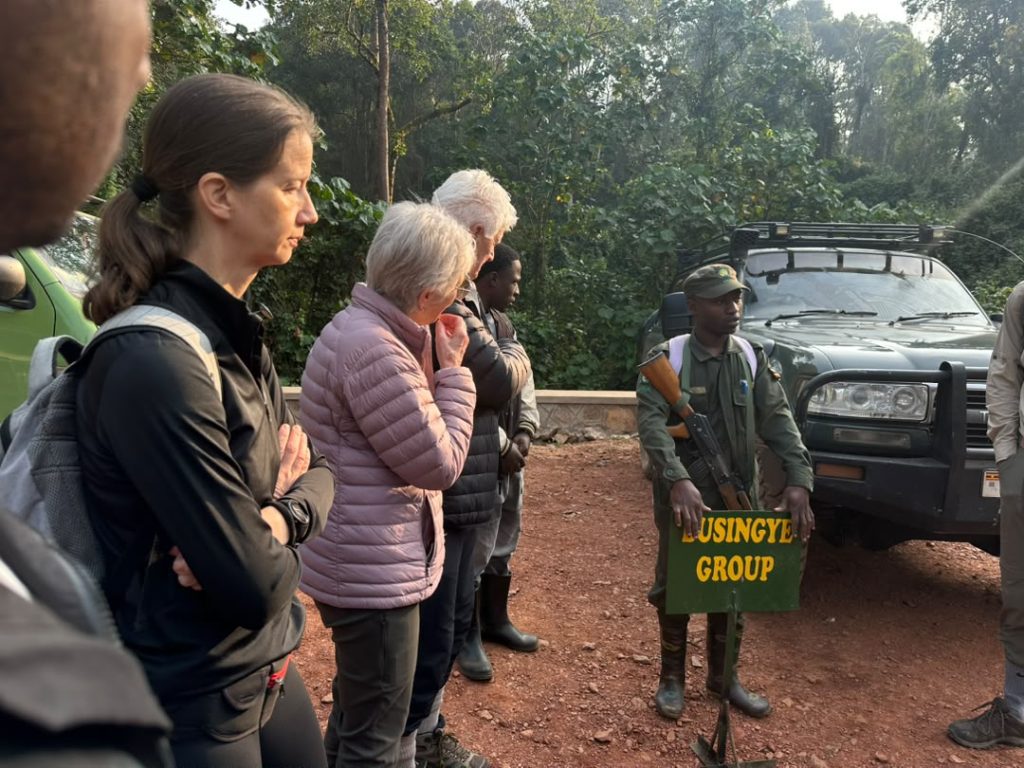
On the morning of your trek, you arrive at the Buhoma headquarters around 7:30 AM. After registration and a welcome, often with a cultural dance performance, rangers give a briefing on the rules and on gorilla behaviour. They then divide visitors into groups of up to eight, each assigned to one family.
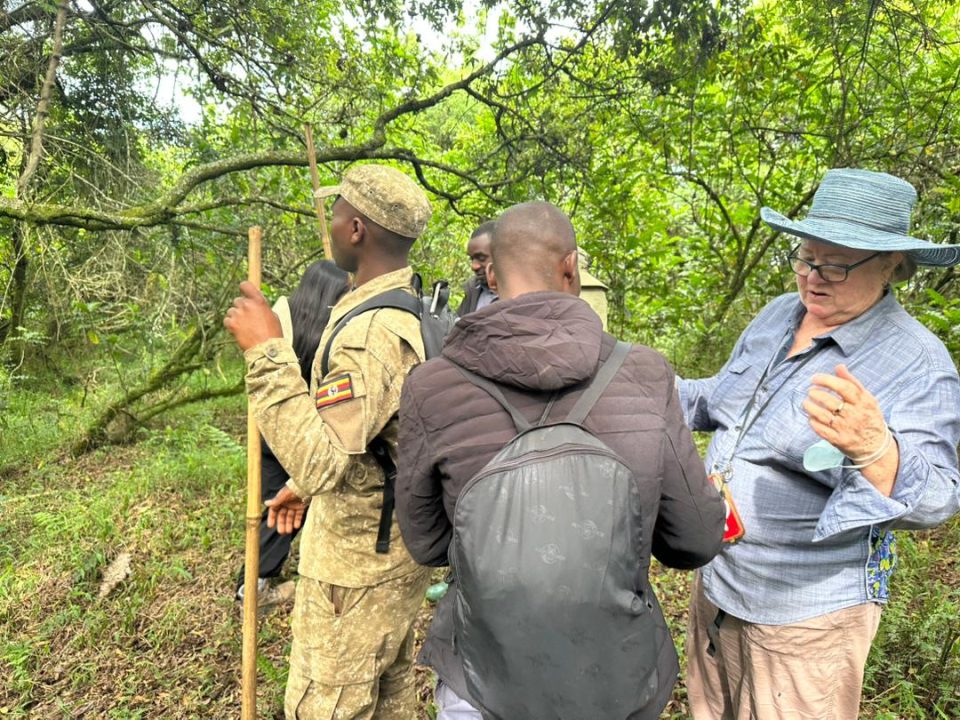
Allocation considers fitness, age and sometimes group bookings, so families or friends travelling together usually trek together. At about 8:00 AM, your group sets off with an armed ranger guide, while advance trackers are already following the family’s trail from the previous night’s nests. When the gorillas are found, you have one hour with them before hiking back to receive your certificate.
To understand how the full experience feels, read our article on what it’s like to trek gorillas in Uganda and Rwanda.
A Day in the Life of a Buhoma Gorilla Family
Knowing how gorillas spend their day helps you understand what you are seeing during your hour with them. Each evening, every gorilla except the youngest infants builds a fresh nest of bent branches and leaves, either on the ground or low in the trees. Infants sleep with their mothers. Trackers use these nests, along with dung and trampled vegetation, to find the family the next morning.
Gorillas wake shortly after dawn and spend the morning feeding. Mountain gorillas are mostly vegetarian, eating leaves, shoots, stems, bark, roots and fruit. An adult silverback can eat a remarkable quantity of vegetation in a single day. Around midday, the family usually settles down for a long rest. This is when you often see the most social behaviour: mothers grooming infants, juveniles wrestling and climbing, and the silverback lying back while youngsters clamber over him.
In the afternoon, the family feeds again and travels slowly through its home range, which can cover several square kilometres. The silverback leads, deciding the direction and pace. By evening, the group finds a new place to nest, and the cycle begins again.
Because Buhoma treks start in the morning, you usually meet the family during its morning feeding or as it begins its midday rest. Both offer wonderful viewing, from the sound of snapping bamboo to the sight of an infant peeking out from its mother’s arms.
Threats Facing Buhoma’s Gorilla Families
Mountain gorillas are classified as endangered. Their numbers have grown thanks to decades of conservation, but they still face serious threats.
Disease: Because gorillas share so much of our DNA, human illnesses such as colds, flu and respiratory infections can be deadly to them. This is why trekkers who are unwell are asked not to visit, and why distance rules are strictly enforced.
Habitat loss: Bwindi is surrounded by some of the most densely farmed land in Uganda. The forest is an island of green in a sea of cultivation, so protecting every hectare matters.
Snares and poaching: Gorillas are rarely targeted directly today, but they can be injured by snares set for other animals. Rangers patrol daily to remove snares and veterinary teams treat injured gorillas when needed.
Conflict with farmers: Families such as Rushegura sometimes leave the forest to feed on crops. Community programmes, buffer zones and human-gorilla conflict teams work to reduce damage and keep both people and gorillas safe.
Every permit you buy helps fund the work that addresses these threats, from ranger salaries to veterinary care and community projects.
Photographing Buhoma’s Gorilla Families
Photographing gorillas in Bwindi’s dense forest is rewarding but challenging. Light is low under the canopy, vegetation often gets between you and the gorillas, and the animals move constantly. A few tips will help:
- Switch off your flash before you reach the family.
- Use a camera that performs well at high ISO, or a lens with a wide aperture.
- A mid-range zoom such as 24–105mm or 70–200mm covers most situations.
- Focus on the eyes, which bring gorilla portraits to life.
- Carry a rain cover or dry bag for sudden showers.
- Spend part of your hour simply watching. Some moments are better remembered than photographed.
Smaller families such as Mubare and Katwe can offer clearer views because there are fewer gorillas moving around, while larger groups such as Habinyanja give you more variety of behaviour to capture.
Getting a Gorilla Permit for Buhoma
Gorilla permits for all Buhoma families are issued by the Uganda Wildlife Authority. A standard permit currently costs US$800 per person for foreign non-residents, with lower rates for foreign residents and East African citizens. Your permit is valid for a specific sector and date, so you must book a Buhoma permit to trek Buhoma families.
Because each family takes only eight visitors a day, Buhoma permits sell out early, especially from June to September and in December. We recommend booking four to six months ahead. Remember that the minimum age is 15 and permits are non-transferable.
At Kenlink Tours, we secure permits for all our guests and book accommodation in the same sector as your permit. Contact our team to check availability for your dates.
Best Time to Visit Buhoma’s Gorilla Families
Gorilla trekking runs throughout the year in Buhoma. The dry seasons, June to September and December to February, offer firmer trails and easier travel, and are the busiest months. The wet seasons, March to May and October to November, bring rain and mud but also lush scenery, fewer trekkers and sometimes lower lodge prices. Check our discounted tours for seasonal offers.
Gorillas are often more active and easier to photograph when the weather is dry, but some trekkers find that during wetter months the gorillas stay at lower altitudes where food is plentiful, which can mean shorter treks.
Where to Stay Near Buhoma’s Gorilla Families
Buhoma has more lodges than any other Bwindi sector, many right on the forest edge. Staying close lets you walk to the briefing, and some lucky guests even spot Rushegura gorillas wandering through the gardens. Options range from simple bandas and community-run guesthouses to luxury forest lodges with spa services.
Our guide to accommodations in Bwindi Impenetrable National Park covers lodges in every sector, and our list of the most budget lodges in Bwindi National Park helps travellers keep costs down.
Getting to Buhoma
By road from Entebbe or Kampala: The drive takes around eight to ten hours. Many itineraries break the journey in Queen Elizabeth National Park, then drive to Buhoma through the Ishasha sector, famous for tree-climbing lions. See our guide to the best route to Bwindi from Queen Elizabeth National Park.
By air: Domestic flights connect Entebbe with Kihihi Airstrip in just over an hour, followed by a drive of around an hour to an hour and a half to Buhoma.
From Kigali: Buhoma is about six to seven hours by road from Kigali. Travellers starting in Rwanda often choose the closer southern sectors instead, but you can route north to Buhoma as part of a longer loop and fly home from Entebbe. This guide to starting in Kigali and ending in Entebbe explains how. Our article on landing in Kigali or Entebbe for a gorilla safari compares both gateways.
What to Pack for Visiting Buhoma’s Gorillas
- Waterproof hiking boots with good grip
- Long trousers and long-sleeved shirts in neutral colours (no camouflage)
- A lightweight rain jacket
- Gardening gloves to grip branches and avoid nettles
- Gaiters or long socks
- A daypack with water, snacks and a packed lunch
- Insect repellent and sunscreen
- Camera with spare batteries (no flash)
- Cash for porters and tips
See our complete guide on what to pack for gorilla trekking in Uganda, Rwanda and Congo.
Gorilla Etiquette: Respecting Buhoma’s Families
The rules rangers explain at the briefing protect the gorillas’ health and keep visitors safe:
- Keep at least seven metres from the gorillas.
- Stay together behind your ranger guide and speak softly.
- No flash photography and no sudden movements.
- Do not eat, drink or smoke near the gorillas.
- Do not trek if you are sick; gorillas can catch human illnesses.
- If a gorilla charges, stay calm, crouch and look down.
Masks may be requested during your hour as a health precaution.
How Buhoma’s Gorilla Families Support Local Communities
Revenue from gorilla permits funds ranger patrols, veterinary care and anti-poaching work. A share is returned to communities around Bwindi through revenue-sharing programmes that support schools, clinics, water projects and roads. Lodges, porters, guides, craft shops and community tours create jobs and income for families living beside the forest.
Buhoma is also a centre for community tourism. The Buhoma Community Walk and Batwa cultural experiences allow visitors to meet local people and understand how conservation and livelihoods are linked. For more ideas on how to spend your free time after meeting the gorillas, see this guide on what to do after a gorilla tour in Bwindi.
Sample Itineraries to Meet Buhoma’s Gorilla Families
3-day fly-in safari: Fly to Kihihi and transfer to Buhoma; track one of the Buhoma families on day two; enjoy the waterfall trail before flying back to Entebbe.
5-day wildlife and gorillas: Game drives in Queen Elizabeth National Park, tree-climbing lions in Ishasha and two nights in Buhoma for gorilla trekking and a community walk.
7–10-day primates safari: Chimpanzees in Kibale, wildlife in Queen Elizabeth, gorillas in Buhoma and relaxation at Lake Bunyonyi. Browse our Uganda safaris or read our tips on choosing the best Uganda safari.
Shorter trips from Kigali: If you prefer Bwindi’s southern families, options include the 1 Day Uganda Gorilla Safari starting from Kigali, the 2 Days Uganda Gorilla Tour starting from Kigali, the 3 Days Uganda Gorilla Safari from Rwanda and the 5 Days Uganda Gorilla and Chimps Safari starting from Rwanda.
Meeting More Gorilla Families Beyond Buhoma
Many travellers enjoy gorilla trekking so much that they book a second trek. You could visit another Bwindi sector, or travel south to Kisoro and Mgahinga Gorilla National Park to meet the Nyakagezi family and track golden monkeys. Kisoro has good accommodation, including the option described in this guide to Ikoro Hotel in Kisoro.
Others continue into Rwanda to meet the gorilla families of Volcanoes National Park, add a cultural experience such as the 3 Days Rwanda Gorilla Tracking and Cultural Tour, or track chimpanzees in Nyungwe Forest National Park. Our article on combining Rwanda and Uganda gorilla trekking and culture shows how to link both countries.
FAQ: Can I Choose Which Buhoma Gorilla Family I Visit?
Not when booking. Permits are issued for the sector, and rangers allocate families at the morning briefing, taking fitness and group bookings into account.
FAQ: Which Is the Oldest Gorilla Family in Buhoma?
The Mubare family, opened to tourism in 1993, is the oldest habituated gorilla family in Uganda.
FAQ: Which Buhoma Family Is Best for Older Travellers?
Rushegura is often recommended because it frequently ranges close to the headquarters, though no trek length can be guaranteed.
FAQ: How Long Will I Spend with the Gorillas?
Exactly one hour once your group reaches the family.
FAQ: Do Gorilla Family Sizes Change?
Yes. Births, deaths, transfers between groups and family splits mean numbers change regularly. Rangers share the latest count at your briefing.
Meet the Gorilla Families of Buhoma with Kenlink Tours
The gorilla families of Buhoma sector, Bwindi, are more than a wildlife attraction. They are living stories: the pioneering Mubare family and the legacy of Ruhondeza, the peaceful split that created Habinyanja and Rushegura, and the newer chapters written by Katwe, Muyambi and Binyindo. Knowing these stories turns your hour in the forest into a genuine meeting with characters you will remember for the rest of your life.
At Kenlink Tours, we secure your Buhoma gorilla permits, book lodges close to the headquarters, arrange experienced driver-guides and design itineraries that suit your fitness and interests. Learn more about our team, explore partner options on the Pick and Transfer Safaris website, and get in touch today to start planning your visit to Buhoma’s gorilla families.