- EXPERT'S HELP
- +256789210067
- +256200955001
- info@kenlinktours.com


How to book gorilla and chimpanzee permits in Uganda
November 16, 2026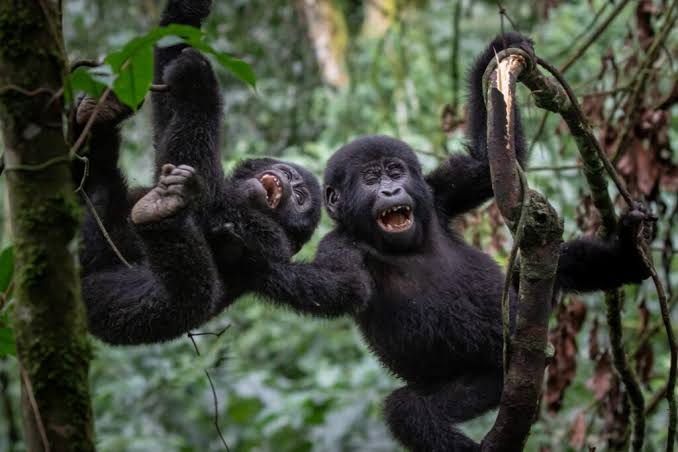
Gorilla Trek and Big Cats Safaris in Uganda. Few places on earth let you look a wild mountain gorilla in the eye in the morning and watch a pride of lions lounging in a fig tree a day later. Uganda does exactly that. Gorilla trekking and big cat safaris in Uganda can be joined into one smooth trip because the country’s best primate forests and its richest savannah parks sit close together in the southwest. This is why travellers call Uganda the “Pearl of Africa”: it packs rainforest, volcanoes, crater lakes, the Nile and classic open plains into a country about the size of the United Kingdom.
At Kenlink Tours and Travel, we have been guiding visitors through these landscapes since 2010. Our team of Uganda Safari Guides Association (USAGA) members has led hundreds of travellers from the misty slopes of Bwindi to the lion-rich plains of Queen Elizabeth and Murchison Falls. In this complete guide we share everything you need to plan your own trip: where to see gorillas, where to find lions, leopards and cheetahs, the best time to travel, permit costs, packing tips and ready-made itineraries you can book today.
If you are new to the country, start with our overview page About Uganda, then browse our full list of Uganda safaris to see how flexible a private tour can be.
What Makes Uganda Different from Other Safari Destinations?
Kenya and Tanzania are famous for big cats, and Rwanda is well known for gorillas. Uganda gives you both in one country, often for less money and with far fewer vehicles at each sighting.
- More than half of the world’s mountain gorillas live in Uganda’s Bwindi Impenetrable and Mgahinga Gorilla National Parks.
- Tree-climbing lions in the Ishasha sector of Queen Elizabeth National Park are one of Africa’s rare wildlife sights.
- Uncrowded game drives: on many mornings in Ishasha or northern Murchison you will share a lion sighting with only one or two other vehicles.
- Short travel times: Bwindi and Queen Elizabeth border each other, so you can move from gorillas to lions in a single afternoon drive.
- Great value: a Uganda gorilla permit costs less than a Rwanda permit, which frees up budget for extra game drives or a boat cruise.
Uganda is also an easy add-on to an East African trip. Many of our guests fly into Kigali and cross into Uganda for gorillas, or start in Uganda and finish in Kenya’s Maasai Mara. Our Kenya safaris and Rwanda safaris pages show how to build a longer multi-country holiday.
Gorilla Trekking in Uganda: Where to Go
Uganda has two parks where you can trek habituated mountain gorillas. Both are in the far southwest, close to the borders with Rwanda and the Democratic Republic of Congo.
Bwindi Impenetrable National Park
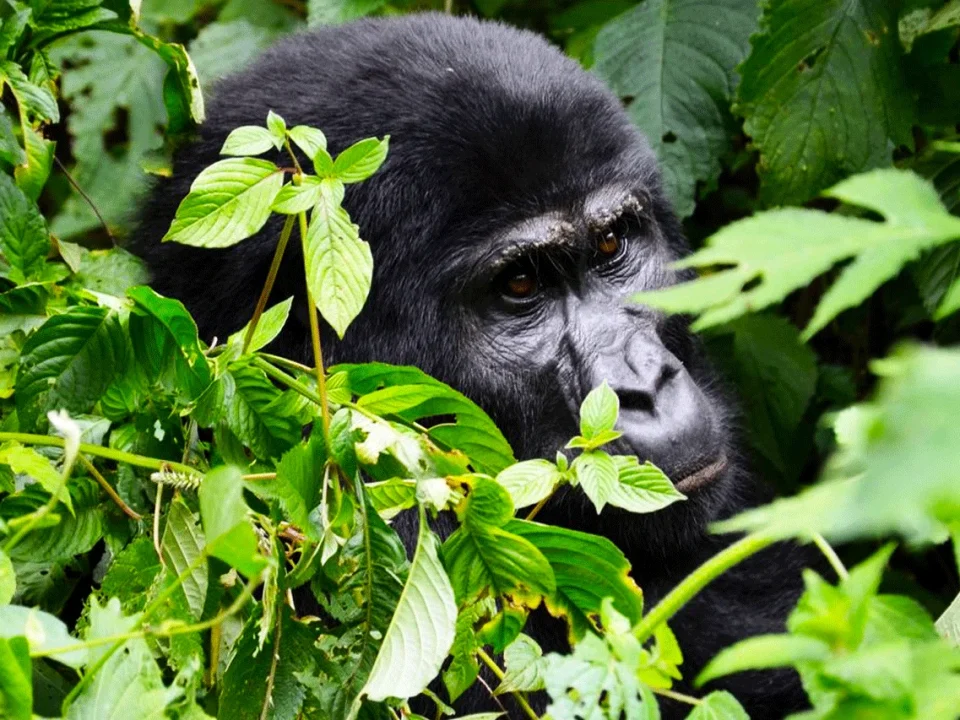
Bwindi Impenetrable National Park is a UNESCO World Heritage Site and the heart of gorilla trekking in Uganda. Its ancient rainforest covers steep ridges and deep valleys, and it is home to around half of the world’s mountain gorillas. Bwindi has more than 20 habituated gorilla families spread across four trekking sectors:
- Buhoma (north): the original trailhead, with good lodges and easy access from Queen Elizabeth National Park. Ideal if you want lions in Ishasha right after your trek.
- Ruhija (east): high and cool, with excellent birding. Treks can be steep but the forest views are superb.
- Rushaga (south): the sector with the most gorilla families and the only place to do the gorilla habituation experience in many seasons. Close to the Rwanda border, so it suits trips starting in Kigali.
- Nkuringo (southwest): dramatic views of the Virunga volcanoes. Trails are among the most demanding in the park.
Our most popular short trips here are the 3-Day Uganda Gorillas Safari from Kampala and the 3 Days Bwindi Gorilla Safari Starting from Kigali for travellers flying into Rwanda.
Mgahinga Gorilla National Park
Mgahinga Gorilla National Park is Uganda’s smallest park and part of the Virunga Conservation Area. It has one habituated gorilla family, the Nyakagezi group, and also offers golden monkey trekking and volcano hikes up Mount Muhavura, Gahinga and Sabyinyo. Mgahinga is perfect if you want a quieter trek and a chance to see two rare primates in two days. Our 4-Day Rwanda–Uganda Golden Monkey and Gorilla Trekking tour pairs both experiences.
What Is a Gorilla Trek Really Like?
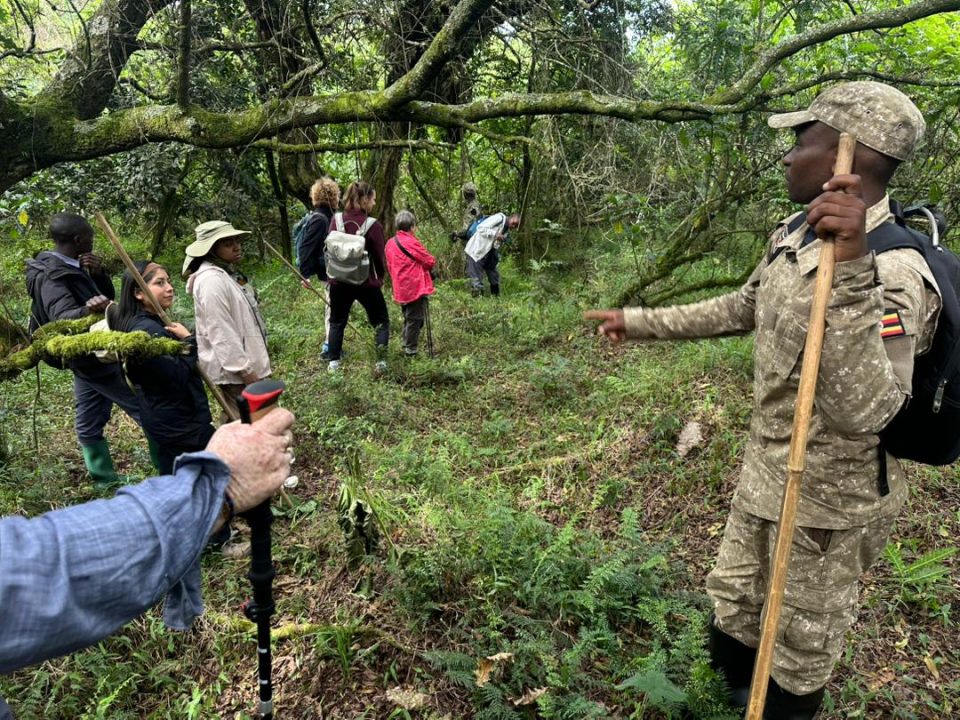
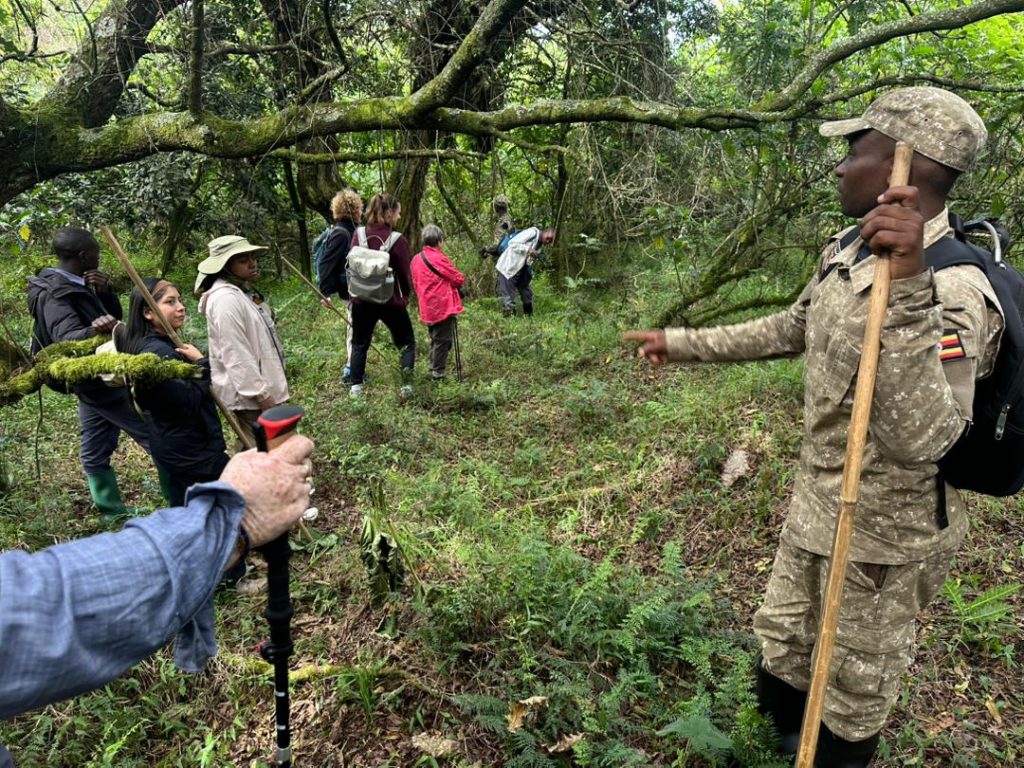
Your day starts early with breakfast and a 7:30 am briefing at the park headquarters. Uganda Wildlife Authority (UWA) rangers explain the rules and assign you to a gorilla family. Each family can be visited by a maximum of eight people per day.
You then hike into the forest with an armed ranger, trackers who went ahead at dawn to find the gorillas, and porters if you hire one. Treks take anywhere from one to six hours depending on where the family has moved overnight. Trails can be muddy, steep and covered in thick vegetation, which is why the forest is called “Impenetrable.”
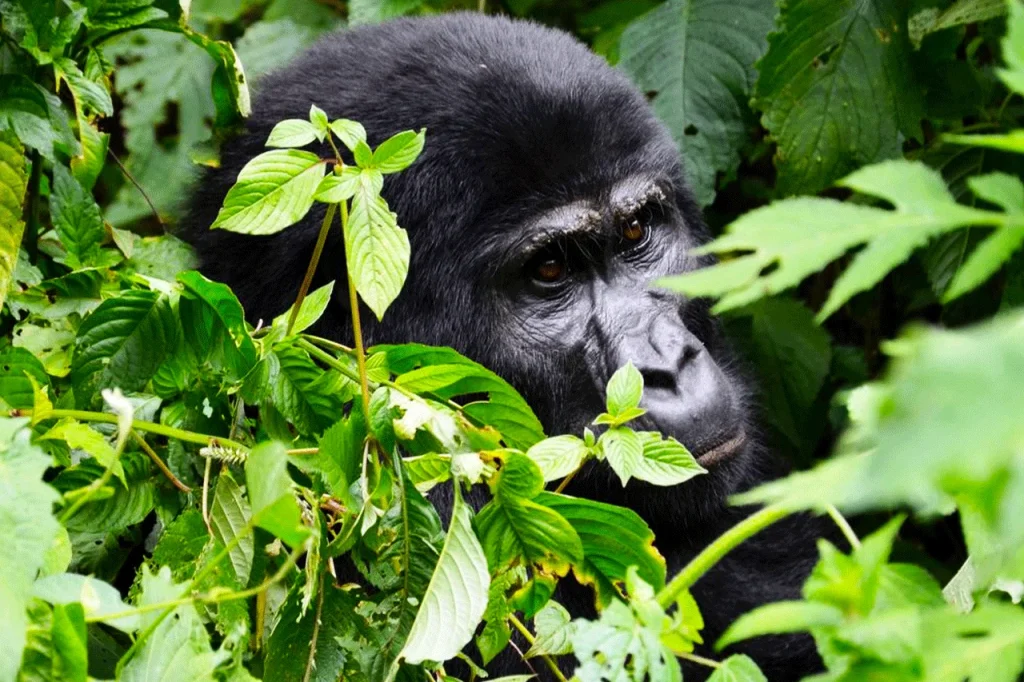
When you reach the group, you get one magical hour with them. You may watch a huge silverback feeding on stems, juveniles wrestling and somersaulting, and mothers cradling tiny infants. You keep a distance of about seven metres and wear a face mask to protect the gorillas from human illnesses. Most visitors say the hour passes in what feels like ten minutes.
Gorilla Habituation Experience
If one hour is not enough, book the gorilla habituation experience in Bwindi. You join researchers and trackers working with a gorilla family that is still getting used to people, and you can spend up to four hours with them. Only four visitors join each day, so permits sell out fast. It is the best choice for photographers, filmmakers and anyone who wants to understand gorilla behaviour in depth.
Fitness, Age Limits and Porters
The minimum age for gorilla trekking in Uganda is 15 years. You do not need to be an athlete, but you should be able to walk for several hours on uneven ground. Hiring a local porter (around US$20 plus tip) makes a huge difference: they carry your bag, help you on slippery slopes and earn an income that supports conservation in the community. Elderly or less mobile visitors can ask about a sedan chair carried by a team of porters.
Big Cat Safaris in Uganda: Lions, Leopards and Cheetahs
Uganda’s savannah parks are home to healthy populations of lions and leopards, while the remote north still has cheetahs. Here is where to find each big cat and what to expect on your game drives.
Queen Elizabeth National Park: Home of the Tree-Climbing Lions
Queen Elizabeth National Park is Uganda’s most visited savannah park and the natural partner to Bwindi. It stretches from the Rwenzori Mountains to Lake Edward and covers grasslands, crater lakes, swamps and forest.
- Kasenyi Plains: the best area for classic lion sightings. Large herds of Uganda kob gather here, and lion prides follow them. Early morning game drives often find lions on a fresh kill.
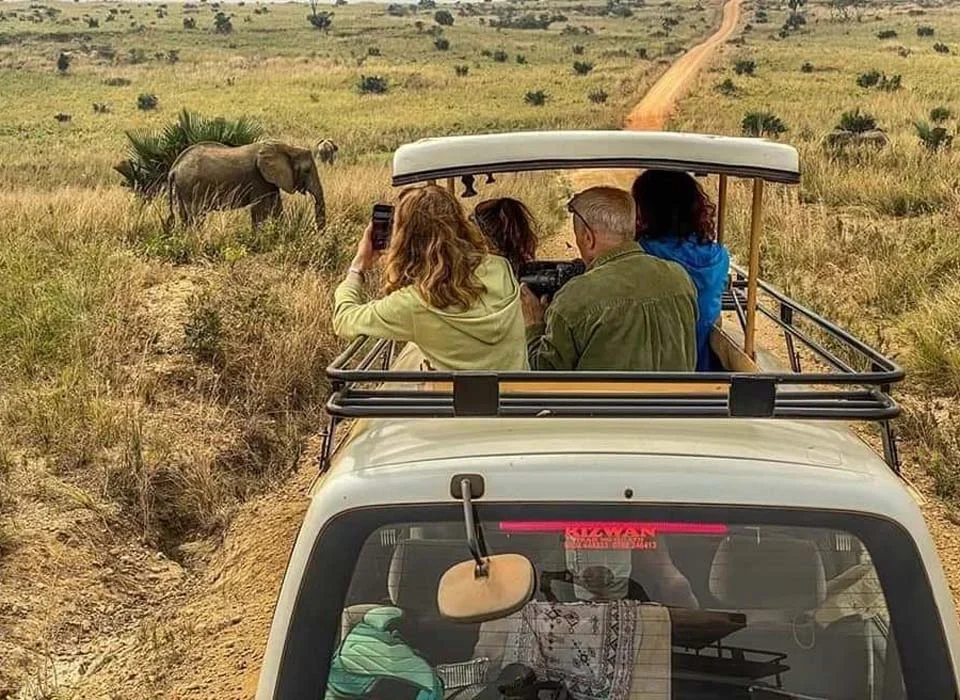
- Ishasha sector: famous for its tree-climbing lions. In the heat of the day, the prides rest high in the branches of large fig and acacia trees, scanning the plains for prey. Seeing a lion stretched out on a branch with its tail hanging down is a highlight for any photographer.
- Kazinga Channel: a two-hour boat cruise on this 32 km channel brings you close to hippos, buffaloes, elephants, crocodiles and hundreds of water birds. Leopards are sometimes seen along the banks at dusk.
- Lion tracking experience: with a UWA researcher, you can join an early morning session to locate collared lions using radio telemetry. Places are limited, so book in advance.
Our 3 Days Queen Elizabeth National Park tour covers Kasenyi, the Kazinga Channel and the crater lakes. For a similar short break, see this 3 Days Safari to Queen Elizabeth National Park itinerary for ideas on pacing.
Murchison Falls National Park: Lions on the Nile Delta Plains
Murchison Falls National Park is Uganda’s largest national park. The Nile squeezes through a gorge just seven metres wide and explodes over the falls, before flowing west towards Lake Albert.
The northern bank of the Nile is prime big cat country. The Buligi game tracks and the Delta area hold several lion prides that hunt Uganda kob, Jackson’s hartebeest and oribi. Leopards are regularly spotted at dawn and dusk resting in borassus palms and acacia trees. You will also see large herds of Rothschild’s giraffe, elephants and buffaloes.
Add a launch cruise to the bottom of the falls and a hike to the top, and Murchison becomes one of the most complete wildlife destinations in East Africa. Many travellers pair it with rhino trekking at Ziwa Rhino Sanctuary on the way from Kampala. A 3 Days Safari to Murchison Falls is the classic short format.
Kidepo Valley National Park: Cheetahs in the Wild North
Kidepo Valley, in Uganda’s far northeast on the border with South Sudan, is one of Africa’s most remote and beautiful parks. Rugged mountains ring the Narus Valley, where lions often rest on rocky outcrops. Kidepo is the only park in Uganda where you have a real chance of seeing cheetahs, along with striped hyenas, bat-eared foxes, caracals and ostriches. It suits travellers with more time, or those happy to take a short scheduled flight from Entebbe.
Lake Mburo National Park: Leopards Close to Kampala
Lake Mburo is a compact park on the way to Bwindi. It has no lions today, but it is one of the best places in Uganda to see leopards on a night game drive. It also has zebras, impalas, elands, and offers walking and horseback safaris. It makes a perfect overnight stop on longer drives between Kampala and the gorilla parks.
Tips for Better Big Cat Sightings
- Head out at sunrise. Lions and leopards are most active in the cool early morning.
- Spend at least two nights in each savannah park to give yourself more chances.
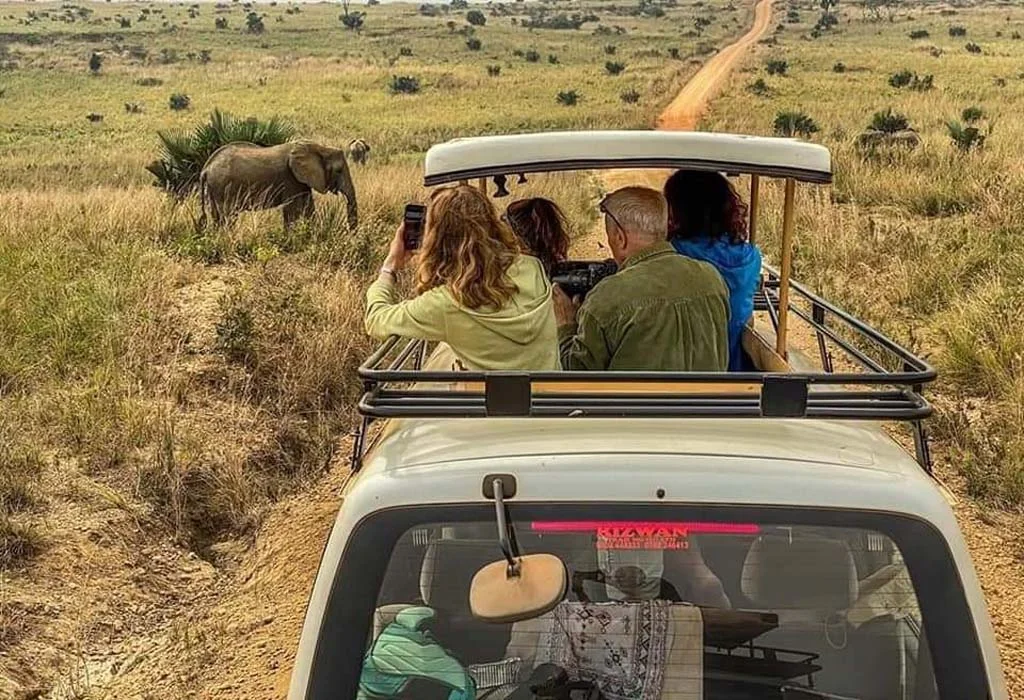
- Use a 4×4 safari vehicle with a pop-up roof for 360-degree views and photography.
- Bring binoculars and a camera lens of at least 200–400 mm.
- Trust your guide. Our driver-guides read alarm calls from kob and baboons to find hidden cats.
More Uganda Highlights to Add to Your Gorilla and Big Cat Safari
Gorillas and lions are the headline acts, but Uganda has many more experiences that fit neatly into the same route. Adding one or two of them turns a good safari into an unforgettable one.
Chimpanzee Tracking in Kibale Forest
Kibale Forest National Park is known as the primate capital of the world, with 13 primate species including about 1,500 chimpanzees. Morning and afternoon tracking walks take you into the forest to watch chimps feeding, grooming and calling loudly to each other through the trees. Kibale sits about three hours north of Queen Elizabeth, so it fits perfectly before your lion game drives. Book a dedicated 3 Days Chimp Tracking Safari to Kibale National Park or combine apes in our 4 Days Primate Tour. Nearby, the Bigodi Wetland Sanctuary offers a gentle guided walk with great birding and a good chance of seeing red colobus and grey-cheeked mangabeys.
Rhino Trekking at Ziwa Rhino Sanctuary
Uganda’s wild rhinos were wiped out by the early 1980s. Ziwa Rhino Sanctuary, on the road between Kampala and Murchison Falls, is bringing them back. Here you can track southern white rhinos on foot with experienced rangers, often getting within a safe distance of mothers and calves. A stop at Ziwa is what completes the Big Five for many of our guests.
Lake Bunyonyi: The Perfect Place to Relax After Trekking
After a muddy gorilla trek, Lake Bunyonyi is the ideal place to unwind. This deep, island-dotted lake near Kabale is free of bilharzia, so you can swim, paddle a dugout canoe or simply enjoy the terraced hills from your lodge balcony. It is a natural overnight stop on trips that start or end in Kigali.
The Source of the Nile and Jinja
If you have an extra day at the start or end of your trip, head east to Jinja, the adventure capital of East Africa. You can take a boat to the source of the Nile, try white-water rafting, kayaking, bungee jumping or quad biking, and enjoy riverside sundowners.
Birdwatching Across Uganda
With more than 1,000 recorded bird species, Uganda is one of the best birding destinations in Africa. Bwindi alone holds over 20 Albertine Rift endemics, and the swamps of Mabamba near Entebbe are one of the most reliable places to see the prehistoric-looking shoebill. Keen birders should ask about our 7-Day Birdwatching Safari in Uganda, which can be combined with a gorilla trek. You can also compare this mixed 4 Days Wildlife and Primate Safari for a short combined primate and savannah format.
Where to Stay on a Gorilla and Big Cat Safari
Uganda has accommodation for every budget, and we choose each lodge to match your gorilla permit sector and game drive plans.
- Budget: clean, simple bandas and guesthouses close to park gates, ideal for travellers who want to spend more on permits and activities.
- Mid-range: comfortable lodges with en-suite rooms, hot showers and forest or savannah views. Most of our guests choose this level.
- Luxury: exclusive lodges with private verandas, fine dining and spa treatments, some set right on the edge of the Bwindi forest or overlooking the Kazinga Channel and the Ishasha plains.
Staying inside or right beside the parks means shorter drives in the morning and more time in the field. It also lets you hear the forest at night, or the distant call of a lion across the plains.
Best Itineraries for Gorilla Trekking and Big Cat Safaris in Uganda
The right itinerary depends on how many days you have, where you fly in, and whether you want to add chimpanzees or a second country. Below are our recommended routes, from short breaks to grand tours. Every Kenlink trip is private and can be customised.
5 Days: Gorillas and Tree-Climbing Lions
This is the shortest trip that gives you both highlights without rushing.
- Day 1: Drive from Kampala or Entebbe to Queen Elizabeth National Park, stopping at the Equator.
- Day 2: Morning game drive on the Kasenyi Plains for lions, afternoon boat cruise on the Kazinga Channel.
- Day 3: Game drive through Ishasha in search of tree-climbing lions, then continue to Bwindi.
- Day 4: Gorilla trekking in Bwindi Impenetrable National Park.
- Day 5: Return drive to Kampala or Entebbe.
Book it as our 5 Days Gorilla and Wildlife Safari. If you prefer to start in Rwanda, choose the 5-Day Gorilla Trekking Safari from Kigali to Uganda.
7 Days: Gorillas, Lions and Lake Mburo Leopards
With a week, you can add Lake Mburo for a night game drive and slow the pace down. Our 7 Days Gorilla and Wildlife Safari covers Lake Mburo, Queen Elizabeth (Kasenyi and Ishasha) and Bwindi with comfortable driving days. For comparison, this 7 Days Uganda Safari – One Week Tour shows a similar one-week loop.
8 Days: Gorillas, Chimpanzees and Big Cats
Kibale Forest National Park, north of Queen Elizabeth, has the highest density of primates in East Africa and the best chimpanzee tracking in Uganda. Adding Kibale Forest National Park gives you the “big three” of Uganda: gorillas, chimpanzees and tree-climbing lions. Our 8-Day Uganda Gorilla, Chimpanzee and Wildlife Safari is our best-selling trip for first-time visitors.
10 to 14 Days: The Complete Uganda Big Cat and Primate Circuit
With ten days or more, you can include Murchison Falls in the north for Nile Delta lions and leopards, plus rhino trekking at Ziwa. A typical route runs Kampala – Ziwa – Murchison Falls – Kibale – Queen Elizabeth – Bwindi – Lake Mburo – Kampala. Try our 10 Days Uganda Adventure Safari or the culture-rich 10 Days Best of Primate and Culture. Other operators run similar routes, such as the 10 Days Uganda Primates and Wildlife and the 14-Day Uganda Primates and Safari Adventure, which are useful for comparing pace.
Gorillas in Uganda Plus the Big Five in Kenya or Tanzania
For the ultimate East African holiday, trek gorillas in Uganda and then fly to Kenya’s Maasai Mara or Tanzania’s Serengeti for big cats in huge numbers and, between July and October, the Great Migration. Our 10-Day Gorilla Trekking and Great Migration Safari and the 14-Day East Africa Safari: Uganda Gorillas and Serengeti Wildlife combine both worlds. Prefer to stay in the Great Lakes region? The 9 Days Uganda Rwanda Gorilla and Big Five Safari adds Rwanda’s Akagera National Park.
Short on Time? Gorillas from Kigali
If you only have two or three days, fly into Kigali. Bwindi’s Rushaga sector is about four hours from the city. Our 2 Days Uganda Gorilla Safari Starting from Kigali is the fastest way to see gorillas in Uganda. For even tighter schedules, there are also one-day Uganda gorilla safaris from Kigali, although these mean a very long day on the road.
Best Time for Gorilla Trekking and Big Cat Safaris in Uganda
Uganda sits on the equator, so temperatures stay pleasant all year: around 20–27°C in the savannah parks and cooler in Bwindi, especially at night. What changes is the rain.
- June to September (long dry season): the most popular time. Forest trails are drier, and short grass in Queen Elizabeth and Murchison makes lions easier to spot. Gorilla permits sell out early, so book three to six months ahead.
- December to February (short dry season): another excellent window, with good trekking conditions and active wildlife.
- March to May and October to November (rainy seasons): the landscapes are lush and green, lodges are quieter and some offer discounts. Rain usually falls in short afternoon showers. UWA now offers reduced gorilla permit rates in the low-season months of April, May and November.
In truth, gorillas and lions can be seen in every month. If you want fewer crowds and lower prices, the green season is a great choice, as long as you pack good rain gear.
Uganda Gorilla Permit Costs and Booking
Gorilla permits are issued by the Uganda Wildlife Authority and are the single biggest cost of the trip. Current published rates for foreign non-residents are:
| Permit | Price (USD) | Time with gorillas |
|---|---|---|
| Gorilla trekking (high season) | $800 | 1 hour |
| Gorilla trekking (low season: April, May, November) | $600 | 1 hour |
| Gorilla habituation experience (Bwindi) | from $1,500 | up to 4 hours |
UWA reviews its tariffs from time to time, so always confirm the latest rate when you book. Permits are limited and non-refundable in most cases. When you book a Kenlink package, we secure your permit directly with UWA and make sure it matches the sector where your lodge is located, which saves you long drives on trekking morning.
Park entry fees for the savannah parks (Queen Elizabeth, Murchison Falls, Kidepo) are paid per 24 hours and are included in all our tour prices, along with game drives, boat cruises and your professional driver-guide.
How to Get to Uganda and Move Between Parks
Most international visitors fly into Entebbe International Airport, about 40 km from Kampala. Kigali International Airport in Rwanda is a smart alternative for southern Bwindi. Road travel is the most common way to move between parks: Kampala to Bwindi takes about 8–9 hours, and Bwindi to Queen Elizabeth about 3–4 hours. Domestic flights to Kihihi, Kisoro, Kasese, Pakuba and Kidepo cut travel time for those on a tighter schedule.
We use well-maintained 4×4 safari vehicles with pop-up roofs, charging points and cool boxes. If you prefer to explore on your own, our Car Hire service offers self-drive and chauffeur-driven options.
What to Pack for Your Uganda Safari
- Sturdy waterproof hiking boots with good grip
- Lightweight long trousers and long-sleeved shirts in neutral colours (khaki, green, brown)
- A waterproof rain jacket, even in the dry season
- Gardening gloves to grip vines and thorny plants on the trek
- Gaiters or long socks to tuck trousers into against ants
- A small daypack with a rain cover, and at least two litres of water
- Face masks for the gorilla visit
- Binoculars, a camera with a zoom lens and spare batteries
- Insect repellent, sunscreen, a hat and sunglasses
- A warm fleece for cool mornings in Bwindi and Mgahinga
Health, Safety and Travel Documents
A valid yellow fever vaccination certificate is required to enter Uganda. Talk to a travel clinic about malaria prevention and other routine vaccines. Most nationalities apply for an e-visa online before travel, and the East Africa Tourist Visa covers Uganda, Rwanda and Kenya on a single visa, which is ideal for multi-country trips.
Uganda is a friendly and welcoming country, and the national parks are well protected by UWA rangers. On game drives, always stay inside the vehicle unless your guide says it is safe. On gorilla treks, follow the ranger’s instructions: stay with your group, keep your voice low and never use flash photography. Comprehensive travel insurance that covers medical evacuation is strongly recommended.
Responsible Gorilla Trekking and Conservation
Mountain gorillas were once close to extinction. Today their numbers are growing, thanks to strict protection, careful tourism and local communities who benefit from it. A share of every gorilla permit goes to communities living around Bwindi and Mgahinga, funding schools, health centres and clean water. When you trek, you help protect the gorillas and the people who live beside them.
To travel responsibly, stay home from the trek if you feel unwell, keep the seven-metre distance, hire a local porter, buy crafts from community groups and choose lodges that support conservation. Community visits such as the Batwa Experience near Bwindi or a walk through Buhoma village are a meaningful way to add culture to your trip. Our 4 Days Gorilla and Cultural Tour was designed with exactly this in mind.
Why Book Your Uganda Gorilla and Big Cat Safari with Kenlink Tours?
- Local experts since 2010: we are based in Kampala and know every park, lodge and road personally.
- Professional guides: our driver-guides are USAGA members, and Kenlink is a corporate member of the Uganda Safari Guides Association.
- Permits handled for you: we book gorilla permits directly with UWA and match them to your lodge sector.
- Private and flexible: every safari can start any day and is tailored to your budget, from comfortable mid-range lodges to luxury.
- Trusted by travellers: our guests rate us highly on independent review platforms for our communication, safe driving and great sightings.
Travelling with friends or on a budget? Our Group Tours and Scheduled Departure Safari let you share costs with other travellers. Learn more about our team on the About Us page.
Frequently Asked Questions About Gorilla Trekking and Big Cat Safaris in Uganda
Can I see gorillas and lions on the same trip in Uganda? Yes. Bwindi Impenetrable National Park borders Queen Elizabeth National Park, so you can trek gorillas and see tree-climbing lions in Ishasha within two days. A 5-day trip is enough for both.
Where are the tree-climbing lions in Uganda? They live in the Ishasha sector in the southern part of Queen Elizabeth National Park, about 2–3 hours from Bwindi’s Buhoma sector.
How much does a gorilla permit cost in Uganda? A standard permit is US$800 for foreign non-residents in high season and US$600 in the low-season months of April, May and November. The habituation experience starts from US$1,500.
Does Uganda have the Big Five? Yes. Lions, leopards, elephants and buffaloes live in Murchison Falls and Queen Elizabeth, and white rhinos can be tracked on foot at Ziwa Rhino Sanctuary. Many of our guests see all five in one trip.
Where can I see cheetahs in Uganda? Kidepo Valley National Park in the far northeast is the only place in Uganda with a resident cheetah population.
How fit do I need to be for gorilla trekking? Moderate fitness is enough. Treks last 1–6 hours on steep, muddy trails. Porters and walking sticks help a lot, and rangers set a pace that suits the group.
How far in advance should I book? For June to September and December to February, book three to six months ahead to secure gorilla permits and your preferred lodges.
Is Uganda safe for tourists? Yes. Uganda is a welcoming country, and national parks are well guarded. Travelling with a licensed local operator like Kenlink adds an extra layer of support throughout your trip.
Start Planning Your Uganda Gorilla and Big Cat Adventure
Gorilla trekking and big cat safaris in Uganda offer two of Africa’s greatest wildlife experiences in one compact, beautiful country. One morning you are face to face with a silverback in an ancient rainforest; the next you are watching lions stretch out in the branches of an Ishasha fig tree as the sun sets over the plains.
Ready to go? Browse our popular 5 Days Gorilla and Chimpanzee Tour in Uganda, the quick 3 Days Best of Uganda Gorilla Safari, or the grand 15-Day Rwanda Uganda Primate and Big Five Safari Adventure. For more inspiration, you can also explore regional gorilla safaris and wildlife safaris across Uganda and Rwanda.
Send us your travel dates, group size and budget at info@kenlinktours.com, and our team will design a private gorilla and big cat safari built around you. The gorillas and the lions are waiting.