- EXPERT'S HELP
- +256789210067
- +256200955001
- info@kenlinktours.com


Uganda Tourism Internships
October 5, 2026
Gorilla Tracking and Hiking in Uganda
October 6, 2026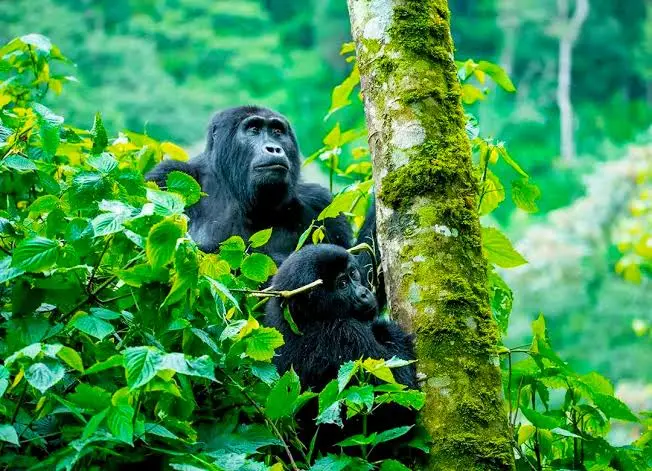
Gorilla Trekking Begin in Mgahinga NP. If you are planning a primate safari to southwestern Uganda, one of the first practical questions you will ask is simple: what time does gorilla trekking begin in Mgahinga NP? The short answer is early. Trekkers report to the Ntebeko Visitor Centre at about 7:00 AM for check-in and a ranger briefing, and groups head into the forest at around 8:00 AM. But the full answer involves much more than a time on a clock. Your start time decides when you wake up, where you sleep the night before, how you get to the park, and even what you pack.
In this guide, the team at Kenlink Tours walks you through the complete trekking day in Mgahinga Gorilla National Park, from the pre-dawn alarm to the moment you receive your trekking certificate. We have guided travellers to the Virunga volcanoes for years, and we share everything we have learned so that your morning with the Nyakagezi gorilla family runs smoothly from the first cup of coffee to the last photograph.
Quick Answer: What Time Does Gorilla Trekking Begin in Mgahinga NP?
Gorilla trekking in Mgahinga Gorilla National Park follows a fixed morning schedule set by the Uganda Wildlife Authority (UWA). Here is the standard timing most trekkers can expect:
- 6:30 – 7:00 AM: Arrive at Ntebeko Visitor Centre, the park headquarters, for registration and permit verification.
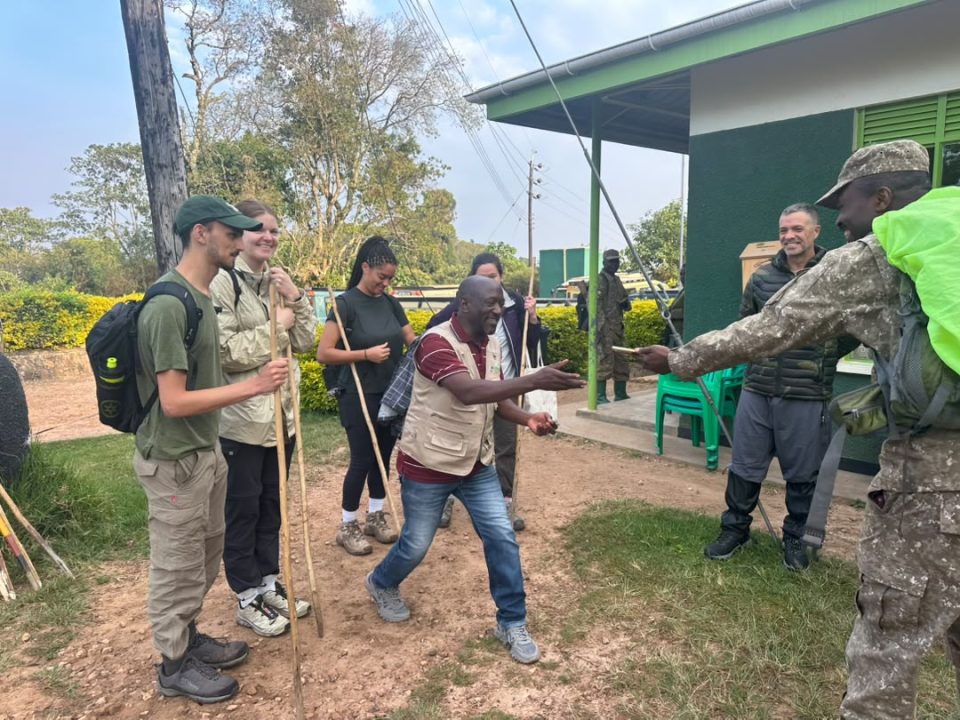
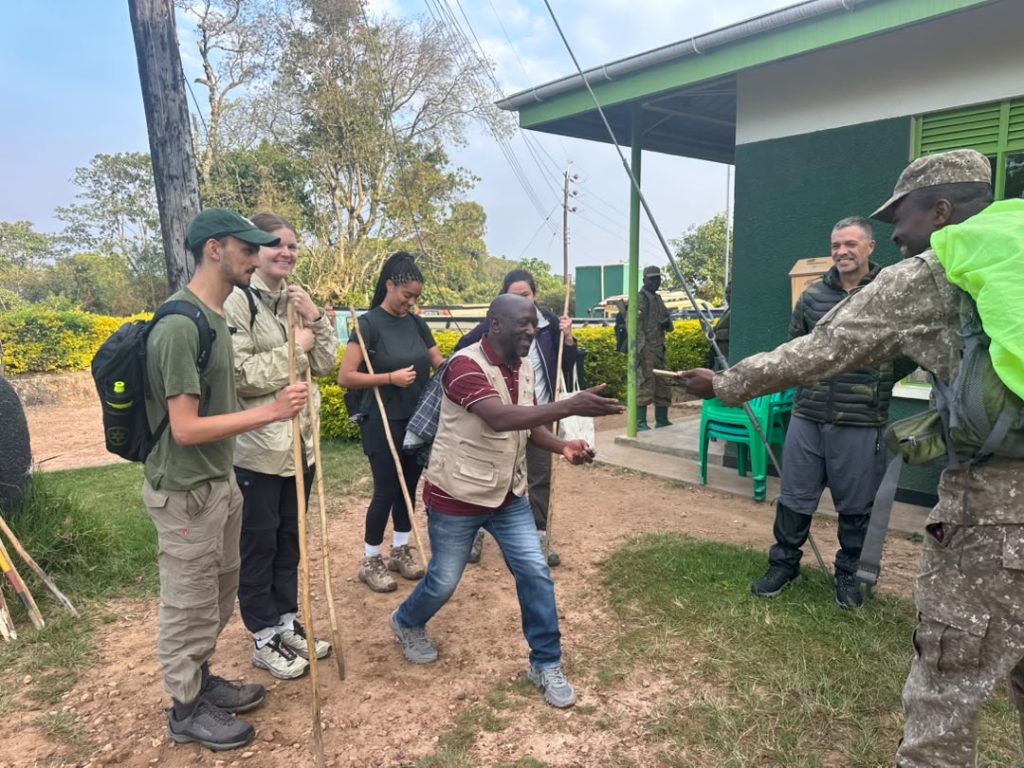
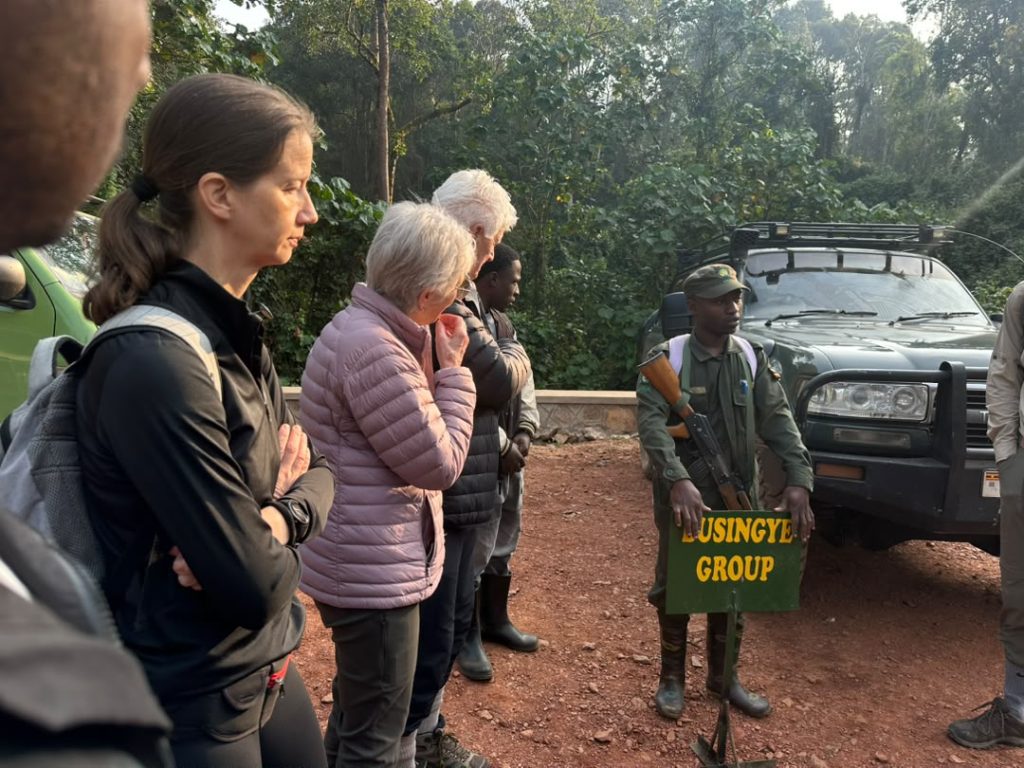
- 7:00 – 7:45 AM: Ranger briefing on safety, gorilla behaviour and trekking rules, often with a short traditional dance performance by local community members.
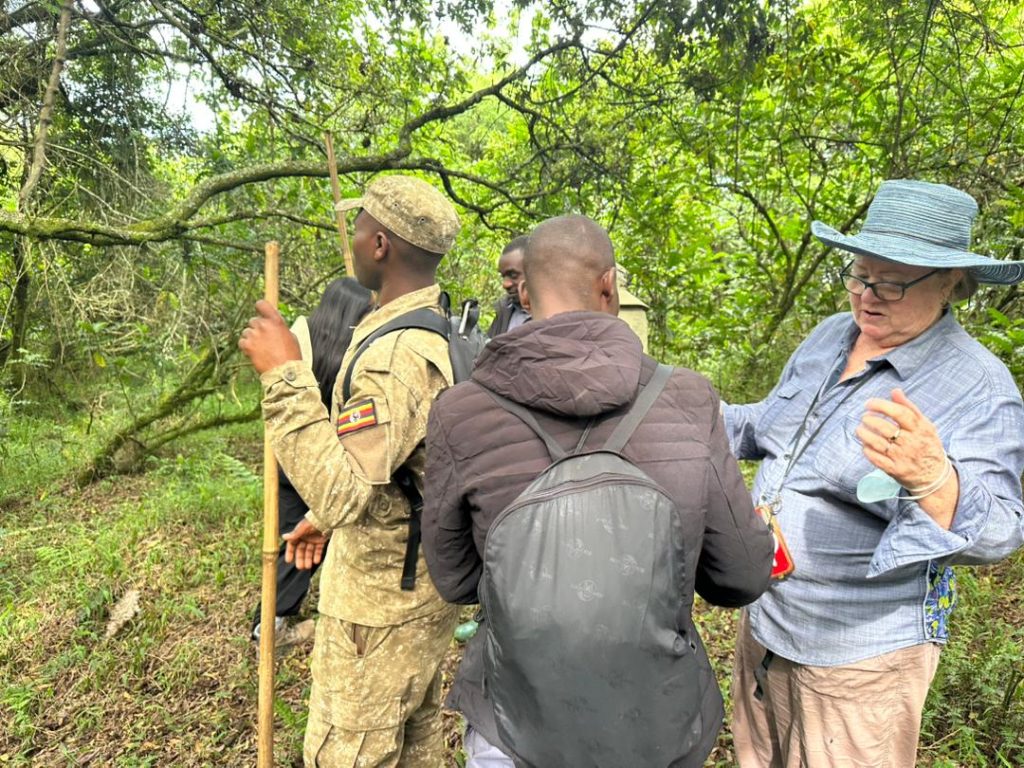
- Around 8:00 AM: Your group of up to eight trekkers sets off with an armed ranger guide, with trackers already in the forest locating the gorillas.
- Late morning to early afternoon: You find the gorillas and spend exactly one hour with them.
- 12:00 – 3:00 PM: Most groups return to Ntebeko and receive their gorilla trekking certificates.
There is only one trekking session per day in Mgahinga. There is no afternoon slot, so if you miss the morning briefing, you miss your trek. That is why punctuality matters so much here, and why a good tour operator plans your accommodation and transfers around this schedule.
A Minute-by-Minute Timeline of Your Mgahinga Trekking Day
To help you picture the day, here is a realistic timeline for a traveller staying in Kisoro town, roughly 30–40 minutes from the park gate.
| Time | Activity |
|---|---|
| 5:00 – 5:30 AM | Wake up, freshen up and dress in trekking clothes |
| 5:30 – 6:00 AM | Early breakfast at your lodge; collect your packed lunch |
| 6:00 – 6:15 AM | Your driver-guide picks you up for the drive to Ntebeko |
| 6:45 – 7:00 AM | Arrival, registration and passport/permit check |
| 7:00 – 7:45 AM | Ranger briefing and group allocation |
| 8:00 AM | Trek begins through farmland edges, bamboo and montane forest |
| 9:30 AM – 1:00 PM | Gorillas located; one magical hour with the Nyakagezi family |
| 12:00 – 3:00 PM | Descent, return to Ntebeko and certificate presentation |
| Afternoon | Lunch, rest, Batwa cultural trail or transfer to your next stop |
Remember that these times are a guide, not a guarantee. Gorillas are wild animals, and the length of your trek depends entirely on where the family spent the night and how far they moved while foraging that morning.
Why Gorilla Trekking in Mgahinga Starts So Early
Visitors sometimes wonder why they need to be up before sunrise for a one-hour encounter. There are several good reasons the Uganda Wildlife Authority keeps the start time early.
Gorillas are most active in the morning. Mountain gorillas wake at dawn, leave their night nests and begin feeding. Morning is when you are most likely to see them eating, grooming, playing and moving as a family. By early afternoon, many gorillas settle into a midday rest.
Trackers need a head start. Advance trackers leave long before you do. They go to the spot where the gorillas nested the previous evening and follow fresh trails, then radio the location to your ranger guide. An early start gives everyone enough daylight to find the family even on a long trekking day.
Safety and daylight. Mgahinga sits on the slopes of the Virunga volcanoes, and weather can change quickly at altitude. Starting at 8:00 AM means even a long trek finishes well before dark, which is important on steep, slippery terrain.
Weather patterns. In this highland region, mornings are often clearer, while afternoon clouds and showers are common, especially in the rainy months. Trekking in the morning usually means better visibility and better photographs.
Where Your Day Begins: Ntebeko Visitor Centre
Every gorilla trek in Mgahinga starts at the Ntebeko Visitor Centre, the park’s headquarters at the foot of Mount Gahinga and Mount Muhavura. Unlike Bwindi, which has four separate trekking sectors, Mgahinga has just one starting point. This makes logistics simpler: there is no risk of driving to the wrong sector, as sometimes happens in larger parks.
Ntebeko lies roughly 14 kilometres from Kisoro town along a rough murram road. The drive normally takes 30 to 40 minutes, longer after heavy rain. The setting is spectacular. On a clear morning you will see the three volcanic cones of Muhavura, Gahinga and Sabinyo rising above you, a reminder that Mgahinga is part of the wider Virunga Conservation Area shared with Rwanda and the Democratic Republic of Congo.
For a deeper look at the region, our About Uganda guide explains how Mgahinga fits into the country’s network of national parks.
Meet the Nyakagezi Gorilla Family
Mgahinga is home to one habituated gorilla group available for trekking: the Nyakagezi family. This group is famous in gorilla circles. For years it was known as a wandering family that crossed into Rwanda and Congo, which made trekking in Mgahinga unpredictable. In more recent years, the family has settled within Ugandan territory, and treks run reliably.
The Nyakagezi group is known for having several silverbacks, an unusual feature that makes for fascinating social dynamics. Because only one group is habituated, only eight gorilla permits are issued per day in Mgahinga. That exclusivity is a big part of the park’s charm. You will share the forest with a small group, not dozens of other trekkers, and the experience often feels more intimate than in busier destinations.
The flip side is that permits are limited, so early booking is essential. We cover how to secure your permit later in this guide, and you can compare Mgahinga with Bwindi and Rwanda on our Uganda and Rwanda gorilla safaris page.
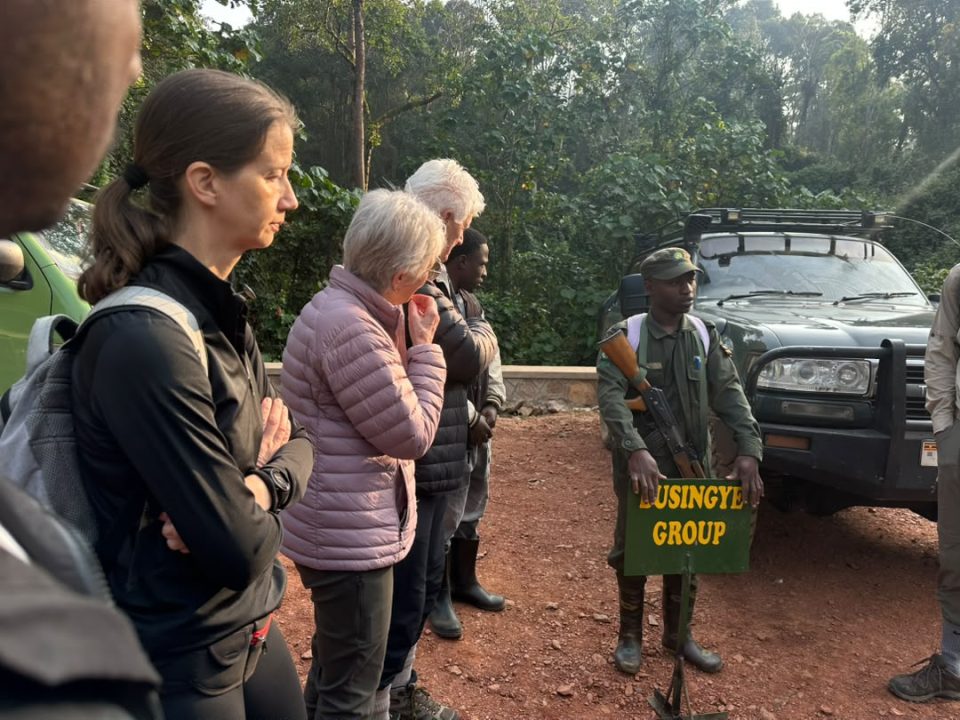
What Happens During the Morning Briefing at 7:00 AM
The briefing is not a formality. It is the most important part of your preparation, and rangers take it seriously. Here is what typically happens between 7:00 and 7:45 AM.
Registration and verification. Rangers check your gorilla permit against your passport. Permits are non-transferable and carry your name and passport details, so bring the same passport you used to book.
Health check. Gorillas share about 98 percent of our DNA and can catch human illnesses such as colds and flu. If you are visibly unwell, rangers may refuse entry. Be honest with yourself and your guide if you feel sick.
Rules and etiquette. The senior ranger explains the gorilla trekking guidelines: keep at least 7–10 metres away, no flash photography, no eating near the gorillas, keep voices low, and follow the ranger’s instructions at all times.
Group formation. Since Mgahinga has one family, all eight permit holders form a single trekking group. Rangers may ask about fitness levels and any health concerns to plan the pace.
Porter hire. This is your chance to hire a local porter. More on that below.
Arriving late can cause real problems. Rangers may wait a short while, but they will not hold the whole group indefinitely. Build in buffer time, especially on rainy days when roads are muddy.
How Long Does the Trek Take and When Does It End?
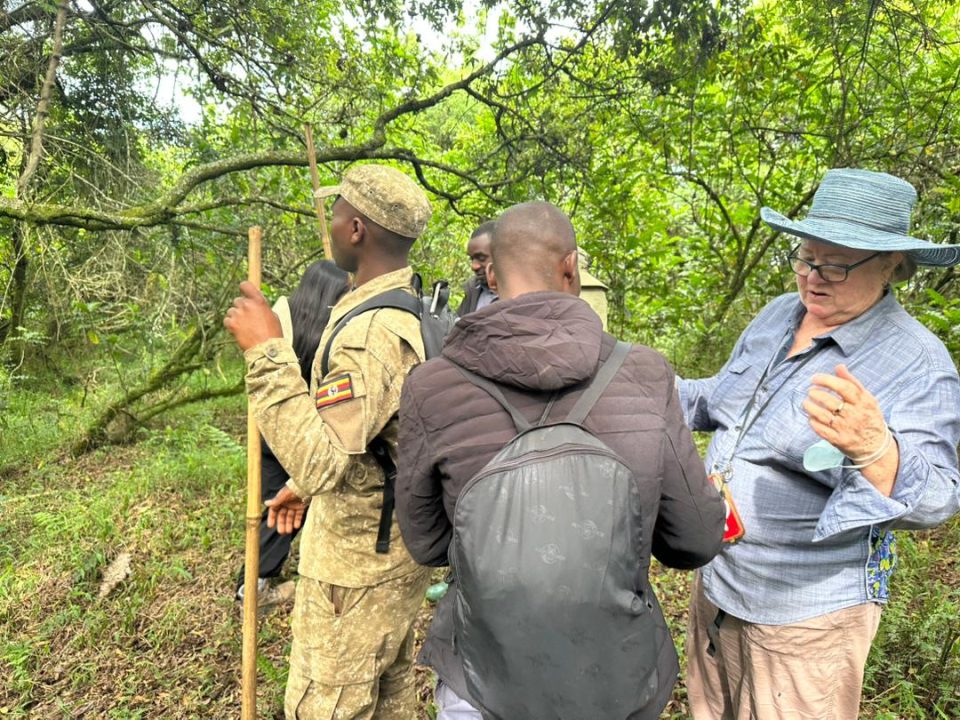
Once you leave Ntebeko at about 8:00 AM, the trek can last anywhere from two to six hours in total, including the one hour you spend with the gorillas. On a lucky day, the Nyakagezi family may be feeding near the park boundary and you could reach them in under an hour. On other days, they may have climbed into the bamboo zone on the volcano slopes, adding several hours of hiking.
The trail usually starts across a stretch of former farmland, then climbs into bamboo forest and montane vegetation. Mgahinga’s terrain is generally considered moderate. It is less tangled than Bwindi’s dense rainforest, but the altitude (the park lies between roughly 2,200 and 4,100 metres above sea level) makes you breathe harder than you might expect.
Most groups are back at Ntebeko between 12:00 PM and 3:00 PM. At the end, rangers present each trekker with a gorilla trekking certificate, a lovely keepsake of your morning in the Virungas. Our article on gorilla trekking in Uganda explains what to expect on the trail itself in more detail.
What Time Should You Leave Your Lodge?
Your departure time depends entirely on where you sleep the night before. Here is a practical guide:
- Lodges at Ntebeko or right by the park gate: Leave at about 6:40 AM. A few minutes’ walk or drive gets you to the briefing.
- Kisoro town: Leave by 6:00–6:15 AM to allow 30–40 minutes of driving plus a buffer.
- Lake Mutanda area: Leave around 5:30–5:45 AM. The drive is longer and the roads are rural.
- Rushaga or Nkuringo (southern Bwindi): Leave around 4:30–5:00 AM. This is possible but tiring; most travellers prefer to move closer to Mgahinga the night before.
- Lake Bunyonyi or Kabale: Leave by about 4:00–4:30 AM. Better still, transfer to Kisoro the day before.
Our honest recommendation is to sleep in Kisoro or near Ntebeko the night before your trek. A shorter morning drive means more sleep, less stress and more energy for the climb. Our guide to accommodation near Mgahinga Gorilla National Park lists lodges at every budget level.
Starting Your Mgahinga Gorilla Trek from Kigali: Early Pick-Up Times
One of Mgahinga’s biggest advantages is its location. The park is much closer to Kigali, Rwanda’s capital, than it is to Kampala. The drive from Kigali to Kisoro via the Cyanika border usually takes about three to four hours, including border formalities. That makes Mgahinga one of the most convenient Ugandan gorilla destinations for travellers flying into Kigali International Airport.
For a same-day trek from Kigali, expect a very early pick-up, usually between 3:00 and 3:30 AM. That timing allows you to reach Cyanika as the border opens, complete immigration and still arrive at Ntebeko before the 7:00 AM briefing. It is doable, but it is a long day, and you will be driving back to Kigali in the late afternoon.
Most of our guests prefer a gentler approach: drive from Kigali the day before, overnight in Kisoro, trek the next morning, and then either return to Kigali or continue into Uganda. Our partners at Pick and Transfer Safaris run short, Kigali-based options such as the 1 Day Uganda Gorilla Safari starting from Kigali and the more relaxed 2 Days Uganda Gorilla Tour starting from Kigali, which show how pick-up times change depending on trip length.
If you would rather combine both countries, read our guide to combining Rwanda and Uganda gorilla trekking and culture. You can also start in Kigali and fly home from Entebbe; this Kigali-to-Entebbe route guide explains how open-jaw itineraries work.
Starting from Kampala or Entebbe
If your Uganda safari begins in Kampala or Entebbe, you cannot realistically trek Mgahinga on the same day you leave the capital. The road journey to Kisoro takes roughly nine to ten hours through Masaka, Mbarara and Kabale, with the final stretch from Kabale to Kisoro winding over steep, scenic hills.
Plan to travel the full day before your trek and arrive in Kisoro in the evening. Alternatively, domestic flights connect Entebbe to Kisoro Airstrip in about an hour and a half, after which a short drive gets you to your lodge. Flying saves a full day of travel but costs more. Either way, the gorilla trek itself still starts with the 7:00 AM briefing on the following morning.
Many of our longer itineraries, such as the 20-Day Wildlife and Nature Experience in Uganda, place Mgahinga after Bwindi or Queen Elizabeth National Park, breaking the long drive into manageable stages.
Does the Start Time Change with the Seasons?
No. Gorilla trekking in Mgahinga starts at the same time all year round. Because Uganda sits on the equator, sunrise and sunset stay fairly consistent, so there is no need for seasonal timetables. What changes with the seasons is the experience on the trail.
Dry seasons (June to September and December to February): Trails are firmer, drives are quicker and the trek tends to be more comfortable. These are the most popular months, so permits sell out faster.
Wet seasons (March to May and October to November): Expect mud, slippery slopes and the chance of rain. Your morning drive may take longer, so leave earlier than usual. On the positive side, the forest is lush, there are fewer visitors and some lodges offer low-season rates. Keep an eye on our discounted tours for seasonal offers.
Whatever the season, mornings at Mgahinga’s altitude can be cold. Temperatures at Ntebeko at 7:00 AM can feel close to 10°C, so a warm layer is essential for the briefing.
Mgahinga Gorilla Permits: Booking to Secure Your Morning Slot
Your start time only matters if you have a permit. Gorilla permits for Mgahinga are issued by the Uganda Wildlife Authority and currently cost US$800 per person for foreign non-residents, with lower rates for foreign residents and East African citizens. The permit covers park entry, the services of ranger guides and trackers, and one hour with the gorillas.
Because Mgahinga issues only eight permits per day, we recommend booking at least four to six months in advance, and earlier for the dry-season peak. Permits are dated, so the date you choose fixes the morning of your trek. Everything else in your itinerary is then built around that 7:00 AM briefing.
A few important permit facts:
- The minimum age for gorilla trekking is 15 years.
- Permits are non-transferable and linked to your passport details.
- UWA requires full payment when booking.
- Tour operators can check availability and secure permits on your behalf as part of a safari package.
At Kenlink Tours, we handle permits for every guest who books with us, so you do not need to navigate the booking system alone. Contact our team with your preferred dates, and we will check Mgahinga availability straight away.
What to Pack the Night Before an Early Start
With a 5:00 AM wake-up, the last thing you want is to search for gloves in the dark. Pack your daypack the evening before. Here is a checklist tailored to Mgahinga’s cool, high-altitude conditions:
- Passport and printed or digital gorilla permit
- Waterproof hiking boots with good ankle support, already broken in
- Long trousers and a long-sleeved shirt in neutral colours (avoid camouflage, which is illegal for civilians in Uganda)
- A warm fleece or light jacket for the cold early morning
- A lightweight rain jacket, even in the dry season
- Gardening gloves to grip bamboo and protect against stinging nettles
- Long socks or gaiters to tuck your trousers into
- At least two litres of water and energy snacks
- Packed lunch from your lodge
- Camera with spare batteries (no flash)
- Insect repellent, sunscreen and a hat
- Small amount of cash for porter fees and tips
For a full breakdown, read our guide on what to pack for gorilla trekking in Uganda, Rwanda and Congo.
Fitness, Porters and Pacing Yourself
You do not need to be an athlete to trek gorillas in Mgahinga, but a reasonable level of fitness makes the morning far more enjoyable. The combination of altitude and uphill walking can tire even regular hikers. Walk at a steady pace, drink water often and do not be shy about asking your ranger to slow down.
We strongly recommend hiring a porter at Ntebeko during the briefing. For a modest fee, usually around US$15–20, a local porter carries your daypack, offers a steady hand on steep sections and shares knowledge of the forest. Many porters come from families who once depended on the forest for their livelihoods, so hiring one directly supports the community and conservation at the same time.
Walking sticks are usually available free at the visitor centre. Take one. On the descent, a stick makes a huge difference on muddy slopes.
Gorilla Trekking Rules You Will Hear at the Briefing
Rangers repeat these rules every morning because they protect both the gorillas and you:
- Keep a distance of at least 7 metres from the gorillas, and step back if a gorilla approaches.
- Stay in a tight group behind your ranger guide.
- Speak in low voices and avoid sudden movements.
- Never use flash photography.
- Do not eat, drink or smoke near the gorillas.
- If you need to cough or sneeze, turn away and cover your mouth and nose.
- Do not leave rubbish in the forest.
- Your one hour with the gorillas is strictly timed.
- If a silverback charges, stay calm, crouch down, look away and follow the ranger’s lead.
Masks may also be requested near the gorillas as a health precaution. Following these rules ensures that future travellers can enjoy the same privilege you do.
Making the Most of the Afternoon After Your Trek
Because Mgahinga treks start early, most travellers are free by mid-afternoon. That leaves time to relax or add another experience. Popular afternoon options include:
The Batwa Trail. The Batwa were the forest’s original inhabitants. Guided by Batwa community members, this cultural walk shows how they hunted, gathered medicinal plants and lived in harmony with the forest. The trail often includes a visit to the sacred Garama Cave.
Lake Mutanda. A short drive from Kisoro, this beautiful lake offers canoe rides with views of the Virunga volcanoes, perfect for a peaceful end to the day.
Rest and reflect. Gorilla trekking is more tiring than it looks. A quiet afternoon at your lodge, sorting through photographs with a hot drink, is a perfectly good choice.
If your trip continues to Bwindi, this guide on what to do after a gorilla tour in Bwindi offers more ideas for extending your safari.
Golden Monkey Tracking: Mgahinga’s Second Morning Adventure
Mgahinga is the only place in Uganda where you can track the endangered golden monkey, and this activity follows a very similar morning schedule. Golden monkey trekkers also gather at Ntebeko for a briefing at around 7:00–8:00 AM, then head into the bamboo zone on the lower slopes of Mount Gahinga.
Golden monkey tracking is shorter and easier than gorilla trekking, usually taking between one and four hours, and permits cost a fraction of a gorilla permit. Because both activities start in the morning, you cannot normally do both on the same day. Most travellers plan gorillas on one morning and golden monkeys on the next.
Mgahinga’s park slogan is “where gold meets silver,” a reference to its golden monkeys and silverback gorillas. To learn more about these colourful primates, including how the Ugandan and Rwandan experiences compare, read our article on golden monkey tracking in Rwanda.
Where to Stay for an Easy Early Start
Choosing the right base can turn a stressful 4:00 AM departure into a relaxed 6:15 AM pick-up. Here are the main options:
Near Ntebeko: A handful of lodges sit at or close to the park gate. You wake up with volcano views and walk to the briefing in minutes. These tend to be mid-range to luxury properties.
Kisoro town: Kisoro offers the widest choice, from budget guesthouses to comfortable hotels, all within 30–40 minutes of Ntebeko. It also has restaurants, banks and the airstrip. One well-located option is described in this guide to Ikoro Hotel in Kisoro, which sits close to Kisoro Airstrip and the Cyanika border.
Lake Mutanda: Lakeside lodges here are peaceful and scenic, with views of the volcanoes across the water. The trade-off is a slightly longer morning drive.
Most lodges in the area are used to gorilla trekkers. They serve early breakfasts from about 5:00 AM and prepare packed lunches on request, so let them know your trekking date when you check in.
Sample Itineraries Built Around Mgahinga’s Trekking Schedule
Every itinerary that includes Mgahinga is designed around one fixed point: the 7:00 AM briefing on your permit date. Here are three examples of how that works in practice.
Short trip from Kigali (2–3 days): Day one, drive from Kigali to Kisoro via Cyanika. Day two, trek the Nyakagezi gorillas at 8:00 AM, then enjoy the Batwa Trail in the afternoon. Day three, golden monkey tracking in the morning, then return to Kigali. Pick and Transfer Safaris offers a similar 3 Days Uganda Gorilla Safari from Rwanda.
Primate combo (5 days): Gorillas in Mgahinga plus chimpanzees in western Uganda or Rwanda. Options include the 5 Days Uganda Gorilla and Chimps Safari starting from Rwanda, or a loop through Rwanda’s Nyungwe Forest National Park for chimpanzees and the famous canopy walk.
Full Uganda safari (7–20 days): Combine Mgahinga with Bwindi, Queen Elizabeth National Park, Kibale Forest and Lake Bunyonyi. Browse our full range of Uganda safaris to find the right length and pace for you. If you are travelling on a budget, our scheduled group tours share transport costs and still include gorilla trekking.
For travellers who want to start in Rwanda and add a cultural element, the 3 Days Rwanda Gorilla Tracking and Cultural Tour pairs well with a Mgahinga extension. And if your dream trip spans more of the continent, see how gorilla trekking combines with a southern Africa safari in our Rwanda and Botswana safari tours.
Mgahinga vs Bwindi vs Volcanoes: Start Times Compared
Gorilla trekking across East Africa follows similar early-morning schedules, but there are some differences worth knowing.
| Park | Briefing | Trek Start | Daily Permits | Permit Cost |
|---|---|---|---|---|
| Mgahinga (Uganda) | 7:00 AM at Ntebeko | ~8:00 AM | 8 (one family) | US$800 |
| Bwindi (Uganda) | 7:30 AM at sector HQ | ~8:00–8:30 AM | Many families, four sectors | US$800 |
| Volcanoes (Rwanda) | 7:00 AM at Kinigi | ~8:00 AM after drive to trailhead | Many families | US$1,500 |
Mgahinga’s single starting point is a real advantage over Bwindi, where travellers occasionally lose time by booking a lodge in the wrong sector. Compared with Rwanda’s Volcanoes National Park, Mgahinga offers the same Virunga volcanic scenery at a lower permit price and with far fewer trekkers on the mountain each day.
Is Mgahinga Safe for an Early Morning Trek?
Yes. Mgahinga is considered very safe for visitors. Uganda Wildlife Authority rangers accompany every trekking group, and armed rangers protect against any risk from wildlife such as forest elephants or buffalo. Your driver-guide stays with you from pick-up until you are back at your lodge, so pre-dawn drives are handled by experienced professionals who know the roads well.
The communities around the park benefit directly from tourism through revenue sharing and employment, and they are welcoming to visitors. For a full discussion of security, health and practical safety, read our article answering is Mgahinga safe for tourists?
FAQ: What Time Should I Arrive at Mgahinga for Gorilla Trekking?
Aim to arrive at Ntebeko Visitor Centre between 6:30 and 7:00 AM. This gives you time to register, use the facilities and settle in before the briefing starts.
FAQ: Can I Trek Gorillas in Mgahinga in the Afternoon?
No. There is only one trekking session, and it starts in the morning. All permit holders trek together after the morning briefing.
FAQ: What Happens If I Arrive Late?
Rangers may allow a short grace period, but they will not delay the group for long. If you miss the departure, you may lose your trek, and permits are generally non-refundable. Always build in buffer time.
FAQ: How Long Will I Spend with the Gorillas?
Exactly one hour once the gorillas are found. This limit protects the gorillas from stress and reduces the risk of disease transmission.
FAQ: Can I Do a Day Trip to Mgahinga from Kigali?
Yes, with a pick-up around 3:00–3:30 AM. It is a long but rewarding day. Staying overnight in Kisoro is more comfortable.
FAQ: Do I Need to Carry Lunch?
Yes. Treks can run into the early afternoon, and there are no shops in the forest. Your lodge will prepare a packed lunch if you ask the night before.
FAQ: Who Decides the Start Time?
The Uganda Wildlife Authority sets trekking times in consultation with park management and conservation experts, balancing gorilla welfare, visitor safety and daylight hours.
Plan Your Mgahinga Gorilla Trek with Kenlink Tours
So, what time does gorilla trekking begin in Mgahinga NP? Plan to be at Ntebeko Visitor Centre by 7:00 AM for your briefing, and expect to step onto the trail with your ranger at about 8:00 AM. From there, the mountain, the weather and the Nyakagezi family decide the rest. Get the timing right, sleep close to the park, pack the night before, and you will be ready to enjoy one of the most moving wildlife encounters on Earth.
At Kenlink Tours, we take care of every detail that surrounds that early start: securing your scarce Mgahinga permit, booking a lodge within easy reach of Ntebeko, arranging an experienced driver-guide, and building a smooth itinerary from Kigali, Kampala or Entebbe. Learn more about our team, explore partner options on the Pick and Transfer Safaris website, or get in touch today to start planning your morning with the gorillas of Mgahinga.