- EXPERT'S HELP
- +256789210067
- +256200955001
- info@kenlinktours.com


Adventure Trips in Uganda
May 13, 2026
Can you do gorilla trekking if you’re over 60?
May 14, 2026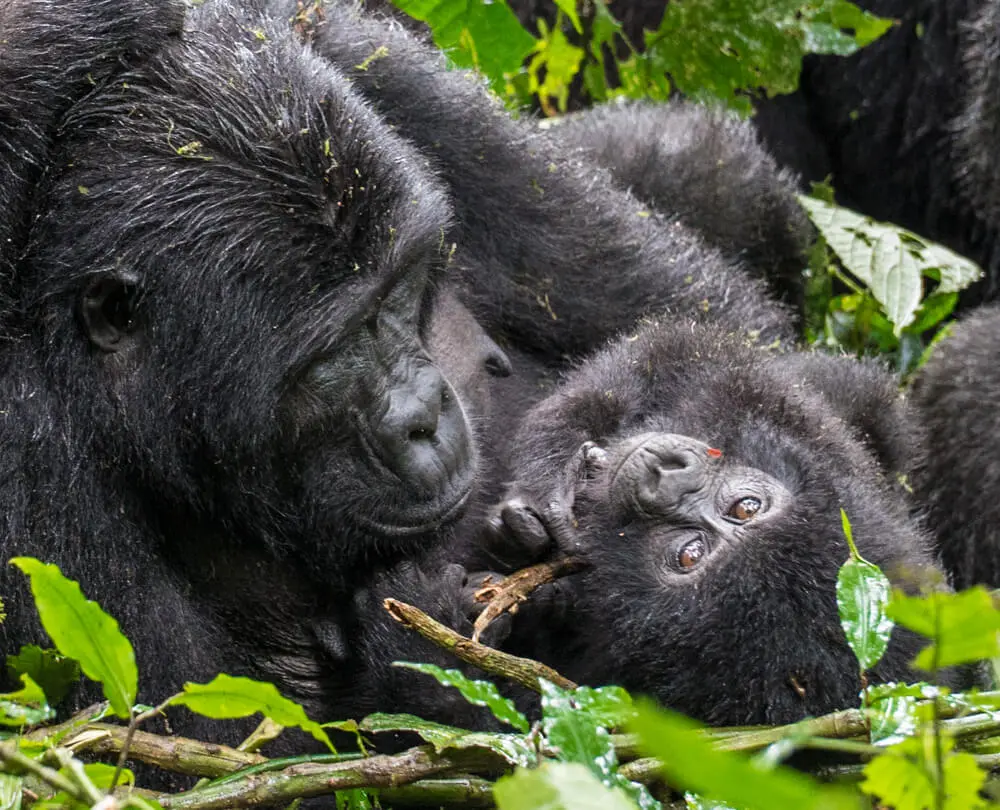
Gorilla trekking with kids: age limits and family tips. Imagine watching your child’s eyes go wide as a mountain gorilla — nearly four times the size of a grown man — knuckle-walks through the misty forest just a few metres away. Few wildlife encounters on earth come close to this, and for families who make it happen, gorilla trekking becomes the story they tell for the rest of their lives. But before you start packing the hiking boots and bug spray, there are rules, realities, and smart planning steps that every family must understand. This guide covers everything parents need to know, from official age limits to trail tips that will make the experience magical rather than miserable.
What Is the Official Age Limit for Gorilla Trekking?
Let’s answer the most important question first. The minimum age for gorilla trekking is 15 years old. This rule is enforced strictly by the Uganda Wildlife Authority (UWA) in Uganda and by the Rwanda Development Board (RDB) in Rwanda. No exceptions are made at the park gates, regardless of how mature a younger child might seem.
This age limit exists for two very good reasons. First, young children can struggle to maintain the silence and calm required during the 60-minute gorilla encounter — sudden noise or movement can agitate a silverback and compromise the safety of the entire group. Second, gorillas are highly susceptible to human illnesses, including common childhood colds and stomach bugs. Protecting these critically endangered animals is a conservation priority that all visitors must respect.
If you are travelling with teenagers aged 15 and above, you are fully cleared to book a permit and bring them along. You can explore our Uganda gorilla trekking packages and Rwanda gorilla safari tours to find the itinerary that best suits your family’s pace and budget.
For the official permit guidelines, you can verify the regulations directly on the Uganda Wildlife Authority website and the Rwanda Development Board tourism page.
Why the Age Limit Is a Gift, Not a Restriction
It might feel frustrating if you have a 12-year-old who is passionate about wildlife. But experienced safari guides will tell you honestly — this rule protects everyone, including your child. The trails inside Bwindi Impenetrable Forest in Uganda and Volcanoes National Park in Rwanda are not gentle nature walks. Depending on which gorilla family you are assigned to track, the hike can take anywhere from 30 minutes to a full six or seven hours of steep, slippery, root-tangled rainforest terrain.
For teenagers who do meet the age requirement, the experience becomes genuinely transformative. At 15 or 16, a young person is old enough to understand what they are witnessing — a critically endangered species in its natural habitat, the result of decades of conservation work — and to carry that awareness into their adult lives. Many wildlife conservationists trace their passion back to a single moment like this.
Choosing the Right Destination for a Family Trek
Uganda and Rwanda both offer world-class gorilla trekking, but they suit slightly different family styles.
Uganda — Bwindi Impenetrable Forest is the wilder, more remote option. It is home to roughly half of the world’s remaining mountain gorilla population, spread across four sectors: Buhoma, Ruhija, Nkuringo, and Rushaga. The trekking here tends to be more strenuous, which makes it best suited for physically active teenagers. The permit costs USD 800 per person, and Uganda also allows you to combine the trek with other incredible wildlife experiences — chimpanzee tracking, Queen Elizabeth National Park game drives, and Nile River adventures. Browse our Uganda family safari itineraries for inspiration.
Rwanda — Volcanoes National Park is the more accessible option for families. The park is well-organised, the infrastructure around the gorilla sectors is excellent, and several of the habituated gorilla families are found relatively close to the starting point of the trek. Rwanda’s permit costs USD 1,500 per person, a premium that reflects the quality of the experience and contributes directly to conservation. Check the Volcanoes National Park official page for the latest updates.
How to Physically Prepare Your Teen for the Trek
One of the most common mistakes families make is underestimating how demanding the hike can be. The good news is that with a little preparation, most healthy teenagers will handle it absolutely fine.
In the weeks before your trip, encourage your teen to go on regular hikes, ideally with a loaded daypack. Practice walking on uneven and inclined surfaces wherever possible. Strengthen the ankles and knees, which bear the most strain on steep descents. On the day of the trek, make sure everyone eats a proper breakfast and stays well hydrated. Altitude is also a factor, particularly in Rwanda’s Volcanoes National Park, where the terrain sits above 2,500 metres. Arriving a day or two early allows bodies to acclimatise.
Hiring a porter is one of the smartest decisions any trekker — young or experienced — can make. Porters carry your bags, steady you on slippery sections, and provide physical support when your legs are burning on the final push uphill. They also provide income for local communities, making it a win on every level.
What to Pack for a Family Gorilla Trek
Packing well makes a significant difference to your family’s comfort and safety on the trail. Here is what every member of your group should have:
- Sturdy waterproof hiking boots with ankle support — this is non-negotiable
- Long-sleeved shirts and long trousers in neutral, dark colours to protect against nettles and safari ants
- A quality rain jacket — the rainforest lives up to its name
- Gardening gloves for gripping vegetation during steep sections
- Insect repellent with DEET, applied to all exposed skin
- A small daypack with water (at least two litres per person), energy snacks, and a basic first-aid kit
- A camera with a good zoom lens — flash photography is strictly prohibited near the gorillas
Leave brightly coloured clothing, strong perfumes, and noisy accessories at the lodge.
Behaviour Rules Families Must Follow During the Encounter
The one-hour rule is sacred. Once your group finds the gorilla family, you have exactly 60 minutes in their presence. During this time, park rangers and guides will brief you on behaviour, but here is what every family member must internalise in advance:
Maintain a minimum distance of seven metres from the gorillas at all times. If a gorilla approaches you — which they sometimes do out of curiosity — stand still, avoid direct eye contact, and follow your guide’s instructions calmly. Never mimic gorilla sounds or make sudden movements. If you feel unwell on the day of the trek, inform your guide, as anyone showing signs of illness is not permitted to enter the forest, to protect gorilla health.
Teenagers tend to handle these rules very well when they understand the reason behind each one. Talk through the guidelines with your kids the evening before the trek. Make it part of the adventure, not a list of restrictions.
Combining Gorilla Trekking With a Broader Family Safari
Gorilla trekking does not have to stand alone. For families visiting Uganda, it pairs beautifully with a Bwindi and Queen Elizabeth National Park safari, where lions, elephants, hippos, and chimpanzees round out an extraordinary wildlife journey. In Rwanda, many families combine the gorilla trek with a visit to the Kigali Genocide Memorial, golden monkey tracking, or a canopy walk through Nyungwe Forest National Park — offering both wildlife thrills and cultural depth.
At KenLink Tours, we design custom family itineraries built around your teenagers’ interests, your group’s fitness level, and your preferred pace of travel. Our local guides know these forests intimately, and our team handles every permit, transfer, and lodge booking so that you arrive ready to enjoy every moment.
Book Your Family Gorilla Trek Today
Gorilla trekking with teenagers is not just a holiday — it is an investment in perspective, in empathy for the natural world, and in memories your family will return to for decades. The 15-year age limit means the timing has to be right, but when it is, there is no better introduction to the wild heart of Africa.
Contact the KenLink Tours team today to start planning your family gorilla safari. Permits sell out months in advance, especially during peak seasons from June to September and December to February — so the earlier you reach out, the better your chances of securing the dates that work for your family.