- EXPERT'S HELP
- +256789210067
- +256200955001
- info@kenlinktours.com

List of National Parks in Uganda
Uganda manages ten national parks covering an extraordinary range of ecosystems — from the ancient equatorial rainforests of the west, where mountain gorillas and chimpanzees inhabit the same mountain slopes, to the open savannah plains of the north, where elephants and giraffes move beneath a sky that feels twice the size of anything in southern Uganda. No other country in East Africa of comparable size contains this breadth of wildlife habitat in a single, connected landscape. Understanding all ten parks — what each protects, what you can do there, and how they relate to each other geographically — is the essential starting point for planning any Uganda safari.
The Uganda Wildlife Authority manages all ten national parks alongside a network of wildlife reserves and community wildlife areas, maintaining a park system that covers approximately 10% of Uganda's total land area. KenLink Tours operates across all ten parks with dedicated itineraries, experienced driver-guides, and permit procurement services for primate trekking at every park that offers it. This guide covers every park in full — area, location, key wildlife, best activities, best time to visit, and how each park slots into a wider Uganda itinerary. For a quick overview, our guide to Uganda's 10 national parks gives you the summary; this post gives you everything else.
All 10 Uganda National Parks — At a Glance
The ten parks divide naturally into three ecological groups: the primate and forest parks of western Uganda, the savannah and wetland parks of the west and north, and the mountain parks of the east and southwest. Understanding this geography before you start building an itinerary saves significant time and vehicle kilometres — parks in the same ecological zone are generally close to each other and easy to combine, while crossing between zones requires more planning. See our distances between Uganda national parks guide for the full transfer time matrix.
Bwindi Impenetrable National Park — Mountain Gorillas & Ancient Forest
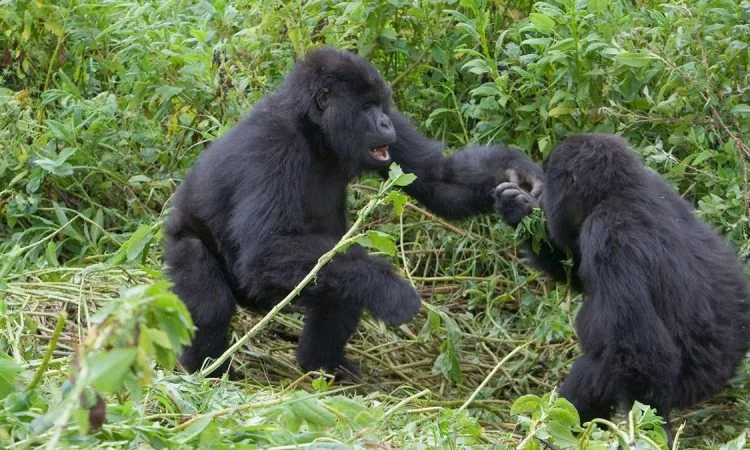
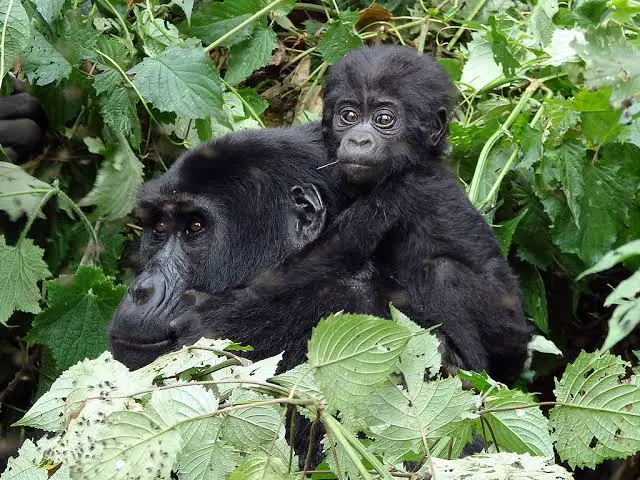
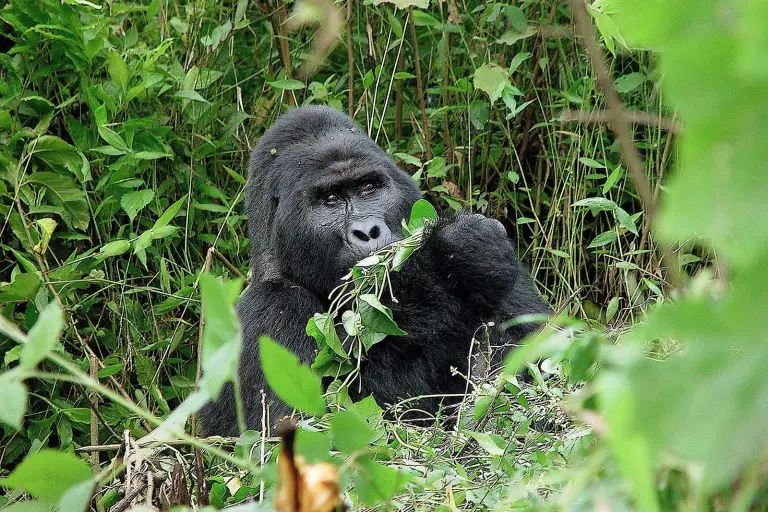
Uganda's most celebrated park and one of Africa's most important protected areas. Bwindi Impenetrable National Park covers 331 km² of ancient Afromontane forest in southwestern Uganda and protects approximately half the world's remaining mountain gorilla population — around 459 individuals across multiple habituated families in four trekking sectors: Buhoma, Ruhija, Rushaga, and Nkuringo. A UNESCO World Heritage Site and the destination that defines Uganda's international safari reputation. The gorilla trekking permit costs USD $800 per person — half the price of Rwanda's equivalent. Bwindi also supports over 350 bird species including 23 Albertine Rift endemics, ten primate species, and the Batwa Pygmy cultural trail experience, making it a destination of extraordinary depth beyond the gorilla encounter itself.
Queen Elizabeth National Park — Big Game, Birds & Tree-Climbing Lions
Uganda's most biodiverse park and its most visited. Queen Elizabeth National Park covers 1,978 km² of savannah, wetland, crater lakes, and Rift Valley lakeshore in western Uganda, supporting over 95 mammal species and 600 bird species. The park is famous for its tree-climbing lions in the Ishasha sector, the Kazinga Channel boat safari, one of Africa's finest hippo-viewing experiences, chimpanzee trekking in Kyambura Gorge, and Kalinzu Forest Reserve on its eastern boundary. Queen Elizabeth straddles the Albertine Rift Valley with the Rwenzori Mountains visible to the north — one of Uganda's most scenically dramatic park settings.
Murchison Falls National Park — Uganda's Largest Park & the Nile
Murchison Falls National Park is Uganda's largest national park at 3,893 km² — a vast wilderness of savannah, woodland, and riverine forest bisected by the Victoria Nile, where the entire river is forced through a 7-metre gap in the rocks and drops 43 metres in the most powerful waterfall in East Africa. The park delivers Uganda's finest open-country game drives — lions, elephants, Rothschild's giraffes, buffalo, and hippos in large numbers — combined with a Nile boat safari to the falls base that ranks among Uganda's top five wildlife experiences. Budongo Forest Reserve on the park's southern boundary adds chimpanzee trekking at USD $30 per person, and Ziwa Rhino Sanctuary on the road north from Kampala allows white rhino tracking en route to the park.
Kibale Forest National Park — Primate Capital of the World
Kibale Forest National Park protects 795 km² of mid-altitude tropical rainforest in western Uganda and contains the highest density of primates of any habitat in Africa — 13 species, including approximately 1,500 chimpanzees. The chimp trekking at Kanyanchu is Uganda's most popular primate activity after gorilla trekking and produces the highest trekking success rate of any Uganda chimp destination at approximately 95%. Beyond the chimps, Kibale's forest supports red colobus monkeys, grey-cheeked mangabeys, L'Hoest's monkeys, and an outstanding bird community of 375+ species. The Bigodi Wetland Sanctuary on the park boundary adds waterbirds and additional primate species in a community-managed setting. Our full guide to chimp trekking in Kibale and Kalinzu covers the experience in detail.
Kidepo Valley National Park — Uganda's Most Remote & Wildest Park
Kidepo Valley National Park in Uganda's remote northeastern corner — bordering South Sudan and within 50 kilometres of the Kenyan frontier — is consistently rated by serious safari travellers as one of Africa's finest national parks and one of the continent's best-kept safari secrets. Covering 1,442 km² of semi-arid savannah, rocky outcrops, and valley grasslands in the Karamoja region, Kidepo supports wildlife found nowhere else in Uganda: cheetahs, striped hyenas, bat-eared foxes, aardwolf, and caracal — all absent from Uganda's other parks. The park also has one of the highest concentrations of lion in East Africa, enormous elephant herds, buffalo, zebra, eland, and over 475 bird species. The Karamojong communities surrounding the park add a compelling cultural dimension available nowhere else in Uganda's tourism circuit.
Mgahinga Gorilla National Park — Volcanoes & Cross-Border Gorillas
Mgahinga Gorilla National Park covers just 33.7 km² — Uganda's smallest national park — but its ecological and conservation significance is entirely disproportionate to its size. Occupying the Ugandan portion of the Virunga volcanic range shared with Rwanda and the DRC, Mgahinga protects the slopes of three volcanoes — Muhavura (4,127m), Gahinga (3,474m), and Sabinyo (3,645m) — and is home to the cross-border Nyakagezi gorilla family, which moves between Uganda, Rwanda, and the DRC throughout the year. When the family is in Uganda, gorilla trekking here costs USD $800 per person — identical to Bwindi. Golden monkey tracking (a vivid endemic primate found only in the Virunga bamboo zone), the Batwa Cultural Trail, and volcano hiking to the summit of Sabinyo add extraordinary depth to what can appear at first glance to be a very small park. Mgahinga is also the most accessible gorilla park from Kigali — just 2–3 hours by road via the Cyanika border. See our Uganda gorilla safari from Kigali guide for the full logistics.
Lake Mburo National Park — Uganda's Most Accessible Savannah Park
Lake Mburo National Park covers 370 km² of rolling acacia-studded savannah, wetland, and lake system in central-western Uganda — the closest national park to Kampala at just 240 km (approximately 4 hours by road) and the only park in Uganda where you can track and view zebras. The park is Uganda's most accessible for visitors with limited time, offering game drives, boat safaris on Lake Mburo itself, walking safaris (one of the few Uganda parks where walking with armed rangers is a standard activity), and horseback safaris — an activity available at no other Uganda national park. Impala, zebra, eland, topi, waterbuck, oribi, hippos, and both leopard and hyena are reliably seen on game drives. Lake Mburo is a natural overnight stop on the Kampala–Bwindi road, making it an easy addition to a gorilla safari itinerary.
Rwenzori Mountains National Park — The Mountains of the Moon
Rwenzori Mountains National Park protects the Rwenzori Range — the "Mountains of the Moon" of ancient geography — on Uganda's western border with the DRC. The range rises to 5,109 metres at Margherita Peak on Mount Stanley, making it Africa's third-highest massif and one of only three equatorial glacier systems remaining on the continent. A UNESCO World Heritage Site, Rwenzori offers multi-day trekking through an extraordinary sequence of ecosystems — montane forest, bamboo, heather moorland, and the famous afro-alpine zone where giant lobelias and groundsels grow in surreal formations on the upper slopes. The Central Circuit trek (7–8 days) takes fit trekkers to the glaciated summit zone; shorter 3–5 day options explore the lower forest and moorland without requiring technical mountaineering equipment. The park's biodiversity includes the endemic Rwenzori turaco, the three-horned chameleon, and several plant genera found nowhere else on Earth.
Mount Elgon National Park — Ancient Volcano & Forest Elephants
Mount Elgon National Park protects the Ugandan slopes of Mount Elgon — an ancient, eroded shield volcano on the Kenya–Uganda border with the world's largest volcanic caldera at 40 km in diameter. The park covers 1,145 km² of montane forest, bamboo, and heathland, and is famous for its salt-cave-visiting elephants — large herds of forest elephants that enter the mountain's lava tube caves to mine mineral salts with their tusks, producing one of Africa's most extraordinary and unusual wildlife spectacles. The park also supports buffalos, sitatunga, black-and-white colobus monkeys, and an excellent high-altitude birding community. Multiple trekking routes lead to the caldera rim and Wagagai Peak (4,321m) — a less technical but equally rewarding alternative to the Rwenzoris for high-altitude mountain hiking in Uganda.
Semuliki National Park — Congo Basin Birds & Hot Springs
Semuliki National Park covers 219 km² of lowland tropical rainforest on the floor of the Semuliki Valley, bordering the DRC along the Semuliki River — the only true lowland Congo basin forest in East Africa. As a result, Semuliki contains bird and mammal species that are not reliably found anywhere else in Uganda or the entire East African bird zone: Congo basin endemics including the African piculet, the Nkulengu rail, and the lyre-tailed honeyguide. The park's Sempaya Hot Springs — boiling geothermal vents surrounded by lush forest — are one of Uganda's most unusual natural spectacles, with both male ("Bitente") and female ("Nyansimbi") springs producing columns of boiling water and steam in a forest clearing. Chimpanzees, forest elephants, pygmy hippos, and the l'Hoest's monkey all inhabit the park's dense forest interior.
The Primate Parks — Uganda's Greatest Distinction
Uganda's most compelling global distinction is its primate diversity — more species than any other country on Earth, concentrated in a cluster of western forest parks that can be combined into a single itinerary without ever covering the same ground twice. Four parks form the core of Uganda's primate safari circuit; a fifth — Semuliki — adds Congo basin species for those with the time and appetite to go further. Our full guide to Uganda primate safari packages has itineraries designed around every combination of these parks.
Bwindi Impenetrable NP
The gorilla trekking destination against which all others in the world are measured. Four trekking sectors — Buhoma, Ruhija, Rushaga, Nkuringo — each with habituated gorilla families and a distinct character of terrain and forest. Beyond the gorillas: the Batwa Cultural Trail, 350+ birds, and the extraordinary atmosphere of one of Africa's most ancient forest ecosystems.
- Don't miss: Gorilla Habituation Experience at Rushaga — a full day with a family being habituated; USD $1,500
- Best combined with: Lake Mburo NP (en route from Kampala) or Queen Elizabeth NP (en route from the west)
- Nearest lodge area: Buhoma village for the north sector; Nkuringo ridge for the south
Kibale Forest NP
The world's finest chimpanzee trekking destination. 13 primate species including habituated chimp communities with a ~95% sighting success rate at Kanyanchu. The Chimp Habituation Experience (CHEX) gives a full day with a habituation community — the most immersive wildlife encounter available at any Uganda park. Fort Portal is the nearest town, a pleasant highland base with crater lakes and tea plantation walks in the surrounding area.
- Don't miss: Bigodi Wetland Sanctuary — community-managed birding and primate walk on the park boundary
- Best combined with: Queen Elizabeth NP (2.5 hrs south) and Bwindi (via the western circuit)
- Permit booking: Book 3+ months ahead for peak season (June–August)
Mgahinga Gorilla NP
Uganda's smallest park and the gateway from Kigali. The Nyakagezi gorilla family is Uganda's only resident Virunga gorilla group — reliably present in Uganda for most of the year. Golden monkey tracking in the bamboo zone is exceptional value and visually spectacular. Three hikeable volcanoes — Sabinyo (cross-border summit to Rwanda and DRC), Muhavura, and Gahinga — add serious altitude options. Only 2–3 hours from Kigali via Cyanika — see our Kigali transfer guide.
- Don't miss: Sabinyo volcano hike — the triple-border summit (Uganda, Rwanda, DRC) is one of Africa's most unusual summit experiences
- Best combined with: Bwindi Rushaga sector (60 km east via Kisoro) for a two-gorilla family itinerary
- Gorilla permit: Confirm Nyakagezi family location before booking — they occasionally cross to Rwanda
The Savannah & Big Game Parks
Uganda's savannah parks deliver a classic East African game drive experience — elephants, lions, buffalo, giraffes, and waterbirds — in a landscape that contrasts sharply with the dense forest environments of the western primate circuit. Three parks anchor Uganda's big-game offer, each with a distinct ecological character and a different supporting set of activities.
Queen Elizabeth National Park — In Depth
Western Uganda · Rift ValleyQueen Elizabeth NP is the natural hub of the western Uganda safari circuit — positioned between Kibale to the north and Bwindi to the south, with excellent road access from both. Its ecological variety within a single park is exceptional: open savannah for game drives, the Kazinga Channel for boat-based hippo and waterbird watching, Kyambura Gorge for chimp trekking, and Kalinzu Forest on the eastern boundary for a second chimp community. The Ishasha sector in the far south is home to the famous tree-climbing lions — one of only two lion populations in the world that routinely rest in the branches of large fig trees.
- Kazinga Channel: 2-hour boat launch — hippos, crocodiles, 600+ bird species at close range
- Ishasha tree-climbing lions: 2-hour drive south of Mweya; best viewed in the late afternoon when the lions move into the trees to escape heat and insects
- Kyambura Gorge chimp trek: USD $50 permit; the dramatic gorge setting makes this the most scenically distinctive chimp encounter in Uganda
- Crater lakes drive: A scenic circuit north of the park through the explosion crater lakes of the Albertine Rift — one of Uganda's most rewarding half-day drives
- Best position: Mweya Peninsula — the park's main accommodation hub, with game viewing from lodge terraces across the Kazinga confluence
Murchison Falls National Park — In Depth
Northwest Uganda · Victoria NileMurchison Falls is Uganda's largest, most dramatic, and arguably most rewarding savannah park — a destination that consistently exceeds visitor expectations. The Nile boat safari from Paraa to the falls base is not just one of Uganda's best activities; it is one of East Africa's. The concentration of hippos on the Nile's banks — hundreds at a time — combined with Nile crocodiles, African fish eagles, goliath herons, and the thundering crescendo of the falls as the boat approaches, creates an escalating wildlife experience that produces a genuine sense of arrival at something extraordinary. The game drives on the northern bank produce Rothschild's giraffe — one of the world's most endangered giraffe subspecies — alongside lions, leopards, elephants, and buffalo in open savannah conditions that favour extended observation.
- Nile boat safari: The definitive Murchison activity — book early as it fills with all lodge guests daily
- Rothschild's giraffe: The only place in Uganda to reliably see this endangered subspecies; herds of 10–20 are commonly encountered on northern bank drives
- Budongo Forest chimp trek: USD $30 — add a morning at Budongo's Royal Mile before entering or after leaving Murchison
- Ziwa Rhino Sanctuary: White rhino tracking on the road north from Kampala — a 3-hour stop that adds rhinos to the Murchison itinerary
- Best time: Dry season (June–August) for game drives; Nile boat safaris are excellent year-round
Kidepo Valley — Uganda's secret masterpiece: Of all Uganda's national parks, Kidepo Valley is the one that most consistently produces the reaction "why did no one tell me about this?" from visitors who make the journey north. The combination of genuinely wild, low-visitor-density savannah, wildlife species found nowhere else in Uganda (cheetahs, striped hyenas, aardwolf), the extraordinary cultural landscape of the Karamojong — one of East Africa's most distinctive pastoral peoples — and the park's remote, frontier atmosphere creates a safari experience unlike anything else in the country. The journey is long — approximately 9–10 hours by road from Kampala, or 1.5 hours by chartered flight from Entebbe — but travellers who make it consistently rank Kidepo among their finest Uganda experiences. KenLink Tours operates dedicated Kidepo safari packages with charter flight options that make the logistics straightforward.
Lake Mburo — The Underrated Overnight Stop
Lake Mburo National Park occupies a unique position in Uganda's park system: it is simultaneously the most accessible park from Kampala and one of the most consistently underestimated. Because it sits naturally on the main Kampala–Bwindi road, many safari travellers pass through it as an overnight stop without spending the full time the park deserves. Those who do give Lake Mburo a genuine two-day visit typically leave wondering why they hadn't allocated more time. The park is Uganda's only home for zebras, impalas, and elands — all conspicuously absent from the western parks — and its walking safari programme, guided by armed rangers through open acacia woodland and rocky outcrops, is one of the few park-managed walking experiences in Uganda where you are genuinely likely to encounter lions and leopards on foot.
The horseback safari available through a private operator near the park boundary is the most unusual wildlife activity in Uganda — riding at a walking pace through herds of zebra and impala that accept horses without flight in a way they would not accept humans on foot. For families, couples, and any visitor who has never experienced wildlife from horseback, a Lake Mburo horse ride is a highlight that generates memories disproportionate to its modest cost and time investment. The lake boat safari at sunset — with hippos surfacing in the reed beds, fish eagles calling from the waterside acacias, and the western sky turning deep orange above the hills — is one of Uganda's quieter but most genuinely beautiful wildlife moments.
The Mountain Parks — Rwenzori & Mount Elgon
Uganda's two mountain parks — Rwenzori in the west and Mount Elgon in the east — offer a completely different type of experience from the forest and savannah parks that dominate most Uganda itineraries. Both reward visitors who are prepared to invest more physical effort in their wildlife experience, and both deliver encounters with landscapes and ecosystems that are found nowhere else on the African continent.
Rwenzori Mountains NP — The Mountains of the Moon
Western Uganda · 5,109m · UNESCO SiteThe Rwenzoris are among the most biodiverse mountain ranges in Africa — a range whose unique combination of high rainfall, equatorial position, and extreme altitude has produced plant communities and endemic species found nowhere else on Earth. The giant lobelias and groundsels of the upper moorland — growing to heights of several metres in forms that look more like extraterrestrial vegetation than anything in the standard African wildlife repertoire — are the park's most visually distinctive feature. The glaciated summit zone of Mount Stanley, while retreating rapidly with climate change, remains accessible to fit, non-technical trekkers on the Central Circuit route.
- Central Circuit: 7–8 days from Nyakalengija trailhead — the full Rwenzori experience including the summit zone and Margherita Peak approach
- Short trails: 3–4 day options exploring the lower forest and moorland without summit ambitions — ideal for combining with a wildlife circuit
- Rwenzori turaco: One of Africa's most sought-after endemic birds; reliably seen in the lower forest on approach routes
- Best combined with: Kibale Forest (2 hrs north) and Queen Elizabeth NP (1.5 hrs south) for a full western Uganda circuit
- Guide required: All Rwenzori trekking must be done with an authorised Uganda Wildlife Authority guide — KenLink Tours books all trekking logistics
Mount Elgon NP — Salt Caves & Ancient Caldera
Eastern Uganda · Kenya Border · 4,321mMount Elgon is one of Africa's most underrated national parks — partly because it sits in Uganda's eastern region, which most safari itineraries skip entirely in favour of the western circuit. The salt-cave elephants are the park's most extraordinary and unusual wildlife encounter: large herds of forest elephants entering the Kitum and Chepnyalil caves after dark to excavate mineral salts with their tusks, producing a spectacle that has been documented by researchers and filmmakers for decades. The caves can be visited during guided night walks — one of Uganda's most atmospheric and genuinely unusual wildlife experiences.
- Salt cave night walk: The signature Elgon experience — guides walk you to Kitum Cave to observe elephant activity; book through KenLink Tours
- Caldera hike: 4–5 days to Wagagai summit (4,321m) through moorland and afro-alpine vegetation — less technical than the Rwenzoris
- Sipi Falls: Three spectacular waterfalls just outside the park boundary — excellent overnight stop and cultural experience with the Sebei community
- From Kampala: Approximately 4–5 hours by road; ideal as a standalone 2–3 day eastern Uganda addition to a Kampala-based itinerary
- Best combined with: Jinja and the Nile (2 hrs south) for an eastern Uganda circuit
Uganda's 10 National Parks — Full Comparison Table
The table below gives you the key facts for all ten Uganda national parks side by side — area, location, primary wildlife, best activities, permit costs where relevant, and the best time to visit each park. Use this as your planning reference when deciding which parks to include in your Uganda itinerary and in what order. For a fuller understanding of the distances between parks and the vehicle times involved in each combination, see our Uganda national park distances guide.
| National Park | Area | Region | Primary Wildlife | Top Activities | Key Permit | Best Time |
|---|---|---|---|---|---|---|
| Bwindi Impenetrable NP | 331 km² | Southwest | Mountain gorillas, chimpanzees, colobus monkeys, 350+ birds | Gorilla trekking, Gorilla Habituation Experience, Batwa Trail, birding | Gorilla: USD $800 | Year-round; Jun–Aug best conditions |
| Queen Elizabeth NP | 1,978 km² | West | Lions, elephants, hippos, chimps, 600+ birds | Game drives, Kazinga Channel cruise, Kyambura Gorge chimps, Ishasha lions | Chimp: USD $50 | Jun–Aug; Dec–Feb |
| Murchison Falls NP | 3,893 km² | Northwest | Elephants, lions, Rothschild's giraffe, hippos, crocodiles | Nile boat safari, game drives, Budongo chimp trek, Ziwa rhino tracking | Budongo chimp: USD $30 | Jun–Aug; Dec–Feb |
| Kibale Forest NP | 795 km² | West | Chimpanzees, red colobus, mangabeys, 375+ birds | Chimp trekking, CHEX, Bigodi Wetland, night walks | Chimp: USD $250; CHEX: USD $250 | Jun–Aug; Dec–Feb |
| Kidepo Valley NP | 1,442 km² | Northeast | Cheetahs, lions, elephants, giraffes, striped hyenas, 475+ birds | Game drives, cultural visits, walking safaris, night drives | No primate permit required | Jun–Aug (dry); Feb for calving |
| Mgahinga Gorilla NP | 33.7 km² | Southwest | Mountain gorillas, golden monkeys, Virunga birds | Gorilla trekking, golden monkey tracking, volcano hikes, Batwa Trail | Gorilla: USD $800; Golden monkey: USD $60 | Jun–Aug; Dec–Feb |
| Lake Mburo NP | 370 km² | Central-west | Zebras, impalas, elands, hippos, leopards, 350+ birds | Game drives, boat safari, walking safari, horseback safari | No primate permit required | Jun–Aug; Dec–Feb |
| Rwenzori Mountains NP | 996 km² | West | Forest elephants, colobus, endemic birds, giant lobelia flora | Mountain trekking (Central Circuit 7–8 days), short trail walks, birding | Trekking fees apply | Jun–Aug; Dec–Feb (driest) |
| Mount Elgon NP | 1,145 km² | East | Forest elephants (cave-visiting), buffalos, colobus monkeys | Salt cave night walks, caldera hike, Sipi Falls visit | Trekking fees apply | Jun–Aug; Jan–Feb |
| Semuliki NP | 219 km² | West | Congo basin birds, chimpanzees, pygmy hippos, forest elephants | Sempaya Hot Springs, birding walks, chimp trekking, Batwa cultural visit | Chimp: USD $30 | Jun–Aug; Dec–Feb |
Suggested Uganda National Park Combinations
The ten parks don't all need to appear in a single itinerary — the most satisfying Uganda safaris are those that choose a coherent cluster of parks and give each enough time to reveal its character fully. Below are three of KenLink Tours' most popular multi-park combinations, ranging from a focused 7-day primate circuit to the complete Uganda loop that covers nine of the ten parks in under three weeks. Our 20-day ultimate Uganda safari is the gold standard for the latter.
The Classic Western Circuit — 7 to 10 Days
Uganda's most popular itinerary structure and the most efficient combination of the country's four flagship parks. No backtracking, no repeated routes, and every major Uganda wildlife category covered — chimps, gorillas, big game, boat safari, and cultural immersion — within a single one-way driving loop from Entebbe or Kigali.
Structure: Entebbe → Lake Mburo NP (overnight) → Queen Elizabeth NP (2 nights: game drives and Kazinga Channel) → Kibale Forest NP (1–2 nights: chimp trek and CHEX option) → Bwindi or Mgahinga (2 nights: gorilla trek) → return to Kigali or Entebbe.
Alternatively, fly into Kigali and begin at Mgahinga — see our Uganda gorilla safari from Kigali guide for this reverse routing, which saves a full day of driving. Our guide to combining gorilla and chimp trekking has the full day-by-day breakdown for the 8-day version.
The Northern & Western Uganda Loop — 12 to 14 Days
An extended circuit that adds Murchison Falls to the western primate parks — delivering the full range of Uganda's wildlife in a single continuous loop. This is the most recommended structure for first-time Uganda visitors who have two weeks available and want to see the country's full ecological range from savannah to forest.
Structure: Entebbe → Ziwa Rhino Sanctuary (en route) → Murchison Falls NP (2 nights: Nile boat safari + Budongo chimp trek) → Kibale Forest NP (1–2 nights: chimp trek) → Queen Elizabeth NP (2 nights: game drives + Kazinga Channel + Ishasha lions) → Bwindi NP (2 nights: gorilla trek) → Lake Mburo NP (1 night) → Entebbe.
This loop covers six parks — Ziwa, Murchison, Kibale, Queen Elizabeth, Bwindi, and Lake Mburo — with three different primate encounters (chimps in Budongo, chimps in Kibale, gorillas in Bwindi) and Uganda's finest savannah game drive at Murchison. Add an optional overnight at Lake Bunyonyi before or after Bwindi for the most relaxed end to the itinerary. Full details in our Uganda safari packages.
The Ultimate Uganda Safari — 18 to 20 Days
For travellers who want to experience the full breadth of what Uganda's national park system offers — including the rarely visited Kidepo Valley, Semuliki, and the mountain parks — the 18–20 day circuit covers nine of the ten parks in a single extended itinerary. This is Uganda in full: every ecosystem, every major wildlife community, and the complete range of activities from gorilla habituation to salt-cave elephant walks.
Structure: Entebbe → Mount Elgon NP (salt caves, Sipi Falls) → fly to Kidepo Valley NP (2 nights: cheetah and lion game drives) → fly south to Murchison Falls (Budongo chimps + Nile safari) → Kibale Forest (chimps + CHEX) → Semuliki NP (Congo birds + hot springs) → Queen Elizabeth NP (Kazinga Channel + Ishasha lions) → Bwindi NP (gorilla trek + habituation experience) → Mgahinga NP (golden monkeys + Sabinyo volcano) → Kigali departure.
The charter flights between Kidepo and Murchison, and between Entebbe and Kidepo, are what make this circuit practical rather than theoretical — road travel between eastern and northern Uganda adds days that most itineraries cannot accommodate. KenLink Tours plans all charter flight legs for this circuit as part of our 20-day ultimate Uganda safari. Contact us for a personalised version of this itinerary.
Practical Tips for Planning Your Uganda National Park Safari
-
1Book gorilla and chimp permits as far in advance as possible — especially for peak season. Bwindi gorilla trekking permits (USD $800) and Kibale chimp permits (USD $250) are the most in-demand wildlife permits in Uganda. During June–August and December–February, permits sell out months in advance — particularly for the most popular Bwindi sectors (Buhoma and Rushaga) and the CHEX at Kibale. KenLink Tours secures all permits as part of package booking. See our Uganda gorilla permit cost guide and chimp permit cost guide for current pricing and availability information.
-
2Use the June–August dry season for the best overall conditions across all parks. Uganda's main dry season (June–August) is the single best period for wildlife viewing across all ten national parks simultaneously — firmer roads, better visibility in the savannah parks, more concentrated wildlife at water sources, and the most comfortable conditions for forest trekking. The best time to visit Uganda guide covers the seasonal considerations for each park individually, including the wet season advantages that experienced wildlife travellers often prefer.
-
3Use charter flights between distant parks rather than attempting long road transfers. Uganda's road network is significantly better than it was a decade ago, but transfers between geographically distant parks — Entebbe to Kidepo, Murchison to Bwindi — remain full-day or multi-day drives. Charter flights between Entebbe (Wilson-equivalent: Kajjansi airstrip) and all major park airstrips dramatically reduce travel time and fatigue, particularly on itineraries that combine northern Uganda (Murchison, Kidepo) with the western circuit. KenLink Tours organises all charter flight logistics as part of extended Uganda safari packages. Check our national park distances guide before finalising your itinerary to understand exactly what each transfer involves.
-
4Don't skip Lake Mburo just because it doesn't have gorillas or chimps. Lake Mburo is Uganda's most consistently underestimated park. Because it lacks the primate trekking that defines Uganda's international reputation, it is frequently treated as a convenience stop rather than a destination in its own right. In reality, the walking safari, boat safari, horseback safari, and the park's zebra and antelope community deliver a completely different and entirely rewarding wildlife experience from the forest parks — and the park's location on the Kampala–Bwindi road makes it a natural two-night inclusion in virtually every western circuit. A dedicated Lake Mburo page has full itinerary recommendations.
-
5Kidepo Valley rewards commitment with a genuinely extraordinary experience. The distance and logistics of reaching Kidepo Valley deter most first-time Uganda visitors, and the park remains far less visited than its exceptional wildlife warrants. The combination of species found nowhere else in Uganda (cheetahs, striped hyenas, aardwolf, bat-eared foxes), the wild frontier atmosphere, and the cultural depth of the Karamojong community experience produce a safari quality that experienced travellers rank among the finest in East Africa. A charter flight from Entebbe or Kampala takes 1.5 hours — making Kidepo a realistic addition to any itinerary of 12 days or more.
-
6Plan your Yellow Fever vaccination well in advance — it is a mandatory Uganda entry requirement. Every visitor to Uganda must have a valid Yellow Fever vaccination certificate, regardless of the port of entry. The vaccination must be administered at least 10 days before travel to be valid, and the certificate (the yellow international vaccination booklet) must be carried and presented at all land border crossings and at Entebbe Airport. See Uganda's official health requirements and consult a travel health clinic at least 6 weeks before your travel date. Our full Uganda trekking packing guide includes a comprehensive health documentation checklist.
-
7A 4WD vehicle is non-negotiable for park visits — not an optional upgrade. Uganda's national park approach roads, particularly for Bwindi, Mgahinga, Kibale, and the Murchison northern bank, range from steep unpaved highland roads to seasonally muddy forest tracks that require genuine four-wheel drive capability. A standard saloon or two-wheel drive vehicle cannot reliably complete the approach to most Uganda parks and may leave you stranded before reaching your lodge gate. All KenLink Tours vehicles are purpose-built 4WD safari Land Cruisers maintained specifically for Uganda's park road conditions. Our Uganda safari safety guide covers vehicle requirements and road conditions in detail.
-
8Add cultural experiences to your national park itinerary — they are as memorable as the wildlife. Uganda's national parks exist within a rich human cultural landscape that is as distinctive and rewarding as any wildlife encounter. The Batwa Cultural Trail at Bwindi and Mgahinga, the Karamojong cultural visit at Kidepo, the Sebei community at Sipi Falls near Mount Elgon, and the fishing community visits on Lake Bunyonyi near Bwindi all provide depth of experience that wildlife alone cannot. The African Wildlife Foundation's community conservation model in Uganda specifically links tourism revenue to community benefit — making these cultural visits simultaneously meaningful tourism and direct conservation contributions. KenLink Tours incorporates cultural experiences into all extended Uganda itineraries as standard.
How Uganda's parks compare internationally: Uganda is one of the most biologically significant countries in Africa relative to its size — a fact confirmed by a decades of IUCN primate assessments that consistently identify Uganda's Albertine Rift as one of the world's most critical biodiversity hotspots. With 20 primate species (more than any other country on Earth), 1,060+ bird species, and a park system that encompasses five distinct ecosystem types within a country the size of the UK, Uganda offers more wildlife value per travel dollar and per itinerary day than any comparable East African destination. This is the core argument behind every KenLink Tours Uganda package: the country consistently over-delivers relative to expectations, and the visitors who experience it thoroughly — across multiple parks, not just the gorilla trek — are among the most satisfied safari travellers we work with.
- Uganda's 10 National Parks Overview
- Bwindi Impenetrable Forest Guide
- Queen Elizabeth NP Complete Guide
- Murchison Falls NP Guide
- Kibale Forest NP Guide
- Kidepo Valley NP Guide
- Mgahinga Gorilla NP Guide
- Lake Mburo NP Guide
- Rwenzori Mountains NP Guide
- Mount Elgon NP Guide
- Semuliki NP Guide
- Chimp Trekking — Kibale & Kalinzu
- Budongo Forest Chimp Trekking
- Gorilla Habituation Experience — Bwindi
- Chimp Habituation Experience — Kibale
- Ziwa Rhino Sanctuary Guide
- Kazinga Channel Boat Safari
- Ishasha Tree-Climbing Lions
- Kidepo Valley Safari Packages
- Distances to Uganda National Parks
- Combining Gorillas & Chimps
- Uganda Gorilla Safari from Kigali
- Kigali to Uganda Transfers
- Best Time to Visit Uganda
- Uganda Safari Packing Guide
- Are Uganda Safaris Safe?
- Uganda Primate Safari Packages
- 20-Day Ultimate Uganda Safari
- All Uganda Safari Packages
- Uganda Gorilla Permit Cost Guide
- Book a Uganda Safari
- Contact KenLink Tours
Plan Your Uganda National Park Safari with KenLink Tours
Whether you want a focused 7-day gorilla and chimp circuit or the full 20-day loop across all ten parks, KenLink Tours handles every detail — permits, transfers, lodges, and on-the-ground logistics — so you spend your time in the forest, not on the phone. Share your dates and which parks interest you, and we'll build your itinerary from there.
Plan My Uganda Safari