- EXPERT'S HELP
- +256789210067
- +256200955001
- info@kenlinktours.com


Uganda Gorilla and Chimpanzee Safari
June 30, 2026
Uganda Safari During School Holidays
June 30, 2026
Uganda Big Five and Gorilla Safari. The term “Big Five,” originally coined by big-game hunters to describe the five most dangerous animals to track on foot, lion, leopard, elephant, buffalo, and rhinoceros, has become a kind of shorthand checklist for many safari travelers. Uganda offers a genuinely compelling twist on this classic safari goal: the chance to combine Big Five sightings with mountain gorilla trekking, an experience entirely outside the traditional Big Five framework but arguably even more remarkable. This guide explains how to realistically plan a Uganda safari around both goals, including an honest look at where the Big Five checklist gets complicated in Uganda specifically.
Understanding Uganda’s Big Five Reality
Before planning around the Big Five, it’s worth understanding Uganda’s specific situation regarding each species, since it differs somewhat from countries like Kenya, Tanzania, or South Africa. Lions, elephants, and buffalo are all reliably found across several of Uganda’s major parks, particularly Queen Elizabeth National Park and Murchison Falls National Park, making these three relatively straightforward to encounter. Leopards, while present in Uganda, are notoriously elusive and largely nocturnal, meaning sightings are possible but considerably less reliable than the other species, even experienced guides can go multiple game drives without a confirmed leopard sighting.
Rhinos present the most significant complication: wild rhinos became extinct in Uganda due to poaching and civil conflict decades ago, meaning there are currently no wild rhinos within any of Uganda’s traditional national parks. The country’s rhino population today exists specifically at Ziwa Rhino Sanctuary, a dedicated conservation area working to reintroduce rhinos to the wild, rather than within the open game-viewing parks most travelers associate with Big Five experiences. At Kenlink Tours, we’re upfront with travelers about this distinction from the start, since it meaningfully affects how a Big Five itinerary should be planned in Uganda specifically.
Where to Find Lions, Elephants, and Buffalo
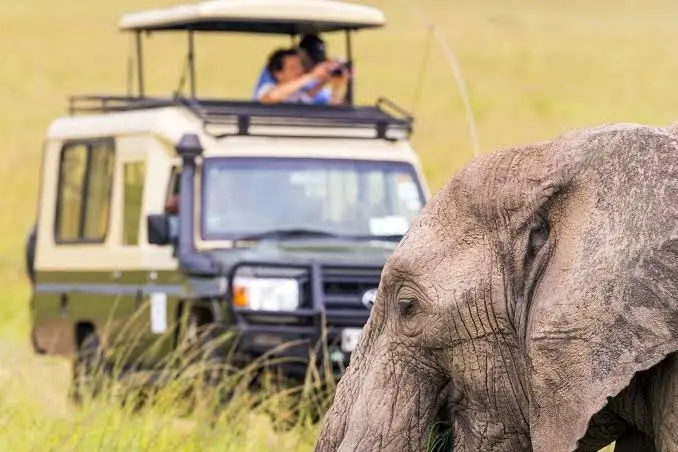
Queen Elizabeth National Park offers some of Uganda’s most reliable Big Five viewing, with healthy populations of elephants, buffalo, and lions, including the rare tree-climbing lions of the Ishasha sector, found in only a handful of locations across Africa. Murchison Falls National Park, Uganda’s largest protected area, offers similarly strong populations of these same three species, along with the dramatic backdrop of the Nile River and its powerful falls. Between these two parks, travelers focused on lions, elephants, and buffalo have excellent opportunities for strong sightings throughout most of the year.
Our Kigali to Queen Elizabeth National Park safari page covers this park’s wildlife viewing in more detail for travelers planning their itinerary around this destination.
Tracking Down Leopards
Leopard sightings in Uganda require patience and a degree of luck, given the species’ elusive, largely nocturnal behavior. Queen Elizabeth National Park and Murchison Falls both offer reasonable leopard populations, and experienced guides know specific areas where leopards are more frequently spotted, often resting in trees during the day. Travelers specifically prioritizing leopard sightings should consider adding a nocturnal game drive where available, since leopards are considerably more active after dark, increasing the chances of a sighting compared to standard daytime drives alone.
It’s worth setting realistic expectations regarding leopards specifically, while sightings do happen, they remain the least predictable of the more commonly found Big Five species in Uganda, and travelers should view a leopard encounter as a wonderful bonus rather than a guaranteed part of the itinerary.
Visiting Ziwa Rhino Sanctuary for Rhinos
For travelers wanting to complete a genuine Big Five checklist in Uganda, a visit to Ziwa Rhino Sanctuary, located along the route between Kampala and Murchison Falls National Park, offers the only realistic opportunity to see rhinos in the country. The sanctuary conducts guided walking safaris specifically to track and observe its resident southern white rhino population, a conservation success story working to eventually reintroduce rhinos back into Uganda’s national parks. While this experience differs somewhat from spotting a wild rhino during an open game drive, it remains a genuinely worthwhile and conservation-positive addition for travelers determined to encounter all five species during their Uganda trip.
Because Ziwa sits along the road route toward Murchison Falls, it pairs naturally with an itinerary that already includes that park, adding relatively little additional travel time to the overall trip.
Combining Big Five Viewing with Gorilla Trekking
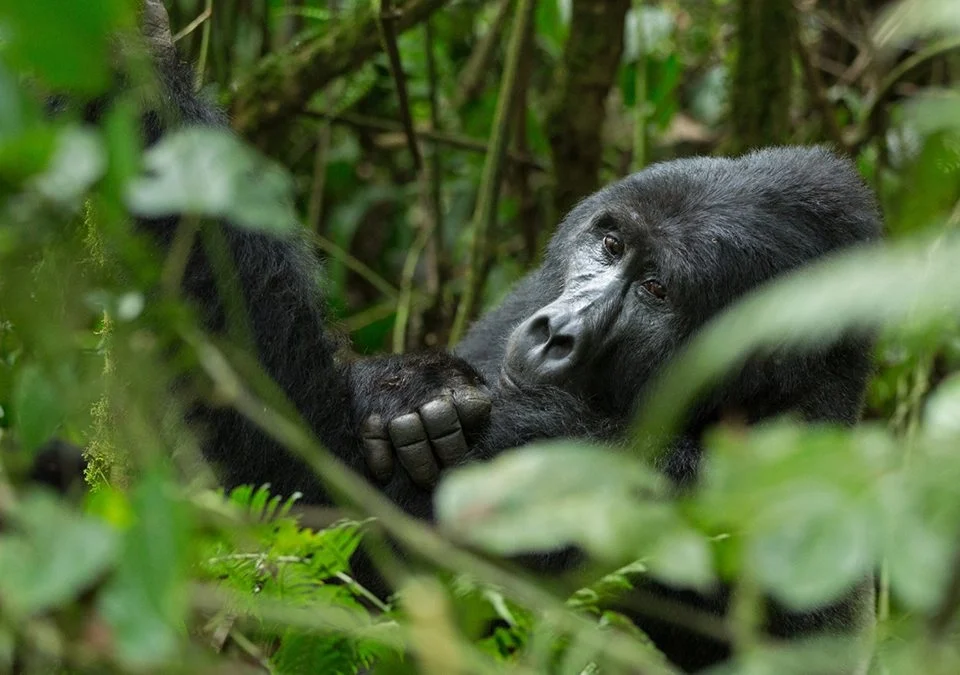
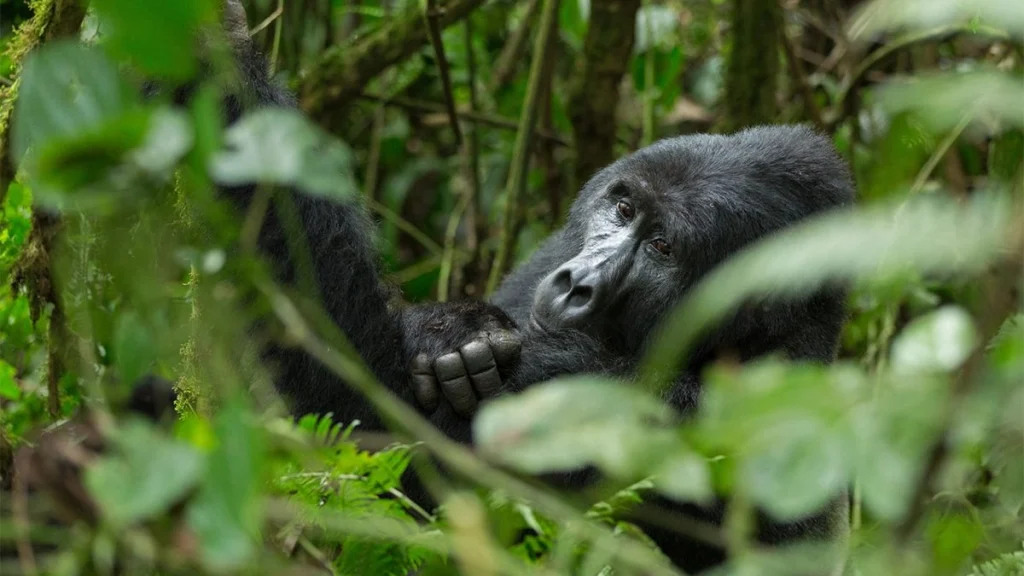
The real draw of a Uganda Big Five and gorilla safari lies in pairing this classic savanna checklist with the country’s signature wildlife experience: mountain gorilla trekking in Bwindi Impenetrable National Park. Because Bwindi sits in Uganda’s southwest, while the strongest Big Five viewing happens in Queen Elizabeth National Park and, for full Big Five completion, Murchison Falls further north, a complete itinerary requires careful route planning to cover both regions efficiently.
A practical approach often begins with gorilla trekking in Bwindi, followed by Queen Elizabeth National Park for lions, elephants, and buffalo, before either extending north toward Murchison Falls and Ziwa Rhino Sanctuary for a complete Big Five and gorilla experience, or concluding the trip if time is more limited. Our Uganda gorilla trek and wildlife safari page outlines how to think through these combination decisions based on available trip length.
Realistic Itinerary Lengths for This Combination
A trip combining gorilla trekking with strong Big Five viewing, excluding rhinos, realistically requires around six to seven days, covering Bwindi for gorillas and Queen Elizabeth National Park for the remaining four species. Adding Murchison Falls and Ziwa Rhino Sanctuary for a complete five-species checklist alongside gorilla trekking generally requires nine to eleven days, given the additional distance involved, or a shorter combined trip if a domestic flight is used to bridge the journey north more efficiently.
Travelers should be realistic about the time investment required for a true Big Five plus gorilla itinerary in Uganda specifically, given the rhino situation, and weigh whether the full checklist genuinely matters to their trip goals versus simply enjoying strong lion, elephant, and buffalo viewing alongside gorilla trekking within a shorter, more manageable timeframe.
Permits and Fees Across This Itinerary
A combined Big Five and gorilla itinerary involves coordinating several separate costs through the Uganda Wildlife Authority (UWA): the gorilla trekking permit at approximately 800 US dollars per person, park entrance fees for each additional reserve visited, and a separate sanctuary fee for the Ziwa Rhino Sanctuary visit if included. Working with an experienced operator to coordinate these costs and bookings together ensures a smooth, well-paced itinerary across the full route.
Plan Your Uganda Big Five and Gorilla Safari
A Uganda Big Five and gorilla safari offers travelers the chance to combine classic safari icons, lions, elephants, buffalo, and with some planning, rhinos, with the country’s signature mountain gorilla trekking experience, all within a single, well-designed itinerary. While Uganda’s specific rhino situation requires a slightly different approach than a typical Big Five trip elsewhere in Africa, the combination of savanna wildlife and gorilla trekking remains one of the most rewarding safari experiences available anywhere on the continent.
To start planning, browse our full range of Uganda safari packages, explore our Bwindi Impenetrable National Park page, or email our team directly at info@kenlinktours.com with your travel dates and priorities, and we’ll help design your ideal Uganda Big Five and gorilla safari.