- EXPERT'S HELP
- +256789210067
- +256200955001
- info@kenlinktours.com


Gorilla Trek and Murchison Falls Safari
August 5, 2026
Gorilla Trek and Lake Bunyonyi Tour
August 5, 2026
Gorilla Trek and Queen Elizabeth Safari. If there’s one combination that captures the full range of what a Uganda safari can be, it’s pairing a gorilla trek with Queen Elizabeth National Park. The two sit close enough together to combine easily — usually just a 2–3 hour drive apart — yet feel like entirely different worlds: the hushed, misty rainforest of the gorilla highlands giving way to open savannah, tree-climbing lions, and the wildlife-lined banks of the Kazinga Channel. This guide walks through how the two fit together, what it costs in 2026, and includes a full sample tour plan for building your own gorilla-and-Queen-Elizabeth safari — whether you have a tight five days to spare or want to extend it into a longer Uganda wildlife circuit.
Why This Is One of Uganda’s Best Combinations
Unlike some primate-and-wildlife pairings that require a long haul across the country, gorilla trekking in Bwindi Impenetrable Forest sits remarkably close to Queen Elizabeth National Park — Uganda’s most visited savannah park. That proximity means you can trek gorillas one morning and be watching lions along the Kazinga Channel by the following afternoon, without the long transit days required to reach destinations like Murchison Falls in the north. It’s a big part of why Queen Elizabeth features in so many of our itineraries, including the tour from Kigali covering Bwindi, Queen Elizabeth, Kibale and Bunyonyi.
What Makes Queen Elizabeth National Park Special
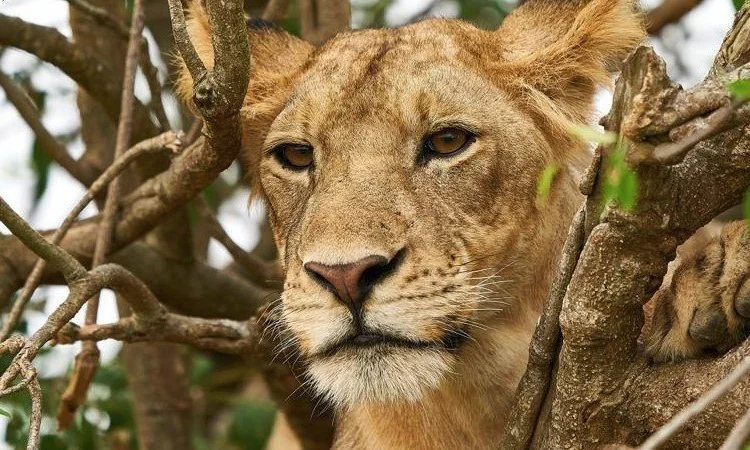
Queen Elizabeth National Park is often described as Uganda’s “medley of wonders” thanks to its unusual mix of habitats — open savannah, dense forest, wetlands, crater lakes, and the Kazinga Channel connecting Lake Edward and Lake George. It holds one of Africa’s highest hippo densities, along with elephants, buffalo, leopards, and the park’s signature attraction: the tree-climbing lions of the Ishasha sector, a rare behaviour seen in only a handful of places worldwide. Our detailed facts and history guide to Queen Elizabeth National Park covers the full scope of what makes it Uganda’s most ecologically diverse park, and our piece on the best national park in Uganda for game drives explains how it compares to Murchison Falls and other options.
The Kazinga Channel Boat Cruise
No visit to Queen Elizabeth is complete without a boat cruise along the Kazinga Channel, the 32-kilometre natural waterway linking the park’s two great lakes. The two-hour cruise brings you within close range of hundreds of hippos and Nile crocodiles basking along the banks, alongside elephants, buffalo, and a huge variety of waterbirds, including pelicans, kingfishers, and African fish eagles. It’s consistently rated one of the best wildlife-viewing activities in Uganda precisely because the animal density along the channel is so reliably high, regardless of season.
Ishasha: Home of the Tree-Climbing Lions
The Ishasha sector, in the park’s remote southern reaches, is famous for lions that spend their afternoons draped across the branches of fig trees — a behaviour rarely documented elsewhere in Africa and still not fully understood by researchers. Reaching Ishasha typically adds a half-day detour from the park’s main Mweya/Kasese circuit, but for travellers who’ve already committed to the drive from Bwindi, it’s a natural stop along the way, since the Ishasha sector sits directly on the road between the gorilla region and the rest of Queen Elizabeth National Park.
Adding Kyambura Gorge Chimpanzee Tracking
For travellers who want a third primate species alongside gorillas, Queen Elizabeth National Park offers Kyambura Gorge — nicknamed “the valley of apes” — where a smaller, sometimes harder-to-find chimpanzee community can be tracked within the park’s boundaries. It’s a convenient add-on precisely because it requires no extra travel beyond what your Queen Elizabeth game drive already covers, and it pairs well with our Big Five and Primate Safari in Uganda, which is built around this exact overlap between primates and savannah wildlife.
Getting From Bwindi to Queen Elizabeth National Park
The drive from Bwindi to Queen Elizabeth National Park is one of the most scenic short transfers in Uganda, winding through terraced hillsides and small trading towns before descending into the park’s open plains. Most itineraries route through the Ishasha sector on the way, turning what could be a simple transfer day into an extra game-viewing opportunity in search of the tree-climbing lions before you’ve even checked into your main Queen Elizabeth lodge. Because the roads here are generally in good condition compared to some of Uganda’s more remote routes, this leg rarely adds the kind of fatigue that a longer transfer — say, to Murchison Falls in the north — would involve.
Wildlife You Can Expect to See
The wildlife contrast between the two halves of this safari is one of its biggest draws. In Bwindi, sightings are centred entirely on the primates you trek to see — mountain gorillas, plus forest birds and the occasional forest elephant along the trail. Queen Elizabeth opens that up considerably: expect elephants, buffalo, Uganda kob, and warthog across the open savannah, hippos and crocodiles in extraordinary numbers along the Kazinga Channel, leopards in the park’s woodland areas, and of course the tree-climbing lions of Ishasha. The park’s wetlands and crater lakes also support over 600 recorded bird species, making it one of Uganda’s premier birding destinations alongside its mammal viewing.
Gorilla Permit and Queen Elizabeth Costs in 2026
Budgeting for this combination means factoring in a gorilla permit plus several Queen Elizabeth activity fees, all charged separately. Current 2026 rates for foreign non-residents:
| Activity | Foreign Non-Resident Price |
|---|---|
| Uganda gorilla trekking permit (Bwindi) | US$800 |
| Queen Elizabeth park entrance fee (24 hrs) | US$40 |
| Guided game drive (daytime) | US$30 |
| Kazinga Channel boat cruise (~2 hours) | US$30 |
| Kyambura Gorge chimpanzee tracking | US$100 |
Compared to the far northern Murchison Falls leg of a longer Uganda safari, Queen Elizabeth’s proximity to Bwindi keeps transport costs and travel time noticeably lower, which is one reason this combination is often the more budget-friendly way to pair gorillas with classic savannah game viewing.
How Many Days Do You Need?
Because Bwindi and Queen Elizabeth sit only a few hours apart, this combination works well as a compact 4–5 day trip — one day for travel and settling in, one for the gorilla trek, and one to two for game drives, the Kazinga Channel cruise, and optionally Ishasha or Kyambura Gorge. Travellers with more time often extend this into a fuller primate-and-wildlife loop by continuing on to Kibale National Park for chimpanzee tracking, as covered in our Big Five and Primate Safari, or by looping further north to add Murchison Falls, matching our 10-day Murchison Falls, Kibale, Queen Elizabeth and Bwindi itinerary.
Sample 5-Day Gorilla Trek and Queen Elizabeth Tour Plan
Here is a practical day-by-day itinerary for this combination:
This plan can be trimmed to 4 days by skipping Kyambura Gorge, or extended to a full week by continuing on to Kibale National Park for a second chimpanzee-tracking day, matching the structure of our Bwindi, Queen Elizabeth, Kibale and Bunyonyi tour.
Where to Stay in Queen Elizabeth National Park
Queen Elizabeth offers one of Uganda’s widest accommodation ranges, from budget campsites to some of the country’s most scenic luxury lodges overlooking the Kazinga Channel or the park’s crater lake district. Our roundup of top luxury lodges in Queen Elizabeth National Park covers the best-located options, and if you have an extra afternoon, the park’s crater lakes make for a scenic, low-key stop between game drives.
Best Time of Year for This Combined Safari
Both gorilla trekking and Queen Elizabeth’s game drives are rewarding year-round, but the dry seasons — June to September and December to February — offer firmer forest trails in Bwindi and easier road conditions on the drive between parks. Wetter months bring lower rates, thinner crowds, and lush green scenery, at the cost of muddier trekking and occasionally softer game-drive roads. Our detailed guide to the best time to see gorillas in Uganda and Rwanda covers the gorilla side of this decision in depth.
What to Pack for Both Legs
This itinerary moves between two very different environments, so your packing list should cover both: waterproof hiking boots, long trousers, and a rain jacket for the Bwindi gorilla trek, plus lighter clothing, sunscreen, and binoculars for the open savannah game drives and boat cruise in Queen Elizabeth. Our full packing list for gorilla trekking in Uganda, Rwanda and Congo covers the forest side, and reviewing our gorilla trekking rules and regulations in Uganda beforehand will help the Bwindi leg go smoothly.
Frequently Asked Questions About Gorilla Trekking and Queen Elizabeth Safaris
How far is Queen Elizabeth National Park from Bwindi?
Roughly 2–3 hours by road, making it one of the easiest wildlife-park pairings with gorilla trekking anywhere in Uganda.
Are the tree-climbing lions guaranteed in Ishasha?
No sighting in the wild is guaranteed, but Ishasha’s tree-climbing lions are seen regularly enough that most multi-day visits have a strong chance of spotting them.
Is 5 days enough for gorillas and Queen Elizabeth?
Yes, 5 days is comfortable. Travellers wanting to add Kibale chimpanzee tracking or more time in Ishasha should plan for 6–7 days instead.
Can I combine this trip with Murchison Falls as well?
Yes, though it adds significant driving time since Murchison Falls sits much further north. Most travellers who want all three destinations plan for 10 days or more.
What’s the difference between Queen Elizabeth and Murchison Falls for game viewing?
Queen Elizabeth is smaller, closer to Bwindi, and known for the Kazinga Channel and tree-climbing lions, while Murchison Falls is larger, further north, and centred on the Nile’s dramatic waterfall alongside its own big-game population. Many travellers choose Queen Elizabeth specifically because of its proximity to the gorilla region.
Ready to Plan Your Gorilla Trek and Queen Elizabeth Safari?
Pairing a gorilla trek with Queen Elizabeth National Park is one of the most efficient ways to combine Uganda’s rainforest primates with its classic savannah wildlife, without long transit days eating into your trip. Our team at Kenlink Tours handles the gorilla permit, all Queen Elizabeth activity bookings, transport, and lodging across both legs. Reach out through our contact page to start planning, or browse our full Uganda safaris collection for more ways to structure this route.