- EXPERT'S HELP
- +256789210067
- +256200955001
- info@kenlinktours.com


Kigali to Murchison Falls Safari
June 30, 2026
Kigali to Mgahinga Gorilla National Park Safari
June 30, 2026
Uganda Primate Safari Starting in Rwanda. Uganda holds one of the richest concentrations of primate species found anywhere in Africa, home to mountain gorillas, chimpanzees, golden monkeys, and a dozen or more monkey species, all within a relatively compact southwestern region. For travelers fascinated by primates specifically, rather than wildlife in general, starting this kind of trip in Rwanda and crossing into Uganda offers a uniquely efficient way to experience an extraordinary range of species within a single, well-organized itinerary. This guide outlines exactly which primates you can encounter, where to find them, and how to structure a Uganda primate safari beginning in Kigali.
Why Uganda Is East Africa’s Premier Primate Destination
Uganda’s location at the convergence of East and Central African ecosystems, combined with its extensive rainforest cover in the southwest, has made it home to roughly half of the world’s remaining mountain gorillas, along with significant chimpanzee populations and one of the highest primate densities recorded anywhere on the continent. Few other countries offer this level of primate diversity within such a manageable travel radius, and starting from Kigali makes accessing this region notably more convenient than routing through Uganda’s capital, Kampala, or its main airport in Entebbe.
At Kenlink Tours, we’ve designed several itineraries specifically around this primate-focused approach, recognizing that many travelers are drawn to Uganda less for general game viewing and more for the rare opportunity to observe great apes and monkeys in their natural rainforest habitat.
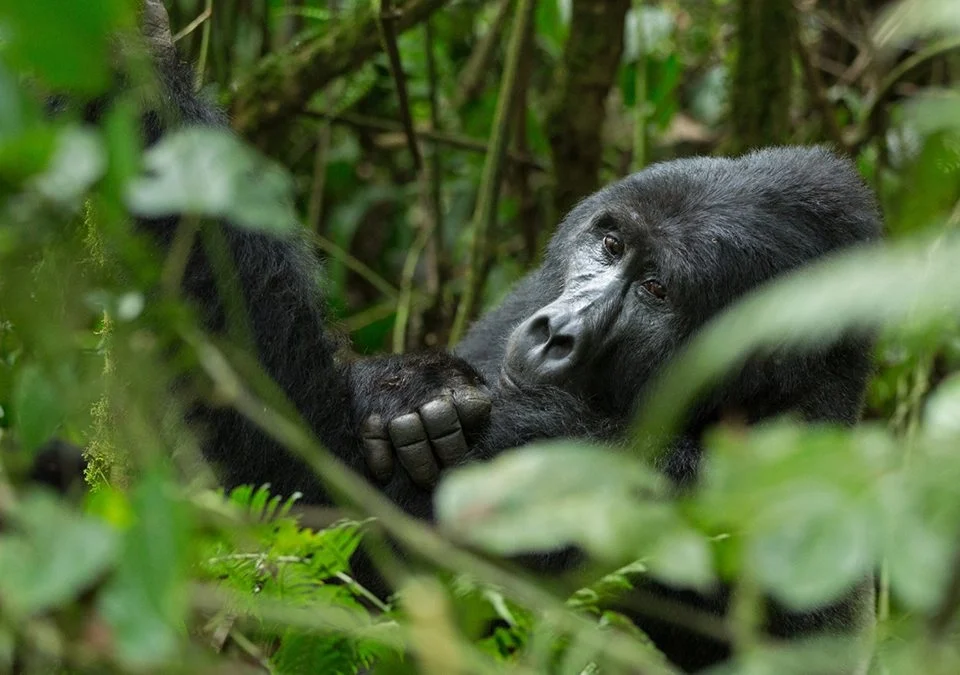
Mountain Gorillas in Bwindi Impenetrable National Park
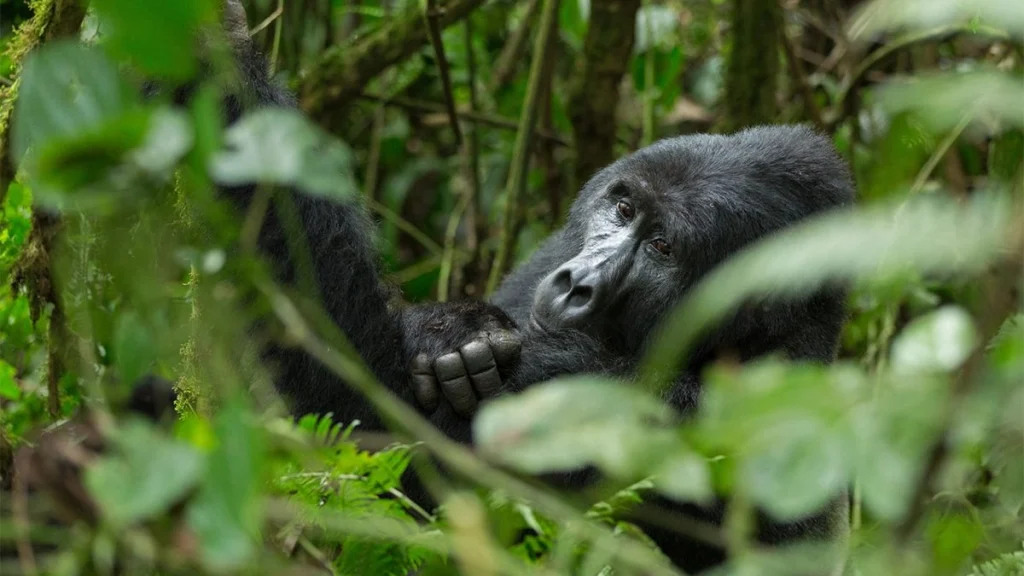
Mountain gorillas remain the headline primate experience for most travelers, and Bwindi Impenetrable National Park, a UNESCO World Heritage Site, hosts the largest concentration of habituated gorilla families available for trekking anywhere in the world. Spread across four trekking sectors, Buhoma, Ruhija, Rushaga, and Nkuringo, the park offers a range of trail difficulties and gorilla family options, with permits issued exclusively through the Uganda Wildlife Authority (UWA) at approximately 800 US dollars per person for foreign non-residents.
The trek itself, followed by an hour spent observing a gorilla family at close range, remains one of the most profound wildlife encounters available anywhere, and forms the centerpiece of nearly every primate-focused Uganda itinerary. Full trekking details are available on our Bwindi Impenetrable National Park page.
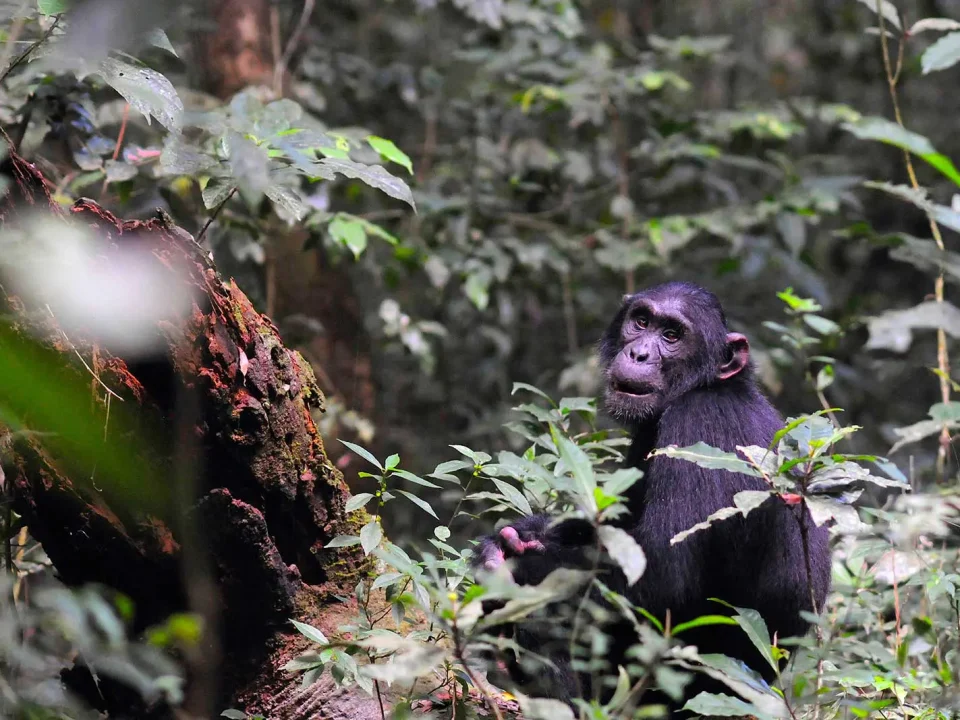
Chimpanzee Tracking in Kibale Forest National Park
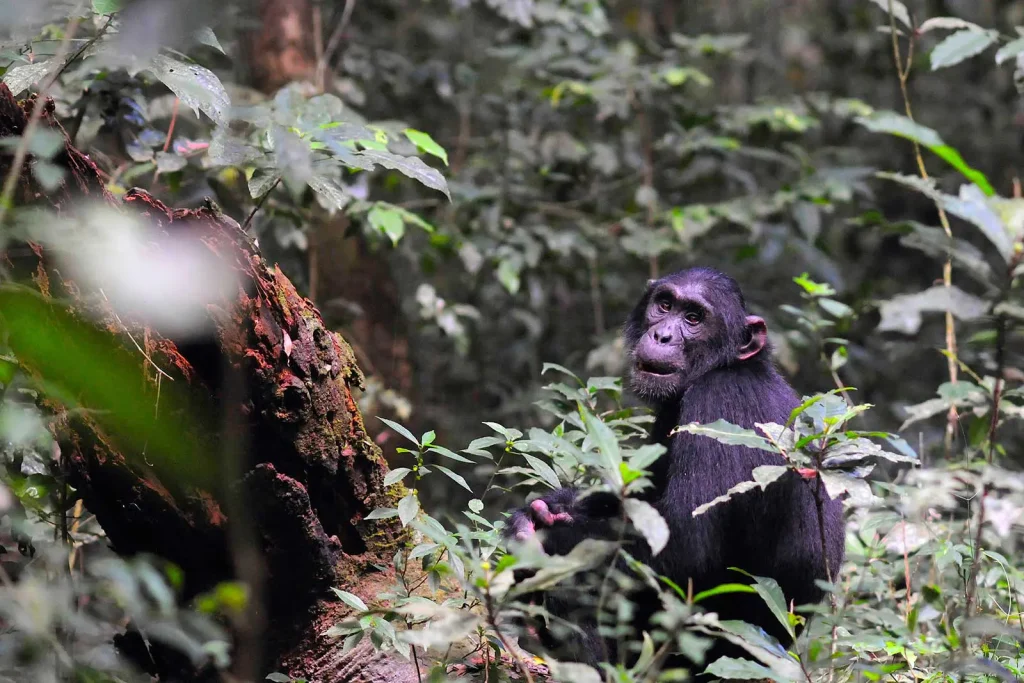
While Bwindi gets most of the attention, Kibale Forest National Park, further north, is widely regarded as one of the best places in Africa to track wild chimpanzees, and holds one of the highest primate densities recorded on the continent, with thirteen primate species recorded within the forest. Chimpanzee tracking permits are considerably less expensive than gorilla permits, making this an excellent value addition for travelers wanting a second great ape encounter within the same trip.
Unlike the calmer, ground-based behavior typical of gorilla families, chimpanzee tracking is a more dynamic experience, as troops move actively through the canopy, vocalizing and interacting in ways that offer a genuinely different primate encounter from gorilla trekking.
Golden Monkey Tracking near Bwindi
For travelers staying in the Bwindi area, golden monkey tracking offers an easy and rewarding add-on activity, typically arranged for a half day alongside the main gorilla trek. Golden monkeys, a strikingly colorful and endangered species found in the Albertine Rift region, are habituated for tourism in areas near the park, offering a more energetic, fast-moving encounter that contrasts nicely with the slower pace of gorilla trekking.
Because golden monkey tracking can often be arranged on the same day as travel between activities, it’s a popular way to add primate diversity to a trip without requiring significant additional travel time.
Other Monkey Species Across the Region
Beyond the headline species, Uganda’s forests support a remarkable variety of monkey species worth watching for throughout any primate-focused itinerary. Black-and-white colobus monkeys, recognizable by their flowing white fur and dramatic leaps between branches, are commonly spotted in forested areas around Bwindi and Kibale. Red colobus, L’Hoest’s monkeys, blue monkeys, and grey-cheeked mangabeys are among the additional species frequently encountered in Kibale Forest specifically, while vervet monkeys and baboons are widespread across nearly all of the region’s parks and lodge grounds.
For dedicated primate enthusiasts, simply paying attention during transfer drives and forest walks between major activities often yields rewarding sightings beyond the scheduled tracking experiences.
Sample 6-Day Primate-Focused Itinerary from Kigali
A well-paced primate safari might begin with the standard drive from Kigali to Bwindi for gorilla trekking, followed by an optional golden monkey tracking session the next morning before continuing toward Queen Elizabeth National Park, which serves primarily as a convenient midpoint stop with its own wildlife highlights. From there, the route continues north to Kibale Forest National Park for chimpanzee tracking, often combined with a guided forest walk to spot additional monkey species, before returning to Kigali.
This structure closely mirrors our 6-day gorilla and chimpanzee safari, which can be further customized to prioritize primate viewing over general game drives depending on your specific interests.
Booking Permits for a Multi-Primate Itinerary
Because this kind of itinerary often involves multiple separate permits, gorilla trekking, golden monkey tracking, and chimpanzee tracking, it’s important to plan and book well in advance, particularly for gorilla permits, which are limited to a fixed number of trekkers per gorilla family each day. We recommend booking gorilla and chimpanzee permits three to six months ahead of travel, especially during peak dry seasons from June to September and December to February, while golden monkey permits generally have more flexible availability.
Our team can coordinate all necessary permits together as part of a single, streamlined booking process, ensuring your itinerary, accommodation, and transport all align around your confirmed trekking dates.
What to Pack for a Primate-Focused Trip
Primate tracking across Bwindi and Kibale both take place in dense rainforest environments, so waterproof hiking boots, gardening-style gloves for gripping vegetation, a reliable rain jacket, and long sleeves and trousers are essential throughout. A good camera with a zoom lens is valuable for capturing primate behavior at a respectful distance, particularly for the more active chimpanzee and golden monkey encounters, though flash photography is prohibited near gorillas and discouraged around other primates as well.
Comfortable, broken-in hiking boots make a meaningful difference across a multi-day trekking itinerary, and travel insurance covering trekking activities is strongly recommended given the physical demands and remote locations involved.
Best Time of Year for Primate Tracking
Primate tracking is possible year-round across Uganda’s forests, since habituated groups are tracked daily regardless of season. The dry seasons, June to September and December to February, offer firmer trails and generally easier hiking conditions, making them the most popular and heavily booked periods for gorilla and chimpanzee permits. The wetter months see fewer crowds and occasionally better permit availability, though trekking conditions across all forest activities become considerably muddier.
For current entry requirements and travel advisories, it’s worth checking guidance from the Uganda Tourism Board before finalizing your travel dates.
Why Start This Trip in Rwanda
Beginning a Uganda primate safari in Kigali offers the same advantages that make it a popular gateway for general Uganda travel: stronger international flight connections, a relatively short drive into the primate-rich southwestern region, and the option to keep permit costs lower than trekking exclusively within Rwanda. For travelers whose primary goal is experiencing the widest possible range of primate species, this routing efficiently connects Bwindi, Kibale Forest, and the areas around them without requiring a flight into Entebbe.
Plan Your Uganda Primate Safari from Kigali
A Uganda primate safari starting in Rwanda offers an unmatched opportunity to encounter mountain gorillas, wild chimpanzees, golden monkeys, and a wide variety of other monkey species, all within a single, thoughtfully designed itinerary departing from Kigali. Whether your focus is purely on the great apes or you want to explore the full breadth of Uganda’s primate diversity, this region delivers an experience few other destinations in the world can match.
To start planning, explore our Bwindi Impenetrable National Park page, browse our full range of Uganda safari packages, or email our team directly at info@kenlinktours.com with your travel dates, and we’ll help design your ideal Uganda primate safari starting in Rwanda.